Author: mazda

  • The Beginning of Engineering Knowledge Club

    The Beginning of Engineering Knowledge Club

    Engineering Knowledge Club logo
    Creative Commons License
    Engineering Knowledge Club Logo by Think Up is licensed under a Creative Commons Attribution-NonCommercial-ShareAlike 4.0 International License.
    Permissions beyond the scope of this license may be available at info@thinkup.org.

    Almost nine months since we were awarded funding from UCL’s Teaching Innovation fund, Paul Greening and I kicked off ‘Engineering Knowledge Club‘. The idea is to encourage students to develop for themselves the engineering knowledge they need in order to be successful in the field of engineering they want to go into. We have set up a dedicated blog for Engineering Knowledge Club, which describes our aims for the project, so I won’t repeat them here.

    But what I will say here is how excited I am about this project. The timing is particularly appropriate as I have been spending most of November co-writing a guide for the Royal Academy of Engineering on experience-led learning in engineering. Many of the ideas discussed in that report we can put in practice in Engineering Knowledge Club, for example:

    Student–led learning – so much of the learning that I see happening in civil engineering courses seems to be motivated by grades, which probably stifles curiosity, intrinsic motivation and independence. I strongly believe that if learners were learning about what they were interested in, then they’d be self-motivated, perhaps work harder, and learn more effectively. Engineering knowledge club is about giving students the chance to define and drive their own learning.

    Learning based on real-world stimuli – civil engineering is a subject that surrounds us, and so lends itself well to learning by observation. And yet, so much civil engineering education is based on text books, lecture notes and websites. Engineering knowledge club will encourage students to be inspired by, be curious about and learn from the environment which surrounds them.

    Reflective learning – people tend to learn better when they think about how they are learning. Over the last two years I’ve experimented at UCL with Paul Greening and at Queens Belfast with Siobhan Cox on using private student blogs for reflective learning. While this has had some success, what’s been missing is students being able to learn from each others’ blog posts. Engineering Knowledge Club will give me the chance to experiment with using a public class blog. This will hopefully help to build a sense of community among the students, and should serve to demonstrate the concept to anyone interested.

    Building a community of learning – I don’t feel that students are encouraged enough to support each other in their learning. I believe that a student cohort in which everyone is looking out for each other would be one that learns more. We hope to build a sense of community in Engineering Knowledge Club and be able to see its impact on learning.

    We shall see!
  • Now ‘lecturing’ at UCL

    Now ‘lecturing’ at UCL

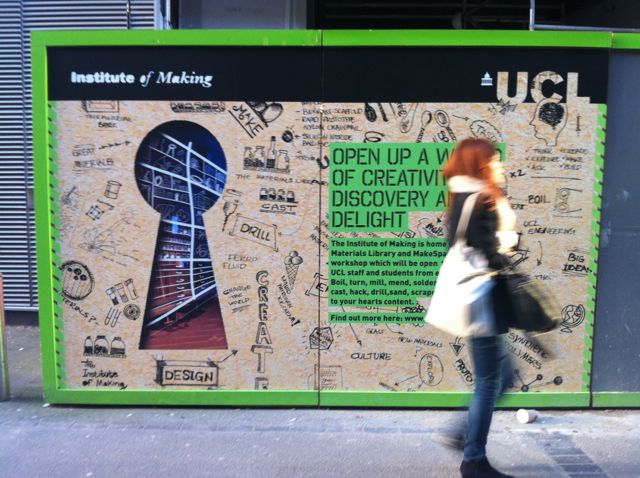
    Institute of Making

    The letter came in the post yesterday. I can now call myself an Honorary Lecturer at UCL’s Department of Civil, Environmental and Geomatic Engineering. Obviously the ‘Honorary’ bit means that I still have my day job at Think Up, but it is great to have recognised a good and growing working relationship with the department through projects such as Knowledge Club and a re-run of Think Up’s Haiti Disaster Relief design project.

    UCL and Think Up are on each other’s doorsteps, so I expect to find myself on campus much more. And now with access to EduRoam, any campus is my office.

  • Teaching at Queens – part 1

    Teaching at Queens – part 1

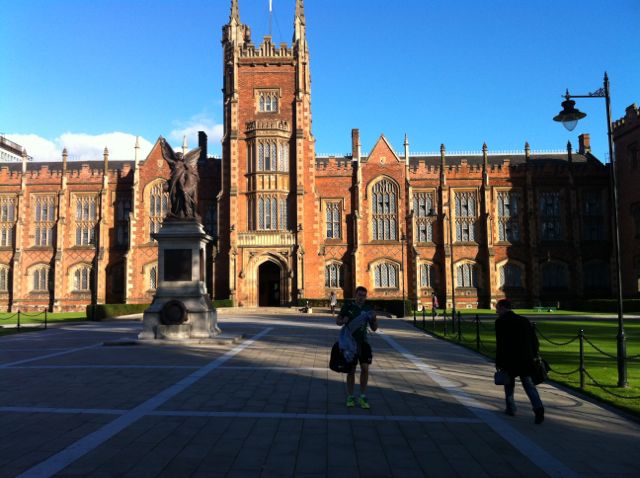
    IMG_5964

    Over the next couple of days I’ll be at Queens University Belfast to do two things: to kick off a new sustainability-themed student project, and to run a curriculum development session with staff on the theme of embedding sustainability.

    Queens commissioned Think Up to design a sustainability-themed project for first year students. With this collaboration we plan to test three things: the idea of using a project early in the course to introduce the ‘basic building blocks’ of sustainable design; how this project can be used to introduce a topic that other teaching staff can build upon in later modules; and how a virtual learning environment (in this case Our in-house platform Student Studio) can be used to facilitate a better link between universities and industry.

    Basic building blocks

    Principle Two of our report Embedding Sustainability in the Undergraduate Civil Engineering Curriculum is to ‘establish the basic building blocks early on in the course’. Using Bloom’s Taxonomy as our theoretical basis, the higher order cognitive processes needed for sustainable design (analysis, assimilation, creation and evaluation) are founded upon the more basic cognitive processes (knowledge of, knowledge that). To enable students to make better judgements in the field of sustainable design, we need to establish the basics that will help them make those decisions.

    The basics are widespread, and include: common terms and definitions; principles of simple analysis techniques; materials; exemplars. Communicating this material is not a great use of class time. The project that we are designing will provide a context within which the students can start to establish these basic building blocks.

    Project brief

    Student are asked to work in groups to answer the rather open-ended question, how sustainable is Titanic Quarter (a large new mixed commercial-residential-cultural development in Belfast)? To help them, we have suggested seven axes for investigation based on the twelve objectives for sustainable development on the Olympic Park. For each axis, we have suggested aspects of the development to investigate, analysis tools and techniques they might use, and technologies they should find out more about.

    Over the coming week, students will go on a fact-finding tour, do online research and try to speak to people who know about the site. Once they have gathered their data, they need to agree as a group how they are going to answer this question. The task is deliberately designed to provoke debate, and to ask students to apply their judgement. We emphasise that there is no right answer, and what is important is the thinking process they go through.

    To conclude the project, students will present their findings to other groups. In each pair of groups, one will the on the role of the developer, the other will take on the role of sustainability consultants answering this question. The students will choose which team they think have best answered-the question. That group will then present their findings to my colleague in the Useful Simple Trust, Dan Epstein, who was head of sustainability on the London Olympics.

    Basis for our teaching modules

    Our hope is that this project will enable other teaching staff to develop modules that build upon these foundations. Titanic Quarter is a development close to he Queens campus and it is likely to be under development for some years to come, so it makes sense to link teaching to reality by drawing on case studies from this project.

    Using Student Studio

    This project will be the second time that I have used Think Up’s virtual learning environment Student Studio to run a remote teaching module in a university. The platform is used to provide briefing information to the students, to provide an online space for a learning blog, and a forum space for discussion posting questions.

    The plan is that I will be in Belfast to kick off the project and give the students an introductory lecture. I will brief them on how to use Student Studio. I will then go back to London, but I will be able to track students’ progress through the project remotely. Together with using Skype to deliver the final presentation, if successful, we hope this technique will demonstrate how industry can be connected to the teaching environment without necessarily having to be there all the time.IMG_5964


  • Day 4 at the RDI Summer School

    Day 4 at the RDI Summer School

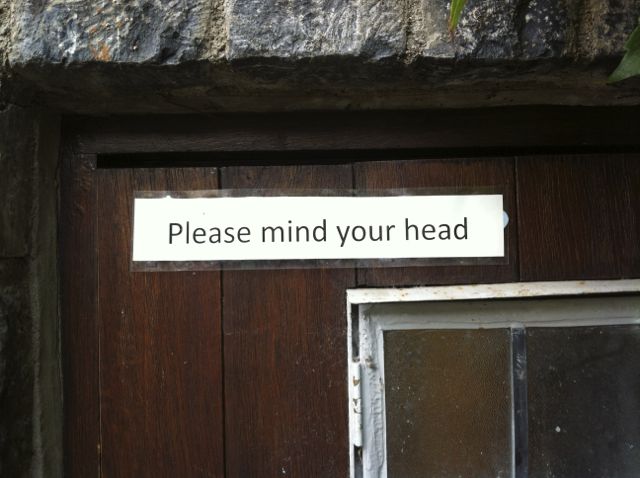
    Please mind your head at the RDI Summer School

    This Day 4 post is written somewhat after the fact, and that’s a good thing. An immediate post might have captured all the logistical comings and goings without capturing anything about what was special.

    I am not sure who first used these words, but in the concluding session, Michael Wolff quoted the following,

    “People will forget what you said, and they will forget what you did, but they will always remember how they made you feel.”

    The handful of attendees I have spoken to in recent days have shared a similar sentiment: that after five weeks back at our desks, the Summer School feels like a long time ago; the details are dim, but there is a feeling that they can start to make sense of what was felt – what was revealed about ourselves and each other – in the context of their day to day lives. It is as if the Summer School is one of those glorious trees at Dartington Hall, basking – photo-synthesising. The leaves are what we said and did; buffeted by the arrival of autumn they quickly fall, but the energy of the summer, the coding and nutrients – in other words how it made us feel – are preserved in the seeds.

    Oak Tree Dartington Hall
    Oak tree at Dartington Hall

    Fergus Fielden gave me the the seed metaphor. He used a sweet chestnut seed from the grounds at Dartington represent his wish on the wish sculpture that we built on day two. In his words (see video snippet here),

    “It symbolises growth…and investing in a sustainable future, but it’s a long game so it is about getting people to be more hands-on about sustainability and awareness. And you have to have faith. You have to invest early on.”

    Planting seeds is the most illustrative description I can find for what the summer school did. Some will germinate next season; others will come to life in later years; some may not survive. Once it emerges, the sapling may take many years to thrive. And it is hard to know from the seed what form the eventual tree will take. Sometimes it is hard to remember what seeds you have planted. Fortunately I have two hours’ footage of video interviews to give me some clues about what sort of seeds were planted.

    Seven Seeds of the Summer School

    • Seed One – The courage to believe in your own convictions and abilities
    • Seed Two – The removal of the mundane to gain sight of what you want to do.
    • Seed Three – The re-ignition and validation of personal passions.
    • Seed Four – The foundation of new friendships and alliances
    • Seed Five – The identification of new personal objectives
    • Seed Six – The nature of working with strangers and how to collaborate.
    • Seed Seven – The knowledge that our greatest adversary in life may be ourselves.

    As we were leaving the summer school, I asked (somewhat metaphorically) designer Syd Hausman, if she’d found what she was looking for:

    “Sounds like a U2 song… I wouldn’t say I’ve found what I am looking for, but the start of many things I will probably find”

    Related Posts

    External links

  • Following Laws of Simplicity, and stumbling upon life hacks

    At the RDI Summer School, I met potter Billy Lloyd. He suggested I take a look at John Maeda’s blog, The Laws of Simplicity‘ which I’ve just started following and reading. I like the approach of having a blog based around the idea of applying a series of rules or commandments. It is something that could work well for putting online Think Up’s report on principles for embedding sustainability teaching in undergraduate engineering courses.

    Reading the Laws of Simplicity blog I stumbled upon a link to a page on 50 life hacks. Well worth looking at!
  • From concrete courtyard to blooming garden – the story of the Big Dig

    From concrete courtyard to blooming garden – the story of the Big Dig

    IMG_5294

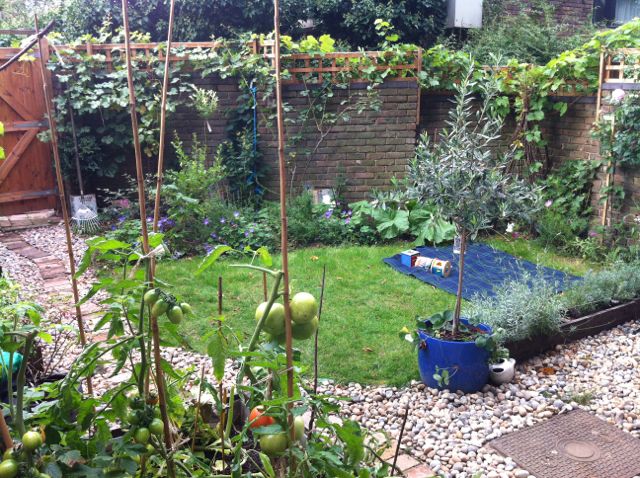
    In December last year I wrote about day one of the Big Dig, M and my plan to transform our barren concrete courtyard into a thriving patch of urban greenery. Today we celebrated the completion of that grand plan with a garden party – a harvest festival no less! – for everyone who helped us along the way. Here’s a little movie slide show of what we achieved.

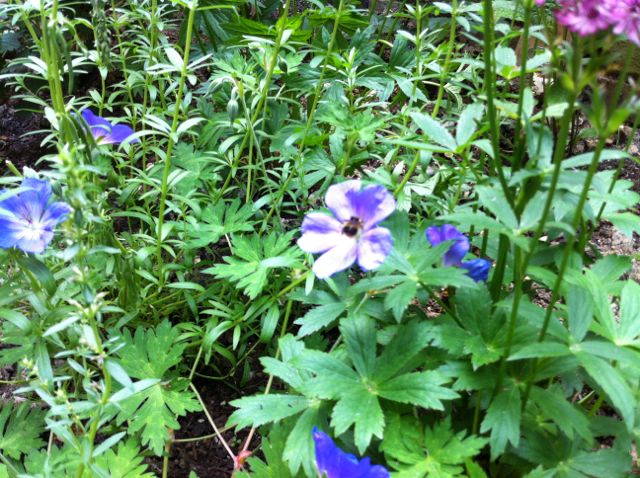
    Seeing all the insects buzzing between the flowers in the beds it is hard to remember that this was an apparently lifeless little corner of London (no doubt kept lifeless with ample weed killer). And in January, when we were standing in knee-deep holes in the ground digging in compost, it was hard to believe that it would turn into the lush environment that it is now.

    IMG_5912

    By the time spring arrived we were putting in the new ground covering: a mixture of turf and gravel, beds and raised beds. The trees and most of the plants went in by early April. I remember thinking that they were quite spread out – just as well given how much they grew. In the summer we turned our hands to plant vegetables – too late in hindsight, but we are still figuring this stuff out.

    One of the aims of the project was to use waste material wherever possible. We had had our collapsing garden fence replaced with a new one, but had asked to keep the old timber. This well weathered material we were able to put to good use, creating three raised beds, a cold frame, a bike shed and compost heap. And because the material all came from the same fence, all the structures we built have a unified look. Continuing on the re-use theme: half of the old back door became the lid for the cold frame; the dozens of bricks we found in the ground became the garden path; an old allotment shed door became the roof of the bike shed.

    IMG_5908

    Two things have made this transformation possible. The first is the plan for the garden put together by our friend Amanda Dennis. From her beautiful pen and watercolour design, to the step-by-step project plan, she guided us through the whole process, and I think she is as pleased as we are with the result. The second is the tremendous help we have had from friends, family and neighbours – I count sixteen volunteers in total over the last nine months. People have lent us tools, sent us plants, driven cars to the dump, built sheds, looked after our baby and dedicated whole days to digging. It has been very heartwarming – and a lot of fun.

    And so to the harvest. Roughly speaking: a punnet of raspberries, red currants, blueberries and a half one of strawberries; a few baby carrots; two plums; two courgettes; fist-fulls of herbs; a dozen ripe tomatoes – and two dozen green tomatoes still full of promise; and a gherkin. We wanted to feed our harvest festival guests the fruits of the labour, but since most of these fell earlier in the year, we had to be a bit creative with the menu: lavender cake; savoury vine leaf cake (delicious!) and herb bread topped with our one gherkin thinly sliced.

    It would be easy to think now that the hard work is done – but now we have the not so small task of keeping it all alive. Watch this space.

  • Day 3 at the RDI Summer School 2013

    Day 3 at the RDI Summer School 2013

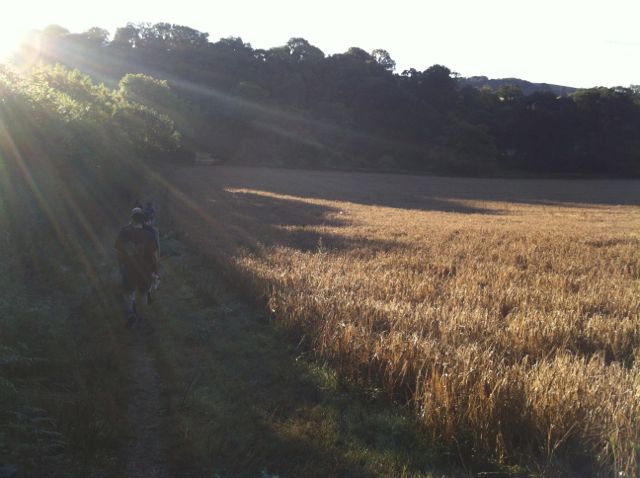
    Sun shining across corn field
    Off for an early morning swim in the Dart

    7am: ten of us met for an early morning swim in the Dart. The water was so cold it began to burn, but the sensation was incredible. Whether they had been swimming or not, by impression from the people I interviewed that morning was that everyone felt refreshed – charged with renewed energy.

    The instructions were to continue the journey begun yesterday. Unlike the day before, there seemed to be a greater feeling of coalescence in each of the working groups. Perhaps a trust was forming; people began to be quite secretive. I decided it would be difficult to learn about what was going on by skipping from group to group so I joined one.

    Stratocumulus Dartington Park
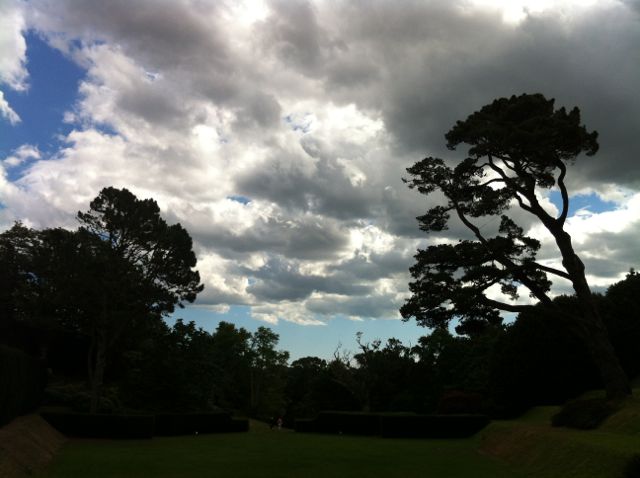
    Stratocumulus over the tilting field at Dartington

    For several hours, we walked and explored the gardens. The brief remained wide open. Ideas emerged and disappeared just as quickly – but without judgement. We found our way to High Cross House, and it was there that, like the fleck of dust that is needed to begin the crystallisation of a solute from solution, something stuck around which ideas started to emerge. We wanted to create something that responded to the landscape – a giant puppet or mobile suspended from one side of the tilting yard to the other. We needed a rope, but all the rope had been taken by other groups.

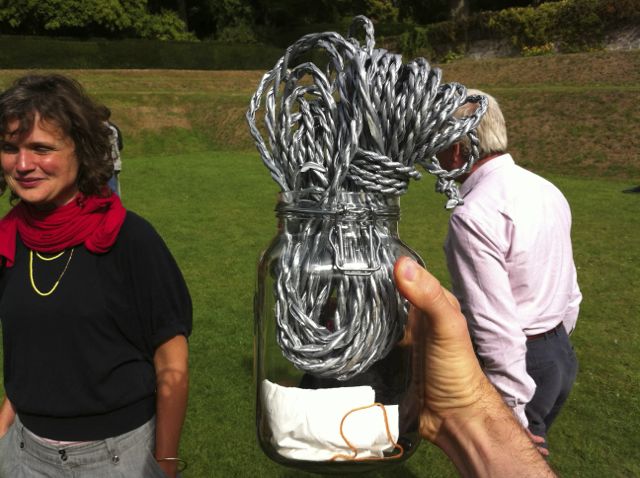
    We decided to create our own rope from the only remaining material in the stores, gaffer tape. Then began wonderful process of collaboration and learning as we crafted our own 25m-long rope by spinning the tape around itself. Engaged in this physical task our spirits were soaring. The storm clouds that had been threatening all weekend finally broke, but we stayed out in the rain, spinning our rope.

    Gaffer tape rope
    A rope hand-woven from gaffer tape

    When the rain stopped we tested our idea – to explore emotion by creating a giant tug-o-war spanning the great valley of the tilting field. It didn’t work – the rope failed under the stress of two people pulling – but it drove us to something better: to create a giant skipping rope. The next hour was brimful with joy as we leaped in and out of the skipping rope. We showed each other how to do it, we created games – we played. We returned to dinner with spring in our step aware that we had touched upon something profound, perhaps the satisfaction of craft…the beauty in simplicity…the joy in play.

    Later we returned to the wish sculpture begun on the day two. Here is what Co-Director Chris Wise had to say about he happened.

    Related posts

    External links

  • Notes from Day Two of the RSA RDI Summer School – sort of

    Notes from Day Two of the RSA RDI Summer School – sort of

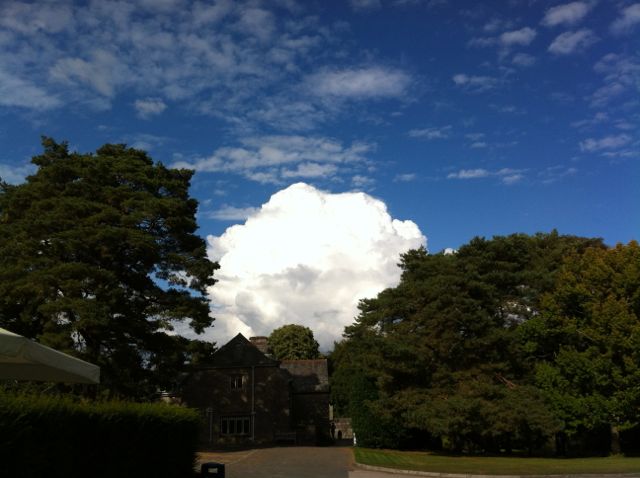
    Cumulonimbus at Dartington Hall
    Storm clouds brewing at RDI Summer School

    My aim for this reportage has been to tell a live story from the Summer School. This is tricky to do because, as I said in my first day post, part of the appeal – and perhaps the impact – of the Summer School is that the participants know so little about what is going to happen. Summer School co-director Chris Wise told me that this mystery intends to put participants on a level playing field without preparation, preconception or prejudice. I understand the importance of what he is saying, but this leaves me, as a storyteller, little story to tell other than descriptions of historic buildings and landscape gardening. I have decided therefore to use the hindsight of what actually happened to help judge what I can include in my reportage of this Summer School without jeopardising the experience for future participants. So, if you are sitting comfortably…

    Dartington Hall is a fantastic place to hold the summer school. The ancient rooms inside and the cascading garden outside, with its wide open spaces and nooks and crannies provide endless spaces for people to stop, think, explore, assemble and create.

    We gathered in one of these rooms for our first activity of the day. Having all been asked to bring a small object that represented a precious wish, we suspended our wishes from tiny threads within a giant cube structure. Our wishes floating before us (check potter Billy Lloyd’s wish here, and more pics here), we were then instructed to ask others about what they had brought, and if we felt some connection to that person’s wish, to connect our two wishes together with more string. Gradually forty-eight individuals and their wishes – many very profound and personal – became interlinked and co-supported in a fine matrix – a beautiful manifestation of the webs that were already starting to spin around and between us.

    Assembled around this wish sculpture we listened to a compilation of interviews from Mike Dempsey’s RDInsights podcasts. As the collection included excerpts from interviews with many of the RDIs present, it allowed something quite personal to be revealed about these designers without anyone having to speak a word. For me this process of opening up began here, and became an important part of our stay at Dartington.

    At eleven, the Co-Directors of the Summer School briefed the participants on what was to become the main activity of the Summer School. The participants were instructed to carry out a sequence of tasks, the means and mechanics of which I won’t go into, designed to set us off on a journey exploring human emotion. The journey would end on the last day of the Summer School when everyone would report back to say what they had found.

    While the Directors’ briefing focused on the mechanics of the exercise, they were ambiguous about their expectations. With hindsight, this ambiguity set up an important tension that would eventually propel each of the groups to go far on their journeys of exploration. I witnessed this growing tension while I moved from group to group, interviewing participants along the way. Initially, everyone participated in good faith, but over a few hours unease grew. Two camps emerged. Some participated in the exercises placing their full faith in the mysterious programme that would somehow guide them to some sort of epiphany. Others found the exercises opaque and a barrier to meaningful discussion.

    Then over dinner something snapped. The Directors stood up and effectively told everyone to stop being so polite and to take responsibility for themselves. It felt like a dressing down, but it was enough to suddenly propel everyone forwards. I think that for those who had been following instructions it was a shock: the instructions were no-longer trustworthy; the only people they could trust were themselves. And I think for those that had felt shackled, they were suddenly released. I may be wrong about those last two sentences, but I am certain by the end of day two a threshold had been crossed.

    Related posts

    External links

  • RDI Summer School – Day One

    RDI Summer School – Day One

    First encounters at the RDI Summer School
    First encounters at the RDI Summer School

    What is remarkable about the RDI Summer School is how so many people applied on the basis on personal recommendation, and yet how little any of the attendees know about what they are going to happen or who they are going to meet. There is a shroud of secrecy around the event that none of the previous attendees want to unveil – as clear an indicator as possible that this event is about the journey and not the destination. The journey began at 7:30am where a mixture of RDIs, young designers and ‘wild cards’ boarded the magical mystery coach. The RDIs are senior designers who have been awarded the title of Royal Designers for Industry in honour of achieving sustained design excellence, aesthetic value, and significant benefit to society. The RDIs are here to inspire, guide and inform the young designers, the largest constituency here – tactfully named to suggest people less advanced in career and age than the RDIs. The wildcards are professionals who are not designers and generally do not work with designers per se but may be touched by design, either as civil servants, commissioners, etc. They too can inspire and guide the young designers, but for this latter group it is also a chance to learn about how to build better collaborations with designers.

    As the charabanc advanced westwards, curious conversation began to unfold between clusters on the bus. People began to discover who their co-travellers are. Somewhere outside Bristol the bus disgorged its contents into a service station. All of a sudden some the UK’s leading designers – architects, potters, stage designers, engineers – were all in the queue at the tiny coffee stand. It was like some 21st century recreation of the 19th century coffee shop encounters of Josiah Wedgwood, James Watt, James Bolton and Erasmus Darwin. By mid-afternnon we arrived in the glorious ground of Dartington Hall. We disembarked, ate and went straight into our first activity. Blackberries, iPhones and laptops were thrown aside, space was created, contact was made, and connections began to form.

    My job on board this journey is to tell a story that it seems must remain secret. From four hours of moving from seat to seat on the coach, I am getting a clearer idea who the characters are and what their backstory is. This is a gang of people who all do useful stuff, and to do that well, they seek in one form or another, a creative recharge. I look forward to witnessing that.

    Related posts

    External links

  • Off to the RDI Summer School

    For the next few days, I will be down at the RDI Summer School. Over four days and three nights, the School inspires, challenges, and provokes designers and those who use design, sharing experiences and searching for insight. For the participants, the Summer School is a journey, and my job is to capture that journey in a series of short videos and blog posts.

    Contrary to current trends in event organisation, there will be no official live blogging or tweeting from the site. The organisers feel that clarity of thought at the school (maintained by minimising distraction from the outside world) is more important than any minute-by-minute account of the event, and I completely agree. The odd tweet that does spin out may use the hashtag #RSARDIsummerschool. So, watch this space, but don’t hold your breath.

    It promises to be a fantastic few days!

  • Build a nuclear power station in a week

    Build a nuclear power station in a week

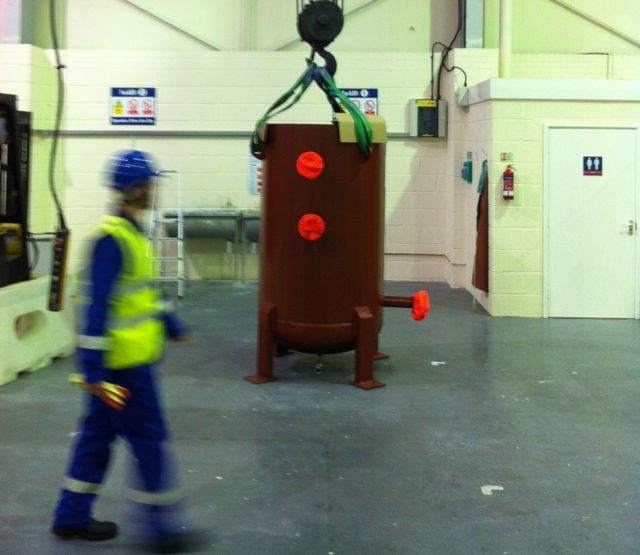
    Image showing student in front of reactor vessel at Nuclear Island Big Rig
    Student coordinates lifting of reactor into Nuclear Big Rig

    It was three years ago, standing in the middle of my first Big Rig structure that I first had the idea of getting engineering students to build their own nuclear reactor. Today I watched as a group of students lifted their ‘reactor’ into position on day two of the pilot of Nuclear Island Big Rig.

    The Big Rig lends itself well to creating mock-ups of industrial plant and installations. The design and construction of a nuclear power station, with some significant alterations for practicality, is exactly the sort of exciting-sounding brief that we use at Think Up to inspire people to pursue a career in engineering.

    The opportunity to put this idea into practice came when Think Up was approached by Cogent to design an event to inspire electrical, mechanical and chemical engineers to take up a career in the nuclear new-build sector. The result is Nuclear Island Big Rig, a week-long event in which a group of 16 engineering undergraduates and apprentices are challenged to assemble, operate, and dismantle a mock-up of the primary cooling circuit of a PWR.

    I was not able to facilitate this event because of my paternity leave, but today I went down for the day to see how everyone is getting on. There I found a team of well motivated students working their way through the problems they were encountering. Some of the most the undergraduates – I had the impression they had a lot to learn from each other.

    While I am not there all week, some of the features we are building into the event are making it easier for us to connect with learners directly from our head office. For instance, we are using our Student Studio online platform to host personal reflective blogs and a student forum for the event. We can use this tool to track the event remotely, and to gather lie feedback as the event progresses. Similarly we created a Facebook event page, which has already enabled us to connect more easily with participants, and allowed them to share practical information with one another.

    I am looking forward to hearing how the students get on over the rest of the week, and to seeing how we can improve the event over future iterations based on what we have learned.

  • The difference between what you plan and what actually happens

    The difference between what you plan and what actually happens

    Photo of students taking to facilitator at the Big Rig
    Students speak to a facilitator at the Winter Warmer Big Rig

    I spend a lot of time at Think Up working on the design of high-impact construction training events (for examples: Constructionarium, Big Rig, Build Camp and Nuclear Island 1 & 2). What I find curious is that some things that feature strongly in the event design process never materialise on the ground; and some things that were never planned turn out to be the event highlights. Here are some of my thoughts, written on the way home from the pilot of one of our recent events, on why some things that are planned don’t actually happen, and why some of the best moments are completely unplanned.

    1. Vision – you have to have a powerful vision for the event should look and feel. This gives you a yardstick against which to can measure your own decisions, and is also essential for motivating and guiding the many other people you’ll need to work with. Where the vision gets lost, the components of the event that make it special tend to get lost as well.
    2. Confidence of the design team and the delivery team. My father’s words ring loud here, ‘a thing is only difficult if you can’t do it’. One of the factors in making our events high-impact is that they are unusual. The consequence is that the designers are often working with unfamiliar domains or approaches; the same is true for delivery partners. The low confidence that follows can lead to design decisions that chip away at the vision. The easy way to get a shot of confidence is to bring the necessary expertise into the team.
    3. Bolt-ons that fall off. I find that elements added to an event late in the design process are the first to fall away. They just don’t have the staying power.
    4. A delivery partner with a can-do attitude is invaluable. They help to breach the confidence gap (see point 2) and bring creative ideas into the design process.
    5. Sort the tech. There is nothing more tedious than faulty tech. As more and more of the events that I am involved with use a tech component, faulty tech is an increasingly important factor in why events don’t go to plan.
    6. Get the ground ready before you start. Once the event has begun, all attention is on facilitation, and the chances of completing unfinished preparatory tasks are almost nil.
    7. Serendipity, the secret member of the design team. You can’t plan for everything. A better approach is to be ready to turn issues into learning opportunities as they crop up.
    8. It’s happening under your nose. I’ve stated the importance of vision in creating a high-impact event, but for some the most valuable learning outcome may not what you planned it to be. Being to fixated on your own vision may blind you from seeing other people’s lightbulb moments.
    9. It takes concentration There’s always lots to think about when planning and running a learning event. In my experience, how well the event goes to plan is significantly impacted by the levels of confidence of the lead facilitator. Things don’t grind to a halt if you don’t concentrate, but corners start to get cut, participants revert to more traditional behaviours, and the vision is weakened.
    10. The effect of event entropy – I think there is a connection between the tendency for a high-impact event to lose quality over several repetitions, and the second law of thermodynamics, that a system will always tend towards greater disorder. It is as if the event vision is some sort of ordering process. Over time, the vision is eroded, the quality is lost. Increasing the order in a system requires energy. Maintaining the vision requires injection of energy – of another sort – and it is easy to forget that.
  • Diary: Imperial College/Serpentine Pavilion/University of Austin Texas

    Diary: Imperial College/Serpentine Pavilion/University of Austin Texas

    [pe2-image src=”http://lh3.ggpht.com/-IqvJLaCnMnE/Ubn1VYuE31I/AAAAAAAAAZI/RFR8CFqYrV8/s144-c-o/13%252520-%2525201.jpg” href=”https://picasaweb.google.com/101339256689884186918/61313#5889007735525400402″ caption=”Dropping in at the Serpentine Pavilion” type=”image” alt=”13 – 1″ pe2_parse_caption=”false” ]

    Yesterday morning was a first. I gave a presentation to 80 students at Imperial while holding a baby in my hip. The presentation was part of the kick-off day for the Expedition-Imperial 2013 Constructionarium week (Event Facebook page; Think Up news piece – soon). The Expeditionengineer due to give the presentation had to go to a meeting in Athens; since I’m the person at Think Up who knows probably most about the Constructionarium it was easiest for me to replace him, even though I didn’t have any child care cover for our daughter. She didn’t seem to mind. She chirped loudly a few times (Imperial presentation at eight months can be the first line of her CV) and the audience certainly weren’t bothered!

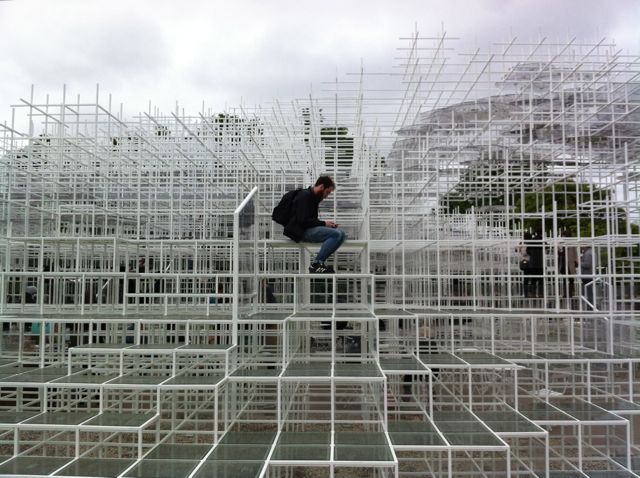
    Pushing the buggy north out of the college I stumbled upon this year’s Serpentine Pavilion, pictured. The structure is wonderfully intriguing to approach. You have a sense that there are spaces and surfaces inside but you can’t see where they begin and end. The people inside therefore appear to be floating inside a sea of addition signs.

    There I received a birthday present, George Monbiot’s ‘Feral‘. Learning from nature is a regular strand in my thinking at the moment (see my post on Hazel Hill to see the sort of thing I mean), and so I expect this book will be of great interest.

    I hurried home to prepare dinner for our evening guest, Gregory Brooks, a senior lecturer at the University of Texas at Austin and who is responsible for third year design studios at in the Architectural Engineering programme. Gregory is faculty director for the Emerging Technologies Programme, a study abroad programme for engineering and architecture students that takes place every two years in London. Here, they visit the architectural engineering sites and to tour the offices of architecture and engineering practices in the capital. I first met Gregory with his cohort of students two years ago when they first visited Expedition. Back then I introduce them to our Workshed site, and ever since I have noticed a significant blip on our Google Analytics over the city of Austin. I was delighted therefore to present once more two weeks ago to this year’s group of visitors.

    Gregory’s work in developing the programme, and in developing a set of online architectural engineering online teaching resources is impressive (for example, see AEWorld, a very comprehensive blog on projects of architectural and engineering interest -to his credit, one of the most popular blogs on WordPress.com) . Our discussion over dinner was  packed with ideas for mutual cooperation and sharing resources, which I look forward to exploring in future.

  • Barbican, you were looking lovely today

    Barbican, you were looking lovely today

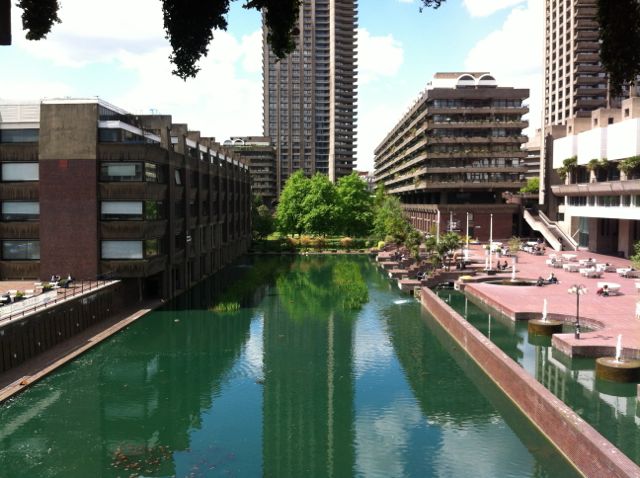
    Today the Barbican looked stunning. I had the feeling that with the sun shining this is how Chamberlin, Powell and Bonn’s original renders of the Barbican might have looked.

    [pe2-image src=”http://lh6.ggpht.com/-7ka-Lujly04/Ubay2xXgaVI/AAAAAAAAAYA/av_FNCOhNWc/s144-c-o/IMG_4923.jpg” href=”https://picasaweb.google.com/101339256689884186918/BarbicanYouWereLookingLovelyToday#5888090216868112722″ caption=”The Barbican” type=”image” alt=”IMG_4923.jpg” pe2_gal_format=”phototile” ] [pe2-image src=”http://lh6.ggpht.com/-3WrpNspLFDU/Ubay_xHkfrI/AAAAAAAAAYA/_K04qXLe_t0/s144-c-o/IMG_4938.jpg” href=”https://picasaweb.google.com/101339256689884186918/BarbicanYouWereLookingLovelyToday#5888090371420094130″ caption=”The Barbican” type=”image” alt=”IMG_4938.jpg” pe2_gal_format=”phototile” ] [pe2-image src=”http://lh3.ggpht.com/-qYEOy4EO4k8/Ubay3h3er5I/AAAAAAAAAYA/tkpj2yfeP-Q/s144-c-o/IMG_4924.jpg” href=”https://picasaweb.google.com/101339256689884186918/BarbicanYouWereLookingLovelyToday#5888090229887119250″ caption=”The Barbican” type=”image” alt=”IMG_4924.jpg” pe2_gal_format=”phototile” ] [pe2-image src=”http://lh6.ggpht.com/-jjvpv0FP_So/Ubay3zuAifI/AAAAAAAAAYA/Wwm1kHfEZ_U/s144-c-o/IMG_4925.jpg” href=”https://picasaweb.google.com/101339256689884186918/BarbicanYouWereLookingLovelyToday#5888090234679233010″ caption=”The Barbican” type=”image” alt=”IMG_4925.jpg” pe2_gal_format=”phototile” ] [pe2-image src=”http://lh4.ggpht.com/-5qn-s4kKcZo/Ubay7vmD9VI/AAAAAAAAAYA/x1Ea6mFproI/s144-c-o/IMG_4928.jpg” href=”https://picasaweb.google.com/101339256689884186918/BarbicanYouWereLookingLovelyToday#5888090302291637586″ caption=”The Barbican” type=”image” alt=”IMG_4928.jpg” pe2_gal_format=”phototile” ] [pe2-image src=”http://lh5.ggpht.com/-Ytf_6MDS-IQ/Ubay8yiXclI/AAAAAAAAAYA/S8zKN5uEi1M/s144-c-o/IMG_4934.jpg” href=”https://picasaweb.google.com/101339256689884186918/BarbicanYouWereLookingLovelyToday#5888090320261313106″ caption=”The Barbican” type=”image” alt=”IMG_4934.jpg” pe2_gal_format=”phototile” ] [pe2-image src=”http://lh3.ggpht.com/-VFMrT96W6Ok/Ubay-v3q0jI/AAAAAAAAAYA/Wrl3QfOnHtY/s144-c-o/IMG_4937.jpg” href=”https://picasaweb.google.com/101339256689884186918/BarbicanYouWereLookingLovelyToday#5888090353905095218″ caption=”The Barbican” type=”image” alt=”IMG_4937.jpg” pe2_gal_format=”phototile” ]

  • In Praise of Euston Station

    In Praise of Euston Station

    I know it is not often that you hear people say this, but I do really like Euston station – from an interpreted transport perspective, it is a good example of a well-thought through hub. (more…)

  • Taking inspiration from the Transcontinental Railroad

    Taking inspiration from the Transcontinental Railroad

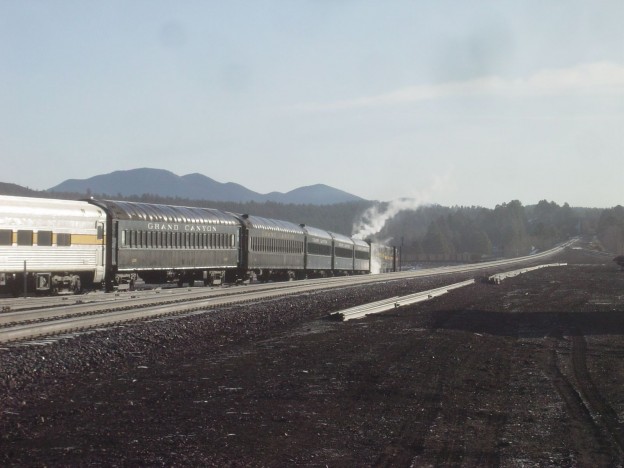
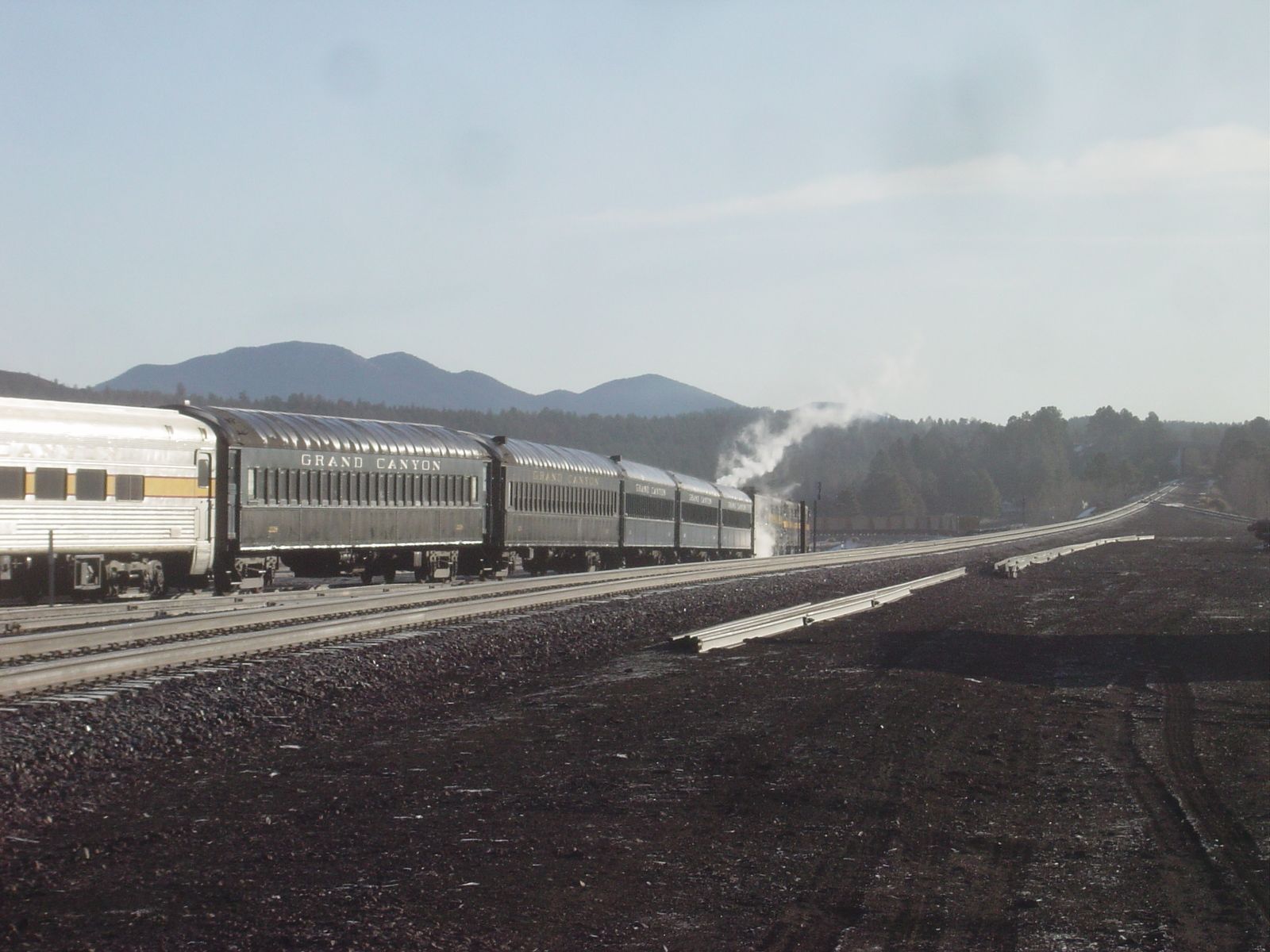
    Image, Grand Canyon Railway, Williams, Arizona, Sante Fe railway
    A train pulls of the Santa Fe railway at Williams Arizona to join the Grand Canyon Railroad

    As I tweeted earlier this morning, today at Think Up I have been working on Build Camp, a concept for a week-long hands-on learning event designed to encourage young people to take on a career in civil engineering. For some time now we have been proposing an event based around the idea of students designing and building their own railway in a week. Today we were looking at how to create a context for the event around which on-site role play activities can be built. Today’s idea was to use the construction of the first american transcontinental railroad as the context, for reasons explained in the following text, extracted from some my draft web copy for the soon-to-be-online Build Camp website.

    Why the Pacific Railroad?
    Learning about the construction of a railway line is an excellent introduction to the world of civil engineering because it embraces so many aspects of the discipline, including: planning and surveying: structural, geotechnical and fluid mechanics; construction management. This event is set in the context of the construction of the Pacific Railroad, the first railway to cross the United States. The construction of this pioneering railway line was led by a team of engineers operating at the railhead. Engineers were responsible for:

    * Surveying and choose a route through the unknown territory ahead.
    * Designing cuttings, embankments, bridges, dams, causeways and tunnels as needed;

    * Sourcing local construction materials: fill for embankments; timber for sleepers; fuel for machinery;
    * Overseeing construction works
    * Organising the logistics of moving labour, materials and plant along the single-track line
    * Establishing camps for workers, sourcing food, and paying wages.

    These engineers were working in the unknown; it was 2000 miles back to headquarters, and so they had to rely on their own ingenuity and engineering judgement to solve the problems they encountered. By setting the role play for this event in the context of the Pacific Railroad we aim to harness that visionary and pioneering spirit, and demonstrates the potential engineers have to shape the world for the better. We are also providing a baseline against which the advances of modern railway construction can be illustrated.

    At present we are hoping to run a pilot of Build Camp in October. Keep an eye out for updates on the Think Up website for more information.

  • Diary of a contact day

    During my parental leave I am doing one ‘keeping in touch’ day a week. On that day, I deal with important queries on Think Up projects. Since my time in the office is very short, these keeping in touch days are an intense snap shot of lots of the stuff we are working on at the moment. Here are some highlights:

    • I was asked to put together a proposal for using web technology to help engineering students raise their levels of background engineering knowledge. Think Codeacademy meets Top Trumps, available through Workshed. I am particularly excited about this project because it will complement the work I will be doing at UCL as part of their teaching innovation scheme.
    • Today we finalised the detailed content of the Nuclear Island Big Rig. All the places on the event have now been allocated. We have been working on this project for over a year – it is fantastic to think that it kicks off on 1st July.
    • Following on from the sustainability teaching seminars that Think Up has been facilitating this year, I have been invited to speak at the Engineering Education for Sustainable Development conference in September.
    • We are gearing up to facilitate the next Imperial/Expedition Constructionarium week.
    • The lovely-sounding people at the Litmus Test got in touch to see if I would be the first engineer to perform at their show – I’d be happy to.

    I’ve heard that becoming a parent makes you more productive in the office. So far, keeping in touch days prove this to be true.


  • Archive photos/early attempts at developing/les arcs

    Archive photos/early attempts at developing/les arcs

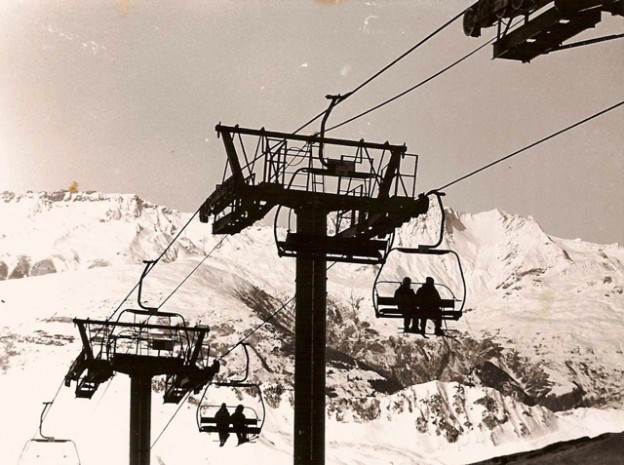
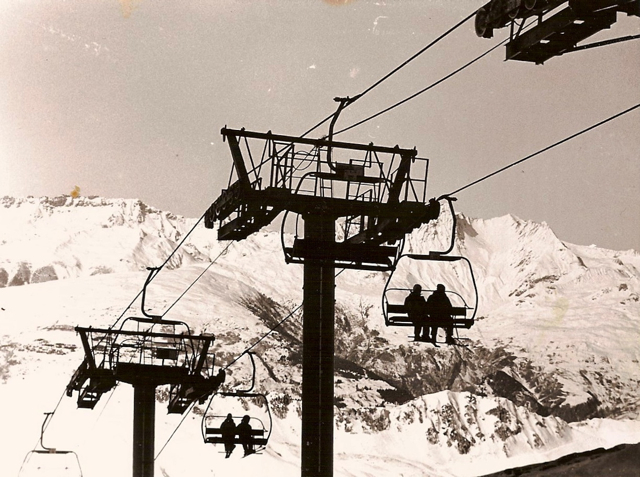
    Ski lift, high contrast, les arcs
    060201_les_arcs02
    060201_les_arcs03060201_les_arcs04

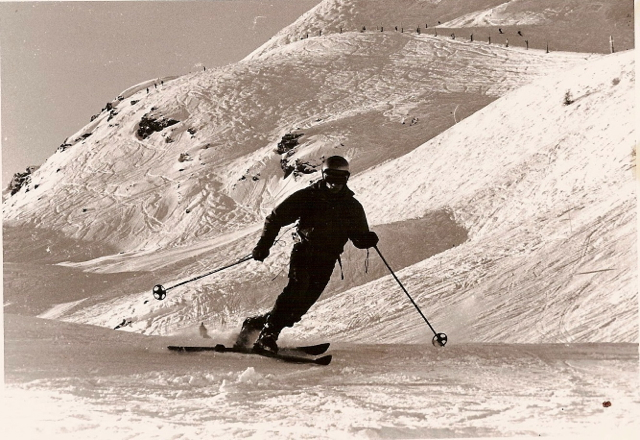
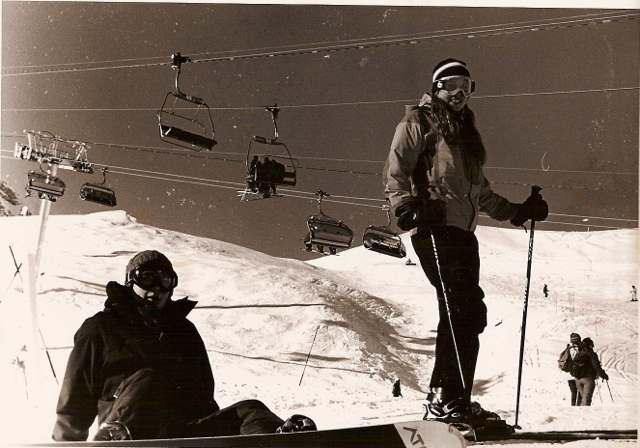
    Probably the best module I studied during my year at ENPC was not engineering-themed – but photography. The module was run as an English language course: the subject of the lessons was photography, and the lessons were in English. Being a native English speaker I was not able to get any credits for the module, but I gained much more. I still vividly remember the magic of seeing images emerge on pieces of paper submerged in solution. In just a few short hours of teaching I learned somethings that have been much more valuable to me than the hours of lectures I sat through on other subjects.

    These photos were taken on a weekend trip skiing at Les Arcs. Getting from Paris to the Alps by overnight train is easy by the way. The night train leaves from Gare d’Austerlitz, and arrives Bourg St Maurice, where there is a lift straight up to Les Arcs.

  • Babbling about Babel: penning a new routine for Science Showoff

    Babbling about Babel: penning a new routine for Science Showoff

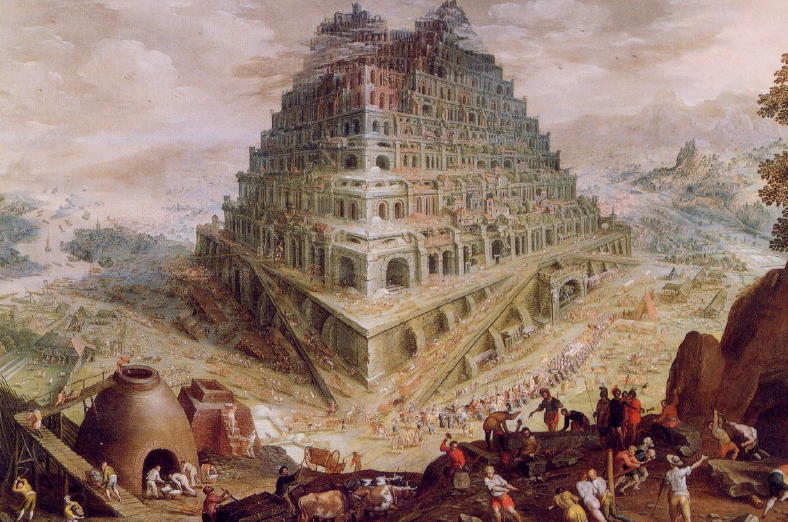
    I’ve just signed up to do a slot at the final Science Showoff to be held at the Wilmington Arms on Tuesday June 4th. I haven’t written any new material since January’s Structural Elements song, but the cogs are now whirling. The theme will be how an engineer would go about designing the Tower of Babel. A tall order, indeed.


    English: Tower of Babel
    English: Tower of Babel (Photo credit: Wikipedia)


  • Herringbone Wall

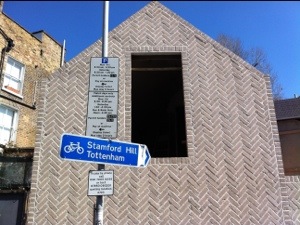
    Herringbone Wall

    20130501-105255.jpg

    Spotted near Dalston

  • Things to do in Berlin: go to the Museum of Things

    On the to do list for my next visit to Berlin (which may not be for some time…*), the Museum of Things. See this link from the museum’s website on current exhibits (and this from the Guardian). The museum has recently added the Frankfurt Kitchen, a 1920s prototype of the modern kitchens with which we are familiar today. Reading about the Frankfurt Kitchen reminded me of an exhibition that I went to see on Charlotte Perriand (Design Museum profile), who was designing in the 30s the sorts of furniture that you’d recongise in Ikea today. From furniture design and architecture to music, I am always surprised just how old ‘modern’ is.

    *maybe in the meantime I should make the time to go to the Design Museum, London.

  • Using construction site notebooks as a teaching tool

    Today the Expedition-Imperial team met to plan their week at this year’s Constructionarium.

    The learning experience is intense on site at the Constructionarium, with students on their feet all day for five days building their projects. Along the way there is lots of background knowledge they can pick up about construction techniques, but it is easy for these nuggets to get lost in the blur of the overall experience.

    My suggestion was that this year we give all students a site notebook in which they can plan their activities, note useful info along the way and write up their daily activities. Of course, giving students a notebook doesn’t necessarily mean they’ll use it, so perhaps we can guide them by showing extracts from real site engineers’ notebooks. These could be shared as a teaching resource on Workshed.

    Earlier this year we bid for some innovation grant funding to develop methods for students to develop their general engineering knowledge. One of the ideas I was interested in exploring was the use of a site diary to develop this knowledge. This year’s Constructionarium looks like a good opportunity to test this approach.

  • Last day of teaching at Edinburgh

    Last day of teaching at Edinburgh

    Image

    Today I made my last teaching visit to Edinburgh for the term. I will go back once more in the spring time to evaluate the work that I have been involved in, and then will be it for my current tenure as a RAE-sponsored teaching fellow; however, there is scope to extend the funding, and we help to do so for another year. (more…)

  • The Return of Low Carb

    The Return of Low Carb

    Installation of solar-thermal water heaters on the Big Rig
    Installation of solar-thermal water heaters on the Big Rig

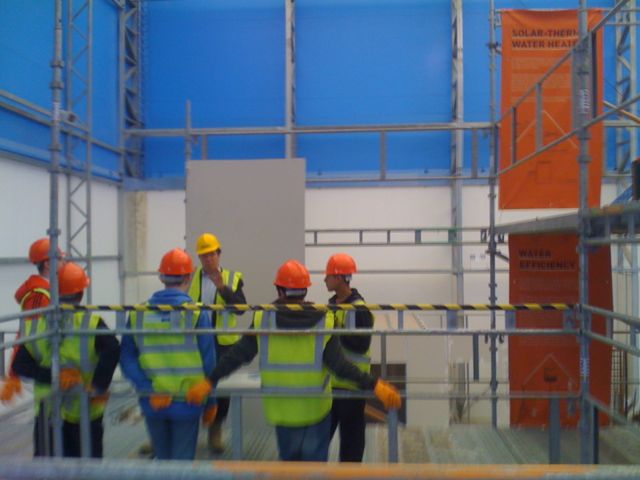
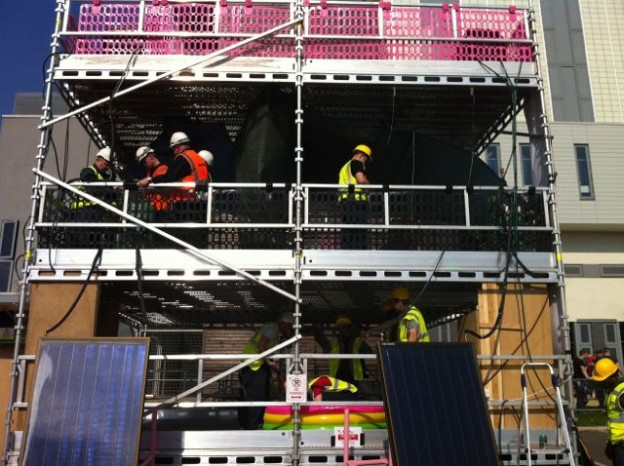
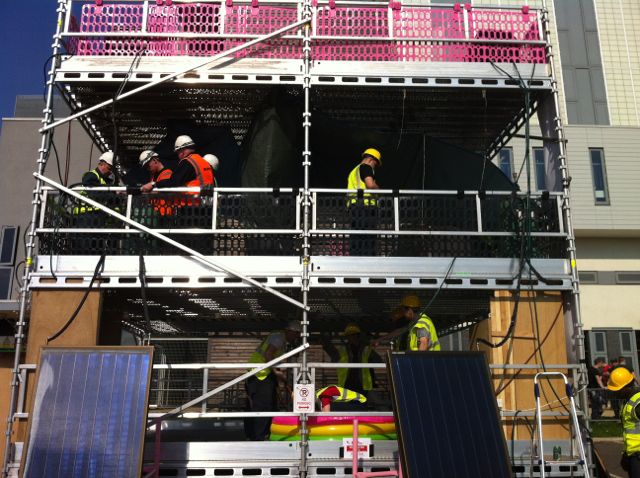
    Yesterday I was at the Big Rig facilitating the annual low-carbon skills challenge at the Big Rig. This is the fourth year in a row that Think Up has run the ‘Low Carb‘ event. I am very proud that since we came up with the Big Rig concept, 100s of students have taken part in Low Carb. (more…)

  • Facilitating the Global Grand Challenges Student Day

    Facilitating the Global Grand Challenges Student Day

    Royal Academy of Engineering, Microsoft Global Grand Challenges Summit, Think Up
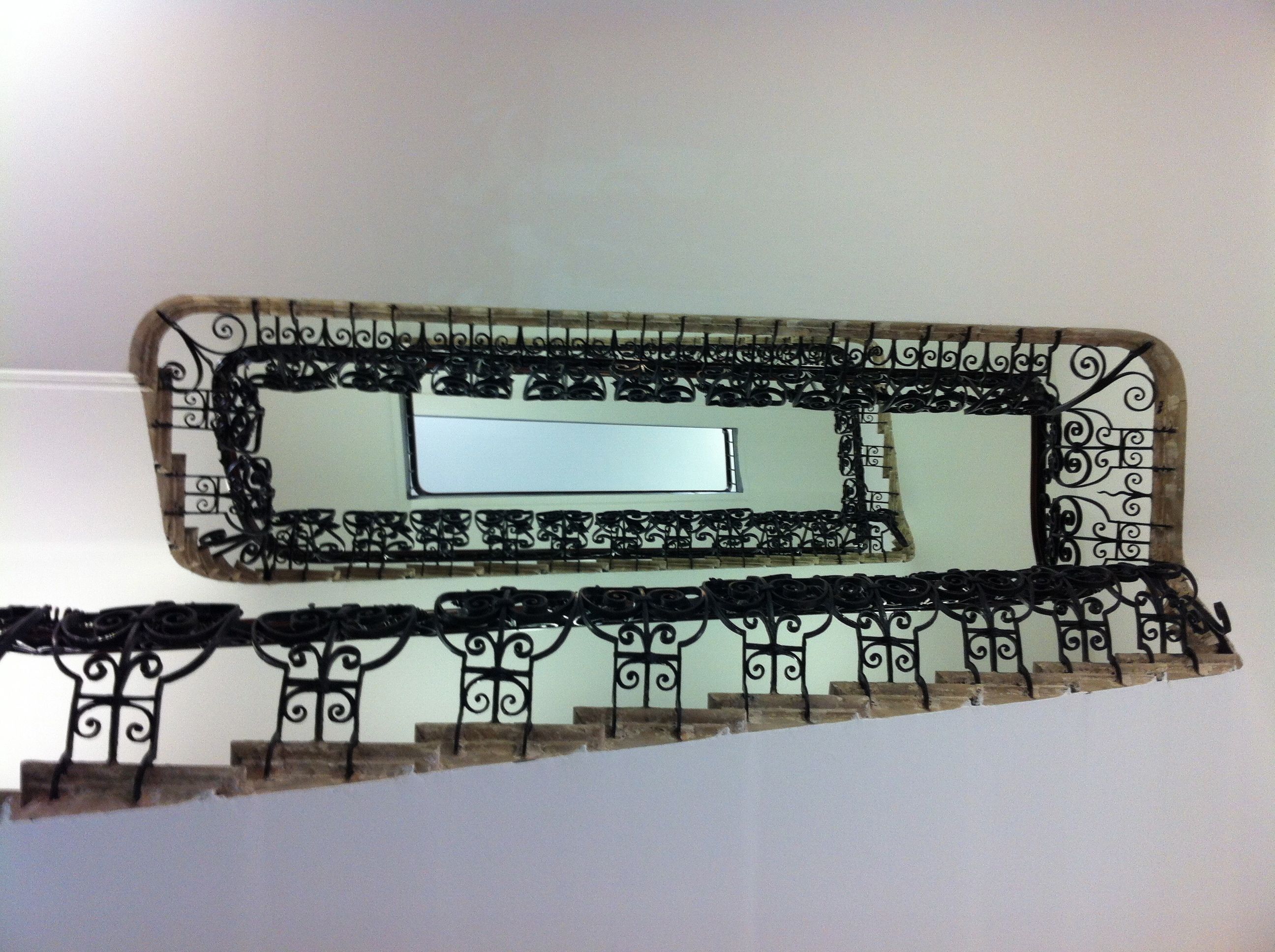
    Spiral staircase at the Royal Academy Engineering, taken on the morning of the Microsoft Global Grand Challenges Summit

    Today Think Up facilitated the Global Grand Challenges Student Day at the Royal Academy of Engineering. The student day is a prelude to the main Global Grand Challenges Summit which starts tomorrow. Our brief for designing the event was to choreograph a day of activities in which students from engineering universities around the world would come together and collaborate to develop a solution to six of the Global Grand Challenges. Our response was a programme that sought to unpick the creative process, and to enable students to examine what skills they need to develop to be better designers, all in the context of solving a major societal challenge. (more…)

  • Tips for riding the Caledonian Sleeper on a work trip

    This is only the second time I have taken a night train as part of a business trip. As we slip into Edinburgh in the early morning, having left London Euston at midnight, I feel this journey has gone rather well (my trip by sleeper to Turin for work in 2008 was less successful). (more…)

  • Thames Cable Car Student Design Workshop

    Today I have been working on content for a new creative design workshop for civil engineering students based on the Emirates Airline. The workshop is part of my work with the civil engineering department at the University of Edinburgh. (more…)

  • Talking Sustainability in Bristol

    I’m just back from the first of six workshops I will be facilitating at universities around the country about how to embed sustainability in undergraduate civil engineering courses. The ICE and Royal Academy of Engineering commissioned Think Up to design and deliver these workshops to disseminate the findings of our sustainability teaching report. (more…)

  • Pursuing general knowledge – not such a trivial pursuit

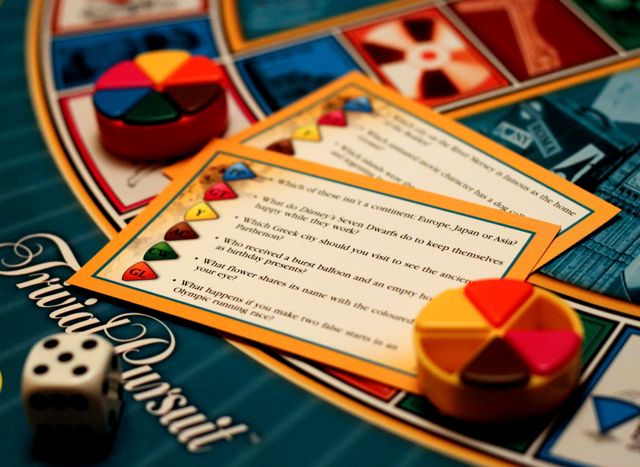
    trivial pursuit

    The ability to design arguably sits at the top of Bloom’s taxonomy of learning, requiring as it does decent doses of creativity and evaluation. The foundations therefore of good design must be a broad general knowledge base. This certainly seems true in civil engineering. In order to quickly think up possible solutions to an engineering problem requires knowledge of material properties and behaviour, construction methods, costs, precedents, laws and codes etc. (more…)