Back in 2004, I and fellow civil engineering student Andy Kosinski got together to create a new student newspaper for the civil engineering department at Imperial College. It was called Livic (‘civil’ backwards). (more…)
Category: Education and teaching
-
Thoughts on developing a social media strategy for an educational resource
Over the last few weeks at Think Up we have been getting our Workshed site (an open educational resource) ready for the start of the new university academic year. Part of this process has been putting in place our social media strategy for the year ahead. Over dinner with a friend last week I realise that this is easier said than done, especially as it is based on working with a number of social media tools over the last few years. To come at it cold can potentially be daunting, and potentially frustratingly slow.
This post therefore is to share with my friend and people in his position our approach to developing a social media strategy for an educational resource. It is by no means definitive or authoritative, and it is a work in progress. Where things do or don’t work I will be happy to report them. I am also aware that people reading this post will be much more experienced in developing social media strategies. If that is you, and you see great big holes in what we are doing, then please tell me. Ultimately, the Workshed site that we are promoting is designed to improve the way people learn about engineering, and is free to use. Anything that can be done to meet its aims can only be a good thing.
(more…) -
The Return of Scientific Curiosity and Creativity/Ideas for an Outdoor Classroom
This post is about rediscovering a childhood fascination for how things work, and the thoughts it has provoked about creating learning environments that harness that fascination for the purposes of education.
-
Notes from Hazel Hill/Slow Learning for teaching sustainability
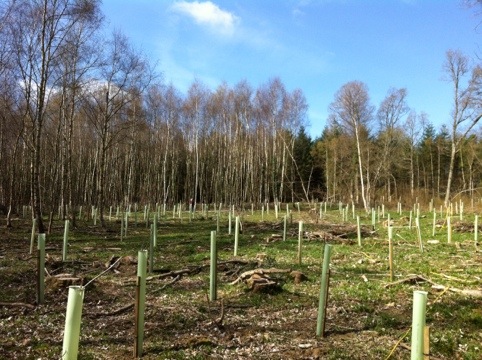
I recently returned from a conservation weekend at Hazel Hill wood, the sixth such weekend in which I have participated, and a visit that prompted some more thoughts on ways we can teach sustainability in universities.
-
Dan Lepard, my first loaf, and the value of fail-safe instructions
My highlight of the Guardian Festival yesterday was Dan Lepard, regular baking columnist for the Saturday Guardian. In a packed room he gave five golden rules for successful bread baking. Listening intently, having never baked a loaf myself before, his directions seemed so clear and his approach so straightforward that I just wanted to go home and bake.
In this instance I think I probably fall into that category of learner who knows so little about baking that I needed clear steps to build my confidence, and it serves as a good reminder of how important it is to prepare a clear message when working with learners who lack confidence. As soon as members of the audience, clearly with more advanced ‘kneads’ (ha ha), chimed in with their clever questions about complicated stuff, I tried not to listen, so as not to lose that clarity of thought the presenter had given me.
And so I present my first loaves. May they be the first of many…
-
The Big Rig at 3 years old
This is the third March in a row that I have facilitated a low-carbon skills competition at the Big Rig, which makes the Big Rig 3 years old.
-
Videos for a Sunday afternoon – the magic of human space flight
I have recently been reminded how human spaceflight can capture the imagination. This weekend I have been setting up Twitter lists (here, for starters) to help me find engineering teaching resources – and stumbled upon this low-light video footage of the earth’s surface taken from the International Space Station. If there ever was anything to get young people into science, technology, engineering and maths (STEM), then space travel must be it. (more…)
-
The Rise and Fall of Civil Engineering – courtesy Google’s amazing ngram viewer
I read an astonishing article this afternoon titled ‘Quantitative Analysis of Culture Using Millions of Digitized Books‘, published early last year in the journal Science. Based on Google’s effort to digitise all books in all languages, researchers have carried out computational analysis on a corpus of over 5 million books – approximately 4% of all books ever published – to give access to vast amounts of data on word use.
The availability of this data allows researchers to observe cultural trends and then subject them to quantitative investigation – the study of ‘culturomics‘. The paper illustrates fascinating changes in language size and use, and shows how the data is used to draw more socio-cultural conclusions.
Best of all, Google has a nifty tool for presenting the data called the ngram viewer, which has allowed me to do a little culturomics of my own for the field of engineering.
-
Good laughs at Science Showoff
I went down to Science Showoff last night at the Wilmington arms, ‘an open mic night for all communicators of science’. The spectrum of material covered was rather large: from shining infra red light through the skulls of babies, to the biochemistry of baking; from the sad world of lonely neutrinos to the history of the space shuttle programme as told through a mash up of archive footage.
-
Resisting Ikea – preparing for Monday’s sustainability conference
I spent most of last weekend preparing for a sustainability conference that we ran on Monday (post about that event appearing shortly). I know from experience that the last few days of organising any event like this always involve a mad dash to the shops, and this time was no different.
[slideshow]
(more…) -
Using the Flipped Classroom model with Expedition Workshed
It’s been one of those days where everything comes together. I have spent the day working on Expedition Workshed site, in particular a new blog aimed helping us have a better dialogue with the teachers who are using the resource in their teaching (I will post a link to the blog when it is ready in a couple of days). At the same time, I have been contributing to discussions related to a new paper that we will be publishing that sets out a model for understanding how structural engineers learn.
And now this evening I have been reading this interesting blog post (http://usergeneratededucation.wordpress.com/2011/06/13/the-flipped-classroom-model-a-full-picture/#entry)about the Flipped Classroom model for teaching, in which material usually delivered during the lecturers and in class is instead delivered via online resources, freeing up classroom time for problem solving, group work, debating, creating and communicating. The post has some overlap with the paper that we are working on, and has got my cognitives whirling away thinking about how Workshed can be used to deliver the at home content.
The post sets out a cycle of learning with four stages:
1. Experimental engagement through hands-on activities, games etc
2. Concept exploration through content-rich website, pod-casts, online chats etc
3. Meaning making through reflective blogging, podcasts
4. Demonstration and application through creative personalised projects and presentations.So here’s my idea (and hopefully before too long I will be able to try it out). I would like to create a lesson plan for s series of activities that teach school children about construction materials and the fabric of their school.
The first stage would be a series of games and discovery activities using the fabric of the school is a stimulus. Learners could for example try to make a model of their school building out of paper, and see what they need to do to make it stronger.
In stage two they would go away and find out about materials and basic structural forms using the resources on Workshed.
In stage three would answer quiz questions about materials and simple structural forms using the interactive tools on Workshed.
In stage four, they would come back to the classroom and work in groups to develop their own design for a new school building, creating a poster or a model, and presenting their proposal to their classmates.
Whilst I have developed teacher packs before based around the design-and-build methodology, this post on Flipped Classrooms has motivated me to think about how the design-and-build can be more thoroughly split out and developed. I look forward to giving it a go.
-
Showreal – Millennium Bridge Micro Documetary
Early this year I was filmed presenting a short clip about the Millennium Bridge by a TV production company developing a concept for a new engineering show. We did the shoot on a freezing January lunchtime. Producer/Director Nick Watson has just posted the clip on YouTube. Thanks Nick!
http://www.youtube.com/watch?v=bJoCc3OyCwA
-
Excited about resource scarcity
I just found myself getting quite excited about resource scarcity. Not the fact of depleting the earth’s resources, but that the subject is relevant to three things that I can claim to know something about: engineering, chemistry and explaining science.

Yesterday I was doing some background research for a new teaching resource that we are exploring developing at Think Up related to resource scarcity and material choice. The resource could become part of Workshed. The starting point for my work Michael Ashby’s book “Material and the Environment, Eco-informed Material Choice”
All the time I was reading I was thinking how interesting it would be to create ways of explaining some of these complex and multidisciplinary issues in an engaging way – from the maths required to understand the economics of resource scarcity, through to understanding how to optimise the design for the whole life of the product.
Here are some choice facts that struck me from the first chapter:
– in 1930 it was estimated that the world would exhaust its stock of copper in thirty years; in 2008, the remaining reserves of copper will still estimated to be exhausted in thirty years.
– the global annual consumption of steel is greater than that of all other metals combined
– the weight of wood used annually in construction is greater than the weight of steel
– the weight of concrete consumed in construction annually exceeds the weight of all other construction materials combined.
The book then goes into detail about the economics of resource depletion and processes for assessing the environmental impact of one material over another during the design process.
Watch is space for teaching resources of this flavour.
-
Do Schools Kill Creativity?
This videocast by Sir Ken Robinson is from the TED series.

