Blog

  • Shatton

    Another comedy sign for the archive.

    Road sign giving directions to a town called Shatton

  • Étampes station roof

    Étampes station roof

    Something caught my eye about the way the sun was shining this afternoon across Étampes station platform.

    As I took this photo a group teenagers asked me for moustache-growing advice.

    The beautiful station roof flies gracefully over the platforms while electricity gantries stomp grumpily across the foreground.

    This clash makes me cross and prompts a post about misaligned systems.

  • Megabutt

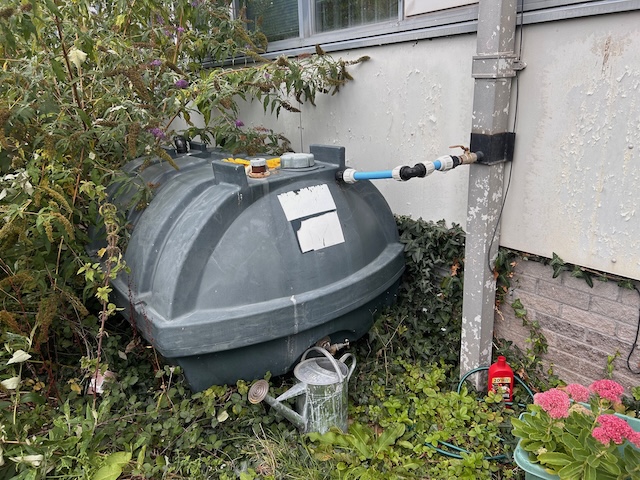
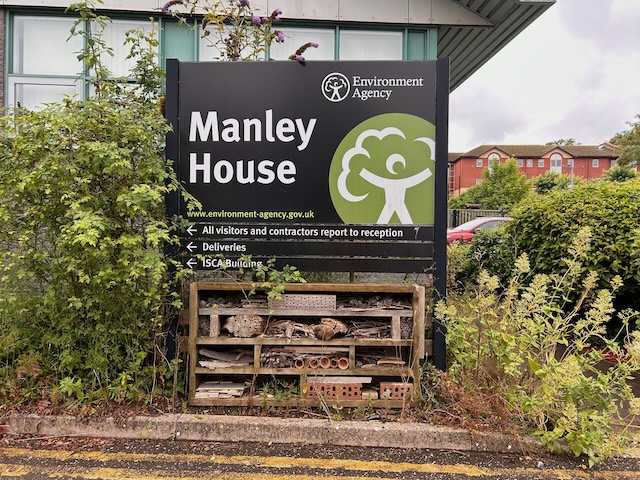
    I love that at Manley House, the Environment Agency’s building in Exeter – Manning House – they have gone large on their water butts. Check this out.

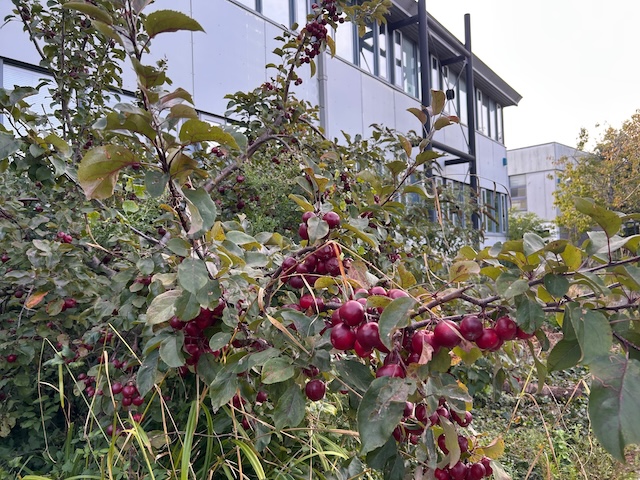
    There is also a beautifully tended veg bed all down this side of the building. What if all offices did this?

  • Glastonbury Piano Bar gig aftermath

    Clown your way in, they said.

    There is a not-so-secret secret bar at Glastonbury, called the Piano Bar. When the main stages shut, the queue to this beautiful tucked away venue snakes down the hill. But I had heard tales of from fellow clowns that if you could impress the bounder on the crew entrance they might let you in.

    So for 15 minutes I solo improvd at an unimpressed human standing behind a piece of heras fencing, guarding the entrance.

    Then they said, you are fairly perseverant. After another 5 minutes, they asked, can you do that on stage? And I said yes. And they said you are in.

    Out of the frying pan and into the fire.

    Because I had only been planning on getting in to watch, not to perform.

    But that’s what the clown’s supposed to do, right? Assume they can do anything, and then revel in the failure.

    In the end it wasn’t failure. In fact I think it went quite well. But I’ll definitely chalk it up as toughest gig yet.

    By the time I was done, I went outside and it was already light.

  • A book of interdependence

    The Pattern Book for Regenerative Design is built around three mindset shifts: interdependence, abundance, and emergence. These are foundational to regenerative design and my aim in writing this book has been to embed these mindsets not only in the content, but in the structure of the book—and in how it gets used.

    Focusing today on interdependence:

    Regenerative design is rooted in connection—connection to community, to ecology, to the places where we make, as well where we take.

    An interdependence mindset recognises that we are part of all these systems—and we rely on them thriving. We are not independent from the world we design, from the harm we might cause or from the thriving we might create.

    This is a book for engineers (and other humans) who want to work with this mindset and strengthen those connections. The 12 patterns in the Pattern Book help readers connect with different contexts:

    • Patterns for working with different clients and collaborators
    • Patterns for developing our own understanding, tailored to different ways of thinking
    • Patterns for engaging with supply chains, local regions, and policy-making

    The book is designed to grow over time, with contributions from readers showing how they’ve used and remixed the content for their own specific scenarios. In doing so, this builds stronger connections across a growing community of regenerative practitioners in industry.

    Specific motifs in the Pattern Book that support interdependence include:

    • The Second Site – deepening the connection between where we make and where we take
    • Better feedback – understanding the conditions that allow better signals to flow between designers and the places their choices impact
    • Carrier wave – tracing how information flows through projects
    • System Survey – identifying the opportunities for, and barriers to, connection in different scenarios

    Our mutual interdependence is nothing new. But as our communities and ecosystems reach the limits of the stress they can handle, that interdependence becomes harder to ignore.

    This book helps designers work more consciously with shared connection.

  • How do you write a book for ten different audiences?

    You start by imagining the people who are going to read it.

    Some readers will be interested in exploring regenerative design for themselves. Others will be looking for ways to introduce regenerative design to their colleagues or clients. In other words, you’re writing for multiple audiences at once.

    And next, you lay out all the pieces of the story.

    Some pieces we’ve been working with for years—like the Systems Bookcase, the Second Site, or the Living Systems Blueprint, models that James Norman and I set out in The Regenerative Structural Engineer.

    Other pieces are less formal. They’re the anecdotes, the linking phrases, the small examples that spark curiosity.

    With all these building blocks in front of you, the question becomes: what order would you place them in for each audience? What sequence could create a compelling journey?

    It’s no different from building an effective pitch deck when you’re bidding for new work. You try different combinations. You see which slides land, which case studies resonate, which arguments bring people along.

    That’s exactly what we’ve been doing in the Regenerative Design Lab, in our presentations, and across the training sessions we’ve delivered. Testing different ways to sequence the building blocks depending on the needs of the audience.

    And that’s what The Pattern Book for Regenerative Design captures.

    We call the building blocks motifs. We stitch these motifs together into patterns. Ten patterns—for ten different audiences.

  • Find the pattern of practice for your audience

    Designers are teachers. We take people on a journey that gets them to say, “Yes, that’s what I want.”

    Good teaching is rarely about setting out the whole picture. It’s about creating moments of tension—when we show something unfamiliar—and moments of release, when the learner sees how it connects to the problems they want to solve.

    We create this rhythm through stimuli, provocations, metaphors, and experiments—arranged in different orders to create different effects.

    The problem I’ve found since starting my work on regenerative design is this: every time we try to teach someone about it, the story changes. The sequence of arguments and the exercises that land best are different each time.

    And then comes the aha moment—not just for the participant, but for me: there isn’t one way to hold a conversation about regenerative design. There are many. But some patterns do repeat. Certain framings are best introduced early. Others land better with technical audiences. Some metaphors bring sceptics on the journey.

    That’s when I realised: we could distil these experiences into a set of repeatable sequences. Patterns of practice for different audiences, goals, and contexts.

    Hence: a Pattern Book.

  • Why a book about patterns?

    We see patterns,

    We think in patterns,

    We create patterns.

    A pattern is something that repeats,

    A drum beat,

    An oscillation.

    Patterns make things regular and therefore intelligible,

    Patterns help us predict what will happen next.

    Out of a sea of random events a pattern can feel like a life raft,

    Or pieces to build a boat.

    The dictionary tells us the word comes from the Middle English ‘patron’ meaning something to be followed,

    What if the patterns we are following are no longer serving us? 

    What if the drumbeat is no longer leading us in the right direction?

    What if the oscillations are going out of control?

    Then we need to learn to see new patterns,

    We need to learn to think in new patterns,

    And we need to create new patterns.

    This new book is about learning to see and create new patterns of practice — ones that we can integrate into our work. Patterns that can help shift our industry from creating harm to creating thriving.

  • I’m back (with a book)

    I’m back (with a book)

    It’s been 47 days since my last entry on For Engineers and Other Humans, and since then I’ve been working on something that feels pretty big. 

    So here’s the announcement: I’ve written a book. It’s called The Pattern Book for Regenerative Design—a practice guide for engineers (and other humans).

    This book weaves together thinking from the Regenerative Design Lab, facilitation notes, posts from this blog and reflections from across my 1851 Fellowship in Regenerative Design. And now it is all in one place. 

    The first release of the book will be for readers of this blog, so stay tuned — you are in the right place. The book will then be on sale directly through the Constructivist website. 

    Why are we doing it this way? Because our aim is to build momentum. The work that started in the Regenerative Design Lab now needs to go further, and the Pattern Book is the manual for doing that. Our intention is to grow this book iteratively. This is iteration one. 

    Iteration two will be informed by how people get on with using the tools, exercises and sequences within. 

    More soon.

  • Warp from the present to the future

    In a traditional loom, strong fibres are stretched out in one direction, through which a second set of perpendicular threads is tied in. These longitudinal threads are called the warp, and the fibres woven in between are the weft. Together they form the patterns in our fabric.

    The goal of regenerative design is for human and living systems to survive, thrive and co-evolve. This statement describes a future state – a vision for how different things could be. 

    But most of the people we work with, be they clients, colleagues or collaborators – are focused on the present. And if we are honest, so are we. If we were to ask ourselves what we think about most often, the answer probably we would be present-day concerns rather than distant aspirations. 

    Warp threads – linking present and future.

    As futures thinker Bill Sharpe helps us understand, the makings of the future are here in the present. 

    The key to bridging future aspirations and present concerns is use framings that are both relevant to today’s challenges and compatible with the future that we want to build. 

    These framings act as strong warp threads, running through the present and the future. Of the various strands of regenerative thinking, three threads stand out as links between the present and future.

    • Complexitythe character of the present and the future. The present is very complex, and it’s not about to become any less so. Regenerative thinking requires us to work with interconnection and complexity. Seeing and working with complexity is therefore both relevant to the present and the future. 
    • Time – the amplifier of change – whether its through compound interest, network effects or technological acceleration, time has the power to amplify both the good and the bad. Regenerative thinking recognises that things are constantly in flow, evolving and adapting over time time. Applying a long-term view is therefore both relevant to today’s interests and tomorrow’s.
    • Iteration – the means of navigating complexity over time. whether it’s the philosophy of continuous improvement, or the method of iterative problem solving – cycles of action and reaction are part of how we work. Regenerative practice requires long-term cycles of experimentation, feedback and learning.  Therefore iterative working has both currency in the present and the future.

    Complexity, time, iteration – are warp threads that link today and tomorrow. They provide a common language that allows us to address immediate concerns through a frame that is still compatible with our regenerative goals.

    You will see these threads running throughout the patterns in this book. 

    But on their own, they are not enough to guarantee a regenerative future. We can also with with complexity, time and iteration to create other, less desirable futures. 

    What bends these threads is the crosswise threads we weave in between, the weft that bends the present towards the regenerative future. 

  • Preaching to the unconverted

    Cognitive dissonance is when we know something to be true but we don’t act as if it is true.

    In the built environment sector, the cognitive dissonance is that the living world knows how to operate complex systems much more effectively than engineers (and other humans) do. And yet, the living world is not revered and not held as a reference point.

    Imagine if the opposite were true, if we held deep reverence for the most sophisticated of operating system on the planet, this respect would be reflected in:

    • The stories we tell about new ideas and innovation.
    • The design references we put on the wall or use as inspiration.
    • The metrics we track to measure successful outcomes.
    • The way we relate to and engage with living systems.
    • The way we make design decisions.

    In short, deep respect for the living world would be reflected in our culture, which is another word for ‘how things get done’.

    But we know this isn’t the case. 

    Of course, we know the important, long-term work is to shift the culture in engineering and construction to see humans as part of a larger web of life. This is the work of changing paradigms and goals, which Donella Meadows tells us are the highest points of leverage in a system. Movements like Engineers Declare are doing great work at this level.

    But the reality is that most organisations in our sector do not have an ecocentric culture. We have the opportunity to influence people every day, but only if we can help them with the challenges they face. 

    The goal of regenerative design is for humans and the living world to survive, thrive and coevolve. But this isn’t the goal of most people running projects today. Their goals are usually much more occupied with the present: budgets, deadlines, dwindling resources and growing uncertainty. 

    This isn’t a criticism, but an observation. 

    So we need to find a bridge, a way to meet people where they are, tools that help tackle the challenges of today in ways that are compatible with a thriving future. A language that translates into both today’s conversations and tomorrow’s. 

    If we can use a shared language, we can start to close this cognitive dissonance, not by telling people they are wrong, but by meeting people and projects where they are.

    This work is about earning trust, building empathy, finding common ground and helping people do their jobs today in a way that sets the foundations for systems change tomorrow.

  • The language of patterns

    The language of patterns echoes systems thinking, an important thread in regenerative design. 

    The idea of a repeatable pattern also invokes time, another important thread to tie in.

    A pattern can be improved upon, it is something we can tailor.

    Patterns communicate the idea of something that is repeatable and therefore something that can spread. 

    A pattern is also something that can stick. If it sticks then we can make change. 

    And that is ultimately what this work is about. 

    In this book, we expanded upon this pattern metaphor to include, threads, motifs, pattens and projects.

  • Seeing the pattern in the strands

    In 2022 I founded the Regenerative Design Lab with the intention of helping to figure out what regenerative design might mean for the construction industry, and how we might shift theory into practice. 

    Over the past four years this has been a shared journey, one shaped by more than 70 participants we have had in the Lab programme, by my Lab co-facilitator Ellie Osborne and the hundreds of conversations we have had along the way. 

    At the start, we realised that was lots we didn’t know. Regenerative design felt like a like a tangled web of many different strands, including themes as diverse as: philosophy, technology, systems thinking, Indigenous wisdom, ecosystems, social justice, biomimicry and community organising. 

    Our first aim was to simply hold space for these conversations and create a framework for reflective exploration and application of these strands of thinking.

    At a similar time, James and I started writing a book. Our job was to take this emerging theory of regenerative design and present it to an audience of structural engineers in a way that was both inspirational and also routed in the realities of projects.

    I have to be honest, that at times, across all these initiatives, the weave of these conversations had been very confusing and I regularly tied myself in knots.

    But over time, patterns had begun to emerge. Certain ways of structuring the conversation worked better for some participants in the Lab than others. Some approaches led to more reflection and introspection, others led to people taking action. And there are clear patterns emerging in what helps to bring different audiences on a journey.

    James and I rewrote the Regenerative Structural Engineer three times before we found a way of sequencing our arguments that seemed to work. That the book has now been sold in over 26 countries – a sign that this pattern resonated. 

    In the two years since then, I’ve had many more conversations, both inside the Lab and out, and learnt more about the different ways to hold a conversation about regenerative design.

    One of the questions I get most often is usually a variation of: how do I talk about this with my clients/can you just give me the slides?

    But it’s not as simple as that. You have to take people on a journey. The journey depends on who you are and who they are. But if you can find a formula that works, you can create a pattern that you can repeat, from conversation to conversation, from projects to project, so that over time we can gradually shift our industry.

    This book is my attempt to guide people in finding their own patterns for exploring and talking about regenerative design. It is an attempt to stitch together what we’ve learnt from all this work and create repeatable patterns that can spin out into practice. 
  • Pattern Poem

    We see patterns. 

    We think in patterns. 

    We create patterns.

    A pattern is something that repeats. 

    A drum beat. 

    An oscillation.

    Patterns make things regular and therefore intelligible. 

    Patterns help us predict what will happen next. 

    Out of a sea of random events a pattern can feel like a life raft. 

    Or pieces from which we can assemble together to create a boat.

    The dictionary tells us the word comes from the Middle English ‘patron’ meaning something to be followed.

    What if the patterns we are following are no-longer serving us? 

    What if the drumbeat is no-longer leading us in the right direction. 

    What if the oscillations are going out of control?

    Then we need to learn to see new patterns. 

    We need to learn to think in new patterns. 

    And we need to create new patterns.

  • Announcement: the Pattern Book for Regenerative Design

    I’m pleased to be able to share that I am working on a new book, due to be published later this spring. 

    ‘The Pattern Book for Regenerative Design – a practice guide for engineers and other humans’

    The book is for change-makers in the built who want to transform our industry into a force for good: 

    • one that creates thriving communities and ecosystems through our work; 
    • an industry that is as conscious about where we make and where we take. 
    • an industry that knows that every time we build something, we have the opportunity to shift the system.

    This is a book for people who dream about the future but who have a job in the present. Who see the potential for the systems we design and inhabit to be much better, but see a very different reality in their projects. And for those who feel the gap between the future we need and the systems we have now is too wide to span. 

    In the Regenerative Structural Engineer, James Norman set out the case for Regenerative Design. It was the first book to set out a theory base for regenerative design in the context of structural engineering, and collects together dozens of examples of brilliant examples of this theory in action. 

    If you are new to regenerative design, I’d highly recommend you start there. And even if you are familiar with the theory from other sources, it’s worth taking a look at because it provides the foundations upon which we build in this guide.

    From theory to practice.

    You’ve read about regenerative design. You are excited about its goals; or you are at least curious to find out more about how it could work. This practice guide is to help you take the next step.

    Practice is the application of theory. It is the habitual way we work. It is the patterns we repeat whether we are: 

    • Supporting individual clients
    • Building a new portfolio of work
    • Transforming a business or an institution
    • Teaching regenerative design
    • Shaping policy in the built environment, or
    • Developing our personal regenerative practice.

    Our patterns of work are made up of tools, models, processes, and ways of communicating. We stitch all of these together to create a pattern of practice that best suits the project we are working on.

    This book is to help you stitch together patterns of practice that not only helps you deliver on your projects – but also embeds regenerative thinking in your work, so that each project stacks up to creating a thriving future. 

    As I write I’ll be serialising the early content on this blog. Stay tuned.

  • Field of view

    Try the following experiment:

    • Hold up your two index fingers to form an ’11’ about 30cm in front of your nose.
    • How slowly increase the gap between your finders until they are at the edge of your peripheral vision. Estimate the width of your field of view

    Now do the same for the vertical axis.

    • Hold your fingers in front of you to make an ‘=’ sign.
    • Move one hand up and the other down until your fingers are at the top and bottom of your peripheral vision. Estimate the height of your field of view.
    • Multiply the height and the width to give a measure of your field of view.
    • Now estimate the area of the screen of the device that you use to do your creative work.
    • Divide the area of your screen by the area of your field of vision. The answer is the proportion of your field of view you use when you do your creative work.

    For me my regular screen is just 1/20 of my field of vision. My phone screen is 1/150 of my field of vision.

    A narrow field of vision is ideal for focusing in on a problem.

    But if we want to open things up, then we need to be able to see more widely.

  • The Kalideascope

    Some time ago, I took James Webb Young’s kaleidoscope analogy for having ideas and ran with it, building a whole model for helping engineers (and other humans) understand idea generation as a structured process. 

    I call it the Kalideascope

    The model has three distinct stages we can follow: 

    • Building the Kalideascope – creating a shared space for idea generation. 
    • Filling the Kalideascope – gathering input patterns.
    • Turning the Kalideascope – making new connections to generate patterns.

    The Kalideascope can help us work at different levels:

    • For individuals, it provides a structured approach to working creatively on a project.
    • For teams, it creates a pathway for tapping into the group’s creative potential.
    • For leaders, it offers a way to think strategically about the creative processes and habits you establish.
    • For people thinking about system change, the model can help us better see the system more clearly, how ideas emerge in it and the opportunities for change within.

    Over the coming weeks I’ll be sharing posts that explore how the Kalideascope works.

  • The technicolour light of new ideas

    The technicolour light of new ideas

    In December 2016, I visited my favourite building, Barcelona’s Sagrada Familia. That afternoon, the low sun shone straight in through the stained-glass windows in the west wall, filling the space with warm, technicolour light. The effect held me in a trance for what felt like minutes. 

    Unlike traditional stained-glass windows, in which the designs are often more figurative, the image in these windows is created from an apparently random pattern of tiny glass elements. Like a giant, static kaleidoscope. 

    James Webb Young likened the process of having ideas to using a kaleidoscope. The bits of glass are existing pieces of information. Turning the kaleidoscope rearranges the pieces of information to create new patterns— new ideas. 

    For me, this model, like the windows in the Sagrada Familia, captures the essential elements of having ideas: an assembly of existing elements, arranged and rearranged to create something new, something capable of captivating us and driving change.

    Through the creative process, we mix together what we already know with different elements to create new patterns. These new patterns have the capacity to shine a fresh light on existing situations and point a different way forward. 

  • Not leaving good ideas to chance

    If we are trying to make the world better, then we need a creative strategy. Design involves two modes of thought: divergent and convergent. The divergent part helps us figure out what might be possible. The convergent part turns that possibility into a plan for action.

    A bad idea well executed is still a bad idea. We need creative thinking in the divergent mode to generate new possibilities, so we can choose the best available idea in the circumstances. 

    Some ideas do come about by accident, but leaving the groundbreaking thinking to chance is not a plan for success. 

    If we don’t have a creative strategy for solving a client’s design brief, then we might lose a client. But if the problem we are trying to solve is much bigger, like how do we bend the construction industry into being an ecological force for good, then we have much more to lose if we don’t have a creative strategy. 

    Yesterday’s riff on beer brewing gives us some clues about what that strategy might involve: 

    • We need to understand the existing system.
      We need to connect to patterns of the past. Ways of doing things that have worked before. 
    • We need to connect to patterns of the future. As the expression goes, the future is not evenly distributed. If we look, we can find examples of the future already in the present.
    • We need to learn from patterns that work – for example, understanding how living systems thrive within their ecosystem limits. 

    Above all, we need to give structure to this creative work. Because if we don’t design our creative process, then we leave change to chance. 

  • Pattern mixing lessons from Bristol’s brewers

    Bristol’s craft brewers are constantly experimenting – mixing patterns to create something new. Over the years I’ve been fortunate to facilitate workshops for teams from local breweries, which has given me some insight into their creative work.

    This flair for invention shines through in the descriptions of their attention-grabbing brews: espresso martini stout; gluten-free pale ale; or even key lime pie IPA. Each of these is a fusion of existing patterns to create something that sounds fresh. 

    But there are other versions of this creative process at play beyond mixing unusual flavour combinations.

    Forwards to the past

    Another mode of creation is to bring back something from the past and make it fashionable again. 

    A recent trend is for craft brewers to resurrect from obscurity the ‘mild’, a largely forgotten-about old-man beer. Here the mix is to take a pattern from the past and put it into the pattern of the modern-day tap room.

    Continuous remixing

    Sometimes, the creative mode is to continuously evolve and update an existing product. 

    When I arrived in Bristol 6 years ago brewers Wiper and True ran a beer called Quintet, which was intended to be a continuously evolving blend of five hops chosen on the basis of seasonal availability. With each creative step, the existing blend of hops is one pattern, the new hop is the other pattern and the new mix is the new pattern.

    Creatively staying the same

    Finally, there is a mode of creation that aims to keep things the same. 

    Many microbreweries strive to have a core beer that they can sell to the supermarkets. The large orders that the supermarkets make  give these small businesses a reliable revenue stream that enables them to grow. But one thing these large retailers don’t want is for the product to change. 

    So if a brewery wants to introduce new processes for reducing the carbon footprint of their core beer, they have to do so in a way that doesn’t change the product. In this case, they might have to change their pattern of ingredients and pattern of brewing with the aim of creating something that was the same as before.

    In these examples we have seen four creative modes:

    • Mixing previously unconnected patterns. 
    • Mixing patterns of past and present. 
    • Continuously remixing to update the present. 
    • Or creating new mixtures that keep things the same.

    Whether we are fermenting or cementing, the key to creativity is pattern mixing.

  • Joesph Monier’s flower pots

    The simple model we use in our teaching at Constructivist is that an idea is simply what happens when we take two existing patterns and mix them to create something new. 

    In the mid-nineteenth century, horticulturalist Joseph Monier was looking for a more sturdy way to make large flower pots for the orange trees he was tending in Paris. These orange trees needed to be brought into the greenhouse in winter and taken out again when the weather warmed. 

    Monier began experimenting with creating cement pots. This material was already commonly used in gardens, but on its own is brittle. Monier’s innovation was to insert an iron mesh into the cement. The resulting composite material, as we know, is much stronger, and the rest is engineering history.

    What Monier did was to take two existing patterns, concrete and iron, and mix them to create a new pattern: reinforced concrete. 

    A material from one context used in another. Taking a different shape and applying it to a familiar form. Applying an emerging technology to an existing field. These new combinations, or recombinations, of existing patterns all represent new ideas. 

    Of course, Monier’s pioneering took many more steps. We may never know the other material combinations he tried (History tends to forget the ideas that didn’t see the light of day). But all ideas, successful or not, start from this process of mixing.

    This perspective on idea generation gives us two things to focus on in the creative process:

    • what patterns do we need as inputs to creativity; and
    • how do we make the new combinations? 
  • Beginning the journey to better ideas

    I hope that in my recent posts I’ve made the case for the need for divergent thinking in our work as engineers (and other humans). If you’d like a recap, here’s some recent posts on this topic.

    I say all this because, in the coming weeks on this blog, I’m going to be delving into strategies for having better ideas, both for ourselves and also in the teams we lead. These tools come under the broad heading of How to Have Better Ideas. 

    To get ready, I’d like you to go to the Settings Page on your brain and navigate to Thinking>Modes, find the settings for the following: prioritisation; risk-aversity; simplification; validation; tidiness; disambiguation and doubt – and toggle these to off. We’re now ready to start our journey into the land of divergent thinking.

  • Cooking with what’s in the cupboard

    My thanks to Jen Ford of Factory X for this analogy. Regular design is like thinking to yourself, “what do I want for dinner?” then going to buy the ingredients from the supermarket. Circular design is more like seeing what’s in the cupboard and thinking creatively about what you can make.

    This shift in approach represents a different relationship with our cooking supply chain. The goals might still be the same: to eat something; to care for someone through providing them with food; maybe to eat healthily; possibly to spend time with family or friends around a meal. But the starting point is different: not what do I want but what do I have to work with.

    I was writing earlier this week about how an improv clown in a theatre works with the audience. They have to work with what is there – they can’t decide in advance how they want the world to be. But they can work with the audience dynamics to create something entertaining with the emotions the clown is able to generate.

    More generally, when we work with what is already present in the system, we have the potential to create a much lower energy solution. If we are working with a material that the system already produces: eg an existing waste stream or renewable resource, then we can create much tighter feedback loops that balance our choices against what’s available.

    But perhaps most excitingly, for the cook, for the clown and the engineer, working with what’s in the cupboard is a much more engaging creative challenge. Walking around the world, we start to see ingredients we can use – the world starts to reveal itself in new ways.

    So, what will you cook for dinner this evening?

  • When the joke isn’t funny anymore

    I’ve been writing this week about when is and isn’t a good time to optimise. And also about the way a street theatre clown uses feedback to keep them close to their goal of making the audience laugh. 

    Well, the clown has another trick up their sleeve, which I learnt from clowning teacher Holly Stoppit, which is called the Drop. 

    Usually a clown can whip up an audience into a frenzy of laughter by doing silly, unexpected things on stage. They will find a gesture or a game that gets the laughs rolling. But then usually, at some point, the joke will stop being funny. The tide turns quickly, and the audience isn’t laughing anymore. 

    This is when the clown should use the Drop. They simply forget all about what they were doing and invent something new. The surprise keeps the audience engaged. It reanimates the clown, giving them a new creative opportunity. It reconnects the clown and their congregation. And the game of improvised laughter-making starts again.

    The reason the clown can do this is they have no resistance to changing the plan. Few deeply held plans about how the session is going to go. Few carefully created props that wouldn’t get used if they took the show in a different direction. And critically, no ego.

    With none of this baggage, the clown is freed of sunk-cost fallacy. Sunk-cost fallacy is the often-held belief that we must continue doing the same things as before because we have invested so much in our existing ways of doing things, even if in the long run changing plans would lead to better overall outcomes. 

    One of the reasons we continue to do the same thing as before rather than change approach is because we feel we have so much invested in the status quo. It could be investment in physical infrastructure or personnel. It could be more personal than that and be an issue of reputation. Or a fear of challenging the powers that be.

    But if the approach we usually take is no longer working for the system, we need to have the confidence to drop and explore something new. Because when the audience stops laughing, the joke isn’t funny anymore. 

  • The tight feedback loops of the clown

    In street theatre, the clown lives for the audience. I’m not talking here about the stereotype of the kids’ entertainment performer, but of the much older sort of clown performance. The kind of clown who appears on stage with nothing more than a funny outfit, a sense of curiosity and maybe a trick or two up their sleeve.  In this sort of performance, the whole purpose of the clown is to find something that will make their audience laugh.

    So if they do something, and the audience laughs, that’s good feedback. They do it some more. If it is a funny gesture, they refine it. When they get more laughs, they amplify the movement and the laughter increases. If that amplification of the movement didn’t correspond to an increase in volume of laughter, they bring it back down again and try a different variation. 

    In improvised clown performance, there are strong reinforcing and balancing feedback loops at play. When the audience laughs more, the clown does it more. When the audience laughs less, the clown does it less.

    The clown, with no script, few props, and lightly held plans, has stripped back all the barriers between them and the audience. This stripped-back approach creates an intense feedback loop which keeps the clown on purpose: of making the audience laugh.

  • When optimisation is a good idea

    There are times when optimisation is a good idea. For example:

    When the technology involved is mature. With a rapidly changing technology, process optimisation may not keep pace with technological evolution.

    When the environment is stable. It is easier to optimise a structure for a prevailing wind than for blustery conditions. 

    When customer behaviour is constant. If customer demand is broadly unchanging, then we can optimise around how we carry on giving them the same thing.

    When you have good feedback. This is critical. Without good feedback from the system you are operating in, you don’t know if what you are putting into that system is meeting your aims. And you can’t see if the system conditions are changing.

    When there are no disruptors. These disruptors could be technological. Or they could be a group of engineers (or other humans) with an approach that is changing things up. It is too late for optimisation when no one needs what you are offering.

    In short, optimisation is good when the conditions are steady. 

    But if our operating environment is changing, then we need to dedicate at least some of our resources to asking, do we need a different approach?

  • The trap of the same way as before

    It is easy to do something the same way we did it before. 

    The previous time acts as a guide.

    Using the same approach as last time gives us something to improve on. We can see the shortcomings and improve on them. 

    We need to do less mental work when we use a tried and tested and optimised approach.

    Using the same way as before avoids us challenging whether the way we’ve been doing things for all these iterations is still fit-for-purpose.

    The same way as before gets us out of difficult negotiations with the other people who are also invested in the same-way-as-before approach.

    And it avoids us having to do the hard work of imagining and creating something different.  Something better. Something more appropriate. Something that the system we are working in needs more than the same way as before.