
I am speaking to more and more people who are disillusioned with their work. Often what is in the balance is a purpose-led career versus job security and status. These conversations have led me to revisit the Happy Grid post I wrote in 2016. It is when I realised that no-one else is going to tell you what to do with you career.
(more…)Category: Effective living
-
HS2, Seneca and the art of persuasion
Persuasion is an important skill for designers: to convince the audience of an idea is it to allow it take root and evolve. Unfortunately, I never have been convinced of my persuasive powers, which is why I am always on the look out for useful tools of persuasion. The following two approaches from very different sources caught my attention this week. Add them to your thinking toolkits if you think they are of use.
The case High Speed 2 and the Overton Window
I first read about the concept of the Overton Window in Owen Jones’s excellent book, ‘The Establishment’. The Overton Window is the range of ideas that the public will accept. This range is not necessarily fixed and can be stretched or shifted one way or the other. Jones argues that the UK ‘establishment’ has successfully shifted the Overton Window in the UK by supporting pressure groups that consistently present in the media opinions to the right of popular acceptability. Over time and exposure these once-extreme views become more acceptable, shifting the Overton Window to the right. In this article from the US National Review the author claims the Overton Window in the US is moving the other way, although I can’t say I agree.
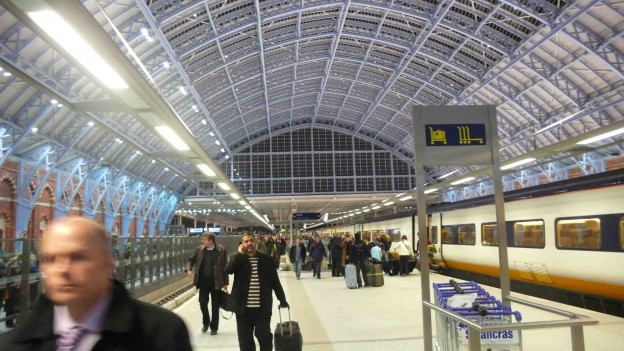
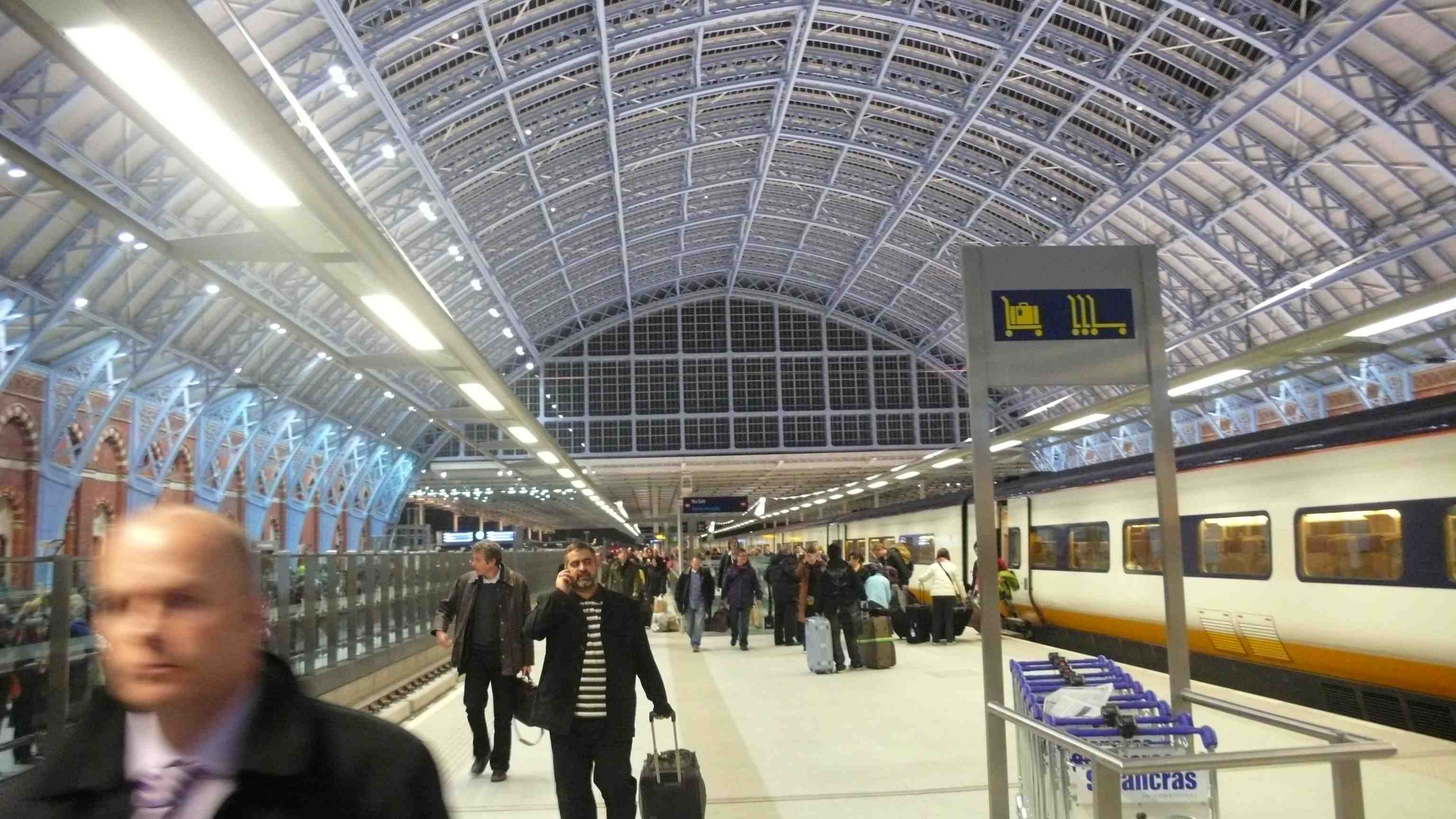
From an engineering design point of view, it is interesting to see how the high-speed rail Overton Window has shifted, as described by Simon Jenkins in his article ‘HS2: the zombie train that refuses to die’. When the first enthusiasts started proposing high-speed rail in the 80s, the railways were in decline – it was an extreme view. Then, little by little, things nudged the terms of the debate towards acceptability: the construction of the channel tunnel; the lack of high-speed line to the tunnel; the eventual opening of the first high-speed line to the tunnel; how high-speed rail could see off the need for a third runway at Heathrow. Eventually, the terms of the debate shifted from whether or not to have a high-speed line, to which route it would take.
And so, there we have persuasive tool number one. It is possible to shift an audience to your way of thinking by consistently and repeatedly advocating ideas that are just beyond acceptability and looking for small wins that slowly shift the Overton Window in your favour. Think of it more as a stopping train than a high-speed approach.
Seneca says don’t be scruffy
My second persuasive tool is not so much a technique but a starting point and comes from Seneca’s ‘Letters from a Stoic’. In his fifth letter he advises his correspondent to
“avoid shabby attire, long hair, an unkempt beard, an outspoken dislike of silverware, sleeping on the ground and all other misguided means to self-advertisement”
The aim of his advice is to make his friend, a fellow philosopher, more acceptable in appearance to his audience so that he may may have more influence over them. He goes on,
“Let our way of life be not diametrically opposed to, but better than that of the mob. Otherwise we shall repel and alienate the very people whose reform we desire”.
And so there we have our second tool of persuasion: don’t be so extreme as to put people off. Be of them, be recognisable to them so that they might accept you.
Acceptable unacceptability?
I encountered these two approaches in the same week, and initially thought them opposed: one is to champion views from the extremes and draw people towards them; the other is to champion views from a position of acceptability. So which is better?
Seneca anticipates and resolves this paradox for us by recommending that,
“one’s life should be a compromise between the ideal and the popular morality. People should admire our way of life but they should at this time find it understandable.”
So perhaps where these approaches meet, and where designers should aim for is acceptable unacceptability.
Related posts
-
Dan Lepard, my first loaf, and the value of fail-safe instructions
My highlight of the Guardian Festival yesterday was Dan Lepard, regular baking columnist for the Saturday Guardian. In a packed room he gave five golden rules for successful bread baking. Listening intently, having never baked a loaf myself before, his directions seemed so clear and his approach so straightforward that I just wanted to go home and bake.
In this instance I think I probably fall into that category of learner who knows so little about baking that I needed clear steps to build my confidence, and it serves as a good reminder of how important it is to prepare a clear message when working with learners who lack confidence. As soon as members of the audience, clearly with more advanced ‘kneads’ (ha ha), chimed in with their clever questions about complicated stuff, I tried not to listen, so as not to lose that clarity of thought the presenter had given me.
And so I present my first loaves. May they be the first of many…
-
Notes on ‘The Art of Doing Nothing’ by Tom Hodgkinson
This post is for the Front Row gang (you know who you are). Since we were talking about the concept of Fun for Free at the last Front Row session, here is a rough-and-ready summary of the essay where I first heard of the concept, ‘The Art of Doing Nothing’ by Tom Hodgkinson. The essay appears in a book called ‘Do Good Lives Have to Cost the Earth’, edited by Andrew Simms and Joe Smith.
(more…) -
Resisting Ikea – preparing for Monday’s sustainability conference
I spent most of last weekend preparing for a sustainability conference that we ran on Monday (post about that event appearing shortly). I know from experience that the last few days of organising any event like this always involve a mad dash to the shops, and this time was no different.
[slideshow]
(more…) -
Excited about resource scarcity
I just found myself getting quite excited about resource scarcity. Not the fact of depleting the earth’s resources, but that the subject is relevant to three things that I can claim to know something about: engineering, chemistry and explaining science.

Yesterday I was doing some background research for a new teaching resource that we are exploring developing at Think Up related to resource scarcity and material choice. The resource could become part of Workshed. The starting point for my work Michael Ashby’s book “Material and the Environment, Eco-informed Material Choice”
All the time I was reading I was thinking how interesting it would be to create ways of explaining some of these complex and multidisciplinary issues in an engaging way – from the maths required to understand the economics of resource scarcity, through to understanding how to optimise the design for the whole life of the product.
Here are some choice facts that struck me from the first chapter:
– in 1930 it was estimated that the world would exhaust its stock of copper in thirty years; in 2008, the remaining reserves of copper will still estimated to be exhausted in thirty years.
– the global annual consumption of steel is greater than that of all other metals combined
– the weight of wood used annually in construction is greater than the weight of steel
– the weight of concrete consumed in construction annually exceeds the weight of all other construction materials combined.
The book then goes into detail about the economics of resource depletion and processes for assessing the environmental impact of one material over another during the design process.
Watch is space for teaching resources of this flavour.
-
Belly dancing, Charleston and keepy-uppies – civic participation in action
[youtube=http://www.youtube.com/watch?v=3gooD14xRh4&hl=en_US&fs=1&border=1]
This morning I was delving further into Bowling Alone (more notes to follow); by this evening I found myself performing at the Charity Gala, Oak View School – part of the Loughton Festival, and the sort of charity event that this book both celebrates and of which it reports the decline.
I had long had this evening’s dancing gig in my diary but I hadn’t really found out anything about it until I arrived. We cobbled together our routine in the car park – which provoked a few stares) and then went in for the show. I was quite astounded by how eclectic the mix was. We were preceeded by a belly dancing troupe, a folk group who sang about dismembered limbs, and a mandolin player (that we didn’t see because we were busy rehearsing our moves). Ours was the Charleston routine that we have used to tread the boards of a fair few Essex venues now; nevertheless I am glad we got that car park rehearsal in – it paid off. But the show stopper was the guy after us who did endless keepy-uppies to music. It’s amazing what hidden talents people have. The world is a better place for them!
I won’t know what Joseph Putman says about how to reverse the decline in social and charitable events until I get to the final section of his book; I would like to think that belly dancing, Charleston and keepy-uppies have a role to play.
-
Social capital – Reading Bowling Alone No.1
The concept of Social Capital came up during my research for Expedition Think Up Mondays. It was in the midst of a conversation about values. The individuals in that group quickly identified that they each bring the value of their personal networks to the group. On a rainy Monday a week later in Islington Central Library I explored this theme, and quickly came upon the notion of Social Capital, and Robert Putman’s highly regarded book ‘Bowling Alone – the Collapse and Revival of American Community’. The book explores the theories relating to social capital, its rise, decline and possible resurrection in America.

The Expedition Think Up Monday programme is long finished, but understanding and growing social capital seems to be at the core of what I am doing with Think Up, the Useful Simple Trust and through my volunteer role at the Institution of Civil Engineers. I have decided therefore to read Putman’s book and log my notes here, with the hope that rearranged, with some retained and some discarded, they can help with the formulation of a vision for how these organisations could work.
Bowling Alone – Chapter 1 Thinking about Social Change in America – notes
Putman notes a general trend that up until the mid-sixties there was an ever increasing involvement of citizens in civic life, be it in sports and social clubs, benevolent societies or in public office; since then however, there has been a considerable decline.
“In recent years social scientists have framed concerns about the changing character of American society in terms of the concept of “social capital”. By analogy with notions of physical capital and human capital – tools and training that enhance individual productivity – the core idea of social capital theory is that social networks have value. Just as a screwdriver (physical capital) or a college education (human capital) can increase productivity (both individual and collective), so too social contacts affect the productivity of individuals and groups.”
Some social capital results in personal benefit, as in when any reciprocity is specific – I’ll scratch your back if you scratch mine”; more valuable to society however is generalized reciprocity: “I’ll do this for you without expecting anything specific back from you in the confident expectation that someone else will do something for me down the road.
On reciprocity, “‘If you don’t go to somebody’s funeral, they won’t go to yours.’ – Yogi Berra”
Frequent interaction among a society of individuals tends to cause more generalised reciprocity. [pg 21]
Your social capital comes in many different shapes and sizes – eg sunay schools, family, internet chat groups.
The external effects of social capital are not always good. Terrorist groups depend on social capital.
‘Therefore it is important to ask how the positive consequences of social capital – mutual support, cooperation, trust, institutional effectiveness – can be maximised and the negative manifestations – sectarianism, ethnocentrism, corruption – minimized. Towards this end many different form of social capital have been distinguished.’ Pg 22
There is a distinction between bridging capital and bonding capital.
Bridging (Inclusive) capital
Outward looking and encompassing people across diverse social cleavages. Eg. civil rights movement, youth service groups.
Good for establishing specific reciprocity and mobilizing solidarity.
A socialogical superglue
Good for getting ahead
Bonding (exclusive) capital
By choice of necessity, inward looking and tend to reinforce exlcusive identities and homogeneous groups. Eg Ethnic fraternal organisations, country clubs.
Better for linking external assets for information diffusion.
A socialogical WD40
Good for getting by
Many people bond in some dimensions (class, race) and bridge in others.
Putman’s maxim for evidence in his book is similar to the jounralist’s two source rule: never report anything unless two independent sources confirm it.
The last page of the chapter reveals the inspiration for the books name: two people from quite different socio-economic backgrounds come into contact with one-another through a bowling team. The aquaintance leads to the younger of the two offering to give his kidney to the older of the two who has been on a waiting list for three years.
Comments
The Useful Simple Trust exists to blaze a trail in the integrated, intelligent and humane provision of the human environment. Freed from the traditional contraints of serving the aquisition of financial capital, the beneficiaries should be look at (and already are, although not necessarily framed in these terms) look at what social capital they have between them, and look to unlock and stimulate the social capital. One idea for Think Up in this instance is to run an event that helps everyone realise our collective social capital, and explore what good we can do with it, and examine how we can grow it.
At first sight, the Institution of Civil Engineers is an organisation that consolidates bonding capital but that wants to create bridging capital. This very concise observation I feel help me shape my input into the ICE London Region’s strategic direction.
-
A few quotes about cities
I am currently preparing a presentation about the density of cities and in particular, how housing should be organised. Here are a some snippets gathered here for my research…
From Rogers’ ‘Cities for a Small Planet‘
(Rogers and Gumuchdjian, 1997, Faber)
“To being our position-fixing aboard our Spacesip Earth wemust first acknowledge that the abundance of immediately consumable, obviously disarable or utterly essential resources have been sufficient until now to allow us to carry on despite our ignorance. Being eventually exhaustible and spoilable, they have been adequate only up to this critical moment. This cushion-for-error of humanity’s survival and growth up to now was apparently provided just as a bird inside of the egg is provided with liquid nutriment to develop it to a certain point” Buckminster Fuller, Operation Manual for Planet Earth (Pg1/1)
”We will leave this city not less but greater, etter and more beautiful than it was left to us” – Athenian oath pledged by new citizens (Pg 1/16)
-
Reducing electricity consumption in homes to become as addictive as checking your blogstats?

The UK government has recently passed new legislation requiring electricity suppliers to fit free real time electricity price monitors in homes in a plan to massively reduce electricity consommation in homes. With Britain committed to reducing its carbon emissions to 60% of 1990 levels by 2050, I am certain that this measure will go at least some way to seeing how much electricity they are wasting. Who knows, checking your consumption metre might become just as addictive as checking your blog stats (addicts, you know who you are!). Read more on the ICE website.
-
Zen and the art of building maintenance

I am in the throws of reading Zen and the Art of Motorcycle Maintenance by Robert Persig. In my view it is a philosophical book that challenges the reader to find beauty in technology, in maths and in reason. I am no book reviewer, so I will only add that Persig uses the motorcycle as an analogy for different ways of thinking. In particular, he talks about the idea of an ‘intellectual knife’: the tool with which we slice up a problem into its components before we set about resolving it. So each evening on the metro, I have been reading about different ways a motorcycle can be divided up in order to explain its different functions, and it has struck me how similar this exercise is to what I am doing at work in order to calculate the cost of the cost of a skyscraper.
One way to add up the cost is to start at the top left-hand corner, and work your way down to the bottom right-hand corner, counting up all the lumps of concrete and steel along the way. This method would be ideal for a bungalow but not for a high-rise as for starters it fails to take into the repetition in the structure. So the first use of the knife is to cut the building up into repeating chunks. Now in the case of this building, like the Gherkin, this building is curvy, so no two floors are identical. The knife is therefore used to cut the building up into chunks whose dimensions are broadly similar, so that mean values for these chunks can be used.
Am I boring you yet? Then look at the photo. I put it in to spruce up what on the surface might otherwise be an apparently boring entry. It’s the view from my office (prizes for anyone who can spot the Eiffel tower). Refreshed? Right, lets carry on…
So we have our broadly similar chunks of building: can’t we start counting? Well yes, but if you want to automate the process you have to put into Excel. I do want to automate it because this project is constantly changing and I want to quickly be able to modify the calculation. This is really where the headaches begin. So often have I marched into writing an Excel spreadsheet only to find that when I am waste-deep in it, it becomes very complicated, difficult to verify and impossible for anyone else to follow. This happened to me last week on this same project. I spent the weekend thinking that there must be a better way. Before I started again I set out the main things I wanted to achieve when doing the calculation again. It has to be easy to enter the data, easy to modify the data, easy to verify the results and easy for somebody else to follow.
If there are any readers left, I want to illustrate the problems that these objectives can cause. I won’t go into how I solved them because whereas the objectives are general and can be applied to the automation of other engineering problems, the solution is specific, of less ‘interest’ to others, and I have that recorded in the form of the spreadsheet itself.
Starting with entering the data, it is very well to count up all the similar columns but how can you be certain that they have all been counted. One answer is to create a big grid with all the stories, to cut and paste in all the similar elements and then to count them all up. Whilst this approach starts off very pleasing to look at, (I think this approach uses Excel well) it quickly becomes unwieldy. In order to simplify things, it is necessary to only put in the absolute minimum of information, putting the rest of the information perhaps on another sheet. The risk here is that the sheet quickly becomes difficult for someone else to follow. The other problem with hiding information elsewhere is that it also becomes difficult to modify quickly.
One might conclude that ease of modification is at the cost of simplicity. However with careful application of the intellectual knife, I don’t necessarily think that this is so. Experience of this sort of calculation, something that I don’t have much of, would give an idea of which variables are more likely to vary and so which ones should be easier to change. For example it may be that the thickness of the core walls are much less likely to change than the thickness of the floor.
Moving on from the depths of dullness and back towards a level of interest that might only correspond to vaguely dull, the one thing I haven’t talked about is how to check you got the right answer, because after all, that’s all that matters. Verifying my procedure and checking that it gives me a reasonable answer has taken me so long (most of the week in fact) that I wonder if using a computer has saved me any time (remember citizens that that is what computers are for…). Trying to unravel what a string of cell names in a formula actually means is the bane of my nascent working life! It doesn’t help that I have no sense of what the answer should be.
That all changed yesterday when I spent the afternoon looking at the final cost add-up of another building designed by this company. By looking at what the price of the foundations was as a percentage of the total cost, say, I instantly had a ball park figure to head for. I then used this rubric to look for where my answers were way off par. Sure enough, where there were discrepancies, there were mistakes.
It makes me wonder why bother doing any of this calculation afresh. The two match up so well that surely one could take the price of the first, modify for inflation, add a bit, and be done.
To conclude, after a week of work on this calculation, I am happy with the result. I have gone into some detail about what I have done because for one thing, a great deal of reflection would quickly have been forgotten as soon as I move onto the next thing. I fear the hours that can be spent in front of computer screen with nothing to show for it. I hope that at the very least I will be able to apply what I have learnt here to the next problem, and more ambitiously that the fruits of my labour will be a rethink of the way that these problems are tackled, which strikes me, albeit as a novice, as inefficient.
It seems entirely appropriate that ‘Zen and the Art of Motorcycle Maintenance’ has inspired me to think in depth about what I am doing. It is unfortunate for me however that motorcycles sound a lot more sexy than volumes of concrete and Excel spreadsheets. Thanks for reading.