Category: Education

  • Workshop: Planning for learning – IDBE, University of Cambridge

    Workshop: Planning for learning – IDBE, University of Cambridge

    I was in Cambridge today to teach my first of four workshops this academic year on the Interdisciplinary Design for the Built Environment Masters programme.

    Part of my teaching bookends the course, with a workshop in week on planning for learning and a workshop in the final week on planning for practice. For the rest I feed in models for understanding the design process that students can use in their studio projects. 

    In this first workshop I introduce my Continuous Design diagram as a common framework for talking about design interventions. The Continuous Design diagram emphasises the continuous cycle of observing, intervening, observing, intervening that we need to do when we are making changes in complex systems. 

    We use this diagram to help participants design a learning journey for themselves. It is a good way to think about what your learning goals are, how you could achieve them and how you will know you are on track. 

    I conclude the workshop with an introduction to action learning and I lead participants through the Action Learning Proforma which I developed with Søren Willert a few years ago now.

    Continuous Design diagram
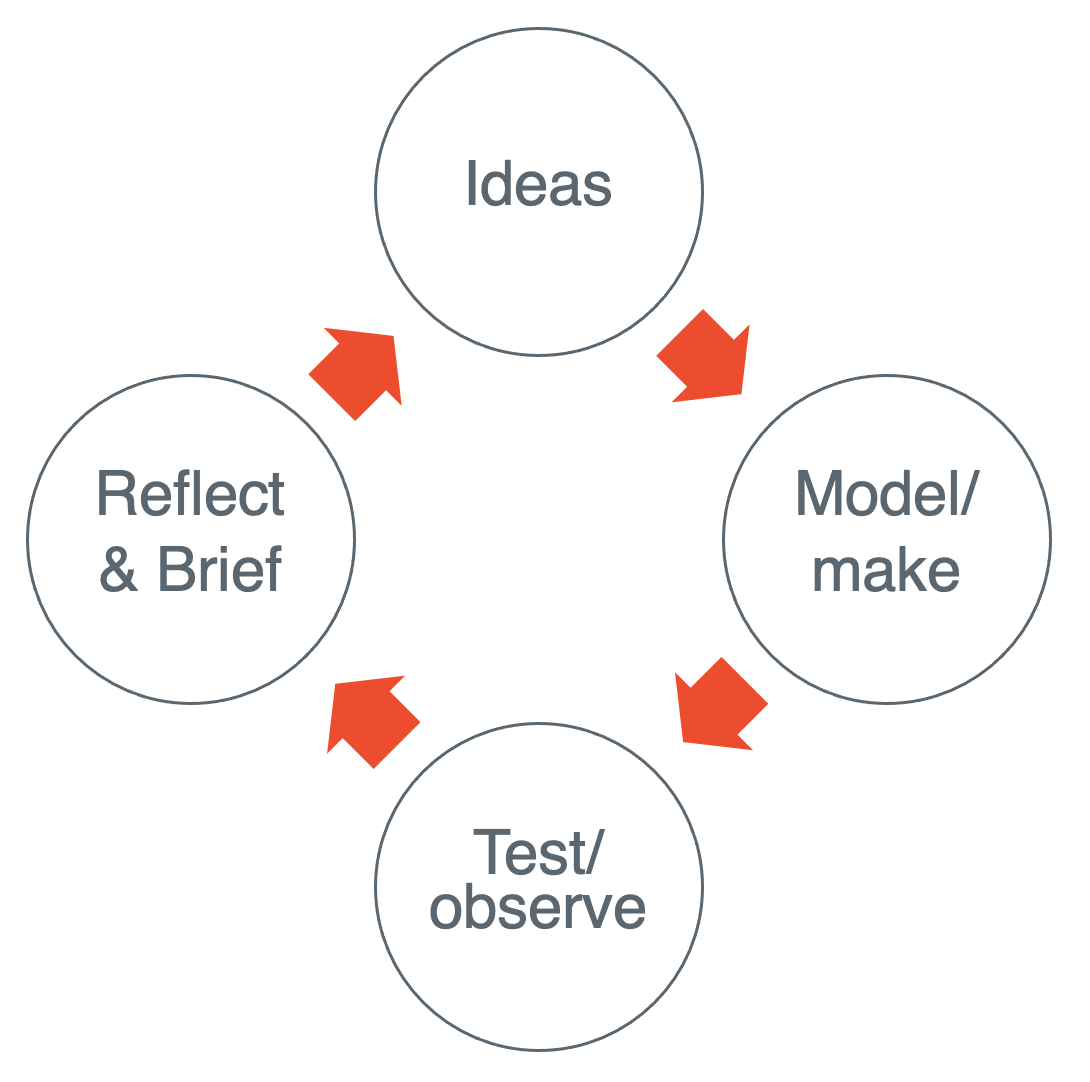
    Continuous Design Diagram by Oliver Broadbent (2021). The diagram shows a loop with four stages: Reflect/brief; Ideas; Make/model; and Test/observe

    This is only the third or fourth time I’ve used the Continuous Design diagram. I see its greatest strength as emphasising the cyclical nature of design, which becomes even more important as we start to think about how to design more regeneratively. 

    This was a particularly lovely day to be teaching in Cambridge. The morning was fresh. I enjoyed having breakfast in the hall at Selwyn College. By lunchtime things had warmed up and I enjoyed sitting for a few minutes by a tributary of the Cam, watching the clear water babble by.

    I am looking forward to returning in December when we will explore what a design brief is in more detail.
  • Notes from ISEE 2018, UCL London

    Notes from ISEE 2018, UCL London

    A very interesting couple of days at the 7th International Symposium of Engineering Education down at UCL. Here’s something I found interesting which I am sharing with colleagues and collaborators.

    (more…)
  • 12 Principles for Problem-based Learning for Engineers

    12 Principles for Problem-based Learning for Engineers

    Over the last 9 months at Think Up I’ve been invovled with an engineering education project that has had a really deep philsophical impact on me. The project is called Enginite, an EruasmusPlus-funded programme of graduate training and placements that aims to give graduating engineers extra skills and experience that will make them more employable.

    My role has been to collaborate with Prof Søren Willert, of the University of Aalborg, to train project partners in how to design courses using a problem-based learning methodology. PBL flips traditional learning on itself, and holds as its fundamental principle that learning is more effective – in terms of retention, recall and motivation – if students drive the learning process themselves. It is one of those statements that we know to be true from experience, but goes directly against how most education is delivered in engineering education. PBL addresses that dissonance by creating a framework for giving students ownership of the problem. (more…)

  • My VR training epiphany

    My VR training epiphany

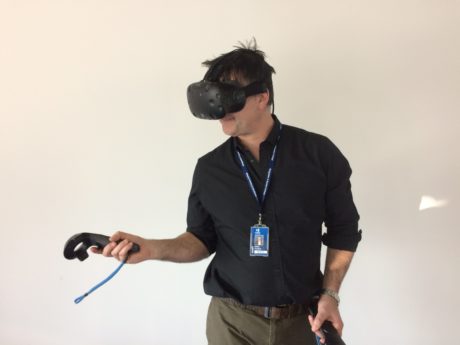
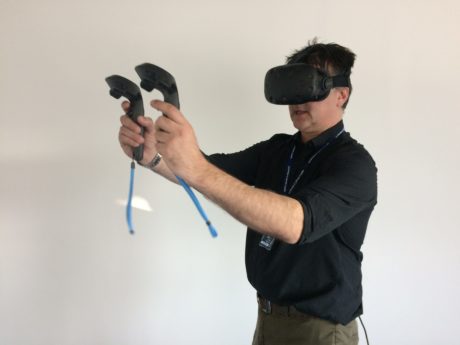
    Last week I was down at Bridgwater and Taunton College to check out the tools Stefan Cecchini and his colleagues are going to be using to deliver a revolutionary new engineering degree curriculum that aims to be entirely inquiry-led. There for the first time I tried out a virtual reality (VR) training environment. I put on the VR headset and gloves, and this is what happened (that’s Stefan, by the way wearing the VR gear).

    (more…)

  • Being Bazalgette – a new work experience idea

    Being Bazalgette – a new work experience idea

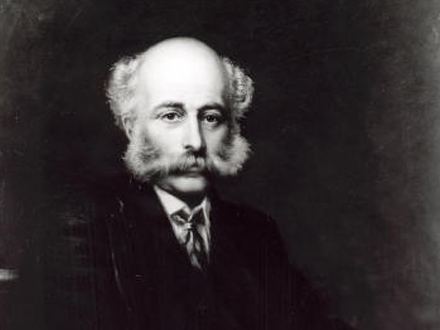
    Joseph Bazalgette by ICE Archive is licensed under a Creative Commons Attribution 4.0 International License.Based on a work at expeditionworkshed.org.
    Creative Commons License
    Joseph Bazalgette by ICE Archive is licensed under a Creative Commons Attribution 4.0 International License.
    Based on a work at expeditionworkshed.org.

    Today at Think Up, Ed McCann and I had lunch with Mike Chrimes from the Institution of Civil Engineers. The main topic on the menu was how to articulate the value to practising engineers of a knowledge of engineering history. Earlier in the day the two of us were talking about how tech could be used to create engaging simulations of work experience for use in schools.

    And then as the main courses arrived the light bulb lit up above my head: why not create a mini module for schools that allows students to take on the role of a famous engineer say for a week. For example, students could spend a week being Bazalgette, chewing over the task of how to transfer vast quantities of poo across London. It would be a fun, playful exercise, but which could be used to develop a range of workplace skills as well as hopefully getting students thinking about what engineers did and do now. There’s more to come on this, but I need to sleep on it…

  • Learning emergency first aid

    Learning emergency first aid

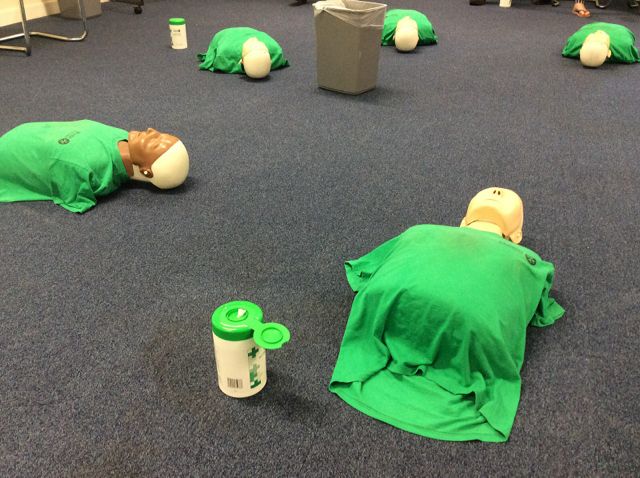
    6 resuscitation dolls lined up on the floor ready for CPR training
    Resuci-Annie catastrophe

    Yesterday I went on the excellent St John’s Ambulance 1-day emergency first aid at work course. It was a real eye-opener: it made me realise just how many of the voluntary and fun activities that I go to are made possible by having first-aiders on site.

    I was of course also interested in the way it was taught. This is not meant to be the land ambiguity; little room here for interpretation. This training gives clear procedures to help save people’s lives. Any crudeness or bluntness to the rules is offset by the huge potential benefit of saving someone’s life.

    The thing I found particularly difficult was doing the treatment with the hands at the same time as doing the patter. One for the science communicators!

    The course relies heavily on acronyms to help you remember procedures, and I admit that despite very clear instruction I was on acronym overload by lunchtime. The course has summative assessments built in throughout so that by the end you have an assessment-based qualification. I am however curious about the drop-off rate in retention of that knowledge. For example, I am certain that many people will remember the DR ABC stuff, but other points will drop away.

    Obviously some retention is better than nothing, and these courses are clearly doing a great deal to save people’s lives, but I wonder if some delayed assessment, say a week later, using a mobile phone app would be a better basis for the qualification?

    That said, St John Ambulance have released an app that gives you back up information, and you do get a pocket reference card – but do you really want to be referring to those in an accident?

    I for one know that I will forget much of the content unless I practise, so those of you that know me don’t be surprised if I ask you to lay down and pretend to be unconscious!

  • The Beginning of Engineering Knowledge Club

    The Beginning of Engineering Knowledge Club

    Engineering Knowledge Club logo
    Creative Commons License
    Engineering Knowledge Club Logo by Think Up is licensed under a Creative Commons Attribution-NonCommercial-ShareAlike 4.0 International License.
    Permissions beyond the scope of this license may be available at info@thinkup.org.

    Almost nine months since we were awarded funding from UCL’s Teaching Innovation fund, Paul Greening and I kicked off ‘Engineering Knowledge Club‘. The idea is to encourage students to develop for themselves the engineering knowledge they need in order to be successful in the field of engineering they want to go into. We have set up a dedicated blog for Engineering Knowledge Club, which describes our aims for the project, so I won’t repeat them here.

    But what I will say here is how excited I am about this project. The timing is particularly appropriate as I have been spending most of November co-writing a guide for the Royal Academy of Engineering on experience-led learning in engineering. Many of the ideas discussed in that report we can put in practice in Engineering Knowledge Club, for example:

    Student–led learning – so much of the learning that I see happening in civil engineering courses seems to be motivated by grades, which probably stifles curiosity, intrinsic motivation and independence. I strongly believe that if learners were learning about what they were interested in, then they’d be self-motivated, perhaps work harder, and learn more effectively. Engineering knowledge club is about giving students the chance to define and drive their own learning.

    Learning based on real-world stimuli – civil engineering is a subject that surrounds us, and so lends itself well to learning by observation. And yet, so much civil engineering education is based on text books, lecture notes and websites. Engineering knowledge club will encourage students to be inspired by, be curious about and learn from the environment which surrounds them.

    Reflective learning – people tend to learn better when they think about how they are learning. Over the last two years I’ve experimented at UCL with Paul Greening and at Queens Belfast with Siobhan Cox on using private student blogs for reflective learning. While this has had some success, what’s been missing is students being able to learn from each others’ blog posts. Engineering Knowledge Club will give me the chance to experiment with using a public class blog. This will hopefully help to build a sense of community among the students, and should serve to demonstrate the concept to anyone interested.

    Building a community of learning – I don’t feel that students are encouraged enough to support each other in their learning. I believe that a student cohort in which everyone is looking out for each other would be one that learns more. We hope to build a sense of community in Engineering Knowledge Club and be able to see its impact on learning.

    We shall see!

  • Day 4 at the RDI Summer School

    Day 4 at the RDI Summer School

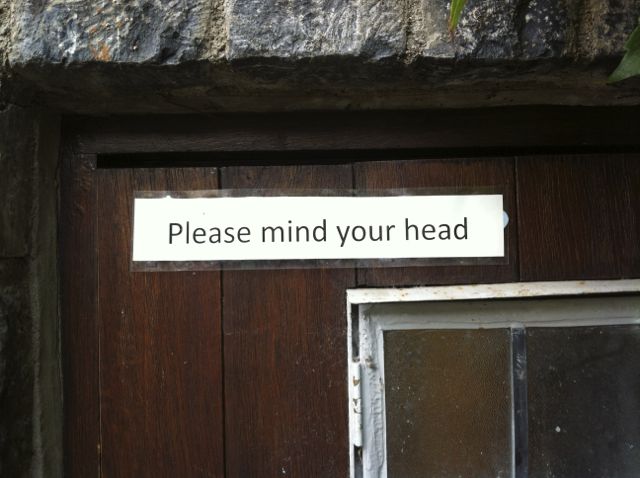
    Please mind your head at the RDI Summer School

    This Day 4 post is written somewhat after the fact, and that’s a good thing. An immediate post might have captured all the logistical comings and goings without capturing anything about what was special.

    I am not sure who first used these words, but in the concluding session, Michael Wolff quoted the following,

    “People will forget what you said, and they will forget what you did, but they will always remember how they made you feel.”

    The handful of attendees I have spoken to in recent days have shared a similar sentiment: that after five weeks back at our desks, the Summer School feels like a long time ago; the details are dim, but there is a feeling that they can start to make sense of what was felt – what was revealed about ourselves and each other – in the context of their day to day lives. It is as if the Summer School is one of those glorious trees at Dartington Hall, basking – photo-synthesising. The leaves are what we said and did; buffeted by the arrival of autumn they quickly fall, but the energy of the summer, the coding and nutrients – in other words how it made us feel – are preserved in the seeds.

    Oak Tree Dartington Hall
    Oak tree at Dartington Hall

    Fergus Fielden gave me the the seed metaphor. He used a sweet chestnut seed from the grounds at Dartington represent his wish on the wish sculpture that we built on day two. In his words (see video snippet here),

    “It symbolises growth…and investing in a sustainable future, but it’s a long game so it is about getting people to be more hands-on about sustainability and awareness. And you have to have faith. You have to invest early on.”

    Planting seeds is the most illustrative description I can find for what the summer school did. Some will germinate next season; others will come to life in later years; some may not survive. Once it emerges, the sapling may take many years to thrive. And it is hard to know from the seed what form the eventual tree will take. Sometimes it is hard to remember what seeds you have planted. Fortunately I have two hours’ footage of video interviews to give me some clues about what sort of seeds were planted.

    Seven Seeds of the Summer School

    • Seed One – The courage to believe in your own convictions and abilities
    • Seed Two – The removal of the mundane to gain sight of what you want to do.
    • Seed Three – The re-ignition and validation of personal passions.
    • Seed Four – The foundation of new friendships and alliances
    • Seed Five – The identification of new personal objectives
    • Seed Six – The nature of working with strangers and how to collaborate.
    • Seed Seven – The knowledge that our greatest adversary in life may be ourselves.

    As we were leaving the summer school, I asked (somewhat metaphorically) designer Syd Hausman, if she’d found what she was looking for:

    “Sounds like a U2 song… I wouldn’t say I’ve found what I am looking for, but the start of many things I will probably find”

    Related Posts

    External links

  • From concrete courtyard to blooming garden – the story of the Big Dig

    From concrete courtyard to blooming garden – the story of the Big Dig

    IMG_5294

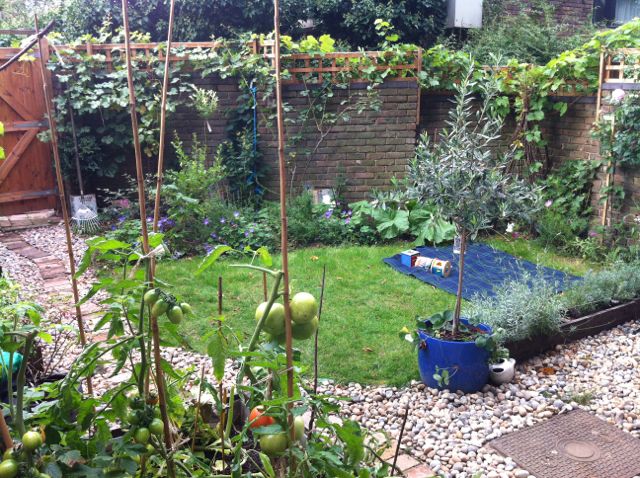
    In December last year I wrote about day one of the Big Dig, M and my plan to transform our barren concrete courtyard into a thriving patch of urban greenery. Today we celebrated the completion of that grand plan with a garden party – a harvest festival no less! – for everyone who helped us along the way. Here’s a little movie slide show of what we achieved.

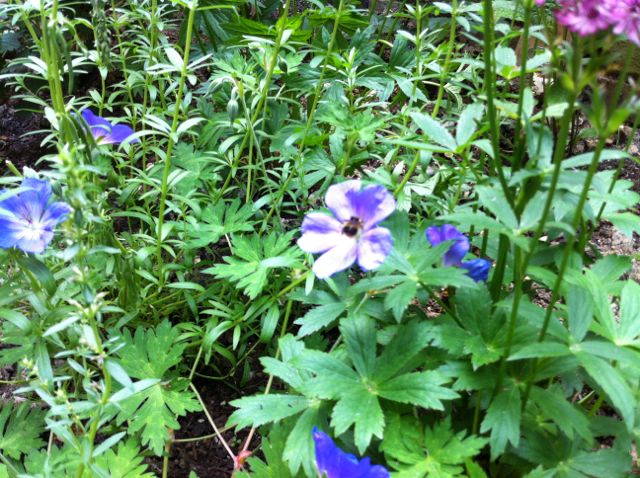
    Seeing all the insects buzzing between the flowers in the beds it is hard to remember that this was an apparently lifeless little corner of London (no doubt kept lifeless with ample weed killer). And in January, when we were standing in knee-deep holes in the ground digging in compost, it was hard to believe that it would turn into the lush environment that it is now.

    IMG_5912

    By the time spring arrived we were putting in the new ground covering: a mixture of turf and gravel, beds and raised beds. The trees and most of the plants went in by early April. I remember thinking that they were quite spread out – just as well given how much they grew. In the summer we turned our hands to plant vegetables – too late in hindsight, but we are still figuring this stuff out.

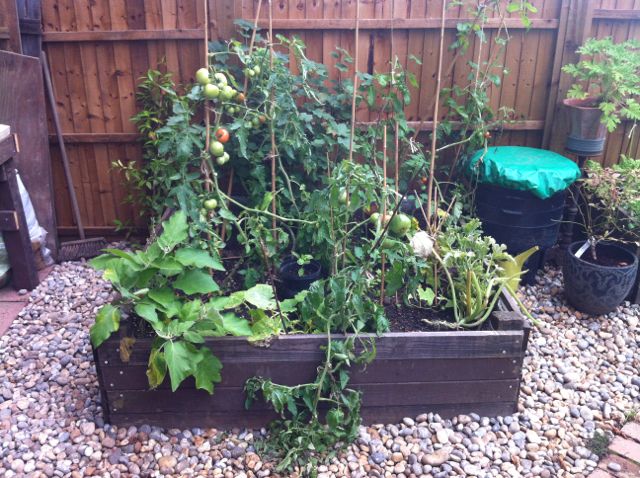
    One of the aims of the project was to use waste material wherever possible. We had had our collapsing garden fence replaced with a new one, but had asked to keep the old timber. This well weathered material we were able to put to good use, creating three raised beds, a cold frame, a bike shed and compost heap. And because the material all came from the same fence, all the structures we built have a unified look. Continuing on the re-use theme: half of the old back door became the lid for the cold frame; the dozens of bricks we found in the ground became the garden path; an old allotment shed door became the roof of the bike shed.

    IMG_5908

    Two things have made this transformation possible. The first is the plan for the garden put together by our friend Amanda Dennis. From her beautiful pen and watercolour design, to the step-by-step project plan, she guided us through the whole process, and I think she is as pleased as we are with the result. The second is the tremendous help we have had from friends, family and neighbours – I count sixteen volunteers in total over the last nine months. People have lent us tools, sent us plants, driven cars to the dump, built sheds, looked after our baby and dedicated whole days to digging. It has been very heartwarming – and a lot of fun.

    And so to the harvest. Roughly speaking: a punnet of raspberries, red currants, blueberries and a half one of strawberries; a few baby carrots; two plums; two courgettes; fist-fulls of herbs; a dozen ripe tomatoes – and two dozen green tomatoes still full of promise; and a gherkin. We wanted to feed our harvest festival guests the fruits of the labour, but since most of these fell earlier in the year, we had to be a bit creative with the menu: lavender cake; savoury vine leaf cake (delicious!) and herb bread topped with our one gherkin thinly sliced.

    It would be easy to think now that the hard work is done – but now we have the not so small task of keeping it all alive. Watch this space.

  • Taking inspiration from the Transcontinental Railroad

    Taking inspiration from the Transcontinental Railroad

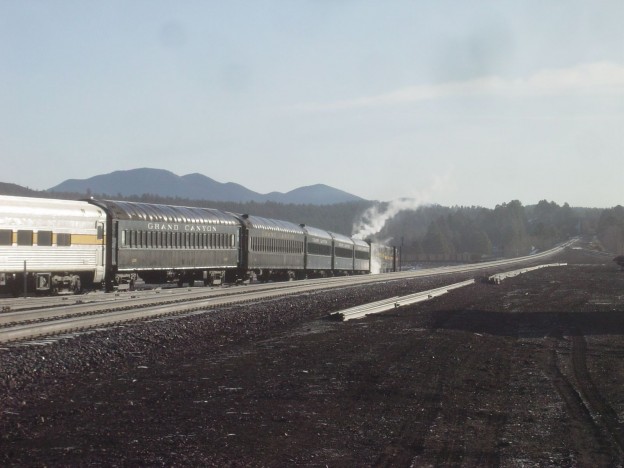
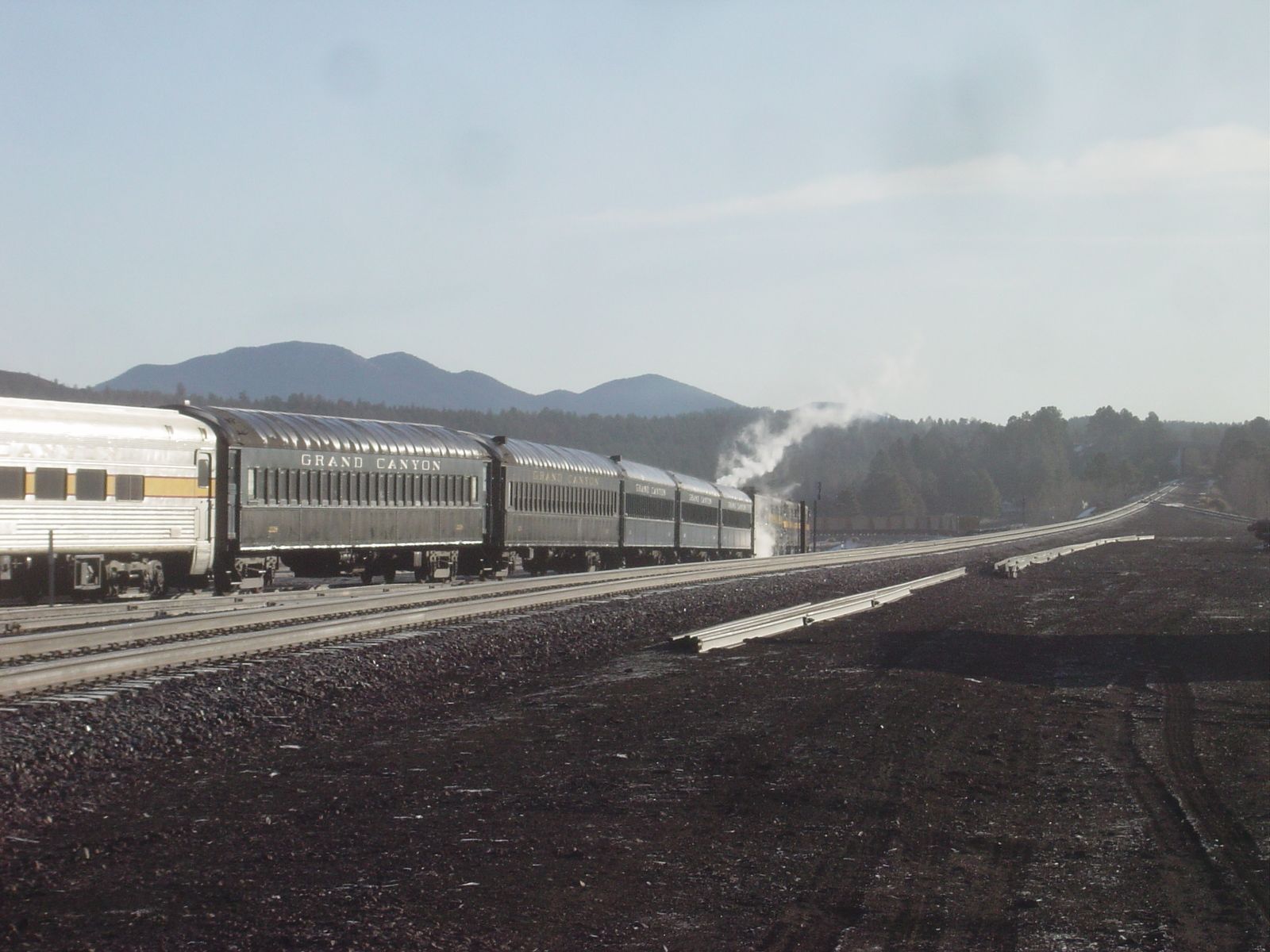
    Image, Grand Canyon Railway, Williams, Arizona, Sante Fe railway
    A train pulls of the Santa Fe railway at Williams Arizona to join the Grand Canyon Railroad

    As I tweeted earlier this morning, today at Think Up I have been working on Build Camp, a concept for a week-long hands-on learning event designed to encourage young people to take on a career in civil engineering. For some time now we have been proposing an event based around the idea of students designing and building their own railway in a week. Today we were looking at how to create a context for the event around which on-site role play activities can be built. Today’s idea was to use the construction of the first american transcontinental railroad as the context, for reasons explained in the following text, extracted from some my draft web copy for the soon-to-be-online Build Camp website.

    Why the Pacific Railroad?
    Learning about the construction of a railway line is an excellent introduction to the world of civil engineering because it embraces so many aspects of the discipline, including: planning and surveying: structural, geotechnical and fluid mechanics; construction management. This event is set in the context of the construction of the Pacific Railroad, the first railway to cross the United States. The construction of this pioneering railway line was led by a team of engineers operating at the railhead. Engineers were responsible for:

    * Surveying and choose a route through the unknown territory ahead.
    * Designing cuttings, embankments, bridges, dams, causeways and tunnels as needed;

    * Sourcing local construction materials: fill for embankments; timber for sleepers; fuel for machinery;
    * Overseeing construction works
    * Organising the logistics of moving labour, materials and plant along the single-track line
    * Establishing camps for workers, sourcing food, and paying wages.

    These engineers were working in the unknown; it was 2000 miles back to headquarters, and so they had to rely on their own ingenuity and engineering judgement to solve the problems they encountered. By setting the role play for this event in the context of the Pacific Railroad we aim to harness that visionary and pioneering spirit, and demonstrates the potential engineers have to shape the world for the better. We are also providing a baseline against which the advances of modern railway construction can be illustrated.

    At present we are hoping to run a pilot of Build Camp in October. Keep an eye out for updates on the Think Up website for more information.

  • Using construction site notebooks as a teaching tool

    Today the Expedition-Imperial team met to plan their week at this year’s Constructionarium.

    The learning experience is intense on site at the Constructionarium, with students on their feet all day for five days building their projects. Along the way there is lots of background knowledge they can pick up about construction techniques, but it is easy for these nuggets to get lost in the blur of the overall experience.

    My suggestion was that this year we give all students a site notebook in which they can plan their activities, note useful info along the way and write up their daily activities. Of course, giving students a notebook doesn’t necessarily mean they’ll use it, so perhaps we can guide them by showing extracts from real site engineers’ notebooks. These could be shared as a teaching resource on Workshed.

    Earlier this year we bid for some innovation grant funding to develop methods for students to develop their general engineering knowledge. One of the ideas I was interested in exploring was the use of a site diary to develop this knowledge. This year’s Constructionarium looks like a good opportunity to test this approach.

  • Last day of teaching at Edinburgh

    Last day of teaching at Edinburgh

    Image

    Today I made my last teaching visit to Edinburgh for the term. I will go back once more in the spring time to evaluate the work that I have been involved in, and then will be it for my current tenure as a RAE-sponsored teaching fellow; however, there is scope to extend the funding, and we help to do so for another year. (more…)

  • The Return of Low Carb

    The Return of Low Carb

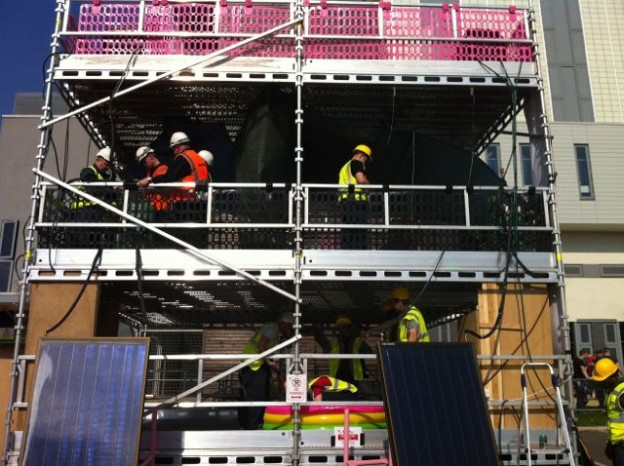
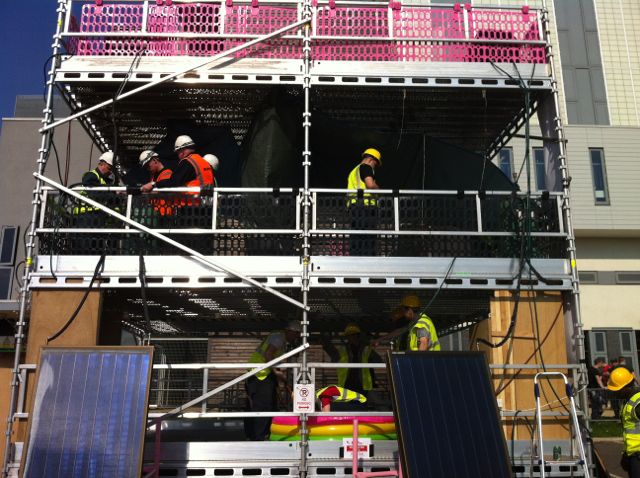
    Installation of solar-thermal water heaters on the Big Rig
    Installation of solar-thermal water heaters on the Big Rig

    Yesterday I was at the Big Rig facilitating the annual low-carbon skills challenge at the Big Rig. This is the fourth year in a row that Think Up has run the ‘Low Carb‘ event. I am very proud that since we came up with the Big Rig concept, 100s of students have taken part in Low Carb. (more…)

  • Facilitating the Global Grand Challenges Student Day

    Facilitating the Global Grand Challenges Student Day

    Royal Academy of Engineering, Microsoft Global Grand Challenges Summit, Think Up
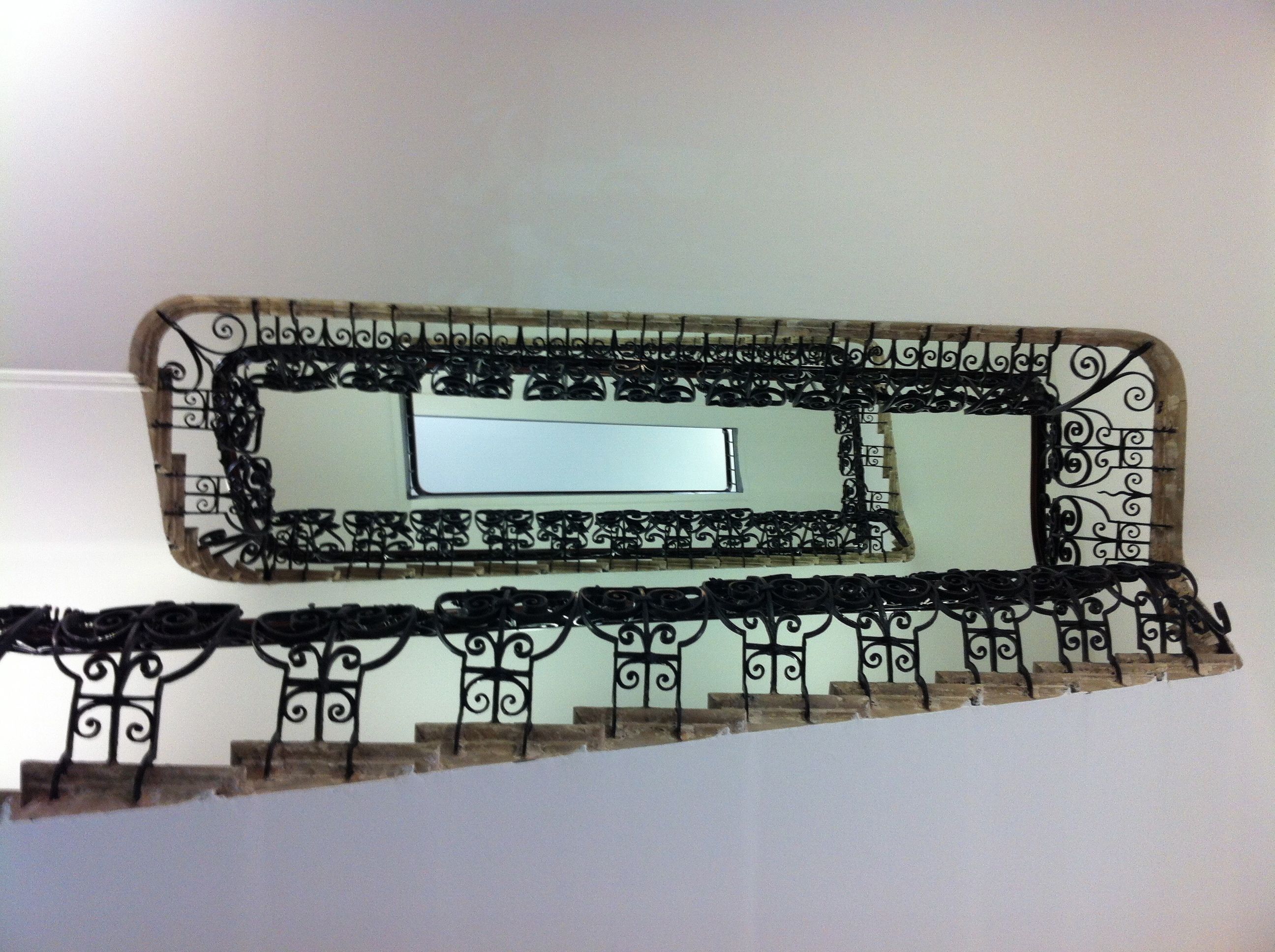
    Spiral staircase at the Royal Academy Engineering, taken on the morning of the Microsoft Global Grand Challenges Summit

    Today Think Up facilitated the Global Grand Challenges Student Day at the Royal Academy of Engineering. The student day is a prelude to the main Global Grand Challenges Summit which starts tomorrow. Our brief for designing the event was to choreograph a day of activities in which students from engineering universities around the world would come together and collaborate to develop a solution to six of the Global Grand Challenges. Our response was a programme that sought to unpick the creative process, and to enable students to examine what skills they need to develop to be better designers, all in the context of solving a major societal challenge. (more…)

  • Thames Cable Car Student Design Workshop

    Today I have been working on content for a new creative design workshop for civil engineering students based on the Emirates Airline. The workshop is part of my work with the civil engineering department at the University of Edinburgh. (more…)

  • Talking Sustainability in Bristol

    I’m just back from the first of six workshops I will be facilitating at universities around the country about how to embed sustainability in undergraduate civil engineering courses. The ICE and Royal Academy of Engineering commissioned Think Up to design and deliver these workshops to disseminate the findings of our sustainability teaching report. (more…)

  • Pursuing general knowledge – not such a trivial pursuit

    trivial pursuit

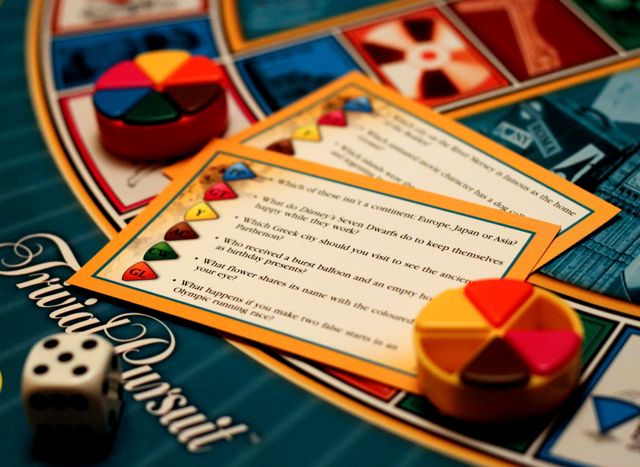
    The ability to design arguably sits at the top of Bloom’s taxonomy of learning, requiring as it does decent doses of creativity and evaluation. The foundations therefore of good design must be a broad general knowledge base. This certainly seems true in civil engineering. In order to quickly think up possible solutions to an engineering problem requires knowledge of material properties and behaviour, construction methods, costs, precedents, laws and codes etc. (more…)

  • Chemistry, engineering and Abbey Road studios

    Image

    My courting of the chemical engineering world continued today with a visit to the ChemEng department at Imperial. Today it got even better, because not only do chemical engineers get to use engineering and chemistry, but they get to sit in a huge control room that looks like the sound desk at Abbey Road studios. Or so it seems. (more…)

  • In praise of Fred Dibnah and Burt Munro

    Most of my work this week has been around designing events that help engineering students develop problem-solving skills. My opposite number at a meeting today cited Fred Dibnah, the famous chimney feller, and Burt Munro, the pioneering motorcycle land speed record holder, as examples of people who didn’t need engineering degrees to solve engineering problems.

    It’s too close to bed time to start writing about developing problem solving skills at undergraduate level. Instead, the stories of these two engineers make for a far more fascinating read.

  • Dipping into chemical engineering

    For someone who has studied both chemistry and engineering, it is somewhat of a surprise that I have had so little exposure to the chemical engineering sector. I did go and meet the admissions tutor for chemical engineering at the University of British Columbia when I was 21, but was put off by the large format pictures of oil rigs. A year later, my fourth year chemistry research project ‘Solute Binding by Surfactant Molecules’ did have some application to the chemical engineering process of foam fractionation. Other than these flirtations over ten years ago, chemical engineering has been largely off my radar, until this afternoon. (more…)

  • The Big Dig

    Big Dig

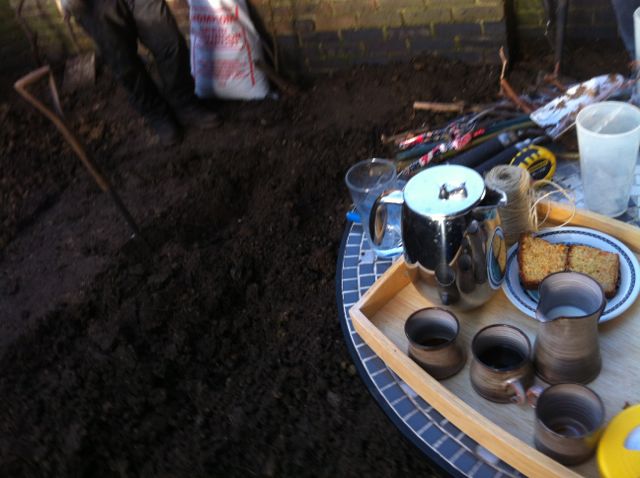
    This is not a post about the civil engineering megaproject to put a massive road underground in Boston. This is a post about spending a very satisfying day with a gang of friends and family ‘heaving hoe’ in our garden.

    (more…)