Category: My studies

  • The bridge between mechanical and civil engineers

    The bridge between mechanical and civil engineers

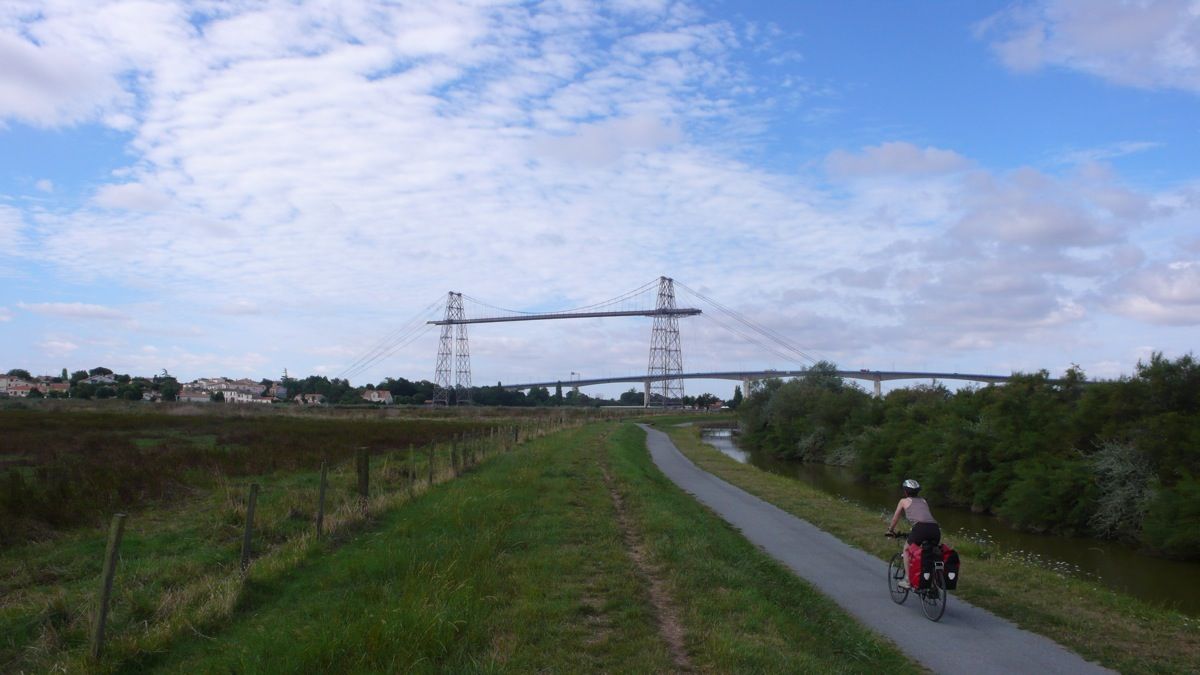
    Rochefort Transporter Bridge
    Rochefort Transporter Bridge

    Last night I was reminded of the fascinating world of moveable bridges. From the glorious transporter bridges of ports and river estuaries to hulking swing bridges of the New Jersey railroad, these projects would make interesting interdisciplinary case studies for civil and mechanical engineers.

    The lightbulb went on when I found this fantastic set of animations on Wikipedia showing the movements of different types of moveable bridges. For me part of the wonder of civil engineering is the scale of the projects. When those massive structures start to move, well, I just have to sit down. But as well as wonder, I think they offer really valuable learning.

    A conclusion of research interviews I carried out last year about developing engineering skills for industry was that engineering employers want graduates who can work with people from other backgrounds to solve engineering problems. In my experience as a civil engineering student we felt miles apart from our mechanical cousins down the corridor. Crudely, we were concerned with things that stayed still, and they were concerned with things that moved. Civils courses that had the word ‘dynamic’ in the title were considered hard and we knew our engineering relatives were studying a more difficult degree!

    One of the challenges in giving students opportunities for interdisciplinary working is the siloed nature of university departments. This is a problem not just across engineering but also in the built environment. I know of major institutions whose civil engineering and architecture students never meet – at least in any formal capacity. So I am increasingly on the look-out for projects or topics that can bring different disciplines together. And a moveable bridge could be just the ticket.

    At the Constructionarium, where engineering students build scaled versions of engineering structures using real materials, plant and processes, two of the bridge projects on site require already significant movement of the superstructure to complete the structure. At Millau the students construct bridge piers in the gorge and slide the deck units across from the gorge sides. At Kingsgate the two halves are the bridge a constructed on either bank of the river and then rotated into position to meet in the middle – I am still struck by the elegance of this construction method.

    Moving a bridge deck once as part of the construction sequence is a starting point, but the real crossover with mechanical engineering begins when the bridge requires a permanent mechanism to make the movement repeatable. At their simplest, moveable bridges require bearings to move the deck units, but a more challenging project would be to have to include hydraulic rams to make get the deck to to lift or swing.

    The aim of the crossover is to give students from either bank of this engineering divide the chance to understand the perspective of the people from the other side so that they might work together better in the future. For the civil engineer that might mean understanding how mechanisms are modelled, the dynamic forces on moving elements and the tolerances required to get the structure to work. For mechanical engineers that might mean understanding how a piece of mechanical plant fits into a civil engineering structure and understanding the practicalities of construction on site.

    But as well as the educational reasons for wanting to develop a moveable bridge-themed student project, I have a more personal reason. When I lived in New Jersey I’d often take the train to New York, and I would stare out of the window in wonder at the host of moveable bridges of every type that the railroad uses between Jersey City and Elizabeth. We just don’t have the same proliferation of moveable bridges in the UK (maybe we paid more to put our railways on viaducts?).

    A couple of years later I had a Saturday job in an office adjacent to Thomas Hetherwick’s roll-up bridge. We’d get people visiting the bridge every day and one time I got chatting to a retired engineer from the states, who it turns out had been a very senior member of staff at the US’s largest moveable bridge specialists. He had worked on and knew a great deal about many of those bridges that I had seen out of the train window in Jersey. Hearing that I was studying engineering, he told me all sorts of fascinating stories.

    Six months later after leaving that job, I dropped by to see my old colleagues, and the receptionist gave me an envelope stuffed full of pictures and reports that that engineer had posted me from the states, without a return address – I had no way to say thank you. To make things worse, I then managed to lose this treasure trove. If I am able to contrive to get a moveable bridge project set up at the Constructionarium, it willl be my way of saying thank you to that generous-minded engineer.
  • Archive photos/early attempts at developing/les arcs

    Archive photos/early attempts at developing/les arcs

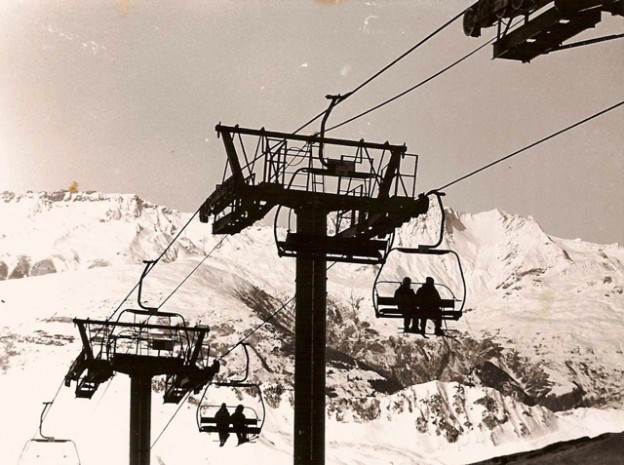
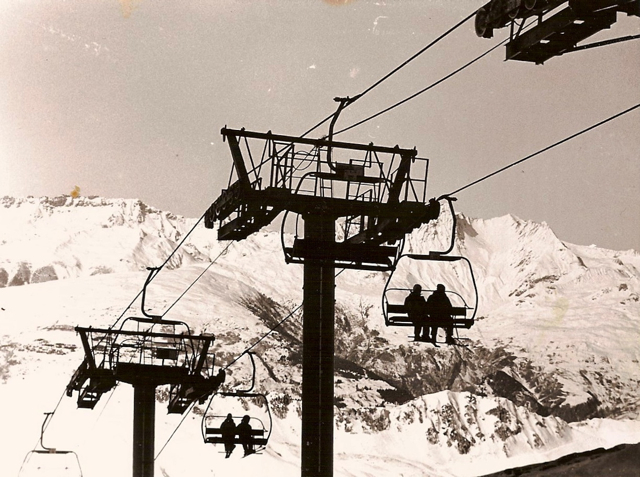
    Ski lift, high contrast, les arcs
    060201_les_arcs02
    060201_les_arcs03060201_les_arcs04

    Probably the best module I studied during my year at ENPC was not engineering-themed – but photography. The module was run as an English language course: the subject of the lessons was photography, and the lessons were in English. Being a native English speaker I was not able to get any credits for the module, but I gained much more. I still vividly remember the magic of seeing images emerge on pieces of paper submerged in solution. In just a few short hours of teaching I learned somethings that have been much more valuable to me than the hours of lectures I sat through on other subjects.

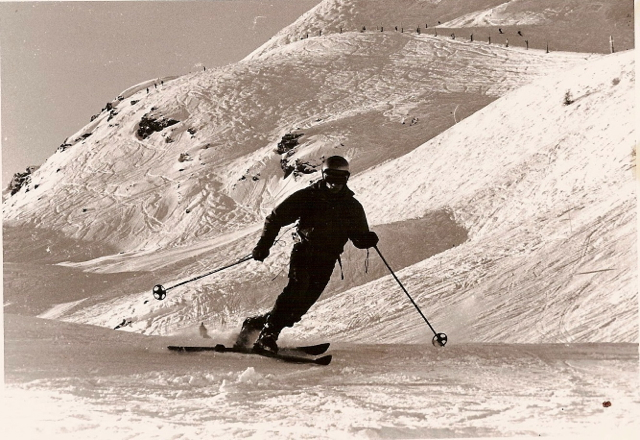
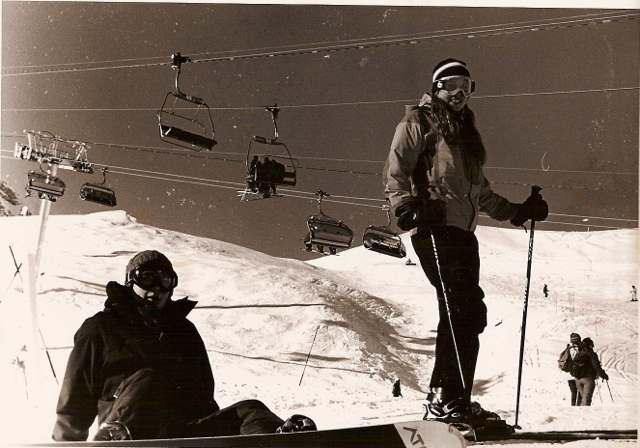
    These photos were taken on a weekend trip skiing at Les Arcs. Getting from Paris to the Alps by overnight train is easy by the way. The night train leaves from Gare d’Austerlitz, and arrives Bourg St Maurice, where there is a lift straight up to Les Arcs.

  • Happy Birthday Livic – Seven Years Old!

    Back in 2004, I and fellow civil engineering student Andy Kosinski got together to create a new student newspaper for the civil engineering department at Imperial College. It was called Livic (‘civil’ backwards). (more…)

  • The Return of Scientific Curiosity and Creativity/Ideas for an Outdoor Classroom

    This post is about rediscovering a childhood fascination for how things work, and the thoughts it has provoked about creating learning environments that harness that fascination for the purposes of education.

    (more…)

  • Joint Best Loser

    NCE Grad of the year cover

    Apparently it was too close to call. The judges deliberated for three hours as to which of the six shortlisted finalists should be given the prestigious title of NCE Graduate of the Year 2008. In the end, the very deserving winner was Emma Kent and Eiffelover was relegated to joint runner up: i.e. Joint Best Loser – which has all the advantages of being a finalist without the obligations of being the winner. So congratulations to the winner, thanks to the NCE, and thank you to the judges, who, through their choice, allowed me to retain my anonymity when shopping in the supermarket.

  • Finishing my course – travelling to Iran by train

    Since my last post, I have been rather busy!  The lack of posts on this blog since then can be attributed in part to the large amount of work my final year project has required in order to get it finished.  The project has changed direction many times along the way and even the end point of the project had not been set until my final week at the company where I had my placement.  But as of Friday it has all been wrapped up. 

    But it hasn’t all been work.  In between we have managed visits to Brittany’s gale-force wind-lashed coast, Bratislava and Alsace as well as to marriages in the UK and Madrid.

    And now the summer beckons.  My plan is to travel with a friend from Paris to Iran and back by train.  The route takes me from Paris via Strasbourg to Zurich and then overnight to Zagreb and then Belgrade.  The next leg from Belgrade through Macedonia brings me to northern Greece on the second day.  After a couple of days rest, the overnight train takes me to Istanbul where I will be meeting Dan for our onward journey across the Bosporous and into Asia.  The direct train from Istanbul to Tehran takes three days.  After two days crossing Turkey, the train reaches lake Van in the east of the country where we must board a boat across to the other shore where we pick up the train again down to the Iranian capital. 

    Once in Iran, we will spend three weeks visiting the major cities of Tehran, Isphahan, Shiraz, Yazd and Mashad before heading back along the Caspian Sea coast back into Turkey and back along the Black Sea coast to Istanbul and back through Europe.  

    So many people have asked me why Iran? The trip itself is the end product of an itinerary that looked very different at the beginning of the year.  But my interest in Iran is manyfold.   All I have read about the country tells me that it is a beautiful place with some unmissable places to visit. Iranian friends I have told about the visit are at pains to emphasise just how well we will be welcomed.  And yet, this impression of the country is a far cry from that held by those who rely on western media for any ideas about the country.  This difference in points of view is one of the reasons that I want to go to Iran and experience the country and its hospitality myself.

    And why go by train?  Well, apart from the enormous carbon footprint associated with flying, I find it hard to imagine going by any other means.  The journey from Europe to Iran by land is one that dates back to the silk route.  Travelling by land is a way of feeling physically connected to a land that in the press feels far away.  Ok, so six days of travel is not exactly close, but these trains do go slowly!  And I am looking forward to seeing how the landscape, climate, architecture, people and language change along the way.  Flying can’t give you that. 

    I am also lucky that I have the time to make such a journey.   The website seat61 and Thomas Cook international rail timetable are in part responsible for my choosing this route.  It also turns out that I am taking the same route as that described in Paul Theroux’s Great Railway Bazaar in which he describes his journey to and from Singapore by train.  He made his journey in the 1970s.  Since then, a lot has changed along his route, and I look forward to comparing notes.

    I will be writing up my journey on this website upon my return, and will be publishing it on this blog.

  • Berlin Wall lost in translation – can anyone help?

    I am correcting a document that has been translated from French into English and I have hit upon a term that keeps cropping up, and I simply don’t know what it is in English.

    In French the term is ‘Paroi Berlinoise’. I always see it translated as ‘Berlin Wall’. In my (admittedly limited) experience as an engineer, I have never heard of a ‘Berlin Wall’ unless it is a type of reinforced concrete structure with graffiti on one side that typically has a design life of, say, forty years.

    I don’t think this is what this document is talking about. Can anyone help? (It maybe useful to know that ‘paroi’ is a word tpyically associated with perimeter foundation walls; for example, a ‘paroi moulée’ translates as diaphragm wall)

  • Project update – meeting the architect and virtual handshakes + one for those who moan about London Underground

    At the beginning of the week, the architects for the project that I am working on flew into town for an intensive week of meetings. Most of yesterday was spent shuttling back and forth between our offices and La Défense for meetings about the building’s structure. For me it was a great chance to get to know the project team before the video conferencing kicks off in ernest (despite Margaret Atwood’s invention that allows her to do book signings wherever she wants in the world from the comfort of her own home, it is still not possible to shake hands over the internet). For the moment there are still a number of questions to answer about the building’s facade but once those are answered there will be a rush to design the floor which, for the moment, is where my project is going to be focused. I therefore have the sense that we are in the calm before the storm.

    During a coffee break, I tried to strike up a non-engineering/architecture conversation with the architects. Struggling fora topic, I suddenly remembered that my favourite US online radio station, KCRW, is broadcast from the same town as their headquarters. They listen to my favourite show in their office on the otherside of the world, every morning. Doesn’t the internet make the world small?

    In other news, old calculations that I had made on the cost of another tower have come back to haunt me. It is not that they were wrong, it is just that I was suddenly required to present my results without any notice. I was therefore glad that I had left a decent paper trail so that I could quickly see how I came to the result two weeks ago. This is basically thanks to my new strategy: to date absolutely everything, to put the date in the name and print it in the header and to include a table of modifications for each time I use a calculation sheet. This may all seem obvious now but it wasn’t when I started off. I have since been asked to carry out a cost calculation on the tower that is the focus of my project. Since cost will be an important part of the choice of floor design, I will be able to tie the overall cost calculation into my project. And now that I have the method sorted, it hopefully shouldn’t take too long to calculate. The only trouble is… none of the floors are identical…

    + one for those who moan about London Underground – spare a thought for those who ride the L in Chicago – from a new blog find: Anonymous 1%

  • Tube Challenge – Project update: wobbly floors

    Tube Challenge
    I always dreamed of doing this when I was a lonely and boring teenager. All the tube stations in one day. Thanks to Mary for sending me this link from Jon’s blog. I will add this to the reasons to move back to London list, a list that I hope will soften the blow of leaving Paris in the autumn.

    Project update
    This is just the briefest of project updates. Things have been super busy recently in the office. Most of last week was spent researching how different types of floor structure vibrate when people walk across them. Unfortunately, the classical mechanical methods that we have been taught are not very useful for the design of office buildings as the calculations quickly become unwieldy and unreliable. Instead, the literature in this area gives empirically derived formulas for checking for excessive vibrations. The problem with these quite specific methods is that it is difficult to see how applicable they are across the board to other types of flooring. In the next few days I will be talking to the manufacturers of various different flooring systems to find out which is best suited to the building that I am working on. They will provide their own methods for checking for vibrations, but it would be nice if I didn’t have to rely on them to provide the method with which I will be testing their theory!

    I have also been a little more involved with preparing material for meetings with the architects for whom, being American, it is useful to prepare stuff in English. All of a sudden, from languishing on the sidelines, I have been thrust into the middle of it all. That’s fine with me!

  • Pounds per square inch?? (project update)

    Today I started getting into the nitty gritty of how to stop a floor from vibrating. When dimensioning the floor slab of a building, one of the considerations is to check whether the natural frequency of the floor is in the same frequency range as that for footsteps. If the two frequencies do coincide the latter could resonate with the first causing the floor to shake.

    Today I have been looking at an American document that brings together the different ways of estimation this interaction. Most of the results are based on empirical evidence of what seems to work. This lack of rigour is fine with me, and is common in engineering. The thing which has really held me up is the units: all the calculations are in pounds, feet and inches! Could there be a more unhelpful system of measurement?

    Curious about this archaic standard, I started hunting around on Wikipdedia and found a wealth of information on the origins of both systems. Apparently, the only countries still to use imperial units of measurement are the USA, Liberia and Myanmar, although, I might add that here in the office my colleagues were surprised to here that in the UK we also use the metric system.

    I urge anyone who is similarly disposed towards the imperial system, to use this site to help them out.

  • Progress…at last

    After much rudderlessness, it seems I now have something fairly conretely (haha!) defined subject for my Projet de Fin d’Etudes. Up until yesterday, I had been increasingly frustrated at my lack of progress. I just seemed to be doing calculations while newer ‘stagiaires’ were wading deep into reading material for their projects. So this morning, with a little more determination I brought the subject up with the powers that be, and this time it was with success.

    It now looks like the bulk of my project will be a study of the floor design for an innovative new tower. As well as dynamics calculations, it will involve plenty of discussion with the architect and the other engineers involved, which suits me. I am happy because, though complicated, it is a well defined subject. I too now have piles of documents to wade knee-deep into.

    Despite this sudden change of course, I do not regard the work that I have done so far to have been a waste. If anything it has been a good intorduction to working in the company. The time spent thinking about how best to decompose the problems I have solved will not have been wasted as, and I said this in a recent blog post, that my method should be applicable to a wider range of problems and, if not, at the very least, next time in my career when I have to work out the cost of a building.

  • Zen and the art of building maintenance

    blog2.JPG


    I am in the throws of reading Zen and the Art of Motorcycle Maintenance by Robert Persig. In my view it is a philosophical book that challenges the reader to find beauty in technology, in maths and in reason. I am no book reviewer, so I will only add that Persig uses the motorcycle as an analogy for different ways of thinking. In particular, he talks about the idea of an ‘intellectual knife’: the tool with which we slice up a problem into its components before we set about resolving it. So each evening on the metro, I have been reading about different ways a motorcycle can be divided up in order to explain its different functions, and it has struck me how similar this exercise is to what I am doing at work in order to calculate the cost of the cost of a skyscraper.

    One way to add up the cost is to start at the top left-hand corner, and work your way down to the bottom right-hand corner, counting up all the lumps of concrete and steel along the way. This method would be ideal for a bungalow but not for a high-rise as for starters it fails to take into the repetition in the structure. So the first use of the knife is to cut the building up into repeating chunks. Now in the case of this building, like the Gherkin, this building is curvy, so no two floors are identical. The knife is therefore used to cut the building up into chunks whose dimensions are broadly similar, so that mean values for these chunks can be used.

    Am I boring you yet? Then look at the photo. I put it in to spruce up what on the surface might otherwise be an apparently boring entry. It’s the view from my office (prizes for anyone who can spot the Eiffel tower). Refreshed? Right, lets carry on…

    So we have our broadly similar chunks of building: can’t we start counting? Well yes, but if you want to automate the process you have to put into Excel. I do want to automate it because this project is constantly changing and I want to quickly be able to modify the calculation. This is really where the headaches begin. So often have I marched into writing an Excel spreadsheet only to find that when I am waste-deep in it, it becomes very complicated, difficult to verify and impossible for anyone else to follow. This happened to me last week on this same project. I spent the weekend thinking that there must be a better way. Before I started again I set out the main things I wanted to achieve when doing the calculation again. It has to be easy to enter the data, easy to modify the data, easy to verify the results and easy for somebody else to follow.

    If there are any readers left, I want to illustrate the problems that these objectives can cause. I won’t go into how I solved them because whereas the objectives are general and can be applied to the automation of other engineering problems, the solution is specific, of less ‘interest’ to others, and I have that recorded in the form of the spreadsheet itself.

    Starting with entering the data, it is very well to count up all the similar columns but how can you be certain that they have all been counted. One answer is to create a big grid with all the stories, to cut and paste in all the similar elements and then to count them all up. Whilst this approach starts off very pleasing to look at, (I think this approach uses Excel well) it quickly becomes unwieldy. In order to simplify things, it is necessary to only put in the absolute minimum of information, putting the rest of the information perhaps on another sheet. The risk here is that the sheet quickly becomes difficult for someone else to follow. The other problem with hiding information elsewhere is that it also becomes difficult to modify quickly.

    One might conclude that ease of modification is at the cost of simplicity. However with careful application of the intellectual knife, I don’t necessarily think that this is so. Experience of this sort of calculation, something that I don’t have much of, would give an idea of which variables are more likely to vary and so which ones should be easier to change. For example it may be that the thickness of the core walls are much less likely to change than the thickness of the floor.

    Moving on from the depths of dullness and back towards a level of interest that might only correspond to vaguely dull, the one thing I haven’t talked about is how to check you got the right answer, because after all, that’s all that matters. Verifying my procedure and checking that it gives me a reasonable answer has taken me so long (most of the week in fact) that I wonder if using a computer has saved me any time (remember citizens that that is what computers are for…). Trying to unravel what a string of cell names in a formula actually means is the bane of my nascent working life! It doesn’t help that I have no sense of what the answer should be.

    That all changed yesterday when I spent the afternoon looking at the final cost add-up of another building designed by this company. By looking at what the price of the foundations was as a percentage of the total cost, say, I instantly had a ball park figure to head for. I then used this rubric to look for where my answers were way off par. Sure enough, where there were discrepancies, there were mistakes.

    It makes me wonder why bother doing any of this calculation afresh. The two match up so well that surely one could take the price of the first, modify for inflation, add a bit, and be done.

    To conclude, after a week of work on this calculation, I am happy with the result. I have gone into some detail about what I have done because for one thing, a great deal of reflection would quickly have been forgotten as soon as I move onto the next thing. I fear the hours that can be spent in front of computer screen with nothing to show for it. I hope that at the very least I will be able to apply what I have learnt here to the next problem, and more ambitiously that the fruits of my labour will be a rethink of the way that these problems are tackled, which strikes me, albeit as a novice, as inefficient.

    It seems entirely appropriate that ‘Zen and the Art of Motorcycle Maintenance’ has inspired me to think in depth about what I am doing. It is unfortunate for me however that motorcycles sound a lot more sexy than volumes of concrete and Excel spreadsheets. Thanks for reading.

  • “The late worm avoids the bird” and other stories…

    I have my cousin Ralph (of Stringfever fame – see link to the left, under music) to thank for that piece of advice, which makes me laugh each time I think of it. Were I a worm, I would quite likely have been eaten by birds of prey at the market this morning. I was there before eight so that I could get some shopping in before breakfast (this is the sort of behaviour that my Marston Street house mates might associate with me when I was sitting finals). It was such a beautiful morning and, well, I like the market. It’s better however, when all the sellers are actually at their stalls rather than in the café. The bio-lady (who has not been treated with any chemical fertilizers) had evidently nipped off for one, and the lady who sells bags of chicory and apples ideal for juicing, opposite, probably went with her. In that spot, the only person left was a man selling bras, who sheepishly refused to take any money on behalf of his neighbour for a bag of her produce.

    And now from before breakfast time, to lunchtime, which is an event here at work. At noon, people start milling around the office talking about going down to the canteen (a quick survey of the people in my team confirms rather unscientifically what I have been told, that people here for breakfast have a coffee and a dried biscuity thing at most, so they must be starving by noon). A big group made up of anyone from the director to the draghtsmen (though interestingly not the secretaries) go down in the lift to the underbelly of the building that is the canteen. This vast underground space has a buffet down one side then rows upon rows of tables and benches. The food is very good if you are into meat, and while not cheap, it is still subsidised by the company. And then everyone eats together. Slowly. Several courses are taken, even if one might only consist of an apple or yoghurt. Only when everyone on the table has had their final spoon of Yoplait does anyone get up. The trays go off on the conveyor belt where they get taken to invisible people who magically clear them and make them nice for the next engineer. En masse, we leave one windowless room for another, this time with a coffee counter at one end. Espressos are gulped down at breathtaking speed. Quick as a flash we are back up in the elevators and at our desks without ever having the inconvenience of seeing sunlight or talking to anyone who doesn’t have a diploma from Les Ponts (insert other grand ecole name here if you like). That’s efficiency for you.

    Speaking of efficiency, two separate personnel departments are now in a race to see who can get me a social security number first. I still have not been paid for my teaching work at the University of Marne la Vallée. I am sure I mentioned this at the time, but just to recap, the university wouldn’t give me a contract without a social security number, and the social security wouldn’t give me a number without a contract. Someone had to give in, and rightly so it was the university. That was back in November. Now in March and my new job, I need a social security number so that I can get paid at work. Here, they gave me a contract straightaway and are now applying for the number. Given that the university are still faffing around, it looks likely that my new job will get me the number and that I will then give that number to my old employees who should then be able to pay me. That’s inefficiency for you. And before anyone thinks I am having a go at French bureaucracy, I am not. It’s just the university being rubbish.

  • Bending beams and counting the cost

    During these first few weeks of my placement I have been carrying out some fairly entry-level calculations on a forty-five storey tower. These follow on nicely from courses in concrete and steel design that I took during my first term at ENPC. However, while these courses were based on the new Eurocode regulations (currently being adopted in the U.K. and in France), the company I am working for is in a transition period during which it is using the new code for some projects and the old French code for others.

    During the first few days I therefore had to get my head round these older regulations that I had never seen before. In particular I was getting hung up on the issue of how much a beam should bend in service. While a bending beam may not necessarily break, it may cause temporary walls to crack and finishes to become damaged: hence the limits on how far a beam can deflect in everyday use. Both codes have similar limits for this deflection; the only difference is in how you calculate the deflection. The Eurocode is a lot more flexible (read vague) on how to perform this sort calculation than the French code. I spent a long time going into the detail of how to apply the French code and got quite confused. Everyone that I asked had their own way of doing it but no one seemed to have a definitive answer (this was not helped by the fact that those who do know are rushed off their feet). In the end, I found that these technicalities accounted for minor differences and I was able to move on. I remain unsatisfied however with my methodology.

    Once a methodology is established, calculations can be automated with Excel. Everyone has their own Excel sheets to speed things up. Or at least that is the idea. When the sheet is up and running, it is very easy to rattle off calculations, but getting it to work is the difficult part and I sometimes wonder whether the time taken verifying the code doesn’t add up to more than it would have taken to do the calculations by hand. It is also very difficult to follow your working in Excel, and even harder to follow someone else’s. The biggest challenge is making these automated calculations readable to others.

    As well as the program for dimensioning beams, I am now on the second version of a program that will work out an approximate cost for this tower. Something that started relatively simply has spiralled out of control, hence the second version. I hope to be able to report progress tomorrow!

  • Final Year Project

    Last Friday I handed in my last piece of course work at ENPC.  Despite having started my placement two weeks ago, last week I was still finishing off work for Ponts.  With all that finished (and after a refreshing weekend of skiing in the Alps), I am now able to give my project my full attention.

    I have decided to use this blog to help me chart my progress through the next four months (actually it is now just three and a half!).  With my project as ill-defined as it is, I hope that entries in my blog will help me keep track of what I am achieving as well as recording the decisions that I will make along the way.

    I say that the project is ill-defined but I only have one point of reference, that being the project that was the fourth year of my chemistry degree.  Back then, I was given a specific research topic and I spent the first weeks reading around the subject and planning experiments for the future.  Though that was for a chemistry degree, I think it is not an unreasonable comparison as it seems to be a similar point of departure as that for people I know doing their final year project at Imperial.

    With no real point of reference, it is difficult to know what to do.  This much I do know from my supervisors at work who themselves undertook similar projects when they were at les Ponts: in the first few weeks, I will be involved in the projects that the team that I part of are working on.  The company has several tall tower projects on the go.  One possibility is that my project will be a broad survey of the different aspects of tall building design, taken from my experience of working on these different projects.  Another is that I will investigate a specific aspect of the design of one or several of these buildings and that this investigation will form the basis of my project.  It is therefore difficult to know, for example, whether the cost estimation of a skyscraper that I carried out this afternoon will be a component of my report or not.

    Hence it is all the more important for me to write up what I am doing along the way.  Watch this space…

  • The end of bridges and the beginning of projects

    After seven and a half years, I had my final exam as an undergraduate last Friday.  As final exams go, it counted for a minute part of my degree – a far cry from my chemistry finals five years ago.  Assessment at ENPC is continuous with marked courseworks and the occasional test.  The “Conceptions Parasismiques” exam last week was only significant because it was my last engagement at the Ecole des Ponts, for tomorrow, I start my placement in a French company.

    At this point it would be helpful to mention how I would be finishing my degree if I were back in the UK.  In their final year, students at Imperial are expected to take on a full course-load of lectures and tutorials and at the same time, to conduct independent research that is to be written up at the end of the year, somehow in the middle of revising for final exams.  In contrast, the system at Les Ponts, which I might add is a system which seems to be typical among other European engineering courses that I have heard about, requires that its students undertake a “projet de fin d’études”.  Rather than being conducted in parallel with studies at the university, the PFE takes place in a company or a laboratory.  In either case, the student is offered a placement during which they can undertake research at the same time as being involved with the day-to-day work of that enterprise.  The placement is also paid, albeit at minimum wage level.  Final year students are close to being qualified and so should know their stuff.  This system offers them the chance to experience the work environment and also offers cheap labour to the companies involved.

    Getting a placement is something of a magic art, and the following words are intended for the eight or so Imperial students coming to ENPC next year.  What is not entirely clear with the PFE is whether it is the students who should be approaching companies with ideas for a project or whether students should be contacting the companies and asking them what they have on offer.  One thing is for certain: if you tell an engineering company in France that you are from the Ecole des Ponts et Chaussées and you are looking for a PFE, they know what you are talking about.

    In order to get my first experience of the professional world, and of speaking French proper like, I went to an event back in November called the Forum Trium, a careers fair where engineering companies and financial firms battle it out to solicit the interest of students from one of a number of grandes écoles in Paris.  I turned up with the worst CV in the world, officially, and proceeded to distribute copies of it evenly across the hall.  Most employers were looking for people interested graduate jobs, but my name was noted nonetheless.

    I left the event no closer to finding a project.  Term plodded on and the PFE slipped down my list of priorities until just before Christmas, when I found that a fair chunk of my French friends had found placements, and what’s more, they were going to be working on topics that not only interested me, but were with companies I would have dearly liked to have had a place with.  I was no closer, however, to understanding how this application process should work.  By the time term started in the New Year, I had landed on the idea of investigating the ways in which the carbon footprint of a building can be measured (more about this in the future).  The project would have taken place at the local building research institute near Les Ponts.  The whole project was conceived over a series of coffees with a couple of members of staff from the department.  I was all set to accept when I received a phone call from a director of Setec TPI who invited me to an interview.  It seemed that one of my awful CVs from the Forum Trium had made it onto his desk.  He was looking for an English speaking engineering to join a team working in collaboration with an American architect on a new skyscraper at La Défense.  Unshaven, I turned up that afternoon for the interview and was offered the place.  In the space of a week I had gone from having nothing to having a choice of placements.

    In the end I chose Setec.  My project there will be an investigation into the role of skyscraper floor design in the overall stability of the building, both during construction and in service.  But I didn’t choose this placement for the topic; rather I chose it for the experience of working in a French engineering office environment, and the opportunity to work on one of Paris’ most prestigious projects.  If the last four months of study have been good for my French, I am hoping that this placement is going to do wonders.

    In conclusion then, what would I recommend to next year’s students when it comes to looking for a placement?  Well, I would definitely advise going to the Forum Trium and introducing yourself to as many companies as you can.  Since I accepted my offer at Setec I have been offered two more placements (including one with SNCF that would have given me free TGV travel for the rest of the year!!) and both of these directly from the Forum.  My other piece of advice is not to be scared to approach companies yourself and say, what project could you offer me.  They expect to get calls from people like you, so you may as well get in where you want to before everyone else does.  The chances are that the early you get involved, the more likely you are to get to choose a project that really interests you.

  • Le vide grenier de l’onzième

    We were recently asked in one of our French classes to write an article about a business in the style of short piece for a newspaper. The brief included nine words, some more obscure than others, that had to be included somewhere in the text. So for those who want to read a little story about a local bric-a-brac store look no further than below (the aforementioned nine words are in bold)

    Le vide grenier de l’onzième

    Il s’agit d’un magasin parisien qui existe depuis quarante ans dans ce quartier assez bobo. Sa vitrine est encadrée de bois très travaillé, avec des fleurs et des gargouilles gravées sur les deux côtés : un véritable bijou d’architecture. Derrière on trouve tout un bric-à-brac bizarre en provenance de quelques centaines de greniers anonymes, vidés grâce à cette entreprise.

    La famille Tatattic habite à cet endroit depuis la fin du XIXe siècle : l’arrière grand-père Tatattic fut bachi bouzouk pendant la guerre de Crimée. Il traversa ensuite l’Europe pendant vingt ans avec sa carriole en tant que marchand de produits turcs. Il accumula un stock précieux, et quand il arriva à Paris, il vendit la totalité pour acheter un terrain de deux cents mètres carrés à côté de la Rue de Charonne. À cette époque, on était en pleine campagne, bien avant que la ville de Paris soit agrandie.

    Pendant les années soixante et le réaménagement de la ville, l’arrière petit-fils Patrick Tatattic vendit le terrain et fit construire un grand immeuble avec un magasin au rez-de-chaussée. Il trouva l’amour avec une jolie danseuse qui s’appelait Kati. Elle fit le clown et le fit rire. Ils se découvrirent en plus une passion commune, les vide-greniers. Après trois semaines, ils se marièrent et commencèrent à explorer les greniers du quartier…

    Quarante ans plus tard, ils travaillent toujours ensemble. Derrière le comptoir, c’est Patrick Tatattic, toujours chic avec son complet marron, qui vous accueille. C’est lui qui s’occupe de l’argent et du prix final. Pourtant, il ne connaît l’emplacement d’aucun de ses produits. Pour trouver quelque chose de précis, il faut s’adresser à sa femme.

    Kati Tatattic n’est plus aussi belle que dans les années soixante, peut-être à cause de ces quarante ans passés cachée dans leur entrepôt (elle applique plusieurs couches de maquillage et sa peau fait un peu abricot fané). Elle est devenue vieille, comme les trésors que cette femme, sans enfants, surveille sept jours sur sept : c’est passionnant. Bien qu’elle ait quitté la scène depuis son mariage, elle danse toujours avec son mari. Si on regarde par la fenêtre quand il n’y a pas de clients à l’intérieur (c’est souvent le cas) on peut voir les deux en train de valser dans les couloirs.

    C’est vrai que le stock est d’une qualité extraordinaire. On demande comment ces marchands peuvent sélectionner les meilleures pièces de chaque grenier au milieu de friperies, de valises et de la poussière qui n’intéressent personne. Leur secret: on dit dans le coin que Madame et Monsieur Tatattic ont un passe-partout pour tous les greniers de Paris, et qu’ils viennent en pleine nuit pour voler les objets de valeur avant que les propriétaires, qui dorment en dessous, puissent les vendre à un prix supérieur. Attention, peut-être sont-ils déjà venus danser chez vous.

  • The end of architecture school

    Dan presents the architecture school

    Today I sat the final exam for what has probably been the most enjoyable course that I have studied during the last four years, the ambitiously titled “History of Construction”. The course took place not at Les Ponts, but at the neighbouring architecture school EAMLV

    The lecturer expertly lead us through building sites from Egypt to Millau and described building materials as diverse as granite and linoleum. But what got me really excited about the course was being in a room full of real live architects. All those asymmetrical haircuts, those interesting glasses. From the outset I fully expected to see my own haircut lose its symmetry and that my sight should deteriorate sufficiently for me to make a purchase at the opticians. I imagined myself sitting among the trendies, smoking cigarettes with my new friends (smoking is clearly an initiation rite).

    In the end, it didn’t quite work out like that. On the plus side, the lectures were excellent and really quite inspiring: it constantly reminded me of all that stuff about why I went into engineering. I have to say that unlike my other exams here, this one wasn’t such a hit and miss affair. But lets look at the bad side… I left the architecture school for the last time looking less trendy than I did at the outset (I got dressed in the dark this morning), my eyesight is just as good as it was before, and I haven’t managed to give up “not smoking”. As for new architect friends, well there was this one guy who I was chummy with, who used to say hi and stuff, but when it came to saying goodbye, both of us knew there was no need to exchange emails. All I could muster when shaking his hand was a feeble “on se revoit sur un chantier un jour” (see you one day on a building site). Disaster.

  • Earthquakes exam leaves students shakey

    We have just had the first of two earthquake engineering exams, and this one was hard!  Revision for the exam was doubly frustrating: firstly because the key topics that we had been told would be on the list had been well hidden among three dense handouts; secondly because of all the twenty topics on the list, only two came up.  Still, I am at least pleased that I didn’t waste too much time revising last night as none of the subjects that I would have studied came up anyway.  This may be a reactionary comment admittedly, but I seriously advise anyone thinking of coming here next year to think twice about studying  this subject.

     This exam has been preventing me thinking about the rest of the term and now that it is over things are looking more rosy!  Next week Dan and I will be sitting the History of Construction exam at the architecture school.  I don’t think I have ever looked forward to an exam more: we will be asked to draw and annotate sketches of buildings ranging from the pyramids to the Milleau Viaduct.  I do this kind of thing on holiday! 

    More exams like this please, and less involving a calculator.

  • Photography Course

    dsc02040b.jpg

    Last week I got wind of a course at ENPC in photography. After a little research I found out that it is actually an advanced course for people learning English, the content of which happens to be photography. Since the course takes place during one of my free slots, I tried this week to sneak along. I asked the teacher whether, given my level of English, I could sit at the back and listen. He happily accepted me onto the course but rather than sit at the back and listen he wants to speak up as afterall two native English speakers are better for the class than just one.

    The first class I went to was on James Natchwey. We wathced a documentary on how he works and I have to say I was stunned. Have a look at his website to see what I mean: www.jamesnatchwey.com

    There is a class blog where we can give each other tips on technique as well as use it to display our photos. I have put a link to this in my blog roll. Most excitingly, the college has a dark room so I will be developping some of my own photos in the not to distant future.

  • How to be dam safe

    0303-glen-canyon-dam-pan12.jpg
    Glen Canyon Dam, as featured in the popular film «Superman»

    When designing, building and operating a dam, there are a few steps that ought to be followed in order to avoid large loss of life. Here are a few that I picked up at my first lecture in a series with the title that I have badly translated as “Conception of risky structures”:

    1) Pay your workers well. The most dangerous period during the lifetime of a dam spans its construction, the filling of the reservoir and the first year of full service. Going on strike over pay during the construction is dangerous because the dam might not be ready for the winter’s flood waters and subsequently may get washed away.

    2) When checking for cracks in the bedrock on to which the dam is to be founded, looking at 50 metre intervals is not good enough. A dam in Wako, Texas collapsed when a section of the bedrock between two cracks about 49 metres apart gave way.

    3) If cracks have been found in the ground, it is unwise to leave them unfilled just because your client refused to give you any extra money to pay for this unforseen cost. To do so has led to death and destruction.

    4) If you are satisfied with the conclusions of your ground survey that there are no cracks in the ground under your dam, don’t then move your dam a few metres downstream to make your lake a bit bigger without doing a new survey. Doh.

    5) If when building, say, a 280m high dam in Italy, you notice that the mountain into which your dam has been founded has started moving(!) at a rate of several centimetres a day, don’t just carry on filling the dam and hope for the best. (In this case though the dam didn’t collapse, the mountain on one side of the lake gave way and a terrific landslide almost filled the lake that had been created, generating an enormous wave which swept over the dam and destroyed villages down-stream)

    6) Finally, if your dam once built is not a profitable venture, don’t succumb to the temptation to sell it to a group of anglers. They may use it for stocking fish. This in itself is no problem. The problems arise in the rainy season when they may lose a significant portion of their fish down the overflow pipe. To prevent this loss, they may put a gauze over the pipe to keep the fish in, but which will also unwittingly get blocked with the leaves and branches which usually accompany storm waters, forcing the flood waters over the top, destroying the dam and killing 2000 people in the town below.

    These six tips are from real examples of fatal dam failures.

    When designing a dam, don’t just be safe, be dam safe.

    282-over-the-hoover-dam2.jpg

    Rose leaning over the Hoover Dam during our visit in March 2003

  • Economic croissants and maps of cheese

    Time is flying by. I am already into my second week of college. These first three weeks are preparatory classes for all the Erasamus students at les Ponts, afterwhich the term starts in earnest. I am being taught in a group of ten made up of two German students, one from Austria, one from Grand Canaria, two Portugese and then the three of us Brits from Imperial. So used to the Imperial timetable (teach 50 mins cappacinno for 10 teach 50 etc) am I that I found the two hour long classes a little hard going to start with. The trick really is to not look at the clock!

    Not that the lessons are boring. No, the course is being taught well and as far as language classes go I think it is the most I have ever been engaged in this sort of lesson with a good mix of group work and class disscussion. The aim of the course is to help us to settle in and to bring our French out of retirement. Part of the settling-in is achieved by teaching us about “French culture”. The material is almost priceless in the way it conforms to a sterotype of what kids are spoon fed in French schools (France’s rivers, mountains and departments, as well as gastronomical maps and economic croissants – the term given to the younger and more productive cresecent from Brittany to the northern Alps). We’ve had gastronomical maps – my request for a map of cheeses is currently being processed. More alarmingly, the worksheet that gave the history of names that you are likely to hear in France failed to note that between 15 and 20% of France’s population are from families of immigrants one, two or three generations ago and so do not have names derived from Asterix or celtic invaders. There was also no mention of the foods that these groups might traditionally eat on the gastronomical map. No surprise there. But on the plus side, I have to say that I am sucker for learning things like maps of cheeses so give me a few weeks and you can test me.

    Right, got to run for my first test…

  • False starts – Grave affair – Breaking & Entering

    Sunday evening I started to pack my bag for my first day of school on Monday, or so I thought… A double-check of a letter from ENPC reconfirmed what Mary has suspected: that I wasn’t actually starting until Tuesday. Brilliant, a free day in Paris, and with my new travel card I could do absolutely anything! I could have started on the Louvre, go for a walk across town, walk across Henry’s bridge, even start a neighbourhood photo diary – obviously being inspired by Sunday’s exhibition. The important thing about being able to do anything is that you must finally settle on something.

    I settled on making tomato soup for lunch with Andy and Liz who were staying with us at the time. To this activity I had alotted an hour, but anyone who knows me in the kitchen won’t be suprised to hear that it was ready only just in time for lunch. It was worth the wait though, even if I do say so myself.

    In the afternoon, Liz an Andy invited me to tour our world-famous local cemetary Pere Lachaise. Amongst its ‘old members’ lie Jim Morrison, Oscar Wilde, Edith Piaf and a whole host of nineteenth centrury notables including Proust, Hausmann (I will surely write more in the future about this legend of town planning) Berlioz and Chopin (I have heard of these latter two that they are now de-composing!). But I am never entirely sure what I am supposed to when I approach one of these heady headstones/town planner tombstones/composer’s coffins/celebrity sarcophogi. I don’t feel sad for someone who has been dead all my life, and whose great works are not contained this cemetary. It also seems bizarre to be happy snapping tombstones when there are freshly laid flowers all around for the much less famous recently deceased. Still, I am as guilty as anyone: here’s a photo of Liz and Chopin’s grave

    liz-and-fred-q4.jpg

    So, with still half the day still to kill, we popped back to the apartment only to get the key stuck in the front door. It wouldn’t budge in, out, round or any combination of these. We were locked out and there was no one on the other side to help us out. We waited an hour and a half for a lock smith that never showed up, then found another who said he’d be round in fifteen minutes. Liz, Andy and I were shacked up in a bar next door to the locksmith’s store so I was waiting to follow him up the road to our apartment, thinking he would walk. Only suddenly he put on a helmet and disappeared off towards our flat on a scooter. I chased after him to no avail, but thwarted him at the one way system.

    He couldn’t budge the dammed key and so he brought all his skills to bear on his crowbar with which he forced open the door. Though the door and frame were hardly damaged the whole lock had to be replaced. A nice one hundred and eighty Euro surprise.

    By the time it was all cleared up, it was gone 5pm. Somehow, though I had had a packed day, it was not exactly how I imagined my free to day in Paris to have been filled!

  • Blog blues

    Thanks to all of you (well one of you) for your requests for photos. I have now been trying to get photos to work on my last entry but to no avail. I will attempt tomorrow at work. A new banner is on its way as well. You lucky things. Until then I am afraid you are just going to have to make do with all my little words.

  • Why blog?

    This first entry is not a treatise on why one should blog.  I am not even certain why I should blog.  But I am certain that I like other people’s blogs, so much so that I want to have a go myself.

    So what might the casual reader expect to find in this blog?  Well, wary of promising too much and not delivering – a common syptom of initial overenthusiasm – lets just keep it simple…

    I want to achieve two things with this blog.

    • Those who know me know that I am on the unhealthy side of enthusiastic about civil engineering – buildings, bridges, towers, tunnels, cities – the lot.  I want to use this blog to share that enthusiasm with anyone  who is interested.
    • I am about to spend a year studying in France.  I hope this blog will help people I know stay in touch with me and with what I am doing.  I also hope that it will encourage those who are intereested in studying abroad to apply.

    So there you have it.  My first entry.  Predicatable I am sure.  I hope that the rest is less predicatable and more enjoyable.

    Ciao for now