Category: Uncategorized

  • A book of interdependence

    The Pattern Book for Regenerative Design is built around three mindset shifts: interdependence, abundance, and emergence. These are foundational to regenerative design and my aim in writing this book has been to embed these mindsets not only in the content, but in the structure of the book—and in how it gets used.

    Focusing today on interdependence:

    Regenerative design is rooted in connection—connection to community, to ecology, to the places where we make, as well where we take.

    An interdependence mindset recognises that we are part of all these systems—and we rely on them thriving. We are not independent from the world we design, from the harm we might cause or from the thriving we might create.

    This is a book for engineers (and other humans) who want to work with this mindset and strengthen those connections. The 12 patterns in the Pattern Book help readers connect with different contexts:

    • Patterns for working with different clients and collaborators
    • Patterns for developing our own understanding, tailored to different ways of thinking
    • Patterns for engaging with supply chains, local regions, and policy-making

    The book is designed to grow over time, with contributions from readers showing how they’ve used and remixed the content for their own specific scenarios. In doing so, this builds stronger connections across a growing community of regenerative practitioners in industry.

    Specific motifs in the Pattern Book that support interdependence include:

    • The Second Site – deepening the connection between where we make and where we take
    • Better feedback – understanding the conditions that allow better signals to flow between designers and the places their choices impact
    • Carrier wave – tracing how information flows through projects
    • System Survey – identifying the opportunities for, and barriers to, connection in different scenarios

    Our mutual interdependence is nothing new. But as our communities and ecosystems reach the limits of the stress they can handle, that interdependence becomes harder to ignore.

    This book helps designers work more consciously with shared connection.

  • Clunch

    You read that right. No it is not an abbreviation of pack lunch. Clunch is a type of limestone, and one of the wonderful pieces of vocabulary I learnt this week from Mark, the stonemason who is renovating the front of our house.

    I asked Mark where he thought the Bath stone used in the surrounds to the windows and doors on our house came from. He pointed to a window jamb (another great word) and said which quarry he thought it came from, and not only that, but also whether it came from the top of the quarry of the bottom. All from the way the rock feels and can be worked.

    Here I am in my office writing about localising supply chains. And outside is someone who lives and breathes (literally I suspect from the dust) local supply. Who knows where rocks came from. Who can tell a story about why a block was placed one way or another. Who can find new uses for old pieces (a broken lintel has become a keystone elsewhere on the facade).

    He laughs at me and my Zoom calls. Fair enough. Thank you Mark for all your local wisdom, and your amazing work.

  • Ponts de Cé to Champtoceaux

    Ponts de Cé to Champtoceaux

    A day for integrated travel! 70km from Ponts de Cé to Ancenis, and then 10km by kayak, our bikes carried to the downstream dock in a van, then cycling up the final 2km out of the valley and into our warm-showers accommodation in Champtoceaux.

    I remember a forward to a Department for Transport report in which John Prescott set out his vision for ‘integrated transport’, journeys made possible by joining together different modes of travel. I’ve always liked this idea, but I try to mix it with a bit of the spirit of adventure of Jules Vernes and Around the World in 80 Days. Mixing cycling and kayaking definitely fits into this category.

    We ate breakfast at a riverside market at Bouchedemaine, where the Maine river joins the Loire. We’ve skirted Angers, but all the surrounding places we’ve visited have been so friendly that I imagine I’d like the city too.

    We really had to get the kilometres in early today to get to the kayak in time. This is the first time we’ve really had to cycle in tight convoy to keep the pace up and stay motivated that we are covering the ground.

    At Saint Florient, I saw this plaque showing distances measured from the bridge. It was created at the start of a period of measuring and controlling the Loire after devastating floods. Measure it, control it, exert power over it. Except compared to other big rivers I’ve seen in France, the Loire still feels quite wild. Not the freight transport artery I was expecting.

    At Ancenis we see our first major suspension bridge across the river. This is where M & I crossed the Loire on our first cycle trip in France from Saint Malo to Agen in 2008.

    We rendezvous with the kayaks and head downstream. Wonderful to be in and on the water, travelling with the flow. The current is strong but it is safe to moor up behind the groynes that reach out into the river and create little beaches behind. We climb out on a beach and swim for the first time in the warm river water.

    A stop at a guinguette, recover our bikes, then do the final climb to our hosts for the evening, a lovely couple who welcomed us to their self-built home, where we camped next to their guinea pigs. We stayed up talking about their travels with a trailer and a tandem through Sardinia, Scilly, Greece and the Adriatic, and then about how they built their house.

  • Customer lift

    Customer lift

    I followed this sign expecting some sort of encouragement or affirmation.

    (more…)
  • The satisfaction of learning what the buttons can do

    The satisfaction of learning what the buttons can do

    I am reminded this morning of much I like working out what all the buttons do on a machine. Quite often the machines we use, be they an oven, a sports watch or a computer, have many more functions than we realise. Not all of these devices have the levels of user interface design that you might get from say a modern phone. While I’m a fan of good user design, I quite enjoy pouring through manuals to discover these more obscure functions… or better still, trying to discover them for myself.

    (more…)
  • Clash of the sign writers

    Spotted in Swindon. I don’t understand how this sort of thing happens
  • Why do they say ‘sixty-ten’ in French?

    This question came up on the way home this evening. On the back of the tandem, my daughter was experimenting with counting in French. Things were going fine until we got to sixty-nine. And then I explained that French for seventy is soixante-dix, literally, ‘sixty ten’. Without turning round, I could feel the look of bewilderment on her face.

    (more…)
  • On traffic

    Drivers, please don’t complain about the traffic: you are the traffic

    Broadbent, O. (2019). Internal monologue everytime I hear a driver complain about the traffic. Bristol.
  • Parenting x inspecting hydraulic structures in the Frome Valley

    [Written in May, posted today] Saturday was the chance for my one of my favourite kinds of parenting: the kind where I can go on a journey with my daughter at her pace, stop and look at various bits of engineering infrastructure along the way, and then move on when we are ready.

    This weekend’s excursion was along the Frome Valley in East Bristol. Near where we live the river cuts a steep gorge through the limestone landscape that forms a lush green necklace that weaves its way through our neighbourhood. It is an excellent off-road route for cycling.

    (more…)
  • Embodied perception and the Bristol Swing Festival

    Embodied perception and the Bristol Swing Festival

    Bristol Swing Festival is unique among swing dancing festivals because it offers the chance to learn circus skills alongside learning to dance. One of the things that I love about coming to Bristol for the swing festival every year is the way it makes me feel grounded in myself and the connection it gives me to other people and the world around me. In the past, I haven’t had a philosophical framework to help me interpret these experiences. But this year I think I found it in Matthew Crawford’s book The World Beyond Your Head. Reading the second chapter, ‘Embodied Perception’, I recognise many of the phenomena that he describes in my experiences here at the festival.
    The key idea Crawford introduces is that we think through our bodies: our bodies are an integral part of our thinking process and thinking doesn’t occur just within the confines of our skulls. Before I think about the consequences of this idea I want to first relate the pieces of evidence that he puts forward for this notion of embodied perception to the experiences I have here at the festival. Before we go on I should just say a little more about what goes on at this festival. As the name suggests people coming to this festival to learn to swing dance but what what makes it unusual is that you also learn circus skills alongside those dance skills. On a typical day you’ll spend the morning and early afternoon learning dance steps and then the rest of the afternoon trying out different circus techniques such as tumbling, handstands, tight rope walking, juggling and clowning. It is therefore a very physical environment and one in which you make a lots of physical and mental contact with other people.
    The first piece of evidence that Crawford sites in support of embodied perception is what happens when we use a stick held in the hand to explore a space we can’t see. When we use the stick to rummage around in the unseen space, we are aware of the stick jostling around in our hand as the other end moves over the contours of the hidden space; however, after a while we stop noticing the stick’s pressure against our hands changing and focus instead on what is happening at the tip of the stick. As he describes, it is as if we see through the stick right to the tip. Our awareness has shifted from our hands and is focused instead on what is happening at the tip of the stick. To use his words the probe itself has become transparent – it disappears. He goes on that the crucial fact that makes this integration of the prosthetic possible is it there is a closed loop between action and perception: “what you perceive is determined by what do you, just as when we make use of our own hands.
    You can see this happening as people start to develop dancing and circus skills. The stiltwalkers are initially very aware of the contraptions they have strapped to their legs but as they gain confidence and familiarity with the sensations they receive through these prosthetics about their relationship to the physical world on the ground it is as if the stilts disappear from view. They have become incorporated into the body from an attentional perspective and what the stiltwalker senses is the ground at the at the bottom of the stilts and not the stilts themselves. I think the same can be said of the sensations that two people feel when they learn to dance with one another. When they begin they are very aware of all the places where their two bodies touch: the connection between their arms, between the sides of their bodies. To beginners this connection with the other dancer is something that they think about a lot. But as the familiarity with this dance hold increases it is if the notion that there are two separate bodies holding onto each other disappears and they experience the dance as one conjoined unit. To re-emphasise Crawford’s words this integration of the stilt or the other dancer into our own bodies is only possible because there is a feedback loop between action and perception. The sensory information we receive when we are dancing with someone is that associated with a four-legged organism with a centre of gravity that exists at some imaginary point between the two dancers’ ribcages and so based on this sensory information we no longer perceive ourselves to be two separate beings but rather one entity.
    So that was the first piece of evidence in support of extended perception:tThe way we integrate tools and prosthetics and even other people into our bodies. The second set of evidence relates to how we interpret the world around us based on sensory information. He explains that the traditional model of perception has it that our eyes supply our brains with a two dimensional representations of the world. When I look at the beer can in front of me what I see is a 2-D representation. But from memory I have images of the can from other perspectives. What my brain does is a sort of three-dimensional rendering in order to create a 3-D model of the can in front of me. This model seems to imply a great deal of processing happens in the head whenever we wish to perceive a 3-D object.  That model however, as Crawford explains is being challenged by and alternative approach. That approach takes as its starting point the fact that our eyes are located in eye sockets in which they can swivel. Those eye sockets are located in a head seated up on a neck that can look from left to right up and down. Those eyes, head and neck are attached to a body that is connected to legs that can propel the body forwards, backwards, left and right and up-and-down. To repeat the quote that Crawford uses, vision is not the purely mental processing of sensory inputs but rather the way in which we use our body to extract invariants from the stimulus flux. In other words, we explore and understand the world around us by moving through it and seeing things from different perspectives and critically this allows us to identify things that remain the same from different perspectives. Movement through the world is therefore critical to understanding it.
    Here at the festival we learn lots about movement and moving in different ways, so it is possible that this altered locomotion offers us new perspectives on the world. In the handstand classes we spent time moving around on all fours and connecting our hands to the ground. In solo jazz we learn to slide, hop and skip through a space, filling it in new ways. In tumbling classes we run, we jump and we fall (gracefully). All of these activities reveal the world to us from new perspectives, and remind us how narrowly we perceive the environments that we commonly inhabit.
    When I look out of the window from the cafe at which I am writing this post at the streams of people walking to work, walking the same direction as each other, walking the same way as each other, to go and sit in office environments that are probably very similar to one another. If we move through (or rather remain sedentary) in very similar ways, what does that say about diversity of thought?
    Crawford concludes this part of the chapter with a reflection on how toddlers learn to walk. When they are learning they are experimenting to see what movements of their bodies produce what effects. Initially this takes lots of concentration, but eventually the commands can be carried out with thinking about them. The child’s attention shifts away from the body toward the world that can now be explored through movement. Through mastering a new skill, their world has grown, and their attention and perception reaches out beyond the body. Invoking Nietzsche, Crawford says that joy is the sense of one’s power increasing. As we master a new physical skill, frustration gives way – their attention shifts from their body to the world beyond – and they feel a sense of joy.
    So what do I take from all of this? Why does going to the Swing Festival feel so good. I think that there are four things at play here:
    The first is that for many, myself included, our primary stimuli during the day are visual and audio – all from the head and little from the body. At the festival, the stimuli are much more physical. This gives our brains a break, and perhaps puts us back into a sensory environment to which are perhaps better evolutionarily suited.
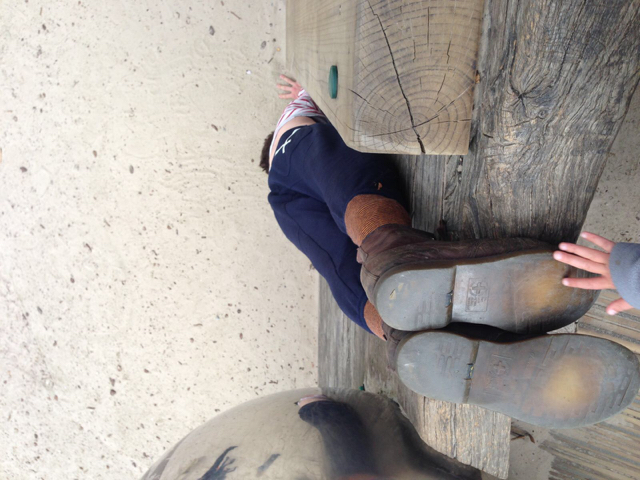
    The second is that many of the skills we learn at the festival allow us to move through the world in new ways, giving us new ways of perceiving it and understanding it. Turning upside down may seem a trivial thing to do, but when we do so much of our thinking the right way round, flipping things provides a refreshing change.
    A third thing I’ve noticed is that spending a few hours a day doing bodily-focused classes seems to make people more physically playful outside those classes. It’s as if we are given permission to rediscover our world through physical play, to rediscover that intrinsic joy that children find when they run around, swing from branches, balance on walls, wrestle with one another or just give each other hugs.
    And finally, the festival gives us a tiny taste of the power we could feel if we could master a circus skill: when we might one day stop looking at our hands and watch the juggling balls dancing in front of us; when we might one day feel the lightness that comes with the perfect handstand.
    To conclude with one of Crawford’s phrases, ‘we think through our bodies’. Bristol Swing Festival gives me new ways to think through my body, and that’s why I enjoy being there so much.

    Related posts

  • Podcast Episode 1 – Engineering, creativity and practical philosophy

    Podcast Episode 1 – Engineering, creativity and practical philosophy

    I’ve been thinking about creating an Eiffelover podcast for over a year. Last week at Port Eliot festival I saw John-Paul Flintoff (@jpflintoff) give a great talk on creativity in which he challenged us to name one creative project that we want to do, and commit to taking the first step…

    And so this is it, the Eiffelover podcast, the first of what I hope will become a regular digest of matters engineering, creative and practically philosophical garnered from the people I meet, the workshops I run and the material I read. I hope you find it useful.

    To kick off, I created my first episode here at Electromagnetic Field camp, a non-profit UK camping festival for those with an inquisitive mind or an interest in making things: hackers, artists, geeks, crafters, scientists, and engineers.

    In this podcast I meet some of the fantastic people here at EMF camp and their imaginitive creations, I dig around to find out what makes these creative people tick, and I get into a fascinating conversation with Richard Sewell about ‘Thingness’, a term he and his colleague coined to talk about the power of making things. Listen now to learn more.

    People mentioned

  • Pursuing general knowledge – not such a trivial pursuit

    trivial pursuit

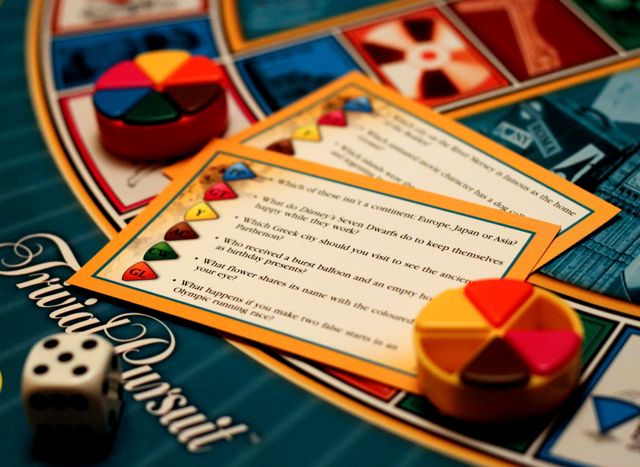
    The ability to design arguably sits at the top of Bloom’s taxonomy of learning, requiring as it does decent doses of creativity and evaluation. The foundations therefore of good design must be a broad general knowledge base. This certainly seems true in civil engineering. In order to quickly think up possible solutions to an engineering problem requires knowledge of material properties and behaviour, construction methods, costs, precedents, laws and codes etc. (more…)

  • Mapping stories – the journey of a Euro note

    I like the idea of using maps to tell stories. I particularly like the idea or using a map to show an emerging story. A couple of years ago I had the idea of creating a personal Journey Planner map for the Tube, showing the bits of the Underground network that I had used in a year. The map would grow the more journeys I went on. This sort of map would of course be useless for planning journeys to new places – though I could just point my nose in the direction of the gaps and be sure to go somewhere new.
    Leagues ahead of my uninitiated idea is a campaign I saw yesterday in the Guardian in an article about ad agencies’ suggestions for rebranding the Euro. The proposal from ServicePlan in Munich is to track the journey of Euro notes through the Euro zone. See concept website here. Individuals would take part by scanning euro note serial codes using their phone, uploading the code to a database along with their geolocation and a photo, and over time see where else this same note travelled.
    Over time a picture could emerge of currency travelling across the breadth of the Euro promoting some sort of shared identity.
    I like the idea, but as I type I realise I don’t quite understand how each note’s onward journey is tracked. If it relies on other people registering the same note, then that is one serious ad campaign that would be needed to get enough people involved…and even then the story would get cut short as soon as someone the note in a suitcase under their bed!

  • Catastrophe with 24 bit sound – showing at UCL on Wednesday 12th September

    I heard a preview of the new sound effects on Catastrophe last week and they left me grinning. – Brilliant