Tag: AI

  • Go (notes on complexity)

    My favourite board game is Go. A 19 by 19 board. White stones versus black. You win by surrounding your opponent’s stones before they surround yours. The game has just three rules, but from this simple concept a game of incredible complexity emerges. 

    My early years of playing Go were frustrating: it didn’t matter what I did, I couldn’t find a way to win. And now that I am more experienced, I find it hard to teach others. I take solace therefore that while the first computer to beat a reigning chess world champion (Deep Blue versus Gary Kasparov) did it in 1997 it took another 20 years for a computer, Deep Mind to beat reining world Go champion Ke Jie.

    The reason Go is so much harder for a computer to play than Chess is the number of branching possibilities that emerge from each move. It is just not possible to play solely on the basis of the player assessing the opposite player’s best move. And therefore a much more complex dynamic emerges in the game that involves the players ability to spot patterns as much as the patterns themselves. 

    I find this fascinating. In this complex situation, the players are part of the solution. Or put it another way, the solution is function of both the physical reality (the stones on the board), the players’ perception of the stones, and the players’ perception of each other’s perception of the stones. In maths terms, the solution y = f(physical world, internal world).

    It highlights for me that with complex situations in which engineers (and other humans) are agents, how we show up and how everyone else is showing up has a big impact on the outcome. We are a long way from optimum answers that can be deduced from calculation.
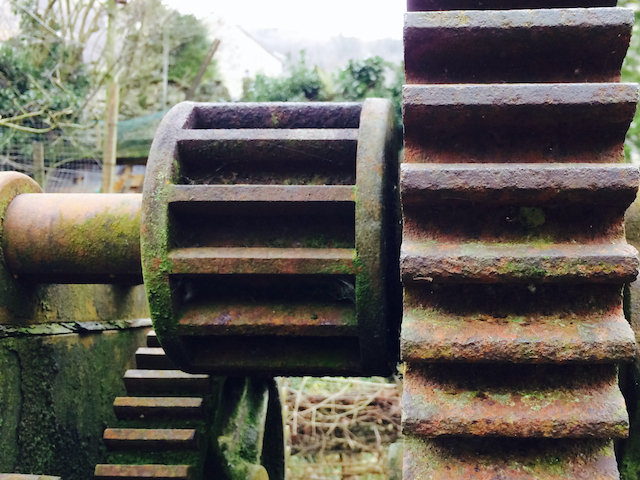
  • Machine work

    Inputs

    Outputs

    KPIs

    Tools

    Models

    Performance

    Quantitative analysis

    Scaling up

    Accelerator

    Dashboard

    Timesheet

    Human resources 

    Bottom line 

    When we think of our work as the work of a machine, then is it any surprise that the incredible machines that we have built will one day starting doing it for us.

    But we do ourselves a disservice if we only think of ourselves in machine terms. If we leave out empathy, care, collective knowledge, grounded understanding of place, knowing that is not describable in words, trust, passion, play… then we are not bringing our whole selves to the work we need to do. 

    There are so many more ways of knowing than the knowledge we can enter into a computer. Let the computers do the computational part – they will be very good at it – and let us step into our wider intelligence as engineers (and other humans).

    This blog post was inspired by Reinventing Organizations, by Frederic Laloux. 

  • A click of the ratchet from physical to virtual

    A click of the ratchet from physical to virtual

    Across all the of the projects I’m involved with we are working out what can go ahead and what must be postponed. A significant factor in whether to proceed is whether the activity can go ahead virtually. While the ability to move online is a blessing for business and job continuity, I think it represents an irriversible step for industry and society away from the phyical to the virtual – a click of the ratchet – that will have long-lasting impacts on our freedom and how we interact with other people.

    (more…)