Tag: biodiversity

  • Just build less

    This post has moved.
    It now lives on the Constructivist blog: read the updated version →

    Eiffel Over is now my stage for engineering-related clowning, singing, dancing and writing — you’ll find my professional writing on design and regenerative thinking over at Constructivist.

    More and more people are asking: how do we move from sustainable design to regenerative design?

    In these conversations, we often talk about system change. We talk about strengthening the connection between designers and the origins of their materials. We discuss unlocking symbiotic loops in material supply and enabling designs that best serve the local ecosystem. All of these changes are essential—and they’ll take years, even decades, to fully implement.

    But these conversations can be a distraction from a much more pressing, if uncomfortable thing we can do to shift our industry towards more regenerative ways of working. Given the massive contribution that construction makes to greenhouse emissions and the massive impact it has an habitat destruction, it is simply this. 

    We must build much less stuff. 

    Build less is writ large in the IStructE’s Hierarchy for Net-Zero Design. And while this hierarchy focuses on carbon, given the impact that material extraction has on habitat loss, there is a strong case that building less will significantly reduce our impact on ecosystems too.

    Of course, there will be things we need, structures we can’t do without. But once we set the intention to build less, we can redirect our creativity as designers toward adapting and thriving with what we already have.

    We’ll still need to build some—but we can, and must, build much less.

  • Vision for a regenerative programme of forestry and building maintenance at Hazel Hill Wood

    Vision for a regenerative programme of forestry and building maintenance at Hazel Hill Wood

    This afternoon I met with two trustees of Hazel Hill Wood to develop some ideas for a funding bid to support more regenerative use of timber to maintain our off-grid buildings. I said at the end of the call I’d write up some thoughts on a what a five-year plan could look like. Here is what I wrote down – stimulated by a very thought-provoking conversation with my excellent trustee colleagues. I’m putting it here rather than on the Hazel Hill website as this is by no means policy! Just a set of ideas, captured to enable further discussion.

    Five-year vision for developing Hazel Hill as a centre for regenerative forest management and traditional construction skills.

    At Hazel Hill Wood we have a unique combination of sustainably managed forest, off-grid buildings and a charity with a mission is to use timber from the wood as part of a regenerative cycle of building repair. Our ambition is to work with these gifts to increase local biodiversity and woodland thriving, build community resilience and wellbeing of all who come into contact with the wood.

    While we reach all of these ambitions to some extent through our current charitable activities, we see the opportunity to unlock greater benefits for the ecosystem and local community by establishing the wood as a centre for learning about how timber can be used as part of a regenerative local construction material. We describe this process as regenerative because it has the potential to have zero negative externalities: harvesting timber in the right places can actually increase woodland health and biodiversity; the timber we harvest can be used to re-establish a range of historical, rural practices, including coppicing, hurdle-making, horse-drawn timber extraction and traditional green-wood construction. Training local people in using these skills can help to enhance the rural economy while helping to maintain the heritage of local buildings. And the wellbeing of all is enhanced through extended contact with the living world through nature connection. 

    To shift to this mode of operation we envisage taking three phases over five years. 

    Phase one – from seed to seedling

    In this first phase we assess the state of the current system and create some of the infrastructure to enable this new activity to happen at the wood. 

    • Forest survey – establishing the health of the ecosystem, possible timber for harvest now and possible timber for future extraction and opportunities to enhance biodiversity through timber harvest.
    • Building survey – establishing the long-term maintenance needs and priorities of our heritage timber buildings.
    • Skills survey – understanding the local skills landscape and how training at Hazel Hill wood could enhance the local economy.
    • Re-establishing connection with rural construction tradespeople.
    • Creating working area – wood seasoning shed, tools shed and outdoor classroom
    • Initiation of volunteer programme for simple construction skills using timber in the forest.
    • Initial harvest of coppiced timber
    • Initial harvest of roundwood poles for seasoning.

    Phase two – from seedling to sapling

    In this phase we increase the scale of our regenerative work, starting to work with wood harvested and seasoned in Phase one while increasing our harvest of timber from the wood. In this phase we grow our education programme around how we see the wood and the buildings as part of a continuum, a process of which we are the stewards, adapting to the needs of the ecosystem and the people who we bring here to heal and learn through connection with the living world.

    • On-going habitat creation and monitoring in areas where timber has been harvested.
    • Maintenance forestry – In order to grow trees for timber, some tree pruning needs to be done to create timber of good quality. We need to develop local skills in how to plan and carry out tree maintenance.
    • Running courses in green wood construction skills.
    • Using seasoned, sawed timber to carry out major upgrades to the structure of our heritage buildings, including new decking for the Oak House and Forest Ark.
    • Invitation to other local crafts people to run training courses at our site.
    • Growing programme of volunteer activities engaged in a range of conservation and heritage construction projects.
    • Growing education programme, offering training in the thinking behind the regenerative principles on site.

    Phase three – from sapling to tree

    In this third phase the operations are more self-sustaining. The process of continuous cover forestry is well-established in the wood, with timber harvested at a rate of 1% per year providing a steady rate of firewood and construction materials for the charity as well as surplus for sale into the local economy. The programme of rural forestry and heritage construction skills training is self-sustaining and as well as bringing in revenue for the charity, is part of the active continuous maintenance of our unique heritage buildings. The site will be well known as a demonstrator project for regenerative principles that can be replicated more widely.

  • Regenerative design as a response to the systemic challenges we face

    In the construction industry we are focused on tackling anthropogenic carbon emissions. But this focus misses two wider points. 

    Firstly, that the climate crisis is just one of a series of outcomes of wider system collapse. Others include massive species loss, social injustice, health, war. 

    Secondly, that the restoration of our biosphere could tackle all of these crises. A thriving socio-ecological system would sequester carbon at the same time as reducing emissions, would create the conditions for a great return of dwindling species, create the conditions for a more socially just society, in which humans can be healthy and thrive. And in which we are not competing with each other for resources.

    So why don’t we just get on with the mission of restoring habitats ourselves?  

    The problem is that setting ourselves that mission does nothing to change the fundamental relationship between humans and the wider living world. 

    Since the Enlightenment, in the Global North we have come to see the living world as something that we can fully know and control. But what we can now see is that the net outcome of humankind’s intervention in the living world is system degredation. 

    From systems theory, we know that if you want to change the outcome of a system, you need to change the rules and relationships in it. 

    As we witness the collapse of our life-supporting ecosystem as a consequence of our actions, many people are starting to realise that it is our relationship to the living world that is at the heart of the problem. Unless we tackle that, and therefore the actions we take as humans, the system will continue to collapse. 

    Instead of seeing ourselves as controllers of nature – separate to nature, what if we instead saw ourselves as part of a wider living system, and having the unique capacity to unlock the potential of that system. In this framing humans act like a keystone species, one that has a disproportionately positive benefit on its ecosystem – a species that increases the potential of all to thrive around it. 

    It is in this philosophy that regenerative design is framed. Regenerative design seeks to intervene at a socio-ecological system level (in other words, the system that includes people and wider living world) to increase the capacity of that system to survive, thrive and evolve.

    By adopting a regenerative approach, we fundamentally change our relationship to the rest of the system – with the aim of changing overall system behaviour, from one of system collapse to one of system thriving.

    When our socio-ecological system is thriving, carbon is sequestered in soils, plants and oceans, species can recover, our use of resources stays within the renewable limits of the local system, resilience returns to our living system, social injustice by definition disappears and the health of our population improves.

    We don’t have to solve these problems one by one – nor can we. Instead we need to create the conditions within which our socio-ecological system can flourish, and these other benefits will follow.

    Regenerative design provides the lens for seeing how we can intervene in a way that seeks to work with life-giving capacity of living systems, and in doing so, transforming our role from instigators of collapse to a keystone species that unlocks living potential. 

    More blog posts about regenerative design

    My work on regenerative design is generously supported by the Royal Commission for the Exhibition of 1851. Read more about my Fellowship in Regenerative Design.

  • Notes from RESTORE report Sustainability, Restorative to Regenerative

    Here are my notes from reading the RESTORE report ‘ (REthinking Sustainability TOwards a Regenerative Economy) Sustainability, Restorative to Regenerative – edited by Martin Brown and Edeltraud Haselsteiner – as my part of my regenerative design research. Thanks Emma Crichton for the link.

    On regenerative design

    This is probably the most useful part for me.

    ‘Regenerative design, relates to holistic approaches that support the co-evolution of human and natural systems in a partnered relationship.’

    (more…)
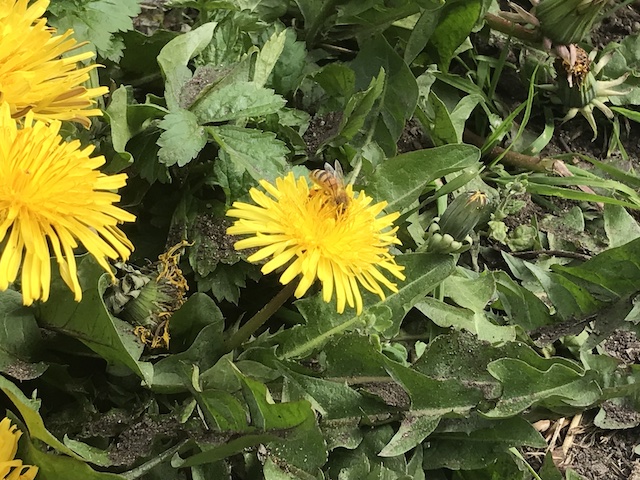
  • Revaluing weeds in the biodiversity emergency

    Revaluing weeds in the biodiversity emergency

    Yesterday a council contractor rode up and down our street spraying weed killer on the pavements, grass and tree pits. I was dumbstruck. This is the biodiversity crisis manifesting literally on my doorstep. And at the same time double standards. Here you have a council that has led the way in the UK in declaring both climate and ecological emergencies. All the while its contractors are spraying weedkiller on its streets. For me this encapsulates the fundamental challenge of the ecological crisis: we understand at some high level that something must be done but we can’t translate that into what a thriving ecosystem looks like.

    (more…)
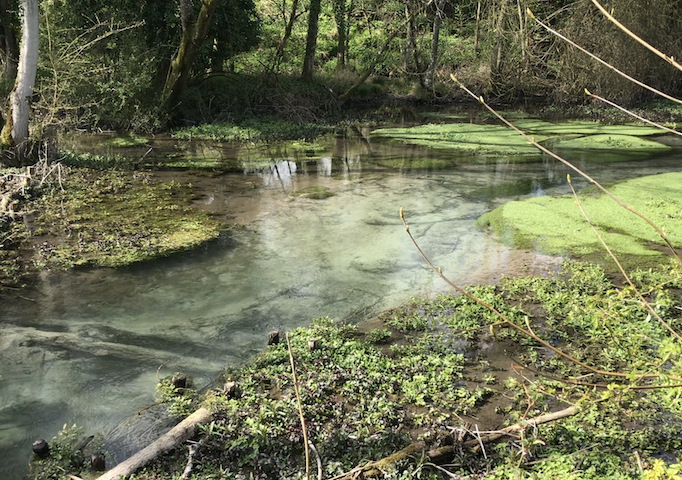
  • Human-scale chalk stream restoration.

    Human-scale chalk stream restoration.

    On this afternoon’s walk we had the joy of arriving at a chalk stream. We had started high on the Ridgeway and descended quickly down through the Devil’s Punchbowl, a dry valley. And it was at the lowest point on our walk that we came upon Letcombe Brook. At this site, conservationist are working to recreate the natural conditions of a chalk stream to enable wildlife to thrive.

    (more…)
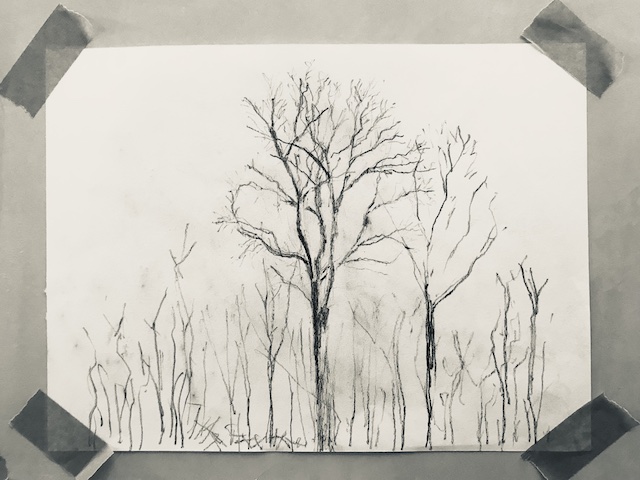
  • Connection with nature through drawing

    Connection with nature through drawing

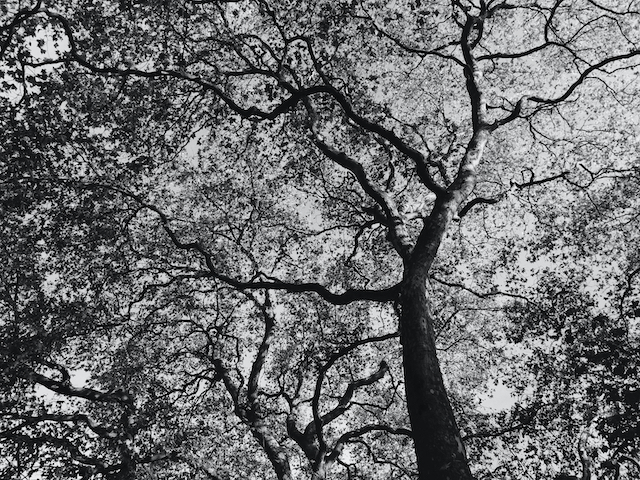
    I drew this ash tree at Hazel Hill Wood last weekend. Though it rises opposite a bench where I like to have a morning coffee, I have never paid it much attention. But doing a twenty-minute sketch I am discovering the tree. Climbing the trunk that rises without foothold for a third of its height. Noticing for the first time its rhythm – the trees spatial ordering. How one trunk becomes a thousand twigs, like a trachea transitioning to countless alveoli.

    As I draw I see a space in the canopy to the left, one that I would not have noticed otherwise. I presume it is a space left by another tree that is now fallen, on the ground but leaving its imprint in the sky.

    (more…)
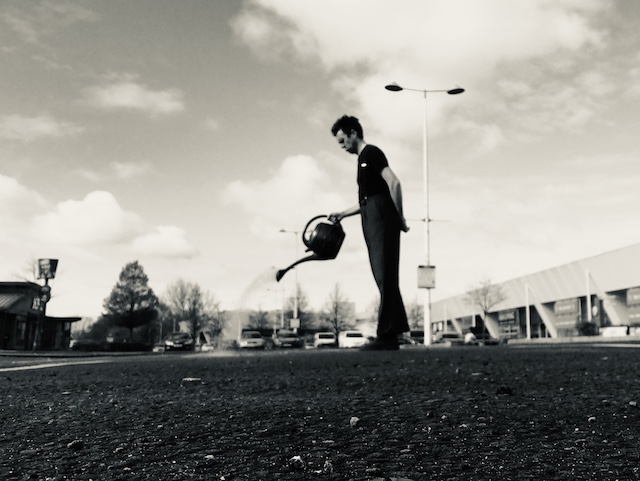
  • Planting parking spaces is a dismal affair

    Planting parking spaces is a dismal affair

    Planting parking spaces is a dismal affair.

    When you water them, the water just drains away.

    The rich soil underneath is capped.

    Parking spaces don’t flower; don’t make nectar, don’t produce fruit that we can eat.

    Insects stay away; birds fly over.

    Never do they grow, rise up from the ground, spread their branches to oxygenate the air.

    No one returns in 30 years time and says I planted that parking space.

    No generation thanked the last for planting more.

    (more…)
  • Questions to ask your colleagues in the biodiversity emergency

    Questions to ask your colleagues in the biodiversity emergency

    The biodiversity emergency requires us to change how we value and relate to the ecosystems that support us.

    Values shift when we change our habits. Habits are the rituals and routines that form part of an organisation’s culture. Work the habits to shift the culture.

    We see it in Toyota’s Improvement Kata, which uses habit to reinforce behaviours around improvement, adaptation and innovation. We see it in the ‘safe-start’ procedure used for meetings in safety-critical industries.

    And so I’m wondering what might be questions that we might routinely ask each other of our projects in organisations that have declared a biodiversity emergency?

    (more…)
  • Rethinking our relationship with our ecosystem

    Yesterday I was writing about what to do after declaring a biodiversity emergency. My conclusions was that the process starts with rethinking our relationship to our ecosystem. Not how can we do something to our ecosystem but how can we work with it. Today I want to get into more ways that we can achieve this shift in the way we think.

    (more…)
  • Book notes – The Hidden Life of Trees

    Book notes – The Hidden Life of Trees

    It feels right as I take on my new role at Hazel Hill Wood to read the Hidden Life of Trees. This is an evolving post based on notes I take as I read through the book.

    From the foreward: ‘The author’s deep understanding of the lives of trees, reached through decasdes of careful observation and study, reveals a world so astonishing that if you read his book, I believe that forests will become magical places for you too.’

    (more…)

  • #18 Hazel Hill Wood – Dawn chorus sonic lockdown therapy- show-notes

    #18 Hazel Hill Wood – Dawn chorus sonic lockdown therapy- show-notes

    30 minutes of uninterrupted dawn chorus Hazel Hill Wood, recorded at the end of March. Hazel Hill is woodland nature reserve and education centre helping frontline staff develop resilience and wellbeing through connection with nature. While people are prevented from visiting the woods during lockdown, the team are working on ways to bring the wood to them during lockdown. Listening suggestions:

    • Early in the morning
    • Over breakfast
    • In the background while you work
    • To clear your mind at the end of work
    • Late at night as you drift off to sleep
    (more…)
  • My neighbours don’t like bees

    My neighbours don’t like bees

    https://youtu.be/ofLmUmiK1Nc

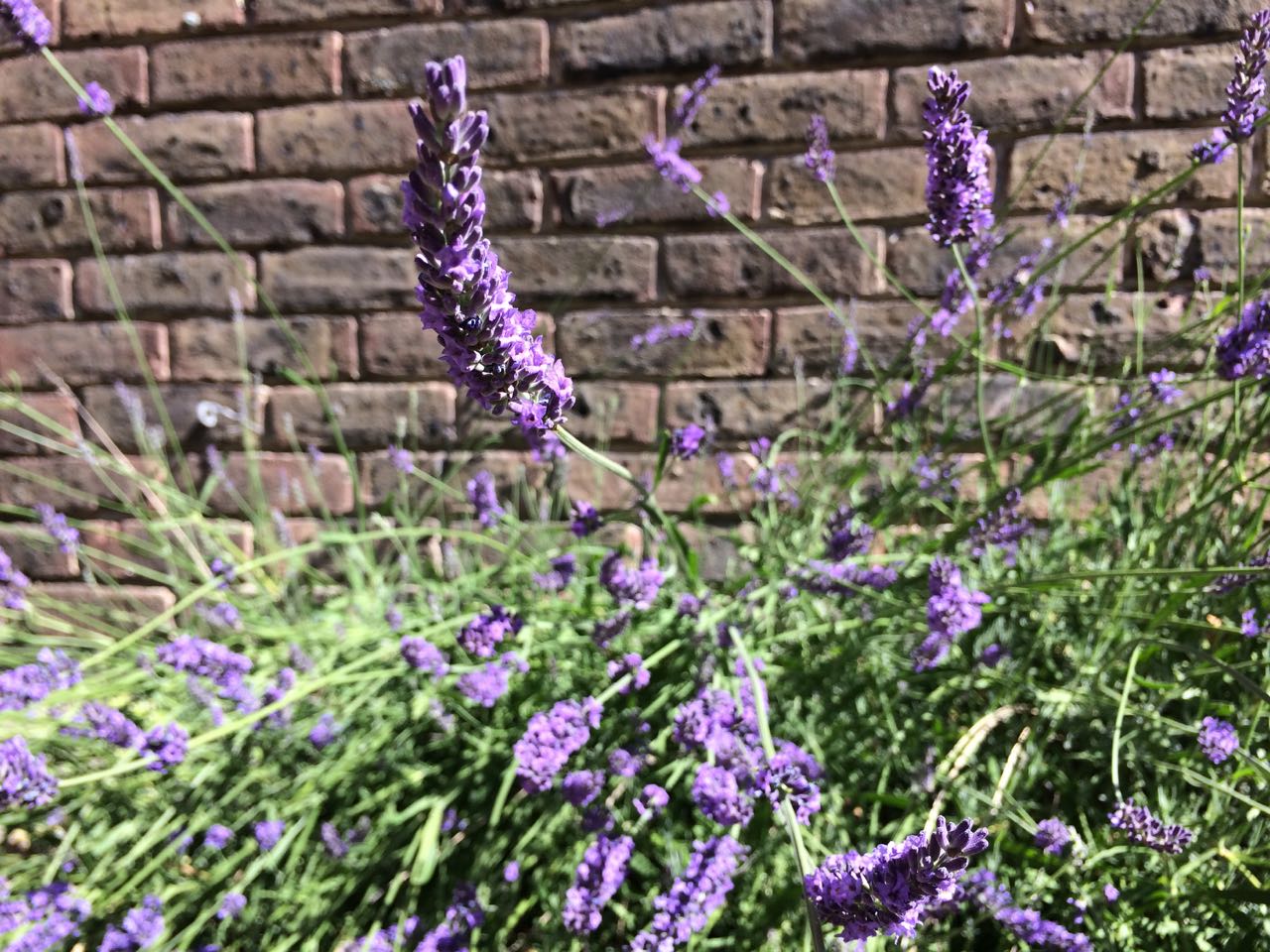
    We planted a hedge of lavender on our estate to revitalise a barren patch of soil near our front door. This sunny morning, the enthusastic lavender stems were bobbing up and down laden with bees. There must have been between 20 and 30. I went to count, as part of the Great British Bee Count. And so it was that I had conversations with several of my neighbours about bees, and I was depressed by what I heard.

    • One complemented me on the lavender, but said the only problem with lavender is that it attracts bees.
    • A second reported hatred for bees, having been repeatedly stung by that very flower bed, before conceding they had been wasps.
    • The third, having been complementary about the flowers, reported a bee had dive bombed from twenty metres above delibrately to sting him and concluded they must be evil.