Tag: Bristol

  • Pattern mixing lessons from Bristol’s brewers

    Bristol’s craft brewers are constantly experimenting – mixing patterns to create something new. Over the years I’ve been fortunate to facilitate workshops for teams from local breweries, which has given me some insight into their creative work.

    This flair for invention shines through in the descriptions of their attention-grabbing brews: espresso martini stout; gluten-free pale ale; or even key lime pie IPA. Each of these is a fusion of existing patterns to create something that sounds fresh. 

    But there are other versions of this creative process at play beyond mixing unusual flavour combinations.

    Forwards to the past

    Another mode of creation is to bring back something from the past and make it fashionable again. 

    A recent trend is for craft brewers to resurrect from obscurity the ‘mild’, a largely forgotten-about old-man beer. Here the mix is to take a pattern from the past and put it into the pattern of the modern-day tap room.

    Continuous remixing

    Sometimes, the creative mode is to continuously evolve and update an existing product. 

    When I arrived in Bristol 6 years ago brewers Wiper and True ran a beer called Quintet, which was intended to be a continuously evolving blend of five hops chosen on the basis of seasonal availability. With each creative step, the existing blend of hops is one pattern, the new hop is the other pattern and the new mix is the new pattern.

    Creatively staying the same

    Finally, there is a mode of creation that aims to keep things the same. 

    Many microbreweries strive to have a core beer that they can sell to the supermarkets. The large orders that the supermarkets make  give these small businesses a reliable revenue stream that enables them to grow. But one thing these large retailers don’t want is for the product to change. 

    So if a brewery wants to introduce new processes for reducing the carbon footprint of their core beer, they have to do so in a way that doesn’t change the product. In this case, they might have to change their pattern of ingredients and pattern of brewing with the aim of creating something that was the same as before.

    In these examples we have seen four creative modes:

    • Mixing previously unconnected patterns. 
    • Mixing patterns of past and present. 
    • Continuously remixing to update the present. 
    • Or creating new mixtures that keep things the same.

    Whether we are fermenting or cementing, the key to creativity is pattern mixing.
  • Bristol to Glasgow via the Caledonian Sleeper

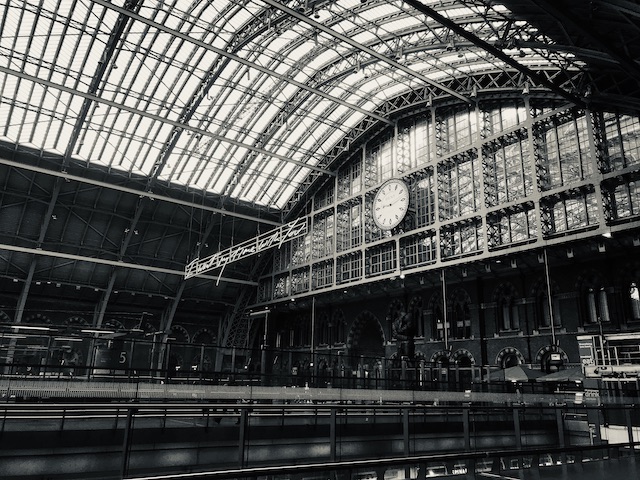
    While it is possible to go direct from Bristol to Edinburgh, and from Bristol to Glasgow with one change, it is a long route and involves spending a long time on Cross Country trains (which I prefer to avoid). So when the need arose this week for me to work in Glasgow for the day, I experimented with a different route: via London and the Caledonian Sleeper

    Going from Bristol to London and then up to Scotland is taking two sides of the triangle. But if I can sleep for a decent chunk of the journey then it is very appealing. 

    (more…)
  • Notes from RESTORE report Sustainability, Restorative to Regenerative

    Here are my notes from reading the RESTORE report ‘ (REthinking Sustainability TOwards a Regenerative Economy) Sustainability, Restorative to Regenerative – edited by Martin Brown and Edeltraud Haselsteiner – as my part of my regenerative design research. Thanks Emma Crichton for the link.

    On regenerative design

    This is probably the most useful part for me.

    ‘Regenerative design, relates to holistic approaches that support the co-evolution of human and natural systems in a partnered relationship.’

    (more…)
  • Bristol: from rainforest to desert

    Where I live, coal was so abundant near the surface that you could have dug a hole in your garden and found it lying there. This coal was laid down during the carboniferous period when Bristol was somewhere over the Equator and the ecosystem was abundant with life. This coal is fossilised life.

    Yet walk a few streets north-west and you find a band of red sandstone. By this time in its geological history, Bristol had drifted north towards the Tropic of Cancer and the area had become desert. No more fossilised life, no more coal – just scorched sand. Carry on further north and carbonate limestones return. The desert receded and life came back.

    (more…)
  • Hello Planet Earth (goodbye Planet Money)

    Sunday morning we cycled through Bristol and up to Leigh Woods. We took the ‘high route’, choosing to climb up through the wealthy streets Clifton. Everywhere oozes money and wealth. The cavernous houses, gleaming cars, manicured front gardens and then the tiny shops of Clifton Village. Humans and their worldly possessions are all I can see.

    And then, all of a sudden, release. The ground gives way and we are soaring high over the Avon Gorge. As the Clifton Suspension Bridge leaps from one cliff to the other, I feel like I am looking at a giant fracture in the Earth’s crust, looking back in time through rock layers laid down millions of years ago. The scale changes. Humans are tiny again, a tiny feature of the surface. Nature and all the evidence of all its forces spread out before me.

    I yell ‘hello planet earth, and good bye planet money’, and we are off towards the woods.

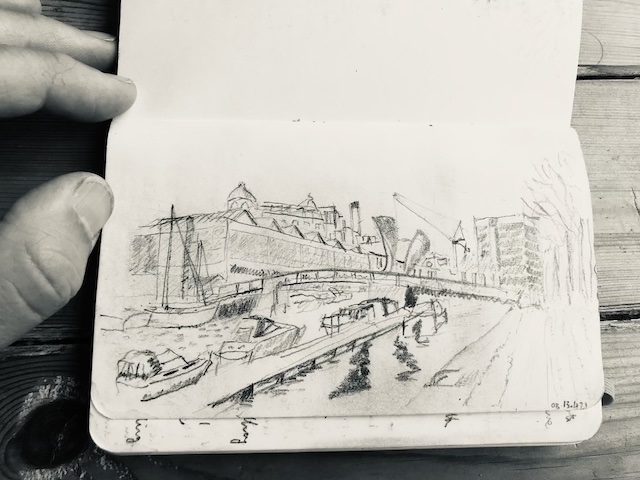
  • Analogue Skill 009: Sketch what you see

    Analogue Skill 009: Sketch what you see

    Take out a piece of paper and draw a sketch of what you can see. You will notice more than you ever would by taking a photograph.

    Sketching could easily fall into two categories in my collection of analogue skills: Remembering Things and Spending Time Alone.

    (more…)
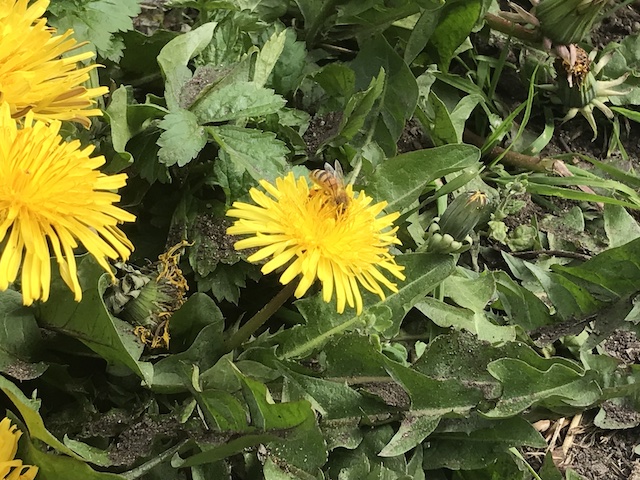
  • Revaluing weeds in the biodiversity emergency

    Revaluing weeds in the biodiversity emergency

    Yesterday a council contractor rode up and down our street spraying weed killer on the pavements, grass and tree pits. I was dumbstruck. This is the biodiversity crisis manifesting literally on my doorstep. And at the same time double standards. Here you have a council that has led the way in the UK in declaring both climate and ecological emergencies. All the while its contractors are spraying weedkiller on its streets. For me this encapsulates the fundamental challenge of the ecological crisis: we understand at some high level that something must be done but we can’t translate that into what a thriving ecosystem looks like.

    (more…)
  • An action learning template for reaching any goal

    An action learning template for reaching any goal

    I met with a friend earlier in the week to talk about setting some life goals. It’s a conversation we had had five years ago and then did nothing about, but this time I came prepared with the Eiffel Over Action Learning Template.

    (more…)
  • Parenting x inspecting hydraulic structures in the Frome Valley

    [Written in May, posted today] Saturday was the chance for my one of my favourite kinds of parenting: the kind where I can go on a journey with my daughter at her pace, stop and look at various bits of engineering infrastructure along the way, and then move on when we are ready.

    This weekend’s excursion was along the Frome Valley in East Bristol. Near where we live the river cuts a steep gorge through the limestone landscape that forms a lush green necklace that weaves its way through our neighbourhood. It is an excellent off-road route for cycling.

    (more…)