Tag: commons

  • Salt harvesting in Brittany – engineering and commoning

    Salt harvesting in Brittany – engineering and commoning

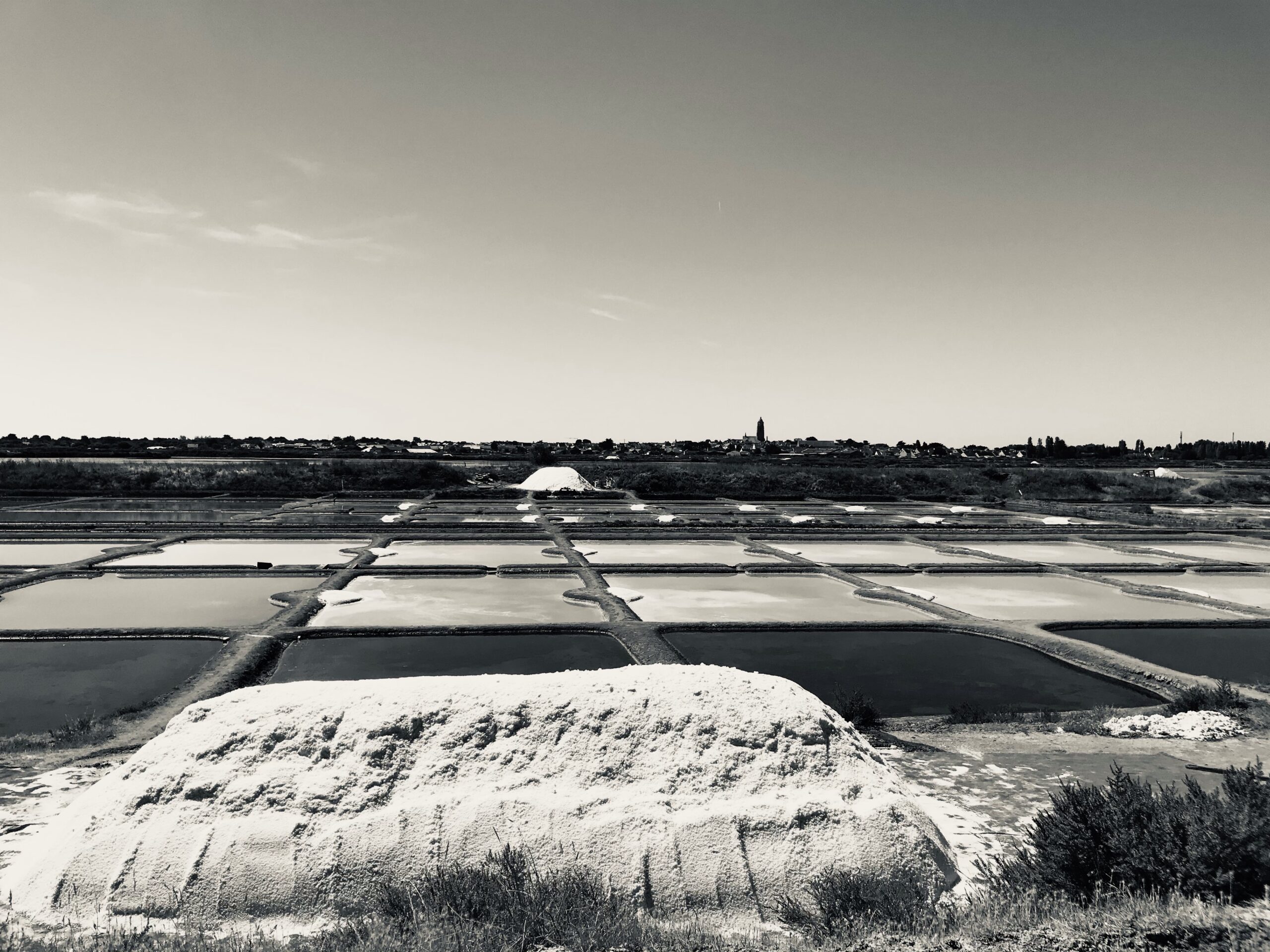
    Salt has been harvested in the bay between Le Croisic and Guérance on the edge of Brittany for centuries. The industry had been in decline but in more recent decades has started to grow again with the local attainment of a ‘red label’ quality status for its salt products.

    We had the privilege of getting a tour of the salt beds with my old friend from Paris days, Ronan when we stayed with his family in the house he grew up in in Batz-sur-Mer. It was a welcome two-day stop on our Summer Tour.

    As Ronan explained:

    • At high tide, sea water flows into reservoirs that stock the water for the day of salt harvesting.
    • This salt water is then directed by an intricate network of channels to blocks of salt beds.
    • Each salt bed is about the size of a typical English allotment. In a salt bed the water from the channels flows in and the flow reduced to almost a stand-still.
    • During the heat of the day, the water evaporates and salt crystals form. There are two salt products: the purer ‘fleur de sel’, which accumulates on the surface; and the darker ‘sel gris’ which accumulates on the bottom.
    • Morning and evening salt harvesters walk out to their salt beds and gently scrape the two types of salt out of the beds and pile them up on the side. Single bed can produce a wheelbarrow-full every day in high summer.
    • The salt harvesters transfer their salt to larger communal salt piles, which are then taken to the town cooperative.
    • Individuals and families have harvesting rights over a specific beds.

    I find the salt beds a fascinating example of engineering and commoning. This is a common resource which requires shared infrastructure to harvest. What we take out is bountiful, but requires a shared responsibility for preserving the purity of the resource. Similar to the water irrigation channels that I saw in Mirenna in Spain many years ago.

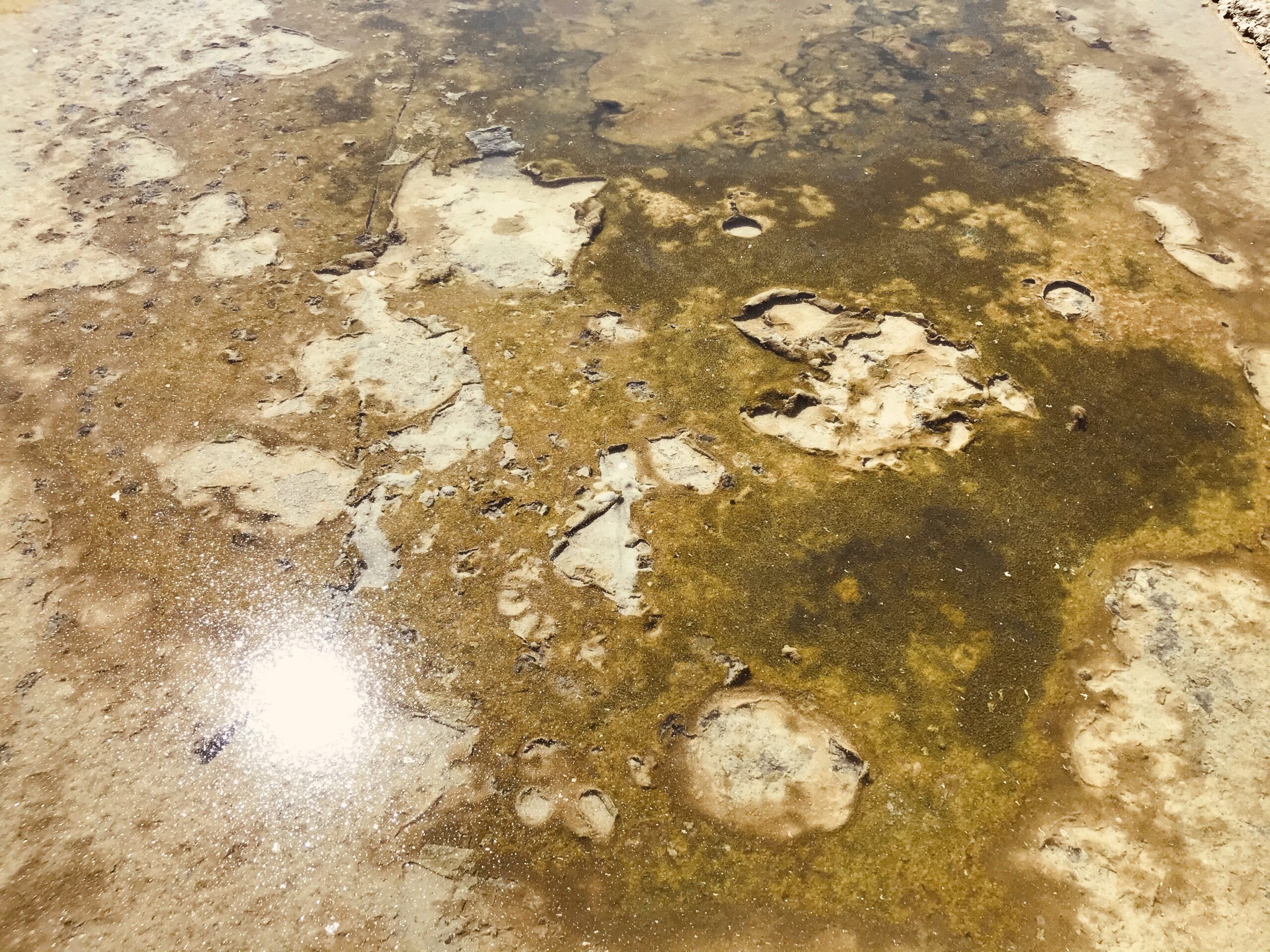
    The salt beds also create wonderful colours. The colour depends on the salt concentration and the angle of the sun.
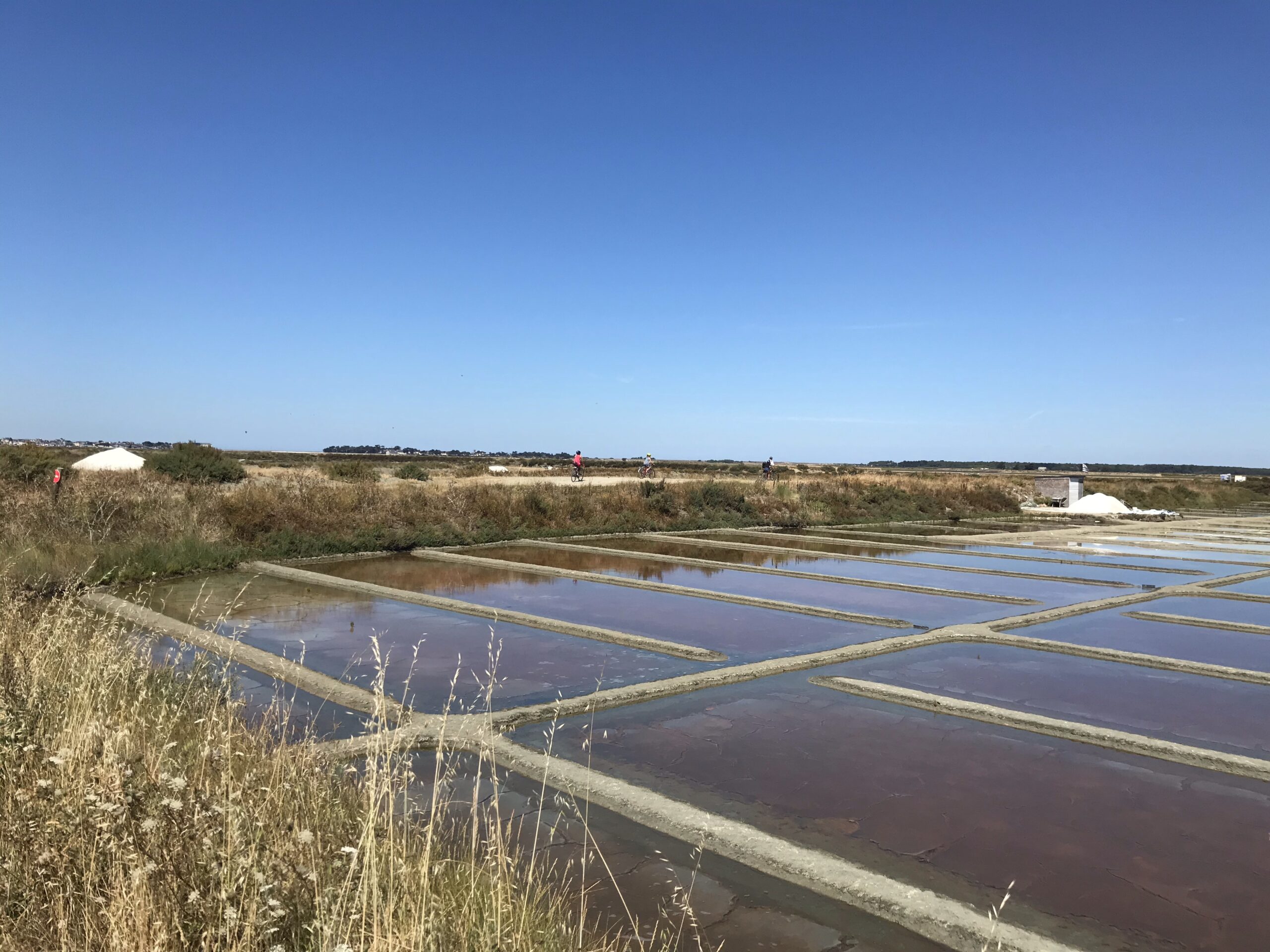
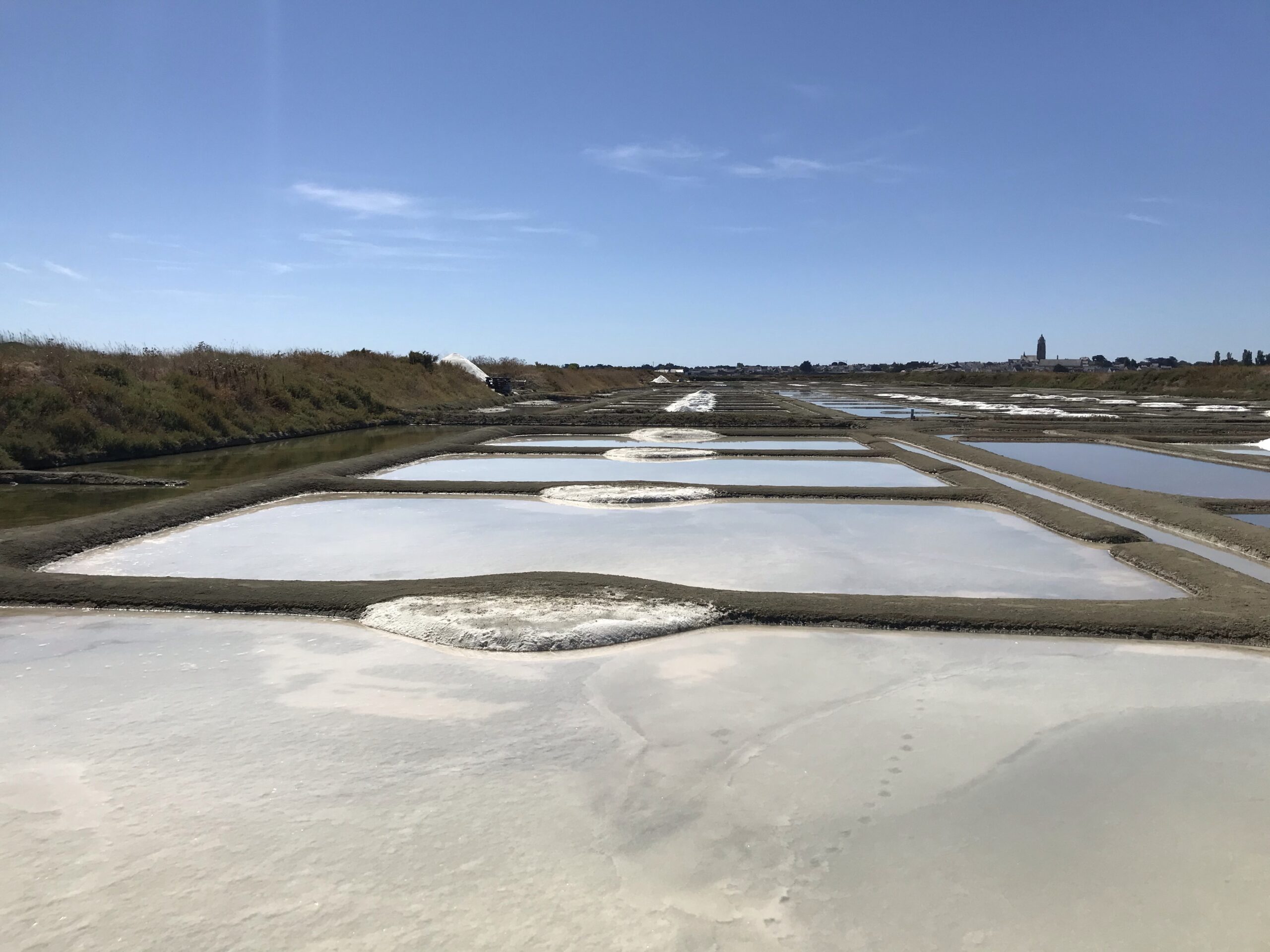
    A group of salt beds at Batz-sur-Mer
    The morning’s harvest of fleur de sel is gathered up against the wall
    The individual harvests are collected together
    The colours of a salt bed
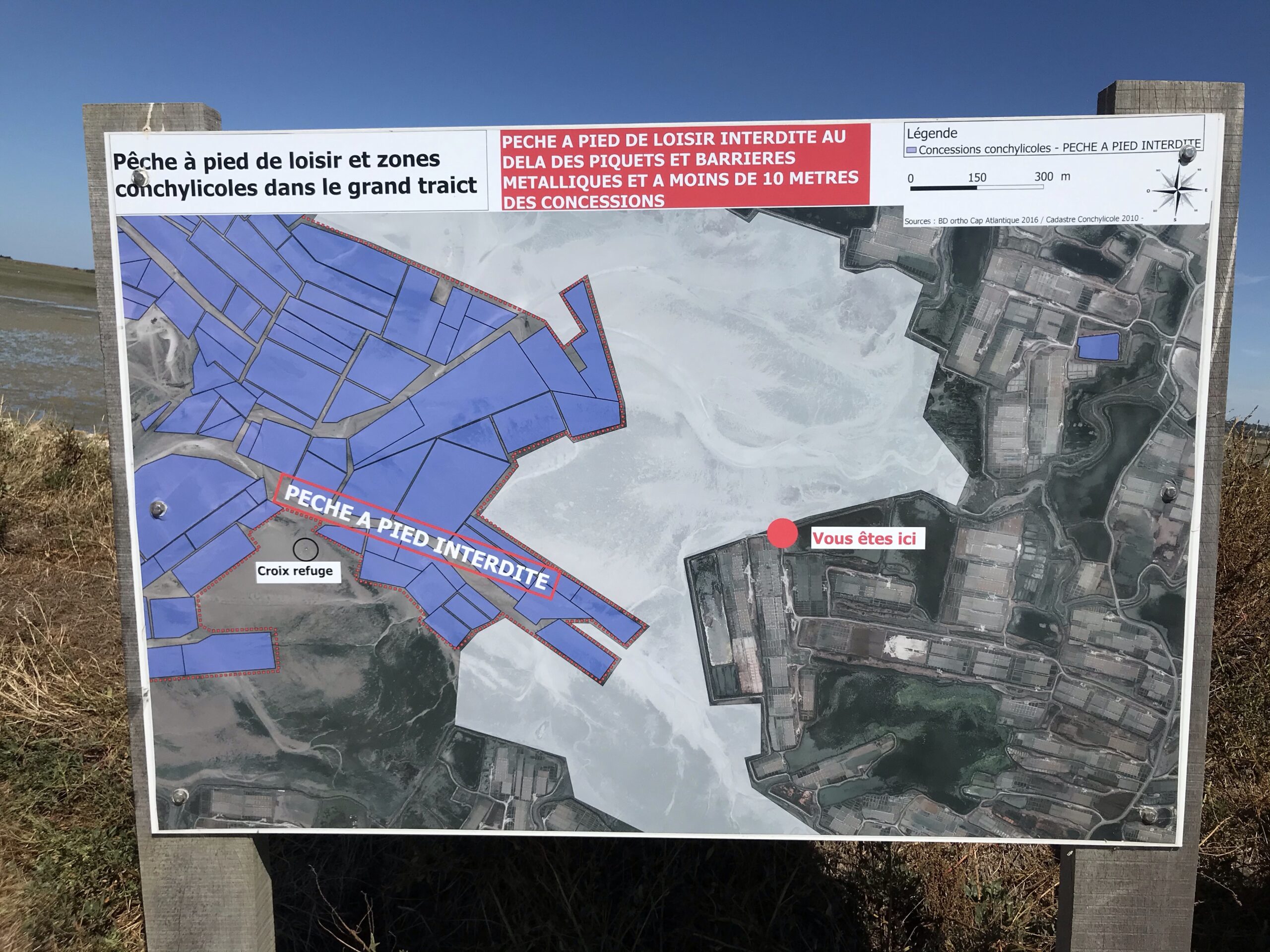
    Map of the salt beds of Batz-sur-Met
    The very slow flow of water through the salt beds – watch carefully.

  • Muides sur Loire – Blois – Amboise

    Muides sur Loire – Blois – Amboise

    The second day of cycling along the Loire. A relatively flat 70km that would get steadily heavier going as the day heated up. The cycle path along the Loire is well signed, well routed through towns and villages to ensure you can get provisions. It also has lots of attractive river-side places to stop for a beer and for kids to play in a playground.

    Our day began in Loir-et-Cher and at some point we crossed into Indre-et-Cher. French départements were created to enable a horse rider to reach any part from the central préfecture in a day. It’s probably the same distance as if you were travelling by bicycle.

    This has been a day of castles. First, Chambord, the famous opulent palace. Then Blois, situated on its battlements in the town centre over looking the river. Finally Amboise, an astonishing fortress which is also where Leonardo Da Vinci is buried.

    My recent reading about commons and land ownership means that I can’t see these places and not think about how the wealth needed to create them is made in part from confiscating land and taxing them local populations. This isn’t news, but these sights are often held in isolation from the story of their creation. At Chambord Europe’s longest stone wall kept the locals out of the forest to stop them hunting and foraging on land that would have been theirs on pain of death.

    These are of course stories of rulers and social injustice from 100s of years ago. Arguably France had a conversation about this imbalance of land ownership in through the Revolution, but in the UK we never have. Consequently we still have owners of massive parcels of land who derive this ownership from William the Conqueror. As we think about how we use local resources to support local economies, we need to have a conversation about returning common land to them communities that surround them.

  • If you want to save the planet… have dancing lessons

    Serendipitously, as I was preparing for my first dance teaching workshop this morning at the Idler Festival, I spotted a quote in one of my other open browser tabs a quote from David Flemming.

    Commons are cooperative enterprises; they therefore depend on trust, on reciprocity, and on social capital. The market economy can get by, for a time, with a gravely-weakened culture and social capital, but the commons cannot. If you really want to save the planet and to give human society a decent chance of living on it, the first thing you should do is to join a choir. Or have dancing lessons, or both. That is not quite the hyperbole it seems: in enduring communities, the thing which defines and distinguishes them is their culture of dance, music, story and tradition—so intertwined with trust that it is hard to tell cause from effect. 

    David Flemming, in ‘Lean Logic – A DICTIONARY for the FUTURE and HOW to SURVIVE IT’

    We always said in the Mudflappers that our mission was to make the world slightly better through the medium of dance. Well here is some compelling philosophical underpinning to back that up. I shared this quote with the dance workshop today and it was well received.