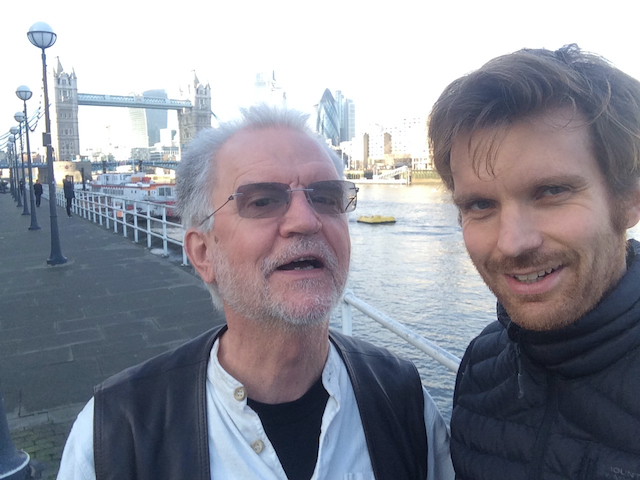
There was great energy at today’s IStructE Academics’ Conference, the theme of which was Creativity and Conceptual Design.
If you are visiting this site for the first time, it may have been thanks to Chris Wise’s kind recommendation in his keynote presentation – thanks so much Chris.
I presented a session on how to have ideas. Usually when I’m billed with this title, I run a workshop on idea generation, but I thought for once, I would stand up and say what I think about the subject. I’m glad I did because it seemed warmly received. It was also a chance to talk through themes that will be included in the chapter I am writing in a book on scheme design – more details to follow.
I am just back from taking part in a Design Thread workshop at Imperial College, the aim of which was to co-ordinate activity between the various design-relevant courses on the undergraduate civil engineering course at Imperial. Here are some reflective notes as I whiz home, during the writing of which I came up with the notion of ‘secretly teaching design‘. (more…)
Over the last 9 months at Think Up I’ve been invovled with an engineering education project that has had a really deep philsophical impact on me. The project is called Enginite, an EruasmusPlus-funded programme of graduate training and placements that aims to give graduating engineers extra skills and experience that will make them more employable.
My role has been to collaborate with Prof Søren Willert, of the University of Aalborg, to train project partners in how to design courses using a problem-based learning methodology. PBL flips traditional learning on itself, and holds as its fundamental principle that learning is more effective – in terms of retention, recall and motivation – if students drive the learning process themselves. It is one of those statements that we know to be true from experience, but goes directly against how most education is delivered in engineering education. PBL addresses that dissonance by creating a framework for giving students ownership of the problem. (more…)
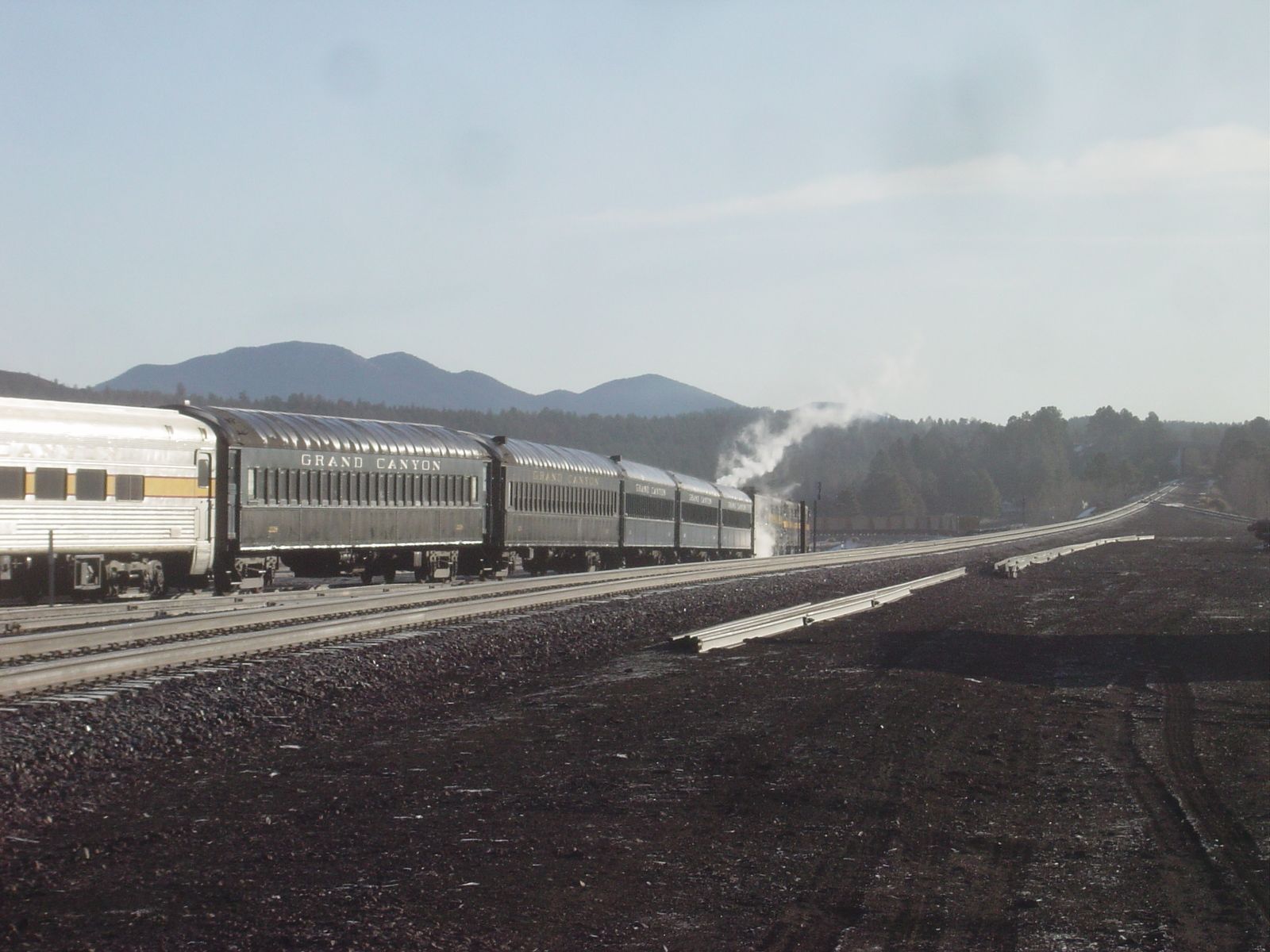
A train pulls of the Santa Fe railway at Williams Arizona to join the Grand Canyon Railroad
As I tweeted earlier this morning, today at Think Up I have been working on Build Camp, a concept for a week-long hands-on learning event designed to encourage young people to take on a career in civil engineering. For some time now we have been proposing an event based around the idea of students designing and building their own railway in a week. Today we were looking at how to create a context for the event around which on-site role play activities can be built. Today’s idea was to use the construction of the first american transcontinental railroad as the context, for reasons explained in the following text, extracted from some my draft web copy for the soon-to-be-online Build Camp website.
Why the Pacific Railroad?
Learning about the construction of a railway line is an excellent introduction to the world of civil engineering because it embraces so many aspects of the discipline, including: planning and surveying: structural, geotechnical and fluid mechanics; construction management. This event is set in the context of the construction of the Pacific Railroad, the first railway to cross the United States. The construction of this pioneering railway line was led by a team of engineers operating at the railhead. Engineers were responsible for:
* Surveying and choose a route through the unknown territory ahead.
* Designing cuttings, embankments, bridges, dams, causeways and tunnels as needed;
* Sourcing local construction materials: fill for embankments; timber for sleepers; fuel for machinery;
* Overseeing construction works
* Organising the logistics of moving labour, materials and plant along the single-track line
* Establishing camps for workers, sourcing food, and paying wages.
These engineers were working in the unknown; it was 2000 miles back to headquarters, and so they had to rely on their own ingenuity and engineering judgement to solve the problems they encountered. By setting the role play for this event in the context of the Pacific Railroad we aim to harness that visionary and pioneering spirit, and demonstrates the potential engineers have to shape the world for the better. We are also providing a baseline against which the advances of modern railway construction can be illustrated.
At present we are hoping to run a pilot of Build Camp in October. Keep an eye out for updates on the Think Up website for more information.