Tag: Loire

  • Champtoceaux to Nantes – reflections on Loire à vélo

    Champtoceaux to Nantes – reflections on Loire à vélo

    The last leg of our journey along the Loire à Vélo cycle route, à 35km flat run into Nantes. It was misty as we covered the early morning ground, keen to get to Nantes with enough time to wander around the Machines de l’Île. After breakfast in uninspiring Mauves sur Loire, the feel of the cycle path changes: it is more like we are cycling through a city park. We are in the outskirts of Nantes.

    We arrive at Nantes train station, which has a new terminal built high across the tracks with tree shaped columns beneath that splay out into oak-tree like branches within the concourse to provide shade for the travellers.

    Reflections on Orléans to Nantes via the Loire à Vélo

    We were using the cycle route more as a means of getting from Paris to the Atlantic coast rather than planning a dedicated trip to do the Loire à vélo route – and while I thought it would be fun I enjoyed it even more than I expected.

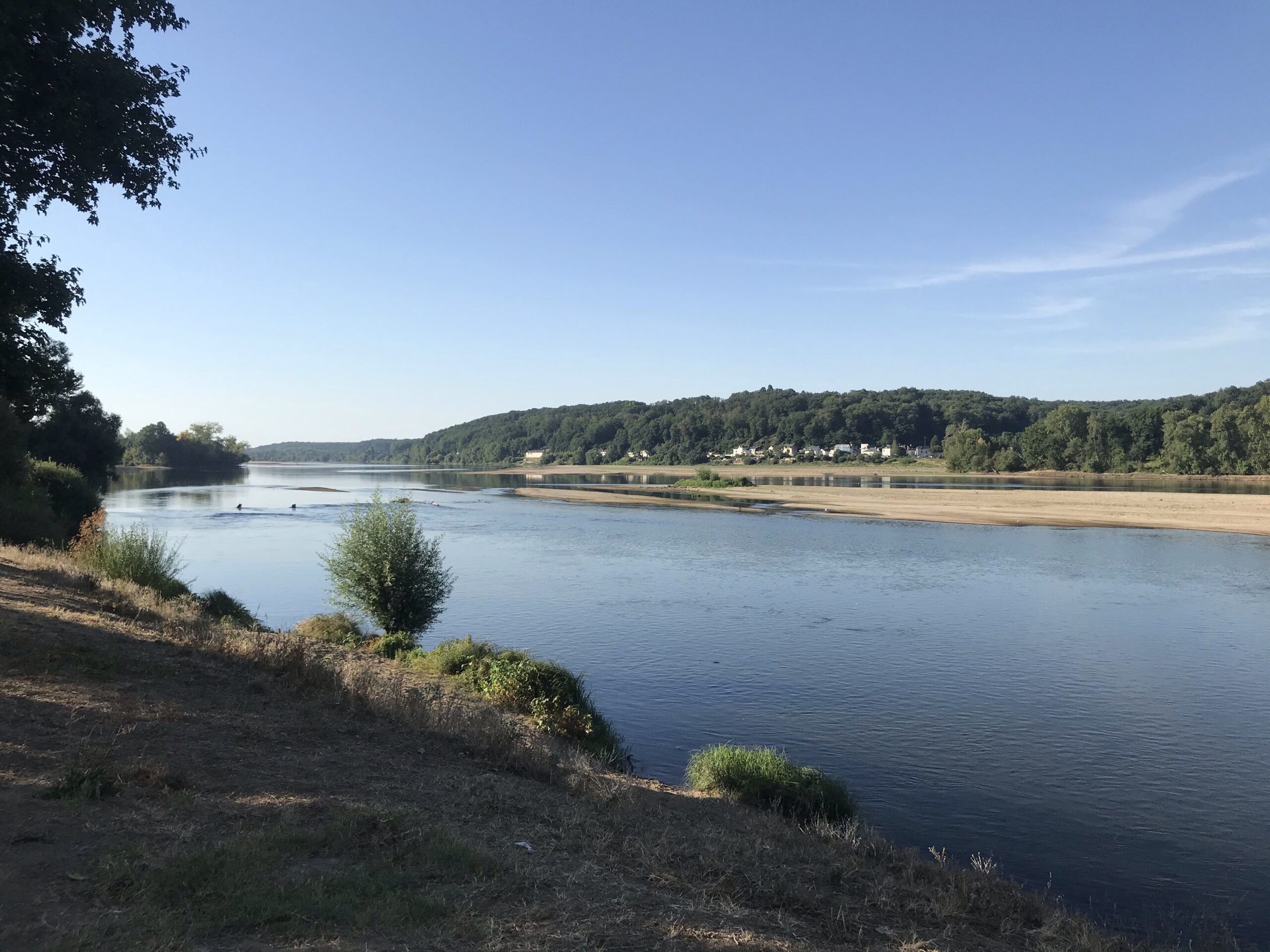
    • The Loire is much wilder than say the Rhone or the Garonne. It is not used as a major inland shipping route and so feels less industrialised. The water is able to follow a more natural course as reflected in the various channels that weave their way through the landscape, and the sand banks that are a haven for birds.
    • That said there are levées to cycle along, albeit set back so that the flow is less interrupted, and these are great to cycle along.
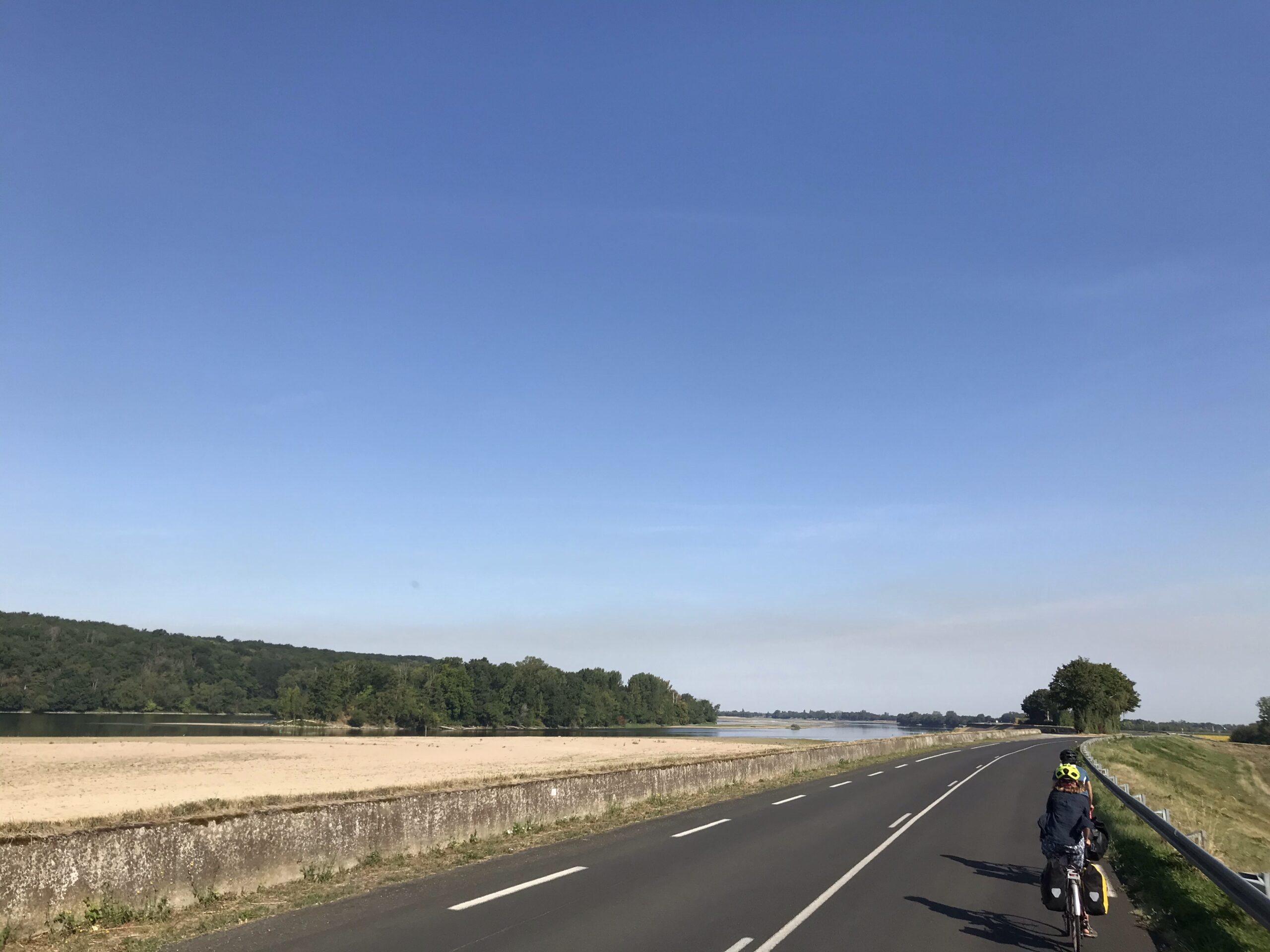
    • My favourite sections were when the levee road is quiet, and we are able to get some speed up while watching the river landscape change in the channel below.
    • My least favourite where the river approaches a city. Tours in particular seemed to have turned its back on its rivers.
    • There is a great atmosphere on the path. You meet cyclists going the length of the Loire à vélo path, and some beyond towards Basel and towards the Black Sea.
    • The riverside guinguettes were great to stumble across and make the most of to eat at en route or chill out at in the evening.
    • I wouldn’t bother visiting the out-of-town chateaux. They represent an accumulation of wealth extracted from the local landscape and local people that is somehow not reconciled, not addressed. Just a place to drive to. The middle of town chateaux of Blois and Amboise are a bit more connected to the towns, are more interesting and don’t require a detour.
    • The route is well signposted, there’s lots of campsites en route. The highlights were the Slow Village in Pont de Cé, and wild camping under the stars.

    Onward journey

    We are now leaving the Loire à vélo cycle path and making a little detour out to Batz sur Mer in Brittany before heading south by train towards the Ile de Ré, cycling to Arcachon, train to Biarritz, then making our way by some means or another to Santander in Northern Spain.

  • Ponts de Cé to Champtoceaux

    Ponts de Cé to Champtoceaux

    A day for integrated travel! 70km from Ponts de Cé to Ancenis, and then 10km by kayak, our bikes carried to the downstream dock in a van, then cycling up the final 2km out of the valley and into our warm-showers accommodation in Champtoceaux.

    I remember a forward to a Department for Transport report in which John Prescott set out his vision for ‘integrated transport’, journeys made possible by joining together different modes of travel. I’ve always liked this idea, but I try to mix it with a bit of the spirit of adventure of Jules Vernes and Around the World in 80 Days. Mixing cycling and kayaking definitely fits into this category.

    We ate breakfast at a riverside market at Bouchedemaine, where the Maine river joins the Loire. We’ve skirted Angers, but all the surrounding places we’ve visited have been so friendly that I imagine I’d like the city too.

    We really had to get the kilometres in early today to get to the kayak in time. This is the first time we’ve really had to cycle in tight convoy to keep the pace up and stay motivated that we are covering the ground.

    At Saint Florient, I saw this plaque showing distances measured from the bridge. It was created at the start of a period of measuring and controlling the Loire after devastating floods. Measure it, control it, exert power over it. Except compared to other big rivers I’ve seen in France, the Loire still feels quite wild. Not the freight transport artery I was expecting.

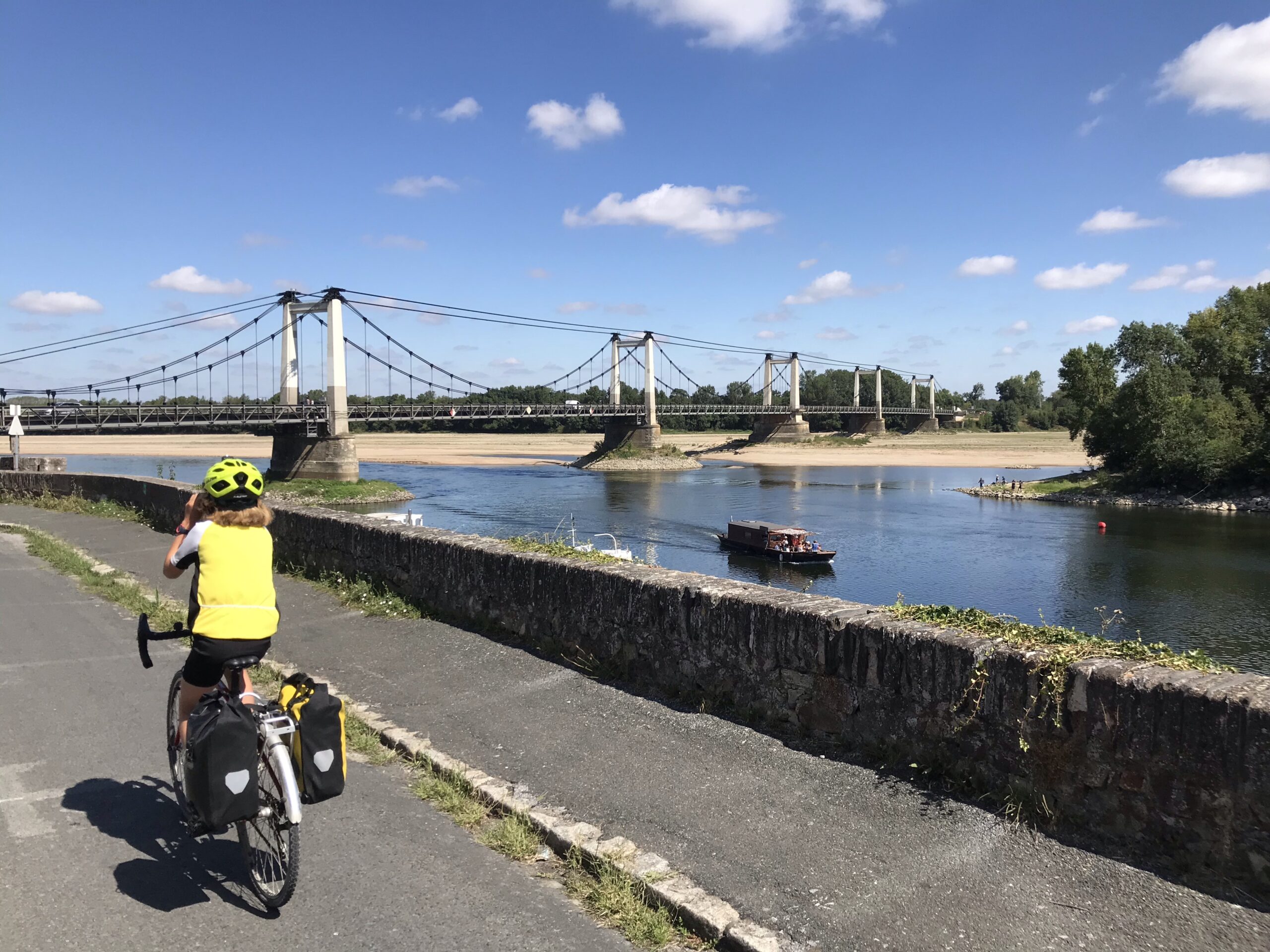
    At Ancenis we see our first major suspension bridge across the river. This is where M & I crossed the Loire on our first cycle trip in France from Saint Malo to Agen in 2008.

    We rendezvous with the kayaks and head downstream. Wonderful to be in and on the water, travelling with the flow. The current is strong but it is safe to moor up behind the groynes that reach out into the river and create little beaches behind. We climb out on a beach and swim for the first time in the warm river water.

    A stop at a guinguette, recover our bikes, then do the final climb to our hosts for the evening, a lovely couple who welcomed us to their self-built home, where we camped next to their guinea pigs. We stayed up talking about their travels with a trailer and a tandem through Sardinia, Scilly, Greece and the Adriatic, and then about how they built their house.

  • Saumur to Ponts de Cé

    Saumur to Ponts de Cé

    The next leg of our cycle trip along the Loire took us from Saumur to Ponts de Cé, a town a little south of Angers.

    Again the river landscape has changed here. Now wider, another notch up in scale. The islands are longer. The curves more sweeping.

    The Loire downstream of Saumur

    As the cycle path was getting a little bumpy we decided to cycle in convoy along the fast road that follows the top of the flood dyke. This was to be a strategy we used more and more to cover the kilometres on longer stages of our ride. We had roughly 60km to cover and we wanted to get most of them done by lunchtime.

    Much of the riverbed is dry, with the flow restricted to one part of the channel.

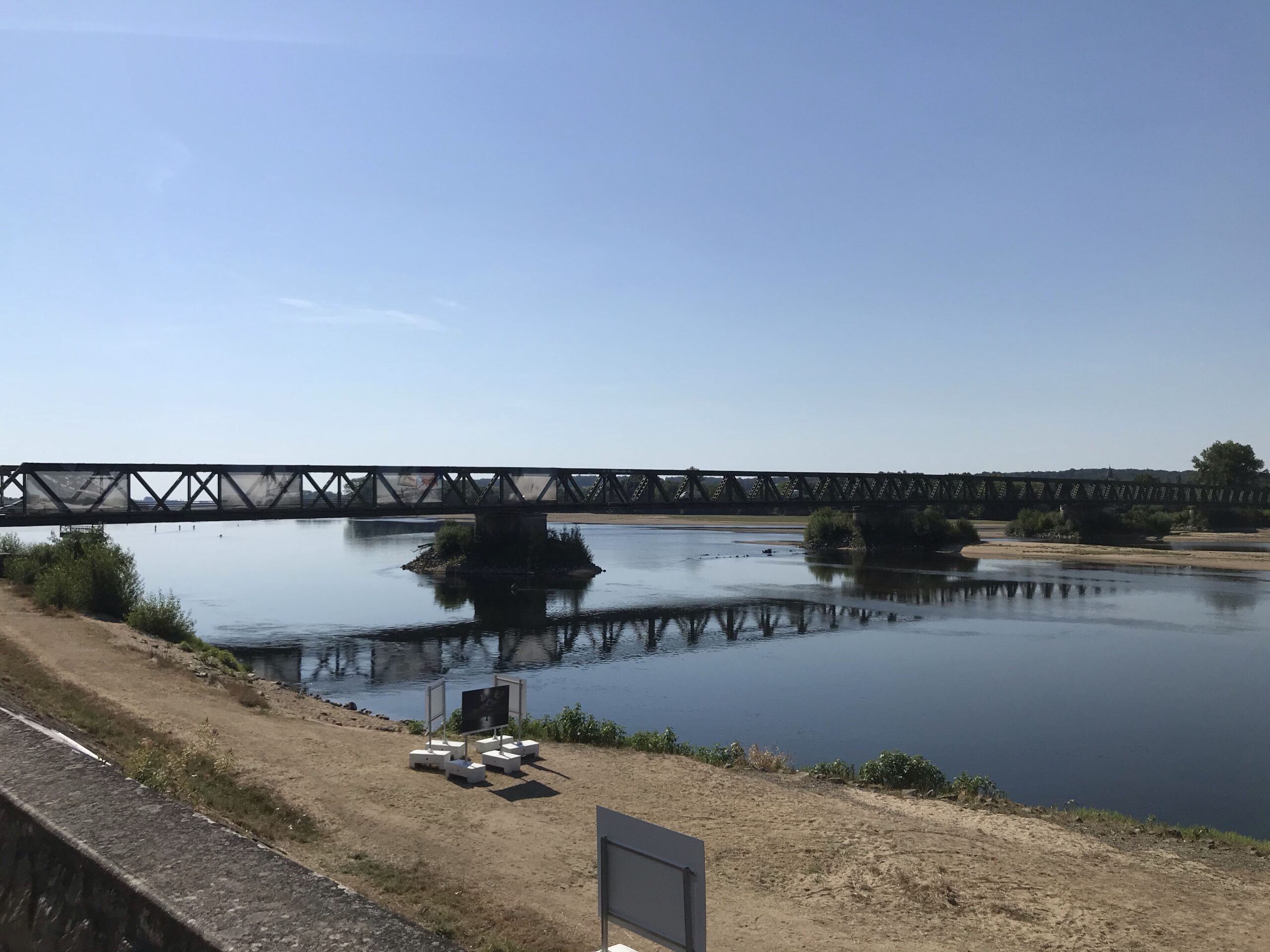
    We can start to predict where good watering holes will be by seeing in the distance where the river crossings are. We had a refreshing stop by this typical truss bridge.

    We arrived in Ponts de Cé early afternoon and made our way to the very relaxed and comfortable Slow Village campsite. It was a relief to reach our destination before the heat of the day reached its maximum. A chance to do some washing, repack, chill out.

    A had a typical altercation with a swimming pool attendant who found my swimming shorts not stretchy enough to conform to the swimming rules. Mysteriously my well-used cycle shorts were perfectly acceptable.

    We spent the evening at the best guinguette so far of our trip. Good food and wine at reasonable prices and friendly staff. After dinner we walked out across the dry river bed to channel on the other side and waded in the warm waters.

  • Cher-Loire confluence to Saumur

    Cher-Loire confluence to Saumur

    The one night we decided to sleep with out a tent and it rained. Only a few spots at around 5am, but enough to wake me and wonder if we should abandon camp. It was still dark. I decided to hope for the best and go back to sleep. Half-an-hour later we were woken by torch lights. This time fishers hoping to find a quiet spot for an early stint with the rod. I think were as surprised by them as they were by us. We got up and watched the dawn light up the water for two hours.

    We cycled 10km to find breakfast, the morning still a welcome cool temperature and overcast. We were happy to reach Bréhemont, perched on the dyke above a sweep in the Loire. Since the confluence with the Cher the river has changed character. A bit wider with sand banks that make great habitats for birds. We saw bird watchers along the banks with their telescopes.

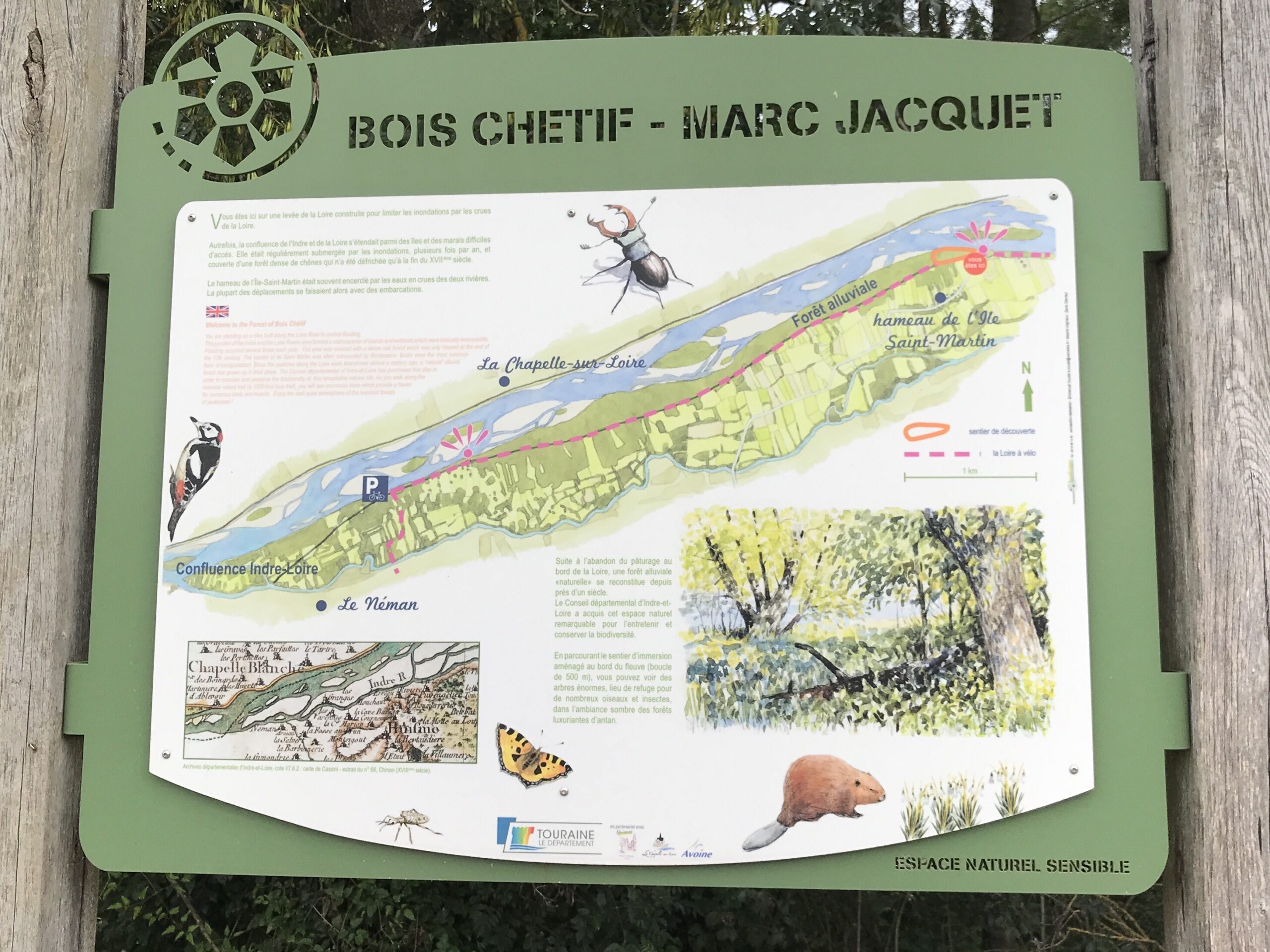
    The next section of path passes through a reforested area of land between the dyke and the river. Long ago the river borders were marshy woodlands that would flood several times a year. The marshes were drained to make agricultural land but now the terrain is being left to return to rich woodland. The space is cool and lush. We followed an enormous bird of prey which glided down the cycle path ahead of us through the trees.

    Boos Chetif- Marc Jacquet

    Lunch in Avoine, a great example of a town that has invested in its public spaces to create an environment that attracts visitors and supports civic life as well. A lovely town square, well appointed with cafe, tabac, supermarket, boulangerie and street market. Spaces for parking bikes and doing maintenance. A water feature.

    We cross the Indre river, a tributary of the Loire, and enter the valley of the next tributary, the Vianne. We find a friendly looking campsite, very laid back with furniture out by the river, and we wade in the Vianne’s waters- colder than the Cher last night.

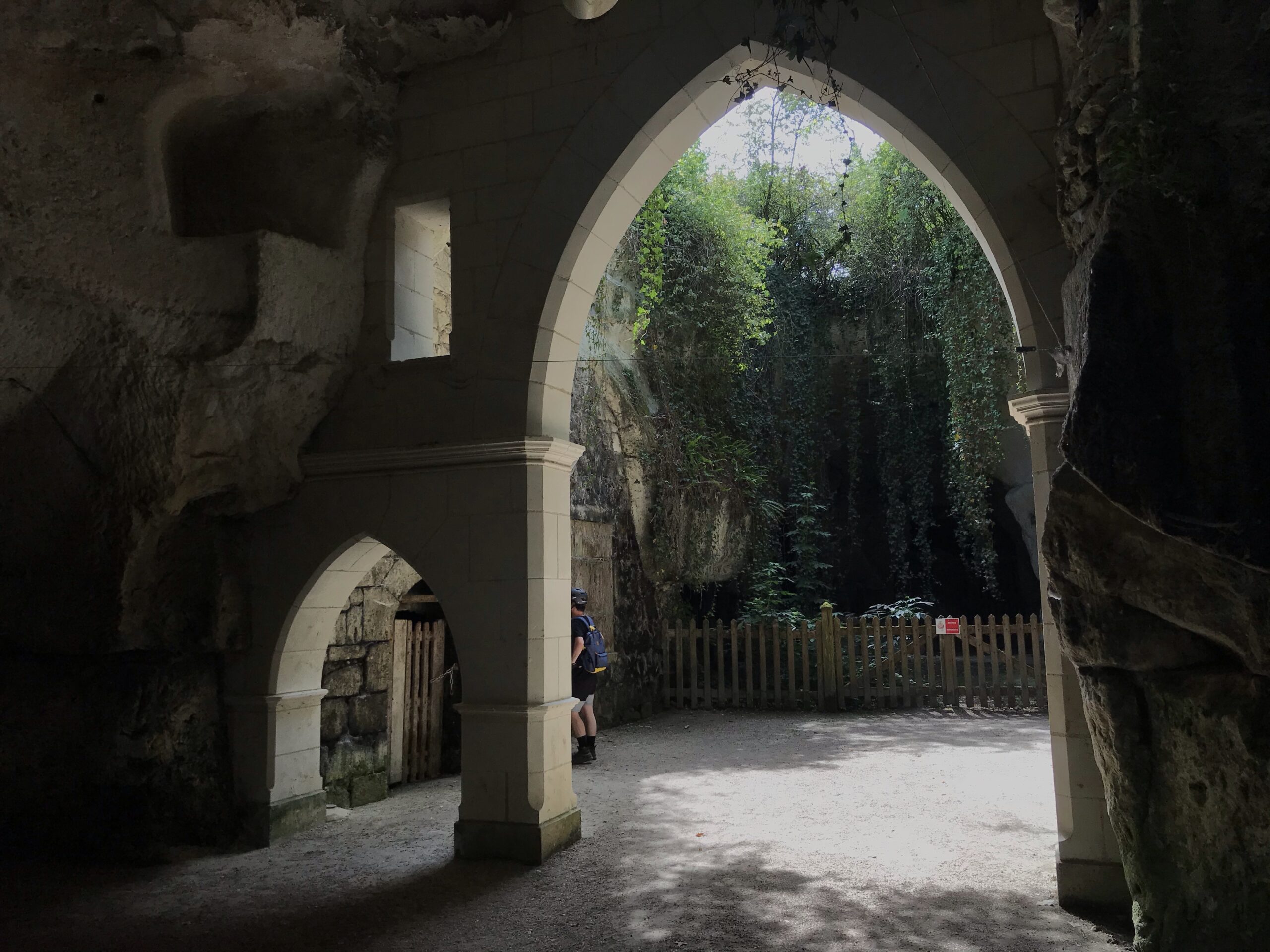
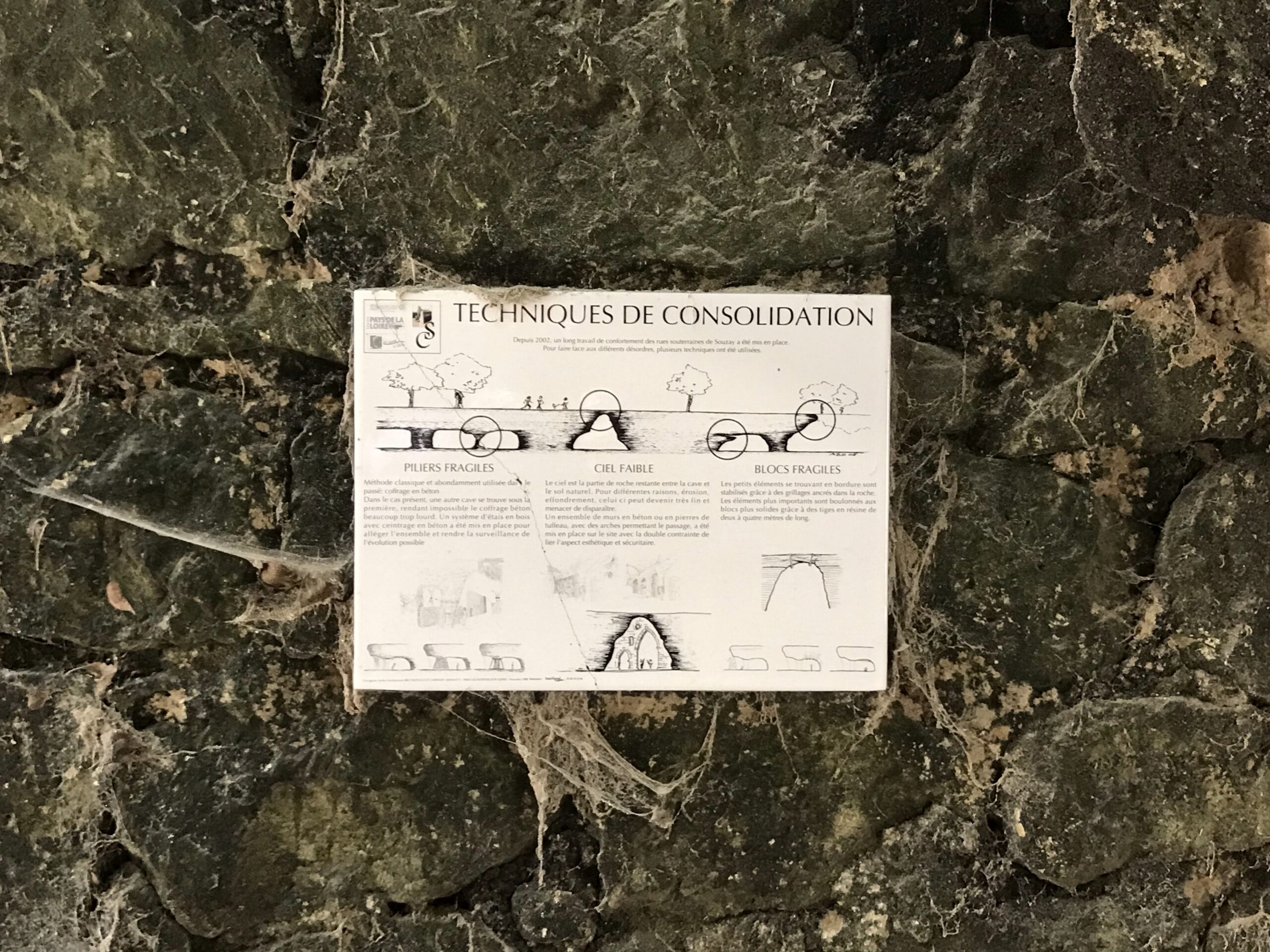
    Approaching Saumur, we climb up the valley sides to the plateau above where the regions famous grapes are grown. The path then winds down again and suddenly takes you underground into a recently-restored subterranean village. Not long ago the village high street was in a deep canyon in the limestone. The shops were in eroded and excavated caves to either side. Plants hung down from above, adding additional shade to prevent the sun overhead from heating the space too much. After the heat of the hills the space was so refreshingly cool.

    These incredible underground spaces are from the past but they could be the future too. All around us the signs of a climate heating up are increasingly obvious. It feels almost unbearable to be out in the midday sun and yet here is a way to live in the cool in the hottest place in the valley that uses just the shade and the coolness of the earth to create habitable conditions.

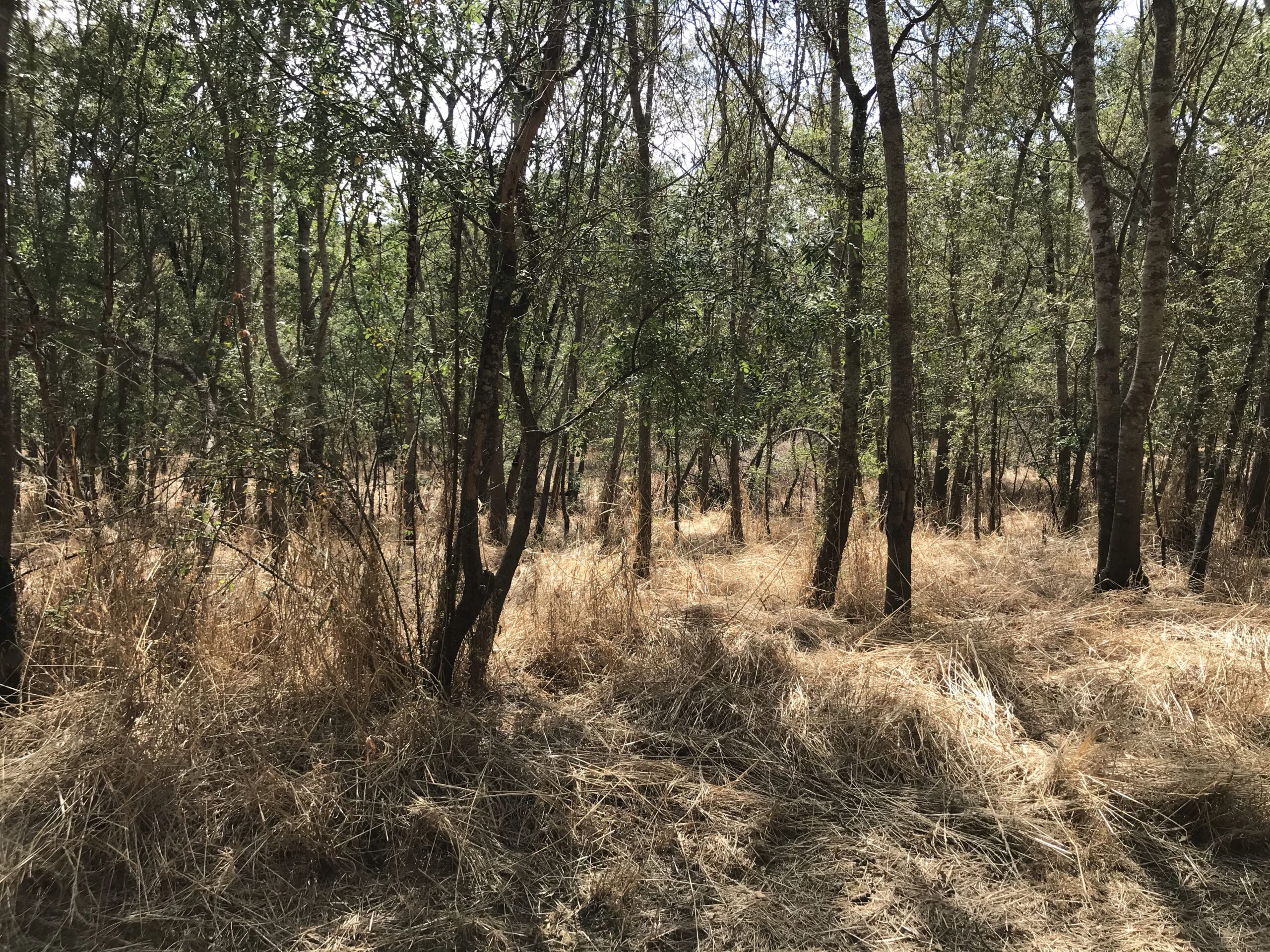
    As if to emphasise the impact of climate heating locally, we cycled out of the underground village and almost immediately into a bone-try forest. But this isn’t the south of France, it’s the middle bit. This is not normal.

    In Saumur we camped on the island in the middle of town. Camp sites on islands in rivers close to big towns seems to be a common format of civic infrastructure in France. Perhaps it is common more widely to European countries with wide rivers running through them. I enjoy being able to step out from your tent, cross the bridge and absorb the evening atmosphere.

    The strange feeling we had though in Saumur is of a place that is in the middle of a heat crisis but no one seems to mind. As long as the wine is cold.

  • Amboise to the Cher Loire confluence

    Amboise to the Cher Loire confluence

    We left Amboise, climbed the out of the valley of the Loire and over into the Cher, which runs parallel to the Loire and would be what we followed for the rest of the day. First stop le chateau de Chenonceau, which is sits across a river on arches. I always thought this would be my favourite of the Loire chateau but again I felt disappointed. I think mainly because it so heaving with visitors, which, obviously we are too. (are you stuck in traffic or are you traffic?)

    We knew we would have a hot day of cycling. 70km to our destination. We could see the city of Tour from afar, and the river gradually widened as we approached. Tour sits between the Cher and the Loire rivers but largely seems to ignore them both. We found it hard even to find a place to leave the river path and get up over the levee. We cycled into town hot and hungry and ended up eating expensive pizza. It’s one of those situations where you feel like you haven’t quite got this right and you pay through the nose for it.

    I was pleased at least to have seen Tours, with its medieval centre. One of those places that I’m unlikely to visit again so pleased at least to be able to have put a brief experience to the name. But I was pleased to leave too. The way out, like the way in was not trop évident.

    We cycled through the afternoon heat. We found our way to Savionières which had a ganguette. Coffee and ice cream while we waited for the heat to pass.

    We were due to be staying in a garden further downstream, arranged through Warmshowers.com but as we cycled along we noticed a quiet, picturesque sweep in the river and wondered if we could wild camp. We picked our way through the trees and discovered we were at the point where the Cher river joins with the Loire. There was a beach we could swim off and a shelter point to sleep. We didn’t even need to put up a tent.

    S and I went swimming in the Cher. The flow in the Loire looked a bit fast so we didn’t venture into its waters. Bright green frogs leapt out of the undergrowth. The water was so warm. Overhead egrets patrolled the skies and waded in the water. Opposite a whole herd of cows came down to the water and waded in the shallows. We fell asleep to the sight of bats a few metres overhead and the occasional rattle of trains on the Tours Nantes line crossing the viaduct opposite.

  • Paris – Orleans – Muides-sur-Loire

    Paris – Orleans – Muides-sur-Loire

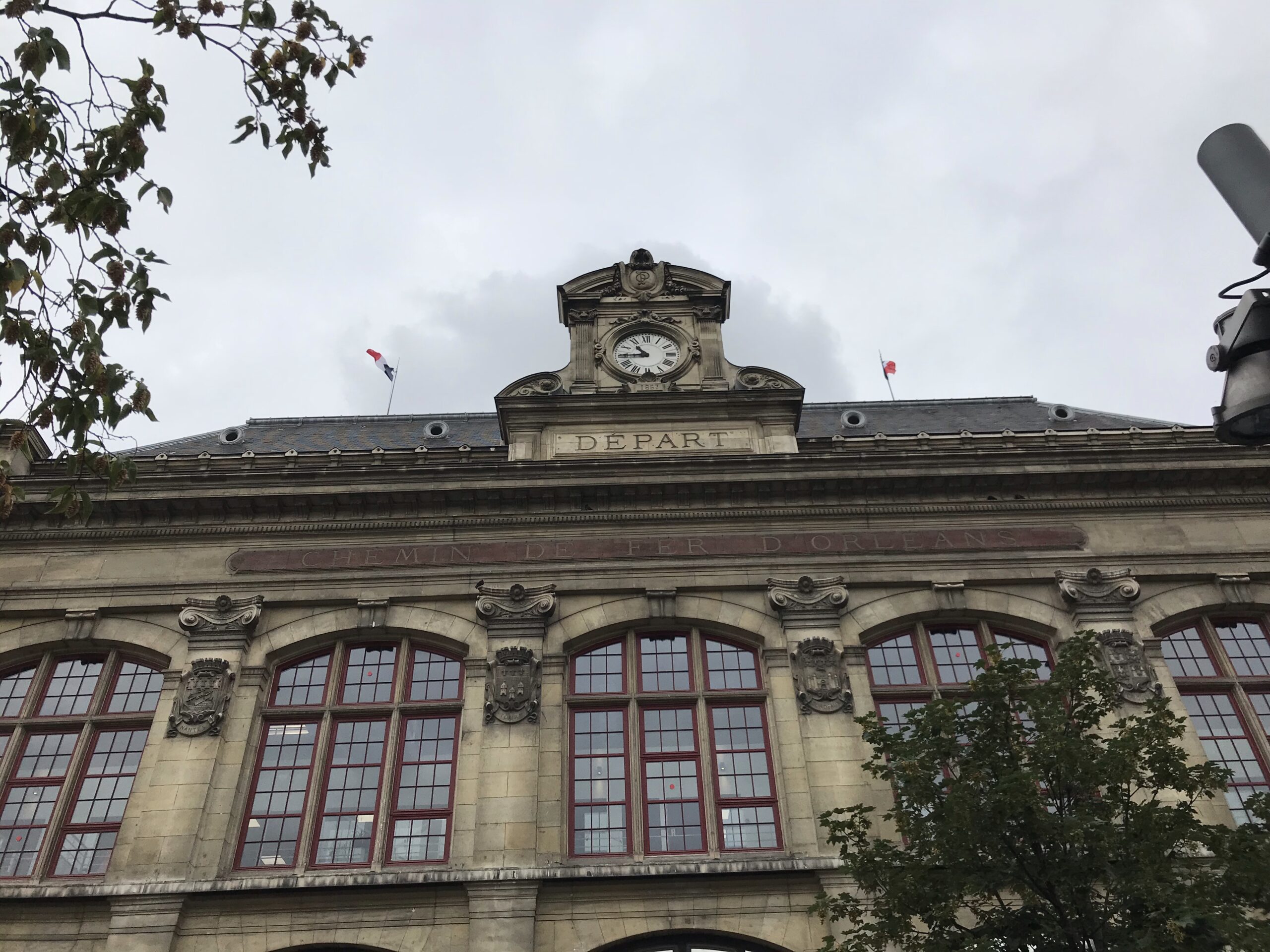
    Today our trip shifted gear, away from the city and on the road again. We left paris from the Gare Austerlitz, which feels like it has been under reconstruction for 15 years. I can’t believe how much concrete must have been poured to create the podium that is spanning over the platforms. I wonder if attitudes to using concrete are shifting in France like they are shifting in the UK?

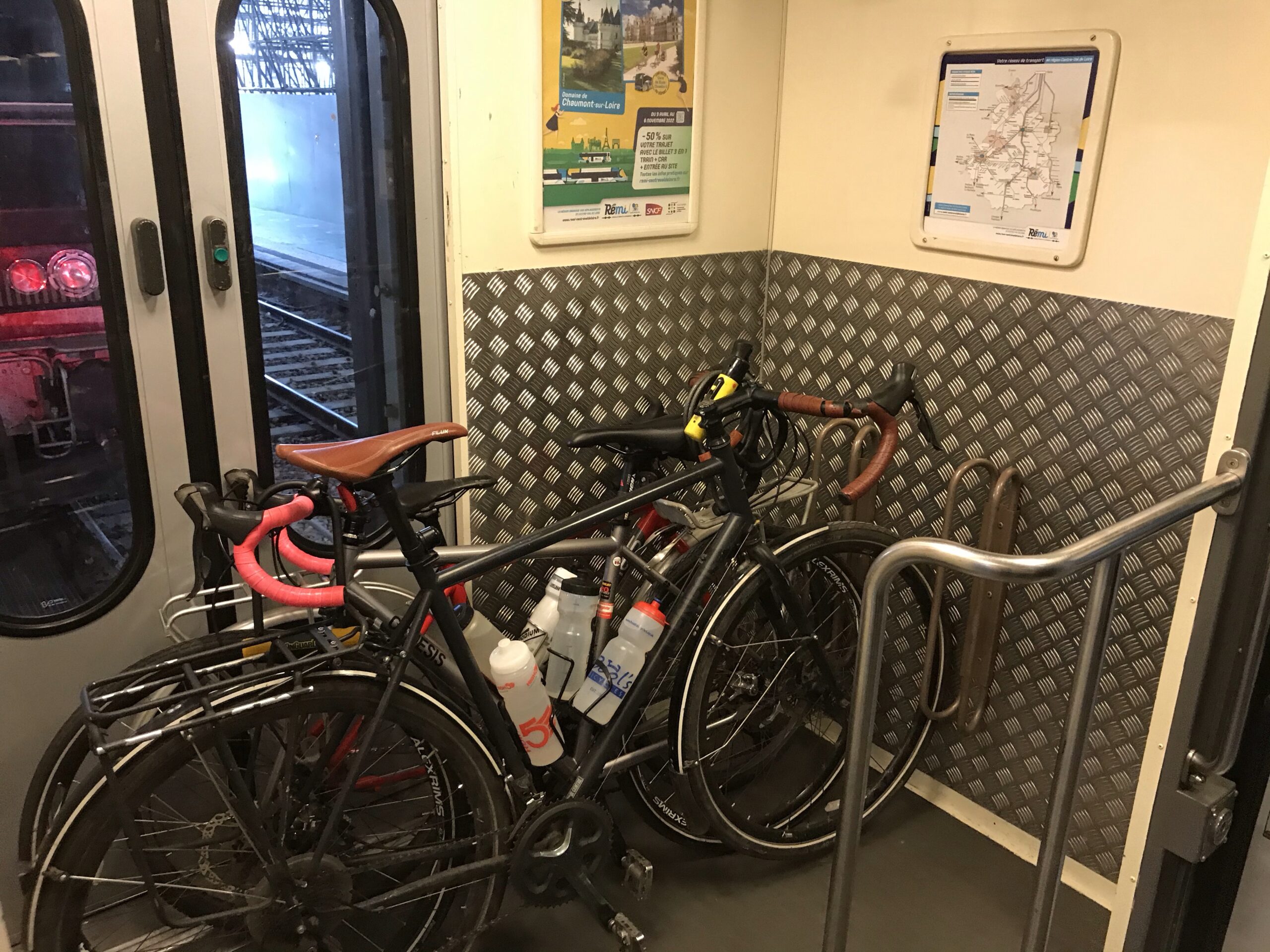
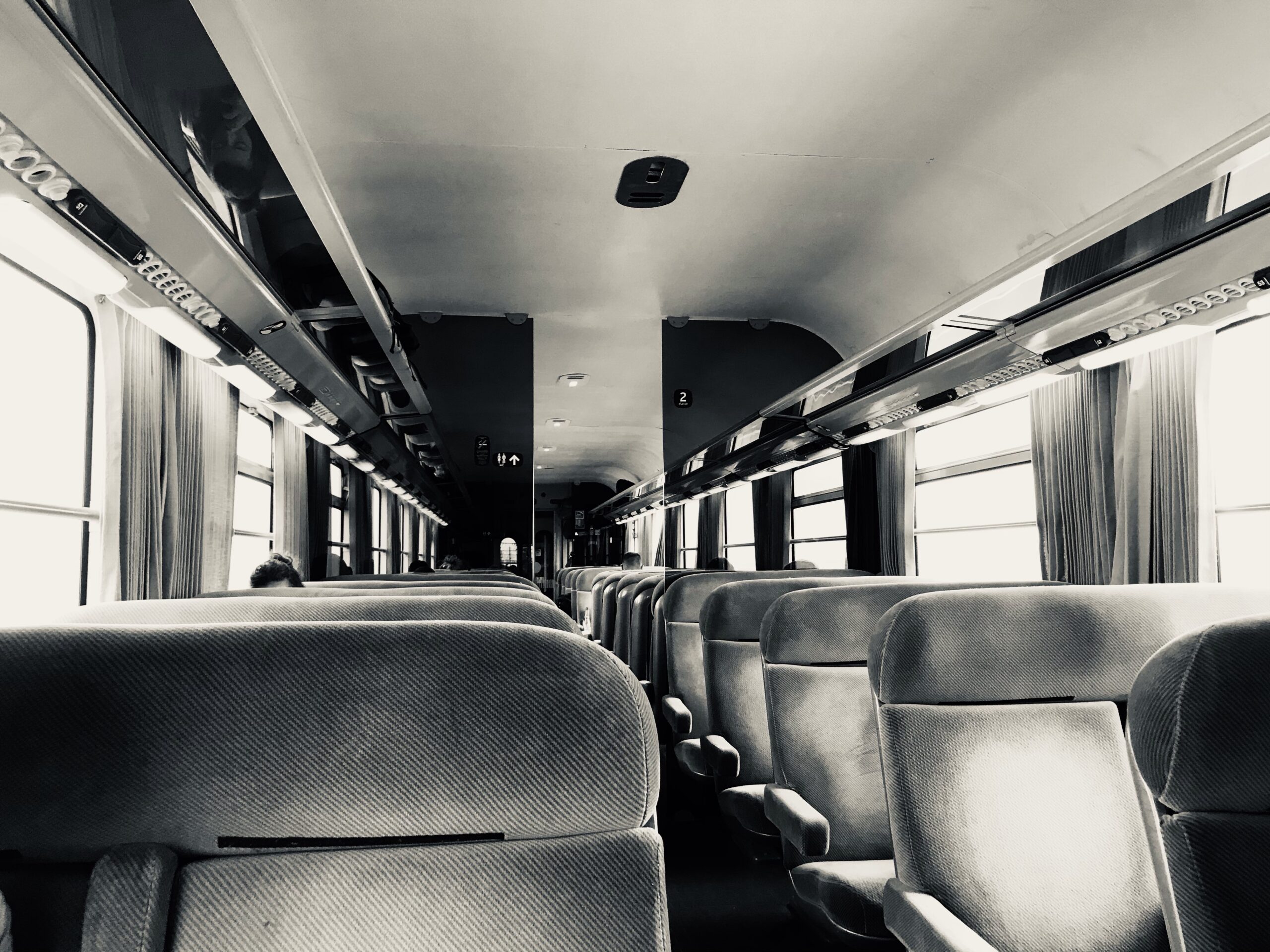
    It’s a short ride to Orléans from Paris in one of those old intercity trains like the ones I’d see go humming past on the railway line below my grandmother’s house. There’s plenty of space for bicycles, albeit after you have lifted them up the high steps. On the way I spotted the remains of a test track for an aborted hover train project, a competitor to the British schemes being tested in Ely in the 1970s, neither of which came to fruition.

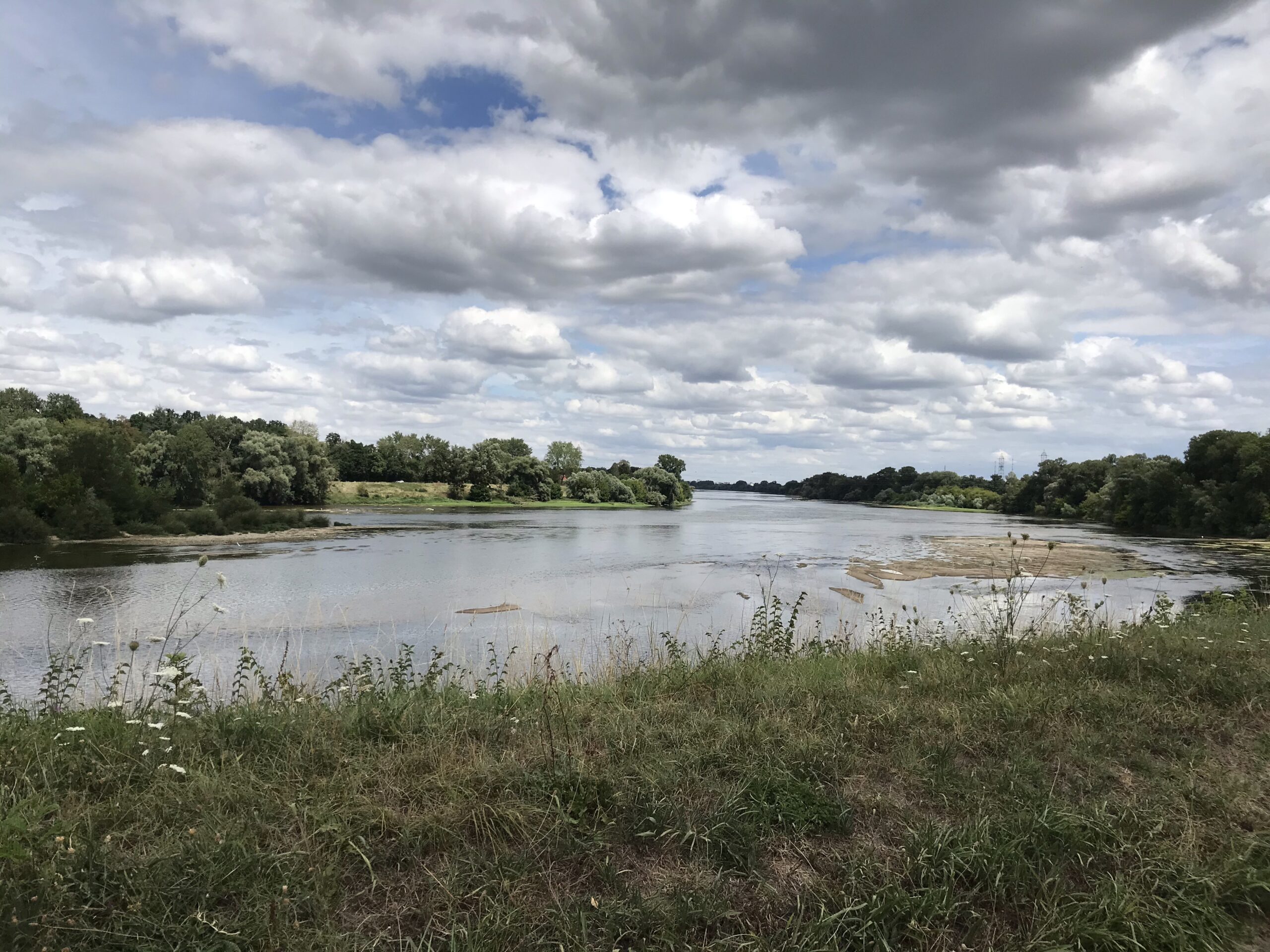
    After a few days in city it feels a relief to reach the Loire, which stretched out before us left and right as we ate our picnic lunch on the banks. We now have six days of cycling down it’s wide cycle paths atop flood dykes.

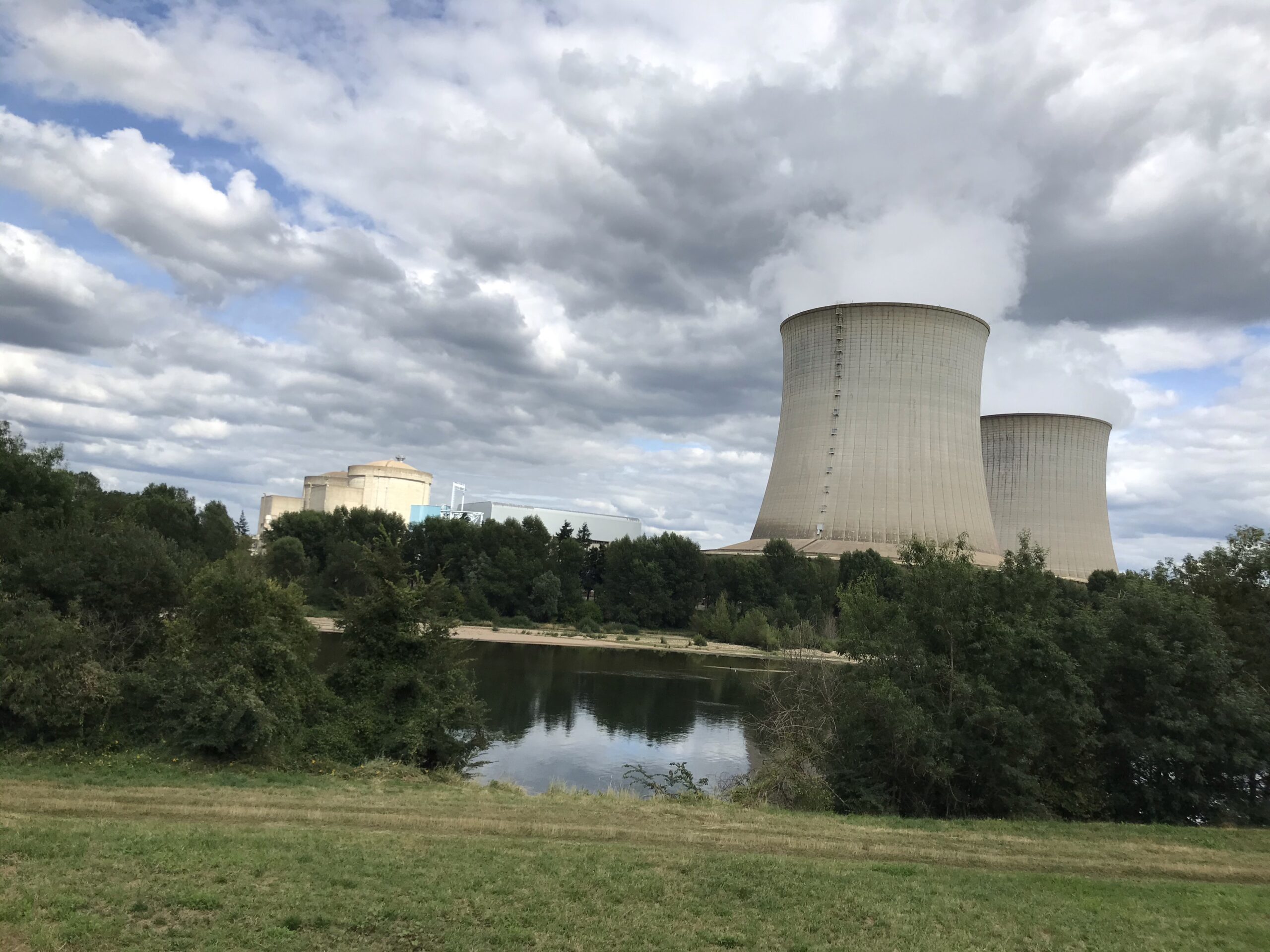
    First nuclear power station of the trip

    Last night we drank in a packed street bar in Paris, today our beers are in a riverside campsite ganguette. I am enjoying the change.

  • Ponts de Cé – Ancenis – Champsaucau

    Ponts de Cé – Ancenis – Champsaucau

    A multimodal stage on our journey through France, with 70km by bike, 7km by kayak and another 2km uphill to finish the day.

    We crossed the Maine river at Bouchemaine, where we stopped for the market and breakfast by the river. The scene looked like we could be in the Netherlands.

    I remember little about the rest of the ride other than it was hot and we cycled in a tight convoy to keep a steady pace and cover the ground.

    We crossed to the north side of the Loire over a more substantial suspension bridge than we’ve seen so far. Minor aside on suspension bridges. The Loire is the first place I’ve seen multispan suspension bridges with a post tensioned top cable to keep the towers an equal distance apart.

    At Ancenis we boarded two kayaks and our bikes were taken downstream in a van. There was a big difference in river flow rate across the width of the channel and finding the fast flowing sections was quite tricky.

    We were advised we could moor up and swim behind any of the groynes built out into the river. Behind each, the river water swirls in a great rotating eddy that you have to paddle through to reach the beach. This was where we had our only swim in the Loire. It was so warm.

    We arrived at the drop off point, refreshed ourselves as the guinguette and climbed the hill up to our accommodation, a family home we found on warmshowers.com

    Our hosts live in a beautiful, self-build home. We enjoyed hearing the details of the construction, their water conservation measures and meeting their guinea pigs.

    Warm Showers is a great tool for cheap travel, but it does require quite a lot of on-the-go administration.