The highlight of our visit to Nantes was standing next to the Great Elephant as it set off for one its walks around the former dock yards. The 45-tonne steel and wood sculpture is part of the Machines de L’Île creations. At the centre is the workshop where engineer-artists create mechanical creatures that replicate real animal movements. The concept is that the creatures escape from the workshop to create the exhibits around the dockyard site.
I find the whole place a wonderful combination of humour, heart, engineering, spectacle and wonder and reverence for creatures big and small. Definitely worth a 3 star engineering detour.
From stage one of the Tour de Femmes in Paris to a very different stage two finish in Provins. The stage in Paris was of ceremonial importance, but I think the stages between more regional towns are more characteristic of the overall tour experience.
Unsure whether to go the night before, we looked up the finish town of Provins on the race website. And sure enough it is a UNESCO world heritage sight. This is what the Tour is for: showing off bits of France. Having lived here and traveled widely for a year I’d never heard of Provins. And so we set off for a day of sightseeing and cycle watching.
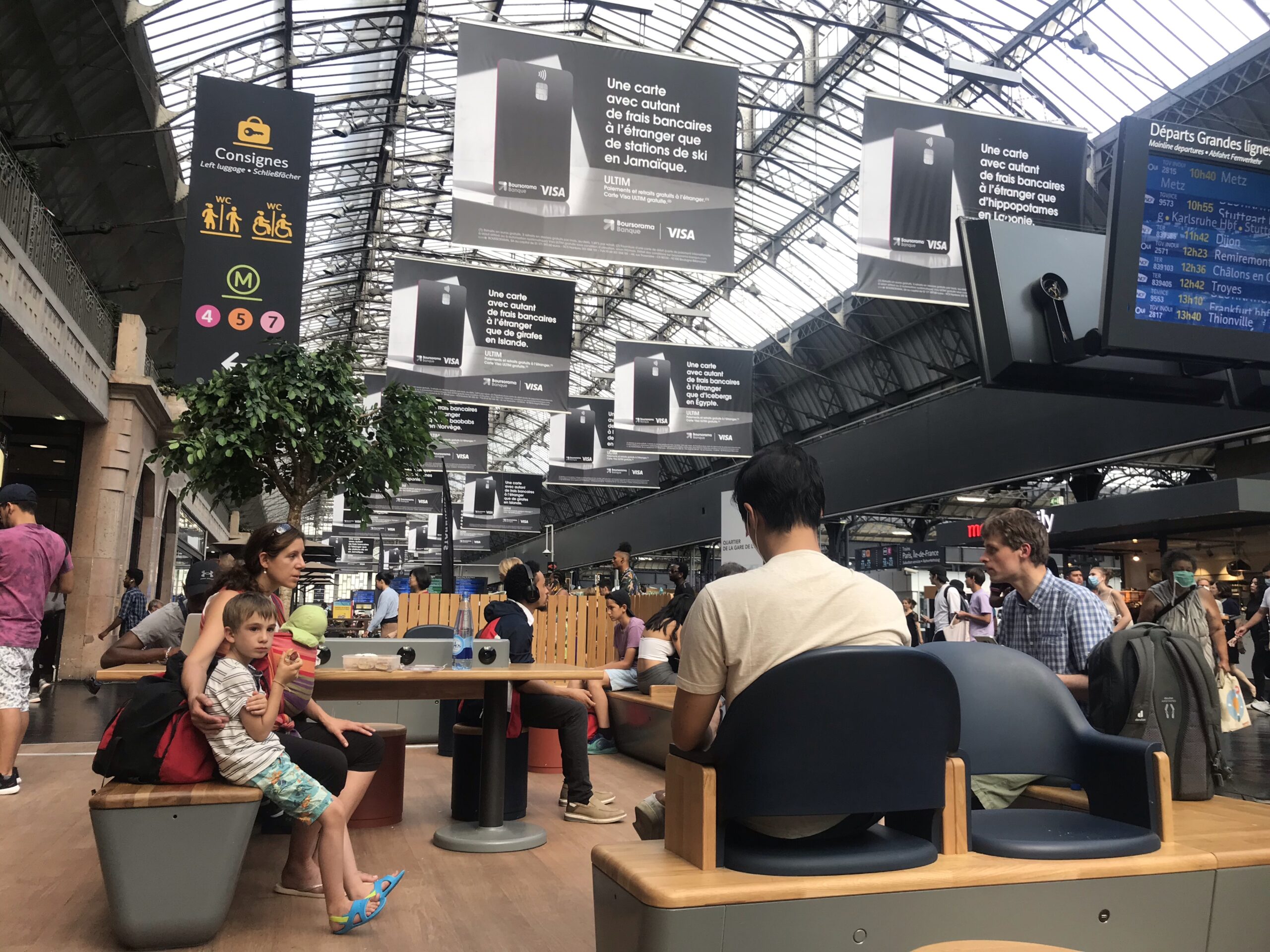
I was happy to find that our route to Provins was a direct train from the Gare de l’Est. I used to come here and imagine the journeys you’d be able to take when they would open the TGV Est Européen in 2007, connecting Paris at high speed to Strasbourg, Cologne and Frankfurt. It is a very wide terminus station with brightly lit, glazed concourse that runs the width of the platform ends. It’s not as imperious as Gare du Nord, not as concrete as Montparnasse, not as complicated as Saint Lazare. It’s like a dinner table set out for lots of European friends with a nice bright table cloth and plenty of elbow room. I also appreciate the abundance of seating without obligation to sit in a cafe.
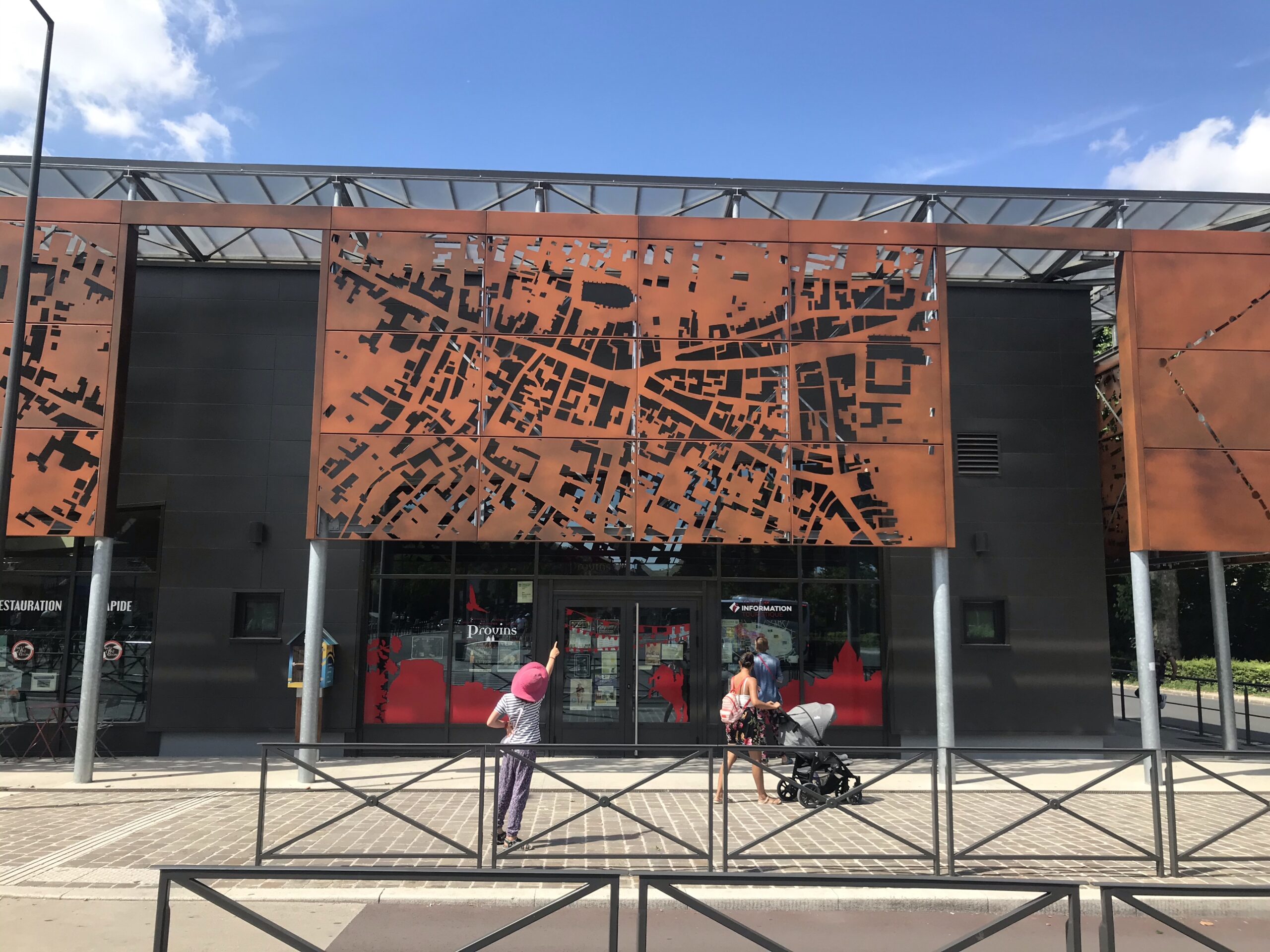
From one end of the Transilien line P to the other, at Provins station the most striking thing is the Office de Tourisme which had an elegant Coreten facade with the map of the city carved out of it to make dappled shade on the building front.
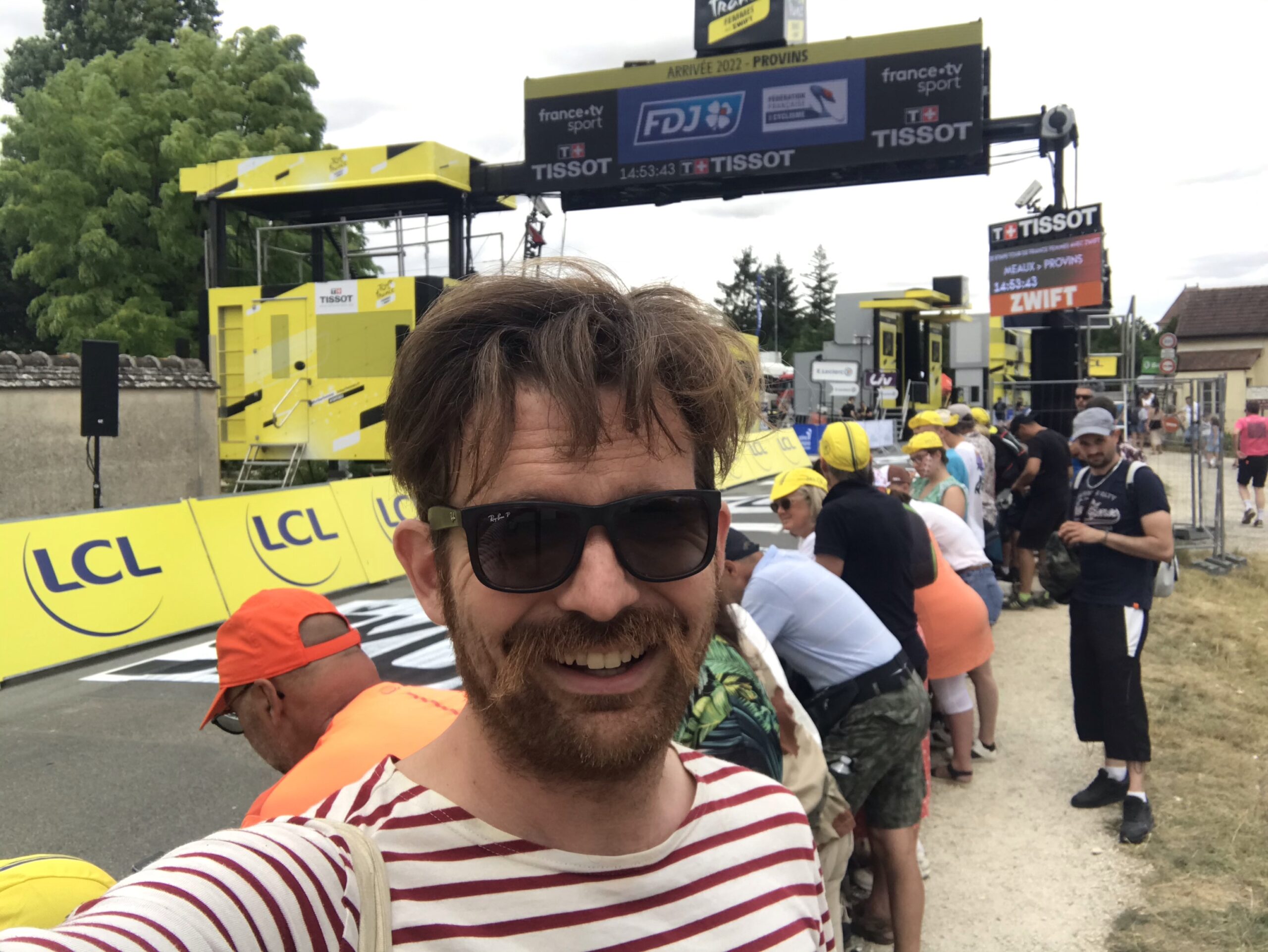
We walked down the medieval streets, had a relaxed lunch in a restaurant, spotting Tour lanyard wearers all around us. Gently, imperceptibly at first, the pedestrians, the residents started all walking in one direction. We followed them round the ancient streets, through the impressive ramparts and then there it was: the ‘permanance’ – the collection of vehicles which is the travelling caravan of the Tour. We passed the winners’ podium, the commentators box and then there was the finish line. All of these bits of infrastructure are so familiar from watching over a hundred stages from the television, and there they were just in front of us. Smaller, and bigger, in real life.
I think one of the most surprising things about the Tour is that all this infrastructure is moved from town to town every day. It is literally a travelling circus. It is life on the road, not just for the riders but for the logistics entourage.
We knew we’d get a good chance of standing near the finish, but we didn’t expect to get five metres from the line. We found our spot and waited the two hours or so for the race to pass. I did this watercolour of the finish line. I appeared to be the only person taking pictures with this choice of medium.
A brave local commentator was keeping the crowd interested, and i learnt a lot about what a big deal it is for a region or département to host the tour. We heard about the local cycle clubs and rising stars. We heard about all the local people who had worked to bring the Tour to Seine et Marne and to the town of Provins. All the folk who had assisted in getting the barriers in place early in the morning. I had the feeling that lots of people watching weren’t into pro-cycling, but that this was the travelling spectacle coming to town that they had to see.
An hour before the race came the travelling caravan of sponsors vehicles handing out free stuff. I know that this is what the Tour is all about on one level, marketing opportunities for these big French brands. It is awful in terms of waste stuff given out and it is laughable. From the cars freebies are thrown out and the crowd go wild for them. Key rings from the gendarmerie, T-shirts, the famous hats, processed meat from one of the sponsors. I am sorry to say I didn’t get a pink Zwift that but glad that my daughter got one.
And then it was on to watch the racing. As I found yesterday it is actually quite hard to follow the race when you are there, but being near the end we could see the big screen. I was watching when three pretty awful looking crashes happened. These were made all the more graphic when we saw the injured riders limp to the line later.
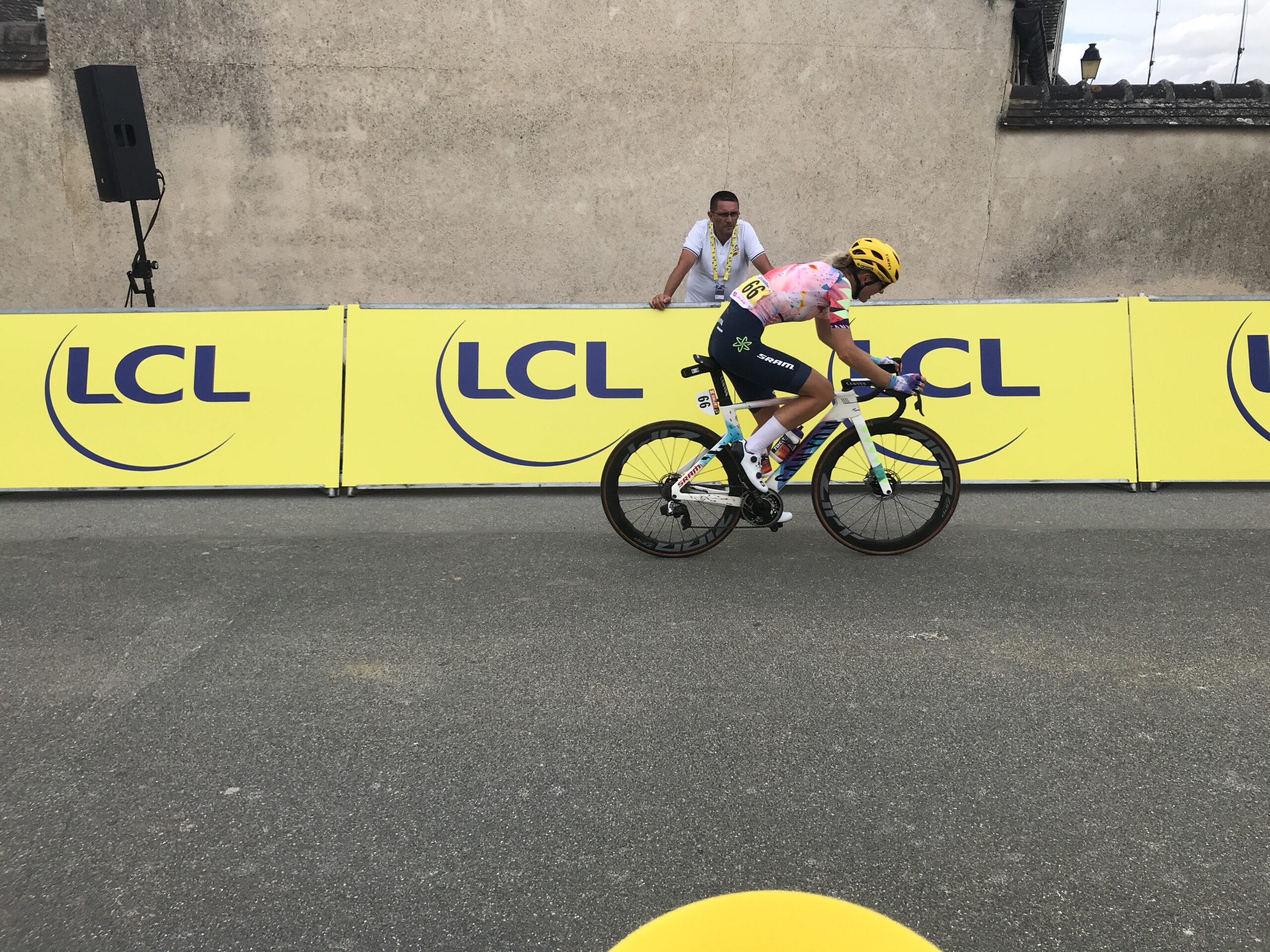
The riders passed the finish twice. First for an intermediate sprint, and then round a 15km loop which brought them back for the finish. After the sprint a breakaway group formed of Elisa Balsamo, Elisa Longo Borghini, Marianne Vos, Niewiadoma, Silvia Persico and Makia van der Duin. But in the final sprint to the line Marianne Vos broke away from this group and zoomed ahead to cross the line. Incredible to see possibly the best cyclist in the world win her 241 stage win and with it the Yellow Jersey.
Seeing the racers close up makes the whole thing feel more human. They are much smaller in real life. Their pain is more real. And their power as they cycle past.
And then fascinating to see how the end of race proceedings are orchestrated. While one racer is collapsed on the ground getting medical help, other people are getting on with the medal ceremony. This stage is done, and the juggernaut must roll on.
I spend most of my time designing creativity training for engineers. In this episode we flip the format. Alexie Sommer, Independent Design and Communication Director and collaborator on many of my projects interviews me about why I set up Eiffel Over and Constructivist Ltd, and what our plans are for designing creativity training for engineers in 2020. We get into:
Techniques for teaching creativity
Our programme of training support people tackling the climate emergency
I read an astonishing article this afternoon titled ‘Quantitative Analysis of Culture Using Millions of Digitized Books‘, published early last year in the journal Science. Based on Google’s effort to digitise all books in all languages, researchers have carried out computational analysis on a corpus of over 5 million books – approximately 4% of all books ever published – to give access to vast amounts of data on word use.
The availability of this data allows researchers to observe cultural trends and then subject them to quantitative investigation – the study of ‘culturomics‘. The paper illustrates fascinating changes in language size and use, and shows how the data is used to draw more socio-cultural conclusions.
Best of all, Google has a nifty tool for presenting the data called the ngram viewer, which has allowed me to do a little culturomics of my own for the field of engineering.