Tag: training

  • Losing at Tetris (and planning)

    If you’ve ever played the computer game Tetris, you’ll know how it goes: things are fine at first. Blocks drop at a manageable pace, and you can take your time placing them neatly. But as the stack grows higher and headroom becomes limited, the blocks fall faster. You’re forced to make snap decisions, and it gets harder to place them well. Mistakes compound, and suddenly, it feels like everything is accelerating towards disaster.

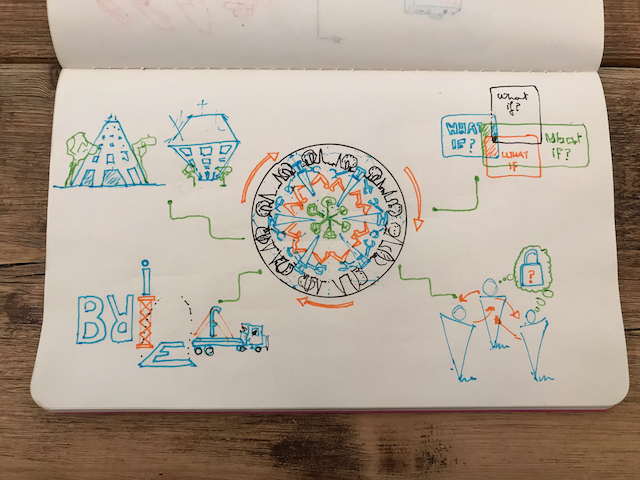
    Today, I’ve been running training for the Get It Right Initiative, and this is one of the analogies I use to explain what happens when we don’t make time to plan.

    In design and construction, as in Tetris, when we skip planning, we’re more likely to make rushed decisions. These decisions can lead to mistakes, which in turn create more problems, more stress, and even less time to address the growing chaos.

    Unfortunately, in real life, the consequences of getting things wrong are far more serious than losing at a game.

    Fortunately, unlike in Tetris, we do have more freedom to step back and make time for planning. Planning is the important-but-not-urgent task that prevents small issues from escalating into crises.

    It might not always feel like we have that freedom. Making space for planning might mean sacrificing something else, but that sacrifice is often far less damaging than the entire plan going wrong and it being game over.

  • From great to transformative: training and workshops that stick

    From great to transformative: training and workshops that stick

    How do you run a great workshop or training day that really makes a difference to the way people work? The keys are ownership and reflection. 

    In my view, great workshops, training days and away days need to do two things. They need to help people solve their own problems. And they need to help people work reflectively towards fixing them. 

    (more…)
  • The magic moment when learning and teaching come alive

    The magic moment when learning and teaching come alive

    It is the moment I look for on my training courses. It is when participants switch from general interest in the topic or material to a moment of clarity about where they are now, what they want to be able to do and what stands in their way. For me this is when teaching and learning come alive because we have clarity of purpose, a goal which provides both motivation and a clear end point and a challenge that we can sink our teeth into.

    When we reach these conditions we can enter into a space of joint experimentation (as my colleague Søren Willert would call it) where neither of us necessarily know what is going to happen but we have confidence that our efforts will be worthwhile.

  • Training course – Introduction to Conceptual Design for Structural Engineers

    Training course – Introduction to Conceptual Design for Structural Engineers

    This course, which I deliver at Constructivist for the Institution of Structural Engineers is my longest running conceptual design training course. It is an introductory course, which splits conceptual design up into three phases: establishing the brief, creative thinking and convergent thinking and provides simple models for understanding each of these phases.

    (more…)
  • Reflections on video selfie training

    Reflections on video selfie training

    Think Up Selfie Movie Training

    Yesterday at Think Up I ran a workshop training engineers in how to use selfie movies to tell communicate to people about engineering. The aim of the workshop was to inspire and give the participants the skills to use video as a medium to share interesting engineering stories. The attendees were a group of engineering students from UCL and Imperial and a couple of graduate engineers from Expedition Engineering.

    The content I had to deliver was in two parts: the technical skills – talking to camera, framing the shot, etc; and storytelling – figuring out what to say.

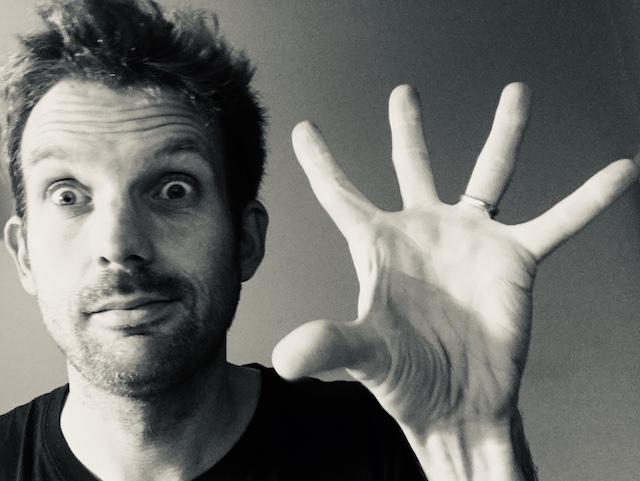
    In my experience people are nervous to talk to camera, so I kicked off the workshop with asking people to film a selfie introducing themselves and sharing two surprising facts about themselves. It turned out to be a great way to kick off the exercise. I think it worked because people had to confront their fears straight away. We used these examples as a context for talking about what makes a good selfie. I then showed them a selfie I had made that morning, and asked them what was good and bad about it (below).

    We then moved on to storytelling. I had thought that the participants would find the storytelling easier than the technical material, but it was the contrary. I asked individuals to think of a subject that they are passionate about, and to find one particular intriguing aspect of that subject that could form the kernel of their story. That bit was mostly easy, the challenge was finding the language that helped weave a compelling yarn. In the end the way round this was for me to suggest linking phrases or expressions and to show them how they could be used, and then for the individuals to weave those phrases into their stories.

    The impact was stark: once they had a compelling story to tell, and they knew how to say it, even the least confident sounded a lot more confident on camera.

    In the end I saw some really quite moving videos being produced. As homework I asked the participants to polish their performances and upload a video to the Think Up Facebook page. I’ll have more to write on this depending on whether they do or don’t post anything!

    There are some important things that I take away from delivering this workshop:-

    • This is another reminder that there is no substitute in learning for getting people to do. Forcing the participants to make a film straightaway was probably scary for most, but once they were ‘doing’ it was easier to talk about how to do it better. I had a similar experience in a communications workshop I ran last week on difficult conversations in engineering projects. We talked about the ideas, but it was only when I forced participants to role-play the scenarios (which they seemed reluctant to do at first) that the learning really seemed to sink in.
    • I haven’t previously appreciated the value of good storytelling, though many of the people I work with do. Perhaps because it is something I think I’m good at, I don’t recognise how other people find it a challenge. This is a theme that I would like to develop in more training for engineers.
    • This event was about confidence building, and I used a lot of the confidence building techniques I know from swing dance teaching – lots of applause for one-another’s efforts; keeping the momentum up and the tone positive – and it seemed to pay off.