Tag: woodland

  • Remote treehouse design

    Sometimes humour serves best to highlight the ridiculousness of a situation. 

    In my last few posts I’ve been exploring the relationship between designers and the ecosystem they draw their materials from. 

    The working thought experiment has been a game in which differently sized design teams compete to build a wooden shelter from fallen branches in a forest. The size and configuration of the team have a big impact on how the teams source and work with their materials. 

    Now, let’s make it ridiculous. Imagine that instead of the design teams being situated on site in the wood, they are instead situated in a cabin just outside the forest. The construction teams remain on site. How would the game work?

    The direct link between designers, the site, the construction team and the environment that the materials come from is broken.

    The first challenge is communicating to the designers what the site is like. This could be done by means of a drawing, or even a video sent to the designers. But any representation is likely to be a partial version of fully understanding the site. 

    Next we need to find a way to communicate to the designers what materials are available. In the game, the materials are sourced from the surrounding woodland. But found materials don’t necessarily conform to easily describable units. We could envisage then a system in which branches are harvested and sawn to make their dimensions easier to work with and specify. In doing so, we lose some of the material in order to ease communication and specification for the remote design team.

    With a list of standard parts the remote design team can then begin their design. They may invite the build team in to the design office for ‘early contractor involvement’. When the designs are produced, there will need to be further meetings to brief the construction team on how the design works.

    As construction begins, the people on site notice the design could better fit into the local environment with some changes, but that would take additional meetings with the design team over in the cabin. And it’s not their own design anyway. They don’t feel like they own it, so they don’t bother.

    Meanwhile, the design team forget that they are in a game and start selling their remote treehouse design services to other people. They have a design that they believe works, and so start using it in other woodlands, albeit with even less knowledge of the locally available materials, site conditions, and fitness-for-purpose of their design.

    Of course, this is a ridiculous way to organise a construction process.

  • Losing edge (on the disadvantages of scale)

    In my last few posts I’ve been exploring the relationship between the scale of design team and the connection with the places they are working with. Today I’ll go into the benefits of smaller scale.

    To explore this topic I’ve invented a game as a thought experiment. In this game, teams of different sizes compete in a woodland to build shelters from materials they have foraged. To form their working groups, the participants of each team form into tight clusters. The catch is that only people on the outside of the cluster – the ones on the edge – can do the foraging. 

    Yesterday, I explored the advantages that larger groups have, and in particular the possibility of specialisation that a larger team allows. But this specialisation comes with costs. A big one is the loss of contact with the surrounding ecosystem. 

    In a smaller team, everyone is involved with foraging, designing and building. This interconnectedness means that the processes can inform each other. The process of foraging informs what materials are available for design and construction. Design itself might be a process of trial and error with the available materials. And the experience of construction can inform what materials the foragers need to look for next. 

    The smaller scale also enables the design process to adapt to environmental conditions. If, for example, a particular material is running out in the environment, the foragers can get something different, and adapt the design. Over time, there is even the possibility that the foragers could notice the impact of harvesting materials on the ecosystem. It could be, for example, that harvesting a certain kind of timber encourages regrowth of other species. 

    This constant, direct feedback loop is much easier to achieve in smaller teams—teams with more “edge,” or more points of contact with the environment.

    In larger teams, this kind of information can still be shared, but because specialist designers aren’t directly in contact with the environment, a formal process for transmitting information must be established. This introduces a risk: if designers don’t experience the environment firsthand, they may become desensitised to the information. Seeing and feeling the conditions on the ground creates a deeper understanding than hearing about them secondhand.

    While this is a post about building wooden shelters, it is a metaphor for our actual large-scale design processes, in which designers have virtually no contact with the environment that they are affecting by their design decisions. Without edge – without strong connection with our ecosystems – it is much harder to work in harmony with those systems. 

  • Cher-Loire confluence to Saumur

    Cher-Loire confluence to Saumur

    The one night we decided to sleep with out a tent and it rained. Only a few spots at around 5am, but enough to wake me and wonder if we should abandon camp. It was still dark. I decided to hope for the best and go back to sleep. Half-an-hour later we were woken by torch lights. This time fishers hoping to find a quiet spot for an early stint with the rod. I think were as surprised by them as they were by us. We got up and watched the dawn light up the water for two hours.

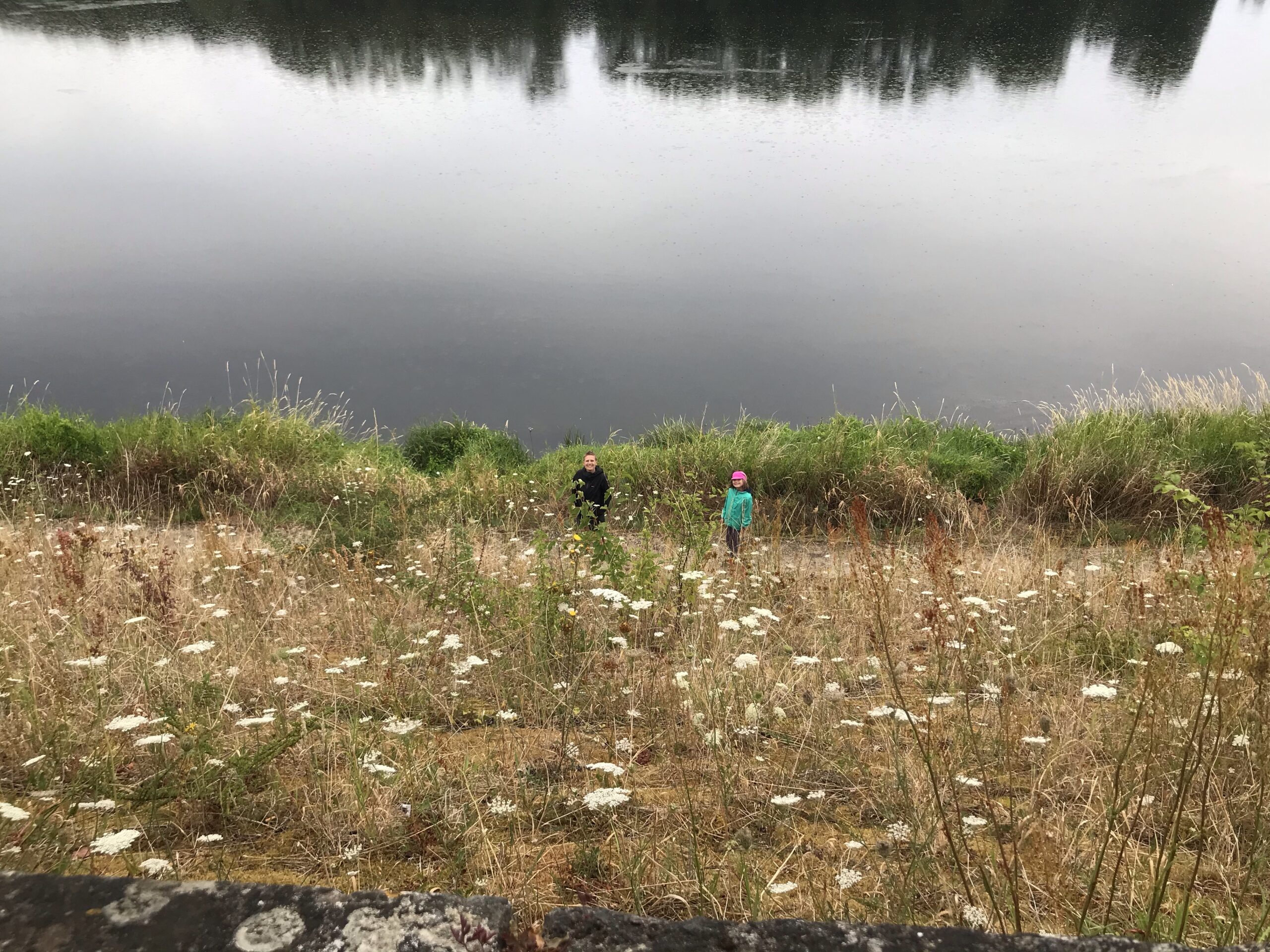
    We cycled 10km to find breakfast, the morning still a welcome cool temperature and overcast. We were happy to reach Bréhemont, perched on the dyke above a sweep in the Loire. Since the confluence with the Cher the river has changed character. A bit wider with sand banks that make great habitats for birds. We saw bird watchers along the banks with their telescopes.

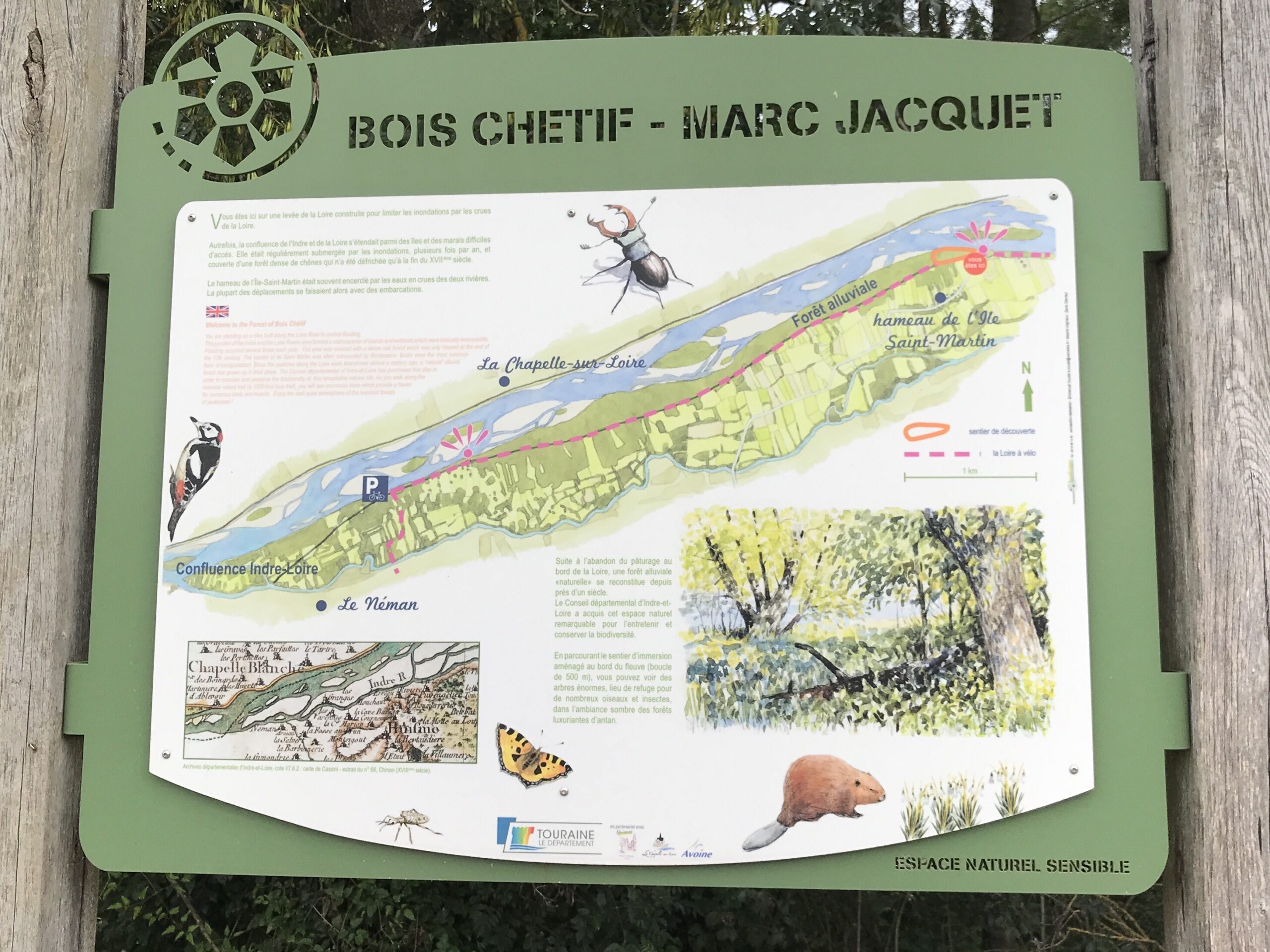
    The next section of path passes through a reforested area of land between the dyke and the river. Long ago the river borders were marshy woodlands that would flood several times a year. The marshes were drained to make agricultural land but now the terrain is being left to return to rich woodland. The space is cool and lush. We followed an enormous bird of prey which glided down the cycle path ahead of us through the trees.

    Boos Chetif- Marc Jacquet

    Lunch in Avoine, a great example of a town that has invested in its public spaces to create an environment that attracts visitors and supports civic life as well. A lovely town square, well appointed with cafe, tabac, supermarket, boulangerie and street market. Spaces for parking bikes and doing maintenance. A water feature.

    We cross the Indre river, a tributary of the Loire, and enter the valley of the next tributary, the Vianne. We find a friendly looking campsite, very laid back with furniture out by the river, and we wade in the Vianne’s waters- colder than the Cher last night.

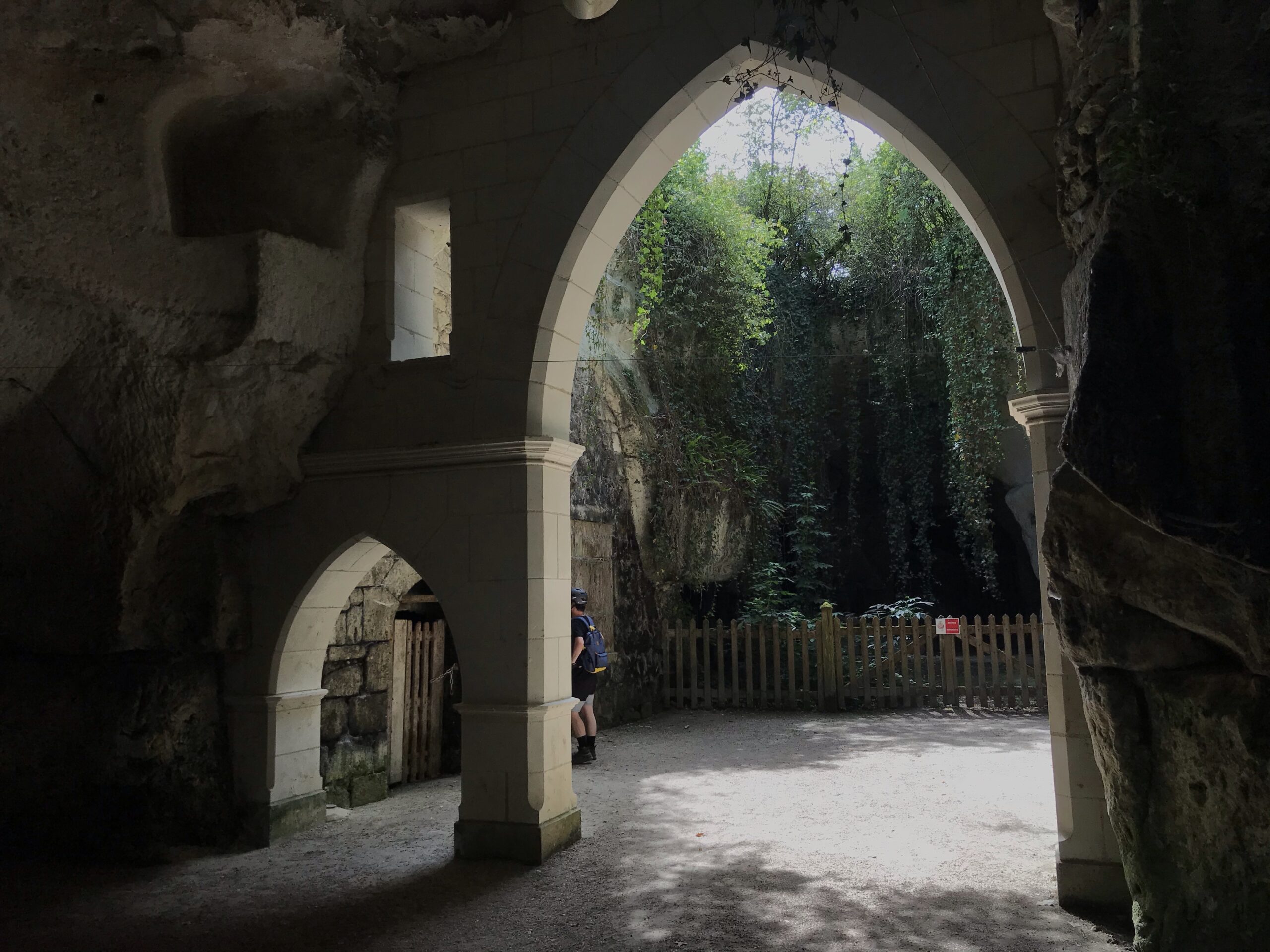
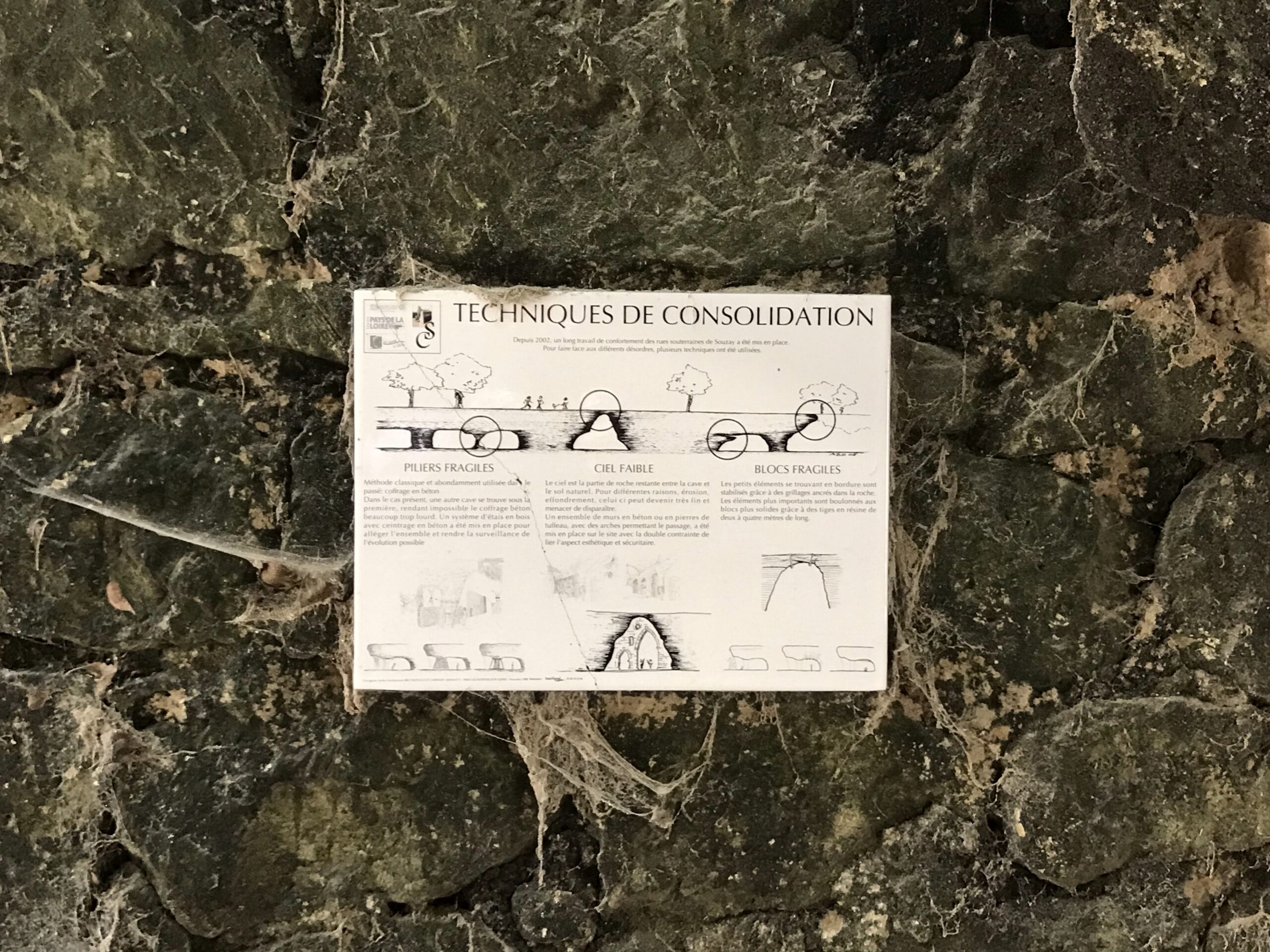
    Approaching Saumur, we climb up the valley sides to the plateau above where the regions famous grapes are grown. The path then winds down again and suddenly takes you underground into a recently-restored subterranean village. Not long ago the village high street was in a deep canyon in the limestone. The shops were in eroded and excavated caves to either side. Plants hung down from above, adding additional shade to prevent the sun overhead from heating the space too much. After the heat of the hills the space was so refreshingly cool.

    These incredible underground spaces are from the past but they could be the future too. All around us the signs of a climate heating up are increasingly obvious. It feels almost unbearable to be out in the midday sun and yet here is a way to live in the cool in the hottest place in the valley that uses just the shade and the coolness of the earth to create habitable conditions.

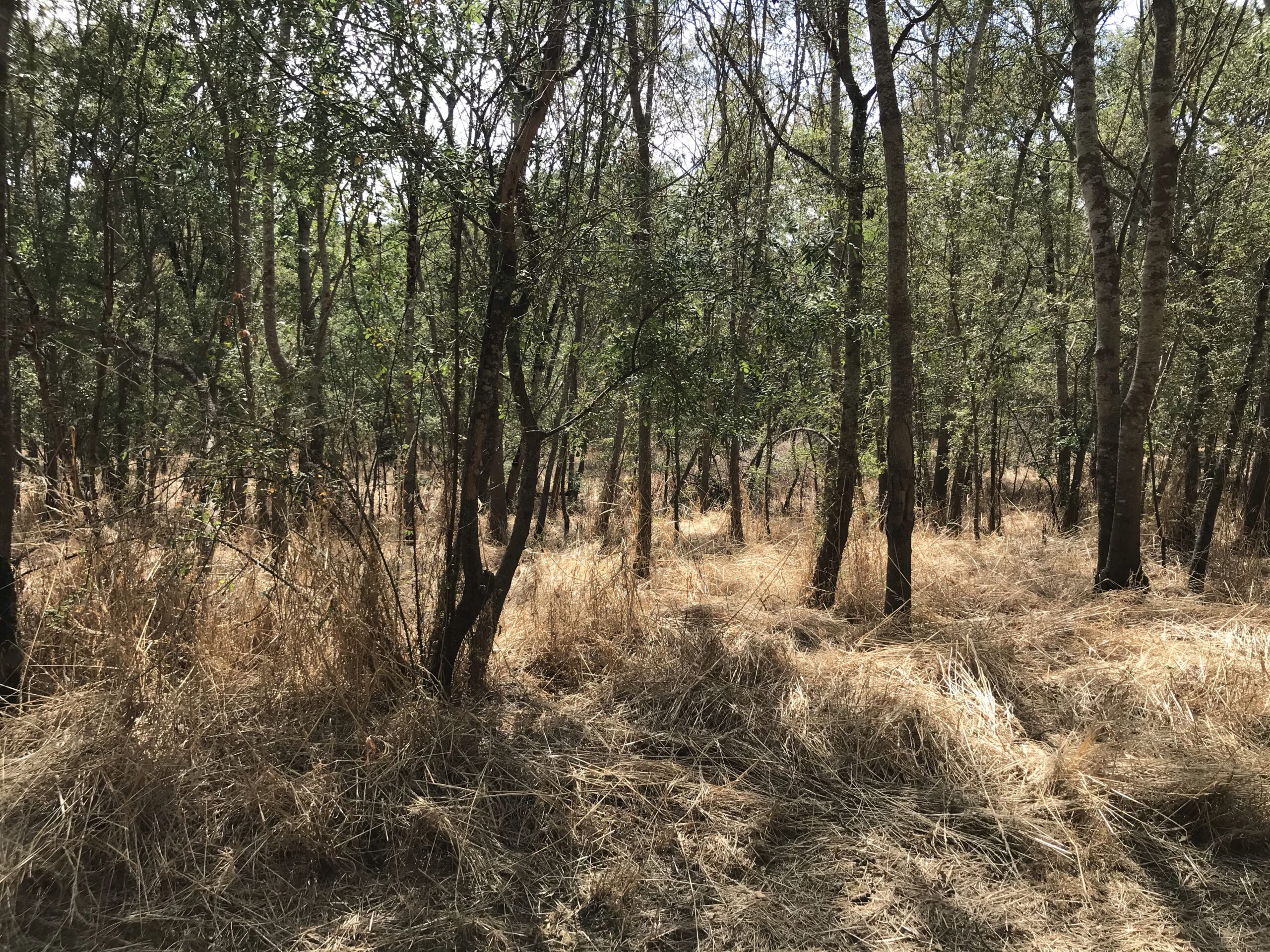
    As if to emphasise the impact of climate heating locally, we cycled out of the underground village and almost immediately into a bone-try forest. But this isn’t the south of France, it’s the middle bit. This is not normal.

    In Saumur we camped on the island in the middle of town. Camp sites on islands in rivers close to big towns seems to be a common format of civic infrastructure in France. Perhaps it is common more widely to European countries with wide rivers running through them. I enjoy being able to step out from your tent, cross the bridge and absorb the evening atmosphere.

    The strange feeling we had though in Saumur is of a place that is in the middle of a heat crisis but no one seems to mind. As long as the wine is cold.