Author: mazda

  • Chemistry, engineering and Abbey Road studios

    Image

    My courting of the chemical engineering world continued today with a visit to the ChemEng department at Imperial. Today it got even better, because not only do chemical engineers get to use engineering and chemistry, but they get to sit in a huge control room that looks like the sound desk at Abbey Road studios. Or so it seems. (more…)

  • In praise of Fred Dibnah and Burt Munro

    Most of my work this week has been around designing events that help engineering students develop problem-solving skills. My opposite number at a meeting today cited Fred Dibnah, the famous chimney feller, and Burt Munro, the pioneering motorcycle land speed record holder, as examples of people who didn’t need engineering degrees to solve engineering problems.

    It’s too close to bed time to start writing about developing problem solving skills at undergraduate level. Instead, the stories of these two engineers make for a far more fascinating read.

  • Why did the Toucan cross the road?

    I was cycling from Islington to Old Street this afternoon and saw a sign saying ‘Cyclists, push button for Toucan crossing’. Odd, as there weren’t any Toucans in site.

    Joking aside, I realised I had no idea what this unusually named highway device is. So I look up Toucan crossing online to find out what that it is one of a menagerie of animal themed crossing devices. How many of the following have you heard of?

    Pelican crossing – this is the pedestrian crossing that everyone has heard of. It’s name apparently comes from PELICON, a shortening of pedestrian light controlled. From which a whole ark of possibilities emerges…

    Toucan crossing – this is one that both pedestrians and cyclists can use, so-called because ‘two-can’ cross. Clever.

    Puffin crossing – no, this is not a crossing for children. This is the one that has the pedestrian signal at eye-level above the button. It also includes a pedestrian sensor that checks when pedestrians have finished crossing. Hence the name pedestrian user-friendly intelligent crossing.

    Pegasus crossing – like a Toucan crossing, but this time for horses.

    Who knew?!

  • Dipping into chemical engineering

    For someone who has studied both chemistry and engineering, it is somewhat of a surprise that I have had so little exposure to the chemical engineering sector. I did go and meet the admissions tutor for chemical engineering at the University of British Columbia when I was 21, but was put off by the large format pictures of oil rigs. A year later, my fourth year chemistry research project ‘Solute Binding by Surfactant Molecules’ did have some application to the chemical engineering process of foam fractionation. Other than these flirtations over ten years ago, chemical engineering has been largely off my radar, until this afternoon. (more…)

  • The Architecture of Pasta Shapes

    I just spotted this while reading someone else’s Christmas present.

    “The more interesting pasta shapes, such as the shell-shaped conchiglie, or the ear-like orecchiette, didn’t just happen…Those clever twists and curls and flowing lines are much more drawing board than chopping board. Although as a sauce hound, I would suggest that Frank Gehry would probably make a better pasta designer than the late Mies van der Ruhe.”

    – Nigel Slater, The Kitchen Diaries Volume 2.

  • The Big Dig

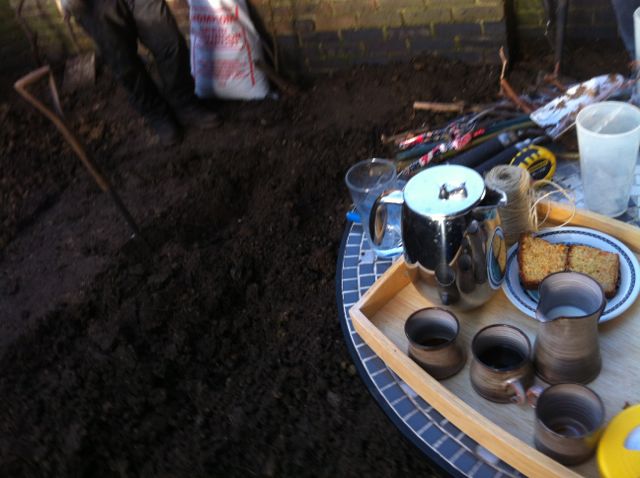
    Big Dig

    This is not a post about the civil engineering megaproject to put a massive road underground in Boston. This is a post about spending a very satisfying day with a gang of friends and family ‘heaving hoe’ in our garden.

    (more…)

  • A3 Hindhead Tunnel: User notes for the London-to-Portsmouth Motorist

    English: Hindhead Tunnel A3 Open Day 14th May ...
    English: Hindhead Tunnel A3 Open Day 14th May 2011 North Portal (Photo credit: Wikipedia)

    For many years the London to Portsmouth motorist would often have been delayed in tail-backs where the A3 wound its way up the closely packed contours of the Devil’s Punchbowl, a site of special scientific interest. But not so any more thanks to a twin-bore tunnel which sends the A3 beneath this stunning part of the Surrey landscape.

    Here are a few things for the curious motorcar driver to know on as he or she whizzes 65m under the landscape: (more…)

  • An end to ‘nailing the start but messing up the finish’

    I find that when I am memorising any sort of sequence – song lyrics, dance moves, lines for a presentation – I usually over rehearse the beginning and spend hardly any time on the end. (more…)

  • Built in Britain

    Yesterday I watched the first episode of Evan Davis‘s two-part programme Built in Britain. If you like engineering then you’ll love this. It is great to see a big-budget BBC feature on civil engineering that both celebrates modern engineering projects in the UK, but also attempts to answer some of the more difficult questions that new infrastructure projects raise. I feel that engineering programmes usually feature the superlatives – biggest, tallest, longest, deepest – and miss the more important issues, like what societal benefit large-scale engineering projects do, or in some cases don’t, bring. The example of the A3 tunnel under the Devil’s Punch Bowl is a great example of how the case can be made for an expensive infrastructure projects (see links below). And the example of Kielder dam shows how risky predicting the future is.
    (more…)

  • Mapping stories – the journey of a Euro note

    I like the idea of using maps to tell stories. I particularly like the idea or using a map to show an emerging story. A couple of years ago I had the idea of creating a personal Journey Planner map for the Tube, showing the bits of the Underground network that I had used in a year. The map would grow the more journeys I went on. This sort of map would of course be useless for planning journeys to new places – though I could just point my nose in the direction of the gaps and be sure to go somewhere new.
    Leagues ahead of my uninitiated idea is a campaign I saw yesterday in the Guardian in an article about ad agencies’ suggestions for rebranding the Euro. The proposal from ServicePlan in Munich is to track the journey of Euro notes through the Euro zone. See concept website here. Individuals would take part by scanning euro note serial codes using their phone, uploading the code to a database along with their geolocation and a photo, and over time see where else this same note travelled.
    Over time a picture could emerge of currency travelling across the breadth of the Euro promoting some sort of shared identity.
    I like the idea, but as I type I realise I don’t quite understand how each note’s onward journey is tracked. If it relies on other people registering the same note, then that is one serious ad campaign that would be needed to get enough people involved…and even then the story would get cut short as soon as someone the note in a suitcase under their bed!

  • Chapter Two: Parenthood

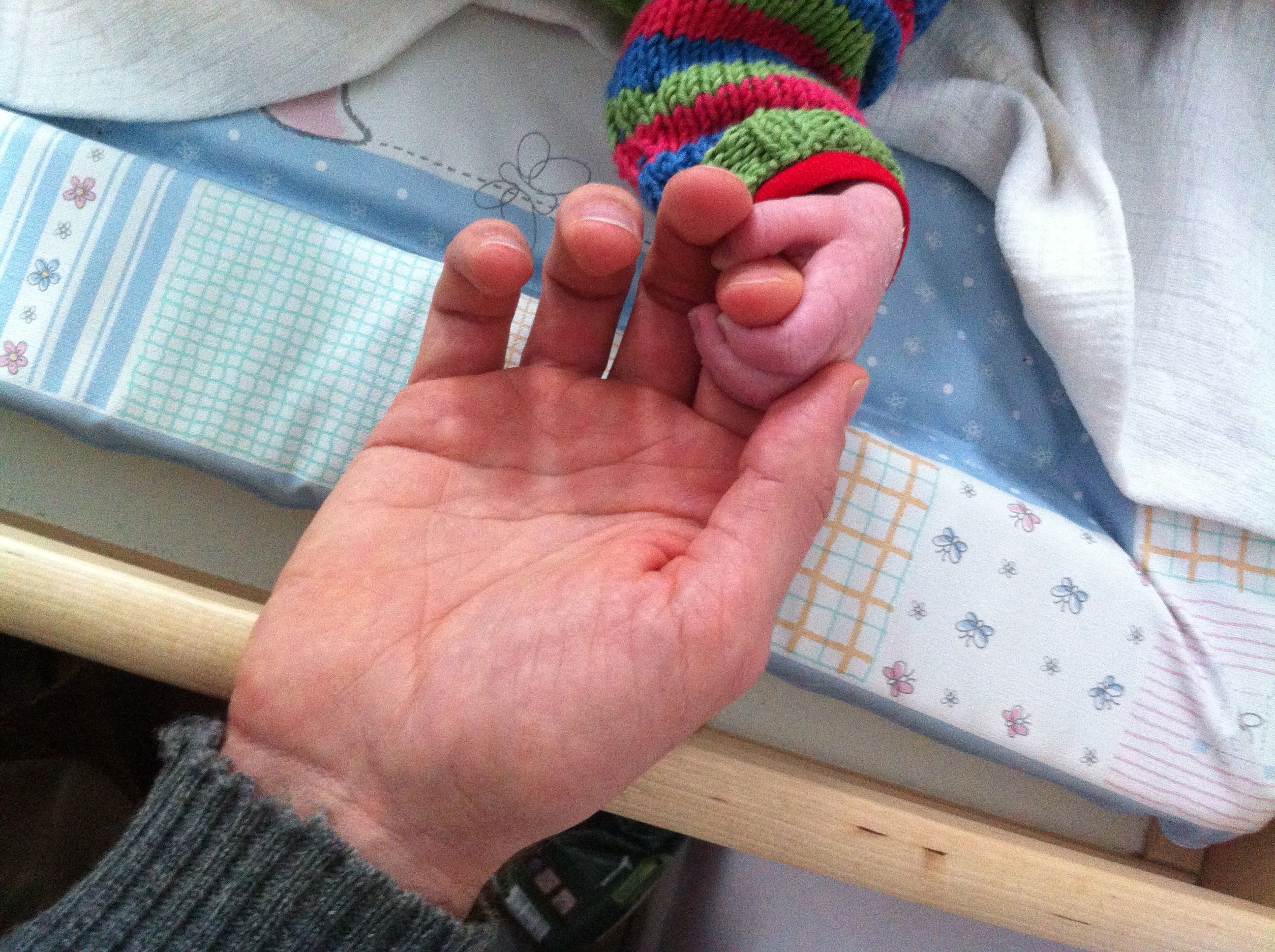
    Last week M and I had a little baby daughter. We are so thrilled to welcome her to the world, and excited about everything that she brings. Baby photos are off-topic for this blog, but this little person is already reshaping my world, so I am sure she will be wriggling her way into my posts in her own way. Watch this space.

  • Speaking with Pictures – Peter Ayres at Big Draw Big Make at the V&A

    This afternoon M and I dropped in to the V&A to see what was happening at Big Draw, Big Make. The first talk that caught our eye was Speaking with Pictures, by Peter Ayres from Hetherwick Studio.
    (more…)

  • Catastrophe with 24 bit sound – showing at UCL on Wednesday 12th September

    I heard a preview of the new sound effects on Catastrophe last week and they left me grinning. – Brilliant

  • Happy Birthday Livic – Seven Years Old!

    Back in 2004, I and fellow civil engineering student Andy Kosinski got together to create a new student newspaper for the civil engineering department at Imperial College. It was called Livic (‘civil’ backwards). (more…)

  • Thoughts on developing a social media strategy for an educational resource

    Image

    Over the last few weeks at Think Up we have been getting our Workshed site (an open educational resource) ready for the start of the new university academic year. Part of this process has been putting in place our social media strategy for the year ahead. Over dinner with a friend last week I realise that this is easier said than done, especially as it is based on working with a number of social media tools over the last few years. To come at it cold can potentially be daunting, and potentially frustratingly slow.

    This post therefore is to share with my friend and people in his position our approach to developing a social media strategy for an educational resource. It is by no means definitive or authoritative, and it is a work in progress. Where things do or don’t work I will be happy to report them. I am also aware that people reading this post will be much more experienced in developing social media strategies. If that is you, and you see great big holes in what we are doing, then please tell me. Ultimately, the Workshed site that we are promoting is designed to improve the way people learn about engineering, and is free to use. Anything that can be done to meet its aims can only be a good thing.
    (more…)

  • Good times at Shambala

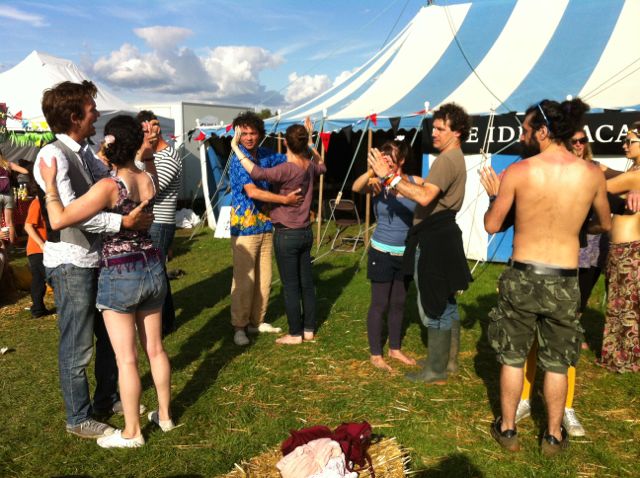
    I think I often say this when I come back from a music festival, but Shambala is one of the best festivals I’ve been to. It could be the post-festival giddiness that makes me say this; or that festivals are getting better. (Or even it could be that I’m getting better at choosing what to go to. Unfortunately this can’t be true as I was invited by someone else to help with swing dance teaching.) In any case, I was only at Shambala for 24 hours, so it must be doing something right. A few highlights:
    (more…)
  • A few photos from National Walk to Work Week

    [slideshow]

    Last Friday, inspired by National Walk to Work week I walked to work, first to the Hub in King’s Cross, and then on to Oxford Circus. Here’s a few photos I took on the way to King’s Cross. I took a similar route on foot to that which I normally take on my bike, but being on foot I was much more inclined to stop and look at things en route. Highlights included trying out a new tree house climbing frame in Arundel Square and a precocious cat.

  • World tour of structural form at Cafe Scientifique

    A big thank you to the lovely audience at Cafe Scientifique Brighton who welcomed me this evening for my talk, A World Tour of Structural Form. I felt very welcome indeed.

    20120418-000102.jpg

    The aim of the talk was to share a number of basic structural engineering principles and to demonstrate how these can be used to explain how buildings stand up. The talk was illustrated with structures from around the world. I promised no maths and no equations. I stuck to my promise, and judging from the audience responses to my questions, I think this method worked!

    (more…)

  • The Return of Scientific Curiosity and Creativity/Ideas for an Outdoor Classroom

    This post is about rediscovering a childhood fascination for how things work, and the thoughts it has provoked about creating learning environments that harness that fascination for the purposes of education.

    (more…)

  • Notes from Migrations at the Tate Britain

    Notes on a few things that caught my engineer’s eye at the Migrations exhibition at the Tate Britain today.

    ‘Quickly Away Thanks to Pneumatic Doors’ and ‘Soon in the Train by Escalator’, both by László Maholy-Nagy, 1937 are two eye-catching information posters that explain how new technologies will work to improve passenger journeys. The posters are clear, without being patronising. It makes me wonder why we don’t do the same now to explain the engineering that is being employed to build the latest additions to the Tube. Right now in London, we have one of the largest infrastructure projects ever undertaken in the capital underway, Crossrail, and yet the project feels hidden rather than celebrated. More public civil engineering information posters please – I am sure they would be avidly read by young and old.

    (more…)

  • Notes from Hazel Hill/Slow Learning for teaching sustainability

    Notes from Hazel Hill/Slow Learning for teaching sustainability

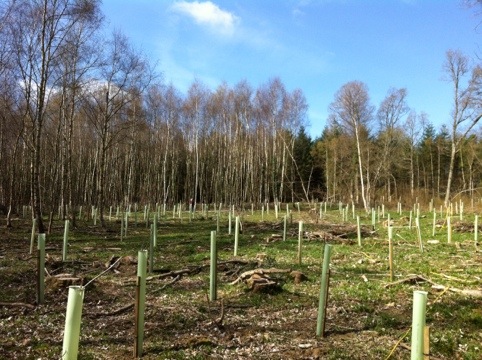
    I recently returned from a conservation weekend at Hazel Hill wood, the sixth such weekend in which I have participated, and a visit that prompted some more thoughts on ways we can teach sustainability in universities.

    20120401-154142.jpg
    (more…)

  • Roll up roll up engineering communicators…time for more Science Showoff

    …it’s Science Showoff time (well it will be next Tuesday). That magnificent monthly occasion when enthusiasts from all walks of science tread the boards in an entertaining manner in a pub, a nice pub in fact. There’s live demos, banjo-playing quantum mechanicians and people with witty things to share with you across the spectrum from biology to astrophysics. There’s a good cause and a general feeling of bonhomie.

    What’s missing? Engineers. There’s loads of stuff that engineers could talk about that this science-hungry audience would lap up. I had a go with cooking with concrete and a Forth Bridge demo, and now it’s my job to try to get more engineers to do the same. So if you think you it’s up your street then come on down on Tuesday to get the measure of the place.

    The next one after that will be on the 5th June, when you could have a go yourself. Go on…

  • Dan Lepard, my first loaf, and the value of fail-safe instructions

    My highlight of the Guardian Festival yesterday was Dan Lepard, regular baking columnist for the Saturday Guardian. In a packed room he gave five golden rules for successful bread baking. Listening intently, having never baked a loaf myself before, his directions seemed so clear and his approach so straightforward that I just wanted to go home and bake.
    In this instance I think I probably fall into that category of learner who knows so little about baking that I needed clear steps to build my confidence, and it serves as a good reminder of how important it is to prepare a clear message when working with learners who lack confidence. As soon as members of the audience, clearly with more advanced ‘kneads’ (ha ha), chimed in with their clever questions about complicated stuff, I tried not to listen, so as not to lose that clarity of thought the presenter had given me.
    And so I present my first loaves. May they be the first of many…

    20120325-184720.jpg

  • The Big Rig at 3 years old

    This is the third March in a row that I have facilitated a low-carbon skills competition at the Big Rig, which makes the Big Rig 3 years old.


    (more…)

  • The Future of Construction, Surveying…and rock’n’roll?

    The flying robots that Vijay Kumar and his team have built are breathtaking. In this TED talk, he explains how the flying machines work, shows how they can fly in formation to construct simple structures, perform astonishing acrobatics, and explore and map out empty buildings autonomously. Obviously it doesn’t take much to think of more sinister uses of this technology, but another more positive application, shown at the end, shows a considerable amount of imagination…it is worth watching this to the end which is laugh-out-loud funny.

    [ted id=1376]


  • Cooking with Concrete at Science Showoff 5

    Thanks to everyone who came down to Science Showoff 5 to see my first attempt at Cooking with Concrete on stage. I think I was able to convince the audience that, like pastry or dough, concrete is indeed a versatile cooking ingredient. In a little under nine minutes we went through the my grandmother’s C35 concrete recipe, handed down to her by her grandmother. Unfortunately as concrete takes 28 days to reach testing strength we didn’t have time to test the sample there and then, but we did have a look at the samples that we tested rather spectacularly in the lab back in August at Imperial.

    I have uploaded the recipe to the new cooking with concrete section of this blog – available for a short time only.

    I’ll be jointing the Science Showoff gang for the Brighton Science Festival next week doing more ‘hardcore’ cooking. Next time I might even be able to bag some video footage.

  • Videos for a Sunday afternoon – the magic of human space flight

    I have recently been reminded how human spaceflight can capture the imagination. This weekend I have been setting up Twitter lists (here, for starters) to help me find engineering teaching resources – and stumbled upon this low-light video footage of the earth’s surface taken from the International Space Station. If there ever was anything to get young people into science, technology, engineering and maths (STEM), then space travel must be it. (more…)

  • The Rise and Fall of Civil Engineering – courtesy Google’s amazing ngram viewer

    I read an astonishing article this afternoon titled ‘Quantitative Analysis of Culture Using Millions of Digitized Books‘, published early last year in the journal Science. Based on Google’s effort to digitise all books in all languages, researchers have carried out computational analysis on a corpus of over 5 million books – approximately 4% of all books ever published – to give access to vast amounts of data on word use.

    The availability of this data allows researchers to observe cultural trends and then subject them to quantitative investigation – the study of ‘culturomics‘. The paper illustrates fascinating changes in language size and use, and shows how the data is used to draw more socio-cultural conclusions.

    Best of all, Google has a nifty tool for presenting the data called the ngram viewer, which has allowed me to do a little culturomics of my own for the field of engineering.

    (more…)