All this week I have been writing about organising inputs to the creative process, but at the end of the week I’m feeling overwhelmed from too many inputs. I need to switch off and reflect, but before I do here are the themes that are swirling round my head. I capture them so that they might be useful for another time.
(more…)Category: Analogue Skills
-
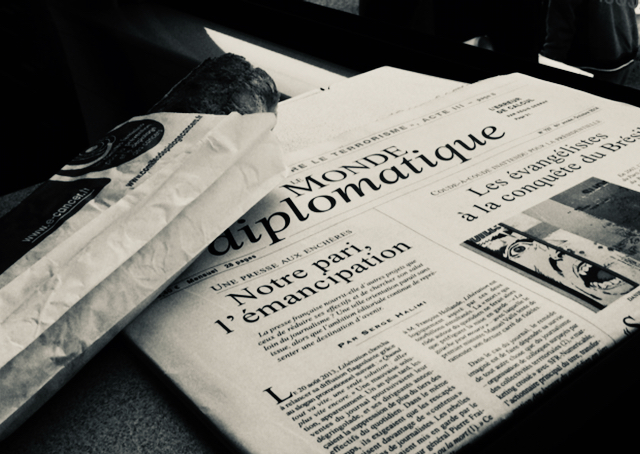
Proust’s antidote to endless scrolling
(more…)The fault I find in our journalism is it forces us to engage with some fresh triviality every day whereas only three or four books give us anything that is of any importance.
Charles Swann, in Swann’s Way, In Search of Lost Time Vol.1 -
The left-right game – experiments in navigation, embodiment and control
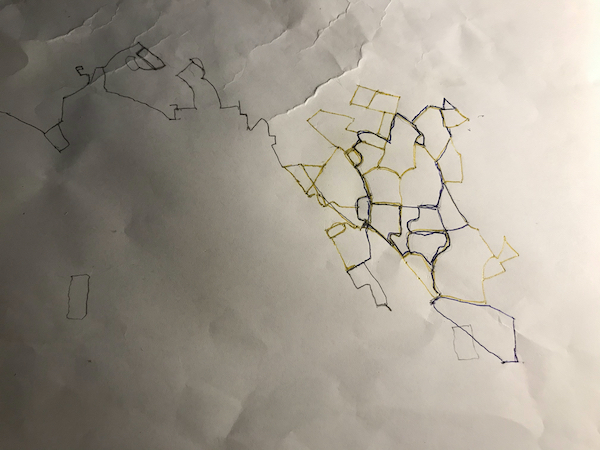
Yesterday my daughter and I left the house and flipped a coin. Heads for left, tails for right. Right it was, then left, then left again, et cetera. A random journey along the roads, cyclepaths and alleyways of our neighbourhood ensued. It became a fun home-schooling lesson in probability. It revealed to me the habits that stop me from noticing so much of what surrounds me. And it was a fascinating experiment in not having a plan.
(more…) -
Apollo 8 | What do you do with your computer?
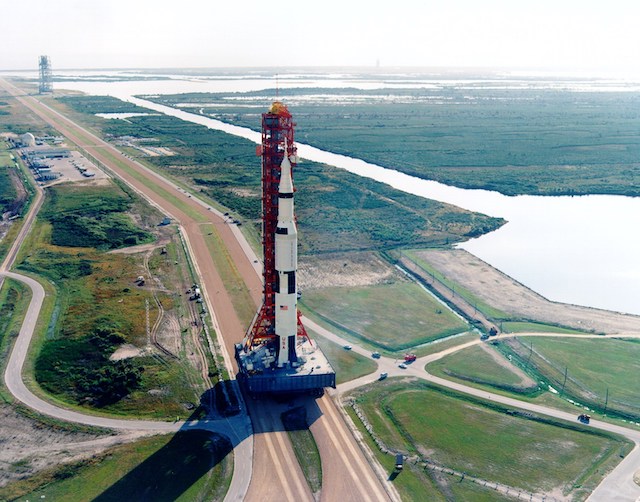
I’ve been listening the BBC World Service’s podcast ’13 Minutes to the Moon’ about the Apollo space programme. Last night I listened to the episode about Apollo 8, the perhaps forgotten daring mission that enabled the moon landings to happen. I woke up this morning thinking just what an incredible achievement it was.
(more…) -
Imprisoned with the infinite – the philosophical implications of an imaginary visit to Sweden
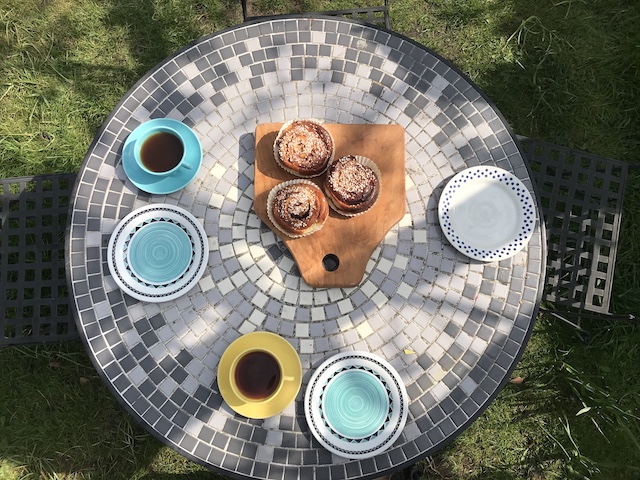
Yesterday our household returned home from an imaginary holiday. Despite being in lockdown, we realised that we could imagine going on a trip anywhere in the world. Our daughter suggested our Sweden. Too far to easily get to under normal circumstances without flying, with that constraint removed we thought, why not? Now back home, I have been using this visit as an opportunity to explore some philosophical arguments about how we deal with choice and how this affects our creativity.
(more…) -
The horizon of existence | surveillance capitalism | the return of analogue skills
It’s hard to know where to start. So much has changed in the last fortnight and there is so much that I feel compelled to write about. But now that our house has also become a remote workplace, a homeschool and playground and locus for all entertainment and time-passing activities, it is hard to find the time to write in an ordered way, so I will capture things as they emerge and look to see the patterns over time. I hope you will bear with me, reader. On my mind today:
- The shrinking horizon of existance
- Surveillance capitalism and Analogue Skills
- Everyone is the same distance away
- Mourning friction
- A great slowing
-
The satisfaction of learning what the buttons can do
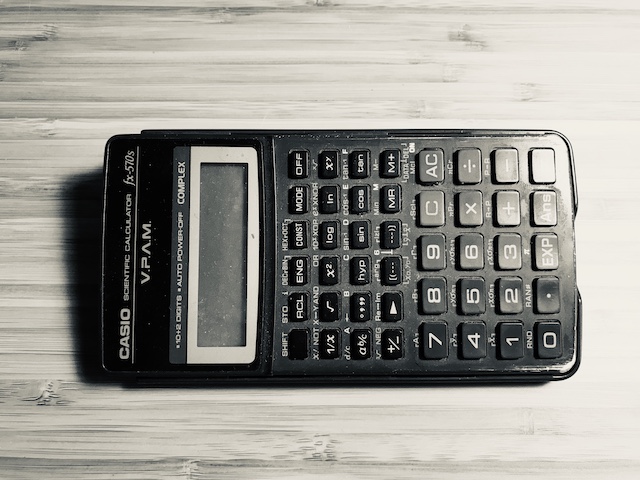
I am reminded this morning of much I like working out what all the buttons do on a machine. Quite often the machines we use, be they an oven, a sports watch or a computer, have many more functions than we realise. Not all of these devices have the levels of user interface design that you might get from say a modern phone. While I’m a fan of good user design, I quite enjoy pouring through manuals to discover these more obscure functions… or better still, trying to discover them for myself.
(more…) -
From self-help to help me.
Readers of this blog will know I started a project a couple of years ago to write a book called ‘Analogue Skills‘, a re-examination of the pre-screen skills that relied on to get through the day. I’ve always intended it to be part philosophical, part self-help. When I’ve stalled in my writing, one of the barriers has been not knowing how much of an authoritative voice to take. There is a well-troden self-help author path in which the writer spends a period of time – usually at least six months, sometimes a decade of a career – living the chosen lifestyle, and then writing about it. But that doesn’t sit well with me. I feel the Analogue Skills project to be much more of an experiment.
(more…) -
The experience of distance
Marseille
A morning walk up the steep hill to the Basilica of Notre Dame de la Gard granted me panoramic views of the city of Marseille and the sea. I love the peaceful hum that can be extracted from high up of a limbering up for a day of activity.I underlined these words yesterday in ‘In Search of Lost Time’. The narrator is talking about how his perception of distance was changed when, instead of travelling by rail, he starts to go by car.
(more…)‘We express the difficulty we have in getting to a place in a system of leagues and kilometres, which becomes false the moment that difficulty decreases. The art of distance, too, is modified, since a village that had seemed to be in a different world from some other village, becomes its neighbour in a landscape whose dimensions have altered.’
Proust, M. (1921). In Search of Lost Time, Vol 4. Sodom and Gomorrah. (C. Prendergast, Ed.) (Penguin Cl). Penguin Books. -
Derive #2 City of London – Log book
- 19/3/18
- Derive #2
- Location: City of London
- Context: preparation for my talk ‘Circling the Square‘
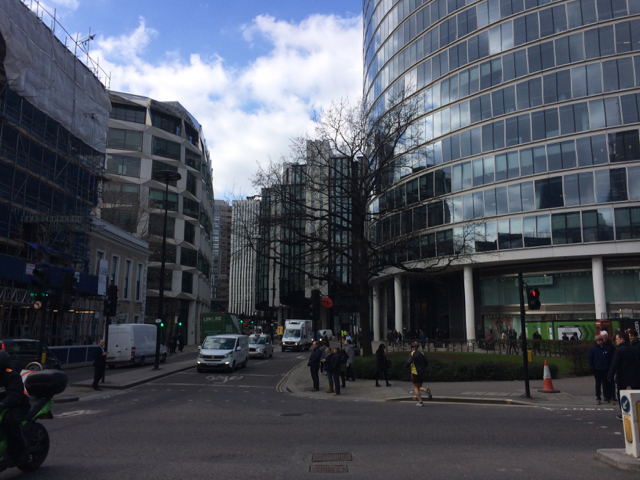
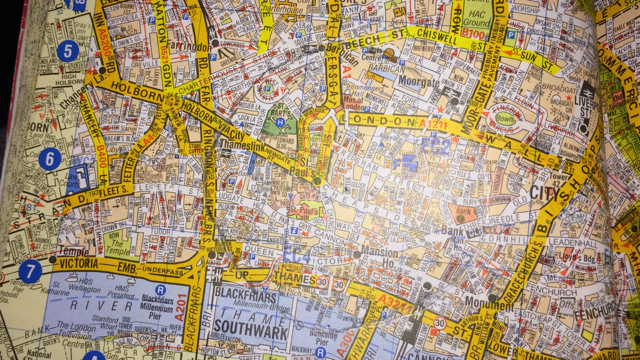
Moorgate x London Wall - 0:00:00 Moorgate and London Wall. Once solid-looking stonewalls are now façades pinned in place by scaffolding while new buildings are constructed behind. In just a few years the streetscape along London Wall has completely changed
- 0:04:34 London Wall and Copthall Avenue Deep metallic groans sound out from behind these hoardings. I assume the core of the building is being demolished, and the sound is the building complain.

- 00:09:41 Black Rock The circle leads straight into the offices of Black Rock. I enter the revolving doors and walk through a long dark lobby past whispering clusters of suited men and women. I emerge blinking onto a much quieter street, Tower 42 in the distance.
- 0:13:31 Copthall Avenue The circle passes straight through the Angel Court building. I attempt to walk through the underground loading bay but I’m turned back by security. There are some places you really aren’t supposed to go.
-
Circling the square – psychogeography in the City
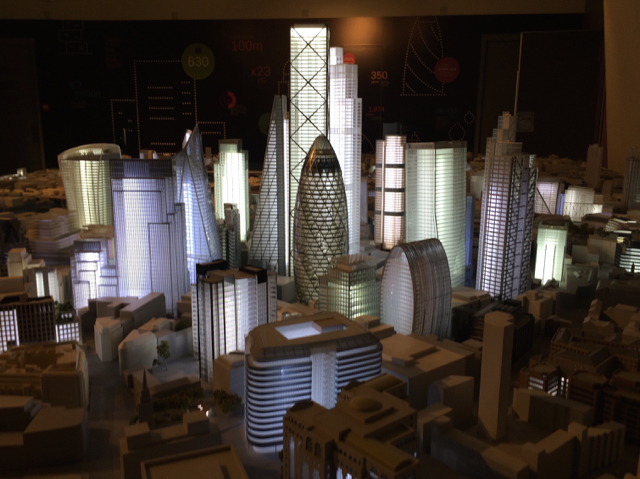
Last night I have a talk at the first ever City of London Showoff called Circling the Square. The event was put on by the City Centre, a fantastic organsiation right at the heart of the City that hosts a fascinatingly detailed 3D model of the City of London. I had been asked to say something entertaining and interesting about engineering in the City. I thought this was a great opportunity to try out and talk about my new hobby, psychogeography. The folllowing is a transcript of my talk (my full data log see my post Dérive #2 – City of London – Logbook)
As an engineer I love going on unconventional journeys: using odd means of transport, exploring forgotten paths, seeing the new from different perspectives. In his book, a Road of One’s Own, Robert Macfarlane instructs us to:
…unfold a street map. Place a glass rim down anywhere on the map and daw round its edge. Pick up the map, go out into the city and walk the circle, keeping as close you can to the curve. Record the experience as you go, in whatever medium you favour: film, photograph, manuscript, tape. Catch the graffiti, the branded litter, the snatches of conversation…Log the data stream…Be alert to the happenstance of metaphors, watch for visual rhymes, conincidenes, analogies, family resemblances, the changing moods of the street. Complete the circle and the record ends. Walking makes for content; footage for footage.
Robert Macfarlne – a Road of One’s Own, cited by Merlin Covereley in ‘Psychogeogrpahy’
-
Augmented reality stargazing: unintended consequences
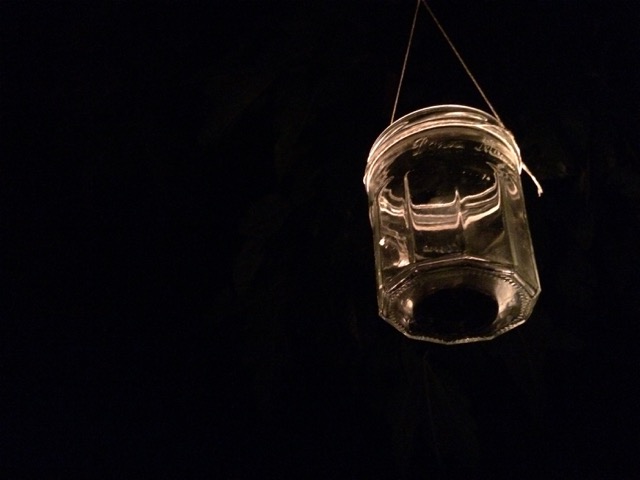
For generations it has been a tradition on the French side of my family to spend summer evenings out in the garden looking at the stars. I happen to know that this is something my great-grand parents were doing from at least their retirement in the 60s, and it is what other families in the village were doing too. When televisions arrived, neighbours didn’t give up their stargazing; they simply opened the windows wide, put the TV on inside and watched it from outside, while still inclined heavenwards.
By the time of my childhood in the 80s, I have no memory of seeing other families outside gazing upwards in the evenings. I wonder if the people watching televisions from their gardens had switched to sitting inside and watching TV with the window open so they could see the stars, to eventually shutting out the stars altogether. But my grandparents, to their credit, shunned the phosphorus screens for the slower moving celestial entertainment.
It is for this reason that I have spent hundreds of nights staring at the same patch of sky from the same particular orientation. I know where the first star usually shines from; where the great bear appears over the horizon; where to expect to see different clusters and motifs of stars. But despite hours of dedicated study, I, nor any of my ancestors seems to have had any definitive knowledge of what any of the stars or constellations actually are. There has been much speculation and debate. That flickering red dot just above the horizon early in the evening must be mars/ no it can’t possibly be mars because it is always in the same place/ it’s actually called Beetlejuice. Our collective space ignorance is further demonstrated when we try and point out to one another where a satellite may be seen crossing the sky: you see that bright star, straight above? Go left a bit to the next bright star, then to that square of really dim stars, then go west about twelve inches, and you’ll see the satellite heading towards to the house.
I share all this to give a sense of the utter familiarity to me of this particular sky-scape, like someone who knows the view from their childhood bedroom window so well that it is impossible that anyone could show them anything new; a scene that is understood through layers of explanation, agreed between generations but never verified, so that you will appreciate the impact on me of downloading for the first time a star identification app and pointing it at the sky. It was as if I had been given a new set of glasses without ever having known that eyes were blurry.
All of a sudden, constellations stretched out in front of me. Scorpio reclining on the horizon, the diving fish of Pisces leaping over the trees in the east. I am looking at the same sky but I am seeing new things – this is augmented reality. That red star of which we had spent so many evenings arguing turns out to be the centre of the galaxy – incredible. I really felt ecstatic. We call out to each other, pointing out new things that we can see with more excitement and intensity than we have mustered for years from these seats.
The next evening, we return to the garden excited to return to our star-gazing. But I sense a subtle shift has come over us. The focus is on the screen and not on the sky; on the augmented reality rather than boring old reality. When the app loses its calibration, I start to believe what the screen tell me rather than what I can see with my eyes, even when the two clearly don’t line up. When I’ve got bored of looking at the app, I start to look at other apps: since I’ve got my screen out why not check my messages quickly. And at this moment the spell of stargazing is broken.
Very quickly the situation seems to be changing from one in which we sat under the cloak of the stars, sometimes in conversation, sometimes in silence, but always together, to one in which we are close-by but in separate worlds. I wonder if in a few years’ time a natural evolution of this scenario will be for us to sit inside where the light is better and check our messages there – with the windows open so we can still see the stars, like our predecessors did two generations ago with their televisions.
This future scenario that I present is of course by no means a foregone conclusion, but it has the characteristics of a pattern that I see myself falling into: using digital technology to solve or augment a particular situation, but in doing so, introducing a set of unintended behaviours, that overall serve to diminish the situation.
Of course none of this information is new. The Greeks new about these constellations. We just needed the technology to help us remember. Now that I know what I am looking at, I need to remember to turn my phone off again.
-
Analogue skills: fogotten powers
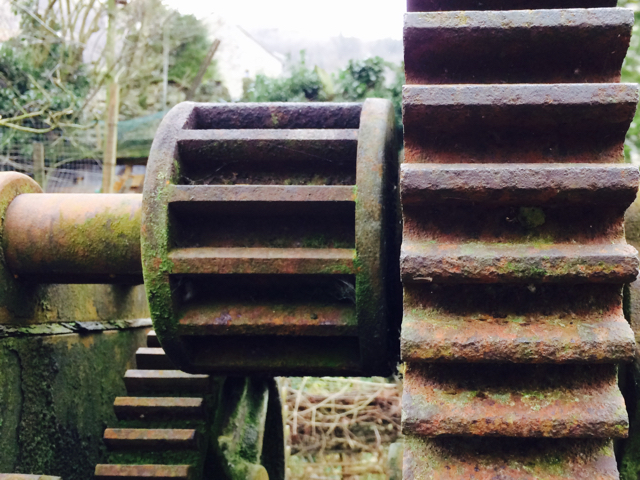
We live in a time of rapid and accelerating technological change. It is the age of digital, big data and smart technology. The digital zeitgeist is presented with a benign face: faster, more connected, more megapixels, do more, see more. But over the last couple of years I’ve had a feeling that in the race to embrace these new digital tools we are forgetting pre-digital ways of doing things which might turn out to have been more useful, more sustainable and better for us. Things like how to communicate face-to-face, how to communicate in written long-form (even the long email is a thing of the past), how to read a map, how to spell, how to sketch, how to make an appointment and keep to it, how to concentrate, how to make things, and even how to take notice of our physical environment.The name I am giving to this pre-digital ways of doing things is ‘analogue skills’. As an on-going project, I plan to explore what analogue skills it would be worthwhile keeping hold of, and to interrogate the digital tools at our disposal to see how to make good use of those without detriment impact to our well-being or to the planet. I hope the outcomes of this project will be to produce some suggestions for how we can use the tools at our disposal, both analogue and digital to improve our experience and quality of life.Of course, there are many ways in which digital tools empower us: wide-spread and long-distance communication; access to information and knowledge sharing; access to an almost unlimited range of media; online commerce and sharing economies; increased connectivity through social media – and I benefit from all of these.But there are also costs. More screen time means less time experiencing the physical environment.The flip side to the benefits of social media is the social anxiety in can cause, fear of missing out – so called FOMO. The huge choice of media that the Internet offers can lead to a sense of being overwhelmed and lower levels of engagement with the content. Digital consumption is dependent on technologies over which consumers have decreasing amounts of control – no longer are we necessarily the masters of our tools – and with built-in obsolescence, these technologies have a large environmental impact.Around me, I increasingly see the signs of digitial discontent. Friends talk about digital detoxes and commit ‘Facebook suicide’. At Hazel Hill Wood, where I co-lead conservation weekends, there is no mobile phone reception. Most participants are relieved for this enforced time offline. But there are usually one or two users per group who anxiously spend time at the one spot in the wood where they can get a feint signal and wave their handsets around in the air, like some ritual dance to the digital deity, in a desperate attempt to connect.At this point I need to make a full disclosure: I write this post on an laptop, using notes that I made while walking along the street on the memo app on my iPhone, cross-referencing that with notes that I made in Evernote almost a year ago, which I will post to a website, which I will then share on social media. So yes, I am fully-signed up user of digital technologies. But there are plenty of digital things that I don’t use. For example, for the last year I have been trying to minimise the distractions of social media by removing notifications from my phone, and by limiting my screen time. For certain, I’ve been sceptical for some time about the digital panacea. This project is an attempt to martial these thoughts, to change my skills and habits and hopefully to help other people along the way.I am fascinated by really cutting edge technology, the innovation that goes into it and the possibility it offers. But I do think that older technologies allow us to interrogate the new; indeed one of the most fascinating things about older technologies is finding out how the engineers of the day were using great ingenuity to extend what was possible within the limits of the technology of the time. Of course, digital technologies are here to stay, and in many ways for the better. What I think is important is making sure that is us who are smart and not just the technology.Related posts
-
Use these 5 apps to create distraction-free time.
We need distraction-free time to make progress on our creative projects. At the same time, we rely on online networks and information to nourish our ideas. The trouble is, spending time online is rarely distraction-free. So, is it possible to get the best of both worlds?
The short answer is yes. In this post I share the strategies that I have adopted to maintain distraction-free time while working online. These include five apps that I regularly use to manage what information I see and when.
This post follows on from my previous post 9 ways to build creativity in your organisation, focusing on steps that individuals can take to manage their own creativity. Expect more from me on this theme in coming posts.
Principles
There are four principles that underpin my approach:
1 – Know your mode
In his book ‘Getting Things Done‘, David Allen tells readers not confuse time when you are processing actions with time when you are completing an action. The same is true for working online. Be clear about whether you are meant to be processing emails/tweets etc, completing an action or, importantly, spending time reading.
2- Avoid the inbox
Enter the inbox, get all the information you need out of there, and then leave. If you return when you are in the middle of something else, don’t be surprised if you get distracted.
3- Reduce the back-and-forth
Just because we can respond instantly, doesn’t mean we have to. Instant responses lead to communication inflation, and erode time to ourselves.
4- Remove notifications
Until the last 100 or so years, toothache must have been the bain of adults lives – always nagging, never leaving us in peace. Today, in the age of modern dentistry, what nags us instead, what disrupts our peace, are social media notifications. If we set regular times to look at our various feeds, we don’t need notifications.
5 apps
I am being generous with the definition of ‘apps’, here to mean both ‘app-lications’ and ‘app-roaches’.
1 – Task management – use Bullet Journal
The first app isn’t an app at all, it’s an instead-of-an-app. For years I’ve been playing around with lots of different apps for managing tasks. My favourites are OnmiFocus and Trello. The trouble with even the best of these tools is that they allow you to create never-ending lists of tasks that you could never get done.
Bullet Journal is different. It is no more than a set of rules for using a paper notebook to manage your tasks. It’s simple, and it works. Each day you write down the tasks you need to complete. At the end of the day, you either forward incomplete tasks to the next day, by physically writing them out again, or your forward it to a page for the week or even month ahead, again physically writing down the tasks. It works because every time you re-write something you end up saying to yourself, ‘come on, am I actually going to do this?’
I’ve been using it for four months now and I’m hooked. Here’s a great intro video for using Bullet Journal.
2 – Information storage and online workspace – Evernote
Evernote is a great tool for storing information and for working online. Here’s how I use it to minimise distractions.
- As I am processing emails, if I find something that I need to refer to later for a particular project, I forward it to Evernote (which you can do straight from your email), adding meta tags in the subject line so that Evernote can file it for me.
- When I am working on a project, I can then look through the notes filed in Evernote that have that project tagged. It’s a great way to get to the information without being distracted by something new in the inbox.
- I do all first drafts of longer emails in Evernote – I can even send them from Evernote without having to go back into my inbox.
One really neat feature of Evernote is that as you use it more and more, it starts to recognise when something you are writing is similar to a previous note – this has the added bonus of making connections that I hadn’t otherwise seen.
3 – Online reader – Instapaper
Until I discovered Instapaper, I had basically stopped reading the articles that people were sending me online. This happened as a consequence of being rigourous about not spending more than two minutes processing any email that someone had sent me. If a correspondent had sent me something to read, I would forward it to a folder called ‘browsing’ where it would then languish unread.
And then I discovered Instapaper, an app that you can forward reading informaiton to. When you open the app, all your articles are there but with the formatting stripped away. What’s left is really clear to read.
Since then I usually make at least one time a week when I sit down with a cup of coffee and read my articles for the week on Instapaper. It is really refreshing to spend time reading longer articles from end to end.
If I like what I read, I forward it to Evernote, tagged for appropriate interests. If I want to share it with other people, I forward it to Buffer – see below.
4 – Schedule social media posts using Buffer
I know from looking at the analytics that most of the people that follow me are online at times when I’d rather not be. To get round this I use Buffer to schedule some of my social media posts to maximise the chances that the people I want to see the post do. Buffer allows you to set up daily posting schedules for all your social media channels. You can save time by posting to several channels simulataneously. Buffer will tell you what times your audience members are interacting with your contact, and can adjust your posting schedule to suit.
5 – Clear yesterday’s messages today
This is a great rule of thumb that I only came across recently in the Guardian (thanks Jenny for the recommendation!). I’ve long abandoned the idea of having an empty inbox – as a strategy it takes too much time and I think can actually lead to more email traffic. In this approach, on any given day, you should only aim to deal with yesterday’s emails. You are still responding within 24 hours, which is a reasonable timeframe, but your response has to be carefully written as you have to empower your correspondent to act without hearing from you againfor 24 hours.
Conclusion
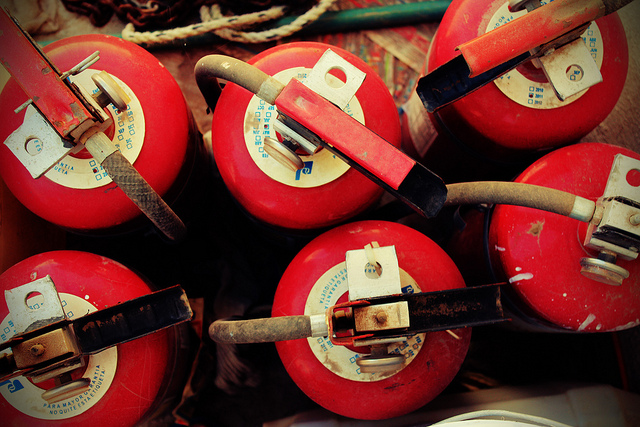
My Dad once quoted the following to me (I am hoping he can remember where it came from and can tell us in the comments to this post): getting information from the internet is a bit like trying to take a sip of water from a fire extinguisher.
Yes, we need access to online information and networks for our creative projects – we just need to manage the flow.
Related posts
- 9 ways to build creativity in your organisation
- The Happy Grid: prioritise your action list in a more fulfilling way
- Does going for a walk improve design?
Image credit: Fire Extinguishers by Claudio González is available under CC-BY-2.0
