Category: Miscellany

  • Memories of seven – a diary for my daughter

    Memories of seven – a diary for my daughter

    My daughter is now seven. I have been trying to remember what being seven was like for me. Memories start to become more frequent around this time. Some major changes were going on for me around then, moving house, moving school, parents divorcing. Until recently I would have said I could clearly remember when and in what order these big events in my childhood happened. But when I tried to write these down, it seems my hard drive is more fragmented than I had realised.
    So I started to recreate my picture of seven on a piece of paper, and in conversation with family, started to fill in the gaps. This is what I’ve managed to piece together.

    (more…)
  • Beware of Shwaa! – (re)learning to read and write

    Beware of Shwaa! – (re)learning to read and write

    Today I went to a phonics briefing meeting at my daughter’s school. I joked beforehand that we were going to a phonetics briefing session, liking the idea of working out what all those symbols you see in a dictionary mean, the ones that look like thermodynamics equations. But when you stop to think about it, spelling in English must be equally incomprehensible to the unititiated. I’ve realised that beyond spelling out simple three-letter words and stringing them together to create dull scenarios involving recumbant felines on carpeting, I simply don’t understand how to help my daughter spell out most words.

    (more…)

  • #8 – Eiffelover on tour in San Francisco

    #8 – Eiffelover on tour in San Francisco

    This is the first of two episodes of the Eiffelovercast recorded in San Francisco earlier this month. I was in the city to run some Think Up workshops, and so talk the opportunity to recorded some thoughts, interviews and sound bites related to my regular themes of engineering, creativity and practical philosophy.

    “News from San Francisco: We are all part of the cloud”

    In this episode I visit the Golden Gate Bridge (my favourite bridge in the world?), find out about experiments down in Stanford about what makes us collaborate better, try out as many modes of transport I can, learn about extended cognition and our relationship with the cloud, and experiment with ditching Google maps in an attempt to understand the city better.

    The second episode from San Francisco will be on line later this week. In the meantime, I hope you enjoy listening.

    To listen you can:

    • Click play on the player above
    • Subscribe by RSS
    • Listen on iTunes
    • Download the episode here
    • Access all episodes online here

    Did none of those links work for you? Or do you access podcasts from another source that I am missing? Then please let me know in the comments below.

  • Choppin’, loppin’, circus and swing – notes from Hazel Hill Autumn Conservation weekend 2015

    Choppin’, loppin’, circus and swing – notes from Hazel Hill Autumn Conservation weekend 2015

    Last weekend 38 people came down to Hazel Hill for our annual Autumn Conservation weekend for two days of woodland conservation and human restoration. We design the weekend to be a mixture of invigorating outdoor conservation work and relaxation in the woods, with a dose of entertainment thrown in too.

    Building on what we learnt from last year, we began the conservation work on the Saturday with a series of activities that would make an immediate and visible difference in the woods. An on-going conservation priority at Hazel Hill is the creation of butterfly rides, which serve two purposes. The first is to create the sort of wide path through the woods that enable the many rare species of butterflies that inhabit the surrounding fields to pass freely through the foerst. The second is to allow light in to the lower levels of the wood in order to increase the biodiversity.

    Widened butterfly ride leading to the Forest Ark

    This year we began our work by significantly widening the ride that runs from the forest ark to the southern cross, which had become significantly encroached upon by regenerating hornbeam. In the process we uncovered and liberated around twenty-five broadleaf trees in tubes that had previously been planted and which were being smothered by the hornbeam. I remember planting some of these trees myself on my first conservation weekend six years ago, and so I am pleased to see them being rescued. Any of this weekend’s participants returning to this spot in the wood in ten years time are now much more likely to find ash, oak and hazel trees maturing, thanks largely to their work this weekend.

    (more…)

  • Are you doing a French Mazurka?

    Are you doing a French Mazurka?

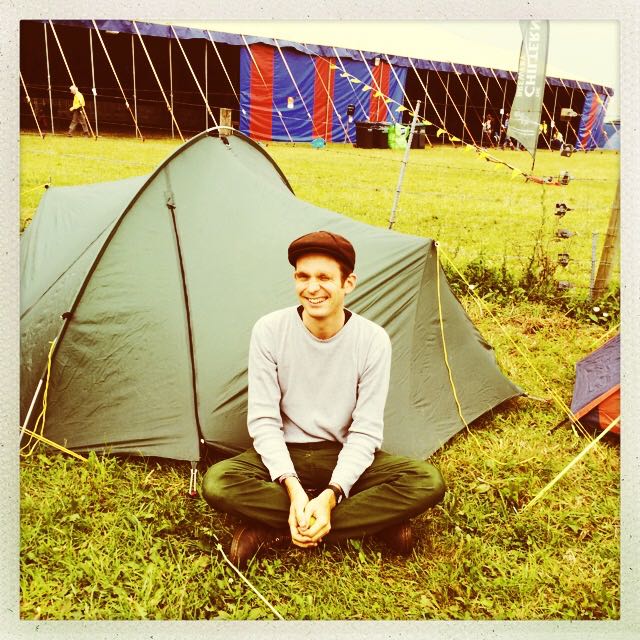
    I’m writing this on the train home from Towersey Festival to which I had been invited by my friends Nat and Sophie to help out with some swing teaching and performing for the Shooting Roots line-up. Towersey was my introduction to folk festivals, and it felt like a gateway to a fascinating world of music and dancing to discover. Nat and I were there to teach a 1 hour Lindy hop class and to do some dancing with a band in the evening (see the gig notes below for info).

    Towersey felt quite unlike any festival I’d been to before, and I think the main difference is the way in which people are engaged with the music and dance that is being performed. The crowds are attentive; they really listened in our lesson; they were really paying attention in the band performances. People are having a great time but there is none of the rowdiness, (except for being kept awake by a choir singing in four part harmony at 1am in the campsite). I love the way people carry around instruments, and there is space for people to jam. There was also the largest selection of real ales I’ve seen at any festival. And what’s more people walk around with their own tankards, which as far as I’m concerned is the best way yet to reducing festival waste.

    (more…)

  • Teaching le Charleston Stroll – the Port Sainte Marie Method

    Teaching le Charleston Stroll – the Port Sainte Marie Method

    photo by peter ayres

    Teaching the Charleston Stroll has become the mainstay of the Mudflappers’ festival swing dance teaching. I think there’s three reasons why it is so popular with crowds: the footwork is easy to pick up, which means that people can quickly overcome their fear of not being able to dance; the fantastic feeling you get from being in a large group of people all moving in sync with each other and the music; and finally there’s the snowball effect whereby a group of people dancing together keeps drawing more and more people in.

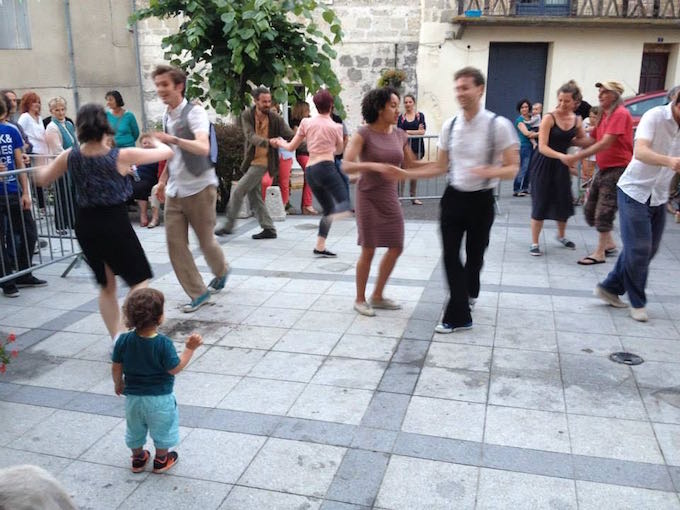
    This year, the Mudflappers performed in the village of Port Sainte Marie in the south-west of France as part of the country’s national Fete de la Musique. We had already performed four routines and the crowd wanted a lesson. Le Charleston Stroll was the obvious choice. But rather than teach the usual set of variations (fearing being incomprehensible after one-too-many peach juice-infused presssions) we came up with a cunning teaching method. We prominently stationed one Mudflapper on each of the four corners of the crowd, standing on, say, a bench. The crowd did the basic routine facing me and then turned to face the bank, where that Mudflapper would do a variation and everyone would copy. They would then turn to face the town hall where another dancer demoed another variation, and so on, until we faced the front again. Holding the microphone, all I had to do was shout, ‘vers la banque’, ‘vers la mairie’, ‘vers la route’ and ‘vers la Garonne’ – using my best beginner French.

    And it worked. At 11:30pm in the heart of a sleepy French village in which in all my life I have never seen more than four people congregate, we had 50-odd people doing the Charleston Stroll. The Port Sainte Marie technique as it will henceforth be called is now standard issue in the Mudflappers manual – coming soon to a festival/soirée musicale near you.


  • Reflections on video selfie training

    Reflections on video selfie training

    Think Up Selfie Movie Training

    Yesterday at Think Up I ran a workshop training engineers in how to use selfie movies to tell communicate to people about engineering. The aim of the workshop was to inspire and give the participants the skills to use video as a medium to share interesting engineering stories. The attendees were a group of engineering students from UCL and Imperial and a couple of graduate engineers from Expedition Engineering.

    The content I had to deliver was in two parts: the technical skills – talking to camera, framing the shot, etc; and storytelling – figuring out what to say.

    In my experience people are nervous to talk to camera, so I kicked off the workshop with asking people to film a selfie introducing themselves and sharing two surprising facts about themselves. It turned out to be a great way to kick off the exercise. I think it worked because people had to confront their fears straight away. We used these examples as a context for talking about what makes a good selfie. I then showed them a selfie I had made that morning, and asked them what was good and bad about it (below).

    We then moved on to storytelling. I had thought that the participants would find the storytelling easier than the technical material, but it was the contrary. I asked individuals to think of a subject that they are passionate about, and to find one particular intriguing aspect of that subject that could form the kernel of their story. That bit was mostly easy, the challenge was finding the language that helped weave a compelling yarn. In the end the way round this was for me to suggest linking phrases or expressions and to show them how they could be used, and then for the individuals to weave those phrases into their stories.

    The impact was stark: once they had a compelling story to tell, and they knew how to say it, even the least confident sounded a lot more confident on camera.

    In the end I saw some really quite moving videos being produced. As homework I asked the participants to polish their performances and upload a video to the Think Up Facebook page. I’ll have more to write on this depending on whether they do or don’t post anything!

    There are some important things that I take away from delivering this workshop:-

    • This is another reminder that there is no substitute in learning for getting people to do. Forcing the participants to make a film straightaway was probably scary for most, but once they were ‘doing’ it was easier to talk about how to do it better. I had a similar experience in a communications workshop I ran last week on difficult conversations in engineering projects. We talked about the ideas, but it was only when I forced participants to role-play the scenarios (which they seemed reluctant to do at first) that the learning really seemed to sink in.
    • I haven’t previously appreciated the value of good storytelling, though many of the people I work with do. Perhaps because it is something I think I’m good at, I don’t recognise how other people find it a challenge. This is a theme that I would like to develop in more training for engineers.
    • This event was about confidence building, and I used a lot of the confidence building techniques I know from swing dance teaching – lots of applause for one-another’s efforts; keeping the momentum up and the tone positive – and it seemed to pay off.
  • Greenwich Peninsula

    Greenwich Peninsula

    I snapped these wandering along Greenwich Peninsula last Saturday.

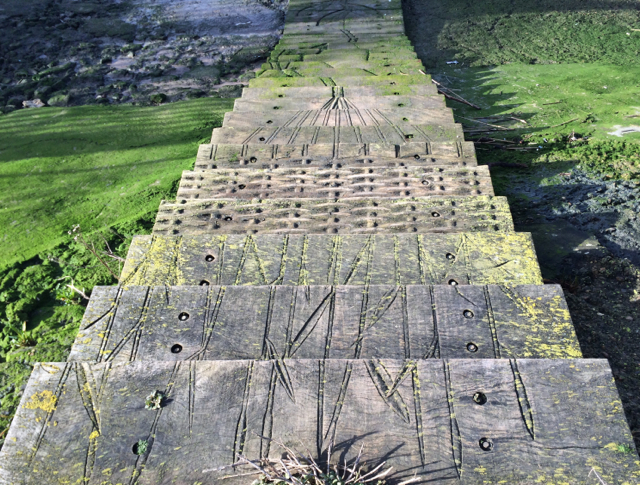
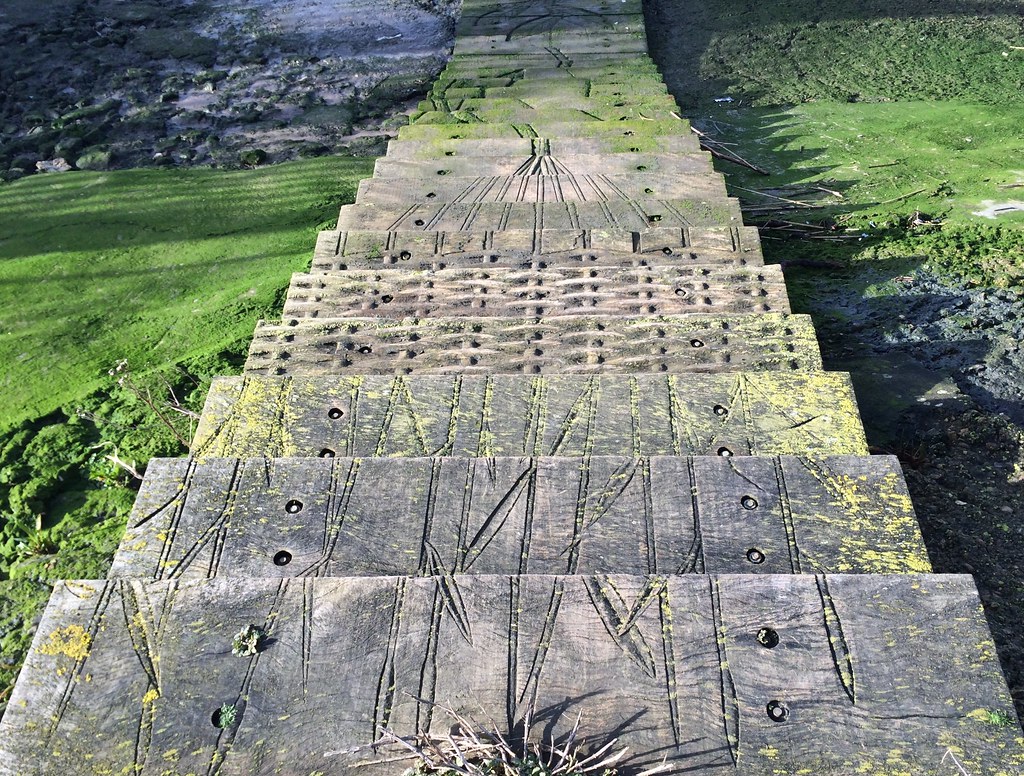
    Enderby Steps

    Canary Wharf from Greenwich Peninsula

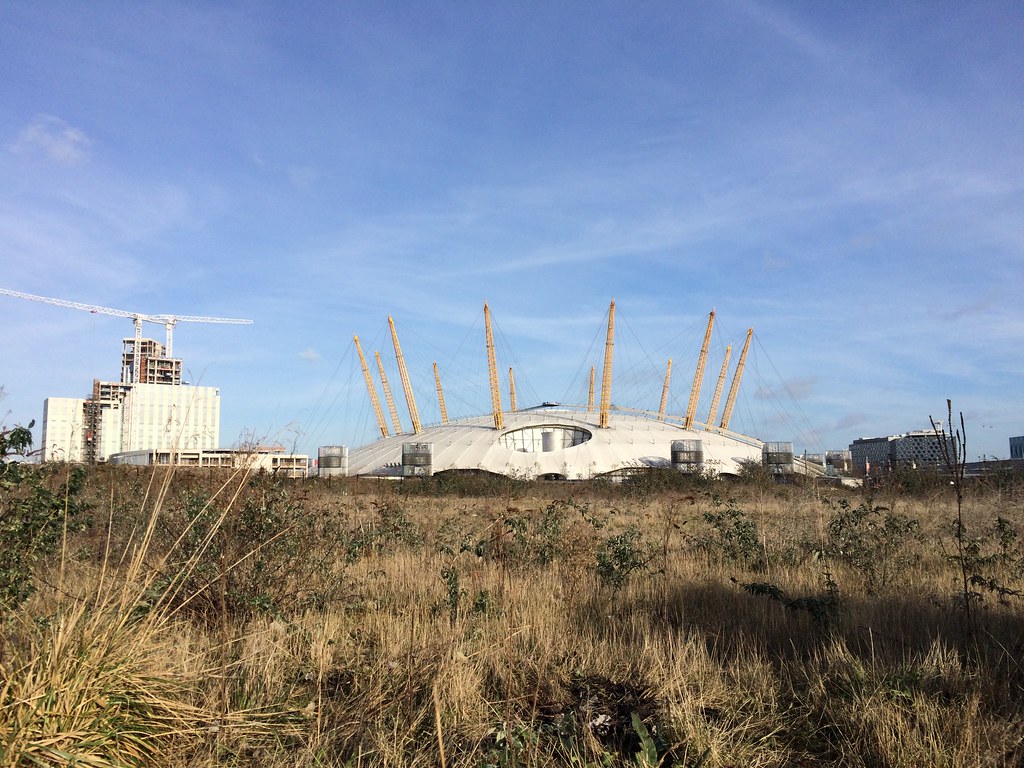
    Millennium Dome

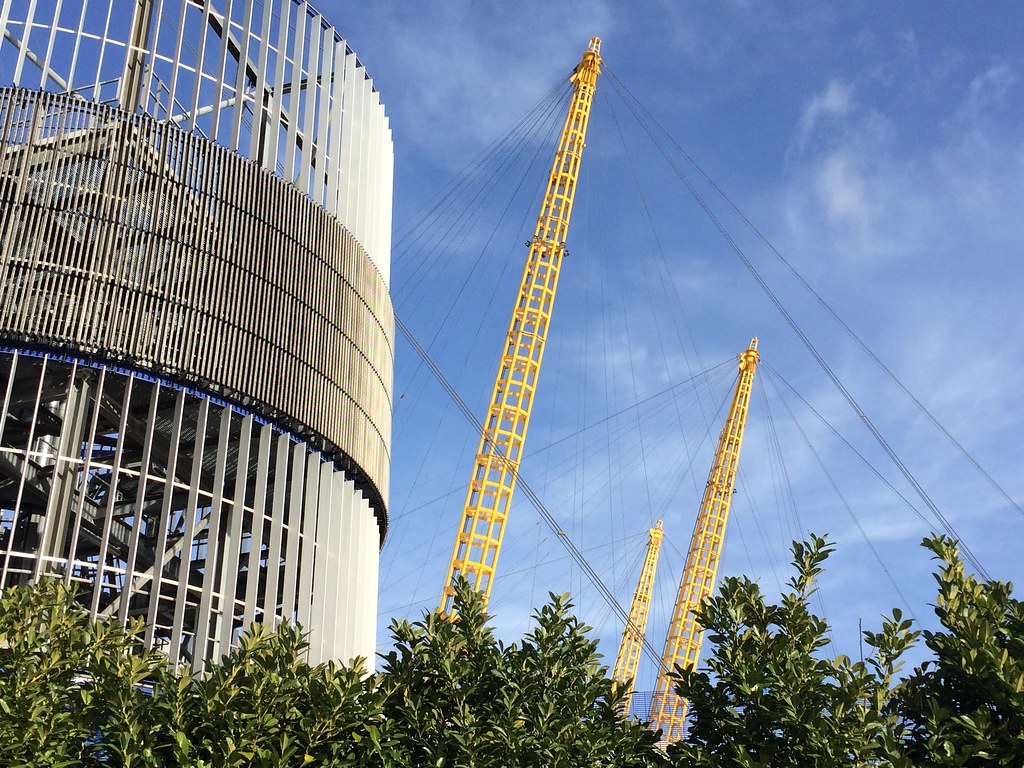
    Millennium Dome – over the tree tops


  • 8-count basic lindy hop lesson

    8-count basic lindy hop lesson

    Swing at the Scolt Head

    Tuesday nights are when the Mudflappers teach our weekly beginners’ swing dancing class before the London Dance Orchestra takes to the stage at Swing at the Scolt Head. Since I have been doing a lot of the teaching recently I have deployed my usual set of beginners’ class material and so I am having to come up with some new content. Since quite a bit of thought goes into this, I thought I would make some record of it on this blog, not least so I don’t forget in future.

    In recent classes we have been spending a lot more time on warm ups. This week we put on Opus One by the Mills Brothers and just got the crowd to shake different bits of their body to the music. It felt really good and everyone seemed instantly to have shaken off their day.

    Next up, we taught a bit more of the Shim Sham. This week we tackled the trick bit, the break. (I think we could dedicate a whole class to learning breaks, and maybe call it ‘Breaking Good’). We started by clapping the rhythm, then worked through the footwork, calling the steps. Pretty quickly the crowd picked up, and we had them doing their breaks to the classic T’Ain’t what you do.

    Then on to the bulk of the bulk of the lesson, which we spent teaching side-by-side lindy hop moves. I think this set of moves feels really good to learn because you can really move a long way on the dancefloor, you can style it up lots, and the benefit of a strong connection can really be felt. We taught side-by-side charleston, and taught kick ups, and kick the dog. We then showed how from a side-by-side Charleston you can do an inside turn to reverse direction, and from there to move into a hand-to-hand Charleston.

    To fit all this in in an hour and half we had to keep the pace up. We did our usual half-time drinks break about two thirds of the way through and then we upped the pace to fit in the hand-to-hand Charleston. By the end, I think everyone in the crowd had nailed the routine and felt pretty good and warmed up for the band.

    The last thing to mention is for this week, I paid particular attention to the music. Earlier in the week I had discovered the music of Kid Ory, and so the whole teaching playlist was tracks by him: Ain’t Misbehavin’, Joshua Fit the Battle of Jerricho, Muskrat Ramble and Maple Leaf Rag, all top tunes which I can’t get out of my head. I’m looking forward to next week!

  • Experiments in content flipping

    Experiments in content flipping

    Experiments in flipping content


    This year I have been experimenting with content flipping in my teaching. The idea of content flipping is that students first encounter the course material in their own time, so that teaching time can be spent discussing, applying or interpreting the material. The aim is to make more effective use of both time together and time apart.

    I have had two opportunities this year to take a flipped approach. The first was as part of a Think Up commission at the University of Cambridge to assist in the coordination of a residential Masters module in innovation in construction engineering. It was my job to provide a theoretical framework that would weave together the themes of the week’s speakers. I decided it would be a better use of class time if the students could arrive at the residential week having already got to grips with conceptual ideas around notions of ‘future’ and ‘innovation’. These frameworks having been established before students arrive, we’d then be able to use our contact time to interpret what the course speakers had said against these frameworks.

    The flipped exercises I sent out as two documents we called ‘Think Up Think Pieces’, one on ‘Future’ and one on ‘Innovation’. [link coming soon] These were sent to the students along with pre-reading papers from the more ‘traditional’ lecturers. In my first session with the students, I asked if anyone had covered the flipped content – only two out of twenty had. Not a great success – I’ll come on to my reflections on this in a moment.

    Where I have had more success with flipping is with the graduate training programme I designed as part of a Think Up commission for a large construction management company. Here the aim was to introduce their first-year graduate intake to the key stages in the construction life-cycle of a building. The programme was to involve five intensive role-play-based workshops in which the graduates, working in teams, would take on the role of a team engineers as it managed the key stages in the construction process of a building. In order to have the maximum time available for role-play we decided to flip the theory. Two weeks before each workshop, we sent the participants a pre-briefing worksheet of activities and reading they needed to carry out to prepare them for the contact time.

    In this instance, the majority of the students actually did the ‘flipped’ exercises. So what was the difference?

    • In the Cambridge scenario, there was just one set of flipped exercise, followed by a back-to-back set of lectures and contact time. In the corporate training scenario, there were several sessions with long gaps in between when the participants could do their flipped work. In the latter case, the participants could see the benefits of doing the flipped work, and if they didn’t do so for the first workshop, they probably made sure they did for the second one.
    • In the Cambridge scenario, my hopefully-interesting flipped exercises were bundled with more traditional reading lists sent out by the other lecturers. They weren’t to know there was something maybe a little different inside the material I’d sent over, and so probably didn’t look (I didn’t get the chance to ask students why they hadn’t read my material, or whether they had read anyone else’s)
    • In the corporate training scenario, I got to brief the participants several weeks before the start of the course on the pedagogical model we were adopting, and in particular the importance of the flipped learning exercises. In other words, they knew what was expected of them, and so may have been more motivated to follow that learning scheme.
    • Unfortunately I was not able to bring a reflective learning element into the work at Cambridge, but in the corporate training example, the teams were required to complete a reflective learning diary post after each workshop during which they were asked to reflect on the value of what they had learnt in the pre-briefing phase, which I am sure helped participants to see the value of this approach.
    • Finally, in some of the flipped exercises in the corporate training example, I required participants to write a short summary of what they had learnt in the run-up to the session.

    The flipped learning exercises were clearly of benefit to the graduate participants. They arrived at the role-play scenarios with a clearer idea of how they might be able to succeed at the tasks they were being set, and had more contact time with the facilitators to discuss the issues that they didn’t understand.

    So what do I conclude about flipping? In the case where it worked I was very happy with the impact of the approach, and I will continue to adopt the approach where I can. To anyone else trying it, I would recommend:

    • Being clear with the learners in advance that this is the approach you are going to take and why.
    • Keep the reading or exercises concise and achievable rather than sending out a lengthy reading list that no one is capable of reading.
    • Consider setting a short exercise to check participants have completed the flipped activities.
    • If you are using a reflective learning approach, ask students to think about what they learnt from the flipped compoment of the teaching.

    So, what do you think? Have you tried this approach? What are you experiences?


  • Où est la salle de danse? – Why learning to lindy hop is like learning a language

    Où est la salle de danse? – Why learning to lindy hop is like learning a language

    Mudflappers Peter and Nat demonstrate you can lindy hop anywhere.
    Mudflappers Peter and Nat demonstrate you can lindy hop anywhere.

    It’s not long until fellow Mudflapper Jenny Millman and I begin teaching our six-week course ‘Learn to Lindy Hop’ at the Idler Academy. Being a lindy hopper and being an Idler go hand-in-hand, as these classes will show.

    You only have to a watch a short vintage clip of lindy hoppers dancing on a film like Hellzapoppin to see that the Lindy Hop oozes with cool, but the great thing about this and other forms of swing dance is that it is a social dance. What this means is that if you learn a few basic moves, and you find yourself in the vicinity of someone else who knows some basic moves, you can get up and start dancing. The threshold for participation is low and the fun you can have is endless. All you need is a song on the radio and someone to dance with and you can get instant pleasure, making it an ideal leisure pursuit for Idlers.

    Learning to Lindy Hop is a bit like learning a new language. You begin with learning some words and phrases, and, sure, you have to practice these for a bit using corny holiday-based role-play exercises, but pretty soon, you can start improvising and finding things out about the person you are talking with. In Lindy Hop, the moves are the vocabulary, the rhythms are the grammar, the lead and follow technique the conversational etiquette and the music… is what you talk about. Over the course of six weeks we’ll be teaching some basic vocab and grammar, which we will practice in role-play (où est la salle de danse?) and we’ll be playing lots of music, so that before they know it our students will be conjugating their way around the dance floor.

    Learn to Lindy Hop kicks off on Wednesday 22nd October. For more info and to book a place visit the Idler Academy website.

  • Hazel Hill Family Adventure Weekend

    Hazel Hill Family Adventure Weekend

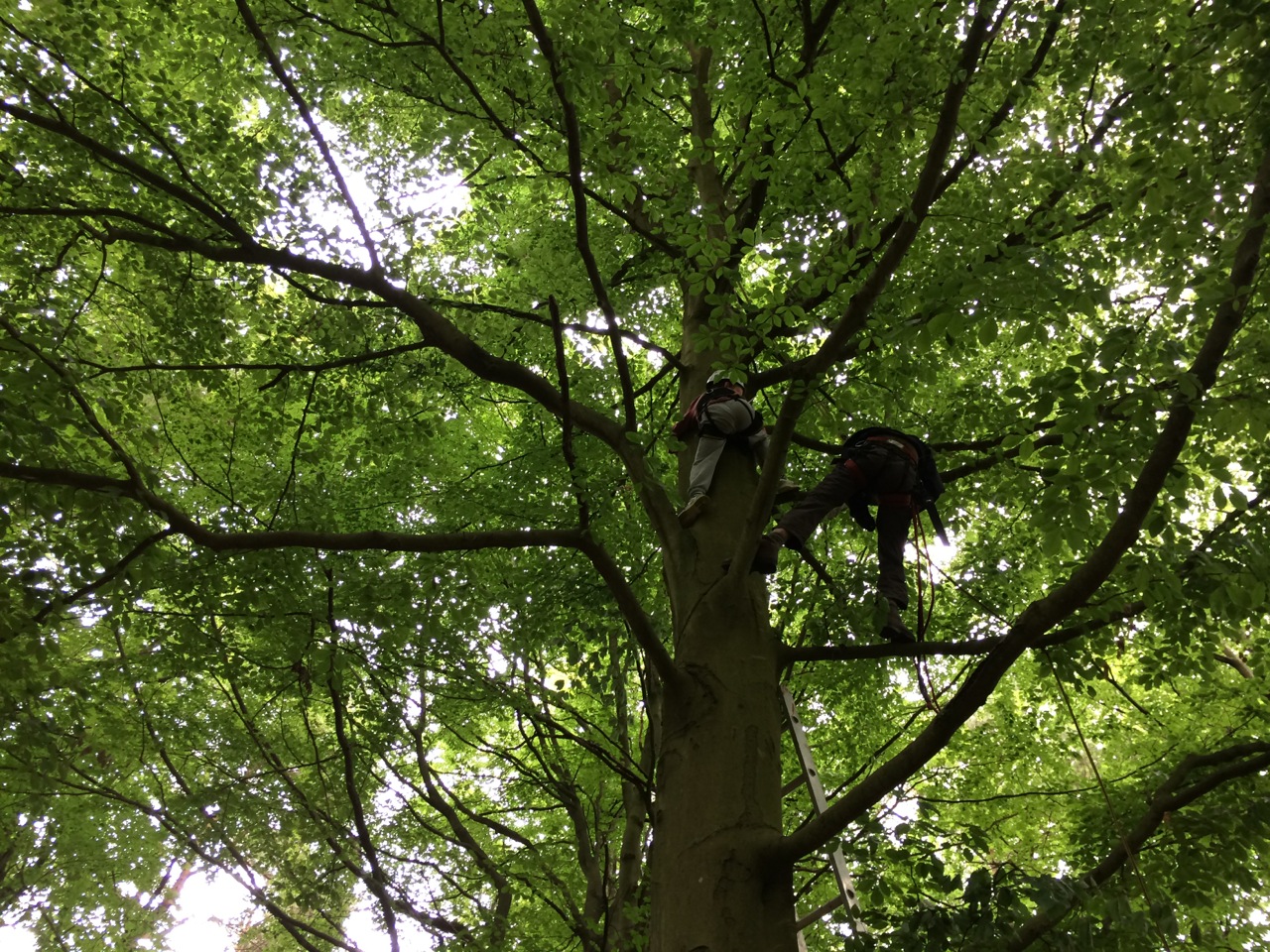
    A kid, supported with a harness, climbs ten metres up a tall beech tree at Hazel Hill
    A kid, supported with a harness, climbs ten metres up a tall beech tree at Hazel Hill

    I’ve just returned a wonderful weekend in the woods, the first ever Hazel Hill Family Adventure Weekend. The aim of the weekend was to give kids the chance to get out into the woods and to create their own adventures. We ran the weekend in partnership with Monkey Do who create fantastic rope net structures that allow kids (and grown ups) to jump, bounce and swing from level to level between the trees.

    When the families arrived on Friday evening, we filled up on enchiladas before going on a walk through the woods to help everyone get their bearings. We finished the evening with introductions around the campfire and a discussion about the weekend ahead. We had thought the kids would want to go to bed, but, as it turned out, not until they had been on a night walk through the pitch-black forest.

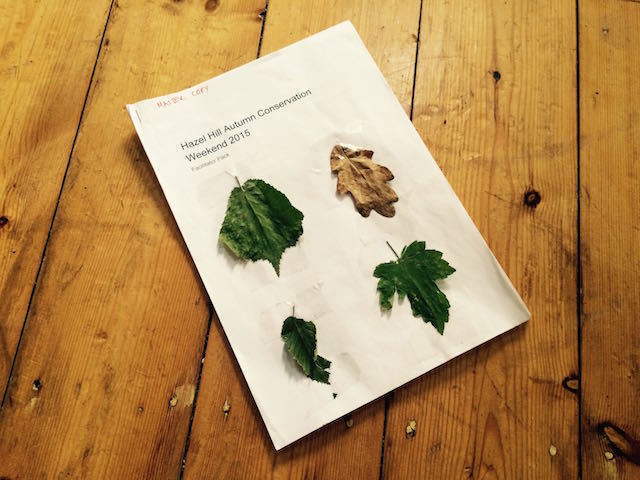
    After an early breakfast on Saturday morning we went looking for leaves to help us learn about the different types of tree in the wood. Then it was time to get into the nets. For an hour and a half the kids clambered around, daring each other to jump from the highest net to the lowest one, and challenging each other to race from one side to the other. Meanwhile, one by one, kids and adults were strapped into a safety harness and climbed as high as they would dare up one of the tallest beech trees in the wood. When the forecast rain came in the afternoon we retreated to the covered roundhouse for a session on how to light a fire with a flint and steel. My accordion provided background music which eventually turned into everyone singing along.

    Earlier in the day we challenged the kids to move from one area of the wood to another without being seen. The idea was to encourage them to go deeper into the woods and explore the secret pathways through the undergrowth created by the dear. This exercise was good practice for our last outdoor activity of the afternoon, a game of capture the flag (tea towel) played right across an area of dense woodland at the westernmost end of Hazel Hill.

    The evening began with a dinner of vegetable kebabs that the kids roasted on an open fire. I then ran a solo Charleston class for adults and kids, which was supposed to last half an hour, but went on for an hour and a half as everyone was enjoying it so much. We eventually regrouped at the campfire to reflect on the day and to listen to some poems by Michael Rosen.

    Sunday’s start was not quite so early: the kids’ exertions were beginning to catch up with them. We played more stalking games through the wood, this time in the thickest area of forest. We then moved on to the dark wood, an area planted with scots pine, for a game of Owl and Mouse, a blindfold game in which the ‘mice’ must sneak up on the blindfolded ‘owl’ without being heard – an exquisitely silent game to watch! We returned to the nets for more suspended adventures and finished with a final game of capture the flag, this time played among the tall trees of the heart wood where there is much more space to run around.

    The weekend was a great success in many ways. All the participants left beaming. The parents told of their joy at managing to persuade their kids to put away their electronic devices for the weekend; and even some of the kids admitted to appreciating this as well. It was also a for the crew, none of us having worked together before, and all of us enjoying ourselves and feeling part of the wood. And I think it was a great success for Hazel Hill, showing how the woodland can be used as a place for adventure.

    I look forward to using what we learnt from this event in other weekends at Hazel Hill (especially at our upcoming Autumn Conservation Weekend), to working with all the facilitators again, and hopefully to seeing many of the participants at future Hazel Hill weekends.

  • A sketch for the Big Idea

    It was on a train to Bristol yesterday, travelling with my colleague Ben, that I articulated in I think the clearest terms yet the model of learning that through my various projects I would like to explore and develop practically. It goes something like this:

    What do I want to know or be able to do?

    What skills or knowledge do I need to have in order to meet this aim?

    Which of these skills, knowledge or aptitudes do I already have?

    How can I make up the deficit?

    How will I know when I’ve got there?

    The benefits of the approach are:

    it starts with the needs of the individual, and values their own experience of the world. It is potentially empowering and rewarding. It could be self-sustaining if the individuals develop the skills necessary to adopt the approach.

    Disadvantages or challenges I can see are:

    Learners need to have developed a certain level of skill and maturity before they can adopt the approach. Learners need access to a whole different type of coach or teacher who can guide them through the process. The approach is not easily scalable, requiring a much more tailored relationship between coach or teacher and student.

    I see these disadvantages as challenges to be overcome, and hopefully my projects can help contribute.

    My motivations are:

    A love of self-started learning and personal development; the astounding way that our brains can learn and a concern that our current formalised systems of learning are crude; the depressing sight of students motivated purely by grades and the hugely destructive fetch that summative assessment seems to have on the learning process.

    Clearly these thoughts need refining, but I wanted to get these reflections written down while they are fresh. Clearly these are also big ideas to implement – perhaps impossible. In this respect I am inspired by the following from Rousseau’s Emile:

    “People are always telling me to make practicable suggestions. You might as well tell me to suggest what people are doing already, or at least to suggest improvements which may be incorporated with the wrong methods currently in use. There are matters witch regard to which such a suggestion is far more chimerical than my own, for in such a connection the good is corrupted and the bad is none the better for it. I would rather follow the established method than adopt a better method by halves. There would be fewer contradictions in the man; he cannot aim at one and at the same time two objects.”

  • Adventures in the trees – planning under way

    Adventures in the trees – planning under way

    Camp fire at Hazel Hill Wood
    Camp fire at Hazel Hill Wood

    Planning is now in full swing for a Adventures in the Trees, a new project that I am excited to be involved with at Hazel Hill Wood. For this project the team at Hazel Hill Wood has teamed up with the team from Monkey Do to create two family weekends that give young people a taste for wild play in the woods.

    Monkey-Do is a small non-profit social enterprise founded to promote tree climbing that runs free wild play activities for children in parks and woodlands, bringing people together with nature through play. At Hazel Hill, Alan Heeks interested in exploring how the wood can be used to prototype new ways of getting young people interested in woodland. The Adventures in the Trees weekends will bring Monkey Do’s experience of rigging aerial playgrounds to the magical woodland of Hazel Hill.

    My job is to help design the event programme and to co-lead one of the weekends aimed at 7 to 13-year-olds.

    More information and booking details will shortly be available through the Hazel Hill website.

    Greater involvement with Hazel Hill

    In 2014 I will be getting more involved with developing the programme of educational activities at Hazel Hill wood, in many ways inspired by reading George Monbiot’s ‘Feral’ last year. My role in the Adventures with Trees weekends is part of that programme. Another activity will be co-leading a conservation weekend at the wood in the Autumn. More details to follow…

    Related posts

  • Now ‘lecturing’ at UCL

    Now ‘lecturing’ at UCL

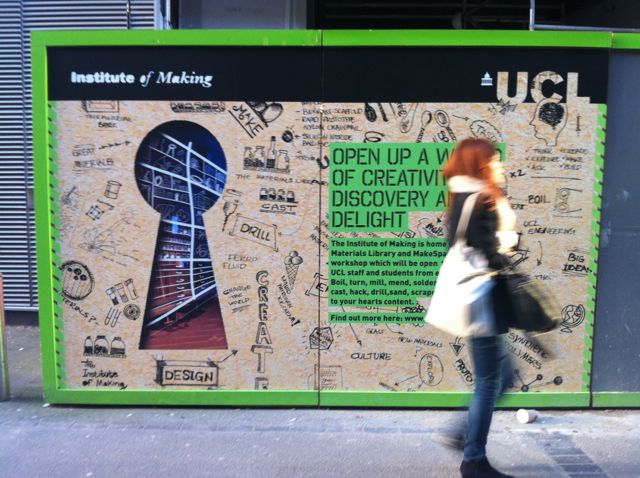
    Institute of Making

    The letter came in the post yesterday. I can now call myself an Honorary Lecturer at UCL’s Department of Civil, Environmental and Geomatic Engineering. Obviously the ‘Honorary’ bit means that I still have my day job at Think Up, but it is great to have recognised a good and growing working relationship with the department through projects such as Knowledge Club and a re-run of Think Up’s Haiti Disaster Relief design project.

    UCL and Think Up are on each other’s doorsteps, so I expect to find myself on campus much more. And now with access to EduRoam, any campus is my office.

  • Teaching at Queens – part 1

    Teaching at Queens – part 1

    IMG_5964

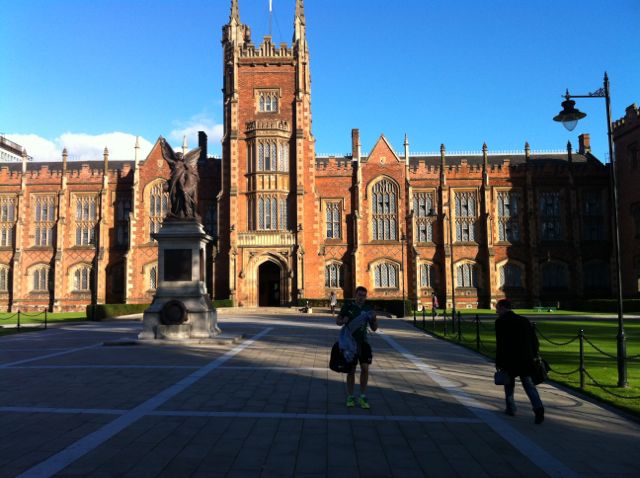
    Over the next couple of days I’ll be at Queens University Belfast to do two things: to kick off a new sustainability-themed student project, and to run a curriculum development session with staff on the theme of embedding sustainability.

    Queens commissioned Think Up to design a sustainability-themed project for first year students. With this collaboration we plan to test three things: the idea of using a project early in the course to introduce the ‘basic building blocks’ of sustainable design; how this project can be used to introduce a topic that other teaching staff can build upon in later modules; and how a virtual learning environment (in this case Our in-house platform Student Studio) can be used to facilitate a better link between universities and industry.

    Basic building blocks

    Principle Two of our report Embedding Sustainability in the Undergraduate Civil Engineering Curriculum is to ‘establish the basic building blocks early on in the course’. Using Bloom’s Taxonomy as our theoretical basis, the higher order cognitive processes needed for sustainable design (analysis, assimilation, creation and evaluation) are founded upon the more basic cognitive processes (knowledge of, knowledge that). To enable students to make better judgements in the field of sustainable design, we need to establish the basics that will help them make those decisions.

    The basics are widespread, and include: common terms and definitions; principles of simple analysis techniques; materials; exemplars. Communicating this material is not a great use of class time. The project that we are designing will provide a context within which the students can start to establish these basic building blocks.

    Project brief

    Student are asked to work in groups to answer the rather open-ended question, how sustainable is Titanic Quarter (a large new mixed commercial-residential-cultural development in Belfast)? To help them, we have suggested seven axes for investigation based on the twelve objectives for sustainable development on the Olympic Park. For each axis, we have suggested aspects of the development to investigate, analysis tools and techniques they might use, and technologies they should find out more about.

    Over the coming week, students will go on a fact-finding tour, do online research and try to speak to people who know about the site. Once they have gathered their data, they need to agree as a group how they are going to answer this question. The task is deliberately designed to provoke debate, and to ask students to apply their judgement. We emphasise that there is no right answer, and what is important is the thinking process they go through.

    To conclude the project, students will present their findings to other groups. In each pair of groups, one will the on the role of the developer, the other will take on the role of sustainability consultants answering this question. The students will choose which team they think have best answered-the question. That group will then present their findings to my colleague in the Useful Simple Trust, Dan Epstein, who was head of sustainability on the London Olympics.

    Basis for our teaching modules

    Our hope is that this project will enable other teaching staff to develop modules that build upon these foundations. Titanic Quarter is a development close to he Queens campus and it is likely to be under development for some years to come, so it makes sense to link teaching to reality by drawing on case studies from this project.

    Using Student Studio

    This project will be the second time that I have used Think Up’s virtual learning environment Student Studio to run a remote teaching module in a university. The platform is used to provide briefing information to the students, to provide an online space for a learning blog, and a forum space for discussion posting questions.

    The plan is that I will be in Belfast to kick off the project and give the students an introductory lecture. I will brief them on how to use Student Studio. I will then go back to London, but I will be able to track students’ progress through the project remotely. Together with using Skype to deliver the final presentation, if successful, we hope this technique will demonstrate how industry can be connected to the teaching environment without necessarily having to be there all the time.IMG_5964


  • Diary – Feral/Flora and Forna/Hook, Line and Singer

    [pe2-image src=”http://lh5.ggpht.com/-MY6w8huA6Ic/UchQA4uxxhI/AAAAAAAAAbU/Fi8B9PgfMl8/s144-c-o/13%252520-%2525201.jpg” href=”https://picasaweb.google.com/101339256689884186918/62413?authkey=Gv1sRgCN3nl-Dng7iRGw#5893048088573101586″ caption=”Gillespie Park” type=”image” alt=”13 – 1″ ]

    I’m now several chapters into George Monbiot’s book Feral, and I’m enjoining it immensely. It is already making me think differently about the ways in which I choose to engage with my surrounding environment. It also makes me realise my vocabulary of flora and fauna is really very limited – it hardly seems to extend further than the words in the picture books I read our daughter (and many of those animals aren’t native to South East England!) This ignorance worries me: if I don’t have the words, then how can I have the ideas?

    Inspired, I took a walk down to wonderful Gillespie Park, and wandered round the meadow. The info panel told me I’d find wild lupins, which I did – not a new word, br a moment’s appreciation of a plant I’d never stopped to see growing in that space.

    I’ve written previously about participating in conservation weekends at Hazel Hill wood. This week the opportunity has arisen to be involved with helping to shape the educational programme at the wood. It is a place I greatly enjoy visiting, and so I look forward to the chance of getting more involved.

    This afternoon we sang two engineering themed songs from Cerys Matthews’s book, Hook, Line and Singer: London Bridge is Falling Down; and The Runaway Train. This week I’ve been listening to Britten arrangements of folk songs, and an idea for a new engineering song, based on one of these tunes, is buzzing round my head – a cross between Boris Vian’s ‘La Java des Bombes Atomiques‘ and the ‘Emperor’s New Clothes’. Watch this space.

  • Diary: Imperial College/Serpentine Pavilion/University of Austin Texas

    Diary: Imperial College/Serpentine Pavilion/University of Austin Texas

    [pe2-image src=”http://lh3.ggpht.com/-IqvJLaCnMnE/Ubn1VYuE31I/AAAAAAAAAZI/RFR8CFqYrV8/s144-c-o/13%252520-%2525201.jpg” href=”https://picasaweb.google.com/101339256689884186918/61313#5889007735525400402″ caption=”Dropping in at the Serpentine Pavilion” type=”image” alt=”13 – 1″ pe2_parse_caption=”false” ]

    Yesterday morning was a first. I gave a presentation to 80 students at Imperial while holding a baby in my hip. The presentation was part of the kick-off day for the Expedition-Imperial 2013 Constructionarium week (Event Facebook page; Think Up news piece – soon). The Expeditionengineer due to give the presentation had to go to a meeting in Athens; since I’m the person at Think Up who knows probably most about the Constructionarium it was easiest for me to replace him, even though I didn’t have any child care cover for our daughter. She didn’t seem to mind. She chirped loudly a few times (Imperial presentation at eight months can be the first line of her CV) and the audience certainly weren’t bothered!

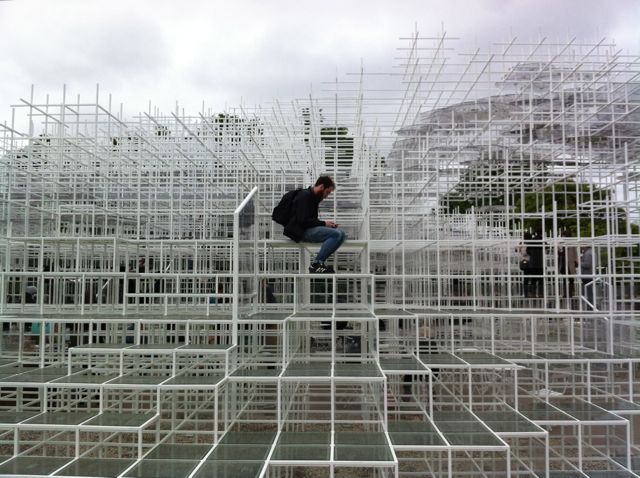
    Pushing the buggy north out of the college I stumbled upon this year’s Serpentine Pavilion, pictured. The structure is wonderfully intriguing to approach. You have a sense that there are spaces and surfaces inside but you can’t see where they begin and end. The people inside therefore appear to be floating inside a sea of addition signs.

    There I received a birthday present, George Monbiot’s ‘Feral‘. Learning from nature is a regular strand in my thinking at the moment (see my post on Hazel Hill to see the sort of thing I mean), and so I expect this book will be of great interest.

    I hurried home to prepare dinner for our evening guest, Gregory Brooks, a senior lecturer at the University of Texas at Austin and who is responsible for third year design studios at in the Architectural Engineering programme. Gregory is faculty director for the Emerging Technologies Programme, a study abroad programme for engineering and architecture students that takes place every two years in London. Here, they visit the architectural engineering sites and to tour the offices of architecture and engineering practices in the capital. I first met Gregory with his cohort of students two years ago when they first visited Expedition. Back then I introduce them to our Workshed site, and ever since I have noticed a significant blip on our Google Analytics over the city of Austin. I was delighted therefore to present once more two weeks ago to this year’s group of visitors.

    Gregory’s work in developing the programme, and in developing a set of online architectural engineering online teaching resources is impressive (for example, see AEWorld, a very comprehensive blog on projects of architectural and engineering interest -to his credit, one of the most popular blogs on WordPress.com) . Our discussion over dinner was  packed with ideas for mutual cooperation and sharing resources, which I look forward to exploring in future.

  • Negotiating the lifts at Kings Cross

    Negotiating the lifts at Kings Cross

    20130515-131350.jpg
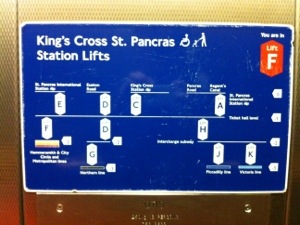
    Pushing a pram, as is my new daily habit, has made me much more aware of the relative accessibility or inaccessibility of London. Today I decided the best option for step-free interchange was to be at Kings Cross, where upon arriving I was presented with the lift schematic shown in this photo. Step-free, no doubt – and that is an achievement in itself – but by no means simple. I had to help two other sets of travellers interpret the map as we processed around the station.

    While I may criticise, the Underground is significantly more accessible to buggies than the Paris Metro, where there are simply no prams to be seen.

    I am of course fortunate that my access requirements are such that, should it be necessary, I can carry the buggy down the stairs. But pursuing step-free access around London does cause me to try out new routes, and to discover bits of stations that I’d never noticed before (at London Bridge, in particular). Perhaps not very profound, but another example of how parental leave is giving me a new perspective on things!

  • Archive photos/early attempts at developing/les arcs

    Archive photos/early attempts at developing/les arcs

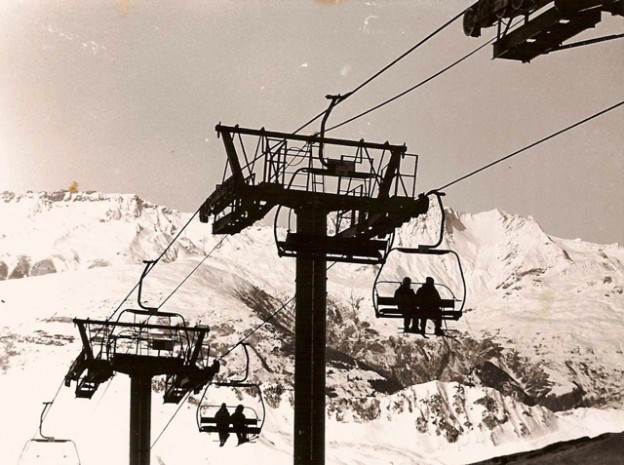
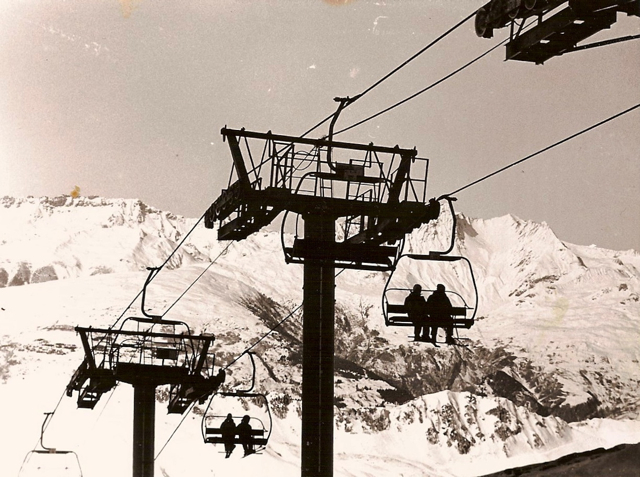
    Ski lift, high contrast, les arcs
    060201_les_arcs02
    060201_les_arcs03060201_les_arcs04

    Probably the best module I studied during my year at ENPC was not engineering-themed – but photography. The module was run as an English language course: the subject of the lessons was photography, and the lessons were in English. Being a native English speaker I was not able to get any credits for the module, but I gained much more. I still vividly remember the magic of seeing images emerge on pieces of paper submerged in solution. In just a few short hours of teaching I learned somethings that have been much more valuable to me than the hours of lectures I sat through on other subjects.

    These photos were taken on a weekend trip skiing at Les Arcs. Getting from Paris to the Alps by overnight train is easy by the way. The night train leaves from Gare d’Austerlitz, and arrives Bourg St Maurice, where there is a lift straight up to Les Arcs.