So many things that I am working on at the moment lead me to the conclusion that there is power in the gaps. But I feel like for my much of my professional development I have been taught to fill in the gaps.
(more…)Category: Training
-
Building creative culture in engineering companies
I am starting to shift my attention away from creative tools for engineers. Tools are still important. But I’ve realised that you need a creative culture for individual creativity to thrive.
Recently, I rediscovered in Laloux’s ‘Reinventing Organisations‘ the Wilbur four-quadrant model. The model describes how culture, systems and worldviews interact. We can use this model to understand a phenomena in an organisations from four different perspectives:
- How the phenomenon can be measured from the outside
- How the phenomenon feels from the inside – intuiting how it feels
- How the phenomenon appears to the individual
- How the phenomenon appears to a group of people.
Like all engineer-friendly models, Wilbur’s is a two-by-two grid. The columns divide the grid into interior perspecitve and exterior perspective. The rows divide the grid into individual and collective perspective. According to Laloux
Wilbur’s insight, applied to organisations, means we should look at: 1) people’s mindsets and beliefs [individual interior perspective]; 2) people’s behaviour [indvidiual exterior perspective]; 3) organisational culture [collective interior perspective]; and, 4) organisational systems (structures, processes and practices) [collective exterior perspective]”
From Reinventing Organisations, Laloux (2016)Applying the four quadrant model to organisational creativity
I’ve assembled some quick thoughts on how the four quadrant model might apply to understanding creativity in an organisation. I have written the statements for a fictional, ideal case. This difference between this ideal case and reality can give us some suggestions for what we might need to do to build a more creative organisation.
(more…) -

Aristotle, Seneca and Emotional Intelligence – conceptual design training notes
This post is intended as a reminder for the people participants in last week’s conceptual design workshop. It may also pique the interest of anyone else interested in learning or teaching creativity for engineers.
The workshop was the fifth of five workshops for this cohort of engineers. At the start I asked attendees to list any challenges they face in doing conceptual design that they would like to focus on in the final session. I asked attendees to name the challenge and what kind of progress they would realistically like to make today towards overcoming that challenge. I summarised the challenges everyone shared, and asked participants to prioritise the topics for discussion. The following topics and talking points follow from that prioritised list. (more…)
-

Designers: turn off your phone – harness the wandering mind
Fireside reflection at Hazel Hill wood. Photographer: Peter Clarkson I recently read Daniel Goleman’s excellent book Focus, and I have been thinking about how our ability to focus affects our ability to design. This thinking was the basis of a workshop session that I recently wrote about harnessing ‘wandering mind’, that mode in which the brain roams freely and forms new associations which are the basis of creative thought. I piloted this material as part of Think Up workshop on creativity that we ran at Hazel Hill wood in July, which seemed to go down well, so I am sharing it here.
Below is a modified extract from some of the course materials associated with this activity. I’d be interested to know if anyone reading recognises these phenomena or tries the approach I am recommending.
In his book Focus, emotional intelligence pioneer Daniel Goleman explains that the brain can really be understood as having two distinct sets of circuitry: the lower brain and upper brain. The lower brain whirs away in the background working on solving problems without us even noticing. Its activity only comes to our attention when it produces an idea as if from nowhere. The upper brain by contrast is the seat of self-control and is the part of the brain that we actively focus on a problem.
In evolutionary terms, the lower brain is the older part. The lower brain is the source of our impulses and emotional reactions. The upper brain can repress these impulses, but at the cost of diverting our attention from the design challenge on which we want to actively direct our focus. In this instance, the lower brain circuitry is causing a hindrance to creative thinking.
However, the lower brain does have a crucially important role to play in design. Research shows that in the moments before people achieve creative insight, their lower brain has been in a state of open awareness. In this state, the mind wanders freely, widely and without judgment to create new associations. When these new associations are made, the upper brain then locks in on them and fishes them out into our active attention.
In order to harness our wandering minds as part of the design process, our upper brain needs to be ready to spot a good idea when it emerges. To do this we need to do two things. The first is to make time in which we stop actively thinking about things and let out thoughts come to us, for example, going for walk or even going on holiday. The second is to minimise distractions, which divert our active attention away from spotting new ideas as they emerge from the lower brain. In other words, making time we when turn off our smart phones and blocking out interruptions.
-

What makes a good conceptual design statement? – working notes
Gateshead Millennium Bridge Today I am working on course material related to defining what is a good conceptual design. I think, in construction at least, it is quite difficult to identify good conceptual design from the finished project. One can judge a finished project on the basis of the final outcome, but unless you have had an overview of the whole design process, it is hard to know how much the final project resembles the original concept design.One clue is in competition sketches, if they are available. It is tempting to suggest that if a simple early-stage sketch exists that closely resembles the final project, then we have a good conceptual design. Good examples might include Paxton’s sketches on a napkin for Crystal Palace or the Utzon’s competition sketches for the Sydney Opera House. But (and I’m not suggesting it was the case for these two examples) it is not beyond designers to create a post-rationalised concept diagram. And while this idea of the simple sketch is also beguiling, it is much more appropriate for projects that resemble a sculpted object, rather than a complex system.From a training perspective, if we were to stand in front of a building and seek to judge the quality of the conceptual design without knowledge of the early-stage design process, I think we’d be on shaky ground. The approach we will adopt instead is to spend time defining what a good conceptual design statement looks like so that designers can judge the quality of their conceptual designs at the start of the project.There are lots of definitions of what a good conceptual design statement is. My colleague Ed McCann has pointed me towards a helpful description from the world of interior fit out. In his book Shaping Interior Space, Rengel describes the three elements of a good conceptual design statement as:1. Talking more about the solution than the problemThe place for the statement of the problem is in the brief.2. SelectiveHere he means it talking about the dominant factor which is going to define the design approach. Is it a question of how a long span is going to be achieved, huge forces are going to be resisted, or what the human experience is.3. EconomicalCareful use of words to pack the most into the fewest words.These three elements are something I can work on with a group of learners. We might begin by asking them to compare different conceptual design statements, and get them to elucidate these rules; and then get them to create their own statements.One key modification I will make to this set of rules to make them equally applicable to sketching as to words.If you are reading this and have either your own definition of good conceptual design statements that you use, or particularly good examples of conceptual design that you’d like to share, then please comment below. -
Workshop inspiration from Jackson Pollock
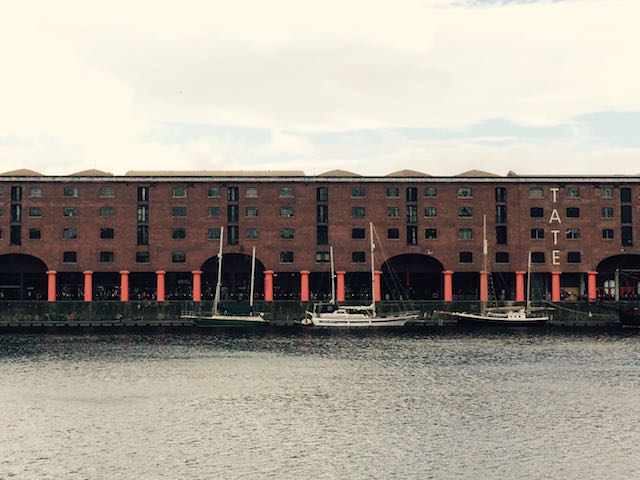
 Today I went on a recce to the Tate Liverpool for a course we are designing at Think Up for a client. As I left the event hosting space I was left to wander the Jackson Pollock exhibition. The show will still be running when we hold our event, which great because I can see three ways in which this exhibition can be used to support the learning on our course.
1. Working with the subconscious
One of the features of the model of idea generation that I will be introducing is the important role of the subconscious in creativity. In Daniel Goleman‘s book Focus, he describes (more elegantly than I am doing here) how the ‘active’ brain is always on the lookout for useful stuff that the wandering brain generates. On this theme, I picked up some useful quotes from the exhibition notes:‘Pollock’s aim to work directly from the subconscious led to a radical process of dripping and pouring paint over large canvasses placed flat on the studio floor…”the modern artist…is working and expressing an inner world – in other words expressing te energy, the motion, and other inner forces.”Then, this from another section:‘Although there was an element of chance Pollock frequently spoke of the importance of decisions over the merely accidental.’My intention is to use Pollock’s work to emphasise the link between the conscious and subconscious in creative work.2. Relating to your audience
Engineers often have to communicate ideas to audiences with different value sets. One place where there is commonly a clash of values is around aesthetics. Engineers typically get little training in aesthetics, compared, say, to architects. Therefore it is unsurprising that engineers can find themselves cut out of such conversations with the client when an architect is at the table. In the course that we are creating, we are not trying to run training on aesthetic appreciation, but simply intending to make the point that you need to understand the perspective of the audience you are dealing with.To help make this point, I think there is a role-play example that we can create that involves Pollock’s work, given the bumpy relationship he had with his audiences. One idea might be to get engineers to take on the role of Pollock’s agent, and to get them to persuade a critical viewer of the merits of his work.3. Thinking Hard
Pollock reflects that ‘his new works require a lot from the viewer’. I find this exhibiton forces me to think hard, and not merely to engage with the surface, and I think the same can be said of good creative thinking. You need to think hard.To conclude, as ever, I’ll have to see if there’s time in the programme to fit in these ideas. I hope that there is. -

Follow the deer tracks, who knows where they’ll lead
Every time I go to the woods I find new insight or inspiration that I can use in my teaching. Today’s comes from deer tracks.
I know the main tracks that criss cross Hazel Hill Wood well. I could probably draw a reasonably accurate map of the place from memory. In a sense, I’m a bit sad that as I have got to know the wood better, I don’t get lost there any more.
But there’s a whole different level on which the wood can be explored, and on which I can lose myself. If you pay attention as you wander down any of the main tracks, you’ll see thin paths going off into the undergrowth. They are easy to miss at first because no sooner than they are off the main path they dive off under low branches. These are in fact deer tracks, and they criss-cross the wood on a different plane – about two feet high. When you start to look for them you’ll spot them everywhere.
For me these deer tracks are an invitation to go off track, to go into the unknown and see to where you end up.
I followed such a track this morning and it led me through dark pine trees and then suddenly I was into a patch of widely-spaced silver birch pushing up through a carpet of lush muss. The place had a sort of magical green light. I had been to this place once before but would not have known how to find it.
To follow deer tracks you have to go off course, you have to pay attention – it’s not the easiest path. The tracks take you via unknown, sometimes-secret places, and bring by new routes to places you already know. And because the journey is different, the destination is not the same.
-
An end to ‘nailing the start but messing up the finish’
I find that when I am memorising any sort of sequence – song lyrics, dance moves, lines for a presentation – I usually over rehearse the beginning and spend hardly any time on the end. (more…)