Tag: abundance

  • Cooking with what’s in the cupboard

    My thanks to Jen Ford of Factory X for this analogy. Regular design is like thinking to yourself, “what do I want for dinner?” then going to buy the ingredients from the supermarket. Circular design is more like seeing what’s in the cupboard and thinking creatively about what you can make.

    This shift in approach represents a different relationship with our cooking supply chain. The goals might still be the same: to eat something; to care for someone through providing them with food; maybe to eat healthily; possibly to spend time with family or friends around a meal. But the starting point is different: not what do I want but what do I have to work with.

    I was writing earlier this week about how an improv clown in a theatre works with the audience. They have to work with what is there – they can’t decide in advance how they want the world to be. But they can work with the audience dynamics to create something entertaining with the emotions the clown is able to generate.

    More generally, when we work with what is already present in the system, we have the potential to create a much lower energy solution. If we are working with a material that the system already produces: eg an existing waste stream or renewable resource, then we can create much tighter feedback loops that balance our choices against what’s available.

    But perhaps most excitingly, for the cook, for the clown and the engineer, working with what’s in the cupboard is a much more engaging creative challenge. Walking around the world, we start to see ingredients we can use – the world starts to reveal itself in new ways.

    So, what will you cook for dinner this evening?

  • Make hay while the wind blows

    Make hay while the wind blows. Riffing on yesterday’s theme of power, a few weeks ago as storm winds tore across the UK, I was kept awake by the sound of the plastic sheeting slapping against the scaffolding on the front of our house. 

    And I found myself wondering, what is the wind analogy to making hay while the sun shines? It’s an incantation to seize the moment and make the most of an opportunity while it lasts. And of course, we already harness wind power. I presume a lot more energy is generated on a stormy night.

    But like any abundance in nature, the wind doesn’t distribute its power evenly. It comes in surges. It’s a fleeting opportunity. 

    Storm’s blowing, quick—boil a kettle! Pump some water uphill! These were my middle-of-the-night musings.

    Eventually, my thoughts drifted to a memory from 2024: cycling along Loch Awe, near Oban. After a long day cycling in heavy winds, we reached a campsite in Dalavich that was attached to a well-equipped community centre. It had a restaurant and bar with a deck overlooking the lake, games rooms with pool and table tennis and excellent washing and cooking facilities.

    But it wasn’t just for tourists—the local community was in there too, enjoying the space. Curious, I wanted to know more about how this facility had been paid for, and it turns out that it gets funds from the community owned wind turbine at the top of the hill. 

    Brilliant, I thought: community energy, harvesting a local abundant resource—the wind—and reinvesting the money into the community.

    I suppose on gale-force nights, the drinks are on the house?

  • Seeking abundance in the Cambridge Fens

    Seeking abundance in the Cambridge Fens

    An abundance mindset is a key tool for the regenerative engineer. It gives three things.

    The first is the ability to see the richness of the situations we are in. The wealth that we have which may go unnoticed. The unused materials that could be worked with. The richness of the harvest.

    The second is the possibility of seeing the potential of a place. What could this place be. What could happen here if we unlock the latent capacity of community and ecosystem to make something better.

    And the third is the ability to see the missing richness of a place. Where a system may be in a desertified state, what it could like where it returned to its previous flourishing state.

    It is this third kind of abundance that I see in the project to return 9000 acres of the Fens in East Anglia to nature. Where this was once a habitat deep in peat and rich in diverse species, draining of the land and intensive farming have left the fens in a decertified state in which 2cm of peat is eroded ever year. Near my cousin’s house the land is four metres lower than it was before draining started in the Victorian period. Soon there will be none left.

    But purchase of large swathes of land by the Wildlife Trusts is enabling the return of wetter forms of farming in this land. This alternative approach aims to restore the peatland habitat, increase biodiversity and create a shift to alternative crops that can thrive in these wetter environments.

    This abundant vision creates the potential for humans and the rest of the living world to thrive together.

  • The incredible system that will save us

    Good news. There is an incredible system that can save humanity and will enable us to thrive on planet Earth.

    Here’s how it works. 

    • It is entirely powered by the effect of the sun and the moon.
    • Using simple elements it can establish itself in new locations and in a few iterations it can rapidly scale up, complexifying and adapting to meet its operating conditions. 
    • The system produces no waste at all – all outputs from one process are inputs to others.
    • It creates incomprehensibly complex structures from a small palette of abundant, local materials.
    • The system purifies and circulates water. 
    • It keeps the air in the atmosphere breathable, and maintains levels of greenhouse gases at a level appropriate for system survival.
    • It even screens out harmful rays from the sun.
    • It creates food and nutrients.
    • It even creates abundant construction materials.
    • The system has built-in resilience to enable it to respond to shocks. 
    • It has the capacity to learn and to develop new designs. These designs are optimised to ensure the health of the whole system, not just the individual element within it.

    It is the system of life in the biosphere of planet Earth. If we step back and think about it, there is no system that humans have created that can compete in terms of its resilience, life-giving potential and ability to adapt. 

    This life giving system is out there, it surrounds us, and it is still just about intact. This is good news.

    There is more good news. 

    We, human beings, have been evolved as part of that system, and it is interwoven with us. As I heard fellow Regenerative Design Fellow Michael Pawlyn describe, there are more microbial cells than human cells in our bodies. So there is no meaningful separation between us and this system. 

    And if all parts of the system have evolved to increase the health of the system, then we too have been created by that system to fulfil a role. 

    So, there is this incredible life giving system that we are in extricable part of. So far so good.

    Now some not so good news. Since the Enlightenment, in the Global North we have started to see ourselves as separate from that system. That same school of thought which used reason to take power away from the divine, placed rational ‘man’ at the top of the hierarchy of life. 

    We became separate the system and then we started exploiting it. Initially the system had enough elastic capacity to respond to the damage being rendered by its human population.

    But having become separated from that wider living system ourselves, we no-longer paid attention to the feedback loops that might otherwise have limited our behaviour.

    Enraptured by our our own reason, we lost sight of the incredible power of the capacity of the wider living world to heal us, for it to be important for us, and so we devalue it even more. Dazzled by the spectacle of our own creations, we lose sight of the incredible, overwhelming, delicate, powerful and fragile system that we are part of.

    Now to the really bad news.

    We are like engineers working for a foolish developer who asks us to take bricks out of the foundations to build extra storeys at the top. We have extracted, depleted and destroyed so much of this system that it is about to collapse. Without this life-giving support system, we stand little chance of surviving on this rock in the solar system. 

    And so, what do we do now? Clearly we need to revive the health of our life-support system.

    We can think of our ailing living system on planet Earth as a sick patient displaying multiple symptoms. Without being doctors, we can probably see that if we treat one symptom at a time we may never treat the underlying cause of the disease. Holistic medicine in contrast seeks to consider factors that enable the health of the whole person. Things like diet, sleep, exercise, living environment. Adjusting these factors to increase overall patient health can increase the patient’s ability to respond to illness. Long-term observation of the patient can help work out what factors are having the best effect. 

    This approach recognises the body as a complex system that is not fully knowable and so needs cycles of careful intervention and observation. This approach also recognises that when this system is thriving it is much more resilient and therefore able to respond to shocks and recover. 

    Applying this same logic to the living system on planet earth, if we can enable the conditions within which it can flourish again, then the system can do what it needs to heal. The questions we should be asking are what are the equivalents to diet, sleep, exercise and living environment for our living system on Earth, and what can we do adjust these conditions to bring the system back into a healthy state?

    Creating the conditions for flourishing is an example of intervening higher in the system. Rather than treating the individual elements in the system we are seeking to change the relationships that dictate how the system behaves. 

    But there is one fundamental relationship that we need to change. And that is the one between humans and the rest of the living world. Its decline has led to our almost total separation from the ecosystem that supports us – physically, culturally, psychologicically and in relation to our concept of power. 

    In the analogy above we treated the Earth’s living systems as a patient that we are treating. To change that fundamental relationship between humans and this wider living system, we have to see ourselves as the patient. We are part of that living system. We are inextricably linked to it. When it is healthy, we are healthy. When it is sick, we are sick. 

    So, how can we conclude this news bulletin?

    • We are part of an incredible system. 
    • If we want to heal it we need to treat it holistically. 
    • We need to rediscover our role – not as controllers, not all-seers, but as a unique part of the system that can help the system bounce back and change course where it needs to. 
    • We are new on the planetary scene. We have evolved incredible brain powers, very recently we have seen that, used unwisely, our powers can be hugely destructive, but re-tuned to the system we have evolved in, humans could add terrific resilience to our living world. 
    • If we can create the conditions for the system to thrive, then the system will take care of the rest.
    • And if we help it thrive we will, by dint of being part of that system, be thriving too.

    More blog posts about regenerative design

    My work on regenerative design is generously supported by the Royal Commission for the Exhibition of 1851. Read more about my Fellowship in Regenerative Design.

  • Paris – towers, boats and beaches

    Paris – towers, boats and beaches

    Today we had a proper tourist day in Paris. We’ve been numerous times with our daughter but now she’s old enough to remember we decided to take in some sights. And you know, it’s good to do these things every so often even in the places you call or once called home.

    Main mode of transport was the Bateau Bus. I love the ferry ride. I often wonder why boats aren’t used more in cities to get around. We had three great rides along the river to get us to right across town.

    Here are some snaps

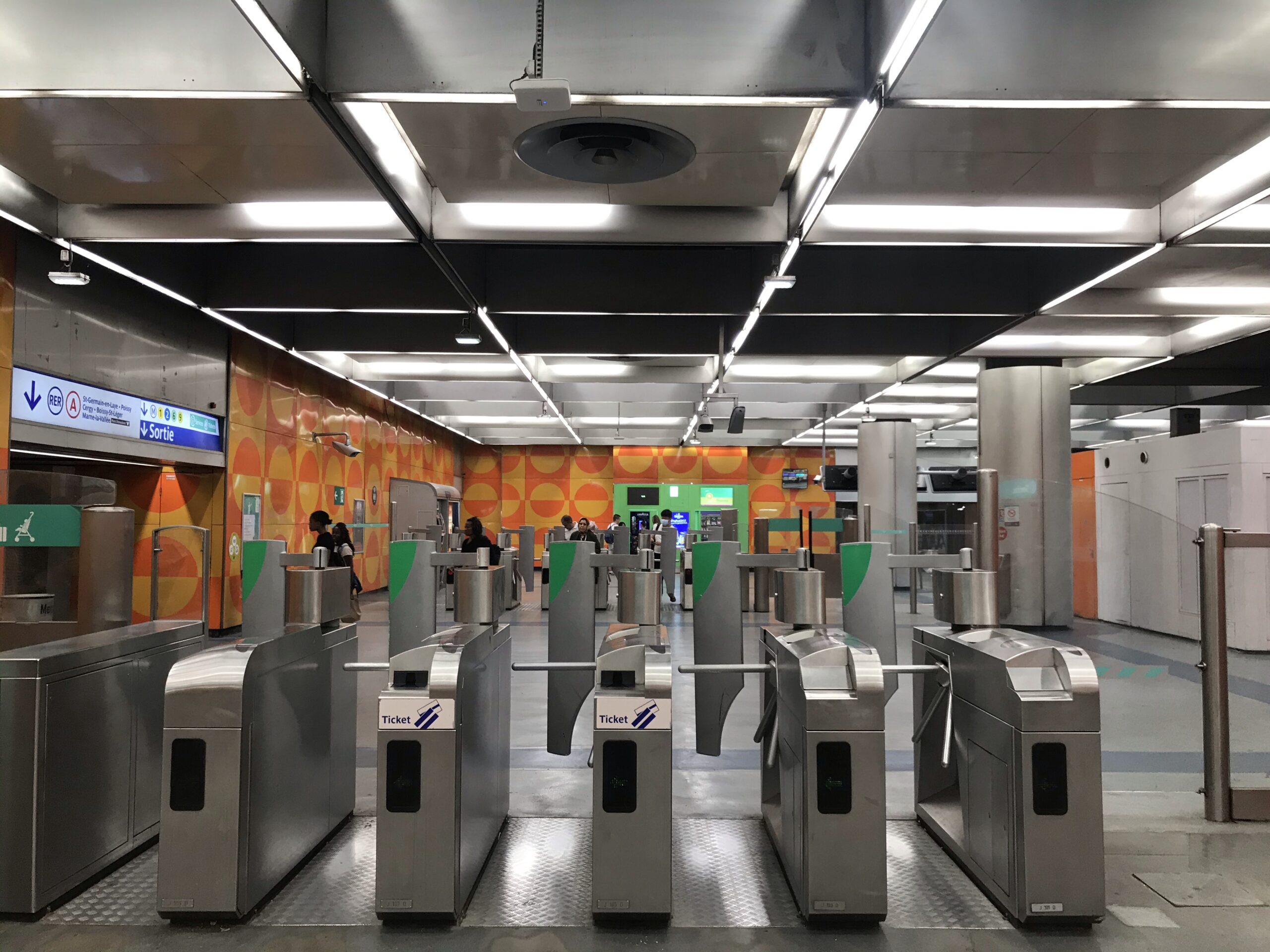
    Nation Station – I have always loved the futuristic from the past look of this station.
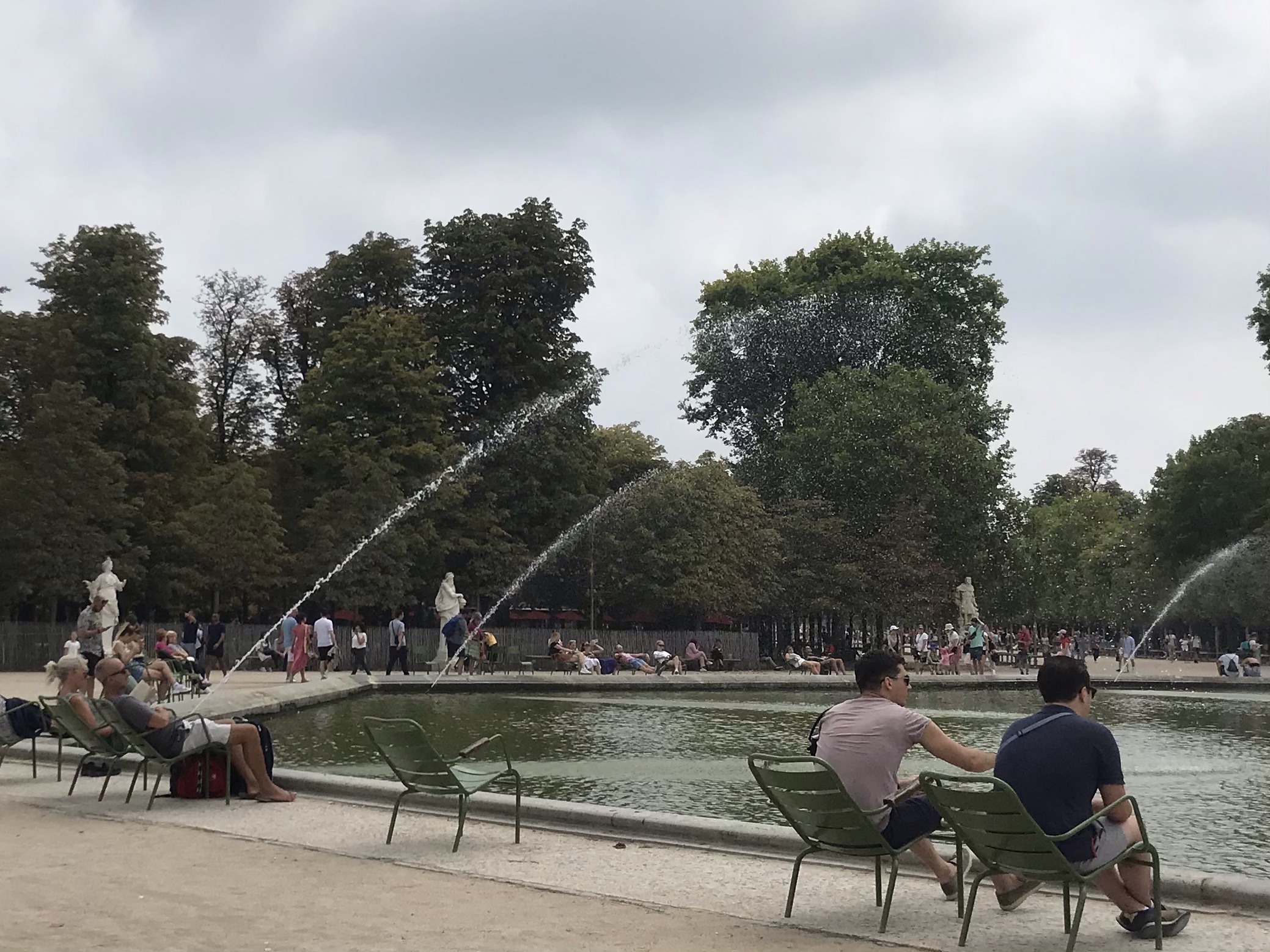
    The peeing fountains are always a giggle
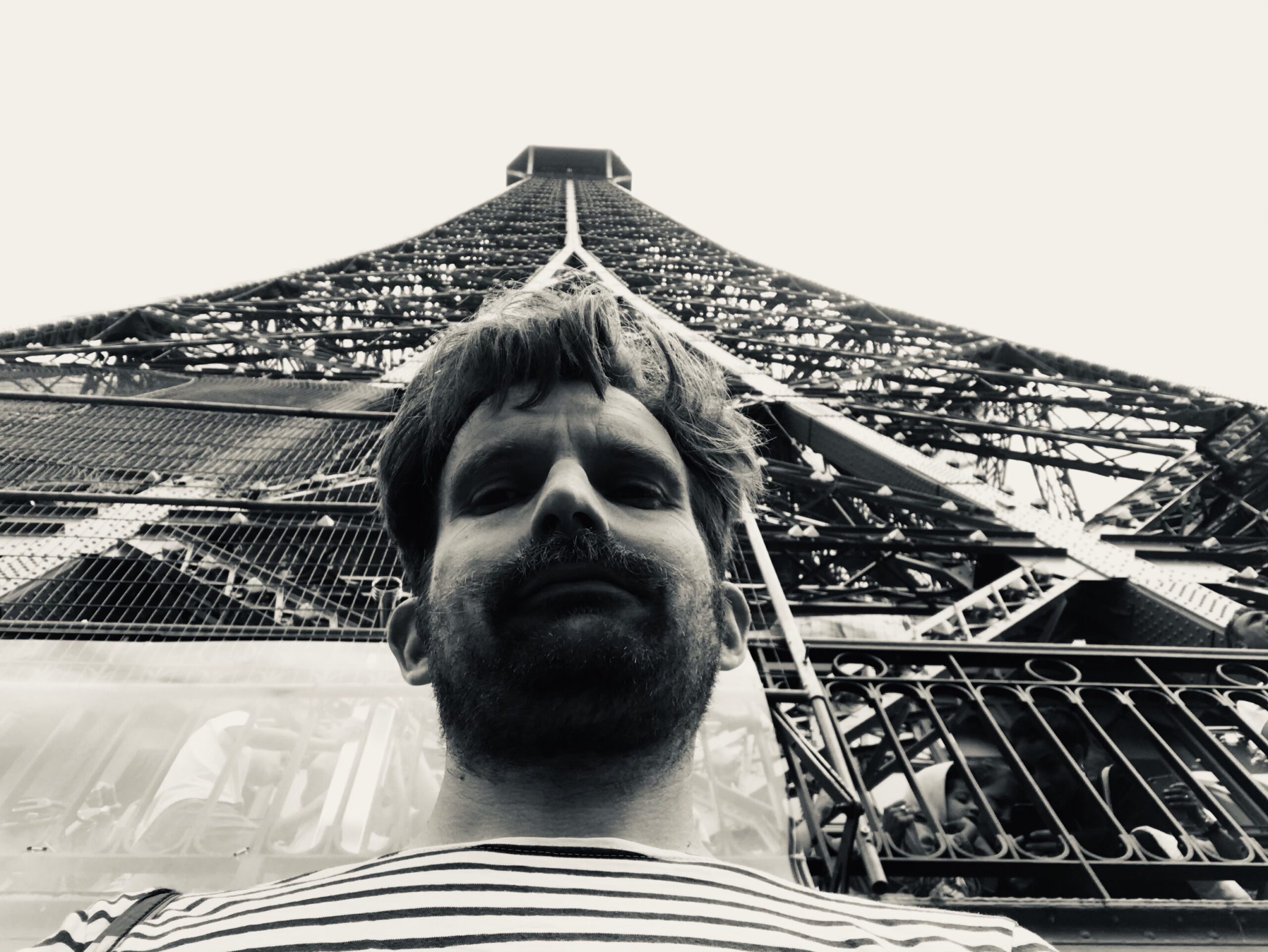
    The eponymous tower in all its glory and ridiculousness
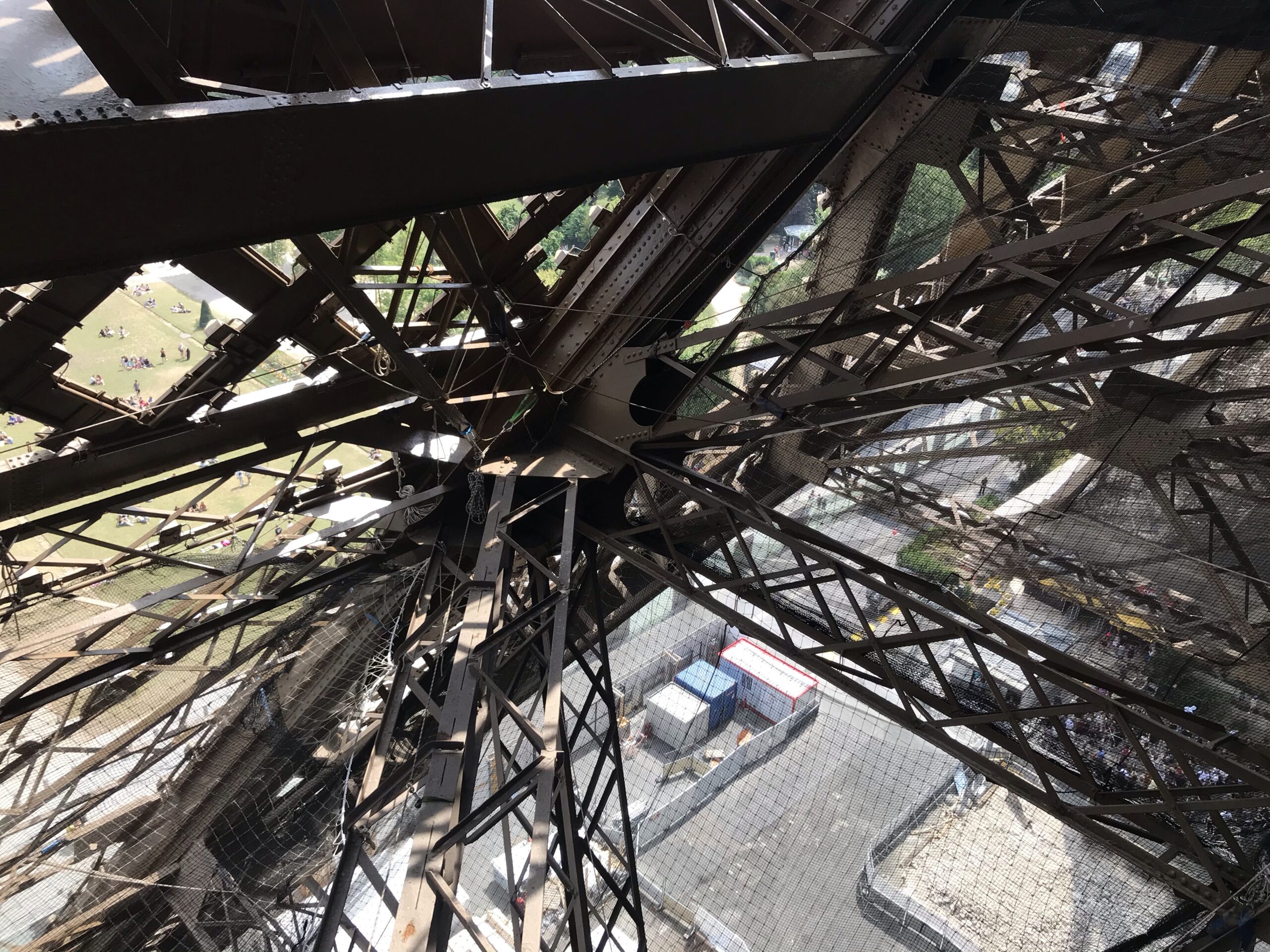
    Complicated node connection
    Paris Plage
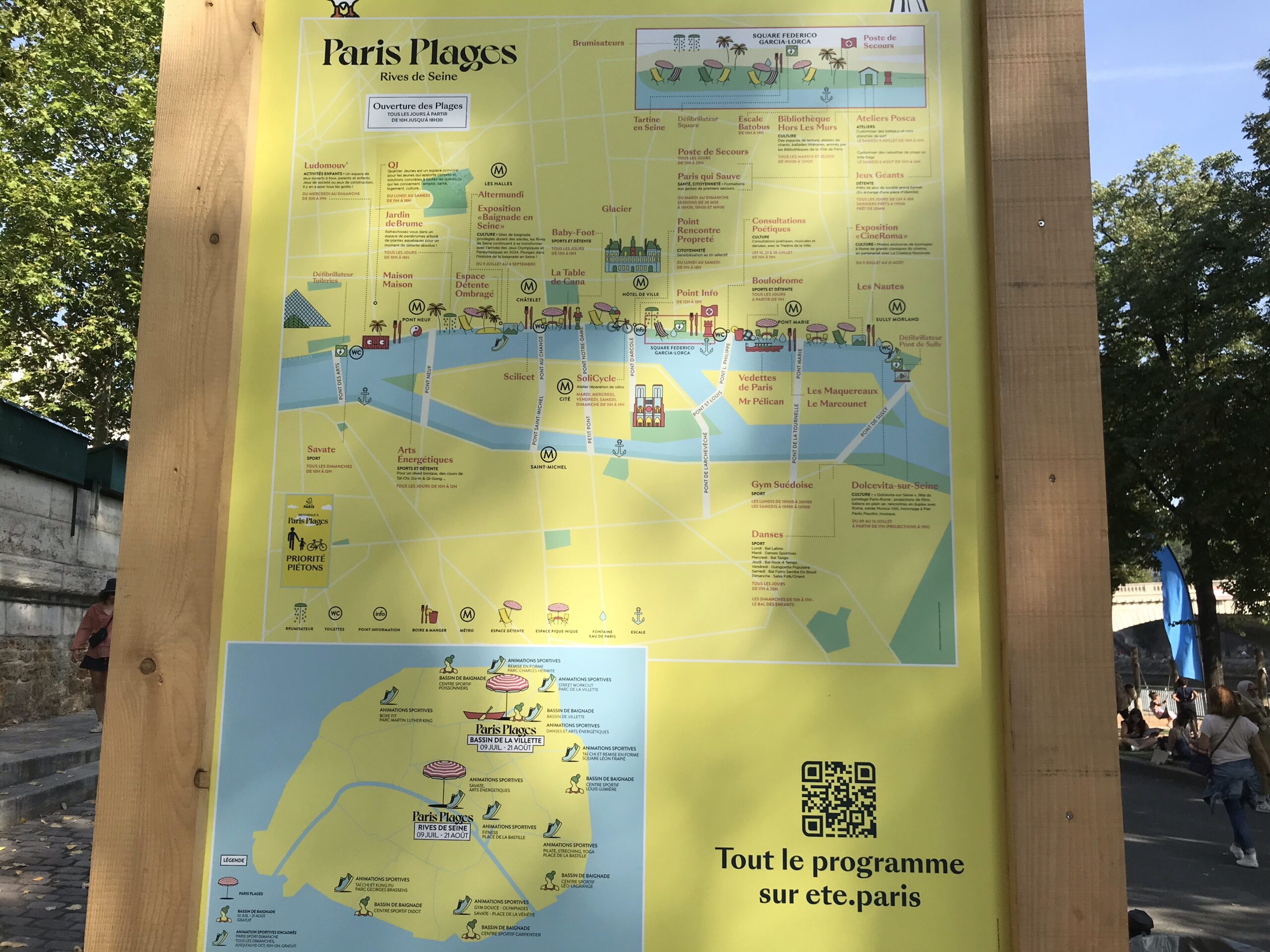
    The plan of Paris Plage activities
    Beach bar and football area
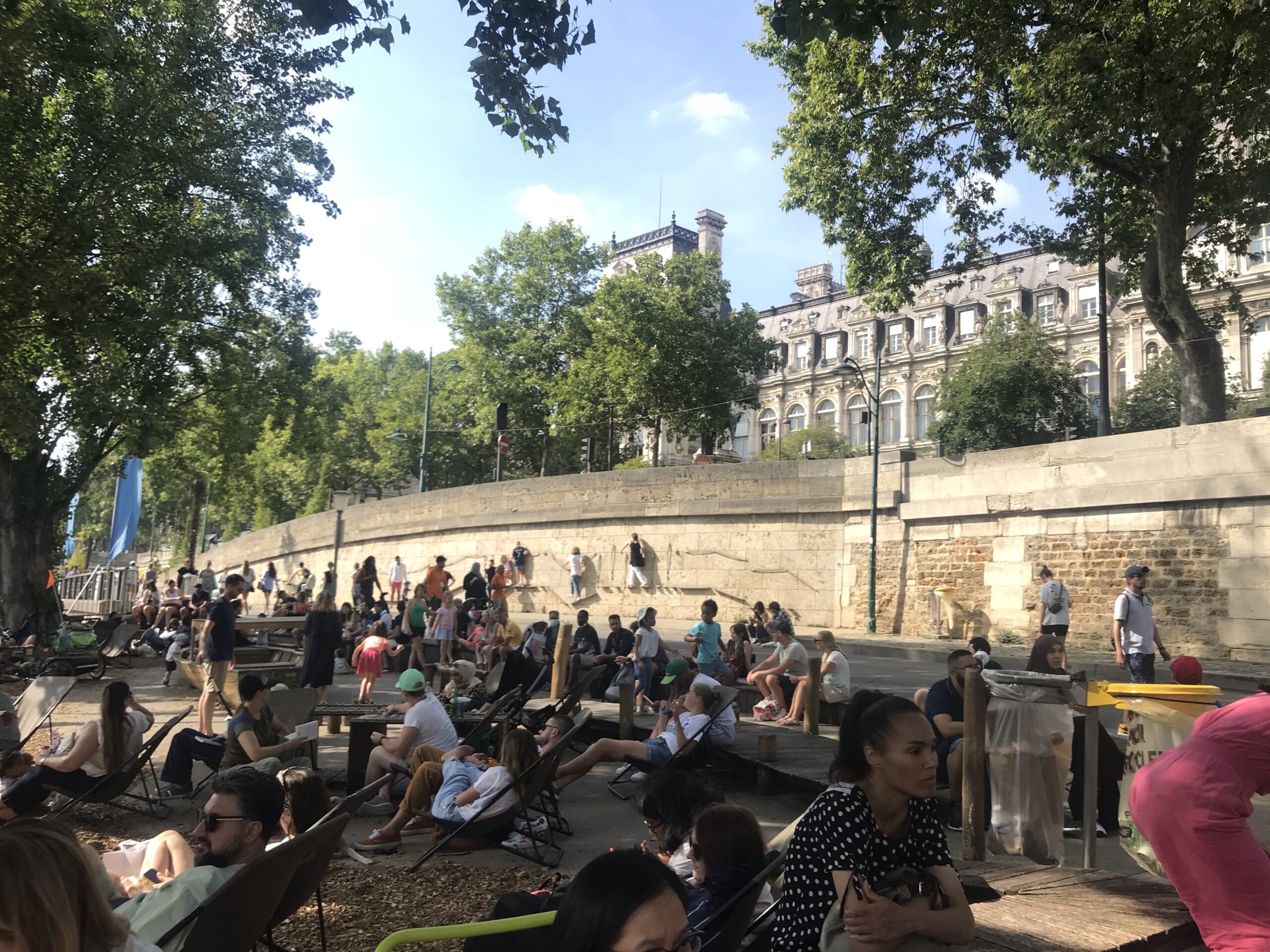
    Climbing wall and water misters to keep everyone cool

    Paris Plage

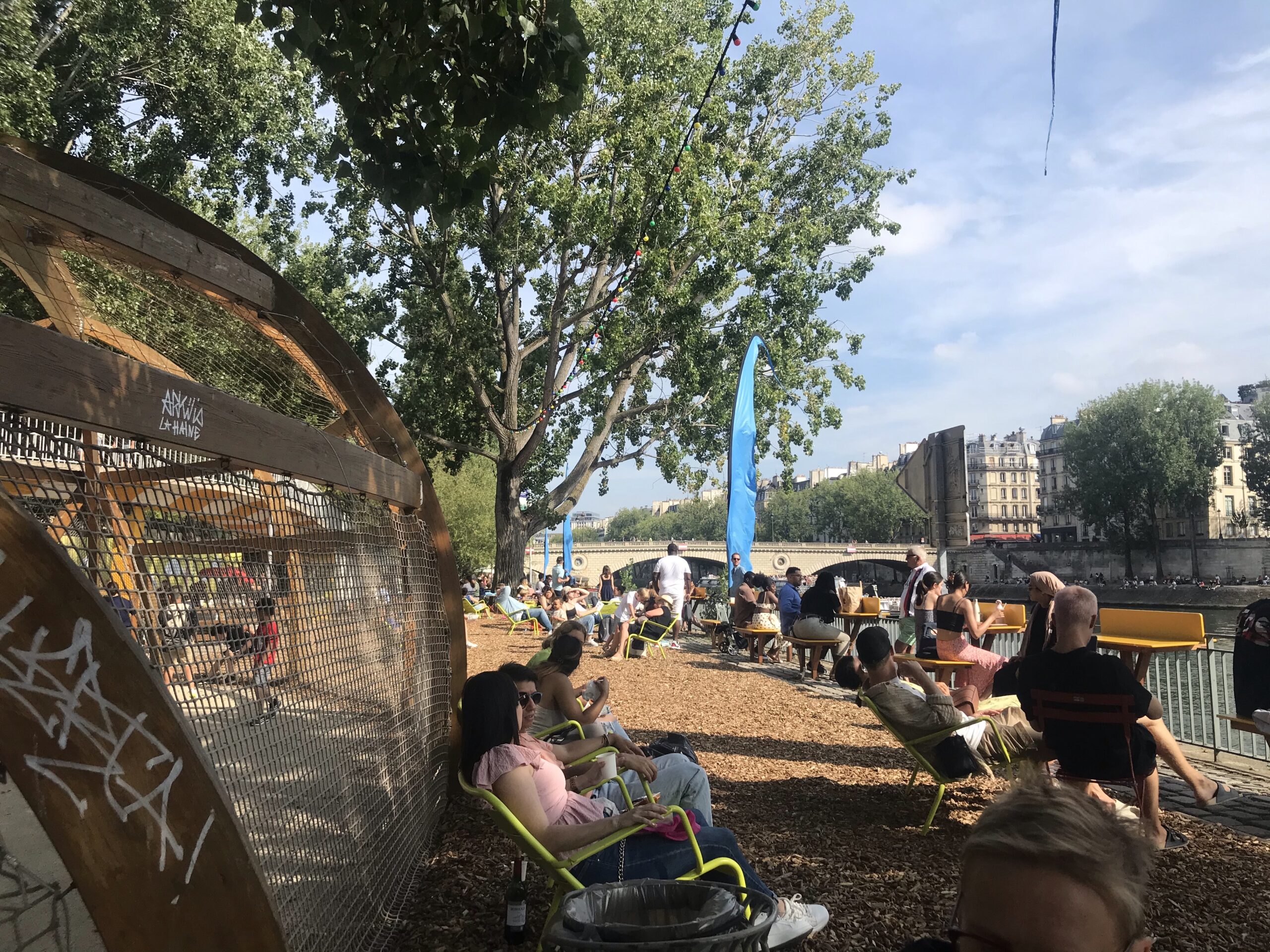
    Paris Plage is Paris’s beach. Created by closing a busy road along the banks of the river. The fully pedestrianised area is a mixture of beaches, at areas, games areas and just generally space to hang out. It’s not commercial. It’s there to enrich the life of people. A fantastic example of shared public abundance.

  • Following abundance versus desire

    Following abundance versus desire

    At our local allotments, permaculture teacher Mike Fiengold re-distributes food waste in the community. Even after he has sent food to various local charities there is lots left over, and so he asks if we can take some away. At first I felt it greedy to take more than what I considered to be my fair share. But then I realised it was helpful if we could take as much as possible off his hands. Because if he can clear his stores, he can get more of whatever waste the system is generating and put it into the hands of the people that need it. So now we take more than we need and try to distribute this excess among our neighbours on our street. 

    There’s a few things going on here that I want to note. 

    (more…)
  • Recognise the desert to return it to life

    When renewable systems are over exploited they fall into a desertlike state. In this state the system population is too low to support regrowth and the system structures break down. But given the right conditions and encouragement, regrowth can return. The seeds are all there. The self-organising ecosystem can return to recreate resilience, complexity and diversity associated with rich life.

    (more…)
  • Regenerative Design: a process not a thing

    Regenerative Design: a process not a thing

    As I continue my exploration of regenerative design in engineering, correspondents have said it would be helpful to gather examples of regenerative design. Templates that we can look at, imitate and integrate.

    From my reading of Wahl (see my recent post), I’m increasingly understanding regenerative design to be a process rather than a thing.

    Regenerative practice of any sort (in design, in education, in living…) is practice that leaves the ecosystem richer and better able to heal itself. It is practice that sees humans as a keystone species that play a unique role in helping their ecosystems thrive.

    (more…)
  • Analogue Skills for Design at the University of Bath

    Analogue Skills for Design at the University of Bath

    Today at the University of Bath I am running a workshop on Analogue Skills for Design. This workshop fuses material from my conceptual design teaching with my observations from the Analogue Skills project, my attempt to collect and curate less digital ways of doing things in case we need to use them again.

    Creativity and design as human skills

    A key thread that runs through my design and creativity teaching is that these are very human processes, which are deeply impacted by individual’s connection to themselves, each other and the environment which supports them. 

    At the individual level, creativity is hugely influenced by our emotional and physiochemical state, the relationship between our conscious and subconscious and our unique combination of lived experience. At a group level, how ideas emerge in a collective consciousness and become the work of many is influenced by relationships, accessibility and the many facets of working culture. And of course we all live in the physical world, the world that we are trying to shape. How we move through and experience that physical world – not in our heads but as moving inhabitants of space – influences how we respond to and act in that space.

    All of these factors are features of how we design, not as purely rational, reason engines, but as emotional, physical human beings.

    Analogue Skills

    Another ability of humans – although not unique to humans – is the ability to create tools. Taking a lever as both an example and a metaphor, our tools enable us to multiply our efforts. The tools we use shape our perception of what is possible, and so influence how we perceive the world. 

    Over the last five years or so I have become increasingly interested in how our tools, and in particular our newer, digital tools influence how we think and live. Because while we have always been influenced by our tools, the rate of introduction of new, digital tools has become so rapid that in less than a generation, our tools have transformed the way we think, feel and behave. 

    I experience this personally because I am a Xennial, someone from a sub-generation that grew up without internet enabled computers but who has spent their whole working life with one. Xennials are halfway between digital natives and digital immigrants. I feel this timing of my up-bringing gives me insight into two different ways of thinking, what I loosely call the more analogue and the more digital. These two ways of thinking can be very different. Take the simple example how to organise information. In the analogue world, information is carefully indexed and prized because it may not be possible to find it again. It is a paradigm of scarcity but also care. In the digital world, the natural assumption is the information is searchable and always available and so information itself is de-valued. This is a paradigm of abundance but also of less care. 

    From this perspective,  individuals become more and more dependent on these new technologies, I see that what once was a tool that served us, these technologies have become a tool to manipulate us. From user to used. With dependency comes fear. How could I ever live without it? But so ubiquitous is our internet-enabled world that we risk forgetting the ways we could live and flourish without computers in our pockets.

    The Analogue Skills Project is my attempt to record less-digital ways of doing things before they get forgotten so that we can use these to evaluate what technology we do and don’t want. It is an attempt to build resilience and reduce dependence on technology that may not always be there to help us. It is my hope to find a more human balance between the analogue and the digital.

    See my collection of analogue skills so far.

    Human operating system

    I see each analogue skill as a way of liberating ourselves from digital dependency and to discover something that it turns out we can do ourselves as humans: each one is a clue to the workings of the human operating system.

    To accompany the growing list of skills I have also created the Analogue Skills Manifesto, which is an invitation to resist the digital pull and rediscover what you can do as a human being:

    • Don’t delegate autonomy to the machines
    • Resist a mediated experience
    • Resist life as content
    • Re-discover old tech
    • Much less is much more
    • Welcome uncertainty
    • Don’t get things done
    • Share, swap and learn from others
    • Relish company
    • Seek nourishment in time alone
    • Embrace friction, embrace inconvenience
    • Forget the unimportant and remember the valuable
    • Ground yourself and find your bearings
    • Use your hands and your senses
    • Concentrate
    • You have everything you need.

    Analogue Skills in Design

    Bringing these two themes of work together, what are the analogue skills that we bring to design that we risk forgetting if we don’t use them, and are worth rediscovering if they have already slipped away?

    Looking through my design teaching deck, there are many concepts which are already analogue, and so I am putting them together here:

    These are skills that we are going to experiment with today. These are things that you can do because you are human. There isn’t going to be a software upgrade. You don’t have to pay a license fee. You can share these tools with whoever you like, and when the internet goes down, you will still be designing. I should also add that these tools don’t stop you from using digital tools – they are here to help you choose.