Make hay while the wind blows. Riffing on yesterday’s theme of power, a few weeks ago as storm winds tore across the UK, I was kept awake by the sound of the plastic sheeting slapping against the scaffolding on the front of our house.
And I found myself wondering, what is the wind analogy to making hay while the sun shines? It’s an incantation to seize the moment and make the most of an opportunity while it lasts. And of course, we already harness wind power. I presume a lot more energy is generated on a stormy night.
But like any abundance in nature, the wind doesn’t distribute its power evenly. It comes in surges. It’s a fleeting opportunity.
Storm’s blowing, quick—boil a kettle! Pump some water uphill! These were my middle-of-the-night musings.
Eventually, my thoughts drifted to a memory from 2024: cycling along Loch Awe, near Oban. After a long day cycling in heavy winds, we reached a campsite in Dalavich that was attached to a well-equipped community centre. It had a restaurant and bar with a deck overlooking the lake, games rooms with pool and table tennis and excellent washing and cooking facilities.
But it wasn’t just for tourists—the local community was in there too, enjoying the space. Curious, I wanted to know more about how this facility had been paid for, and it turns out that it gets funds from the community owned wind turbine at the top of the hill.
Brilliant, I thought: community energy, harvesting a local abundant resource—the wind—and reinvesting the money into the community.
I suppose on gale-force nights, the drinks are on the house?
This is a post for the cycling decision-makers among you. It may resonate even if you don’t cycle. Variations on the question of whether, if it starts raining when cycling, it is worth stopping to put on your waterproofs.
How late am I running? Have I got time to stop? How heavy is the rain? Will it carry on? How quickly could my clothes dry? Will I get wetter stopping to put them on?
If I do decide to carry on, is it wetter to go quicker or slower?
Do I have all the facts? Do I know all the unknowns? Is this a complicated or a complex problem? Am I able to make a good decision?
Is there an angle I can cycle at in which my rain shadow protects my lower half sufficiently?
Is how I’m framing the question limiting the result? What opportunities am I not considering? If I stop at a random location to put on my waterproofs, what might I notice that I might never have discovered had I ploughed on?
What happened last time? Was it the right decision? What are other people doing? What would my future self advise?
Am I even in the right frame of mind to make this decision? What could I be thinking about instead?
What happens if I get it wrong? How much does it matter to me if I get it right? Am I deluding myself that I’m in control?
Our summer tour continues. From Batz-sur-Mer we took a TER train to Nantes. No cycle reservation necessary. And then from Nantes, an Intercité train to La Rochelle. This is the only service on our whole tour for which we did need a cycle reservation. At this point in the Tour I am now preferring the idea of having to make a reservation because at least you are guaranteed a place. Of course what we need is much more provision on trains for bikes.
From La Rochelle station we cycled straight through the old town, out of town and over the magnificent Île de Ré viaduct to the island where we would be staying for six nights. The following are selected Eiffel Over highlights.
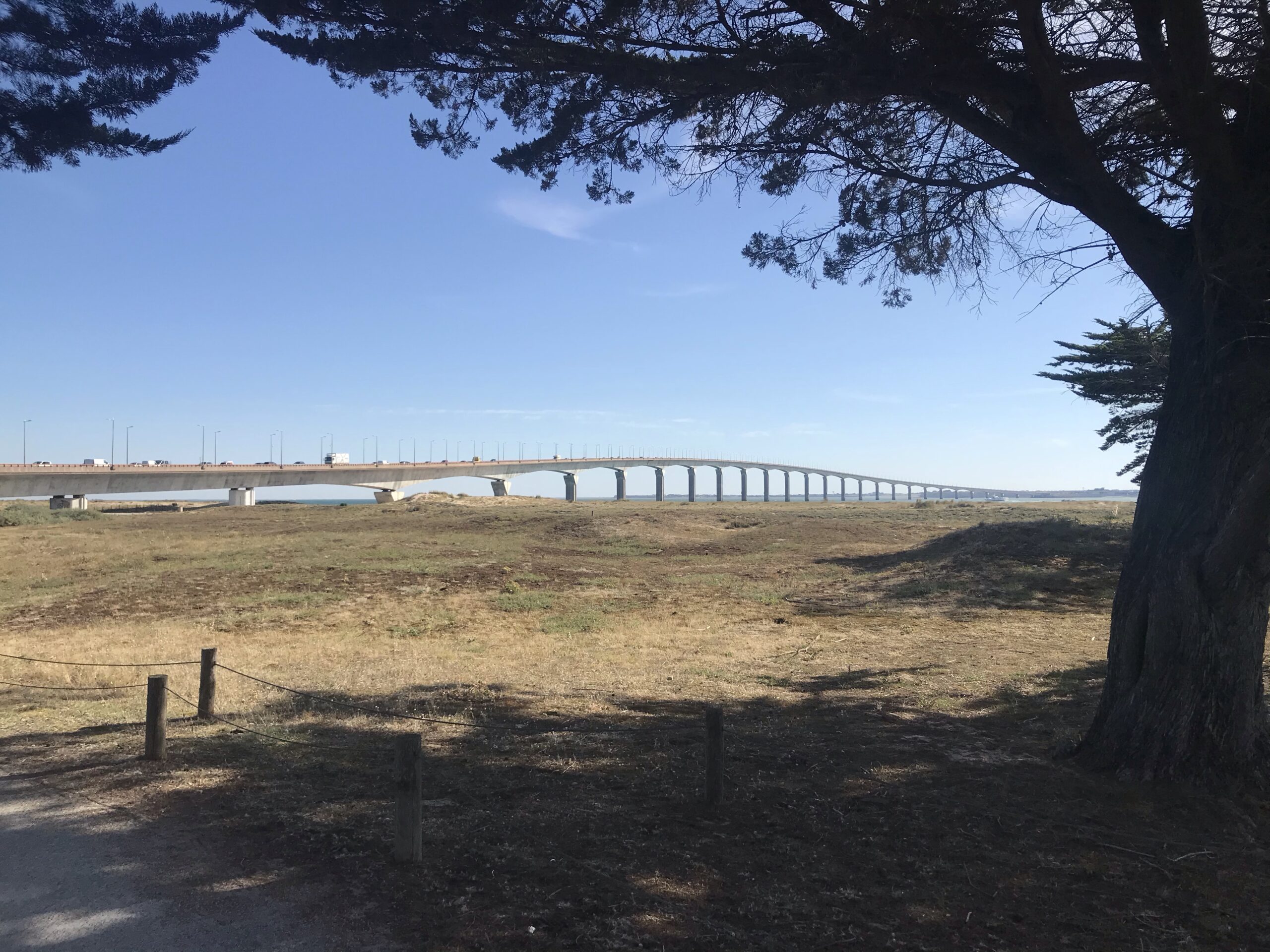
Île de Ré bridge
View from the island side of the Île de Ré viaduct
This is the 2.9km bridge linking the mainland to the Ile de Ré. Get all the facty stuff here from Wikipedia.
I find its curve on plan as well as on elevation very graceful.
There is a segregated cycle path which is a much better way to cross than to sit in a 2.9km jam with all the cars.
Very elegant columns too.
Impressive to see this structure marching out across the sea.
A significant portion of the tolls are spent on improving transport infrastructure on the island – see below.
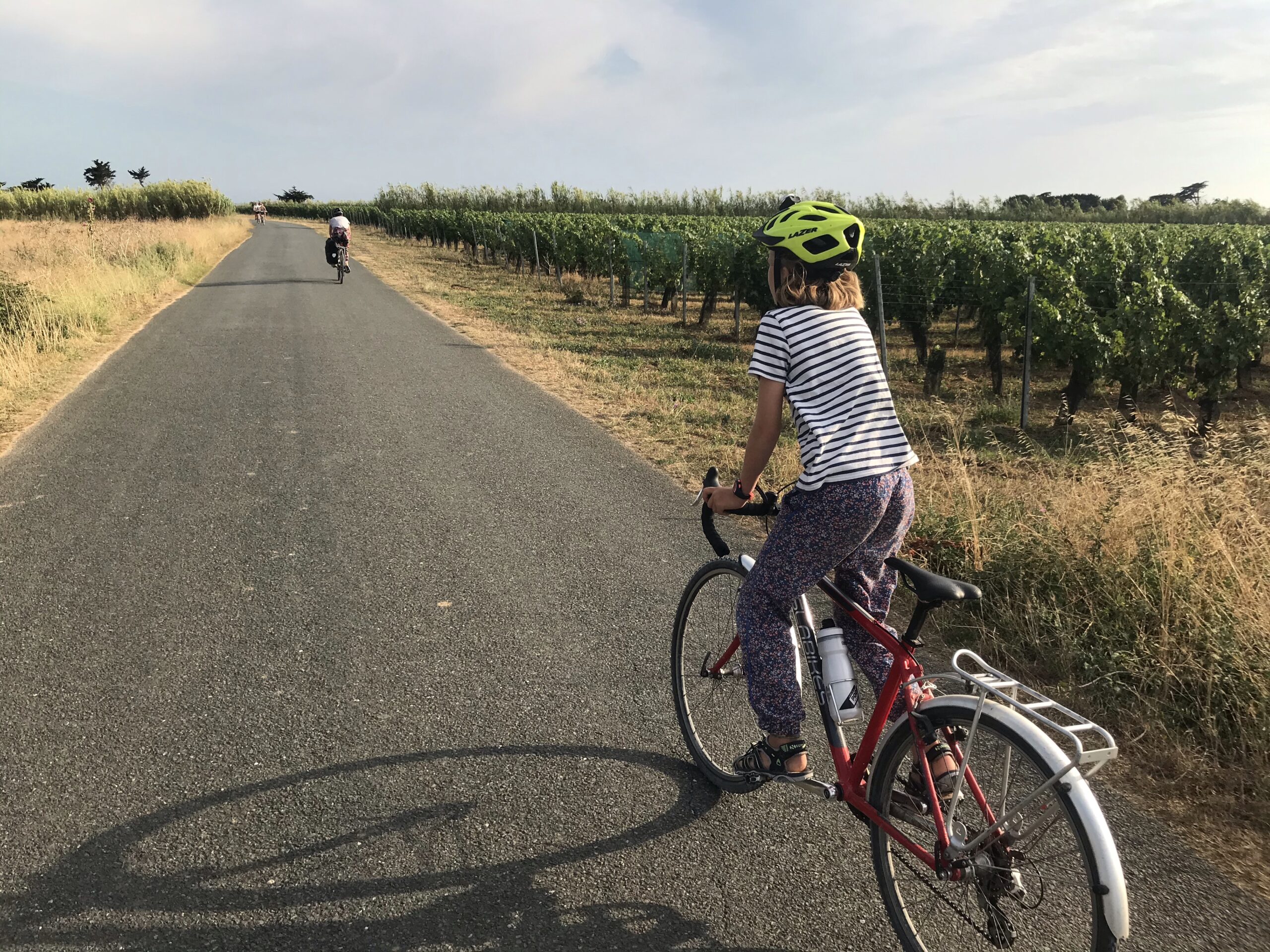
Cycling on Île de Ré
Cycling between vineyards on the Île de Ré
The local authority has invested heavily in promoting cycling on the island to the extent that it is a victim of it’s own success. There is a very comprehensive network of cycle lanes crossing the island. And these are very crowded in places because they are so popular. It is as if the island could do with doubling again the cycle infrastructure.
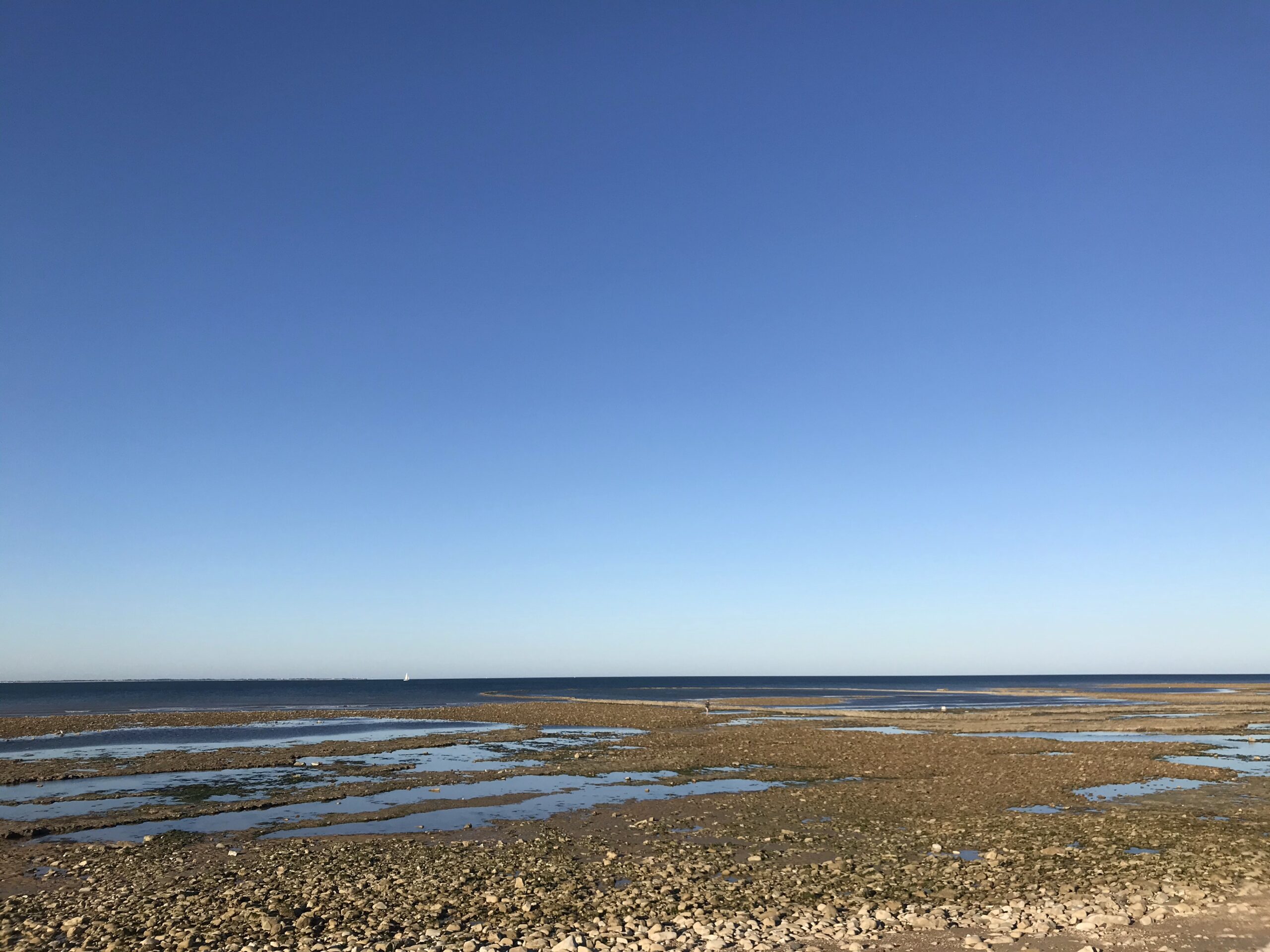
Stone fishing ‘écluses’
The dry stone wall of an écluse can just be seen arcing out to sea in the top left of this picture from the Île de Ré.
For centuries it has been traditional to build tidal lagoons on the beaches that fill with water at high tide and then which slowly drain at low tide, enabling local fishers to scoop up the fish left behind. The lagoons are created by building a large circular dry-stone wall on the tidal flat. Local laws forbid the use of concrete – these walls are carefully built by hand and maintained to create this once important source of food. Their French name is ‘écluses’, the same word for a lock on a canal.
In the eighteenth century local officials destroyed the écluses to stop this source of food and forcing local men to sign up to join the navy.
More unbelievably, in the second half of the twentieth century, the commercial fishing industry lobbied to have them destroyed again so that they wouldn’t eat in to potential markets for commercial fishing.
In recent years there has been an effort to repair some of the écluses. We saw some people fishing in the one shown above at low tide.
Like the salt flats they are an example of infrastructure managed in common to create an honourable harvest – to use Robin Wall Kimmerer’s term – from the local ecosystem.
Final thoughts on the Île de Ré
The Île de Ré is a fascinating place but the early August heat was almost unbearable and the summer crowds relentless – although in the further reaches of the island where M explored there were places where no one was to be seen. There is lots to find out about how people have lived in this island. And not just humans. For instance, two thirds of European bird species have been spotted here, it being a major stopping off point for migration. The sea life is also fascinating to explore at low tide.
The visit makes me want to visit more wild islands. Maybe ones that are not connected by bridge to the mainland.
After six days we were ready to cycle back over the bridge and head on south.
The last leg of our journey along the Loire à Vélo cycle route, à 35km flat run into Nantes. It was misty as we covered the early morning ground, keen to get to Nantes with enough time to wander around the Machines de l’Île. After breakfast in uninspiring Mauves sur Loire, the feel of the cycle path changes: it is more like we are cycling through a city park. We are in the outskirts of Nantes.
We arrive at Nantes train station, which has a new terminal built high across the tracks with tree shaped columns beneath that splay out into oak-tree like branches within the concourse to provide shade for the travellers.
Reflections on Orléans to Nantes via the Loire à Vélo
We were using the cycle route more as a means of getting from Paris to the Atlantic coast rather than planning a dedicated trip to do the Loire à vélo route – and while I thought it would be fun I enjoyed it even more than I expected.
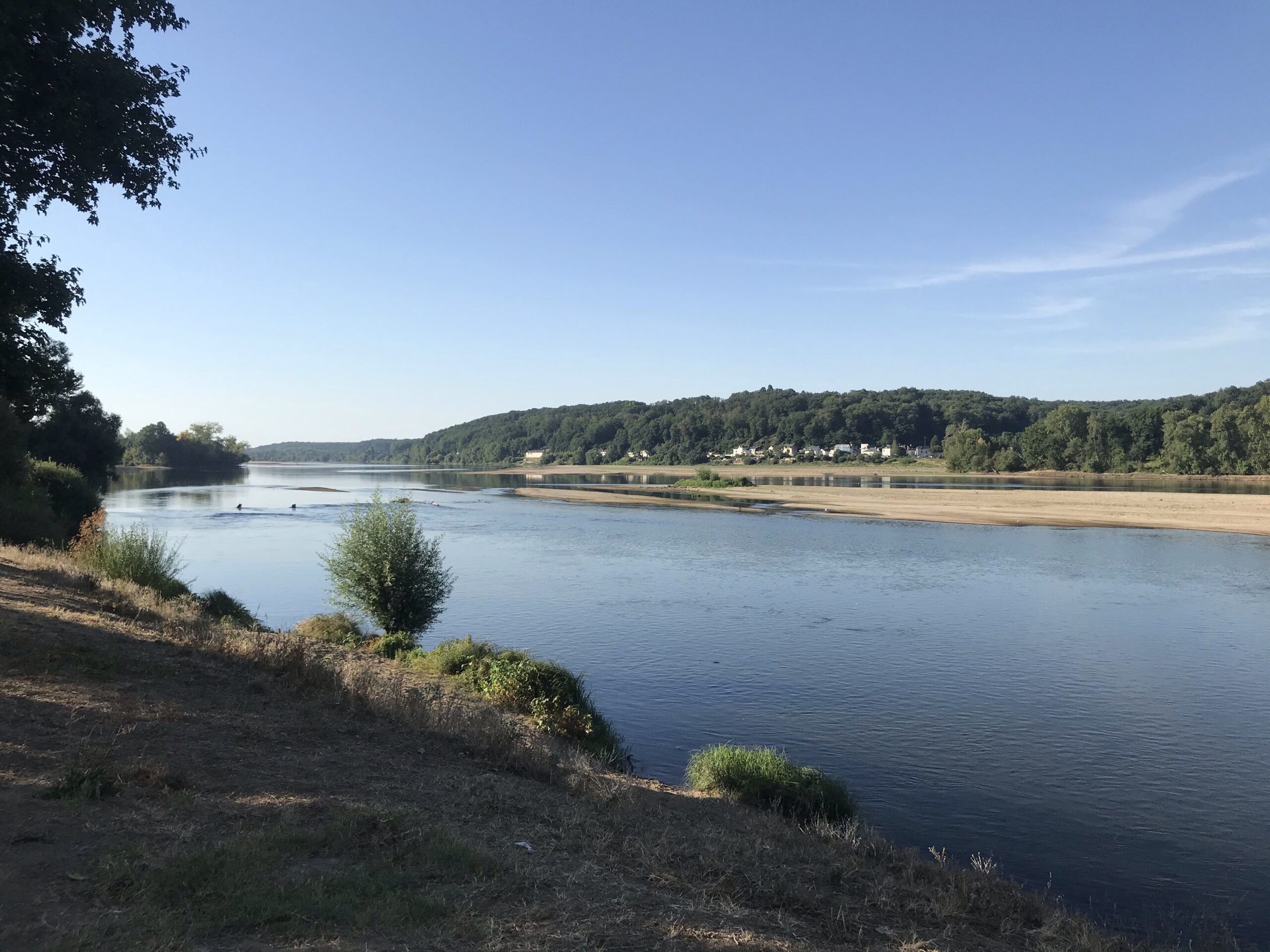
The Loire is much wilder than say the Rhone or the Garonne. It is not used as a major inland shipping route and so feels less industrialised. The water is able to follow a more natural course as reflected in the various channels that weave their way through the landscape, and the sand banks that are a haven for birds.
That said there are levées to cycle along, albeit set back so that the flow is less interrupted, and these are great to cycle along.
My favourite sections were when the levee road is quiet, and we are able to get some speed up while watching the river landscape change in the channel below.
My least favourite where the river approaches a city. Tours in particular seemed to have turned its back on its rivers.
There is a great atmosphere on the path. You meet cyclists going the length of the Loire à vélo path, and some beyond towards Basel and towards the Black Sea.
The riverside guinguettes were great to stumble across and make the most of to eat at en route or chill out at in the evening.
I wouldn’t bother visiting the out-of-town chateaux. They represent an accumulation of wealth extracted from the local landscape and local people that is somehow not reconciled, not addressed. Just a place to drive to. The middle of town chateaux of Blois and Amboise are a bit more connected to the towns, are more interesting and don’t require a detour.
The route is well signposted, there’s lots of campsites en route. The highlights were the Slow Village in Pont de Cé, and wild camping under the stars.
Onward journey
We are now leaving the Loire à vélo cycle path and making a little detour out to Batz sur Mer in Brittany before heading south by train towards the Ile de Ré, cycling to Arcachon, train to Biarritz, then making our way by some means or another to Santander in Northern Spain.
A day for integrated travel! 70km from Ponts de Cé to Ancenis, and then 10km by kayak, our bikes carried to the downstream dock in a van, then cycling up the final 2km out of the valley and into our warm-showers accommodation in Champtoceaux.
I remember a forward to a Department for Transport report in which John Prescott set out his vision for ‘integrated transport’, journeys made possible by joining together different modes of travel. I’ve always liked this idea, but I try to mix it with a bit of the spirit of adventure of Jules Vernes and Around the World in 80 Days. Mixing cycling and kayaking definitely fits into this category.
We ate breakfast at a riverside market at Bouchedemaine, where the Maine river joins the Loire. We’ve skirted Angers, but all the surrounding places we’ve visited have been so friendly that I imagine I’d like the city too.
We really had to get the kilometres in early today to get to the kayak in time. This is the first time we’ve really had to cycle in tight convoy to keep the pace up and stay motivated that we are covering the ground.
At Saint Florient, I saw this plaque showing distances measured from the bridge. It was created at the start of a period of measuring and controlling the Loire after devastating floods. Measure it, control it, exert power over it. Except compared to other big rivers I’ve seen in France, the Loire still feels quite wild. Not the freight transport artery I was expecting.
At Ancenis we see our first major suspension bridge across the river. This is where M & I crossed the Loire on our first cycle trip in France from Saint Malo to Agen in 2008.
We rendezvous with the kayaks and head downstream. Wonderful to be in and on the water, travelling with the flow. The current is strong but it is safe to moor up behind the groynes that reach out into the river and create little beaches behind. We climb out on a beach and swim for the first time in the warm river water.
A stop at a guinguette, recover our bikes, then do the final climb to our hosts for the evening, a lovely couple who welcomed us to their self-built home, where we camped next to their guinea pigs. We stayed up talking about their travels with a trailer and a tandem through Sardinia, Scilly, Greece and the Adriatic, and then about how they built their house.
The next leg of our cycle trip along the Loire took us from Saumur to Ponts de Cé, a town a little south of Angers.
Again the river landscape has changed here. Now wider, another notch up in scale. The islands are longer. The curves more sweeping.
The Loire downstream of Saumur
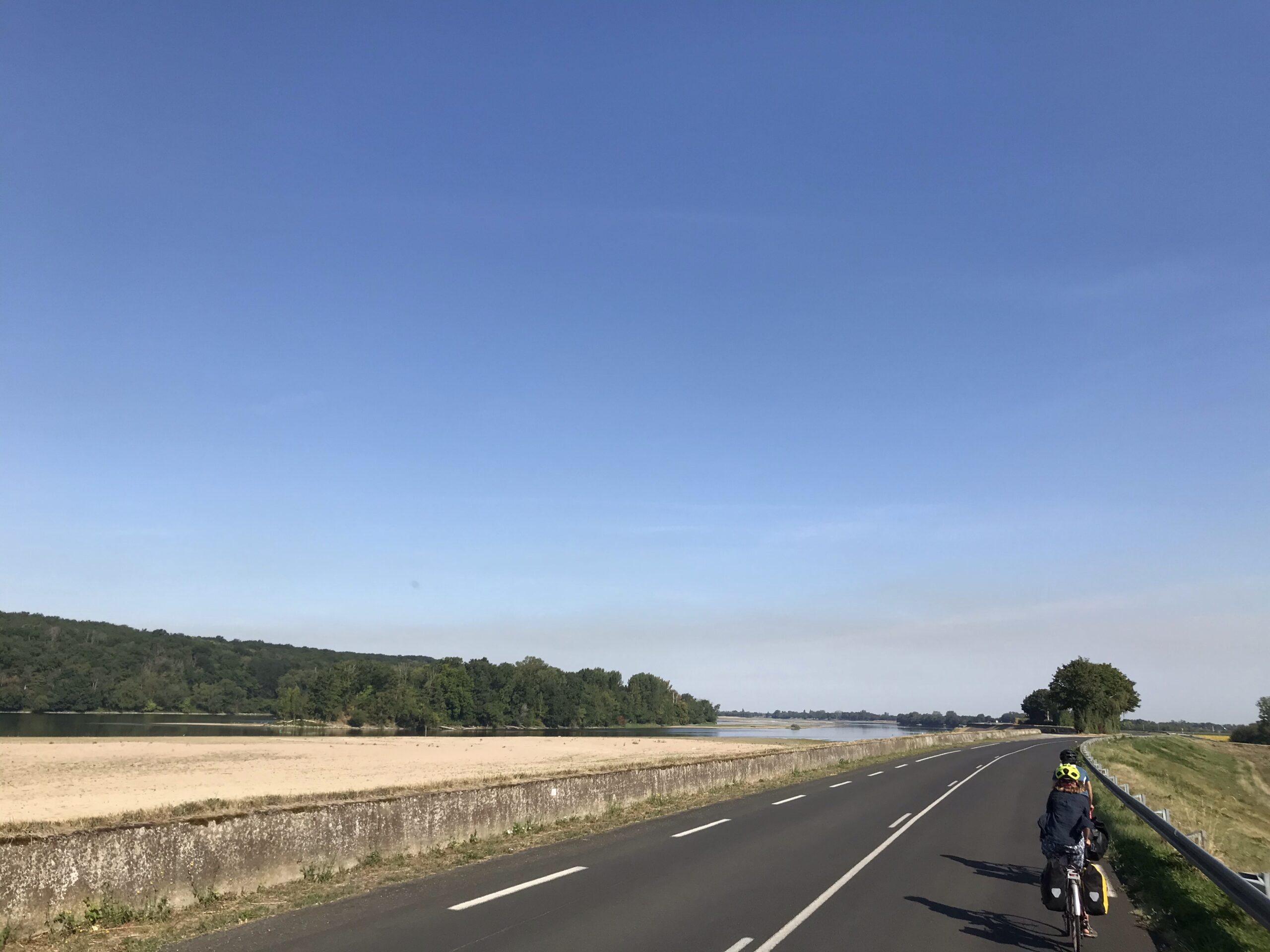
As the cycle path was getting a little bumpy we decided to cycle in convoy along the fast road that follows the top of the flood dyke. This was to be a strategy we used more and more to cover the kilometres on longer stages of our ride. We had roughly 60km to cover and we wanted to get most of them done by lunchtime.
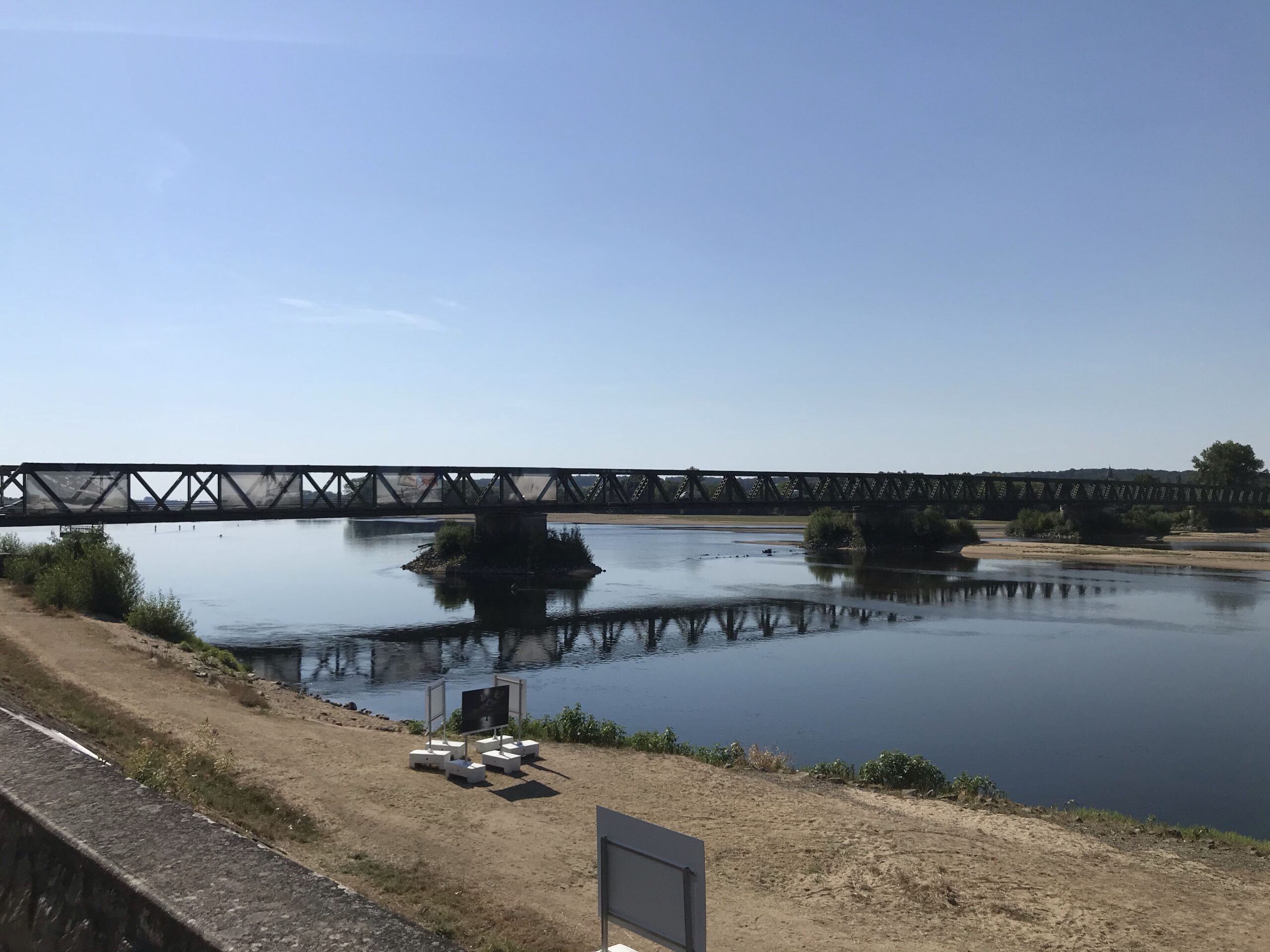
Much of the riverbed is dry, with the flow restricted to one part of the channel.
We can start to predict where good watering holes will be by seeing in the distance where the river crossings are. We had a refreshing stop by this typical truss bridge.
We arrived in Ponts de Cé early afternoon and made our way to the very relaxed and comfortable Slow Village campsite. It was a relief to reach our destination before the heat of the day reached its maximum. A chance to do some washing, repack, chill out.
A had a typical altercation with a swimming pool attendant who found my swimming shorts not stretchy enough to conform to the swimming rules. Mysteriously my well-used cycle shorts were perfectly acceptable.
We spent the evening at the best guinguette so far of our trip. Good food and wine at reasonable prices and friendly staff. After dinner we walked out across the dry river bed to channel on the other side and waded in the warm waters.
The second day of cycling along the Loire. A relatively flat 70km that would get steadily heavier going as the day heated up. The cycle path along the Loire is well signed, well routed through towns and villages to ensure you can get provisions. It also has lots of attractive river-side places to stop for a beer and for kids to play in a playground.
Our day began in Loir-et-Cher and at some point we crossed into Indre-et-Cher. French départements were created to enable a horse rider to reach any part from the central préfecture in a day. It’s probably the same distance as if you were travelling by bicycle.
This has been a day of castles. First, Chambord, the famous opulent palace. Then Blois, situated on its battlements in the town centre over looking the river. Finally Amboise, an astonishing fortress which is also where Leonardo Da Vinci is buried.
My recent reading about commons and land ownership means that I can’t see these places and not think about how the wealth needed to create them is made in part from confiscating land and taxing them local populations. This isn’t news, but these sights are often held in isolation from the story of their creation. At Chambord Europe’s longest stone wall kept the locals out of the forest to stop them hunting and foraging on land that would have been theirs on pain of death.
These are of course stories of rulers and social injustice from 100s of years ago. Arguably France had a conversation about this imbalance of land ownership in through the Revolution, but in the UK we never have. Consequently we still have owners of massive parcels of land who derive this ownership from William the Conqueror. As we think about how we use local resources to support local economies, we need to have a conversation about returning common land to them communities that surround them.
From stage one of the Tour de Femmes in Paris to a very different stage two finish in Provins. The stage in Paris was of ceremonial importance, but I think the stages between more regional towns are more characteristic of the overall tour experience.
Unsure whether to go the night before, we looked up the finish town of Provins on the race website. And sure enough it is a UNESCO world heritage sight. This is what the Tour is for: showing off bits of France. Having lived here and traveled widely for a year I’d never heard of Provins. And so we set off for a day of sightseeing and cycle watching.
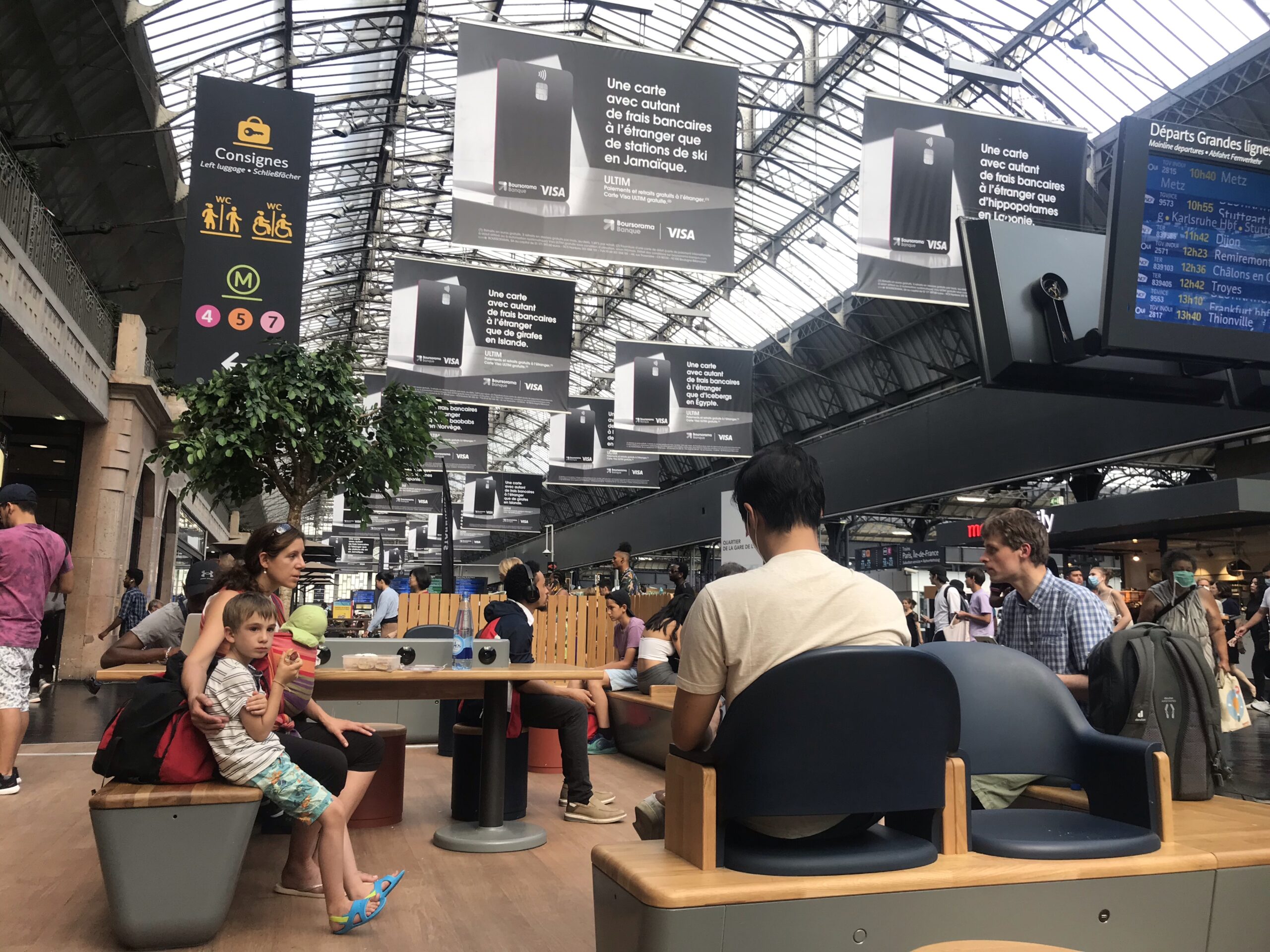
I was happy to find that our route to Provins was a direct train from the Gare de l’Est. I used to come here and imagine the journeys you’d be able to take when they would open the TGV Est Européen in 2007, connecting Paris at high speed to Strasbourg, Cologne and Frankfurt. It is a very wide terminus station with brightly lit, glazed concourse that runs the width of the platform ends. It’s not as imperious as Gare du Nord, not as concrete as Montparnasse, not as complicated as Saint Lazare. It’s like a dinner table set out for lots of European friends with a nice bright table cloth and plenty of elbow room. I also appreciate the abundance of seating without obligation to sit in a cafe.
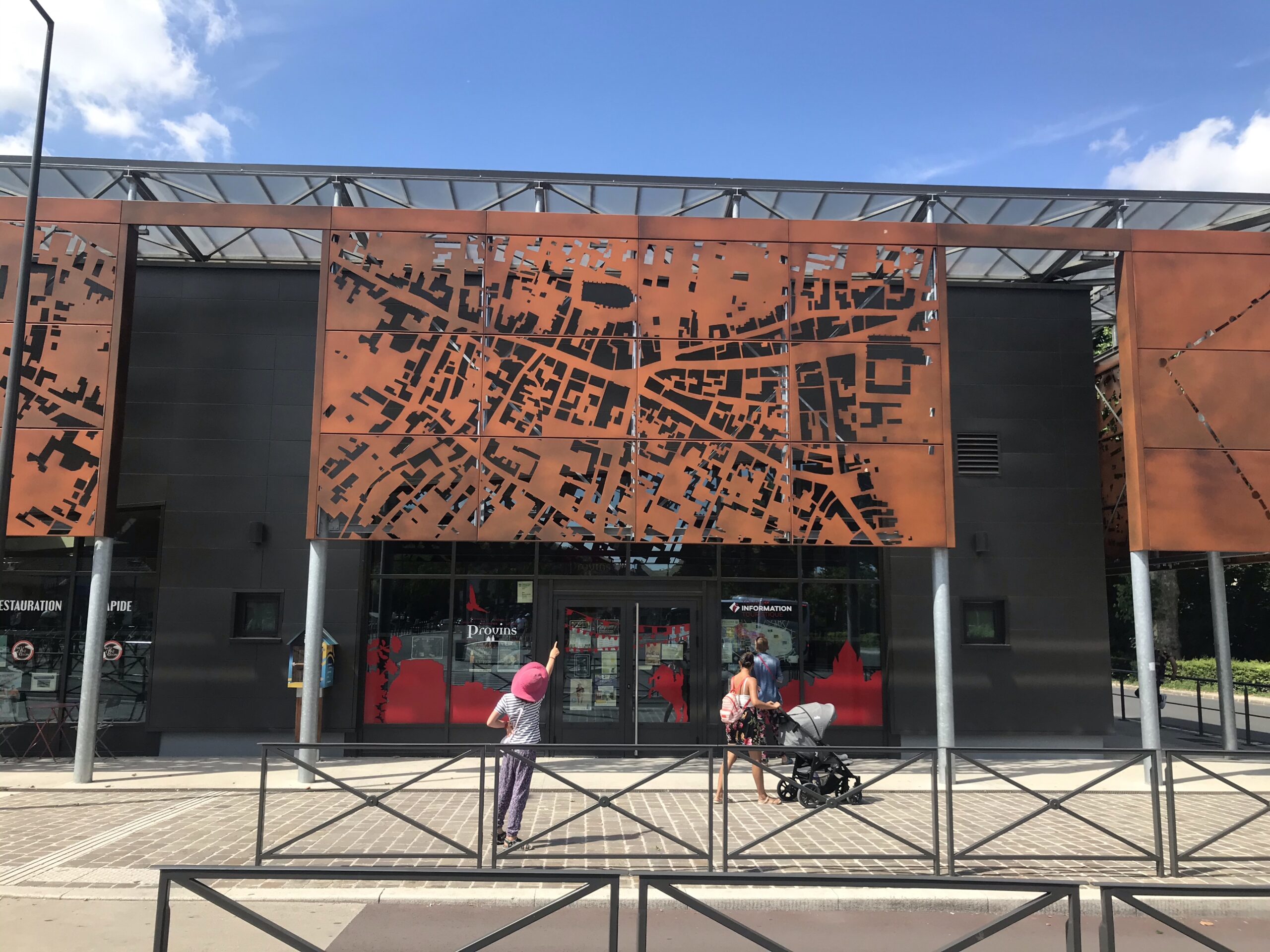
From one end of the Transilien line P to the other, at Provins station the most striking thing is the Office de Tourisme which had an elegant Coreten facade with the map of the city carved out of it to make dappled shade on the building front.
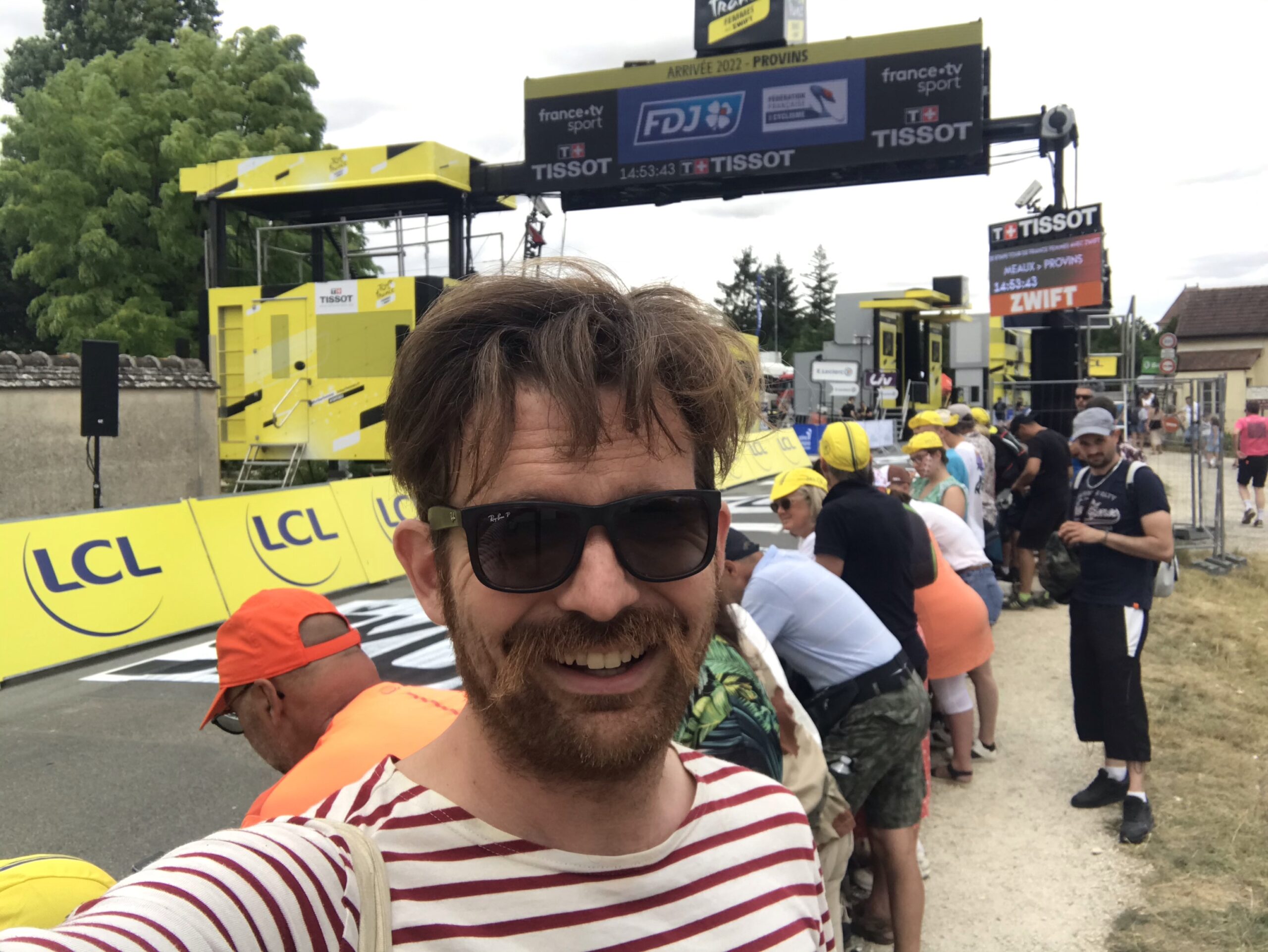
We walked down the medieval streets, had a relaxed lunch in a restaurant, spotting Tour lanyard wearers all around us. Gently, imperceptibly at first, the pedestrians, the residents started all walking in one direction. We followed them round the ancient streets, through the impressive ramparts and then there it was: the ‘permanance’ – the collection of vehicles which is the travelling caravan of the Tour. We passed the winners’ podium, the commentators box and then there was the finish line. All of these bits of infrastructure are so familiar from watching over a hundred stages from the television, and there they were just in front of us. Smaller, and bigger, in real life.
I think one of the most surprising things about the Tour is that all this infrastructure is moved from town to town every day. It is literally a travelling circus. It is life on the road, not just for the riders but for the logistics entourage.
We knew we’d get a good chance of standing near the finish, but we didn’t expect to get five metres from the line. We found our spot and waited the two hours or so for the race to pass. I did this watercolour of the finish line. I appeared to be the only person taking pictures with this choice of medium.
A brave local commentator was keeping the crowd interested, and i learnt a lot about what a big deal it is for a region or département to host the tour. We heard about the local cycle clubs and rising stars. We heard about all the local people who had worked to bring the Tour to Seine et Marne and to the town of Provins. All the folk who had assisted in getting the barriers in place early in the morning. I had the feeling that lots of people watching weren’t into pro-cycling, but that this was the travelling spectacle coming to town that they had to see.
An hour before the race came the travelling caravan of sponsors vehicles handing out free stuff. I know that this is what the Tour is all about on one level, marketing opportunities for these big French brands. It is awful in terms of waste stuff given out and it is laughable. From the cars freebies are thrown out and the crowd go wild for them. Key rings from the gendarmerie, T-shirts, the famous hats, processed meat from one of the sponsors. I am sorry to say I didn’t get a pink Zwift that but glad that my daughter got one.
And then it was on to watch the racing. As I found yesterday it is actually quite hard to follow the race when you are there, but being near the end we could see the big screen. I was watching when three pretty awful looking crashes happened. These were made all the more graphic when we saw the injured riders limp to the line later.
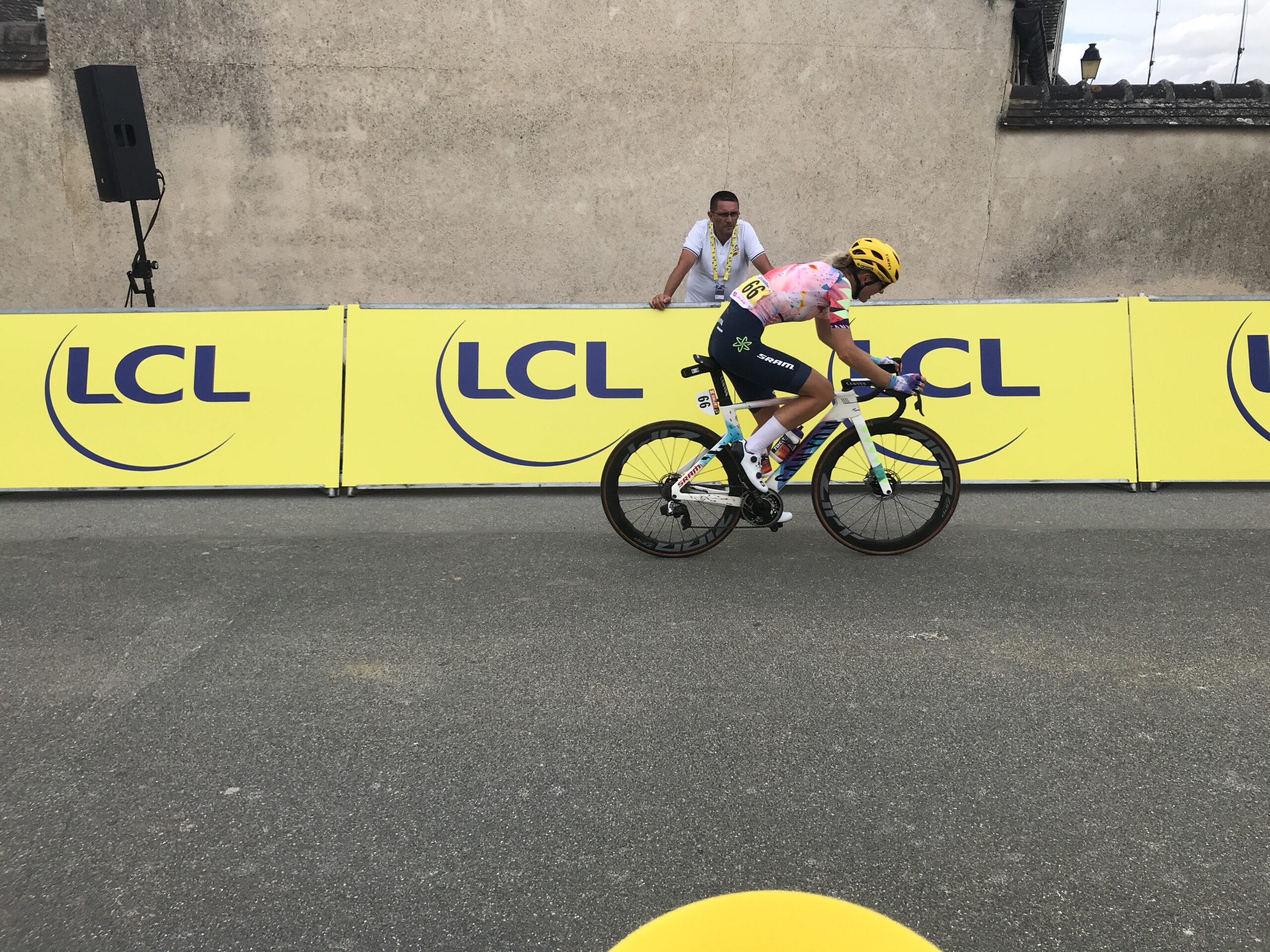
The riders passed the finish twice. First for an intermediate sprint, and then round a 15km loop which brought them back for the finish. After the sprint a breakaway group formed of Elisa Balsamo, Elisa Longo Borghini, Marianne Vos, Niewiadoma, Silvia Persico and Makia van der Duin. But in the final sprint to the line Marianne Vos broke away from this group and zoomed ahead to cross the line. Incredible to see possibly the best cyclist in the world win her 241 stage win and with it the Yellow Jersey.
Seeing the racers close up makes the whole thing feel more human. They are much smaller in real life. Their pain is more real. And their power as they cycle past.
And then fascinating to see how the end of race proceedings are orchestrated. While one racer is collapsed on the ground getting medical help, other people are getting on with the medal ceremony. This stage is done, and the juggernaut must roll on.
One of the anchor points for our trip this summer is to catch the start of the Tour de Femmes, which coincides with the end of the Tour de France.
It is so exciting to be able to see the first women’s tour, of proper scale, kickoff. following the tour feels like a bit of a family guilty pleasure, that a guilt subdued a bit now that there is a women’s tour of decent scale, but there’s still a long way to go. Interestingly it seems some of the women’s teams were set up by pro-men who wanted decent cycling opportunities for their daughters.
From the Rue de Rivoli we stood on the railings to watch the eight laps of the women’s peleton, struggling to identify who was whom, relying mostly on the live updates from the website. Despite my preference for analogue experiences, it really is a sporting day out that is enhanced by having a live feed in your pocket.
When the women had gone by we crossed the Jardin de Tuileries to the Orangerie to wait for the Men’s peloton. Having watched the men’s tour on the TV for so many years it was really exciting to be seeing the spectacle close up. It’s like with anything that you have watched on television the scale of things looks very different in real life. Things are at once much smaller because you don’t get the close-up camera shots, and then very large when people do get close.
The Tour de France peleton on its penultimate lap of the Tuileries
It’s such a thrill to see these riders who have been up and down mountains all around France, not to mention their excursion to Denmark, end up right in front of us. It is quite a spectacle. We enjoyed having it with a group of British cycling fans, and were interested to see how little our Paris friends cared for the race. This corroborates a newspaper article yesterday about the Tour’s growing international reputation and the increasing ambivalence for it among the French.
Tomorrow we head out into Ile de France to see stage two of the Tour de Femmes. It’ll be interesting to see how the atmosphere changes on a smaller stage in a more rural spot.
Tips for watching the Tour de France in Paris
This is what we did in 2022 and what we’d do again. Both the women’s and men’s Tour do loops of the Jardin de Tuileries and the Champs Elysées. Access to metro stations in the area is limited. So we arrived an hour early and entrees the area via Metro Palais Royale Louvre. From there you can walk straight in to the gardens. There was also an access point by the Pont Solferino.
We watched the Women’s Tour from behind the railings along the Rue de Rivoli, which is where the close up photo I took above is taken from. A good shady spot but you don’t get long-distance views.
We watched the Men’s Tour from the terrace outside the Orangerie. This was well shaded while waited during the day but was in full sun for the last hour wait and during the laps. Come prepared if you go there.
Next time we’d go to the banks of the Seine opposite the Orangerie which stayed in shade throughout but which had a good view. Note this area had a police bag check point as it is closer to the track and we didn’t think we’d get through with our picnic knives!
Today we begin our summer #surfacetravel continental adventure: from Caen in Normandy to Santander in Northern Spain. We are travelling via mixture of bicycle and train.
The adventure began yesterday with putting our bicycles on the ferry at Portsmouth. As a cycle passenger on a ferry you exist in this weird no persons land between foot passenger and car driver. The cycle route from Portsmouth harbour to the ferry port it’s actually very well signposted. But when you get to the ferry port it is unclear what you are supposed to do. Once we realised though that you’re supposed to line up with the cars, it’s pretty straightforward. And cycling across the open expenses of the ferry terminal and up to the boat feels quite rebellious.
As a regular readers of this blog will know, I love a ferry ride. Ferries are like floating buildings. A funny mixture of shopping centre, hotel and seagoing vessel. I also love a cafeteria. All of this made for a very enjoyable six hour crossing. I particularly enjoyed trying some handstands in the deck with S.
Riding with Brittany ferries feels like I’m having a little piece of France pick you up from the UK coast. A two course lunch menu followed by a stiff coffee. The Tour de France on the TV.
Speaking of which, I was blown away watching the race leader stop to allow his rival to catch up after having fallen on the slopes in the Pyrenees. So often the historical stories of men racing in the tour are about macho rivalries. this feels much more sporting, much more human.
Looking forward to beginning our own Tour de France.
Sunday morning we cycled through Bristol and up to Leigh Woods. We took the ‘high route’, choosing to climb up through the wealthy streets Clifton. Everywhere oozes money and wealth. The cavernous houses, gleaming cars, manicured front gardens and then the tiny shops of Clifton Village. Humans and their worldly possessions are all I can see.
And then, all of a sudden, release. The ground gives way and we are soaring high over the Avon Gorge. As the Clifton Suspension Bridge leaps from one cliff to the other, I feel like I am looking at a giant fracture in the Earth’s crust, looking back in time through rock layers laid down millions of years ago. The scale changes. Humans are tiny again, a tiny feature of the surface. Nature and all the evidence of all its forces spread out before me.
I yell ‘hello planet earth, and good bye planet money’, and we are off towards the woods.
I have had the great fortune of having spent three weeks in France, a good portion of it cycling. Touring is a great way to leave behind your pre-occupations and to think about the future – in my case, the themes for my training and writing in 2021-2022.
This year, all cycle paths point towards regenerative design – design that is win-win-win for individuals, society and the planet. I hear echos here of the triple bottom line of sustainable design, but sustainability, with it’s promise to protect the environment for the benefit of future generations is no-longer enough. This is a keep-things-the-same model. But as the latest IPCC report confirms, keeping things the same will lead to the breakdown of the carefully balanced ecosystem on which we depend. What we actually need is design that builds back the abundance, diversity, complexity and resilience of the ecosystem that quite literally gives us life.
Deleting apps and leaving your phone at home could be analogous to dismantling urban highways.
I read earlier this week about the research that established a direct link between building more roads and the level of traffic in a system. The researches established a directly proportional link. Increase road capacity by 10% and traffic increases by 10%. The causal link is that when you increase road capacity, you make it easier for more people to make more journeys. And so more people drive until the new road reaches capacity. At which point the traffic stops growing until new roads are built.
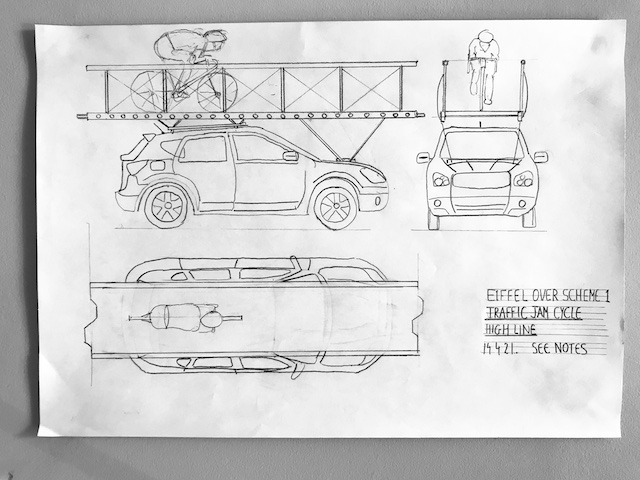
The daily traffic jam on my local high street has inspired me to think about a way to turn a traffic jam into an opportunity to a way to create safer cycling. This solution is win-win: car drivers get to stay in their cars while facilitating the creation of more traffic-free cycle routes in and out of our cities.
The concept is for all cars to be fitted with a light-weight section of Universal Cycle Flyover, designed to fit most any vehicle. Cars approaching a traffic jam simply park close enough to the next car to to enable a continuous connection for the cycle deck.
(The scheme shows a cyclist on a racing bicycle. Of course other types of bicycle would be encouraged, I just started the sketch too close to the top of the page to fit a more upright riding position.)
In my previous post I was talking about the experience of distance, and how, when understood as an experience, distance is no longer a fixed entity.
That post was triggered by some lines from Proust in which the narrator is talking about how his perception of local distances alters when he switches from rail transport to motorcar. Some further thoughts on this topic.
I recall how the distances between various destinations, and therefore the shape of the city itself, appeared to change when the London Overground, an orbital railway in the inner suburbs, opened. All of a sudden areas of the city that seemed far away felt much closer: South-East London, previously impossibly far, was now a nearby neighbourhood to where I lived in the North-East.
Such a step-change in the experience of city living demonstrates the transformative power of civil engineering infrastructure. Linking, drawing together, connecting – this is what engineers have been doing for centuries.