Tag: France

  • Bernina Express

    I recently traveled to Italy and back overland, seeking an alternative to the usual high-speed Paris-Milan service, which had been blocked for many months due to a landslip. But fortunately (like a more positive version of the poem ‘We’re going on a bear hunt’), when looking for alternative ways to cross the Alpine massif, then there definitely are other ways to go over it, under it and around it.

    The ‘around it’ route in case would have involved to the south of France and then along the coast to Italy. But French holiday travel precluded us from getting tickets on the fast French sections. And so we opted for going outbound ‘over it’ via the Bernina Express, and homebound ‘under it’ via the Gotthard Base tunnel.

    The Bernina Express really is the scenic way to cross the Alps. From the eastern Swiss town of Chur, the train corkscrews up inside mountains, zigzags across steep slopes and leaps over more than a hundred viaducts. This narrow-gauge railway turns impossibly narrow curves so that you regularly see the trailing end of the train out of the windows when you sit at the front. At the top of the Bernina Pass, over 2000 metres up, glaciers hang overhead in valleys above, and mineral water in lakes reflect the mountain-scape in technicolor. The descent begins where we cross the watershed between the Danube (leading to the Black Sea) and the Po (heading to the Adriatic) – two very different destinies for a raindrop. The descent feels steeper than the rise, with our destination of Tirano tantalisingly close in the valley below but the switchbacks and spirals taking over an hour to complete.

    Crossing over the border into Italy at the very end of the line feels like an achievement. And even though we have spent the last four hours sitting down, travelling this way you really get a sense of what an awesome barrier the Alps are right in the middle of Europe. How over the centuries trade might have travelled along these passes, and the advantages to the people able to make the route faster. 

    Top tip – the Bernina Express terminus and the Trenitalia station, for onward travel, are on two sides of a town square. The other two sides are occupied by cafes that will do you a delicious meal of pasta and leave you plenty of time to make your connection. 

    Tomorrow – ‘going under it’, via the Gotthard Base tunnel. 

  • Saumur to Ponts de Cé

    Saumur to Ponts de Cé

    The next leg of our cycle trip along the Loire took us from Saumur to Ponts de Cé, a town a little south of Angers.

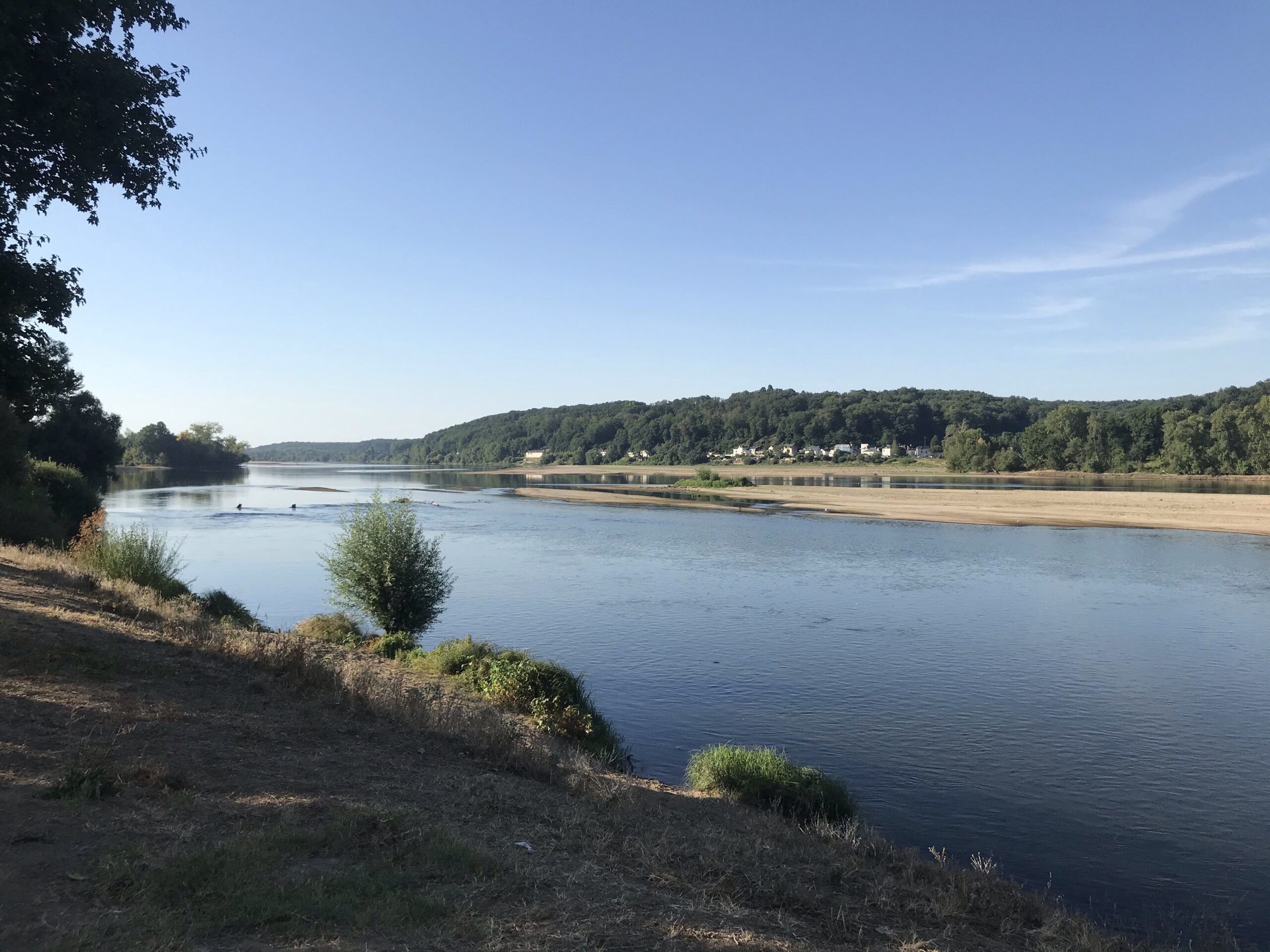
    Again the river landscape has changed here. Now wider, another notch up in scale. The islands are longer. The curves more sweeping.

    The Loire downstream of Saumur

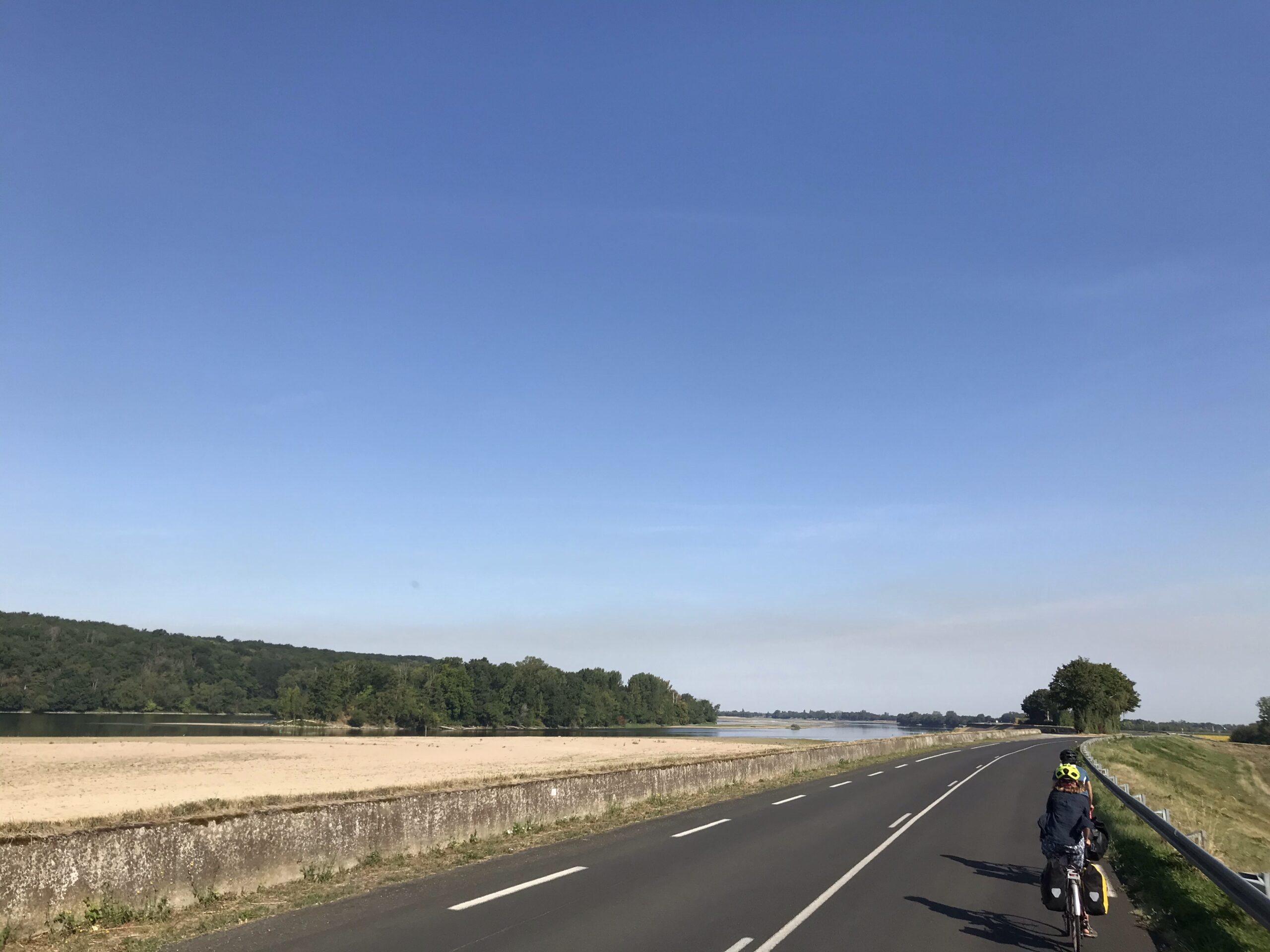
    As the cycle path was getting a little bumpy we decided to cycle in convoy along the fast road that follows the top of the flood dyke. This was to be a strategy we used more and more to cover the kilometres on longer stages of our ride. We had roughly 60km to cover and we wanted to get most of them done by lunchtime.

    Much of the riverbed is dry, with the flow restricted to one part of the channel.

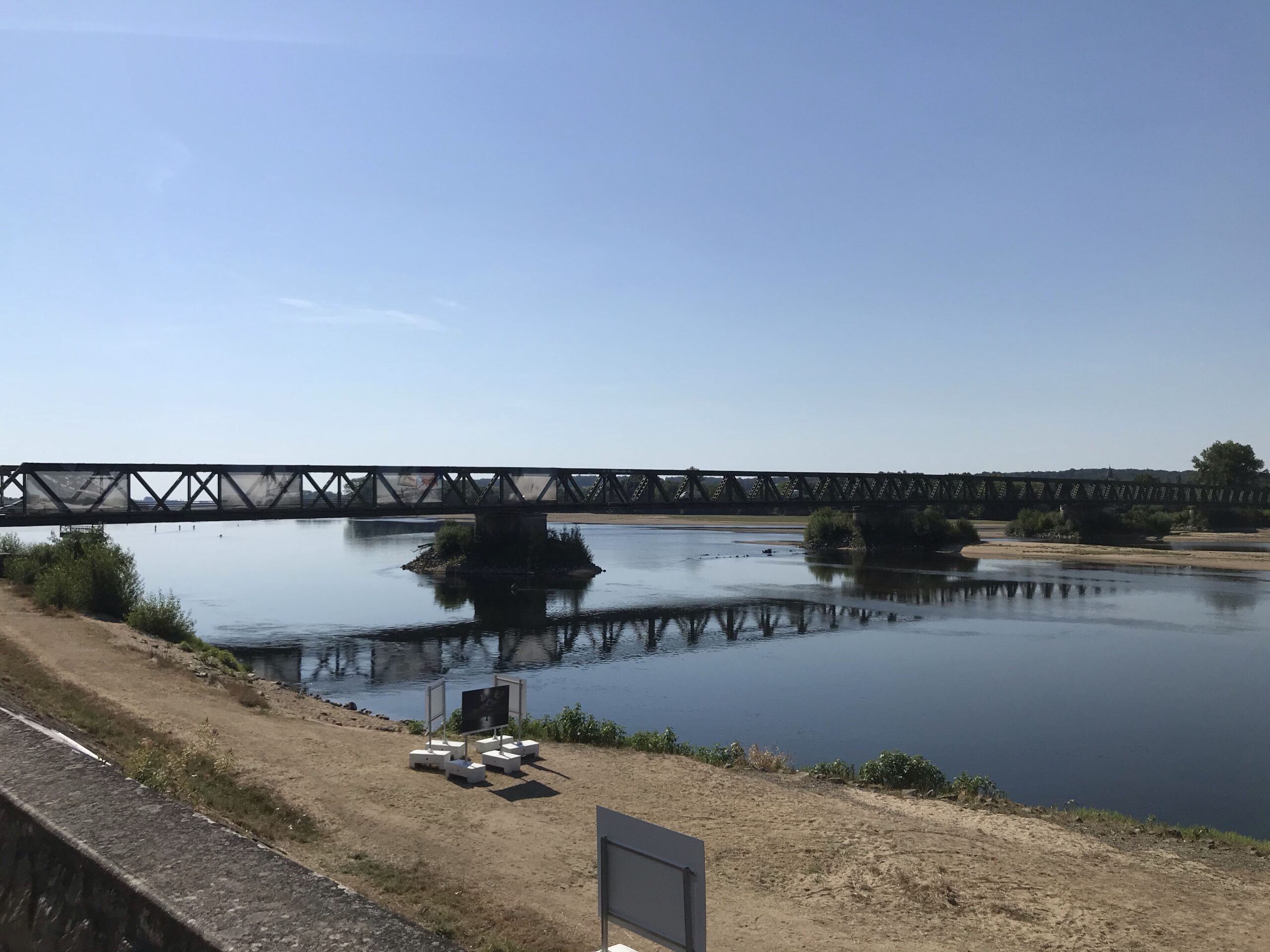
    We can start to predict where good watering holes will be by seeing in the distance where the river crossings are. We had a refreshing stop by this typical truss bridge.

    We arrived in Ponts de Cé early afternoon and made our way to the very relaxed and comfortable Slow Village campsite. It was a relief to reach our destination before the heat of the day reached its maximum. A chance to do some washing, repack, chill out.

    A had a typical altercation with a swimming pool attendant who found my swimming shorts not stretchy enough to conform to the swimming rules. Mysteriously my well-used cycle shorts were perfectly acceptable.

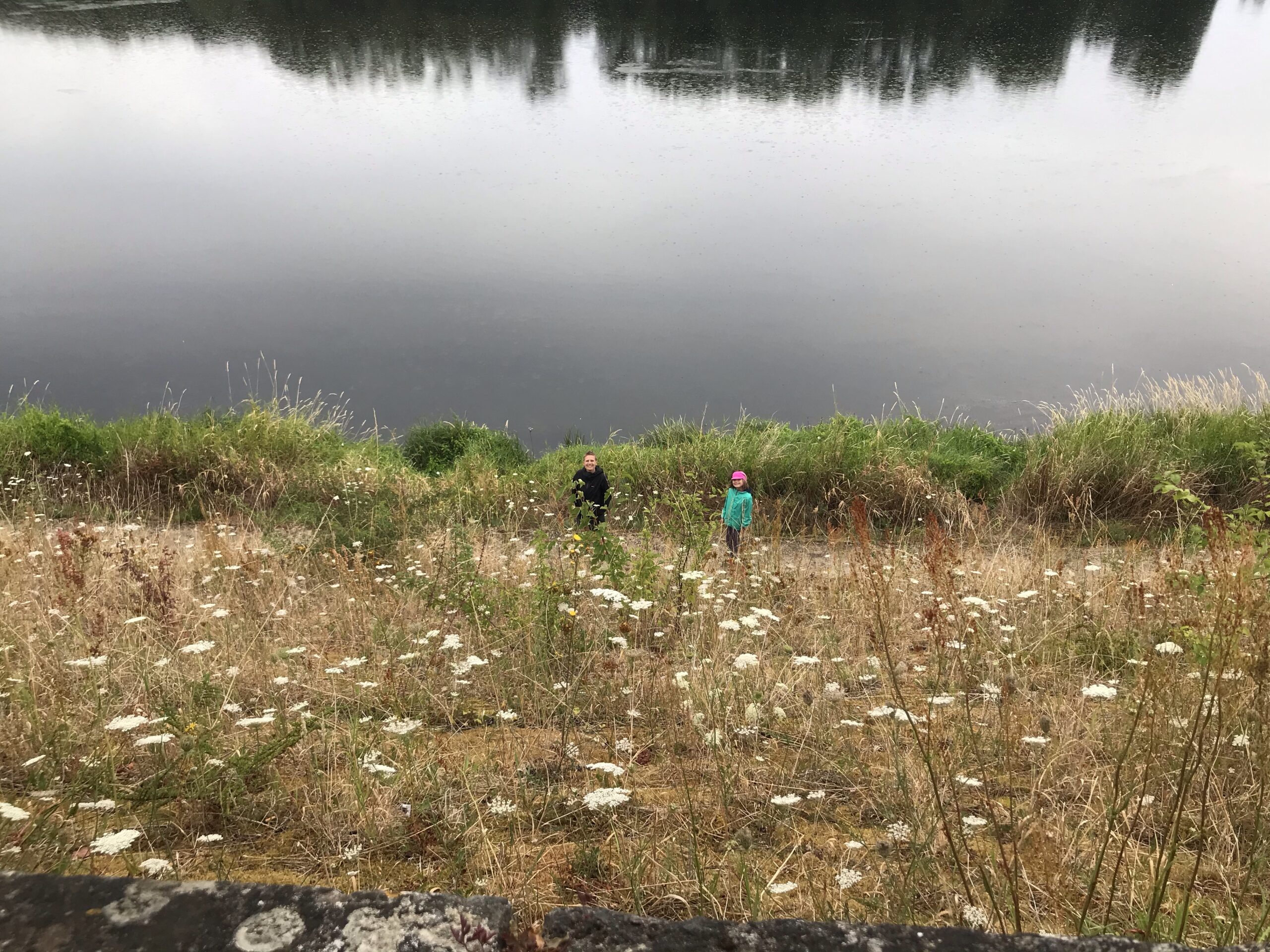
    We spent the evening at the best guinguette so far of our trip. Good food and wine at reasonable prices and friendly staff. After dinner we walked out across the dry river bed to channel on the other side and waded in the warm waters.

  • Cher-Loire confluence to Saumur

    Cher-Loire confluence to Saumur

    The one night we decided to sleep with out a tent and it rained. Only a few spots at around 5am, but enough to wake me and wonder if we should abandon camp. It was still dark. I decided to hope for the best and go back to sleep. Half-an-hour later we were woken by torch lights. This time fishers hoping to find a quiet spot for an early stint with the rod. I think were as surprised by them as they were by us. We got up and watched the dawn light up the water for two hours.

    We cycled 10km to find breakfast, the morning still a welcome cool temperature and overcast. We were happy to reach Bréhemont, perched on the dyke above a sweep in the Loire. Since the confluence with the Cher the river has changed character. A bit wider with sand banks that make great habitats for birds. We saw bird watchers along the banks with their telescopes.

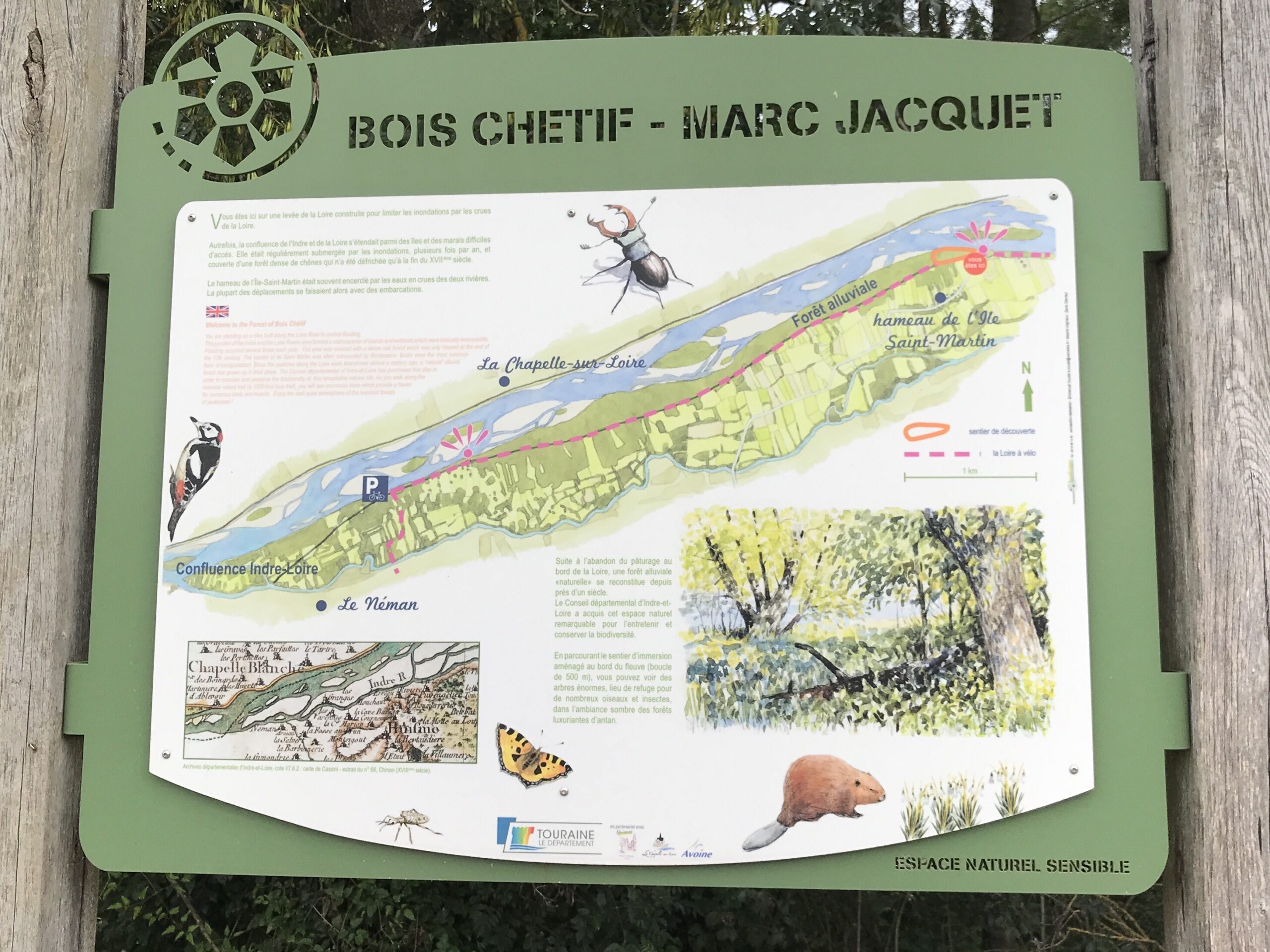
    The next section of path passes through a reforested area of land between the dyke and the river. Long ago the river borders were marshy woodlands that would flood several times a year. The marshes were drained to make agricultural land but now the terrain is being left to return to rich woodland. The space is cool and lush. We followed an enormous bird of prey which glided down the cycle path ahead of us through the trees.

    Boos Chetif- Marc Jacquet

    Lunch in Avoine, a great example of a town that has invested in its public spaces to create an environment that attracts visitors and supports civic life as well. A lovely town square, well appointed with cafe, tabac, supermarket, boulangerie and street market. Spaces for parking bikes and doing maintenance. A water feature.

    We cross the Indre river, a tributary of the Loire, and enter the valley of the next tributary, the Vianne. We find a friendly looking campsite, very laid back with furniture out by the river, and we wade in the Vianne’s waters- colder than the Cher last night.

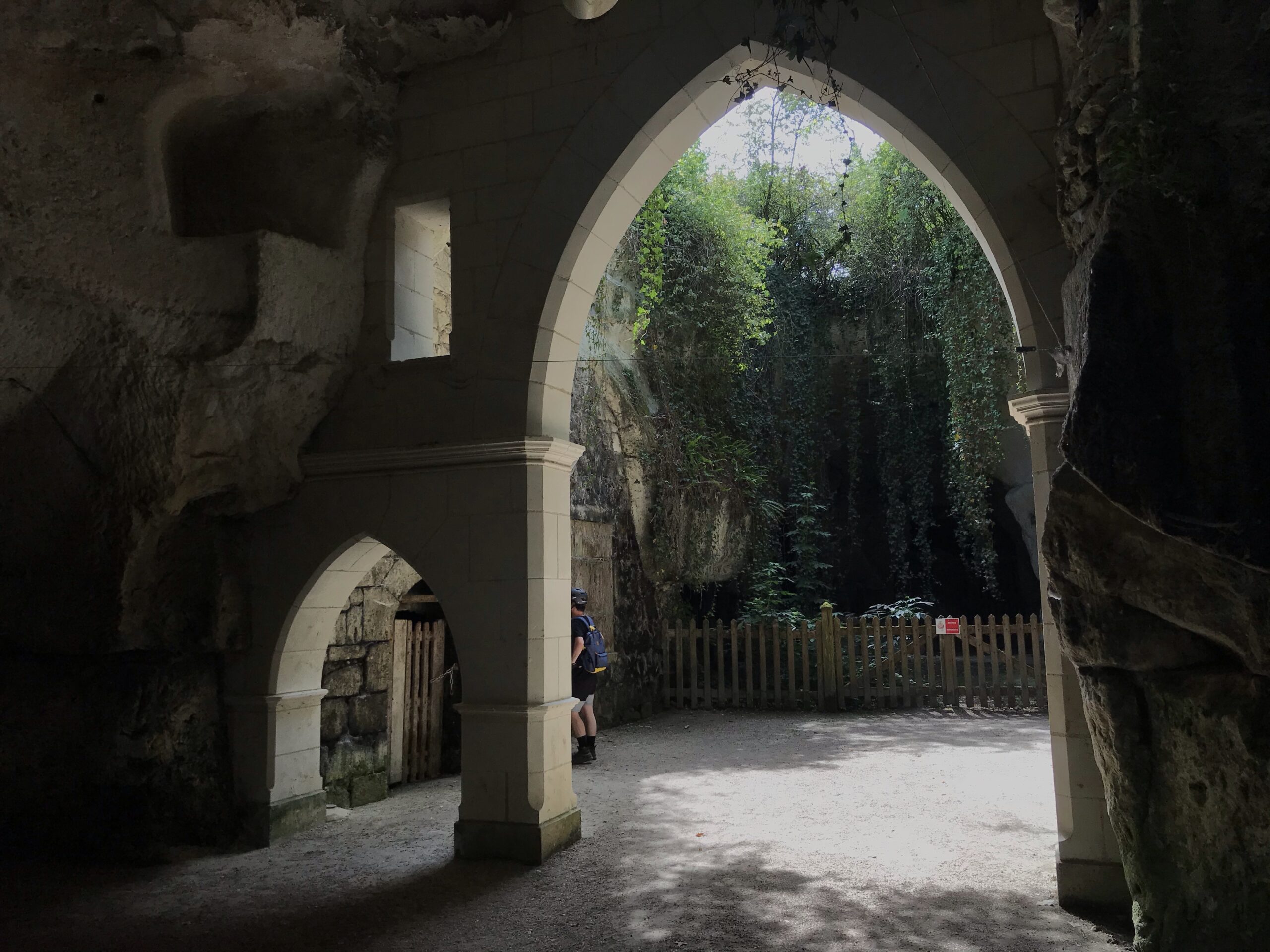
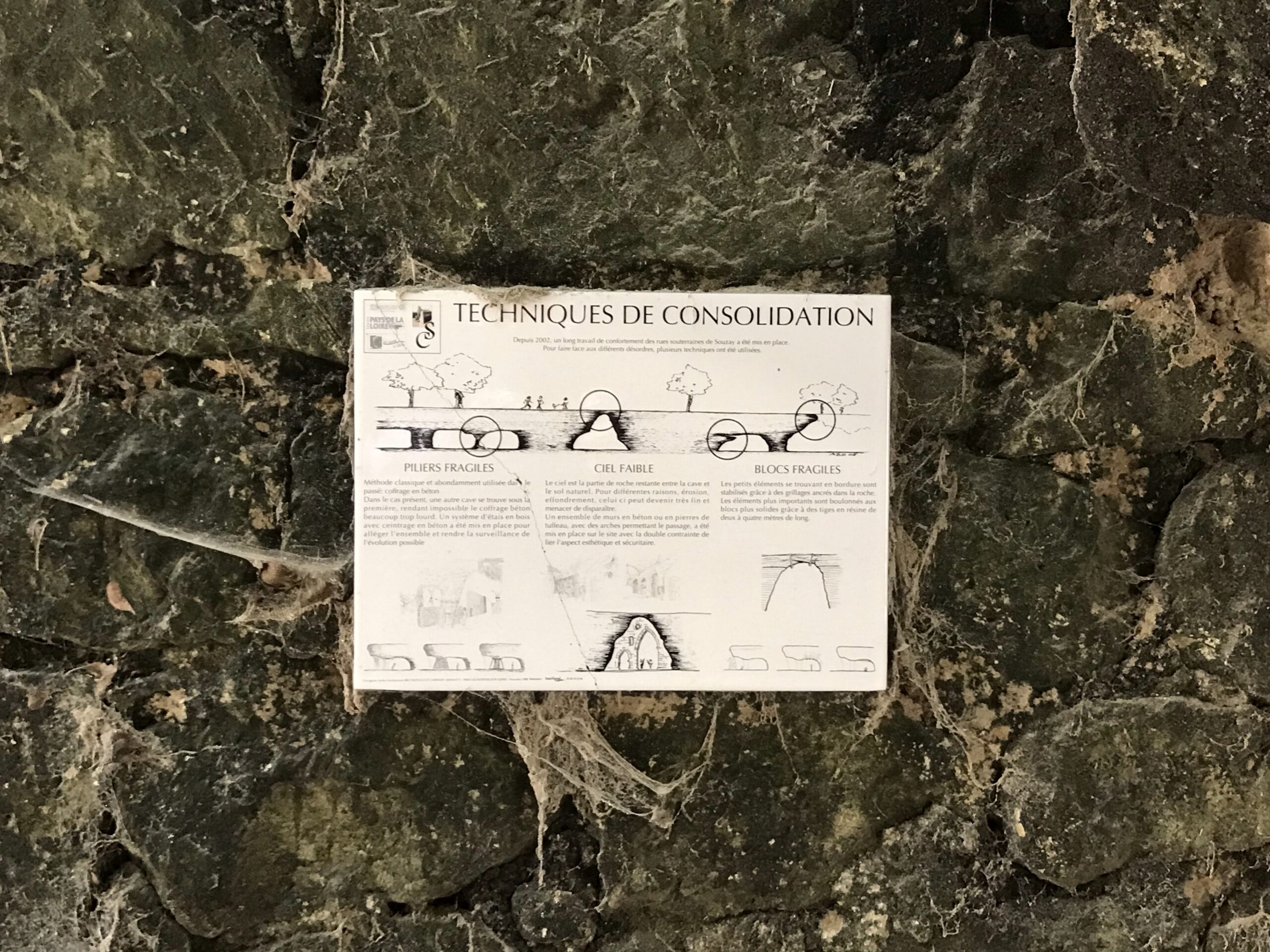
    Approaching Saumur, we climb up the valley sides to the plateau above where the regions famous grapes are grown. The path then winds down again and suddenly takes you underground into a recently-restored subterranean village. Not long ago the village high street was in a deep canyon in the limestone. The shops were in eroded and excavated caves to either side. Plants hung down from above, adding additional shade to prevent the sun overhead from heating the space too much. After the heat of the hills the space was so refreshingly cool.

    These incredible underground spaces are from the past but they could be the future too. All around us the signs of a climate heating up are increasingly obvious. It feels almost unbearable to be out in the midday sun and yet here is a way to live in the cool in the hottest place in the valley that uses just the shade and the coolness of the earth to create habitable conditions.

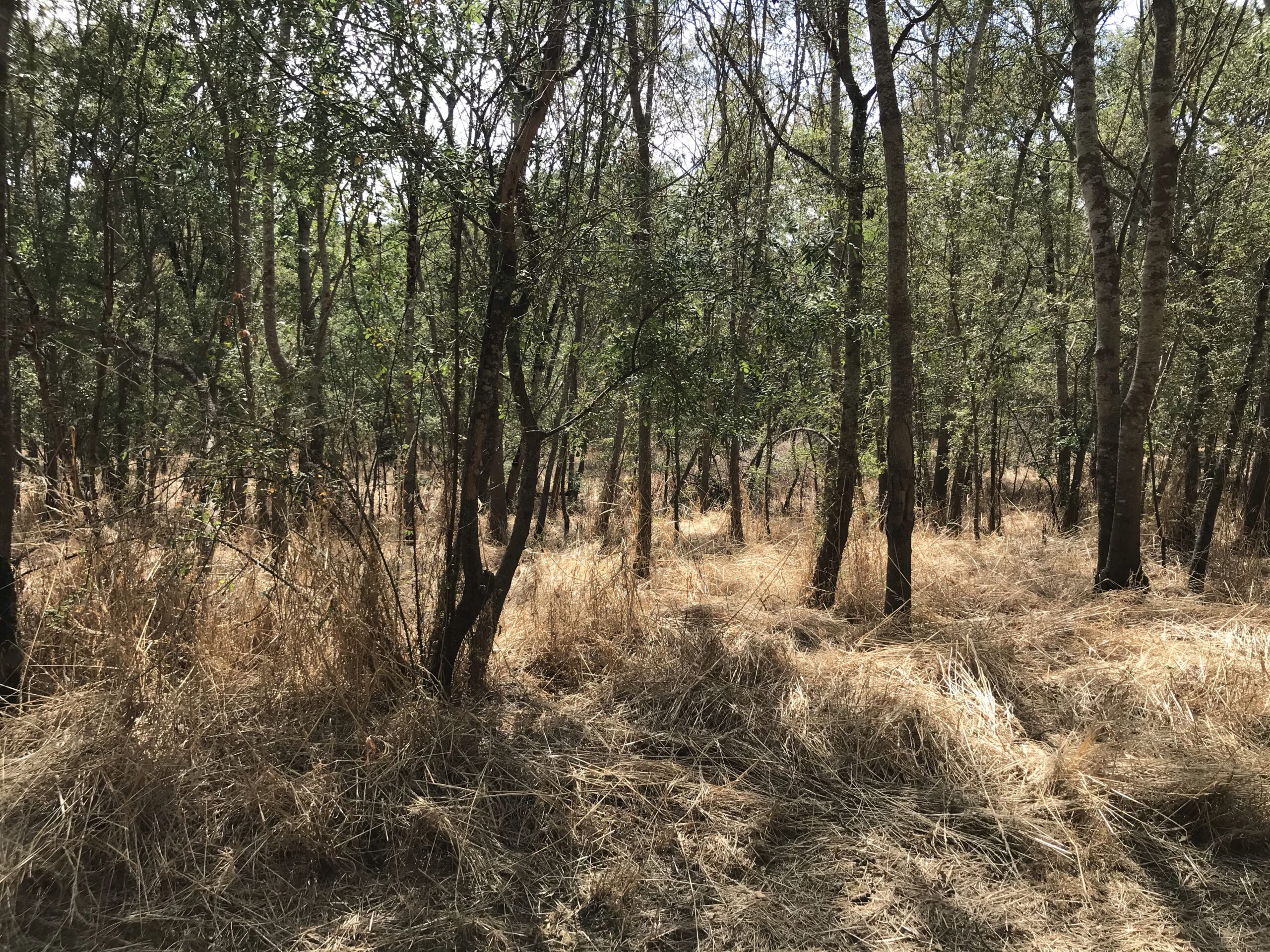
    As if to emphasise the impact of climate heating locally, we cycled out of the underground village and almost immediately into a bone-try forest. But this isn’t the south of France, it’s the middle bit. This is not normal.

    In Saumur we camped on the island in the middle of town. Camp sites on islands in rivers close to big towns seems to be a common format of civic infrastructure in France. Perhaps it is common more widely to European countries with wide rivers running through them. I enjoy being able to step out from your tent, cross the bridge and absorb the evening atmosphere.

    The strange feeling we had though in Saumur is of a place that is in the middle of a heat crisis but no one seems to mind. As long as the wine is cold.

  • Preparing the colours for your Professional Palette

    Preparing the colours for your Professional Palette

    There are some inputs to our creative process that we build up over time so that we are ready to draw on them whenever we work on a new project. In this next post in my series on creative thinking tools for projects, I will share with you another source of inputs for the Kalideacope. I call it the ‘preparing the colours for your Professional Palette. These are the set of colours from which you paint your ideas. The image this phrase conjures up for me is of the Impressionist painter spending time in their workshop in Paris getting their paints ready before they get on a train from the Gare St. Lazare, head out into the Normandy countryside and paint a landscape. You have to do the prep in the workshop before you can go out and paint. But how does this apply to us?

    (more…)
  • The horizon of existence | surveillance capitalism | the return of analogue skills

    The horizon of existence | surveillance capitalism | the return of analogue skills

    It’s hard to know where to start. So much has changed in the last fortnight and there is so much that I feel compelled to write about. But now that our house has also become a remote workplace, a homeschool and playground and locus for all entertainment and time-passing activities, it is hard to find the time to write in an ordered way, so I will capture things as they emerge and look to see the patterns over time. I hope you will bear with me, reader. On my mind today:

    • The shrinking horizon of existance
    • Surveillance capitalism and Analogue Skills
    • Everyone is the same distance away
    • Mourning friction
    • A great slowing

    (more…)

  • Appreciating concrete in Marseille

    One of the thing things that I like about Marseille is the quality of the concrete tower block design. I’ve been riding in taxis back and forth across the city with my father who is undergoing cancer treatment in various branches of the city’s healthcare system and appreciating the architectural tour I’m getting.

    In the centre of town these blocks remind me of bookcases: two monolithic, slick sides between which span the concrete shelves, on which sit the apartments like colourful books. It’s fascinating to see the different ways that windows, balconies and staircases are articulated in these concrete buildings. I point out towering souring fin walls, beautifully articulated fire escapes, and how paint is used to express the different elements of the concrete structures.

    The rocky hills that rise up behind Marseille keep the city hemmed in by the sea. Standing on the high ground platform of Notre Dame de la Gard in the middle of town, you can see clusters of distant tower blocks that seem to bravely climb the distant slopes of the edge of the city, like pilgrims. I’m used to seeing tower blocks standing imposingly against the flat, grey London sky, but here these structures are rendered tiny by the massive hills behind them.

    (more…)