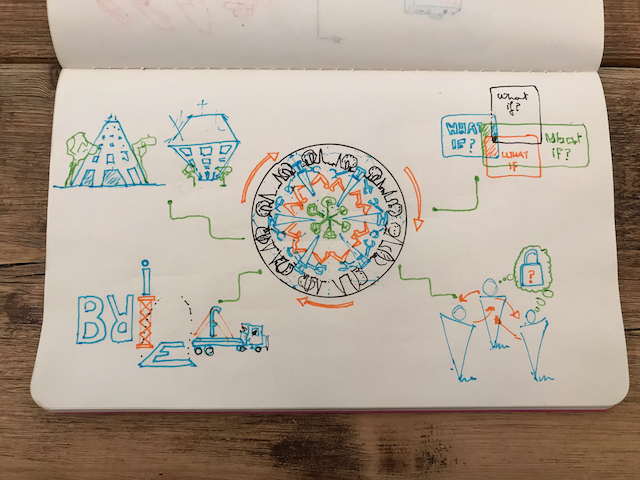
Tag: modelling and testing

  • Machine work

    Inputs

    Outputs

    KPIs

    Tools

    Models

    Performance

    Quantitative analysis

    Scaling up

    Accelerator

    Dashboard

    Timesheet

    Human resources 

    Bottom line 

    When we think of our work as the work of a machine, then is it any surprise that the incredible machines that we have built will one day starting doing it for us.

    But we do ourselves a disservice if we only think of ourselves in machine terms. If we leave out empathy, care, collective knowledge, grounded understanding of place, knowing that is not describable in words, trust, passion, play… then we are not bringing our whole selves to the work we need to do. 

    There are so many more ways of knowing than the knowledge we can enter into a computer. Let the computers do the computational part – they will be very good at it – and let us step into our wider intelligence as engineers (and other humans).

    This blog post was inspired by Reinventing Organizations, by Frederic Laloux. 
  • Carbon vs everything else: system health vs system outputs

    I’m getting this down while it is fresh in my mind following a planning conversation with Will Arnold this morning for our Net Zero Structural Design course. In the final session of this course we are helping participants think about how to weigh up carbon with other wider sustainability considerations.

    In my post earlier this morning I was reflecting on how focusing on a system’s resilience can enhance its restorative powers. My angle then, from a design perspective, was thinking about how we can shift the design brief from designing objects or outputs to designing resilience. Now I am thinking from a different angle: how we test for resilience, and how this relates to tests for carbon footprint.

    (more…)
  • Analogue Skill 009: Sketch what you see

    Analogue Skill 009: Sketch what you see

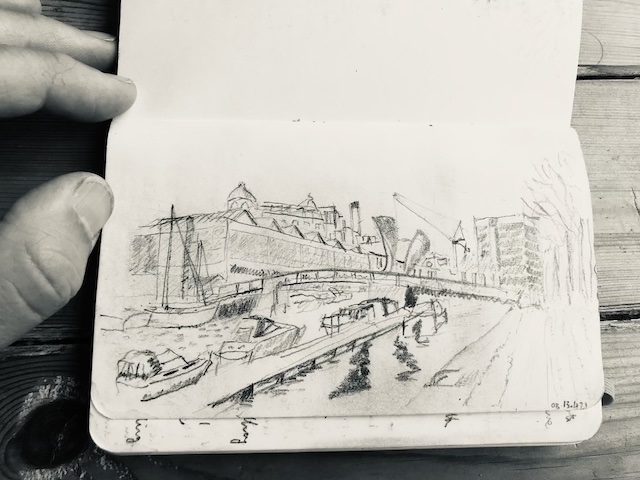
    Take out a piece of paper and draw a sketch of what you can see. You will notice more than you ever would by taking a photograph.

    Sketching could easily fall into two categories in my collection of analogue skills: Remembering Things and Spending Time Alone.

    (more…)
  • Turning the brief into requirements we can test

    In my last post I asked how do I know if my ideas are any good? My answer was that a good idea is one that meets the requirements of the brief. In this post I turning the brief into requirements we can test – and how the process can be surprisingly creative.

    (more…)
  • How do I know if my ideas are any good?

    How do I know if my ideas are any good?

    It’s a simple question. When I ask people what they want to get out of a training course with me on design or creativity, a common answer is ‘greater confidence that my ideas are good’. But how do I know if my ideas are any good? In this post I provide an answer that is simple, but that has deeper consequences.

    (more…)
  • From would you think to what do you think – avoiding hypothetical feedback

    Today I’m sharing a principle of workshop design about how we gather feedback in workshops. But the principle also applies more widely to how we get feedback in design.

    (more…)
  • How do you know if your idea is any good?

    I regularly ask this question on my ‘How to Have Better Ideas’ workshops (the sequel to ‘How to Have Ideas’). It’s a short question that triggers a wide range of answers. But the one I am looking for is this:

    ‘A good idea is one that meets the brief’

    My aim is marrying up the brief and the idea. I want to emphasise that the two should match. If the idea doesn’t meet the brief, then we have three consequences:

    (more…)
  • Training course – Introduction to Conceptual Design for Structural Engineers

    Training course – Introduction to Conceptual Design for Structural Engineers

    This course, which I deliver at Constructivist for the Institution of Structural Engineers is my longest running conceptual design training course. It is an introductory course, which splits conceptual design up into three phases: establishing the brief, creative thinking and convergent thinking and provides simple models for understanding each of these phases.

    (more…)