Tag: open-channel flow

  • Smoothing things out

    One of earliest childhood memories of travel is riding in the back of the car driving along a motorway in mountains in the north of Italy. To traverse a terrain of deep valleys and high ridges the engineers had taken a midline. The road leaps across the ravines on high viaducts, plunging straight into a tunnel only to fly out again across the next bridge. With the sea glistening deep below it was an exhilarating journey. (Did this sow the seed of going into civil engineering?)

    Faced with a series of peaks and troughs the engineers flattened the journey. They saved journey time and energy on every single car journey on that route, every day for over half a century.

    Smoothing things out is something that engineers seem to be generally good at. For example we’ve been straightening rivers to make them more navigable for centuries. 

    But building faster, straighter roads also increases traffic. Straightening rivers increases flood risk. 

    When we start to consider the unintended consequences smoothing things out we might find that working with the ups and downs and twists and turns is better. The friction slows down the flow. People or water, in these examples, spend longer in each place. There is greater interaction and opportunity exchange and creation of wealth in its many forms.

    Next time I cross the Italian Alps hopefully I can do it on a bicycle, following the contours of the river valleys.

  • Salt harvesting in Brittany – engineering and commoning

    Salt harvesting in Brittany – engineering and commoning

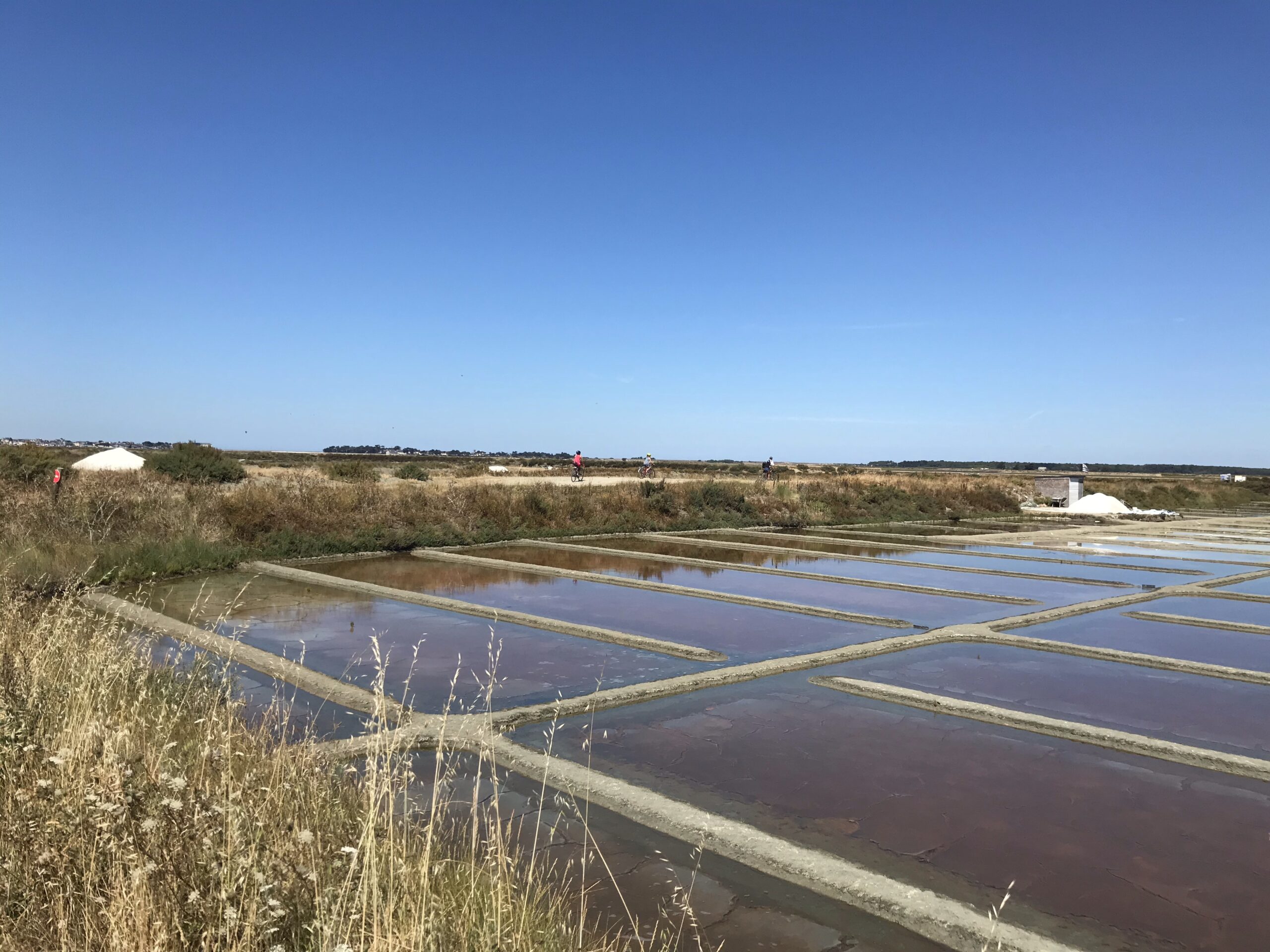
    Salt has been harvested in the bay between Le Croisic and Guérance on the edge of Brittany for centuries. The industry had been in decline but in more recent decades has started to grow again with the local attainment of a ‘red label’ quality status for its salt products.

    We had the privilege of getting a tour of the salt beds with my old friend from Paris days, Ronan when we stayed with his family in the house he grew up in in Batz-sur-Mer. It was a welcome two-day stop on our Summer Tour.

    As Ronan explained:

    • At high tide, sea water flows into reservoirs that stock the water for the day of salt harvesting.
    • This salt water is then directed by an intricate network of channels to blocks of salt beds.
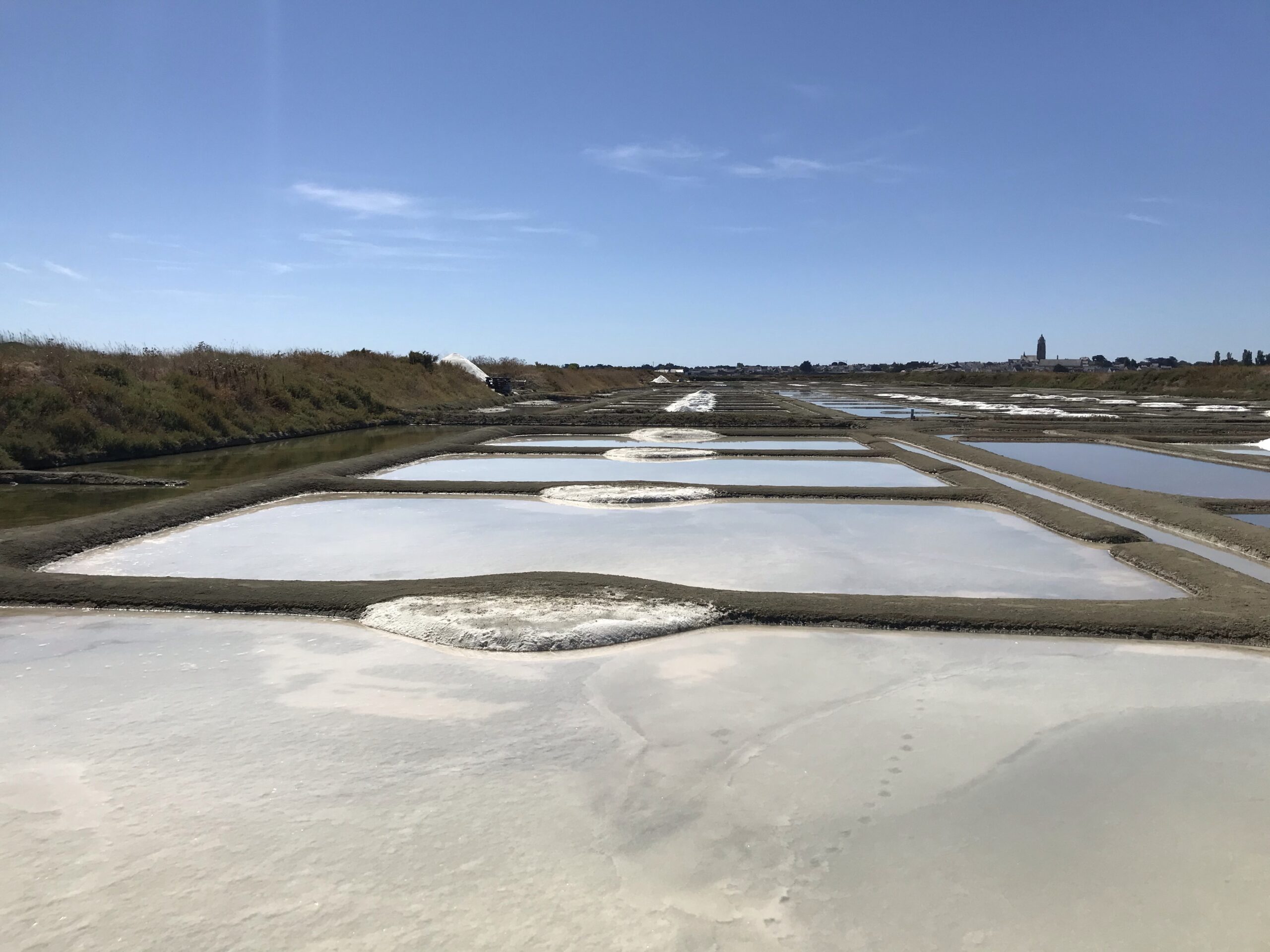
    • Each salt bed is about the size of a typical English allotment. In a salt bed the water from the channels flows in and the flow reduced to almost a stand-still.
    • During the heat of the day, the water evaporates and salt crystals form. There are two salt products: the purer ‘fleur de sel’, which accumulates on the surface; and the darker ‘sel gris’ which accumulates on the bottom.
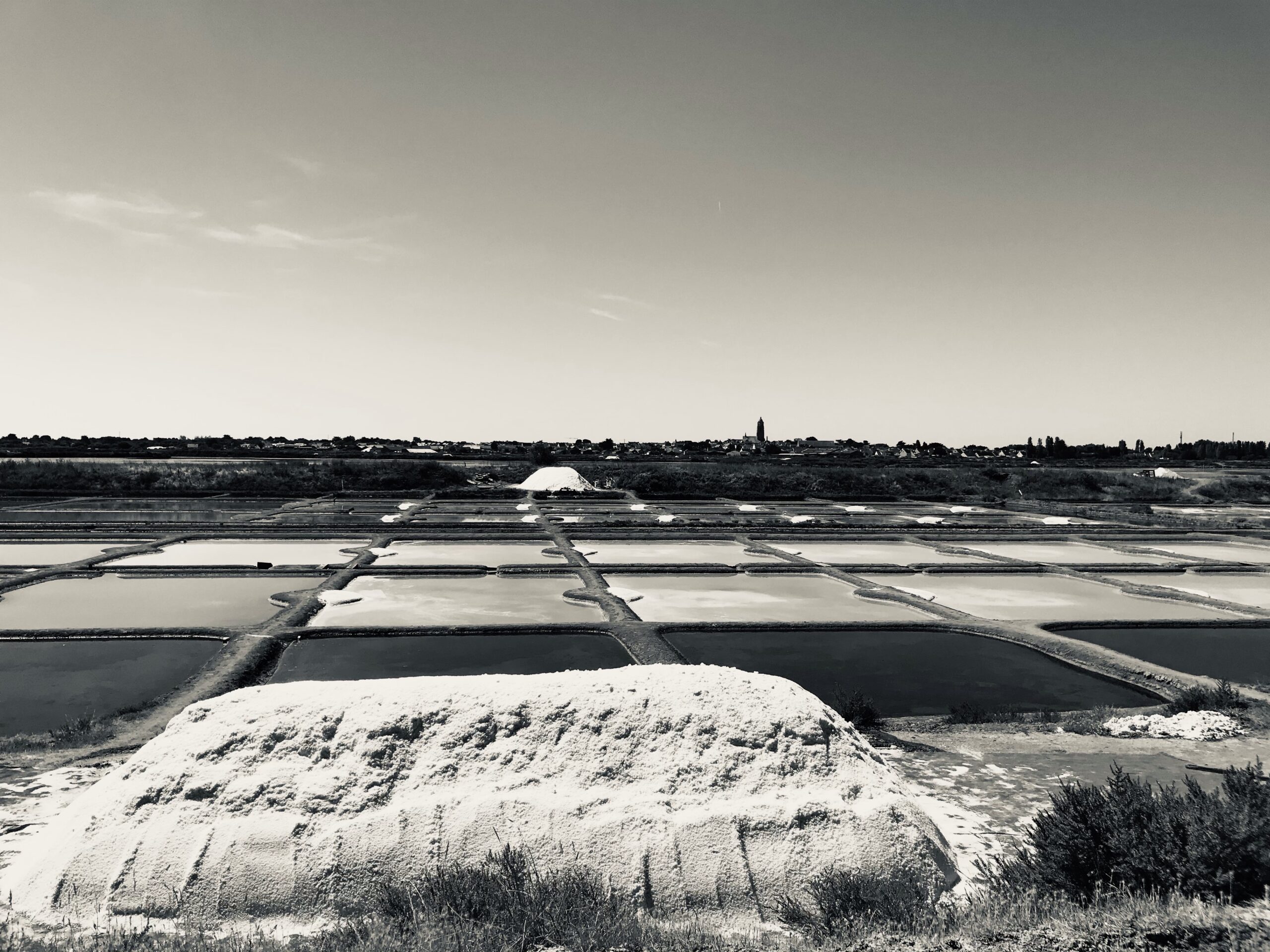
    • Morning and evening salt harvesters walk out to their salt beds and gently scrape the two types of salt out of the beds and pile them up on the side. Single bed can produce a wheelbarrow-full every day in high summer.
    • The salt harvesters transfer their salt to larger communal salt piles, which are then taken to the town cooperative.
    • Individuals and families have harvesting rights over a specific beds.

    I find the salt beds a fascinating example of engineering and commoning. This is a common resource which requires shared infrastructure to harvest. What we take out is bountiful, but requires a shared responsibility for preserving the purity of the resource. Similar to the water irrigation channels that I saw in Mirenna in Spain many years ago.

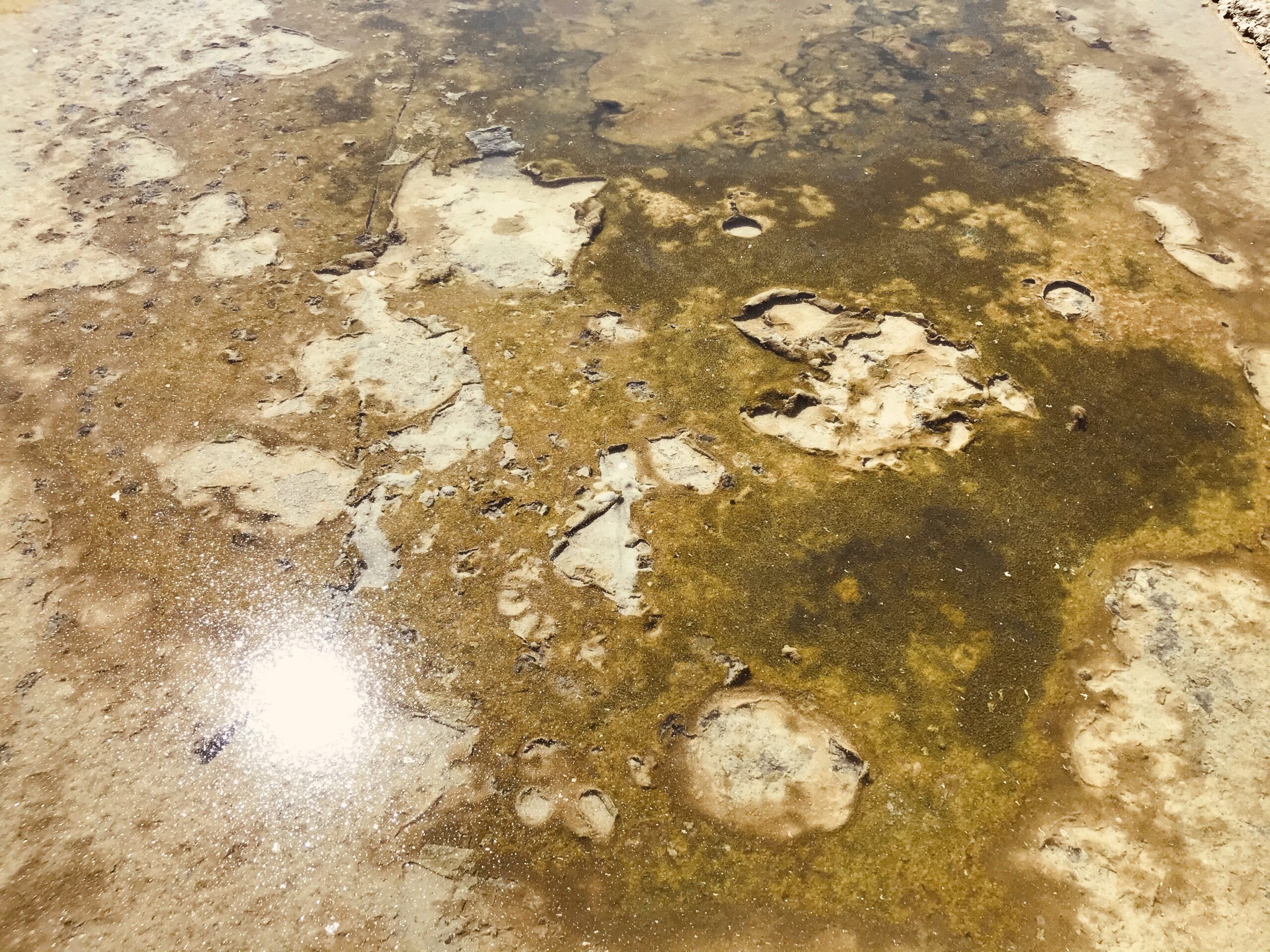
    The salt beds also create wonderful colours. The colour depends on the salt concentration and the angle of the sun.

    A group of salt beds at Batz-sur-Mer
    The morning’s harvest of fleur de sel is gathered up against the wall
    The individual harvests are collected together
    The colours of a salt bed
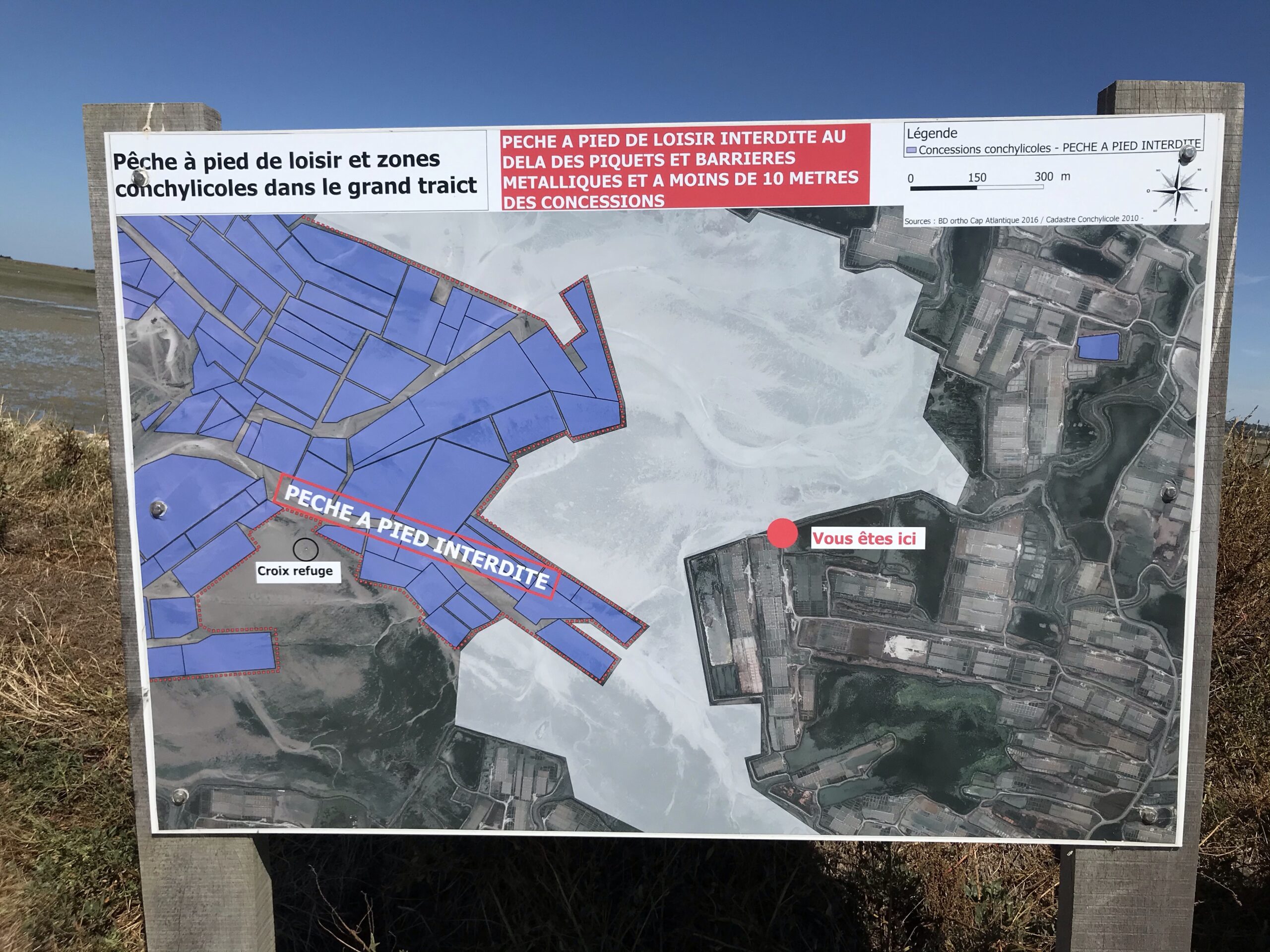
    Map of the salt beds of Batz-sur-Met
    The very slow flow of water through the salt beds – watch carefully.

  • Ponts de Cé to Champtoceaux

    Ponts de Cé to Champtoceaux

    A day for integrated travel! 70km from Ponts de Cé to Ancenis, and then 10km by kayak, our bikes carried to the downstream dock in a van, then cycling up the final 2km out of the valley and into our warm-showers accommodation in Champtoceaux.

    I remember a forward to a Department for Transport report in which John Prescott set out his vision for ‘integrated transport’, journeys made possible by joining together different modes of travel. I’ve always liked this idea, but I try to mix it with a bit of the spirit of adventure of Jules Vernes and Around the World in 80 Days. Mixing cycling and kayaking definitely fits into this category.

    We ate breakfast at a riverside market at Bouchedemaine, where the Maine river joins the Loire. We’ve skirted Angers, but all the surrounding places we’ve visited have been so friendly that I imagine I’d like the city too.

    We really had to get the kilometres in early today to get to the kayak in time. This is the first time we’ve really had to cycle in tight convoy to keep the pace up and stay motivated that we are covering the ground.

    At Saint Florient, I saw this plaque showing distances measured from the bridge. It was created at the start of a period of measuring and controlling the Loire after devastating floods. Measure it, control it, exert power over it. Except compared to other big rivers I’ve seen in France, the Loire still feels quite wild. Not the freight transport artery I was expecting.

    At Ancenis we see our first major suspension bridge across the river. This is where M & I crossed the Loire on our first cycle trip in France from Saint Malo to Agen in 2008.

    We rendezvous with the kayaks and head downstream. Wonderful to be in and on the water, travelling with the flow. The current is strong but it is safe to moor up behind the groynes that reach out into the river and create little beaches behind. We climb out on a beach and swim for the first time in the warm river water.

    A stop at a guinguette, recover our bikes, then do the final climb to our hosts for the evening, a lovely couple who welcomed us to their self-built home, where we camped next to their guinea pigs. We stayed up talking about their travels with a trailer and a tandem through Sardinia, Scilly, Greece and the Adriatic, and then about how they built their house.

  • Weekend engineering works – near Weston-Super-Mare

    Weekend engineering works – near Weston-Super-Mare

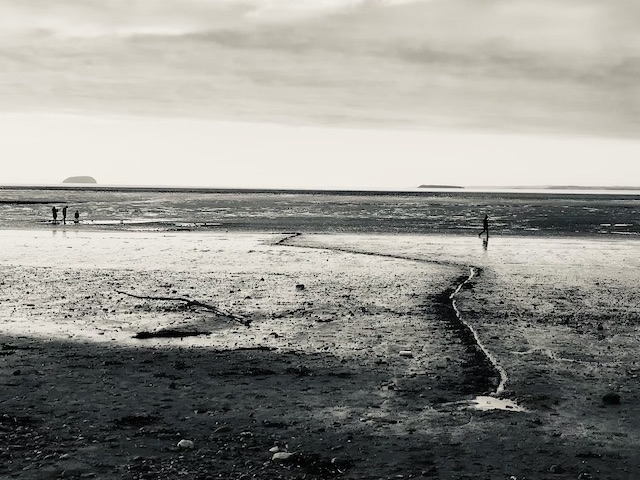
    Today engineers completed work on a major new irrigation channel to bring drinking water to a major new coastal development on Sand Bay, near Weston-Super-Mare. The 60-metre-long new canal brings water that rises from the coarse sand at the back of the beach across the inter-tidal zone to the new fortified town, which looks north-westwards across the Bristol Channel towards Cardiff.

    In a bold vision, the water supply has two functions: potable water supply for the imaginary people living in the turret in the middle of the island; and also to ensure the defensive moat is always full. Anglo-French design and build contractors Eiffelover and Co. have a long track record in delivering civil and environmental projects in coastal settings.

    (more…)