Tag: problem-based learning

  • Setting a vision question rather than a vision statement

    It is my role as Chair of Hazel Hill Trust to be the ‘vision holder’ for the project. There are lots of ways you can interpret what this means. It could be to write the vision. Or it could be to facilitate the process from which the vision emerges. I have chosen a middle path, which is to ask a question.

    My question is, what if Hazel Hill Wood could become a centre for regenerative practice? The challenge I am faced with is being consultative and facilitative about longer-term decision-making at the same time as providing direction while we bring on board new Trustees and make some important operating decisions.

    Asking a question rather than providing an answer sits more comfortably with my constructivist, problem-based learning practice. Yes, I am setting a question, and that question tells us in which direction to head. But the answer gets decided by the people on the journey.

    Read my post setting out this vision question on the Hazel Hill Trust website.

  • What does regenerative design mean for engineers?

    What does regenerative design mean for engineers?

    As I wrote in my last post, this summer I have been thinking about regenerative design, and what it means for engineers. 

    In the context of climate breakdown, the dominant paradigm in design is sustainability: design that seeks to sustain the quality of our existing ecosystem for the benefits of future generations. But as the latest IPCC report makes clear, our planetary systems are so depleted that even if we stopped putting carbon dioxide into the environment now, there is sufficient carbon dioxide in the environment to trigger significant temperature rises and ecosystem destruction. What we need now is to go further than maintaining the status quo and start regenerating our planetary ecosystems through our actions – this is regenerative design. 

    (more…)
  • Ticket to ride winning strategies – weekend engineering works

    This week’s Weekend Engineering Works post is about Ticket to Ride winning strategies. The game involves racing against other players to build a network of railway lines across different counties and continents. What I find exciting about the game is the recreation of an age of bold and adventurous engineering: the railway era. I particular enjoy building routes that I have travelled down in real life. But what I enjoy most is dreaming up winning strategies, and then testing them out.

    In this post I describe my few of my more successful Ticket to Ride wining strategies. Alongside, as you might expect from this blog, I’ve also provided some wider musings on their philosophical implications.

    (more…)
  • The magic moment when learning and teaching come alive

    The magic moment when learning and teaching come alive

    It is the moment I look for on my training courses. It is when participants switch from general interest in the topic or material to a moment of clarity about where they are now, what they want to be able to do and what stands in their way. For me this is when teaching and learning come alive because we have clarity of purpose, a goal which provides both motivation and a clear end point and a challenge that we can sink our teeth into.

    When we reach these conditions we can enter into a space of joint experimentation (as my colleague Søren Willert would call it) where neither of us necessarily know what is going to happen but we have confidence that our efforts will be worthwhile.

  • Approaching professional development as a professional

    Approaching professional development as a professional

    How do you make sure you get the most out of the investment you are making in your professional development? First you have to commit to doing the hand work, which, in fact, comes in two parts. And then you need to create the conditions for your success. All is revealed in this video.

    (more…)
  • The power is in leaving a gap

    The power is in leaving a gap

    So many things that I am working on at the moment lead me to the conclusion that there is power in the gaps. But I feel like for my much of my professional development I have been taught to fill in the gaps.

    (more…)
  • An action learning template for reaching any goal

    An action learning template for reaching any goal

    I met with a friend earlier in the week to talk about setting some life goals. It’s a conversation we had had five years ago and then did nothing about, but this time I came prepared with the Eiffel Over Action Learning Template.

    (more…)
  • #15 Show-notes – Oliver Broadbent interview by Alexie Sommer – Creativity, climate and clowning

    #15 Show-notes – Oliver Broadbent interview by Alexie Sommer – Creativity, climate and clowning

    I spend most of my time designing creativity training for engineers. In this episode we flip the format. Alexie Sommer, Independent Design and Communication Director and collaborator on many of my projects interviews me about why I set up Eiffel Over and Constructivist Ltd, and what our plans are for designing creativity training for engineers in 2020. We get into:

    • Techniques for teaching creativity
    • Our programme of training support people tackling the climate emergency
    • And what engineers might learn from clowns.

    Listen on Apple Podcasts , Sticher or by download here

    (more…)
  • Olafur Eliasson at the Tate + reflections on my own work

    Olafur Eliasson at the Tate + reflections on my own work

    This week I have had the feeling that I have been struggling recently to find focus on my creative work. I have lots of projects on at the moment, and I am not satisfied that I am being able to draw a cohesive thread between them. I think this is important because I subscribe to the idea that to have impact on your work, you need to be regularly adding to it in a disciplined way – always adding momentum to the fly-wheel, as Jim Collins puts it.

    (more…)
  • Keynote: How problem-based learning can save the world and make you happy too.

    Keynote: How problem-based learning can save the world and make you happy too.

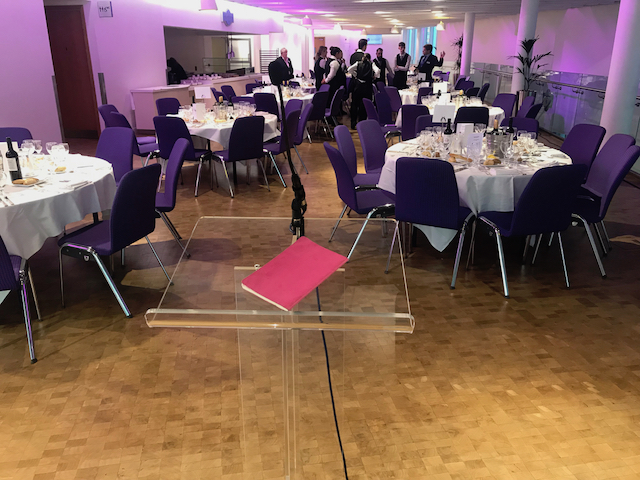
    In November 2019 I was booked to deliver the keynote address for the University of Edinburgh Engineering Faculty’s away day. It was an opportunity to explore how the climate and ecological emergencies are an invitation to delve into:

    • The scale of the challenge to traditional university teaching
    • The nature of the challenge and how we need a different approach
    • How to use a problem-based learning approach
    (more…)
  • Performance versus reflection

    A key part of problem-based learning is reflection. But how do you get people not interested in reflection to start thinking critically about the decisions they take over their learning. The answer could be to think about performance.

    (more…)
  • A reminder about the imminent climate catastrophe and how we should educate engineers to prepare for it

    A reminder about the imminent climate catastrophe and how we should educate engineers to prepare for it

    [The following text is adapted from the after-dinner speech I gave at the University of Edinburgh Engineering Faculty’s away day. It was originally titled ‘How problem-based learning can save the world and make you happy too’. But I have renamed it ‘A reminder about the imminent climate catastrophe and how we should educate engineers to prepare for it’]

    Tonight’s engagement is my first since I took a summer sabbatical, which I planned to use to work on a book. Those plans changed in my first week away when I got involved in the Extinction Rebellion summer uprising in Bristol. That experience of direct action and the reaction it caused prompted me to read much more about climate breakdown, models for political change, the implications of societal collapse, the role of engineers to help minimise impacts and deal with upheaval in our own communities and the role of the people that teach engineers.

    (more…)
  • Notes from IStructE Academics’ Conference 2018

    There was great energy at today’s IStructE Academics’ Conference, the theme of which was Creativity and Conceptual Design.
    If you are visiting this site for the first time, it may have been thanks to Chris Wise’s kind recommendation in his keynote presentation – thanks so much Chris.
    I presented a session on how to have ideas. Usually when I’m billed with this title, I run a workshop on idea generation, but I thought for once, I would stand up and say what I think about the subject. I’m glad I did because it seemed warmly received. It was also a chance to talk through themes that will be included in the chapter I am writing in a book on scheme design – more details to follow.

    (more…)

  • Secretly teaching design – notes from our curriculum planning day at Imperial

    Secretly teaching design – notes from our curriculum planning day at Imperial

    I am just back from taking part in a Design Thread workshop at Imperial College, the aim of which was to co-ordinate activity between the various design-relevant courses on the undergraduate civil engineering course at Imperial. Here are some reflective notes as I whiz home, during the writing of which I came up with the notion of ‘secretly teaching design‘. (more…)

  • 12 Principles for Problem-based Learning for Engineers

    12 Principles for Problem-based Learning for Engineers

    Over the last 9 months at Think Up I’ve been invovled with an engineering education project that has had a really deep philsophical impact on me. The project is called Enginite, an EruasmusPlus-funded programme of graduate training and placements that aims to give graduating engineers extra skills and experience that will make them more employable.

    My role has been to collaborate with Prof Søren Willert, of the University of Aalborg, to train project partners in how to design courses using a problem-based learning methodology. PBL flips traditional learning on itself, and holds as its fundamental principle that learning is more effective – in terms of retention, recall and motivation – if students drive the learning process themselves. It is one of those statements that we know to be true from experience, but goes directly against how most education is delivered in engineering education. PBL addresses that dissonance by creating a framework for giving students ownership of the problem. (more…)