There are some inputs to our creative process that we build up over time so that we are ready to draw on them whenever we work on a new project. In this next post in my series on creative thinking tools for projects, I will share with you another source of inputs for the Kalideacope. I call it the ‘preparing the colours for your Professional Palette. These are the set of colours from which you paint your ideas. The image this phrase conjures up for me is of the Impressionist painter spending time in their workshop in Paris getting their paints ready before they get on a train from the Gare St. Lazare, head out into the Normandy countryside and paint a landscape. You have to do the prep in the workshop before you can go out and paint. But how does this apply to us?
(more…)Category: London and Paris
-
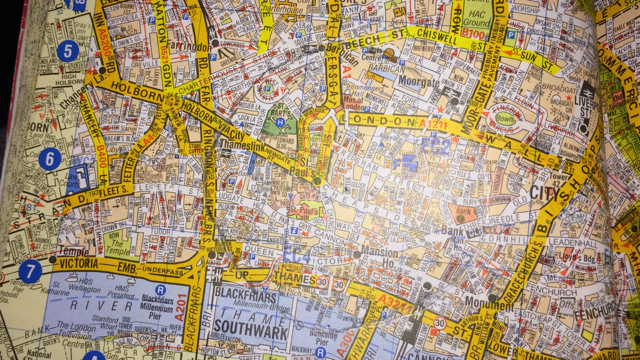
Derive #2 City of London – Log book
- 19/3/18
- Derive #2
- Location: City of London
- Context: preparation for my talk ‘Circling the Square‘
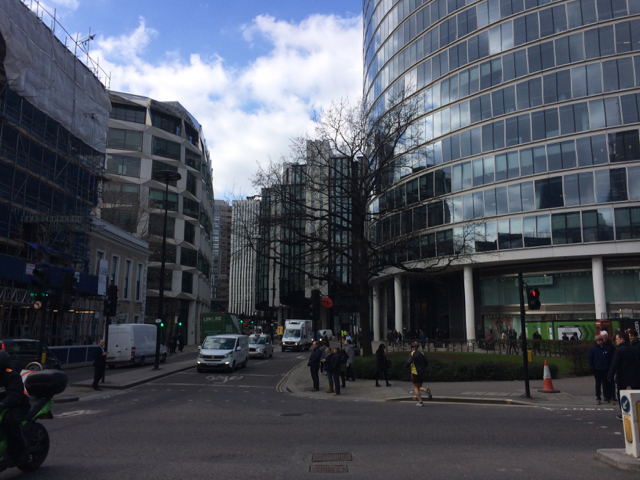
Moorgate x London Wall - 0:00:00 Moorgate and London Wall. Once solid-looking stonewalls are now façades pinned in place by scaffolding while new buildings are constructed behind. In just a few years the streetscape along London Wall has completely changed
- 0:04:34 London Wall and Copthall Avenue Deep metallic groans sound out from behind these hoardings. I assume the core of the building is being demolished, and the sound is the building complain.

- 00:09:41 Black Rock The circle leads straight into the offices of Black Rock. I enter the revolving doors and walk through a long dark lobby past whispering clusters of suited men and women. I emerge blinking onto a much quieter street, Tower 42 in the distance.
- 0:13:31 Copthall Avenue The circle passes straight through the Angel Court building. I attempt to walk through the underground loading bay but I’m turned back by security. There are some places you really aren’t supposed to go.
-
Harrow: my original civil engineering inspiration?
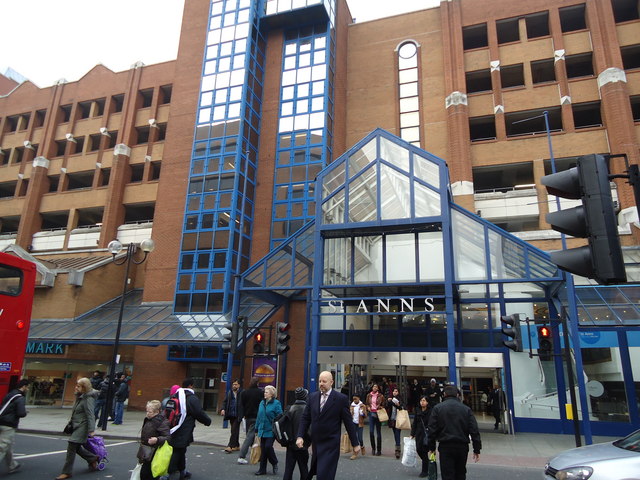
St Ann’s shopping centre, Harrow – my original inspiration? ‘geograph-2284249‘ by Stacey Harris is licenced under CC BY SA 2.0 This morning I was down at our local primary school arranging to do a talk about civil engineering for the Year 5 and 6s. The head teacher remarked that most of the teachers at the school probably wouldn’t know what civil engineers do, let alone the students. It was the same for me as a kid. But although I didn’t know the words civil engineer, I was fascinated by all things civil engineering: big construction, railways, bridges, waterways.
I grew up in Harrow, and though I regularly visit family in the area, in over fifteen years I haven’t been back to the town centre that was the backdrop to my childhood. This week, beating the Tube strikes meant an eighteen mile cycle ride through that part of the world. After an hour and a half in the saddle in the pouring rain I decided to take a pit stop in downtown Harrow. And WHAMM: all these childhood memories came streaming back, as vivid as if they were yesterday:
- There’s the ‘whole in the wall’ where my Dad would queue for cash
- There’s the Debenhams that I followed my Mum round on what seemed like endless trips
- There’s where I first went to McDonald’s on my own
- That’s where I got mugged for the money I’d saved up to buy a new motor for my radio control car
- There’s the bar that underaged me used to go into at 4pm on a Saturday and wait patiently to avoid the evening bouncers.
But the strongest memory I have of all is the excitement of seeing much of the town centre under construction. For the suburban child that I was, Harrow was the big lights. The 6-8 storey office blocks in the town centre I considered big, glamorous, sophisticated – like the buildings in the montage at the start of Dallas. So when construction started of an enormous middle-of-town shopping centre began including a 9-storey post-modern multi-storey car park, it really captured my imagination.
I remember watching the St Ann’s centre being built right from the basement excavation works and the piling through to the fit-out – watching from the bus stop across the road. I remember the steel superstructure being erected and asking my Dad why they were building a giant Meccano model of the building before they built the real thing. The new centre required major rerouting of the roads – this too I found fascinating.
The influence of all this construction is clear in the drawings that I made at this age – some of which I still have. I was trying to design my own shopping centres, car parks, one-way systems, tram systems, all modelled on Harrow. There were other influences too: the construction of the M25 up the road was an event horizon for me. When my best friend moved away, I asked if he would be coming back before they finished the M25, something which I knew would take ages. When I was told no he wouldn’t, I knew I was in for a long wait.
I even remember aged about ten going to a traveling exhibition about how Harrow would be served by something called ‘Crossrail’ – that sounded incredible.
After St Ann’s with its anchor stores and enticing food court, they built St George’s the even more ambitious St George’s shopping centre, and then the Harrow property bubble must have burst because there is the concrete shell of abandoned incomplete office block just around the corner. These days the anchor stores have dwindled, and the food court sells more chicken than I remember.
Had I grown up here fifteen years later I wonder if I would have been similarly inspired?
-
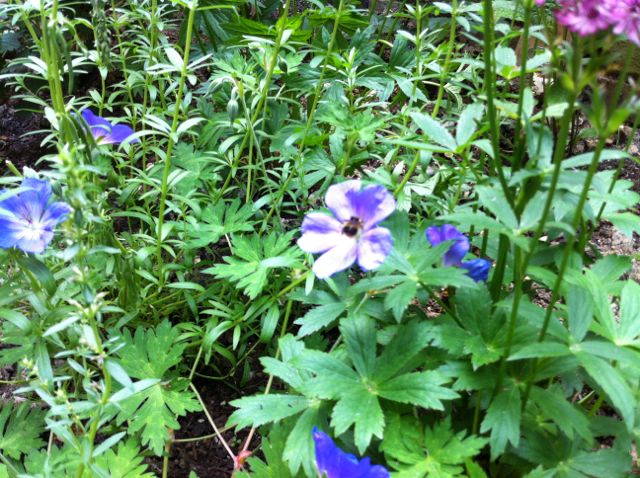
From concrete courtyard to blooming garden – the story of the Big Dig
In December last year I wrote about day one of the Big Dig, M and my plan to transform our barren concrete courtyard into a thriving patch of urban greenery. Today we celebrated the completion of that grand plan with a garden party – a harvest festival no less! – for everyone who helped us along the way. Here’s a little movie slide show of what we achieved.
Seeing all the insects buzzing between the flowers in the beds it is hard to remember that this was an apparently lifeless little corner of London (no doubt kept lifeless with ample weed killer). And in January, when we were standing in knee-deep holes in the ground digging in compost, it was hard to believe that it would turn into the lush environment that it is now.
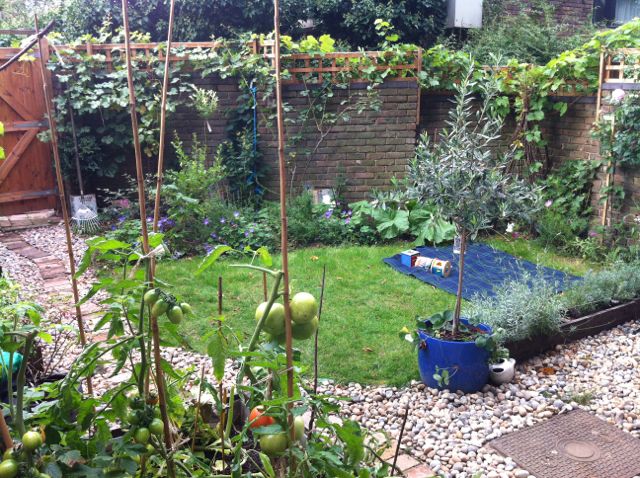
By the time spring arrived we were putting in the new ground covering: a mixture of turf and gravel, beds and raised beds. The trees and most of the plants went in by early April. I remember thinking that they were quite spread out – just as well given how much they grew. In the summer we turned our hands to plant vegetables – too late in hindsight, but we are still figuring this stuff out.
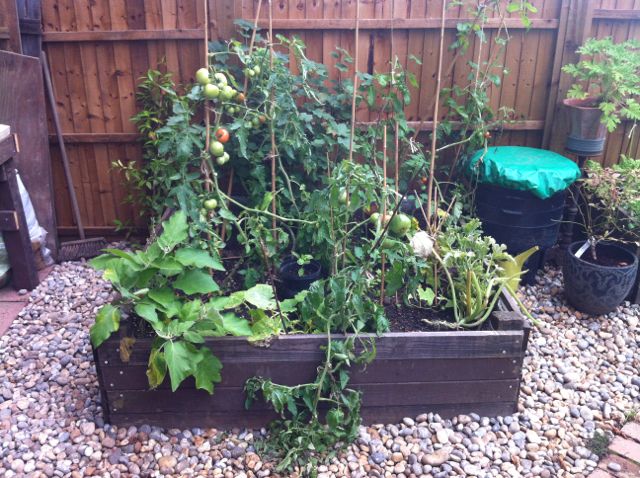
One of the aims of the project was to use waste material wherever possible. We had had our collapsing garden fence replaced with a new one, but had asked to keep the old timber. This well weathered material we were able to put to good use, creating three raised beds, a cold frame, a bike shed and compost heap. And because the material all came from the same fence, all the structures we built have a unified look. Continuing on the re-use theme: half of the old back door became the lid for the cold frame; the dozens of bricks we found in the ground became the garden path; an old allotment shed door became the roof of the bike shed.
Two things have made this transformation possible. The first is the plan for the garden put together by our friend Amanda Dennis. From her beautiful pen and watercolour design, to the step-by-step project plan, she guided us through the whole process, and I think she is as pleased as we are with the result. The second is the tremendous help we have had from friends, family and neighbours – I count sixteen volunteers in total over the last nine months. People have lent us tools, sent us plants, driven cars to the dump, built sheds, looked after our baby and dedicated whole days to digging. It has been very heartwarming – and a lot of fun.
And so to the harvest. Roughly speaking: a punnet of raspberries, red currants, blueberries and a half one of strawberries; a few baby carrots; two plums; two courgettes; fist-fulls of herbs; a dozen ripe tomatoes – and two dozen green tomatoes still full of promise; and a gherkin. We wanted to feed our harvest festival guests the fruits of the labour, but since most of these fell earlier in the year, we had to be a bit creative with the menu: lavender cake; savoury vine leaf cake (delicious!) and herb bread topped with our one gherkin thinly sliced.
It would be easy to think now that the hard work is done – but now we have the not so small task of keeping it all alive. Watch this space.
-
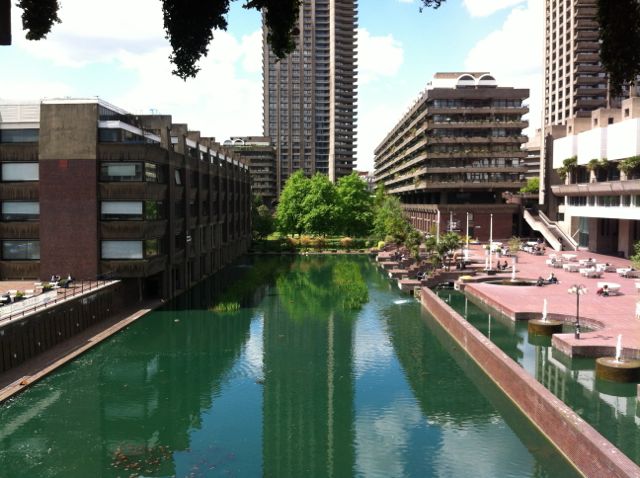
Barbican, you were looking lovely today
Today the Barbican looked stunning. I had the feeling that with the sun shining this is how Chamberlin, Powell and Bonn’s original renders of the Barbican might have looked.
[pe2-image src=”http://lh6.ggpht.com/-7ka-Lujly04/Ubay2xXgaVI/AAAAAAAAAYA/av_FNCOhNWc/s144-c-o/IMG_4923.jpg” href=”https://picasaweb.google.com/101339256689884186918/BarbicanYouWereLookingLovelyToday#5888090216868112722″ caption=”The Barbican” type=”image” alt=”IMG_4923.jpg” pe2_gal_format=”phototile” ] [pe2-image src=”http://lh6.ggpht.com/-3WrpNspLFDU/Ubay_xHkfrI/AAAAAAAAAYA/_K04qXLe_t0/s144-c-o/IMG_4938.jpg” href=”https://picasaweb.google.com/101339256689884186918/BarbicanYouWereLookingLovelyToday#5888090371420094130″ caption=”The Barbican” type=”image” alt=”IMG_4938.jpg” pe2_gal_format=”phototile” ] [pe2-image src=”http://lh3.ggpht.com/-qYEOy4EO4k8/Ubay3h3er5I/AAAAAAAAAYA/tkpj2yfeP-Q/s144-c-o/IMG_4924.jpg” href=”https://picasaweb.google.com/101339256689884186918/BarbicanYouWereLookingLovelyToday#5888090229887119250″ caption=”The Barbican” type=”image” alt=”IMG_4924.jpg” pe2_gal_format=”phototile” ] [pe2-image src=”http://lh6.ggpht.com/-jjvpv0FP_So/Ubay3zuAifI/AAAAAAAAAYA/Wwm1kHfEZ_U/s144-c-o/IMG_4925.jpg” href=”https://picasaweb.google.com/101339256689884186918/BarbicanYouWereLookingLovelyToday#5888090234679233010″ caption=”The Barbican” type=”image” alt=”IMG_4925.jpg” pe2_gal_format=”phototile” ] [pe2-image src=”http://lh4.ggpht.com/-5qn-s4kKcZo/Ubay7vmD9VI/AAAAAAAAAYA/x1Ea6mFproI/s144-c-o/IMG_4928.jpg” href=”https://picasaweb.google.com/101339256689884186918/BarbicanYouWereLookingLovelyToday#5888090302291637586″ caption=”The Barbican” type=”image” alt=”IMG_4928.jpg” pe2_gal_format=”phototile” ] [pe2-image src=”http://lh5.ggpht.com/-Ytf_6MDS-IQ/Ubay8yiXclI/AAAAAAAAAYA/S8zKN5uEi1M/s144-c-o/IMG_4934.jpg” href=”https://picasaweb.google.com/101339256689884186918/BarbicanYouWereLookingLovelyToday#5888090320261313106″ caption=”The Barbican” type=”image” alt=”IMG_4934.jpg” pe2_gal_format=”phototile” ] [pe2-image src=”http://lh3.ggpht.com/-VFMrT96W6Ok/Ubay-v3q0jI/AAAAAAAAAYA/Wrl3QfOnHtY/s144-c-o/IMG_4937.jpg” href=”https://picasaweb.google.com/101339256689884186918/BarbicanYouWereLookingLovelyToday#5888090353905095218″ caption=”The Barbican” type=”image” alt=”IMG_4937.jpg” pe2_gal_format=”phototile” ]
-
In Praise of Euston Station
I know it is not often that you hear people say this, but I do really like Euston station – from an interpreted transport perspective, it is a good example of a well-thought through hub. (more…)
-
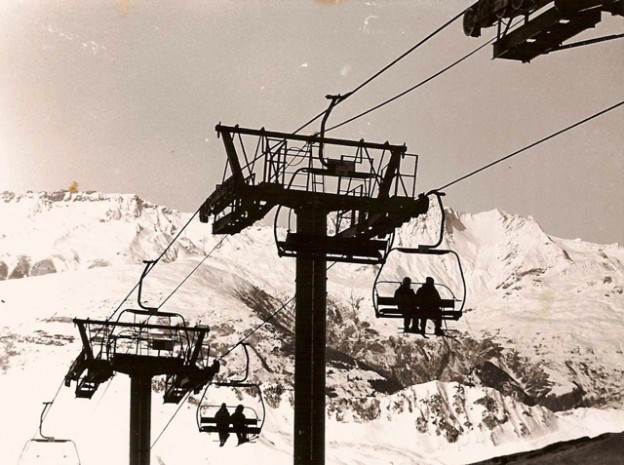
Archive photos/early attempts at developing/les arcs
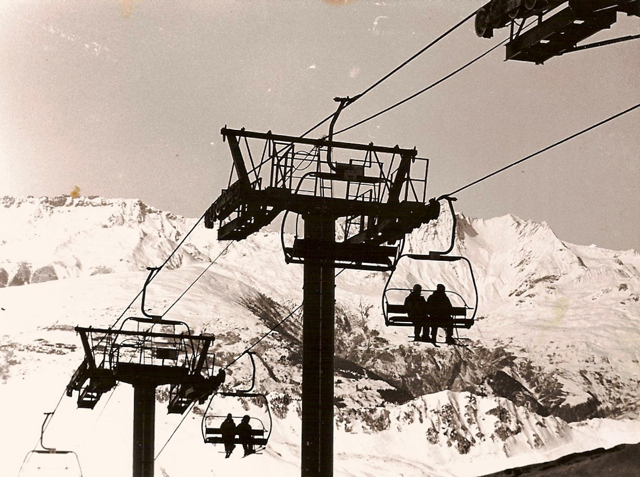
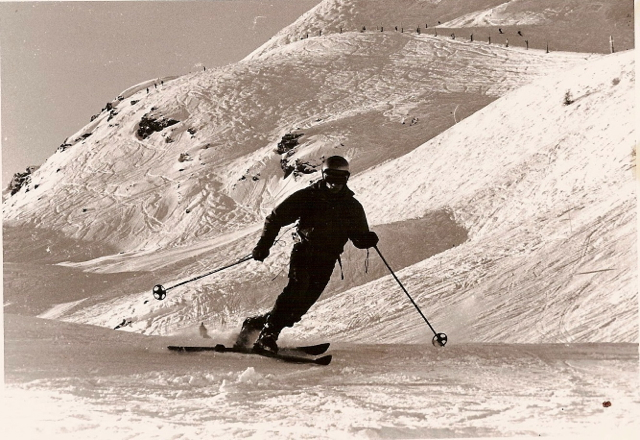

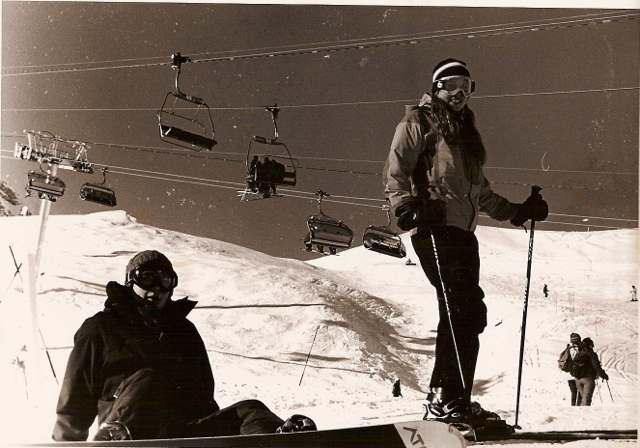
Probably the best module I studied during my year at ENPC was not engineering-themed – but photography. The module was run as an English language course: the subject of the lessons was photography, and the lessons were in English. Being a native English speaker I was not able to get any credits for the module, but I gained much more. I still vividly remember the magic of seeing images emerge on pieces of paper submerged in solution. In just a few short hours of teaching I learned somethings that have been much more valuable to me than the hours of lectures I sat through on other subjects.
These photos were taken on a weekend trip skiing at Les Arcs. Getting from Paris to the Alps by overnight train is easy by the way. The night train leaves from Gare d’Austerlitz, and arrives Bourg St Maurice, where there is a lift straight up to Les Arcs.
-
The Big Dig
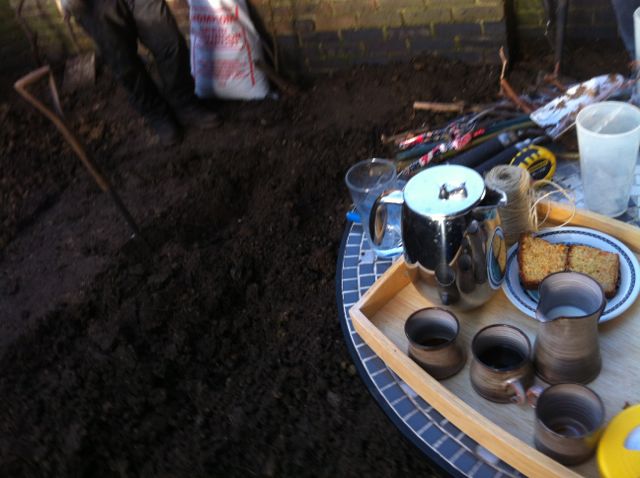
This is not a post about the civil engineering megaproject to put a massive road underground in Boston. This is a post about spending a very satisfying day with a gang of friends and family ‘heaving hoe’ in our garden.
-
Going full circle on the Overground
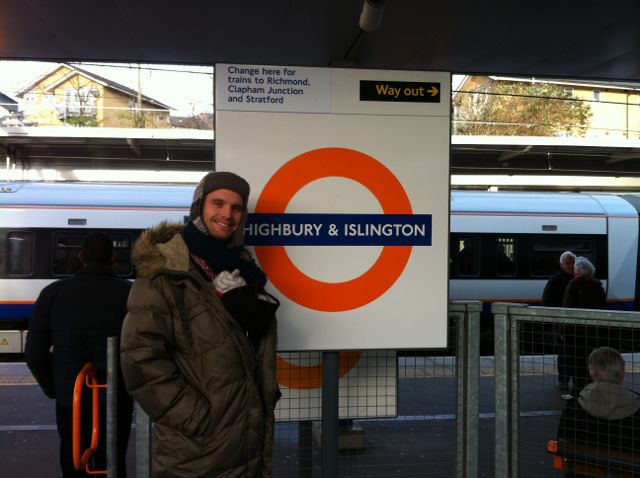
I feel like a bit of a wally standing here in the rain at Clapham High Street Overground station. There are many shorter ways to get me home, which is diametrically across London from here. I could for example slice straight through the middle on the Northern Line. But I want to take the slow circumferential route simply because for the first time, I can. (more…)
-
Skyfall, starring Daniel Craig…and Bazalgette’s sewerage system
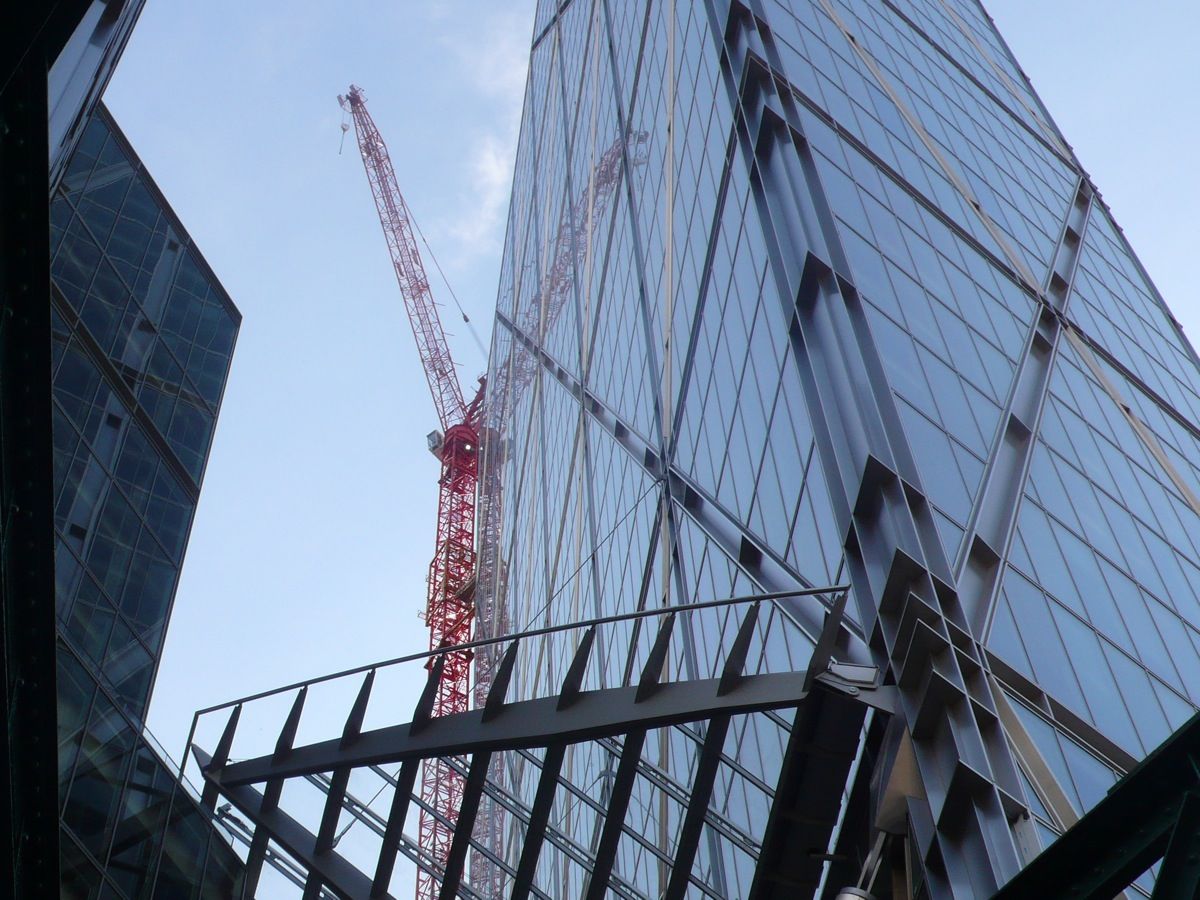
Being set mostly in London, the latest James Bond film, Skyfall, takes us an action-packed tour of some the city’s great engineering projects: disused Underground tunnels, Bazalgette‘s embankment sewerage system, and even the ancient tunnels under Smithfields, adjacent to the Crossrail site at Farringdon. Even Bond is supposed to be scaling a skyscraper in Shanghai, it is in fact The Bishopsgate Tower (pictured). I was bemused to see that the meticulous plan of the villain seemed to depend on the District line running without delay. Was this meant as a joke?
-
Speaking with Pictures – Peter Ayres at Big Draw Big Make at the V&A
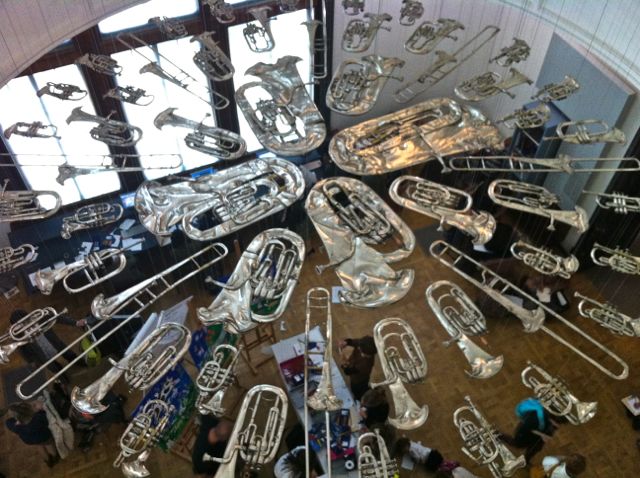
This afternoon M and I dropped in to the V&A to see what was happening at Big Draw, Big Make. The first talk that caught our eye was Speaking with Pictures, by Peter Ayres from Hetherwick Studio.
(more…) -
A few photos from National Walk to Work Week
[slideshow]
Last Friday, inspired by National Walk to Work week I walked to work, first to the Hub in King’s Cross, and then on to Oxford Circus. Here’s a few photos I took on the way to King’s Cross. I took a similar route on foot to that which I normally take on my bike, but being on foot I was much more inclined to stop and look at things en route. Highlights included trying out a new tree house climbing frame in Arundel Square and a precocious cat.
-
Notes from Migrations at the Tate Britain
Notes on a few things that caught my engineer’s eye at the Migrations exhibition at the Tate Britain today.
‘Quickly Away Thanks to Pneumatic Doors’ and ‘Soon in the Train by Escalator’, both by László Maholy-Nagy, 1937 are two eye-catching information posters that explain how new technologies will work to improve passenger journeys. The posters are clear, without being patronising. It makes me wonder why we don’t do the same now to explain the engineering that is being employed to build the latest additions to the Tube. Right now in London, we have one of the largest infrastructure projects ever undertaken in the capital underway, Crossrail, and yet the project feels hidden rather than celebrated. More public civil engineering information posters please – I am sure they would be avidly read by young and old.
-
Roll up roll up engineering communicators…time for more Science Showoff
…it’s Science Showoff time (well it will be next Tuesday). That magnificent monthly occasion when enthusiasts from all walks of science tread the boards in an entertaining manner in a pub, a nice pub in fact. There’s live demos, banjo-playing quantum mechanicians and people with witty things to share with you across the spectrum from biology to astrophysics. There’s a good cause and a general feeling of bonhomie.
What’s missing? Engineers. There’s loads of stuff that engineers could talk about that this science-hungry audience would lap up. I had a go with cooking with concrete and a Forth Bridge demo, and now it’s my job to try to get more engineers to do the same. So if you think you it’s up your street then come on down on Tuesday to get the measure of the place.
The next one after that will be on the 5th June, when you could have a go yourself. Go on…
-
Dan Lepard, my first loaf, and the value of fail-safe instructions
My highlight of the Guardian Festival yesterday was Dan Lepard, regular baking columnist for the Saturday Guardian. In a packed room he gave five golden rules for successful bread baking. Listening intently, having never baked a loaf myself before, his directions seemed so clear and his approach so straightforward that I just wanted to go home and bake.
In this instance I think I probably fall into that category of learner who knows so little about baking that I needed clear steps to build my confidence, and it serves as a good reminder of how important it is to prepare a clear message when working with learners who lack confidence. As soon as members of the audience, clearly with more advanced ‘kneads’ (ha ha), chimed in with their clever questions about complicated stuff, I tried not to listen, so as not to lose that clarity of thought the presenter had given me.
And so I present my first loaves. May they be the first of many…
-
Good laughs at Science Showoff
I went down to Science Showoff last night at the Wilmington arms, ‘an open mic night for all communicators of science’. The spectrum of material covered was rather large: from shining infra red light through the skulls of babies, to the biochemistry of baking; from the sad world of lonely neutrinos to the history of the space shuttle programme as told through a mash up of archive footage.
-
Resisting Ikea – preparing for Monday’s sustainability conference
I spent most of last weekend preparing for a sustainability conference that we ran on Monday (post about that event appearing shortly). I know from experience that the last few days of organising any event like this always involve a mad dash to the shops, and this time was no different.
[slideshow]
(more…) -
Looking back from the future: Useful Simple Trust’s first decade, as told in the year 2020
As part of the Useful Simple Trust Away Day in June 2011, eight Trustees and Directors were each asked to compose and present a five-minute piece giving an overview of the Useful Simple Trust in the year 2020. These pieces, in various formats, from a virtual 3D Skype teleconference to an epistemological exchange were presented to the audience from within a hanging shroud of black material – an opaque tent representing a barrier between the future and the present. Below is an approximate transcription of what I said.

“Hello, can everyone see me? Looks like it. Good. This 3D Skyping system is incredible: it feels like we are in a room together when in fact we are all of us is in different parts of the world. So, greetings to the team of consultants working on the 2020 Qatar Olympics. Hello to the team working at the UN’s floating HQ for climate change mitigation strategy, currently moored somewhere over Norfolk. And of course, hello to the team of engineers in Belgium working on the infrastructure reconstruction programme following the recent civil war out there. I will begin.
“I have been asked to say a few words to characterise the way the Trust works, and describe the key moves that we made over the last decade to get us to where we are now.
“I would say that the environment in which we work is firstly characterised by extensive and complex overlapping networks of personal and professional contacts. We use these networks to learn, to share information, to collaborate on work and to market our services. We make far more use of our personal social capital than we ever did before, and our communication using these networks is completely decentralised.
“The second characteristic relates to where we add value. Information is cheap, and with the development of automated Google research projects, there is a phenomenal amount of data available at our finger tips. At the same time, much of the process work that we used to carry out in the UK is now carried out for a fraction of the price abroad. Our skill as an organisation has therefore become the assimilation of information and the creative design of strategic solutions to problems, on which we must then collaborate with other partners internationally to deliver.
“Thirdly I would like to characterise how we work as individuals within the organisation. Seeking to avoid specifics, I describe the staff as being made up of ‘omni-workers’, apprentice ‘omni-workers’ and mentors. The omni-workers have the key trinity of skills: assimilation, creative problem solving and business sense. Plying the avenues of their complex personal networks, these members of staff work as individuals, collaborate with other organisations, or collaborate with other omni-workers wherever the work may be. They are accompanied by apprentices who are learning their trade, and they are guided by mentors who offer up their own experience by way of training.
“To conclude a description of the working landscape, I will describe where it is we work. The short answer is wherever the work needs to be done. We are a highly decentralised interconnected workforce but with robust links to centralised online resources and administrative functions that support us.
” I will now describe the five decisions that the Trust made that were key to getting us to where we are now:
1. We recognised long ago that specialism would increasingly become a liability, and that the asset would be the skill of information assimilation and collaboration with others.
2. We also recognised the immense social capital of the organisation, and the power of an individual’s personal and professional networks to share information, to collaborate on projects and to promote our activity.
3. We decided to identify a number of key societal challenges that we would seek to collaborate on and work towards solving in our projects – thus developing a polemic for the organisation.
4. We recognised the need to raise the level of overall business strategy awareness of the organisation, and set up an internal business school to do so.
5. We packed up our bags and left Morley House, our former HQ in Oxford Circus, and we followed the work.
“As for any regrets over the last decade? I would have to admit to at least three: working far too hard in those early years – not recognising the need to prioritise; not identifying the key societal challenges that would be the focus of our work; and only taking one sabbatical in the last ten years and not two.
“Thank you very much”
-
Showreal – Millennium Bridge Micro Documetary
Early this year I was filmed presenting a short clip about the Millennium Bridge by a TV production company developing a concept for a new engineering show. We did the shoot on a freezing January lunchtime. Producer/Director Nick Watson has just posted the clip on YouTube. Thanks Nick!
http://www.youtube.com/watch?v=bJoCc3OyCwA
-
New Year’s Day – Gauguin: Maker of Myth

M and I have been meaning to go and see the ‘Gauguin: maker of Myth‘ exhibition at the Tate Modern for some time. The reviews have been great, the main criticism the huge crowds. With the exhibition due to finish soon these crowds were only likely to get worse. On New Year’s Eve I remembered I previous NYE when we were on a skiing holiday. Fresh snow had fallen during the night and so we had set our alarm clocks painfully early on New Year’s Day to make the most of the virgin snow. We were the first people on the slopes and it was magical – well worth the effort. Inspired by this halcyon vision, I booked us in for a 10am slot at the Gauguin on New Year’s Day. It was only slightly painful and well worth it.
The exhibition is arranged around a number of themes, such as treatment of women, or religion; and not in chronological order. For me the effect was to focus my attention not on the painting and sculpture but on the man himself – something which I imagine Gauguin would have been pleased with.
I was moved and fascinated by a great number of the paintings- particularly in the way that the colours seem to sizzle; and in the way that some of these paintings seem to open the door to artists such as Matisse.
But what really surprised me was the remorseless pursuit of his own agenda. Nothing (including a wife and five kids) would stop him pursuing the romantic primitive ideal that he seems to have got a flavour for at the colonial exhibitions that he visited in Paris, which eventually took him to Tahiti. And when he got there and found it not as primitive as he had hoped, he just painted what he had wanted it to look like, and spread syphilis in the process- classy.
A very interesting exhibition and morning out. By lunchtime a Bloody Mary and a delicious veggie breakfast at Bill‘s offset the creeping return of the New Year’s hangover. Toast and curry for dinner: not a bad start to the year.
-
Hamlet at the National Theatre – what an epic!
Today I saw Hamlet for the first time. The production that M and I went to was at the National Theatre. Perhaps I shouldn’t be so surprised, but what an epic play it is! There’s murder, deceit, revenge, love, pirates, Denmark and swash-buckling sword fights. I particularly enjoyed the way that this modern production turned the King of Denmark’s speeches into press conferences complete with press advisors and secret service guards. I also liked the mic hidden in the Bible – nice touch.
-
Belly dancing, Charleston and keepy-uppies – civic participation in action
[youtube=http://www.youtube.com/watch?v=3gooD14xRh4&hl=en_US&fs=1&border=1]
This morning I was delving further into Bowling Alone (more notes to follow); by this evening I found myself performing at the Charity Gala, Oak View School – part of the Loughton Festival, and the sort of charity event that this book both celebrates and of which it reports the decline.
I had long had this evening’s dancing gig in my diary but I hadn’t really found out anything about it until I arrived. We cobbled together our routine in the car park – which provoked a few stares) and then went in for the show. I was quite astounded by how eclectic the mix was. We were preceeded by a belly dancing troupe, a folk group who sang about dismembered limbs, and a mandolin player (that we didn’t see because we were busy rehearsing our moves). Ours was the Charleston routine that we have used to tread the boards of a fair few Essex venues now; nevertheless I am glad we got that car park rehearsal in – it paid off. But the show stopper was the guy after us who did endless keepy-uppies to music. It’s amazing what hidden talents people have. The world is a better place for them!
I won’t know what Joseph Putman says about how to reverse the decline in social and charitable events until I get to the final section of his book; I would like to think that belly dancing, Charleston and keepy-uppies have a role to play.
-
Touring the Capital with ICE President Paul Jowitt

Article written for the ICE London’s newsletter in my capacity as Chair of the London Graduates and Students.
Touring the Capital with ICE President Paul Jowitt
ICE President Paul Jowitt’s visit to the London Region.
At the beginning of March I was invited to tour the Capital with ICE President Paul Jowitt. The day long tour was his formal visit to the London Region. I always find the President’s visit to the London Region a funny thing because the President inevitably spends a large portion of his time in the area anyway; nevertheless the President’s visit is intended to be the time at which he or she is formally given a tour of the London Region to hear about the work that this region of the ICE has been up to, as well as to find out about the engineering projects taking shape at the moment. The story of the day was two-fold: great engineering works, and great work being carried out by the ICE London Region volunteers and staff.
The day started with a tour of the Olympic Site. We met at the View Tube, the Olympic Park’s luminous visitor centre from where all the main stadia can be seen whilst munching on the most up-market breakfast butty (read ciabatta) in town. Touring the site in a bus, our tour guides went to great lengths to tell the story of the engineering that we couldn’t see: the park’s extensive infrastructure and enabling works, which were up for an award at the evening’s ICE Merit Awards.
A sprint across town took us to the BBC for lunchtime where we met a group teenagers taking part in an ICE/BBC/Collaboration. The group had been filming interviews with members of the public about Crossrail. We joined them while they were making edits to their films in the BBC’s edit suite designed specifically for school groups. All were amazed by just how the students came alive on camera. One participant didn’t realise that he had managed to coller former Controller of BBC One Alan Yentob into doing an interview. That same student said to me later that it had been the best day of his life. Full credit then to Susan Clements at the ICE who had put this event together.
After lunch in the notorious BBC canteen (do people still make jokes about it? If they do, I don’t see why: it was at least as upmarket as the view tube), another sprint took us back to ICE Headquarters for the President’s meeting with representatives from the ICE London’s Graduate and Students Committee. The session, organised by G&S Vice Chair Kiran Gowda, focused international development, one of the President’s special interest topics for the year, and the role that graduates and students can take in development. The session was a discussion between experts from the field including representatives from Engineers Without Borders and Practical Action, and graduates and students who had secured their place by writing in beforehand with questions that they would like to ask.
The finale to the day was the ICE London Merit Awards, held at the London Transport Museum. The museum made for an exciting venue. This high-profile event celebrated the best of the capital’s recent engineering. Of course the Shards and the Olympic Parks of the line-up did very well – impressive engineering that deserves celebrating – but I was especially glad to see the work of council engineers being celebrated. The judges gave a special award to a small group of local authority engineers who had improved the pedestrian spaces in Woolwich town centre – as important, if not more so, than than structural gymnastics of sky scrapers.
All in all a fascinating, enjoyable and thoroughly exhausting day. A big thank you to Miranda and her team for putting together such a great programme of events.
-
An ode to my bookmark
It slipped away from between the pages as I pushed my way down Oxford Street. It was a present, given to me by my house mate Rose. At that time in 2002 we were house mates while teaching in the States. Rose had been on a trip to Atlanta and brought me back the long oval almost fish-like metal bookmark. Along its body was inscribed, “nothing was ever achieved without enthusiasm”, which I took as a compliment rather than a criticism.
In those early days of multicoloured security alerts I was held for half an hour at Newark airport while the security staff debated whether or not it could be a terrorising implement.It has parted the pages of many books, and has been lost and found many a time. But this time I fear it is gone forever. Goodbye old friend. I hope you are picked up and used by someone else and are not swept up to an early grave.
-
Frank Auerbach: London Building Sites 1952-1962

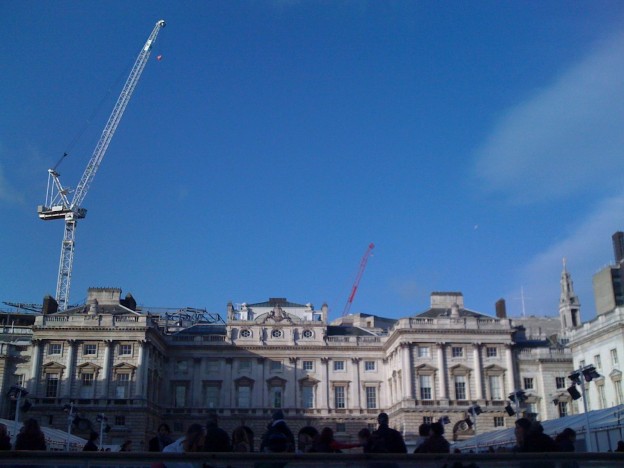
This afternoon M took me as part of my Christmas present to the Courtauld Gallery to see the exhibition ‘Frank Auerbach: London Building Sites 1952-1962. Quite how I have managed to live in London and work in the built-environment sector all these years without ever having taken a look at the Courtauld I just don’t know.
This collection of Auerbach’s work explores the striking and immense construction sites to be found in post-war London. But unlike the clean-cut lines of the modern architecture that rose from the sites, Auerbach’s work is all about the excavations. This is an artist that is painting the world of the civil engineer: the deep excavations for the Shell Building on the Southbank, the basement for the John Lewis headquarters on Oxford Street, the girders of One New Change adjacent to St Paul’s.
Auerbach layers the paint on in spades – up to an inch thick in some works. This is the result of repeatedly reapplying the paint and reworking each piece. The result is a rich texture that evokes the physicality of the building site. The walls ooze and seem almost to weep water; you can almost smell the unearthed depths. The images have been rendered and rerendered so many times on the same canvas that the original image is almost completely obscured and is only identifiable by reference to the preparatory sketches that accompany some of the works. But as a friend put it, you can get so much more out of the paintings but reflecting on the sensations they evoke rather than trying to pick out any particular detail. The reworking of the paint makes a striking resemblance to the movement of materials on site.
“Through his labours with paint, Auerback vividly translated the chasms of mud, shored-up earth and equipment into works which express the creation and distruction inherent in London’s post-war building sites” – exhibition introduction
‘Building site near St. Paul’s: winter’ situates the observer inside the construction site of One New Change, a building which has since been redemolished and is currently being rebuilt again. Unlike many images of the cathedral painted during the war in which the dome is seen to rise above the flames of the Blitz, in this painting St Paul’s cowers away in the corner submitting to this new architecture.
‘Shell Building Site: from the Festival Hall’ is one of set of works peering into the excavations for London’s first skyscraper. What’s struck me about these paintings is that while these are images of the construction of London’s modern era buildings, the viewer could be looking at a site centuries earlier – medieval even.
Probably most inspirational however was the collection of quick hand sketch studies of the sites that feature in some of the works. The lines are very simple but very powerful. Over the last two years I have been on a couple of building drawing classes, and have sketched many buildings: sketches that are about a finished product. But these works are much more about the process than the result. 50 years later another gaping hole has opened up on Oxford Street, a building demolished by developers rather than bombs. I find myself reaching for my sketchbook…
-
The Smallest Cinema in the World

The Smallest Cinema in the World is now open. The Cinema, conceived by artist Annika Eriksson as a venue for films that she is making about Regent’s Park, was designed by a team from Hopkins Architects and Expedition Engineering. The Cinema is mobile so that visitors will have to penetrate deep into the park to find it.
-
Other mobile structures in London this summer
The Smallest Cinema in the World will be a mobile structure. It will be towed to different locations in Regent’s Park throughout the summer. This is possible because the base of the cinema, hidden behind those beautiful shells, is a trailer.
I want to compile a list of other mobile or demountable structures that will be in London this summer. I will start the ball rolling with:
Tonkin Liu’s signature pavilion for this year’s London Festival of Architecture.

-
Richard Rogers Exhibition – Pompidou centre
The Richard Rogers exhibition at the Pompidou centre is now over. I went once and meant to go back as there was so much to take in (and I seem to get exhibition fatigue after about an hour and a half) but alas I didn’t get the chance.
Highlights were the 1:2 scale bright pink models of one of the Heathrow T5 connections, the exquisite 3d-printed model of the Barcelona Bullring and the original competition drawings for the Pompidou – how apt to see them in the finished building.
A few belated few pickies then:-

Antwerp Law Courts
3D Print of Barcelona Bullring
Credits

![[slideshow]](http://eiffelover.com/wp-content/uploads/2012/11/20121112-214023.jpg)