Category: Speaking and workshops

  • Exploring the Brief with IDBE at Cambridge

    Four times a year, I have the pleasure of heading up to Cambridge to teach on the Interdisciplinary Design for the Built Environment (IDBE) course. It’s always a highlight. The people on this course arrive with a great deal of experience from across the built environment sector—and that diversity makes for some fantastic conversations.

    This week’s workshop focused on exploring the brief, a topic I’ve touched on a lot in this blog and that sits at the heart of much of our conceptual design training at Constructivist . For me, it’s about debunking the idea that the brief in a design project is fixed.

    The kernel of the training is, the brief evolves. That realisation fundamentally changes how we approach design. It keeps us open—open to change, open to deeper listening, and open to discovering what the situation is really calling for.

    I’m already looking forward to rejoining this cohort in March. In the meantime, here are a few past posts where I’ve explored this topic further.

  • Workshop: things to think and feel about a design brief

    Workshop: things to think and feel about a design brief

    I was in Cambridge again yesterday to deliver the second workshop in a new cycle of material on conceptual design for the Interdisciplinary Design for the Built Environment Masters programme.

    This cycle of teaching starts with the unpicking what is a design brief. I called it things to think and feel about a design brief because there are skills we need to understand a brief, but it is helpful to question our whole attitude towards what a design brief is.

    A brief can sound like something that is fixed. But I see it more as a signal of intent. Design is a journey of discovery. If it doesn’t involve discovery, it isn’t design. And so, like with any exploratory journey, we can have an intent for setting off, but what we find on the way can and should inform the direction of travel.

    In this workshop we discuss the Designer’s Paradox and the 5 Elements of a Brief, and then we delve into how we can use the brief to test the quality of our ideas. And, critically, how to do it quickly – not with the benefit of multi-dimensional analysis, but with sufficient confident to admit an idea into the domain of the possible.

  • Workshop: Planning for learning – IDBE, University of Cambridge

    Workshop: Planning for learning – IDBE, University of Cambridge

    I was in Cambridge today to teach my first of four workshops this academic year on the Interdisciplinary Design for the Built Environment Masters programme.

    Part of my teaching bookends the course, with a workshop in week on planning for learning and a workshop in the final week on planning for practice. For the rest I feed in models for understanding the design process that students can use in their studio projects. 

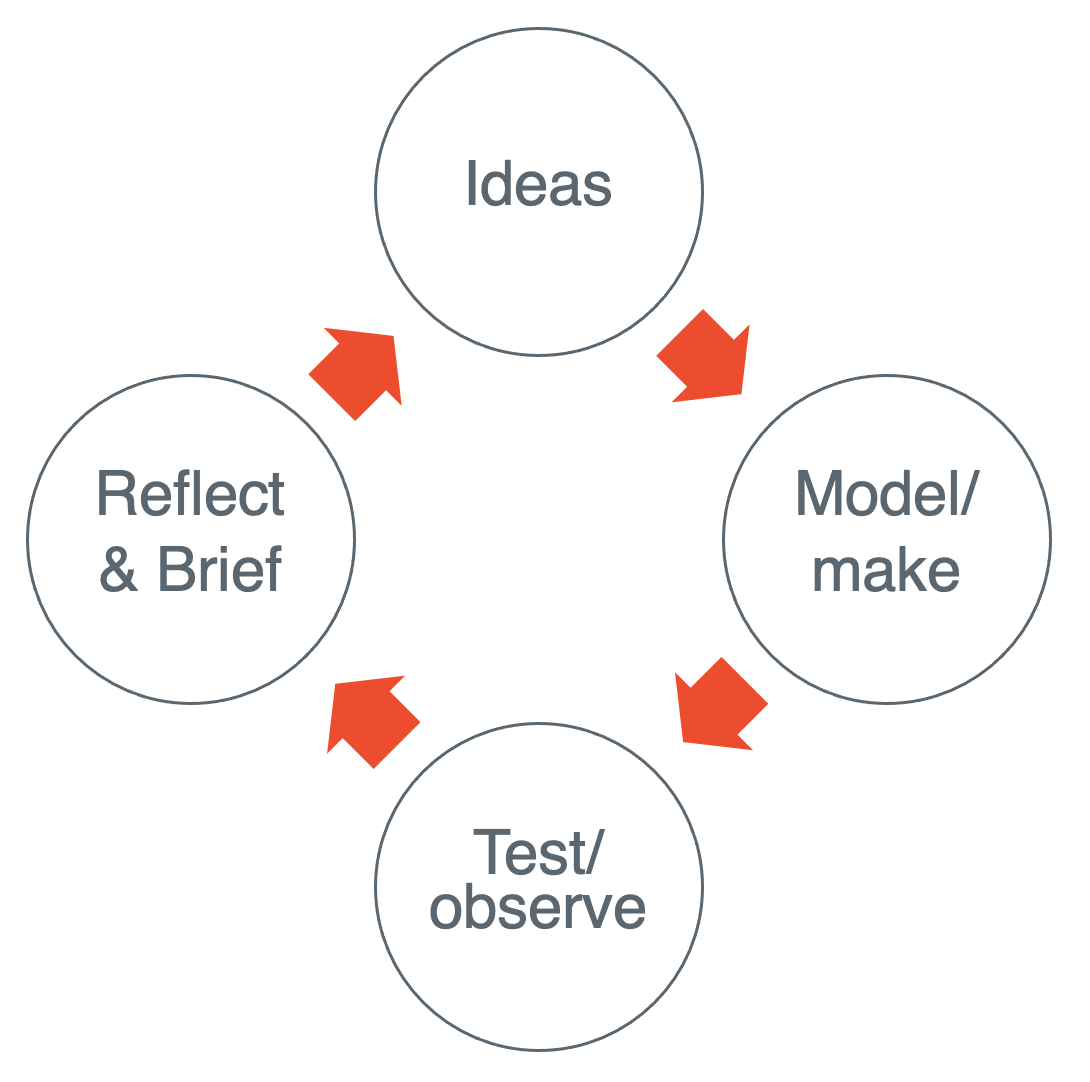
    In this first workshop I introduce my Continuous Design diagram as a common framework for talking about design interventions. The Continuous Design diagram emphasises the continuous cycle of observing, intervening, observing, intervening that we need to do when we are making changes in complex systems. 

    We use this diagram to help participants design a learning journey for themselves. It is a good way to think about what your learning goals are, how you could achieve them and how you will know you are on track. 

    I conclude the workshop with an introduction to action learning and I lead participants through the Action Learning Proforma which I developed with Søren Willert a few years ago now.

    Continuous Design diagram

    Continuous Design Diagram by Oliver Broadbent (2021). The diagram shows a loop with four stages: Reflect/brief; Ideas; Make/model; and Test/observe

    This is only the third or fourth time I’ve used the Continuous Design diagram. I see its greatest strength as emphasising the cyclical nature of design, which becomes even more important as we start to think about how to design more regeneratively. 

    This was a particularly lovely day to be teaching in Cambridge. The morning was fresh. I enjoyed having breakfast in the hall at Selwyn College. By lunchtime things had warmed up and I enjoyed sitting for a few minutes by a tributary of the Cam, watching the clear water babble by.

    I am looking forward to returning in December when we will explore what a design brief is in more detail.

  • Analogue Skills for Design at the University of Bath

    Analogue Skills for Design at the University of Bath

    Today at the University of Bath I am running a workshop on Analogue Skills for Design. This workshop fuses material from my conceptual design teaching with my observations from the Analogue Skills project, my attempt to collect and curate less digital ways of doing things in case we need to use them again.

    Creativity and design as human skills

    A key thread that runs through my design and creativity teaching is that these are very human processes, which are deeply impacted by individual’s connection to themselves, each other and the environment which supports them. 

    At the individual level, creativity is hugely influenced by our emotional and physiochemical state, the relationship between our conscious and subconscious and our unique combination of lived experience. At a group level, how ideas emerge in a collective consciousness and become the work of many is influenced by relationships, accessibility and the many facets of working culture. And of course we all live in the physical world, the world that we are trying to shape. How we move through and experience that physical world – not in our heads but as moving inhabitants of space – influences how we respond to and act in that space.

    All of these factors are features of how we design, not as purely rational, reason engines, but as emotional, physical human beings.

    Analogue Skills

    Another ability of humans – although not unique to humans – is the ability to create tools. Taking a lever as both an example and a metaphor, our tools enable us to multiply our efforts. The tools we use shape our perception of what is possible, and so influence how we perceive the world. 

    Over the last five years or so I have become increasingly interested in how our tools, and in particular our newer, digital tools influence how we think and live. Because while we have always been influenced by our tools, the rate of introduction of new, digital tools has become so rapid that in less than a generation, our tools have transformed the way we think, feel and behave. 

    I experience this personally because I am a Xennial, someone from a sub-generation that grew up without internet enabled computers but who has spent their whole working life with one. Xennials are halfway between digital natives and digital immigrants. I feel this timing of my up-bringing gives me insight into two different ways of thinking, what I loosely call the more analogue and the more digital. These two ways of thinking can be very different. Take the simple example how to organise information. In the analogue world, information is carefully indexed and prized because it may not be possible to find it again. It is a paradigm of scarcity but also care. In the digital world, the natural assumption is the information is searchable and always available and so information itself is de-valued. This is a paradigm of abundance but also of less care. 

    From this perspective,  individuals become more and more dependent on these new technologies, I see that what once was a tool that served us, these technologies have become a tool to manipulate us. From user to used. With dependency comes fear. How could I ever live without it? But so ubiquitous is our internet-enabled world that we risk forgetting the ways we could live and flourish without computers in our pockets.

    The Analogue Skills Project is my attempt to record less-digital ways of doing things before they get forgotten so that we can use these to evaluate what technology we do and don’t want. It is an attempt to build resilience and reduce dependence on technology that may not always be there to help us. It is my hope to find a more human balance between the analogue and the digital.

    See my collection of analogue skills so far.

    Human operating system

    I see each analogue skill as a way of liberating ourselves from digital dependency and to discover something that it turns out we can do ourselves as humans: each one is a clue to the workings of the human operating system.

    To accompany the growing list of skills I have also created the Analogue Skills Manifesto, which is an invitation to resist the digital pull and rediscover what you can do as a human being:

    • Don’t delegate autonomy to the machines
    • Resist a mediated experience
    • Resist life as content
    • Re-discover old tech
    • Much less is much more
    • Welcome uncertainty
    • Don’t get things done
    • Share, swap and learn from others
    • Relish company
    • Seek nourishment in time alone
    • Embrace friction, embrace inconvenience
    • Forget the unimportant and remember the valuable
    • Ground yourself and find your bearings
    • Use your hands and your senses
    • Concentrate
    • You have everything you need.

    Analogue Skills in Design

    Bringing these two themes of work together, what are the analogue skills that we bring to design that we risk forgetting if we don’t use them, and are worth rediscovering if they have already slipped away?

    Looking through my design teaching deck, there are many concepts which are already analogue, and so I am putting them together here:

    These are skills that we are going to experiment with today. These are things that you can do because you are human. There isn’t going to be a software upgrade. You don’t have to pay a license fee. You can share these tools with whoever you like, and when the internet goes down, you will still be designing. I should also add that these tools don’t stop you from using digital tools – they are here to help you choose.

  • Keynote: Rigorous creativity (for engineers and other humans)

    Keynote: Rigorous creativity (for engineers and other humans)

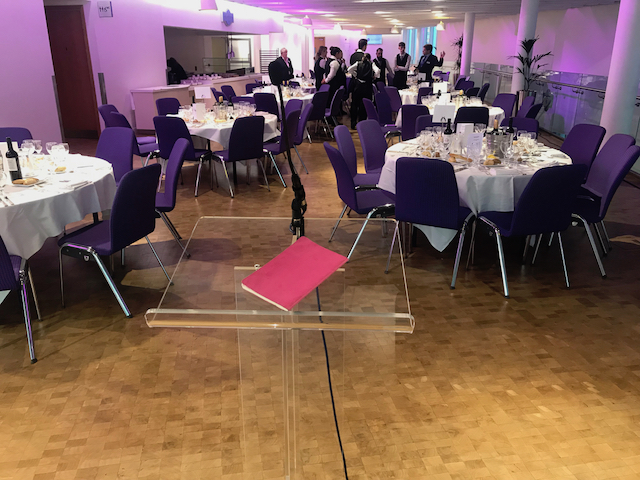
    On 2nd June I was invited to give the opening keynote of the American Institution of Structural Engineer’s annual conference. I used the opportunity to make the case for:

    • Why we need creativity in our profession more than ever, 
    • What the dampers might be to creativity 
    • And how to build creativity into our work in a way, that is, like our analytical work, careful, thorough and conscientious. In other words, rigorous creativity. 

    In my mind, there is no doubt that the climate and ecological emergencies are going to need some urgent creative thinking, and so this was the starting point for my talk.

    At the same time, I am as ever conscious that there are on-the-ground barriers to address to creativity in organisations. One in particular caught really seemed to capture the attention of my audience: project management culture.

    Having set the scene, I used the second half of the keynote to share strategies and tools for building creativity and an individual, team and organisational level.

    This is what the person who booked me said about it all:

    Your keynote was just OUTSTANDING. I had high hopes and expectations for you keynote and you exceeded them. A great message that we all needed to hear.

    Glenn Bell

    If you’d like me to come and deliver a keynote for your event or come and speak to your organisation, then drop me a message on LinkedIn.

  • Talk: How do you maintain creativity across remote teams?

    Talk: How do you maintain creativity across remote teams?

    In the height of the first Covid lockdown I was invited by James Norman and the Institution of Structural Engineers to give a talk on how to maintain creativity across remote teams. During the talk I covered:

    • Understanding the design team as a creative system
    • Ways to improve interactions across a team of remote workers
    • Improving ways to share design information when the traditional ways are no longer possible.
    (more…)
  • Keynote: How problem-based learning can save the world and make you happy too.

    Keynote: How problem-based learning can save the world and make you happy too.

    In November 2019 I was booked to deliver the keynote address for the University of Edinburgh Engineering Faculty’s away day. It was an opportunity to explore how the climate and ecological emergencies are an invitation to delve into:

    • The scale of the challenge to traditional university teaching
    • The nature of the challenge and how we need a different approach
    • How to use a problem-based learning approach
    (more…)