I like the idea of using maps to tell stories. I particularly like the idea or using a map to show an emerging story. A couple of years ago I had the idea of creating a personal Journey Planner map for the Tube, showing the bits of the Underground network that I had used in a year. The map would grow the more journeys I went on. This sort of map would of course be useless for planning journeys to new places – though I could just point my nose in the direction of the gaps and be sure to go somewhere new.
Leagues ahead of my uninitiated idea is a campaign I saw yesterday in the Guardian in an article about ad agencies’ suggestions for rebranding the Euro. The proposal from ServicePlan in Munich is to track the journey of Euro notes through the Euro zone. See concept website here. Individuals would take part by scanning euro note serial codes using their phone, uploading the code to a database along with their geolocation and a photo, and over time see where else this same note travelled.
Over time a picture could emerge of currency travelling across the breadth of the Euro promoting some sort of shared identity.
I like the idea, but as I type I realise I don’t quite understand how each note’s onward journey is tracked. If it relies on other people registering the same note, then that is one serious ad campaign that would be needed to get enough people involved…and even then the story would get cut short as soon as someone the note in a suitcase under their bed!
Blog
-
Mapping stories – the journey of a Euro note
-
Chapter Two: Parenthood
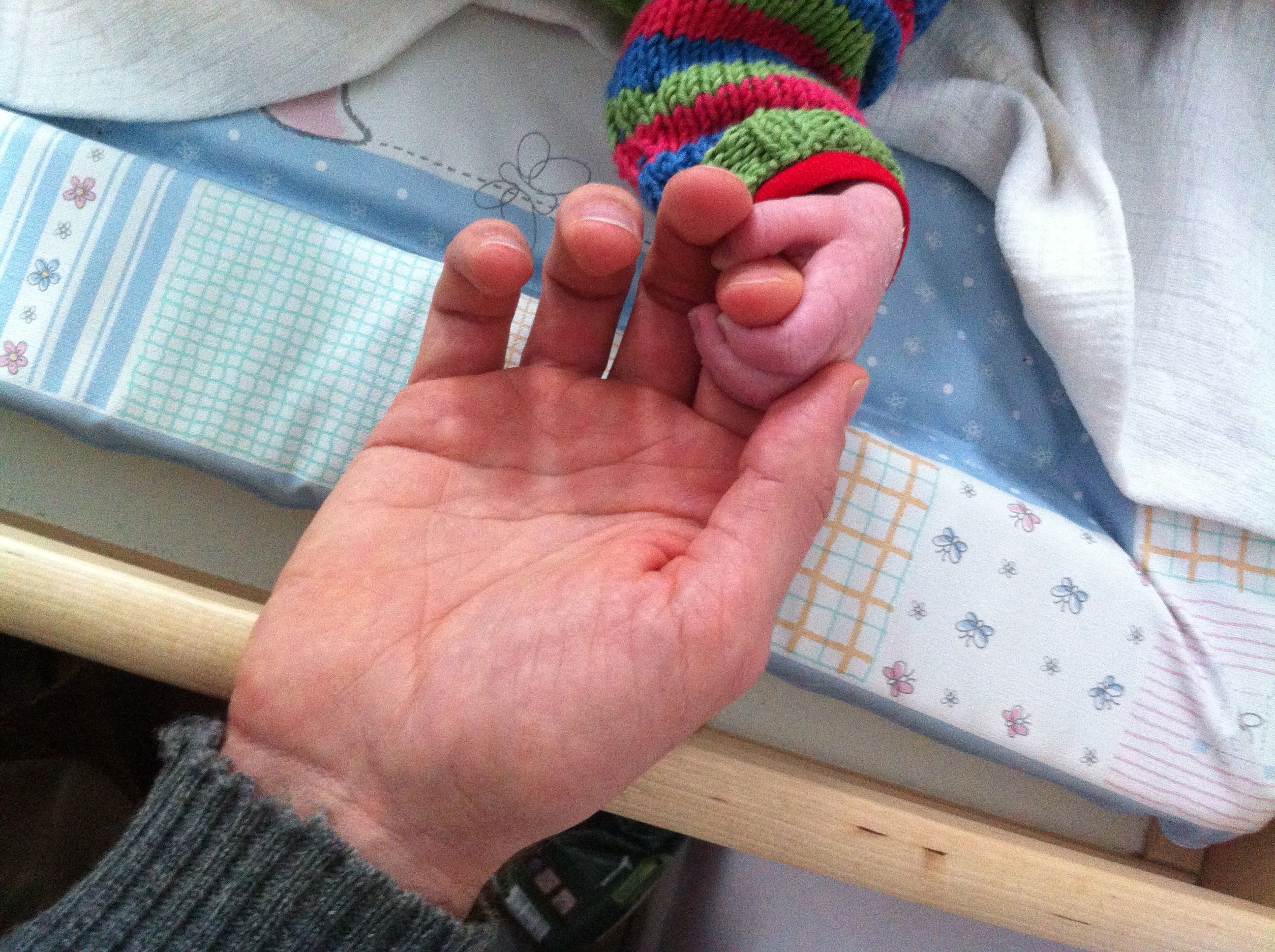
Last week M and I had a little baby daughter. We are so thrilled to welcome her to the world, and excited about everything that she brings. Baby photos are off-topic for this blog, but this little person is already reshaping my world, so I am sure she will be wriggling her way into my posts in her own way. Watch this space.
-
Speaking with Pictures – Peter Ayres at Big Draw Big Make at the V&A
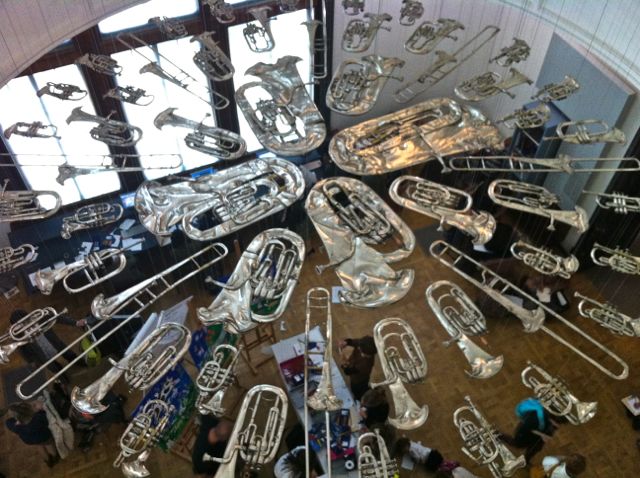
This afternoon M and I dropped in to the V&A to see what was happening at Big Draw, Big Make. The first talk that caught our eye was Speaking with Pictures, by Peter Ayres from Hetherwick Studio.
(more…) -
Catastrophe with 24 bit sound – showing at UCL on Wednesday 12th September
I heard a preview of the new sound effects on Catastrophe last week and they left me grinning. – Brilliant
-
Happy Birthday Livic – Seven Years Old!
Back in 2004, I and fellow civil engineering student Andy Kosinski got together to create a new student newspaper for the civil engineering department at Imperial College. It was called Livic (‘civil’ backwards). (more…)
-
Thoughts on developing a social media strategy for an educational resource
Over the last few weeks at Think Up we have been getting our Workshed site (an open educational resource) ready for the start of the new university academic year. Part of this process has been putting in place our social media strategy for the year ahead. Over dinner with a friend last week I realise that this is easier said than done, especially as it is based on working with a number of social media tools over the last few years. To come at it cold can potentially be daunting, and potentially frustratingly slow.
This post therefore is to share with my friend and people in his position our approach to developing a social media strategy for an educational resource. It is by no means definitive or authoritative, and it is a work in progress. Where things do or don’t work I will be happy to report them. I am also aware that people reading this post will be much more experienced in developing social media strategies. If that is you, and you see great big holes in what we are doing, then please tell me. Ultimately, the Workshed site that we are promoting is designed to improve the way people learn about engineering, and is free to use. Anything that can be done to meet its aims can only be a good thing.
(more…) -
Good times at Shambala
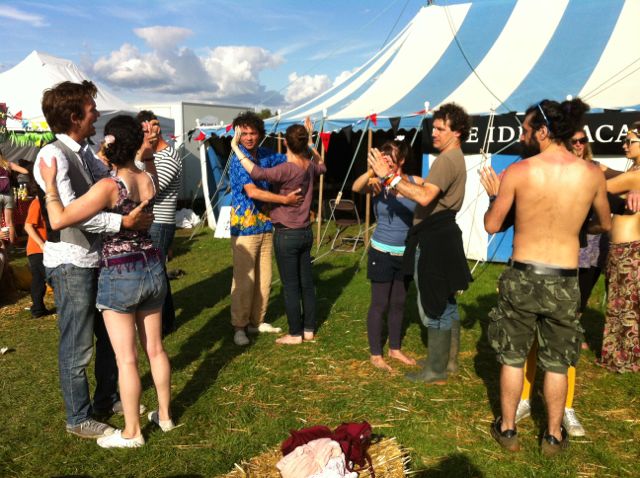 I think I often say this when I come back from a music festival, but Shambala is one of the best festivals I’ve been to. It could be the post-festival giddiness that makes me say this; or that festivals are getting better. (Or even it could be that I’m getting better at choosing what to go to. Unfortunately this can’t be true as I was invited by someone else to help with swing dance teaching.) In any case, I was only at Shambala for 24 hours, so it must be doing something right. A few highlights:
(more…) -
Train + bike: the easy way to get to a festival
Last year for Cloud Cuckoo Land and this year for Shambala, I’ve taken the train most of the way, and covered the final leg by bike. Often the most difficult bit of festival transport is the bit near the site itself, as country lanes groan under the weight of traffic they were never designed for. Even public transport, where available, struggles as it competes with cars. -
A few photos from National Walk to Work Week
[slideshow]
Last Friday, inspired by National Walk to Work week I walked to work, first to the Hub in King’s Cross, and then on to Oxford Circus. Here’s a few photos I took on the way to King’s Cross. I took a similar route on foot to that which I normally take on my bike, but being on foot I was much more inclined to stop and look at things en route. Highlights included trying out a new tree house climbing frame in Arundel Square and a precocious cat.
-
World tour of structural form at Cafe Scientifique
A big thank you to the lovely audience at Cafe Scientifique Brighton who welcomed me this evening for my talk, A World Tour of Structural Form. I felt very welcome indeed.

The aim of the talk was to share a number of basic structural engineering principles and to demonstrate how these can be used to explain how buildings stand up. The talk was illustrated with structures from around the world. I promised no maths and no equations. I stuck to my promise, and judging from the audience responses to my questions, I think this method worked!
-
The Return of Scientific Curiosity and Creativity/Ideas for an Outdoor Classroom
This post is about rediscovering a childhood fascination for how things work, and the thoughts it has provoked about creating learning environments that harness that fascination for the purposes of education.
-
Notes from Migrations at the Tate Britain
Notes on a few things that caught my engineer’s eye at the Migrations exhibition at the Tate Britain today.
‘Quickly Away Thanks to Pneumatic Doors’ and ‘Soon in the Train by Escalator’, both by László Maholy-Nagy, 1937 are two eye-catching information posters that explain how new technologies will work to improve passenger journeys. The posters are clear, without being patronising. It makes me wonder why we don’t do the same now to explain the engineering that is being employed to build the latest additions to the Tube. Right now in London, we have one of the largest infrastructure projects ever undertaken in the capital underway, Crossrail, and yet the project feels hidden rather than celebrated. More public civil engineering information posters please – I am sure they would be avidly read by young and old.
-
Notes from Hazel Hill/Slow Learning for teaching sustainability
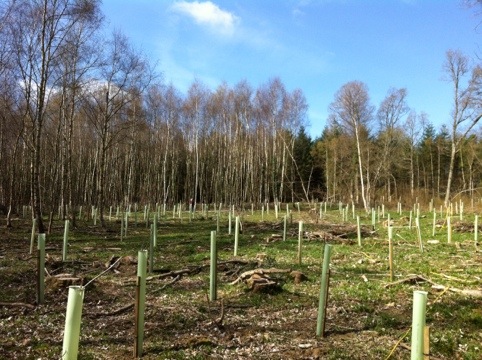
I recently returned from a conservation weekend at Hazel Hill wood, the sixth such weekend in which I have participated, and a visit that prompted some more thoughts on ways we can teach sustainability in universities.
-
Roll up roll up engineering communicators…time for more Science Showoff
…it’s Science Showoff time (well it will be next Tuesday). That magnificent monthly occasion when enthusiasts from all walks of science tread the boards in an entertaining manner in a pub, a nice pub in fact. There’s live demos, banjo-playing quantum mechanicians and people with witty things to share with you across the spectrum from biology to astrophysics. There’s a good cause and a general feeling of bonhomie.
What’s missing? Engineers. There’s loads of stuff that engineers could talk about that this science-hungry audience would lap up. I had a go with cooking with concrete and a Forth Bridge demo, and now it’s my job to try to get more engineers to do the same. So if you think you it’s up your street then come on down on Tuesday to get the measure of the place.
The next one after that will be on the 5th June, when you could have a go yourself. Go on…
-
Dan Lepard, my first loaf, and the value of fail-safe instructions
My highlight of the Guardian Festival yesterday was Dan Lepard, regular baking columnist for the Saturday Guardian. In a packed room he gave five golden rules for successful bread baking. Listening intently, having never baked a loaf myself before, his directions seemed so clear and his approach so straightforward that I just wanted to go home and bake.
In this instance I think I probably fall into that category of learner who knows so little about baking that I needed clear steps to build my confidence, and it serves as a good reminder of how important it is to prepare a clear message when working with learners who lack confidence. As soon as members of the audience, clearly with more advanced ‘kneads’ (ha ha), chimed in with their clever questions about complicated stuff, I tried not to listen, so as not to lose that clarity of thought the presenter had given me.
And so I present my first loaves. May they be the first of many…
-
The Big Rig at 3 years old
This is the third March in a row that I have facilitated a low-carbon skills competition at the Big Rig, which makes the Big Rig 3 years old.
-
The Future of Construction, Surveying…and rock’n’roll?
The flying robots that Vijay Kumar and his team have built are breathtaking. In this TED talk, he explains how the flying machines work, shows how they can fly in formation to construct simple structures, perform astonishing acrobatics, and explore and map out empty buildings autonomously. Obviously it doesn’t take much to think of more sinister uses of this technology, but another more positive application, shown at the end, shows a considerable amount of imagination…it is worth watching this to the end which is laugh-out-loud funny.
[ted id=1376]
-
Cooking with Concrete at Science Showoff 5
Thanks to everyone who came down to Science Showoff 5 to see my first attempt at Cooking with Concrete on stage. I think I was able to convince the audience that, like pastry or dough, concrete is indeed a versatile cooking ingredient. In a little under nine minutes we went through the my grandmother’s C35 concrete recipe, handed down to her by her grandmother. Unfortunately as concrete takes 28 days to reach testing strength we didn’t have time to test the sample there and then, but we did have a look at the samples that we tested rather spectacularly in the lab back in August at Imperial.
I have uploaded the recipe to the new cooking with concrete section of this blog – available for a short time only.
I’ll be jointing the Science Showoff gang for the Brighton Science Festival next week doing more ‘hardcore’ cooking. Next time I might even be able to bag some video footage.

-
Videos for a Sunday afternoon – the magic of human space flight
I have recently been reminded how human spaceflight can capture the imagination. This weekend I have been setting up Twitter lists (here, for starters) to help me find engineering teaching resources – and stumbled upon this low-light video footage of the earth’s surface taken from the International Space Station. If there ever was anything to get young people into science, technology, engineering and maths (STEM), then space travel must be it. (more…)
-
The Rise and Fall of Civil Engineering – courtesy Google’s amazing ngram viewer
I read an astonishing article this afternoon titled ‘Quantitative Analysis of Culture Using Millions of Digitized Books‘, published early last year in the journal Science. Based on Google’s effort to digitise all books in all languages, researchers have carried out computational analysis on a corpus of over 5 million books – approximately 4% of all books ever published – to give access to vast amounts of data on word use.
The availability of this data allows researchers to observe cultural trends and then subject them to quantitative investigation – the study of ‘culturomics‘. The paper illustrates fascinating changes in language size and use, and shows how the data is used to draw more socio-cultural conclusions.
Best of all, Google has a nifty tool for presenting the data called the ngram viewer, which has allowed me to do a little culturomics of my own for the field of engineering.
-
Time Travel at the Beach
I am sitting at the Kit Kat Cafe, perched on the dune at the back of Camber Sands, a vast stretch of sandy beach in East Sussex. The beach is full of people enjoying the warm Autumn sun. In the distance there are kite surfers, and along the shoreline riders are galloping their horses in the shallow water.
-
Good laughs at Science Showoff
I went down to Science Showoff last night at the Wilmington arms, ‘an open mic night for all communicators of science’. The spectrum of material covered was rather large: from shining infra red light through the skulls of babies, to the biochemistry of baking; from the sad world of lonely neutrinos to the history of the space shuttle programme as told through a mash up of archive footage.
-
Notes on ‘The Art of Doing Nothing’ by Tom Hodgkinson
This post is for the Front Row gang (you know who you are). Since we were talking about the concept of Fun for Free at the last Front Row session, here is a rough-and-ready summary of the essay where I first heard of the concept, ‘The Art of Doing Nothing’ by Tom Hodgkinson. The essay appears in a book called ‘Do Good Lives Have to Cost the Earth’, edited by Andrew Simms and Joe Smith.
(more…) -
Resisting Ikea – preparing for Monday’s sustainability conference
I spent most of last weekend preparing for a sustainability conference that we ran on Monday (post about that event appearing shortly). I know from experience that the last few days of organising any event like this always involve a mad dash to the shops, and this time was no different.
[slideshow]
(more…) -
Half a million pounds to save Roald Dahl’s hut?
This morning the Today programme ran with the headline “£1/2Million to save Roald Dahl’s writing hut”. I woke up thinking ‘how can that be’?
(more…) -
Using the Flipped Classroom model with Expedition Workshed
It’s been one of those days where everything comes together. I have spent the day working on Expedition Workshed site, in particular a new blog aimed helping us have a better dialogue with the teachers who are using the resource in their teaching (I will post a link to the blog when it is ready in a couple of days). At the same time, I have been contributing to discussions related to a new paper that we will be publishing that sets out a model for understanding how structural engineers learn.
And now this evening I have been reading this interesting blog post (http://usergeneratededucation.wordpress.com/2011/06/13/the-flipped-classroom-model-a-full-picture/#entry)about the Flipped Classroom model for teaching, in which material usually delivered during the lecturers and in class is instead delivered via online resources, freeing up classroom time for problem solving, group work, debating, creating and communicating. The post has some overlap with the paper that we are working on, and has got my cognitives whirling away thinking about how Workshed can be used to deliver the at home content.
The post sets out a cycle of learning with four stages:
1. Experimental engagement through hands-on activities, games etc
2. Concept exploration through content-rich website, pod-casts, online chats etc
3. Meaning making through reflective blogging, podcasts
4. Demonstration and application through creative personalised projects and presentations.So here’s my idea (and hopefully before too long I will be able to try it out). I would like to create a lesson plan for s series of activities that teach school children about construction materials and the fabric of their school.
The first stage would be a series of games and discovery activities using the fabric of the school is a stimulus. Learners could for example try to make a model of their school building out of paper, and see what they need to do to make it stronger.
In stage two they would go away and find out about materials and basic structural forms using the resources on Workshed.
In stage three would answer quiz questions about materials and simple structural forms using the interactive tools on Workshed.
In stage four, they would come back to the classroom and work in groups to develop their own design for a new school building, creating a poster or a model, and presenting their proposal to their classmates.
Whilst I have developed teacher packs before based around the design-and-build methodology, this post on Flipped Classrooms has motivated me to think about how the design-and-build can be more thoroughly split out and developed. I look forward to giving it a go.
-
Ideas on the theme of ‘fun-for-free’
Hold your own mini-Olympics
We did this last weekend down at my grandmother’s house. We had had plans to go to the local river where there is a lovely beach but the grey skies put paid to that. Then from somewhere the idea sprung to mind of the five of us staying in and holding a track-and-field tournament.
We assembled the props: a parasol stand for a javelin; a boule for a shot put; an old plate for the discus; some beach bats for tennis; a rope between two trees for volleyball; and fruit packing cases for the dressage. My grandmother was the judge.
Poles were thrown; shots were put; a plate was smashed; points were won; tempers were lost – and found again with administration of tea; and medals were presented.
Next up – our own winter Olympics?
 (The discus that got away – two others were not so lucky)
Learn to tight-rope walk
With a few props, practicing circus skills seems like something you can do pretty much anywhere. Here the prop was the rope that we had used for the volleyball net in our mini-Olympics. Pulled tight between two trees at about two feet off the ground, it was hardly death-defying, especially when, under my own weight, the rope stretched, lowering me to ground-level. I fear a lot more practice (using stiffer rope) will be required before I become a funambuliste.
-
A rockabilly festival and a 2CV convention – an extraordinary night out in rural France
 At some point in the future I would like to spend some time living in the area of rural South West France where the French side of my family is from. The idea is especially appealing when on holiday in that part of the world. But I often wonder, what would day-to-day life be like?
During our recent stay at my grandmother’s house, we went out on a Saturday night. As I drove down the dark and empty Route Nationale, I thought, is this what a big weekend night out might feel like, somewhat downbeat about the prospect.
Our first stop was a community centre situated above our local river beach. We had seen advertised that there would be a night of live swing music. The roads en route had been empty, and the town centre equally so, so we were surprised to find the venue packed with groups of people of all ages eating piles of moulles frites around long tables. The band came on – a manouche ensemble – and they played a lively set, although my flip flops and the empty dance floor made me disinclined to want to bust out any moves.
On the way in we’d seen there was a campsite and we went to check it out. At the entrance were parked two 2CVs; another was parked in the car park. Unusual – almost like a 2CV convention I thought. Exactly like a 2CV convention it turns out: every car in the camping site was a 2CV. They came in all models and colours, with modifications, some in classic colours. Large groups of people sat around gas lights, or the full beams from the cars, eating and drinking together. 2CV drivers seem to be happy people!

Coming home we thought we’d check out the next village where we’d heard there was a weekend-long rockabilly festival. Not expecting to find much (I am ashamed to say – who am I to be sceptical?) we could barely enter the village for the lines of cars parked down either side of the busy Route Nationale – some even parked down the middle. We came upon the school field and found hundreds of people gathered wearing rockabilly finery, lit by the sideways glare of flood lights and the lamps of dozens and dozens of Harley Davidsons parked up in rows. In the big tent that rockabilly band was jumpin’, the crowds were dancing, and we dived in, flip-flops and all.
At the exit there was a souvenir stand selling posters and tins of the local confit de canard.
Every time I return to this part of France I find more and more things going on, and only partly I think, because I wasn’t looking hard enough before! And while there would be obvious differences between a night out there and just hoping on the Victoria line, there is plenty to do, and perhaps even more opportunities to make your own fun.
-
Looking back from the future: Useful Simple Trust’s first decade, as told in the year 2020
As part of the Useful Simple Trust Away Day in June 2011, eight Trustees and Directors were each asked to compose and present a five-minute piece giving an overview of the Useful Simple Trust in the year 2020. These pieces, in various formats, from a virtual 3D Skype teleconference to an epistemological exchange were presented to the audience from within a hanging shroud of black material – an opaque tent representing a barrier between the future and the present. Below is an approximate transcription of what I said.

“Hello, can everyone see me? Looks like it. Good. This 3D Skyping system is incredible: it feels like we are in a room together when in fact we are all of us is in different parts of the world. So, greetings to the team of consultants working on the 2020 Qatar Olympics. Hello to the team working at the UN’s floating HQ for climate change mitigation strategy, currently moored somewhere over Norfolk. And of course, hello to the team of engineers in Belgium working on the infrastructure reconstruction programme following the recent civil war out there. I will begin.
“I have been asked to say a few words to characterise the way the Trust works, and describe the key moves that we made over the last decade to get us to where we are now.
“I would say that the environment in which we work is firstly characterised by extensive and complex overlapping networks of personal and professional contacts. We use these networks to learn, to share information, to collaborate on work and to market our services. We make far more use of our personal social capital than we ever did before, and our communication using these networks is completely decentralised.
“The second characteristic relates to where we add value. Information is cheap, and with the development of automated Google research projects, there is a phenomenal amount of data available at our finger tips. At the same time, much of the process work that we used to carry out in the UK is now carried out for a fraction of the price abroad. Our skill as an organisation has therefore become the assimilation of information and the creative design of strategic solutions to problems, on which we must then collaborate with other partners internationally to deliver.
“Thirdly I would like to characterise how we work as individuals within the organisation. Seeking to avoid specifics, I describe the staff as being made up of ‘omni-workers’, apprentice ‘omni-workers’ and mentors. The omni-workers have the key trinity of skills: assimilation, creative problem solving and business sense. Plying the avenues of their complex personal networks, these members of staff work as individuals, collaborate with other organisations, or collaborate with other omni-workers wherever the work may be. They are accompanied by apprentices who are learning their trade, and they are guided by mentors who offer up their own experience by way of training.
“To conclude a description of the working landscape, I will describe where it is we work. The short answer is wherever the work needs to be done. We are a highly decentralised interconnected workforce but with robust links to centralised online resources and administrative functions that support us.
” I will now describe the five decisions that the Trust made that were key to getting us to where we are now:
1. We recognised long ago that specialism would increasingly become a liability, and that the asset would be the skill of information assimilation and collaboration with others.
2. We also recognised the immense social capital of the organisation, and the power of an individual’s personal and professional networks to share information, to collaborate on projects and to promote our activity.
3. We decided to identify a number of key societal challenges that we would seek to collaborate on and work towards solving in our projects – thus developing a polemic for the organisation.
4. We recognised the need to raise the level of overall business strategy awareness of the organisation, and set up an internal business school to do so.
5. We packed up our bags and left Morley House, our former HQ in Oxford Circus, and we followed the work.
“As for any regrets over the last decade? I would have to admit to at least three: working far too hard in those early years – not recognising the need to prioritise; not identifying the key societal challenges that would be the focus of our work; and only taking one sabbatical in the last ten years and not two.
“Thank you very much”
-
Showreal – Millennium Bridge Micro Documetary
Early this year I was filmed presenting a short clip about the Millennium Bridge by a TV production company developing a concept for a new engineering show. We did the shoot on a freezing January lunchtime. Producer/Director Nick Watson has just posted the clip on YouTube. Thanks Nick!
http://www.youtube.com/watch?v=bJoCc3OyCwA


