Search results for: “2006”

  • Inventory of sleeper train journeys

    2024

    2023

    2017

    • London to Penzance

    2013

    • London to Edinburgh

    2011 

    • Paris to Madrid
    • Madrid to Paris

    2010

    • Inverness to London

    2009

    • Paris to Venice
    • Paris to Milan
    • Brussels to Copenhagen

    2008

    • Brussels to Berlin

    2007 

    • Paris to Perpignan
    • Zurich to Belgrade
    • Belgrade to Thessaloniki 
    • Thessaloniki to Istanbul
    • Istanbul to Tehran
    • Tehran to Malatya
    • Istanbul to Budapest

    2006

    2004 

    • Vilnius to Warsaw
    • Krakov to Budapest
    • Budapest to Mostar

    2001

    • Jasper to Winnipeg
    • Winnipeg to Toronto

    2000

    • Marrakesh to Tangiers

    1999

    • Trieste to Zagreb
    • Prague to Venice

    1990

    • Agen to Paris
  • Ouistreham to Paris

    Ouistreham to Paris

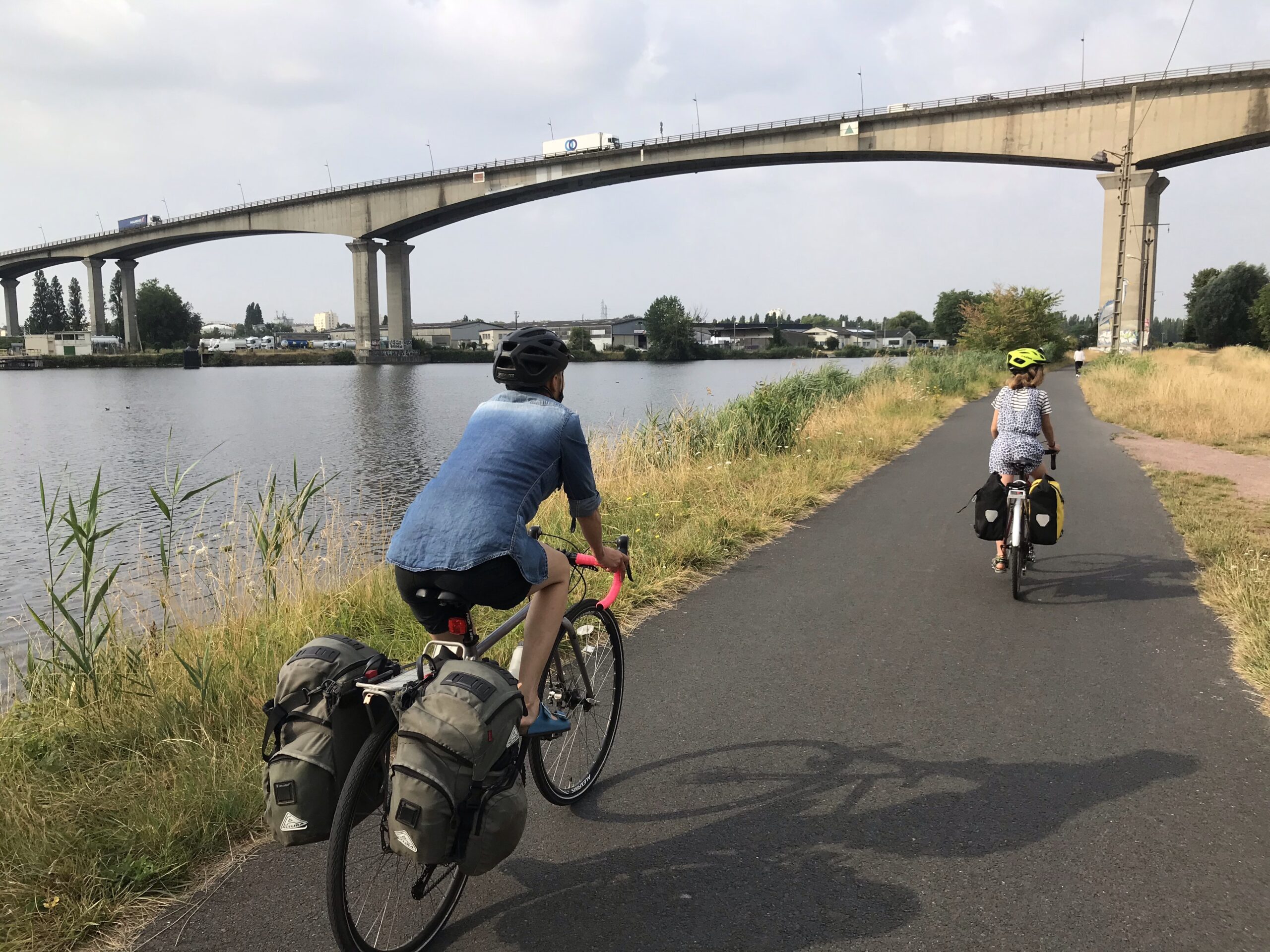
    The port of Ouistreham is about 15km from the city of Caen. Journey today began with a cycle along the canal de Caen à la Mer. The canal is a major import terminal for tropical hardwoods from West Africa. And we could see the timber being stacked up on the opposite banks of the canal.

    Downtown Ouistreham

    We cycled under a heroic motorway viaduct and then arrived by well appointed cycle path in the middle of town. We only had about 45 minutes to spend in town so we found a high point to hang out: in this case the castle right in the city centre.

    Heroic viaduct outside Caen

    Other city centre castles I have enjoyed: Belgrade, Budapest, Blaye. I like when you can simply cycle up from the town below and straight into the gates.

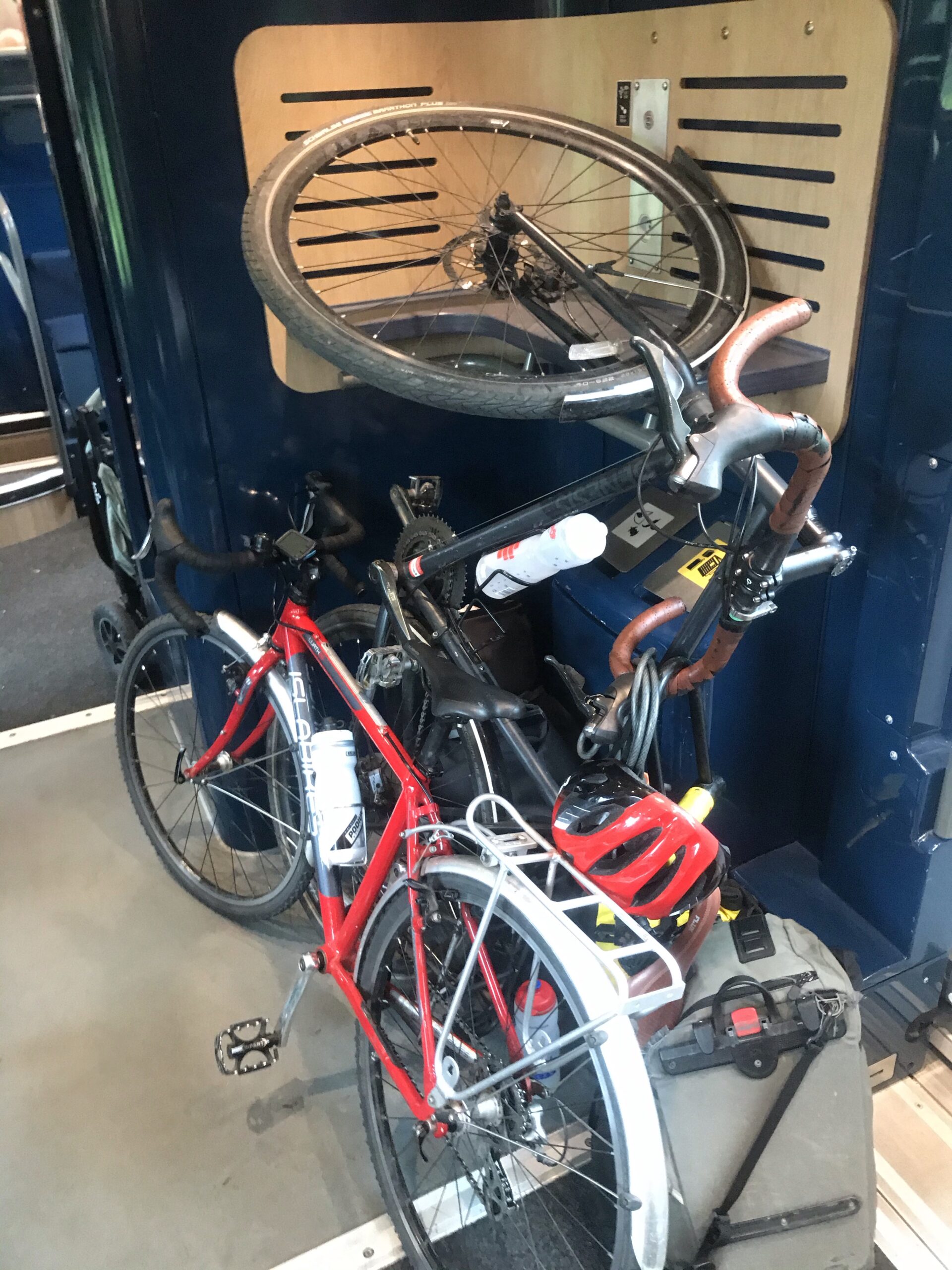
    Our train from Caen to Paris St Lazare was a squash and a squeeze with our bikes. The service has unreserved bike spaces, but these were full and the service busy. Lots of people boarding and getting off with luggage got stuck with us in the bottleneck of the doors. I ended up lifting my bike up on its rear wheel and squeezing on. Somehow I miraculously managed to balance it on a pile of panniers so that when I let go it stayed upright.

    Miraculously balanced bicycles

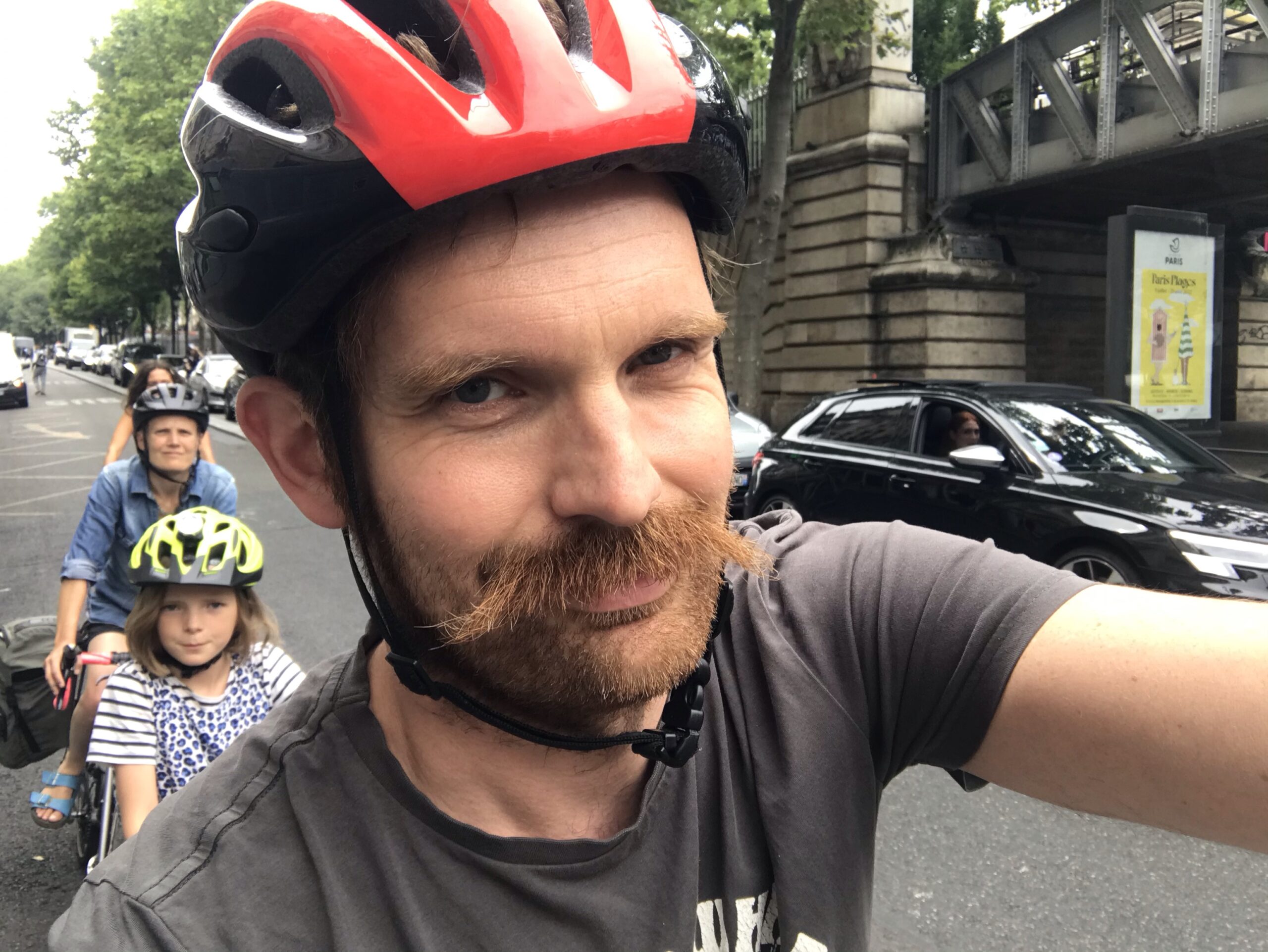
    From Paris St Lazare to the 20th arrondissement we cycled the route of the Metro Line 2, following the cycle paths through the boulevards. This infrastructure went in when we lived here in 2006. Now it feels really hectic to use, with e-scooters, mopeds and delivery vehicles competing for space. As is offering the case though when I feel squashed using cycle infrastructure, I shouldn’t bemoan the other users: they are doing the right thing and it’s fewer cars that we need.

    With all the alternative, shared transport infrastructure, I think Paris is now ready to ban cars altogether. Maybe with rising fuel costs and renewed focus on the climate crisis due to recent heat waves, banning cars in Paris might happen soon.

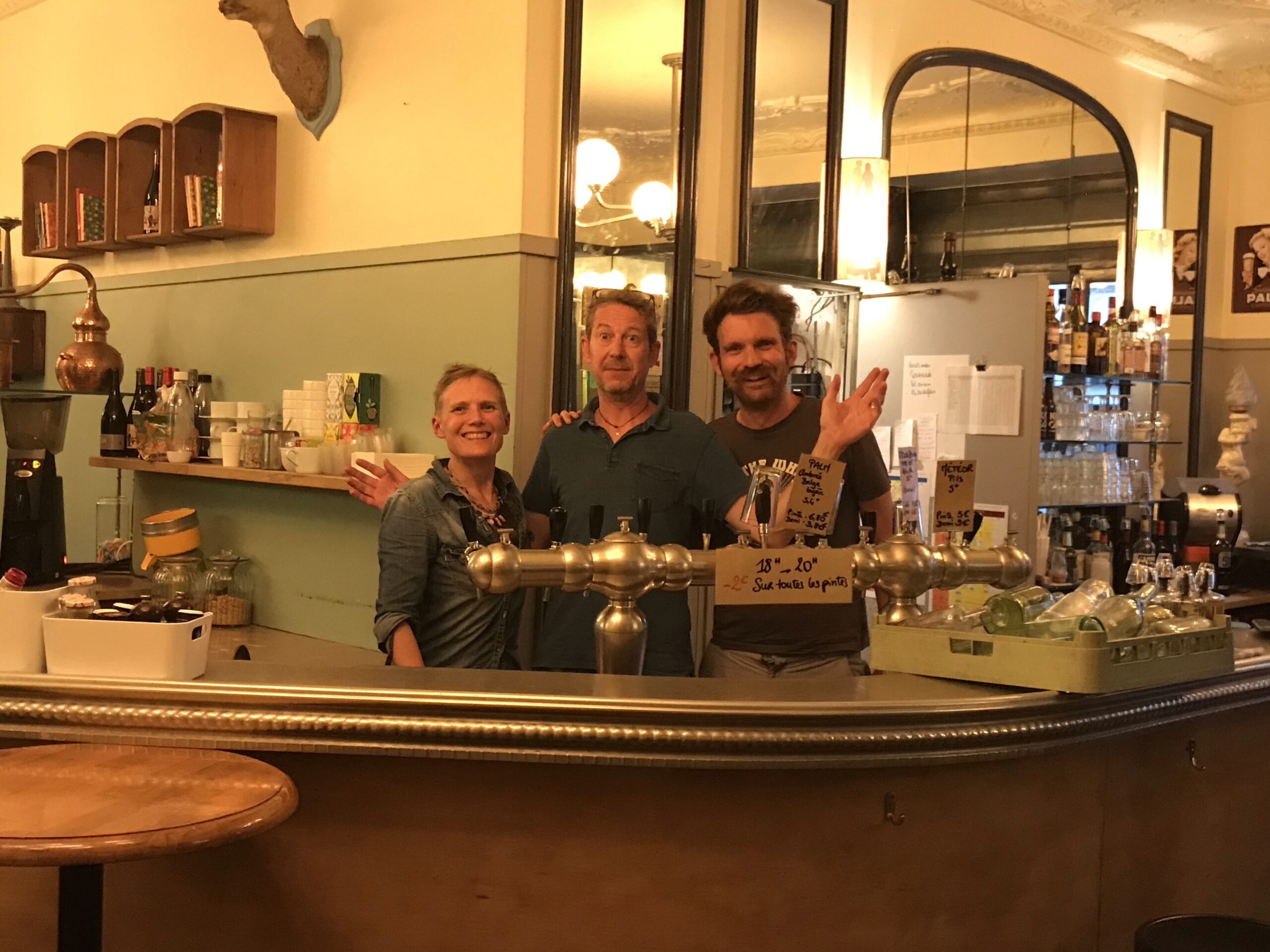
    We finished the day with our friend and proprietor of our old local the Piston Pelican, Stéphane. The bar was closed but he welcomed us in for pizza and wine and an insight on what it’s been like trying to run a Paris bar through Covid. We talked about the heat wave and the climate crisis, and what people in their position can do.

    I told Steph that running a bar like theirs is an important thing to be doing in a time of crisis because it builds community cohesion and resilience. I’m not sure how reassuring that was though as my climate French vocab is a bit ropey: turns out I’d been referring to the climate crisis all evening as the ‘central heating crisis’!

    Mary Stéphane and me at the Piston Pelican

  • #15 Show-notes – Oliver Broadbent interview by Alexie Sommer – Creativity, climate and clowning

    #15 Show-notes – Oliver Broadbent interview by Alexie Sommer – Creativity, climate and clowning

    I spend most of my time designing creativity training for engineers. In this episode we flip the format. Alexie Sommer, Independent Design and Communication Director and collaborator on many of my projects interviews me about why I set up Eiffel Over and Constructivist Ltd, and what our plans are for designing creativity training for engineers in 2020. We get into:

    • Techniques for teaching creativity
    • Our programme of training support people tackling the climate emergency
    • And what engineers might learn from clowns.

    Listen on Apple Podcasts , Sticher or by download here

    (more…)
  • Derive #2 City of London – Log book

    Derive #2 City of London – Log book

    • 19/3/18
    • Derive #2
    • Location: City of London
    • Context: preparation for my talk ‘Circling the Square

    Moorgate x London Wall

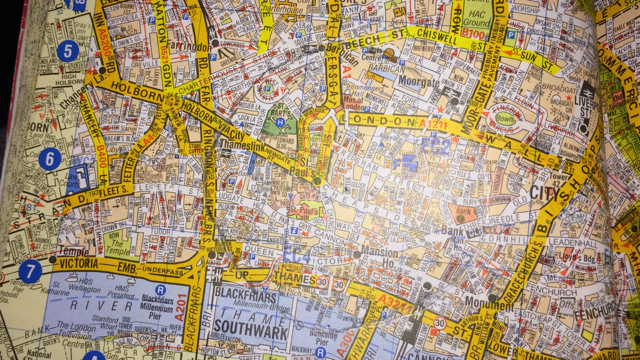
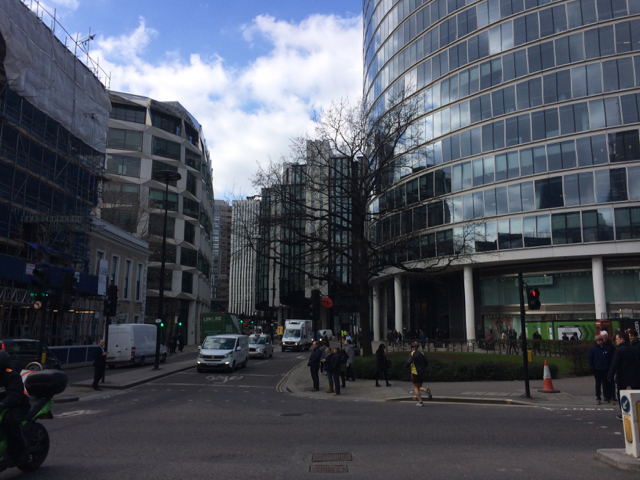
    • 0:00:00 Moorgate and London Wall. Once solid-looking stonewalls are now façades pinned in place by scaffolding while new buildings are constructed behind. In just a few years the streetscape along London Wall has completely changed
    • 0:04:34 London Wall and Copthall Avenue Deep metallic groans sound out from behind these hoardings. I assume the core of the building is being demolished, and the sound is the building complain.

    • 00:09:41 Black Rock The circle leads straight into the offices of Black Rock. I enter the revolving doors and walk through a long dark lobby past whispering clusters of suited men and women. I emerge blinking onto a much quieter street, Tower 42 in the distance.
    • 0:13:31 Copthall Avenue The circle passes straight through the Angel Court building. I attempt to walk through the underground loading bay but I’m turned back by security. There are some places you really aren’t supposed to go.

    (more…)

  • Wobbling la Passerelle Simone de Beauvoir

    [youtube=http://www.youtube.com/watch?v=69NA8E11IDM]

    I was invited on Wednesday to go and help wobble the Passerelle Simone de Beauvoir (previous posts here and here). The wobbling was being sollicted in order to conduct ongoing tests on the bridge’s dampers. The tests were being conducted by the CSTB (France’s centre for building science, where I almost ended up doing my projet de fin d’études).

    Bridges such as this one, and infamously, London’s Millenium Bridge, are susceptible to wobbling caused by the excitation of one of the bridge’s natural frequencies by the pedestrians who use it. As well as forcing the bridge deck up and down with their footsteps, pedestrians also exert a sideways force as they alternatively plant their left and right feet on the deck. This sideways movement is of a similar frequency to the transverse vibrational mode of lightweight bridges such as this one and the Millenium Bridge. When a bridge does start to shake noticeably, there is a tendency to ‘lock-in’ whereby pedestrians synchronise their steps with the vibration in order to stabilise themselves, but in doing so, give more energy to the vibration. The first time that this lock-in phenomenon was observed was at the opening of the Millenium Bridge.

    This sort of vibration is unlikely to cause any damage to the bridge itself but it does make the people onboard feel quite uncomfortable. It is therefore an issue of serviceability. In order to reduce its effects, such bridges are installed with tuned dampers designed specifically to damp out these effects. And in order to check if these dampers are working or not, it takes a group of fifty or so enthusiasts (usually engineers) to jump up and down to see just how much they can get the thing to wobble. I tell you, we got some funny looks from passers by…

  • Project update – meeting the architect and virtual handshakes + one for those who moan about London Underground

    At the beginning of the week, the architects for the project that I am working on flew into town for an intensive week of meetings. Most of yesterday was spent shuttling back and forth between our offices and La Défense for meetings about the building’s structure. For me it was a great chance to get to know the project team before the video conferencing kicks off in ernest (despite Margaret Atwood’s invention that allows her to do book signings wherever she wants in the world from the comfort of her own home, it is still not possible to shake hands over the internet). For the moment there are still a number of questions to answer about the building’s facade but once those are answered there will be a rush to design the floor which, for the moment, is where my project is going to be focused. I therefore have the sense that we are in the calm before the storm.

    During a coffee break, I tried to strike up a non-engineering/architecture conversation with the architects. Struggling fora topic, I suddenly remembered that my favourite US online radio station, KCRW, is broadcast from the same town as their headquarters. They listen to my favourite show in their office on the otherside of the world, every morning. Doesn’t the internet make the world small?

    In other news, old calculations that I had made on the cost of another tower have come back to haunt me. It is not that they were wrong, it is just that I was suddenly required to present my results without any notice. I was therefore glad that I had left a decent paper trail so that I could quickly see how I came to the result two weeks ago. This is basically thanks to my new strategy: to date absolutely everything, to put the date in the name and print it in the header and to include a table of modifications for each time I use a calculation sheet. This may all seem obvious now but it wasn’t when I started off. I have since been asked to carry out a cost calculation on the tower that is the focus of my project. Since cost will be an important part of the choice of floor design, I will be able to tie the overall cost calculation into my project. And now that I have the method sorted, it hopefully shouldn’t take too long to calculate. The only trouble is… none of the floors are identical…

    + one for those who moan about London Underground – spare a thought for those who ride the L in Chicago – from a new blog find: Anonymous 1%

  • Happy New Year

    hello readers I would like to apologise for the lack of posts of late. This blog was meant to be about engineering and my life in Paris. Well, it seems that I have been rather too successful at engineering myself a life in Paris to have the time to write it all down. But all that will change as New Year and its concomitant resolutions beckon. In the mean time, joyeuse fête! Eiffelover dsc02172.jpg

  • Belgrade – day 2

    Wednesday 1st November
    Having decided upon taking a detour via Bulgaria, I embarked upon finding out some basics about the country before my train that evening. My first port of call was the Architecture faculty where I met Barabara who was able to get me on line. An hour of searching yielded a map of Sofia city centre, a vocabulary list, an article about Bulgaria’s president (who if I remember correctly is the only democratically elected European head of state who has also been the king of the same countrt) and a key piece of advice from Barbara: in Bulgaria one nods to say “no” and shakes the head from side to side to say “yes”. This latter point proved a bit of a challenge for the old neuro-linguistic programing.

    31.jpg

    Later that afternoon we met Ana, and after some divine tasting cakes (that ensured I wouldn’t be eating again for at least two days) we scoured that capital for an English language guide to Bulgaria. The main shopping street’s many book shops are well stocked with lonely planets to anywhere you could think of – the Azores, Vietnam, Jamaica, Vancouver Island – everywhere it seemed except Bulgaria. It seemed extraordinary that I couldn’t find any information about the country next door! On the one hand, the prospect of going somewhere off the not-so lonely planet beaten path (as it appearded to me from Serbia) was quite exciting. On the other, it did leave me wondering why so few people, judged purely on the relative number of books detailing the deligts of other local capitals, seem to head next door.

    My tireless and ever-resourceful guides took me on a tour of the disused dock area down by the river Salva just before it joins the Danube. The dockside buildings are in the process of being converted into super-trendy galleries and a bar. We had drinks on an almost floating bar – that is to say, it wasn’t floating but on dry land, but from its windows one might think one is afloat- the nearby real floating bar having been booked out for a private function. To help us believe that our bar was in fact floating, we drank coffee laced with booze. It worked.

    22.jpg

    By early evening, the cold dry spell had given way to rain. I tried to buy my train tickets to Sofia down at the train station, only none of my cards wanted to work. Ana was able to lend me the cash, but I was suddenly worried that I would arrive in Bulgaria with not a euro cent. I tried to do the sums in my head. With the 100€ in my pocket, I might just have been able to buy tickets to take me as far as Budapest from where I already had tickets home booked, as long as I only ate apples along the way. It didn’t bode well.

    Luckily however, just when my worst fiscal nightmares had flashed before me, a cash machine finally decided to be nice and give me the dough. Stocked with food for the journey it was time to wait on the dark and dingey platform for the train to take me away. I was sad to be leaving Belgrade. I had had such a great time with my friends and I was in no mood to continue on my own. Ana and I plotted when we would see each other next. When we first met in Ljubljana the year before, it hardly seemed possible that we would meet again, such is the distance from the UK to Serbia. But with two visits to Belgrade since then already in the travel log, the city doesn’t feel that far away. Roll on our next encounter, Paris in the spring…

  • Budapest to Belgrade

    Monday 30th continued

    12.jpg

    When it comes to rail travel in Eastern Europe, Budapest is a hub, which is why this is the third time I have arrived in Budapest by train. I had tried to pick a train time that would have allowed me to have a cheap as chips massage at the thermal baths but it didn’t work out in the end. Budapest also seems to be where fast western european trains stop and slow eastern european trains start. Still on the “Avala”, I appeared to be the only passenger coming from Vienna who stayed on the train. I was accompanied to the border by a lady with enormous reusable tesco bags that seemed to take up half our cabin.

    The train trundled south at a sometimes painfully slow pace. The line is only single track so numerous times we had to wait in sidings to let a terribly important train carrying logs go the other way. The platforms also seem to stop in Budapest: anyone getting off the train had to make an heroic leap down to the ground, luggage being caught by loved ones below. I passed time until the border in the luxurious and ludicrously overstaffed restaurant car. I was the only customer and as I drank my coffee, the head waiter, his assistant and the chef sat down to a three course meal on the table next to me.

    21.jpg

    I think that is in Asne Seierstad’s book “With Their Backs to the World” (that same author wrote “The Bookseler of Kabul”) that one the people featured quips that there must be more border guards patrolling the frontiers within the former Yugoslavia than in the rest of Europe combined. Becoming now almost a frequent traveller in these parts, I must be becoming familiar to many of them, although admittedly they are more likely to recognise me in my pyjamas as I always seem to cross the border in the middle of the night. These midnight border crossings come with a pang of fear that I am going to be kicked off the train for not having the right visa, despite that little access-all-areas purple book that I keep in my back pocket. Indeed last summer when we were travelling from Belgrade to Greece some Canadians were kicked off the train in the middle of the night at the crossing because they didn’t have the write paperwork.

    This time however I was crossing in the middle of the afternoon and the whole experience was a whole lot less worrysome although the border guard did question me for some time on my reasons for going to Belgrade. Safely into Serbia, I transferred to the cabin of an elderly lady where I had spotted that there was a socket from which I could charge my camera. My Serbo-Croat is not that hot and she didn’t speak any English. Nevertheless we were able to communicate to some extent. I found out that she was called Elizabeth and was from Bosnia but was now living in Novi-Sad (of excellent music festival fame). I think she understood that I was an engineer. And when I told her I was going to Romania she started waving her hands above her head in alarm. It’s amazing how far you can get without words. (I later foound out that my Serbian is even worse than I thought: upon verification with higher authorities that evening, it appears that I had told Elizabeth that my name was English and I had asked her if she spoke Oliver. Oh well, at least I tried)

    We said our goodbyes at Novi Sad, by which time it had already grown dark. There are not many lights in that part of the Serbian countryside and there was nothing but blackness outside my window. Whereas up until Novi Sad, I had always had fellow passengers and hence, somehow, their company, I felt quite alone on that last bumpy hour of the journey. Finally the train rattled its way across the Danube and slowly made its way into Belgrade station. There to meet me on the platform with warm embraces were Ana and Barbara. It had been almost a year since we first met on the IACES exchange to Ljubljana. After a year of promises to come and see them I had finally arrived in their home city, quite exhausted after twenty-eight hours of travel, but with still enough energy for some celebratory beers. Geeverli! (Ana, please advise on the correct spelling!)

    3.jpg

  • Balkans by rail: Vienna to Budapest

    Balkans by rail: Vienna to Budapest

    Monday 30th October

    I must have slept well in my reclining seat as I completely slept through Munich and Saltzburg, although I had been aware of many different people having sat beside me during the night. When I awoke the train – still the Orient Express – was pulling out of Linz. When I had gone to sleep I had been surrounded by people with coats pulled up over their heads to help them sleep but by the time we left Linz these had all been replaced by smart Austrian commuters tapping away at their laptops. It was all rather disconcerting. Between Munich and Vienna the train snakes along the foothills of the Alps, a beautiful site to wake up to. Leafy suburbs appeared and then Vienna rolled into view, looking pristine in the morning sunshine. With an hour and a half to kill I stretched my legs in the vicinity of the station. The first thing that stuck me was how cold the air was and I was cold wearing both of the coats that I was travelling with. Only they day before I had been in Paris wearing a t-shirt!

    2.jpg

    Wien Westbahnhoff is a bright and airy mordernist station with large windows that bathe the quitely ciruclating masses in morning sunlight. All around me seem very relaxed, almost noislessly moving from platform to platform. Time for a coffee and to stock up on provisions and then it was straight onto my next train, the 10am “Avala” to Belgrade.

    In contrast to the western side of Vienna the landscape to the Danube Valley to the east is wide and flat. Between the capital and the border I saw hundreds of windturbines slowly turning over in the breeze. At the border with Hungary I caught sight of the river and on the opposite bank, Slovakia. On the Hungarian side of the border, the river continues eastward for about an hour afterwhich, then it makes a sharp right and heads south to the capital. By 1 o’clock we’ve arrived at Budapest Keleti station.

    41.jpg

  • Balkans by rail: Paris to Vienna

    Sunday 29th October

    sunday1.jpg

    The Gard de l’Est is my favourite of Paris’ railway stations because of the desitnations on its departure boards: Strasbourg, Hamburg, Berlin, Frankfurt, Munich, Vienna… and even, with a change of trains at the border, Moscow. This evening I left Paris on the first leg of another trans-European journey: to Romaina and back by train. It was five o’clock by the time we pulled out of the station on the Orient Express from Paris to Vienna.

    leaving-paris.jpg

    The first few hours of travel were quiet and I dosed off as we pushed on east. Around 10pm we crossed the Rhine and continued into Germany. I tried to find the man with the trolley so that I could buy a sandwich. The conductor pointed to the cabin door on which I should knock. Just before I did knock, between the drawn curtains I saw a hand slide up a bestockinged leg, accompanied by shrieks of laughter. When I did knock on the door, the laughter became muffled and after some delay the door openned to reveal a sheepish looking man and woman sitting on either side of the compartment with the food trolley between them. I felt guilty for disturbing them especially since none of the food was vegetarian so I couldn’t buy anything anyway.

    nancy.jpg

    Back in the carriage a baby had been crying for some time, clearly not impressed by its mother’s best efforts to amuse it for the past hour. I retreated to the vestibule with the girl in the adjacent seat to gain some respite and to play a bit of guitar. No sooner had we started singing a song from the backpacker’s cannon of standards (surely a Beatles number. No tell a lie it was Mamas and Papas) did the mother and baby come out as well, followed by a little girl. The children where thrust into our care and their mother went into the toilet. I carried on playing guitar and the crying stopped. Evidently relieved, the mother took back her kids and returned to the carriage. Suzanne got off the train at Karlsruhe sometime in the middle of the night. When I returned to my seat, the cease-fire between mother and child seemed to be holding and I was able to go to sleep.

  • Déja vu?

    dsc01130b.jpg
    Although I have now been living in Paris for five or so weeks, I only had my first full week of lectures last week. We had to give some indication of the courses that we wanted to take back in April. Ever since then I had been vaguely apprehensive about the classes I would be taking – a mixture really between the fear that they would be too hard mathematically and the fear that I just wouldn’t understand a word of what was being said. Well after one week of full lectures I am happy with the selection so far. In “Conception of Dangerous Strucutres” (there is Ronseal element to some of these course titles http://www2.ronseal.co.uk/) we will be spending the first three weeks looking at designing dams. Then we will move on to nuclear power stations and finally oil platforms. Lots of juicy danger for us to get our risk assessing teeth into. “Bridge Conception” is a tour de force of every time of bridge you could think of, each week given by an expert. Heaven!
    The core desgin options – steel and concrete – were not nearly as baffling in French as I had expected. It did however help that we had covered some of this material before at Imperial. The twist here is that we are learning EuroCode instead of fuddy duddy old British Standards, whatever they are. Finally, the one that I feared was going to be the most mathematical, entitled Parasismic Studies, has recently had its maths content reduced after some complaints. Now if this all sounds like a walk in the park then let us not forget that all of the above is in French, as will be my exams. So, all things considered, a little déja vu is no bad thing.

  • How to be dam safe

    0303-glen-canyon-dam-pan12.jpg
    Glen Canyon Dam, as featured in the popular film «Superman»

    When designing, building and operating a dam, there are a few steps that ought to be followed in order to avoid large loss of life. Here are a few that I picked up at my first lecture in a series with the title that I have badly translated as “Conception of risky structures”:

    1) Pay your workers well. The most dangerous period during the lifetime of a dam spans its construction, the filling of the reservoir and the first year of full service. Going on strike over pay during the construction is dangerous because the dam might not be ready for the winter’s flood waters and subsequently may get washed away.

    2) When checking for cracks in the bedrock on to which the dam is to be founded, looking at 50 metre intervals is not good enough. A dam in Wako, Texas collapsed when a section of the bedrock between two cracks about 49 metres apart gave way.

    3) If cracks have been found in the ground, it is unwise to leave them unfilled just because your client refused to give you any extra money to pay for this unforseen cost. To do so has led to death and destruction.

    4) If you are satisfied with the conclusions of your ground survey that there are no cracks in the ground under your dam, don’t then move your dam a few metres downstream to make your lake a bit bigger without doing a new survey. Doh.

    5) If when building, say, a 280m high dam in Italy, you notice that the mountain into which your dam has been founded has started moving(!) at a rate of several centimetres a day, don’t just carry on filling the dam and hope for the best. (In this case though the dam didn’t collapse, the mountain on one side of the lake gave way and a terrific landslide almost filled the lake that had been created, generating an enormous wave which swept over the dam and destroyed villages down-stream)

    6) Finally, if your dam once built is not a profitable venture, don’t succumb to the temptation to sell it to a group of anglers. They may use it for stocking fish. This in itself is no problem. The problems arise in the rainy season when they may lose a significant portion of their fish down the overflow pipe. To prevent this loss, they may put a gauze over the pipe to keep the fish in, but which will also unwittingly get blocked with the leaves and branches which usually accompany storm waters, forcing the flood waters over the top, destroying the dam and killing 2000 people in the town below.

    These six tips are from real examples of fatal dam failures.

    When designing a dam, don’t just be safe, be dam safe.

    282-over-the-hoover-dam2.jpg

    Rose leaning over the Hoover Dam during our visit in March 2003

  • Freedom of speech for the mute – Cookie Doog – First movie in the can

    dsc02118b.jpg
    Freedom of speech for the mute

    Today I taught for the first time my other English conversation class. This class is larger than the first; twenty to the previous lot’s eleven. It was hard work to get them talking, and that’s all my boss at in the language department wants me to do! I knew that the students of this second group were broadly from science and computing courses so I opted in the first lesson to teach from an article on Google’s recent entry in to the Chinese Internet market. Before we worked on the article itself we had a good session generating useful vocabulary for all to use. My second preparatory item however, a discussion about freedom of speech, was not so successful. Questions such as “what do you think freedom of speech means” and “do you have the right to say what you want here in France” were all met with stony silence. I had to hide the smile on face. It did seem a little ironic that we were talking in essence about a country where there isn’t the right to freedom of speech, and there I had a bunch of students in a ‘free’ country who could have said anything for all I could have cared but instead exercised their right to say nothing. A case of freedom of speech for the mute. Still, things picked up with a vocabulary quiz at the end where students had to buzz in with animal noises. That old pedagogical chestnut!

    dsc02160d.jpg

    Cookie Doog

    In August I went for an ice cream with my grandmother at an ice-cream parlour oft frequented by us on trips to the seaside on France’s Atlantic coast. She was giving the order, so I asked her to order me a double cornet with vanilla and cookie-dough ice cream. Not certain what I meant by cookie-dough, I pointed to the little card above the box that gave its name. There was no French translation. She wouldn’t even venture trying to say cookie-dough with a French accent so I made the order myself sticking to the English pronunciation.
    The ice cream itself was unmemorable, but the question of how to say cookie-dough in French stuck. Clearly the ice-cream parlour didn’t think there was a translation. I was reminded of this question when I went to see Indégènes at the cinema the other day. There again was cookie-dough ice cream. I had by now reached the conclusion that French for cookie-dough is in fact cookie-dough which then raised another question, how do you say it with a French accent? My grandmother clearly didn’t know and Mary sidestepped the issue by plumping for vanilla (boring).
    According to my dictionary, dough is pronounced “d

  • Manifestation

    This post refers to an event I took part in a couple of weeks ago and I have been meaning to write about it for some time. One afternoon Mary and I were walking past Place Gambetta in the 20eme when we were approached by a woman getting people to sign up for a peace protest in the following week. The protest coincided with the interational day of peace, I think. Anyway, what caught my eye was their plan to make an enormous CND sign using people holding flaming torches. I think that this kind of protest can attract a lot more meida attention than smaller activities and so can have more impact. This human CND sign was to be formed infront of the Eiffel Tower, so as to get a good photo shot from above. Mary couldn’t make it but I signed up there and then and bought my wax torch for the protest (the police wouldn’t let the protesters sell the torches at the event itself)

    So later that week, I sauntered down to the Champs de Mars with my rather menacing enormous wax-covered batton. When I signed up I was given a number which corresponed to a position in the CND sign at which I would be standing. And sure enough, on the grass beneath the Eiffel tower I found my number written in flour in the glass. Not being a regular protester, I naively assumed that things would kick-off on time. Silly me. But over the next hour, the crowd started to gather. Pic-nicers enjoying a romantic glass of wine beneath the tower became unaware that they were slowly becoming encircled, trapped, overwhelmed by an enormous symbol of peace (I’m only kidding – everyone seemed quite friendly really). All of a sudden it was time to light the touch papers. From the ground it was hard to really make out the form of the symbol. There we stood for an hour while speeches and demands were called out. I only narrowly avoided setting light to the hair of my section commander. It’s amazing actally that no one’s hair did go up in flames. Then it was time to go home, satisfied that the world would surely take notice and get rid of all its nuclear weapons.

    From the ground
    view from the ground

    From above
    view from above

  • Better than a free lunch

    As far as food at institutions go, the grub at ENPC ain’t half bad. For the early morning caffine boost, elevenses and mid-afternoon pick-moi-ups there is the coffee bar situated in the full splendor of the atrium. Canny students know at precisely what time to grab the left-over croissants before they get put out at the end of the day. That just leaves lunch which is served in the cafeteria. There is a generous selection of hot and cold food not to mention the bulging desserts. Not only does it taste good, it is also subsidised, but instead of knocking ten percent off the cost of any purchases as they do at Imperial, they just knock 1.70 Euro off the bill. This reduction makes a meaty main course half the advertised price. But if you opt for the enormous bowl of salad from the salad bar costing only 1.50, when it comes to the check out my discounted meal has a negative price. That is, everytime I eat there, I earn money! All I need to do is eat 75,000 more lunches there and I will have paid off my entire student debt! Yum…

    tables.jpg

  • Mister Monsieur

    Eiffel tower
    It’s one of those things about growing up. People start calling you Mister. For a long time it was just my bank or anyone asking me for money. It wasn’t until I started teaching maths in the states that I had to get used to the sound of Mr.Broadbent on a regular basis. You see, the trouble is it’s just not me, it’s my Dad, or even his father.

    Since I have been at Imperial, things have been pretty quiet on the mister-stakes. Today however, I became Monsieur Broadbent when I stepped for the first time into the English conversation class that I have now started teaching at the University of Marne-la-Vallee. There are few things that I hate. Nuclear bombs and radishes. Apart from those the only other thing I really dislike is the sound of ‘Broadbent’ said in a French accent. There is no way you can twist Broadbent to make it sit comfortably on a French palette, and I have tried. So no sooner had I become Monsieur Broadbent did I quickly rebrand myself as ‘Oliver’. Original, I know but it just seems to sit well with me. My parents like it. If it wasn’t for all the trouble it would cause with French bureaurocracy, I would just ditch the Broadbent bit all together for the year. Just like Brittany did.

  • An unlikely number of people in our living room

    Meal

    So with an oven installed in our ever-better equipped kitchen, I decided to invite a few of my new international chums over for dinner. We discovered that our modest dining room table normally used for sitting two to four people, can actually accomodate eight. I cooked up a tomato soup (1.5 kilos of tomatos for a euro!) and some pesto to go with. The guests came with offerings of cheese and a fine selection of wines (all ticked off of course on our gastronomic maps). Christna and Alex’s tortialla espagnol was the best I have ever had – suspiciously good in fact. It turns out that for a piece of coursework that had had to do on quality control processes, they investigated the factors that affect how good a tortilla tastes. (Fingers crossed that the secrets will be divulged).
    With the meal over, another four people showed up taking the total up to twelve – a record for the moment – before we headed off to the local venue the Flesh D’Or to see a few bands. As we piled out of the club in the early hours, I was glad to only have a ten minute journey home. Some of the others living out near the campus had to wait until five in the morning to get the first train home.

  • False starts – Grave affair – Breaking & Entering

    Sunday evening I started to pack my bag for my first day of school on Monday, or so I thought… A double-check of a letter from ENPC reconfirmed what Mary has suspected: that I wasn’t actually starting until Tuesday. Brilliant, a free day in Paris, and with my new travel card I could do absolutely anything! I could have started on the Louvre, go for a walk across town, walk across Henry’s bridge, even start a neighbourhood photo diary – obviously being inspired by Sunday’s exhibition. The important thing about being able to do anything is that you must finally settle on something.

    I settled on making tomato soup for lunch with Andy and Liz who were staying with us at the time. To this activity I had alotted an hour, but anyone who knows me in the kitchen won’t be suprised to hear that it was ready only just in time for lunch. It was worth the wait though, even if I do say so myself.

    In the afternoon, Liz an Andy invited me to tour our world-famous local cemetary Pere Lachaise. Amongst its ‘old members’ lie Jim Morrison, Oscar Wilde, Edith Piaf and a whole host of nineteenth centrury notables including Proust, Hausmann (I will surely write more in the future about this legend of town planning) Berlioz and Chopin (I have heard of these latter two that they are now de-composing!). But I am never entirely sure what I am supposed to when I approach one of these heady headstones/town planner tombstones/composer’s coffins/celebrity sarcophogi. I don’t feel sad for someone who has been dead all my life, and whose great works are not contained this cemetary. It also seems bizarre to be happy snapping tombstones when there are freshly laid flowers all around for the much less famous recently deceased. Still, I am as guilty as anyone: here’s a photo of Liz and Chopin’s grave

    liz-and-fred-q4.jpg

    So, with still half the day still to kill, we popped back to the apartment only to get the key stuck in the front door. It wouldn’t budge in, out, round or any combination of these. We were locked out and there was no one on the other side to help us out. We waited an hour and a half for a lock smith that never showed up, then found another who said he’d be round in fifteen minutes. Liz, Andy and I were shacked up in a bar next door to the locksmith’s store so I was waiting to follow him up the road to our apartment, thinking he would walk. Only suddenly he put on a helmet and disappeared off towards our flat on a scooter. I chased after him to no avail, but thwarted him at the one way system.

    He couldn’t budge the dammed key and so he brought all his skills to bear on his crowbar with which he forced open the door. Though the door and frame were hardly damaged the whole lock had to be replaced. A nice one hundred and eighty Euro surprise.

    By the time it was all cleared up, it was gone 5pm. Somehow, though I had had a packed day, it was not exactly how I imagined my free to day in Paris to have been filled!

  • Sunday lunch with the neighbours

    gambetta-q4.jpg

    On Sunday I had the chance to go to a “repas du quartier” – (neighbourhood meal). The deal is that it’s a meal somewhere in the locality, sometimes on tables in the streets, where everyone brings some food and shares it with whoever likes the look of it. Sunday’s repas took place in the local cultural centre, called “Confluences.” There our lentil salad and tzatziki were swapped for various pasta salads, some sizable hunks of cheese and some delicious brownies.

    My description makes it sound a little like a battering stall – “I’ll give you a bit of French tart for some of your melons” but it is far from that. You stroll from table to table taking a pick at whatever you fancy. We got chatting to a woman with the most adorable little girl who kept getting chocolate moose on her nose. The mother had brought with her an entire roasted chicken wrapped in foil. It was just like having Sunday lunch with the neighbours.

    The cultural centre used this opportunity to promote their programme for the year which included a season of plays, films, something else that a very passionate man spoke about at some length but which I failed to catch a word of, and photography exhibits. At the moment the centre is displaying a set of photos taken by a group of African photographers who were invited last year to come to the Twentieth and photograph the area.

    One of the sets of photos was taken by a lady who set about approaching twenty different households and cooking them a meal. In each case a photo was taken, some at the table, some in the kitchen, all very warm photos, and almost all featuring the brightly coloured casserole dish that she brought the food in. Later, when clearing up our plates, we spotted that same casserole dish on a table. The photographer had long gone, her visa having expired soon after the final photo was taken, but the dish that she had used as her prop remains along with her pictures.

    This photo display was one stop on a trail of photo exhibits around the 20eme arrondissement called “Nouvelles Africanaines”. We took a map and checked out some of the others. The image below shows a wall of photos donated by residents of a local hotel where the majority of the rooms were filled with families who lived there permanently.

    I am really glad to have found out what’s on at Confluence and I am really looking forward to going back there soon to see a play next week.

    photo-wall-q4.jpg

  • You wouldn’t do that at home now would you?

    paris-cest-chez-vous-2.JPG

    I saw this ad last spring but it still makes me laugh!

  • Hello Paris – Ultra-modern out-of-date stations – Blue sky thinking for council houses

    Hooray – I have arrived. Last night, I hauled up the steps the final suitcase into the flat that will be Mary and mine for at least the next year. And unlike my last few visits to Paris, I won’t be getting on a Eurostar back to London at stupid o’clock tomorrow morning, nor the day after (not in fact until the end of October, and that will be an evening train). It feels great to be able to settle in.

    First thing this morning I went out to the university campus because I have been given the opportunity, through a friend of Mary, to teach some conversational English classes. The ideal thing about this part-time work is that it would take place in the building next door to where I will be studying. To get out to the campus, it is a five minute ride on the metro down to Nation and then twenty minutes on the RER out to Noisy-Champs on the outskirts of Paris.

    The RER is Paris’ answer to London’s CrossRail – or should that be the other way round since the Parisians designed and built theirs over twenty years ago. The RER station at Nation is an impressive feat of geotechnical engineering. Deep below ground-level, the RER’s platforms are in an enormous tunnel, 30m in diameter and several hundred meters long. The station has some amusing pseudo-technical features that someone who has just missed their train might happen to notice. For example, it looks like the train drivers look at computer monitors to see when people have finished boarding the train, but on closer inspection these devices are in fact a mirrors mounted in the shells of a computer screens. Hmmmm. That along with hi-tec looking train indicator board that actually has all the possible destinations permanently displayed, with a light bulb that lights up next to the destination for the next train, and the ultra-modern-ultra-dated vacuum formed plastic benches along the walls, lead me to conclude that the designers could see the future, they just didn’t yet have the technology to implement it. But enough about stations…

    The univeristy campus is called the Cite Descartes. It houses numerous ‘Grandes Ecoles’ as well as the university of Marne La Vallee. The Cite is an architectural playground and I am looking forward to taking a closer look at some of the buildings. After some wondering, I found the Ecole Nationale des Ponts et Chausses. It is an attractive steel and glass building with an impressive and inviting attrium in the middle. It is in stark contrast to some of the buildings of the University of Marne la Vallee and a reminder of the extra funding that the Grandes Ecoles enjoy over France’s regular universities.

    The interview went well, and depending on my timetable at ENPC I will be teaching a few hours of conversational English a week. Some of the teaching will be for science and maths students and there will be also be classes for students studying urbanism. I think it is all going to be quite interesting and I look forward to starting. It will be a good intro to the world of work in France.

    This afternoon we went to an exhibiton called “Residencity”, a history of the housing that has been built around the edge of Paris. The exhibition itself was in Montreuil, a suburb in the east of the city, in a beautiful building about twenty minutes from the end of the metro. We were in the heart of the banlieu, a catch all term for anything outside the Periferique ringroad and synonymous with the riots of last year, or so the news would have you believe. This bit didn’t look all that different from the urban landscape you would find around Harrow. I get the impression that there are many who would think of this as a no go area. Seemed quite nice to me!

    “Residencity” charts the housing projects that were built to provide accomodation for Paris’ worker population, which swelled at the end of the nineteenth century. Early schemes to clear slums envisaged replacing them with low level blocks of houses among trees remincisent of Ebenezer Howard’s garden cities. These early sketches look surprisingly modern but their age is betrayed by the clothes that the people in them are wearing. Designs for buildings in the 20s are not all the dissimilar to the building that we live in. By the 50s, the developments had taken on the enormous sprawling dimensions typical of some of Paris’ grimmest housing projects. It was all to clear from the posters and protest slogans displayed opposite these designs that slum-dwellers had little choice as to where in these monster developments they were to be housed.

    One cartoon particularly made me laugh. It showed the aspirations for housing of three different classes. For the working class, heaven was a detached house with a garden, purgatory the new edge of town developments, and hell, the slums. For the middle class, heaven was a modern apartment block, purgatory a detached house with a garden, and hell, the new edge of town developments. And finally for the upper classes, heaven was a chateau, purgatory was a modern apartment block and hell was a detached house with a garden. Well, it made me smile (Note to self: they do say that a picture says a thousand words – a photo might have been good here)

    Some archtiects of these developments were more creative than others. Blue sky thinking is evident in the conception of this quite unbelievable housing development – Les Tour Nuages: (click to see image in full)

    Cloud tower

  • Getting ready for the off – Number Two

    France Rushes By

    26th August 2006 I am on my way down to the south of France for the bank holiday weekend. This is the first time that I have managed to get down to Agen for a long weekend without flying. The difference is being able to stay the night in Paris on the way down. Having stayed the night somewhat fleetingly at the apartment – leaving before I arrived sort of thing – I had the chance to enact Phase 2 of the Move to Paris (the first being the random collection of posters, blankets and books last March described in a previous entry). In the end, I didn’t have the strength of character to take only my computer, underwear and a sharp pencil. Yes, in addition I packed a more predictable assortment of clothes and engineering notes. These were packed into my now-famous US Army surplus army bag. A bag of such enormous dimensions that if for some awful reason Mary and I get turfed out of our apartment, we could easily invert the thing and turn it into a three bedroom teepee on the Place de la Republique. While this bag presents tremendous advantages in terms of the sheer volume of stuff it can take, it is also impossible to lift when full. Presumably the US Army uses Hercules aircraft to move theirs. In March I had to rely on my own Herculean strength to carry that thing up the four flights of steps – sans ascenceur – to the flat, and compacted my spine in the process. This time I was more cautious and only half filled it. I had to leave out my pencil sharpener, which means my sharp pencil won’t stay sharp for long… And now I am zooming south on the train. They’re a sophisitcated bunch on the TGV (train de Grand Valise – train of big suitcase as I like to call it). Apart from the half of the occupants of the carriage who were asleep, the rest fell into one of three catagories: those who were reading a white folio french novel, those engaged in that French game – i’ve only seen it in France – where they have to fill in a completely empty grid with words, and the rest who were almost certainly students because they were copying out almost word for word notes from lectures, carefully underlining words in lots of different colours. No one was heard talking too loudly on their mobiles, and no one was drinking Stella. Bliss.

    Chic TGV

    As I left Paris, I could see the tower who’s engineer is the namesake of this blog, somewhere in the mist. Later on, as the train approaches Bordeaux St-Jean station it slows to a crawl in order to cross the enormous truss bridge across the swollen brown waters of the Gironde. It was only recently that I discovered that this bridge was where Gustav Eiffel first made his name as an engineer in charge of this building site. Arriving at Bordeaux St-Jean, I was presented an exciting array of alternative destinations: the Basin de Arcachon for some Atlantic waves, Nice for the Med and Irun which is only one vowel away from one of my dream train destinations… Only last night I heard the story of two similarly train-minded friends who were enroute to Istanbul by rail. Initially flumuxed at not being able to find their train at the station in Budpapest, they found their single Turkey-bound sleeper carriage hooked up to a train to Bucharest. Their tickets matched the carriage number and so with a certain degree of trepidation they boarded the carriage which was empty apart from a conductor with whom they shared no common language. The next day, their carriage wsa unhooked from the rest of the train and left standing alone – tracks stretching out in either direction in the searing midday heat, Istanbul somewhere in the distance. They waited several hours with no information as to where they were, or when they were going to be leaving. It struck me as quite romantic. Now you don’t get that on a plane.

     Stunning Steel Arch Roof at Bordeaux St Jean

  • Getting ready for the off – Number One

    dsc01758.JPG

    This weekend is my last in London. I am away next weekend for the bank holiday, and the weekend after that it’s the big off. It has all come round much faster than I expected. Obviously, the biggest thing I need to sort out is packing. Sitting here in my bedroom – no, stuffroom would be a better name for it as there is only one bed in here but lots of stuff – I keep merrily imagining that it all might pack itself, Mary Poppins in the nursery style. It’s not, is it? Right. Well then, what to take?

    Earlier this year I had had the opportunity to take some stufff out to Paris four months ahead of my move. Given that I was still going to be living and studying in London for four more months I tried to pack things that I definitely needed for my year abroad but didn’t need in the short run. What went was a motley assortment of blankets, posters, thick jumpers and books that are halfway down my reading list for the year. When I went over in the summer I came very close to taking my skis with me, for one it would mean less stuff to take out in September. It would also have appealed to my sense of humour to be travelling with a pair of skis during the July heat wave.

    A very major concern is what to do with all my notes. The thought of going through them all in the middle of the summer holidays does not make me somersault with joy. In fact, the later I leave it, the closer I am to reaching the conclusion that all I need is my computer, a sharp pencil and clean underwear.

    The other part of leaving is saying the goodbyes. Unlike my friend Chloe who is going to be in the Middle East for a year, I am only going to be across the water. There are places on the Metropolitain Line that are further from central London than Paris. And given the number of times that I have been to and fro this year already it really doesn’t feel that far. I don’t raelly need to say goodbye do I? But I know it doesn’t work like that. So yesterday the two of us had a leaving party. It was a really good afternoon and evening in a pub, but the ironic thing is that I am planning to see everyone that I saw yesterday again before I leave, thus adding to, not diminishing, the irreality of the fact that very soon I am leaving. Also, if I am going to see everyone again, how am I going to find the time to pack?

    I say again, all need is a computer, clean underwear and a sharp pencil…

  • About

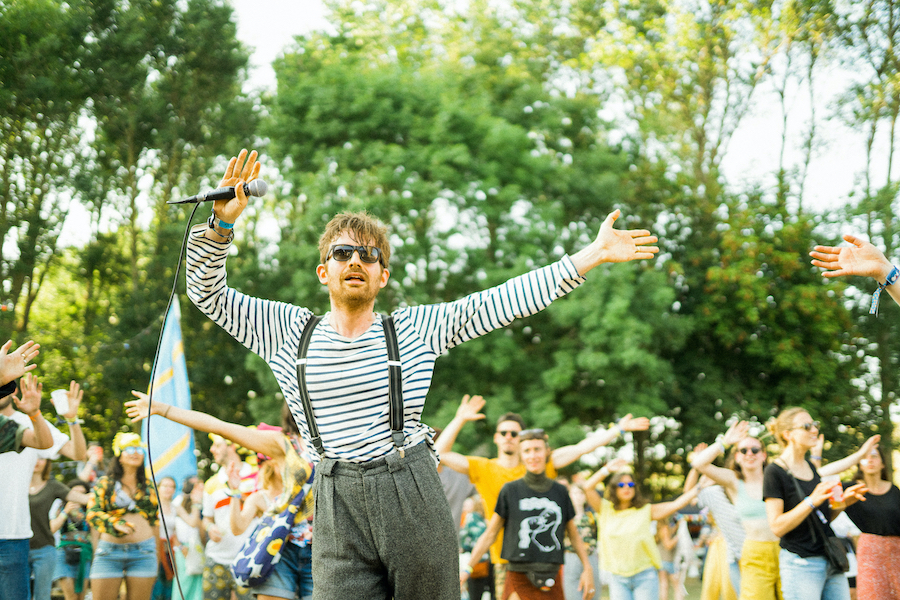
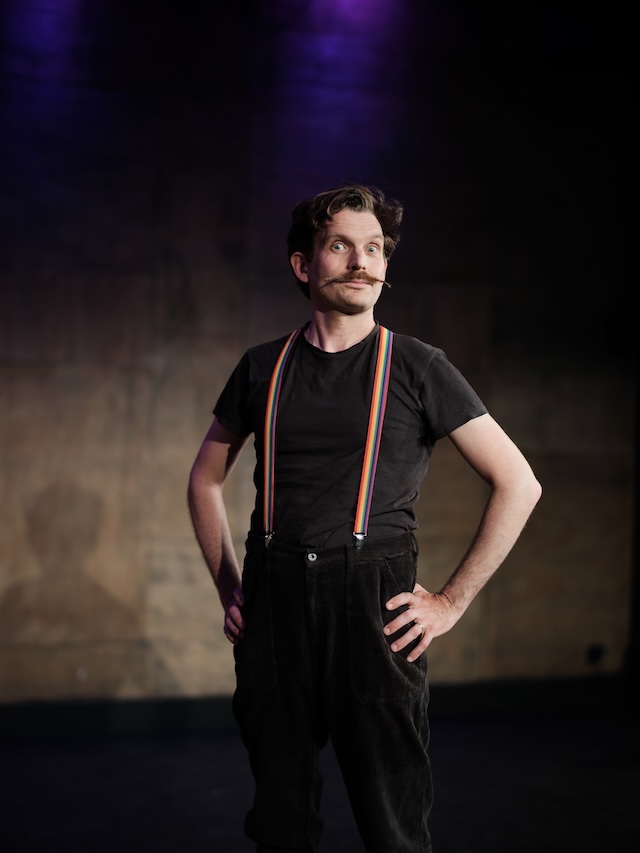
    Eiffel Over is the blogging, clowning, singing, dancing alter ego of Oliver Broadbent — lapsed engineer, writer, teacher and performer.

    I sing comedy songs about technical subjects, clown on stage and teach humans to swing dance and blog.

    You may have found your way here while looking for my professional work teaching regenerative design. If so, you’re probably looking for Constructivist, which lives elsewhere on the internet.

    Born at an early age, I have been getting older at a rate of approximately 365 days per Earth year. In the year of my 26th orbit of the sun — 2006 — I decided it might be fun to start writing things down in a blog. Somehow we are still here.

    This blog has been the propagator of many ideas that later made their way into my professional work at Constructivist, The Regenerative Design Lab, Hazel Hill Wood, books, collaborations and projects.

    It is my personal kalideascope.

    I hope you enjoy reading.

    Tag with @samsnapsalot