Asking what if. It’s my go-to technique for stimulating rapid idea generation in groups. In this post, the latest in my series on creative thinking tools for projects, I am sharing another tool for Turning the Kalideascope. In other words, mixing up what we know about a project to help find new ideas. In this post I explain the thinking and then I share a method for facilitating this approach in groups.
(more…)Category: Creativity
-
Use your Professional Palette
We move now in my series of posts on tools for creative thinking from gathering inputs to stimulating new connections. This is what I call ‘Turning the Kalideacope‘. The first technique is called ‘Use your Professional Palette’, and it builds on a technique for Filling the Kalideascope we discussed yesterday. It also provides a bridge from gathering inputs to processing them. First, let’s talk about the pre-requisites.
(more…) -
Preparing the colours for your Professional Palette
There are some inputs to our creative process that we build up over time so that we are ready to draw on them whenever we work on a new project. In this next post in my series on creative thinking tools for projects, I will share with you another source of inputs for the Kalideacope. I call it the ‘preparing the colours for your Professional Palette. These are the set of colours from which you paint your ideas. The image this phrase conjures up for me is of the Impressionist painter spending time in their workshop in Paris getting their paints ready before they get on a train from the Gare St. Lazare, head out into the Normandy countryside and paint a landscape. You have to do the prep in the workshop before you can go out and paint. But how does this apply to us?
(more…) -
Creative thinking tools for projects: the Eiffel Over guide
We need creative thinking tools in our project toolkit to get the most out the opportunities that a new project offers. Projects provide a setting in which people can come together. They provide a focus point for joint attention. They can lead to outcomes that are probably far greater than what we could achieve on our own. In organisations we rightly focus effort on achieving project goals within project constraints – this is project management. But what I think gets neglected is investing in the creative thinking will help define those goals and help reach them in new ways.
The need for creative thinking in setting goals and figuring out how to achieve them is greater than ever before. The climate and ecological emergencies show us that the usual ways of thinking have failed us. We need new thinking. We need creative thinking.
I have spent much of the last five years researching, developing and teaching practical creative thinking tools. People use these tools to help develop their personal and team-level creativity in projects. Based on feedback from workshops with hundreds of engineers and other professionals, I have developed a shortlist of tools and techniques that have the most impact: either in terms of how they help people understand creativity; or how they empower people to be creative with more confidence.
(more…) -
Filling the Kalideascope – previous projects
Humans tend be to attracted to novelty – Oo, the shiny new thing – but sometimes what we need is in what we know already. This post is another in a my series on ‘Filling the Kalideascope‘ – gathering inputs to the creative process. Today’s input is your previous project work.
(more…) -

Creative inspiration from December
A new month, new good intentions. Just like when I started a new exercise book at school, when I would commit to being extra neat (and then forgetting about it a few days later). It’s good time at least to think about how the advent of December can influence your creative work.
(more…) -
Filling the Kalideascope – go to site
This post has moved and along with my other conceptual design teaching tools is now hosted on the Constructivist website here.
-

What’s the least effective thing I can do to tackle the climate crisis?
I am grateful to the participant in this morning’s climate coaching call who reminded me of the power of asking the opposite question to the one you are trying to answer. Instead of asking what’s the most effective thing he could to tackle the climate crisis, he asked what’s the least he could do. Sometimes it is much easier to define what we shouldn’t be doing than what we should. But from this point of opposition we can get some clues about what we should in fact be doing.
(more…) -

Too many inputs
All this week I have been writing about organising inputs to the creative process, but at the end of the week I’m feeling overwhelmed from too many inputs. I need to switch off and reflect, but before I do here are the themes that are swirling round my head. I capture them so that they might be useful for another time.
(more…) -

Brief explosion – starting a creative project
This post has moved and along with my other conceptual design teaching tools is now hosted on the Constructivist website here.
-

Filling the Kalideascope – creative inputs over time
Yesterday I wrote about the inputs you might gather at the start of a creative project. These are what I call inputs in the moment. But there is a different sort input that is only available to you if you put in the work to gather them. I call these creative inputs over time.
(more…) -

Filling the Kalideascope – creative inputs in the moment
In my last post I described the Kalideascope as a tool for having ideas. You fill it with inputs and then turn it to create new the connections between those inputs which constitute new ideas. In this post I will give an overview of the different kinds of inputs to the creative process you might look for.
(more…) -

Curating information for creativity
In this third video in my series on creative thinking, I go into the concept of curating inputs to the creative process. The combination of our brain and body makes for an awesomely powerful creative machine. We can use our bodies to explore and gather a wide range of inputs and then we can use our arms and fingers to manipulate and rearrange elements within our wide field of vision, and yet much of our creative work is blinkered by computer screens, or worse reduced to the width of a phone. In this video I ask viewers to think about how they can arrange their creative inputs to make full use of their creative faculties.
(more…) -
Build a Kalideascope for creative thinking
In my last post I cited James Webb Young’s definition of an idea as being a new arrangement of existing elements. He goes on to suggest having an idea is like using a kaleidoscope. As I explain in this second video on creative thinking, in my teaching I encourage participants to create their own kaleidoscope dedicate to generating ideas – a Kalideacope.
(more…) -
What is an idea?
This week I have begun creating a series of videos to share my teaching on how to have ideas. The videos start with what simple question, what is an idea. The definition I use, provided by James Webb Young in his 1965 book ‘A Technique for Producing Ideas’ is pragmatic – it gives us tangible ways to work on improving our creative thinking.
(more…) -

The power is in leaving a gap
So many things that I am working on at the moment lead me to the conclusion that there is power in the gaps. But I feel like for my much of my professional development I have been taught to fill in the gaps.
(more…) -

Eggsclamation – notes from Clowns in Crisis
Last night I attended the panel discussion of the excellent Clowns in Crisis conference, hosted by the Online Clown Academy, hosted by. Here are some things I took away from it.
(more…) -
Working notes on feedback as a design tool
This week I ran a workshop with undergraduate students at Imperial College working in design teams at imperial. the aim was to show that it is much easier to give feedback when you a working from a common set of expectations. But this feedback approach can go much further than supporting good team dynamics – itself very important – it can be used as a tool for creative thinking and exploring new ground. Here is a summary of the ten most common points that came up during my conversations with students.
(more…) -

#18 Hazel Hill Wood – Dawn chorus sonic lockdown therapy- show-notes
30 minutes of uninterrupted dawn chorus Hazel Hill Wood, recorded at the end of March. Hazel Hill is woodland nature reserve and education centre helping frontline staff develop resilience and wellbeing through connection with nature. While people are prevented from visiting the woods during lockdown, the team are working on ways to bring the wood to them during lockdown. Listening suggestions:
- Early in the morning
- Over breakfast
- In the background while you work
- To clear your mind at the end of work
- Late at night as you drift off to sleep
-

Unreliable briefs – finding the deeper design narrative
It is tempting to think of a design brief as wholly reliable, a document that contains all the information necessary to execute the design. But design briefs are rarely as reliable as that. In fact we should expect them to be unreliable to start with. Our job as designers is to make our briefs more reliable. To help, I have been playing with the literature concept of the unreliable narrator to help characterise types of unreliable briefs.
(more…) -
Developing a design brief: asking the bigger questions
When developing a design brief, it is tempting to start by constraining the problem – by clarifying, by simplifying, by cutting out. But if we want to make sure we are answering problems that matter, we need to step back from the brief and ask some bigger questions.
(more…) -
Imprisoned with the infinite – the philosophical implications of an imaginary visit to Sweden
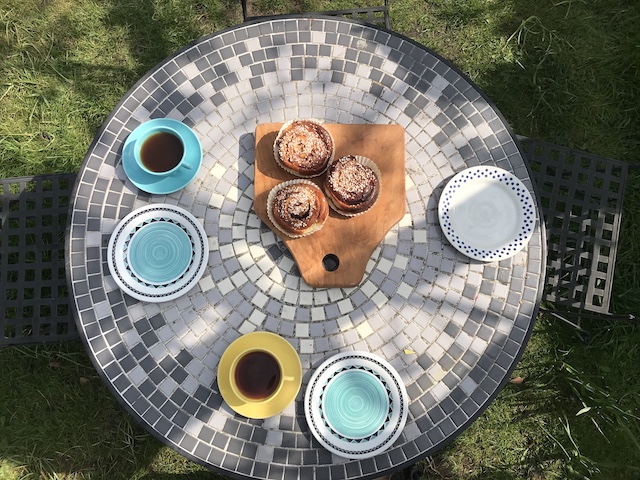
Yesterday our household returned home from an imaginary holiday. Despite being in lockdown, we realised that we could imagine going on a trip anywhere in the world. Our daughter suggested our Sweden. Too far to easily get to under normal circumstances without flying, with that constraint removed we thought, why not? Now back home, I have been using this visit as an opportunity to explore some philosophical arguments about how we deal with choice and how this affects our creativity.
(more…) -
#17 Tabitha Pope – Participatory Architecture – Show notes
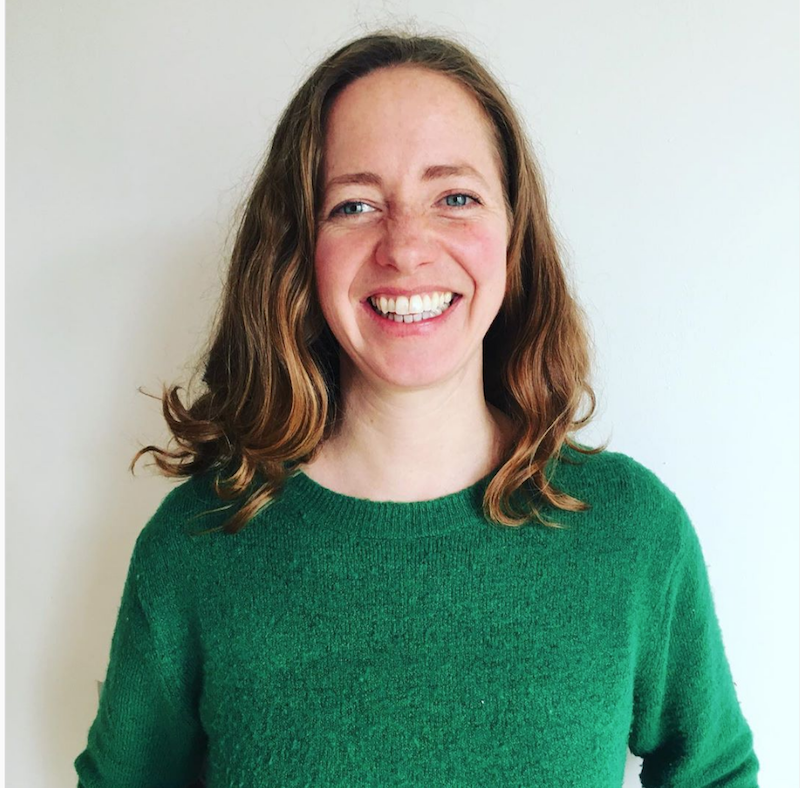
Tabitha Pope is an architect and lecturer, with a specialism temporary structures and participatory architecture and a passion for work that sits at the boundary of art and architecture. In this episode, produced in support of International Women’s Day, my colleague Lucy Barber interview Tabitha about:
- What is participatory design and what benefits does it offer us in the climate emergency.
- Challenging power in order to make architecture a more inclusive space for all under-represented groups, not just women.
- How her practice of carpentry allows her to intervene in the design process in a different way.
- Establishing a nature connection to help designers and citizens alike tackle the biodiversity crisis.
- Stepping into a space of vulnerability in design in order to do things differently.
- Creating spaces for joy and encounter to tackle loneliness and build resilience in communities.
Listen on Apple Podcasts , Sticher or by download here.
(more…) -
#16 Bengt Cousins-Jenvey – How to save a million tonnes of carbon – shownotes
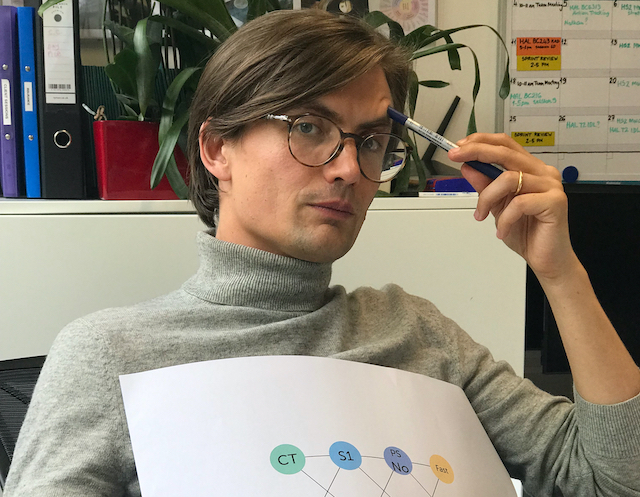
Bengt is a consultant and ‘re-designer’, working in sustainability and circular design in the built environment. This year we are working together to create training in response to the climate emergency. In this interview I ask Bengt about his big question: what single thing can you do to save a million tonnes of carbon. Exploring this question we get into:
- High-level strategies for accounting for carbon that help avoid getting stuck in the detail.
- Using culture-change models to guide organisations as they respond to declaring a climate emergency.
- Thinking frameworks that help consultants engage with the businesses they are supporting.
Listen on Apple Podcasts , Sticher or by download here
(more…) -

#15 Show-notes – Oliver Broadbent interview by Alexie Sommer – Creativity, climate and clowning
I spend most of my time designing creativity training for engineers. In this episode we flip the format. Alexie Sommer, Independent Design and Communication Director and collaborator on many of my projects interviews me about why I set up Eiffel Over and Constructivist Ltd, and what our plans are for designing creativity training for engineers in 2020. We get into:
- Techniques for teaching creativity
- Our programme of training support people tackling the climate emergency
- And what engineers might learn from clowns.
Listen on Apple Podcasts , Sticher or by download here
(more…) -
From Dminor to F#minor – new adventues in chord transitions
My Dad and I talk about chords. How would you get from one key in a piece of music to another? To onlookers, it might seem as though we are playing a game of Mornington Crescent. But it makes sense to us.
This evening I put on the second movement of Ravel’s String Quartet in F, which I love. It’s a plucky effervesecent number, with a soaring, bowed second phrase in a completely different key. I sat down at the piano to work it out. The first section is in D minor, and the second part is in F# minor. The common note that allows the connection is A. But in all my years hammering things out on the piano I have never noticed this as a possible transition, in any key.
(more…) -
Olafur Eliasson at the Tate + reflections on my own work
This week I have had the feeling that I have been struggling recently to find focus on my creative work. I have lots of projects on at the moment, and I am not satisfied that I am being able to draw a cohesive thread between them. I think this is important because I subscribe to the idea that to have impact on your work, you need to be regularly adding to it in a disciplined way – always adding momentum to the fly-wheel, as Jim Collins puts it.
(more…) -
Creative Surplus
Creative surplus is the time we have to invest in thinking creatively, just like a financial surplus allows us to make financial investments. I like the term because it implies both that it is a quantity that you have to create and it is something that you can invest for greater benefit later.
(more…)