Category: Clowning

  • Glastonbury Piano Bar gig aftermath

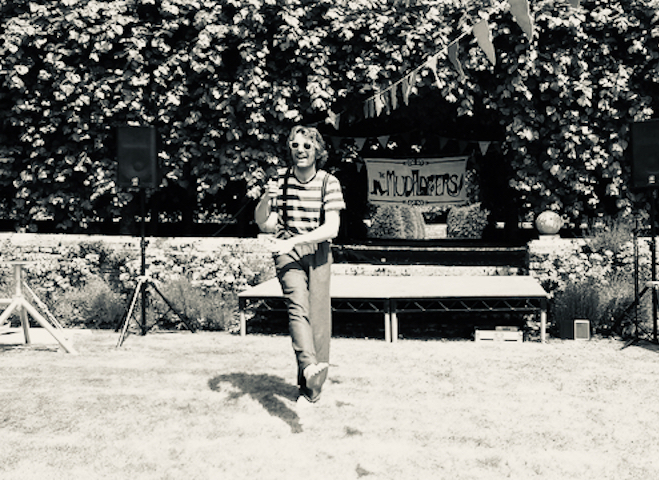
    Clown your way in, they said.

    There is a not-so-secret secret bar at Glastonbury, called the Piano Bar. When the main stages shut, the queue to this beautiful tucked away venue snakes down the hill. But I had heard tales of from fellow clowns that if you could impress the bounder on the crew entrance they might let you in.

    So for 15 minutes I solo improvd at an unimpressed human standing behind a piece of heras fencing, guarding the entrance.

    Then they said, you are fairly perseverant. After another 5 minutes, they asked, can you do that on stage? And I said yes. And they said you are in.

    Out of the frying pan and into the fire.

    Because I had only been planning on getting in to watch, not to perform.

    But that’s what the clown’s supposed to do, right? Assume they can do anything, and then revel in the failure.

    In the end it wasn’t failure. In fact I think it went quite well. But I’ll definitely chalk it up as toughest gig yet.

    By the time I was done, I went outside and it was already light.

  • When the joke isn’t funny anymore

    I’ve been writing this week about when is and isn’t a good time to optimise. And also about the way a street theatre clown uses feedback to keep them close to their goal of making the audience laugh. 

    Well, the clown has another trick up their sleeve, which I learnt from clowning teacher Holly Stoppit, which is called the Drop. 

    Usually a clown can whip up an audience into a frenzy of laughter by doing silly, unexpected things on stage. They will find a gesture or a game that gets the laughs rolling. But then usually, at some point, the joke will stop being funny. The tide turns quickly, and the audience isn’t laughing anymore. 

    This is when the clown should use the Drop. They simply forget all about what they were doing and invent something new. The surprise keeps the audience engaged. It reanimates the clown, giving them a new creative opportunity. It reconnects the clown and their congregation. And the game of improvised laughter-making starts again.

    The reason the clown can do this is they have no resistance to changing the plan. Few deeply held plans about how the session is going to go. Few carefully created props that wouldn’t get used if they took the show in a different direction. And critically, no ego.

    With none of this baggage, the clown is freed of sunk-cost fallacy. Sunk-cost fallacy is the often-held belief that we must continue doing the same things as before because we have invested so much in our existing ways of doing things, even if in the long run changing plans would lead to better overall outcomes. 

    One of the reasons we continue to do the same thing as before rather than change approach is because we feel we have so much invested in the status quo. It could be investment in physical infrastructure or personnel. It could be more personal than that and be an issue of reputation. Or a fear of challenging the powers that be.

    But if the approach we usually take is no longer working for the system, we need to have the confidence to drop and explore something new. Because when the audience stops laughing, the joke isn’t funny anymore. 

  • The tight feedback loops of the clown

    In street theatre, the clown lives for the audience. I’m not talking here about the stereotype of the kids’ entertainment performer, but of the much older sort of clown performance. The kind of clown who appears on stage with nothing more than a funny outfit, a sense of curiosity and maybe a trick or two up their sleeve.  In this sort of performance, the whole purpose of the clown is to find something that will make their audience laugh.

    So if they do something, and the audience laughs, that’s good feedback. They do it some more. If it is a funny gesture, they refine it. When they get more laughs, they amplify the movement and the laughter increases. If that amplification of the movement didn’t correspond to an increase in volume of laughter, they bring it back down again and try a different variation. 

    In improvised clown performance, there are strong reinforcing and balancing feedback loops at play. When the audience laughs more, the clown does it more. When the audience laughs less, the clown does it less.

    The clown, with no script, few props, and lightly held plans, has stripped back all the barriers between them and the audience. This stripped-back approach creates an intense feedback loop which keeps the clown on purpose: of making the audience laugh.

  • If I’m the fool then what does that make you?

    I heard this line in a BBC audio adaptation of King Lear for kids. “If I’m the fool, then what does that make you?” It struck a chord. For me this question captures the power of fooling around as a clown.

    Fooling is playful and at the same time powerfully subversive stuff. The clown owns their foolishness, but in doing so raises a mirror the audience. I may be foolish, but in what ways are you unwittingly foolish too?

    (The play also included the line ‘I hate living a thousand years ago’ – which I am also noting down here for future reference).

  • Universal Cycle Flyover

    Universal Cycle Flyover

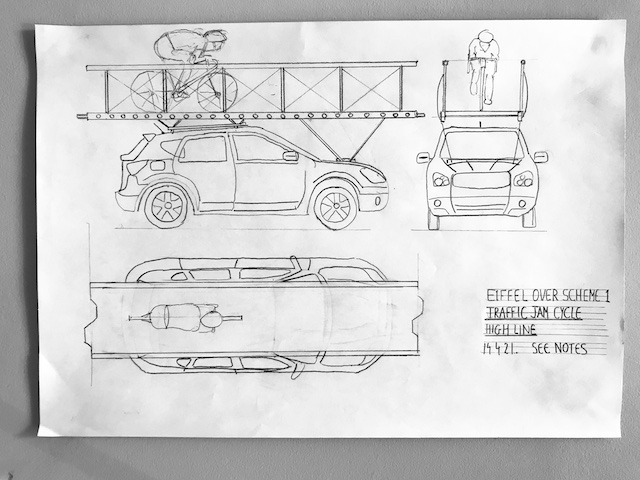
    The daily traffic jam on my local high street has inspired me to think about a way to turn a traffic jam into an opportunity to a way to create safer cycling. This solution is win-win: car drivers get to stay in their cars while facilitating the creation of more traffic-free cycle routes in and out of our cities.

    The concept is for all cars to be fitted with a light-weight section of Universal Cycle Flyover, designed to fit most any vehicle. Cars approaching a traffic jam simply park close enough to the next car to to enable a continuous connection for the cycle deck.

    (The scheme shows a cyclist on a racing bicycle. Of course other types of bicycle would be encouraged, I just started the sketch too close to the top of the page to fit a more upright riding position.)

  • The Structural Elements Song

    Inspired by Tom Lehrer’s The Elements, I wrote the Structural Elements Song to be an itinerary to an educational world tour of structural form. Like The Elements, it is set to the tune of a Modern Major General by Gilbert and Sullivan.

    (more…)
  • Weekend engineering works – near Weston-Super-Mare

    Weekend engineering works – near Weston-Super-Mare

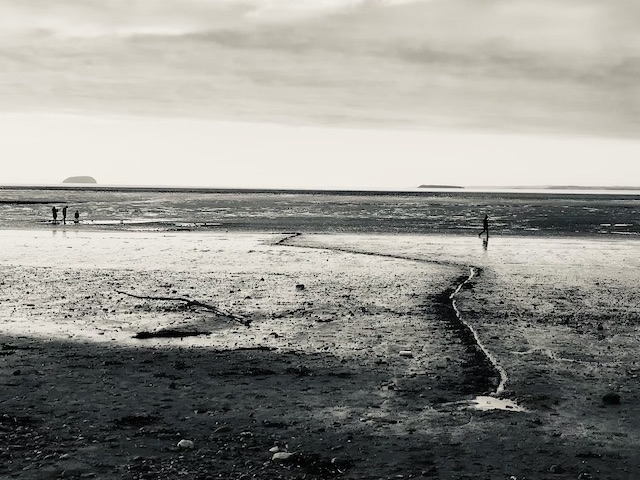
    Today engineers completed work on a major new irrigation channel to bring drinking water to a major new coastal development on Sand Bay, near Weston-Super-Mare. The 60-metre-long new canal brings water that rises from the coarse sand at the back of the beach across the inter-tidal zone to the new fortified town, which looks north-westwards across the Bristol Channel towards Cardiff.

    In a bold vision, the water supply has two functions: potable water supply for the imaginary people living in the turret in the middle of the island; and also to ensure the defensive moat is always full. Anglo-French design and build contractors Eiffelover and Co. have a long track record in delivering civil and environmental projects in coastal settings.

    (more…)
  • The power is in leaving a gap

    The power is in leaving a gap

    So many things that I am working on at the moment lead me to the conclusion that there is power in the gaps. But I feel like for my much of my professional development I have been taught to fill in the gaps.

    (more…)
  • Eggsclamation – notes from Clowns in Crisis

    Eggsclamation – notes from Clowns in Crisis

    Last night I attended the panel discussion of the excellent Clowns in Crisis conference, hosted by the Online Clown Academy, hosted by. Here are some things I took away from it.

    (more…)
  • Proust’s antidote to endless scrolling

    Proust’s antidote to endless scrolling

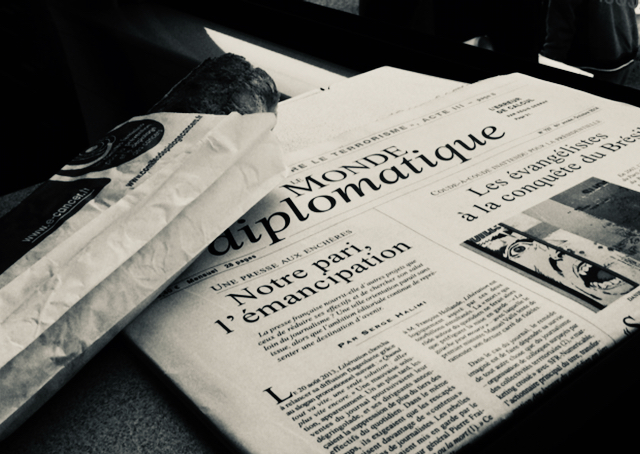
    The fault I find in our journalism is it forces us to engage with some fresh triviality every day whereas only three or four books give us anything that is of any importance.

    Charles Swann, in Swann’s Way, In Search of Lost Time Vol.1
    (more…)
  • Using  Zoom, Eventbrite and Facebook to promote your event

    Using Zoom, Eventbrite and Facebook to promote your event

    Boring post alert.

    Sometimes you need to be boring to be creative.

    This is a really boring post about something I find myself doing lots and lots: setting up an event on Zoom, selling tickets for it and promoting it. My hope is that by sharing these steps you will need to spend less time figuring it all out yourselves.

    (more…)
  • Reading Proust – volume 5 update

    Reading Proust – volume 5 update

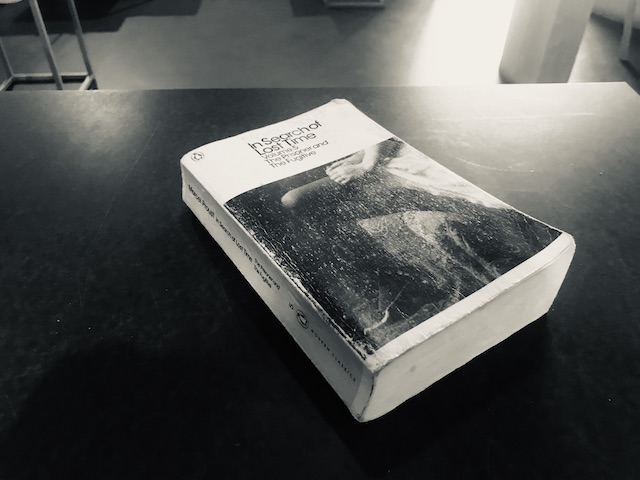
    It wasn’t what I was expecting but volume 5 of Proust’s In Search of Lost Time ends on a cliff-hanger. It is incredible how such separate threads from five previous volumes are starting to brought together: a narrative arc that I could never see converging has in fact been much closer to convergence than I expected.

    I’ve been reading In Search of Lost Time – Proust’s epic explorationg of memory, art, adolescence and decisre – on and off since 2007. It is one of those books that lots of people have heard of, some know two things about it (the long sentances and the flood of memories provoked by dipping a madeliene cake in his tea) but I’ve hardly found anyone who has actually read it. So in 2007 I decided to give it a go (in English!).

    (more…)
  • A better-dressed version of me

    A better-dressed version of me

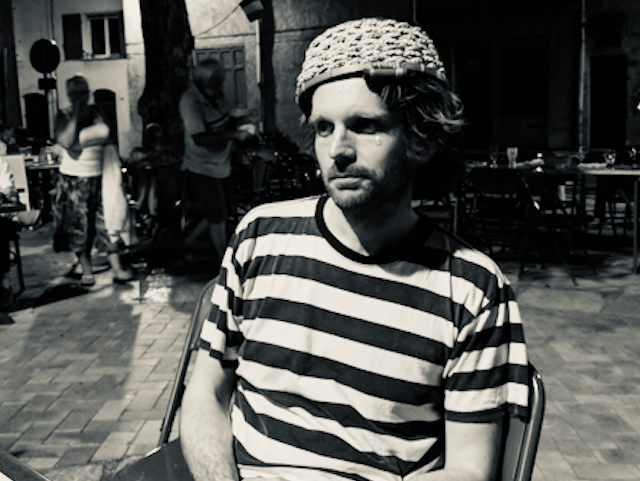
    I sit in my current preferred cafe bolthole and the jacket of the person opposite me catches my eye. It’s a slightly faded turquoise, not unlike a jacket I recently got in the sale. Hang on a second, it is the same jacket, maybe slightly older. I zoom out and notice their whole clothing combination is familiar: a stripey top, dark blue jeans, converse, set off with a dark grey panier.

    These are the clothes that I wear, or at least I think I wear – only better. I look down at my own sartorial combination and I realise it is a poor approximation to my self image. I start to take notes for self improvement – cream converse, turned up jeans – but then my alter-wardrobe is gone.

    I have long been in pursuit of the one outfit to rule them all. There are a few inspirations.

    (more…)
  • Still waiting

    Still waiting

    I’ve realised that quietly, in the back of my mind I am waiting. It hasn’t happened yet, so I just have to wait a bit longer. I am waiting for things to return to normal.

    (more…)
  • Chamber music in the woods

    Chamber music in the woods

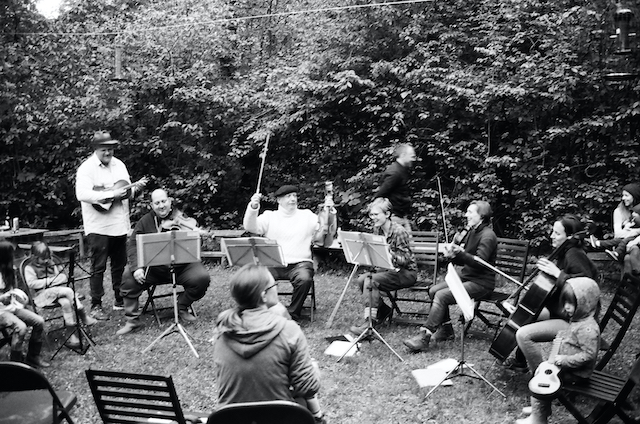
    Yesterday I was feeling particularly sad about the loss of live music during lockdown and the stories of musicians who just don’t have any work at the moment. And then, because this how my brain works, I thought, how can we put on some live chamber music at Hazel Hill Woods?

    (more…)
  • The left-right game – experiments in navigation, embodiment and control

    The left-right game – experiments in navigation, embodiment and control

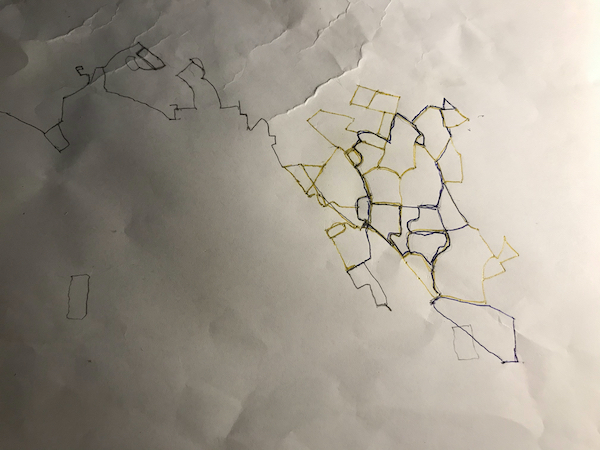
    Yesterday my daughter and I left the house and flipped a coin. Heads for left, tails for right. Right it was, then left, then left again, et cetera. A random journey along the roads, cyclepaths and alleyways of our neighbourhood ensued. It became a fun home-schooling lesson in probability. It revealed to me the habits that stop me from noticing so much of what surrounds me. And it was a fascinating experiment in not having a plan.

    (more…)
  • #18 Hazel Hill Wood – Dawn chorus sonic lockdown therapy- show-notes

    #18 Hazel Hill Wood – Dawn chorus sonic lockdown therapy- show-notes

    30 minutes of uninterrupted dawn chorus Hazel Hill Wood, recorded at the end of March. Hazel Hill is woodland nature reserve and education centre helping frontline staff develop resilience and wellbeing through connection with nature. While people are prevented from visiting the woods during lockdown, the team are working on ways to bring the wood to them during lockdown. Listening suggestions:

    • Early in the morning
    • Over breakfast
    • In the background while you work
    • To clear your mind at the end of work
    • Late at night as you drift off to sleep
    (more…)
  • Imprisoned with the infinite – the philosophical implications of an imaginary visit to Sweden

    Imprisoned with the infinite – the philosophical implications of an imaginary visit to Sweden

    Yesterday our household returned home from an imaginary holiday. Despite being in lockdown, we realised that we could imagine going on a trip anywhere in the world. Our daughter suggested our Sweden. Too far to easily get to under normal circumstances without flying, with that constraint removed we thought, why not? Now back home, I have been using this visit as an opportunity to explore some philosophical arguments about how we deal with choice and how this affects our creativity.

    (more…)
  • A click of the ratchet from physical to virtual

    A click of the ratchet from physical to virtual

    Across all the of the projects I’m involved with we are working out what can go ahead and what must be postponed. A significant factor in whether to proceed is whether the activity can go ahead virtually. While the ability to move online is a blessing for business and job continuity, I think it represents an irriversible step for industry and society away from the phyical to the virtual – a click of the ratchet – that will have long-lasting impacts on our freedom and how we interact with other people.

    (more…)

  • #15 Show-notes – Oliver Broadbent interview by Alexie Sommer – Creativity, climate and clowning

    #15 Show-notes – Oliver Broadbent interview by Alexie Sommer – Creativity, climate and clowning

    I spend most of my time designing creativity training for engineers. In this episode we flip the format. Alexie Sommer, Independent Design and Communication Director and collaborator on many of my projects interviews me about why I set up Eiffel Over and Constructivist Ltd, and what our plans are for designing creativity training for engineers in 2020. We get into:

    • Techniques for teaching creativity
    • Our programme of training support people tackling the climate emergency
    • And what engineers might learn from clowns.

    Listen on Apple Podcasts , Sticher or by download here

    (more…)
  • From self-help to help me.

    Readers of this blog will know I started a project a couple of years ago to write a book called ‘Analogue Skills‘, a re-examination of the pre-screen skills that relied on to get through the day. I’ve always intended it to be part philosophical, part self-help. When I’ve stalled in my writing, one of the barriers has been not knowing how much of an authoritative voice to take. There is a well-troden self-help author path in which the writer spends a period of time – usually at least six months, sometimes a decade of a career – living the chosen lifestyle, and then writing about it. But that doesn’t sit well with me. I feel the Analogue Skills project to be much more of an experiment.

    (more…)
  • From Dminor to F#minor – new adventues in chord transitions

    My Dad and I talk about chords. How would you get from one key in a piece of music to another? To onlookers, it might seem as though we are playing a game of Mornington Crescent. But it makes sense to us.

    This evening I put on the second movement of Ravel’s String Quartet in F, which I love. It’s a plucky effervesecent number, with a soaring, bowed second phrase in a completely different key. I sat down at the piano to work it out. The first section is in D minor, and the second part is in F# minor. The common note that allows the connection is A. But in all my years hammering things out on the piano I have never noticed this as a possible transition, in any key.

    (more…)
  • Memories of seven – a diary for my daughter

    Memories of seven – a diary for my daughter

    My daughter is now seven. I have been trying to remember what being seven was like for me. Memories start to become more frequent around this time. Some major changes were going on for me around then, moving house, moving school, parents divorcing. Until recently I would have said I could clearly remember when and in what order these big events in my childhood happened. But when I tried to write these down, it seems my hard drive is more fragmented than I had realised.

    So I started to recreate my picture of seven on a piece of paper, and in conversation with family, started to fill in the gaps. This is what I’ve managed to piece together.

    (more…)
  • Bubble surface

    Bubble surface

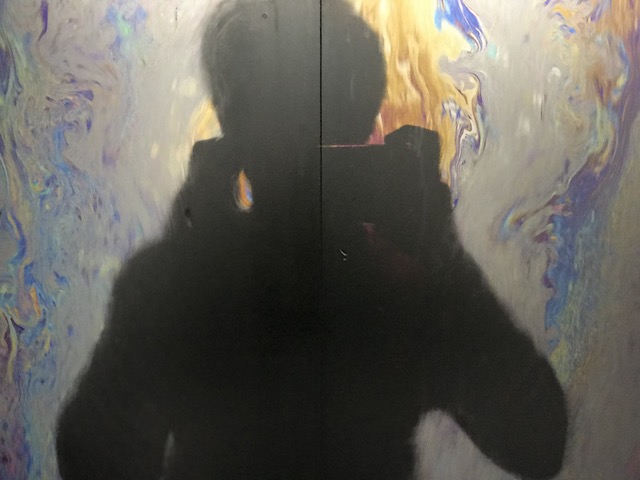
    This afternoon I headed to We The Curious with my daughter for a summer holiday treat. The highlight was the giant sheet of bubble you can make there by dragging a sort of rollerblind contraption through a soapy solution. The result is a vertical bubble surface that flows and swirls with irridescant eddies. When you blow at the surface is distorts out of plane, like a bullesye from a spun pane of glass, or a portal to another dimension.

    And then without warning, ping, it disappears without a trace.

  • Microadventure #1: Garden Sleeping

    Microadventure #1: Garden Sleeping

    For my birthday this week my partner Mary gave me Alistair Humphreys’s inspirational book  ‘Microadventures’. According to Humphreys, a microadventure is an adventure that is short, simple, local, cheap – yet still fun, exciting, challenging, refreshing and rewarding. Last night I undertook my first mission – to go and sleep under the stars in the garden. As adventures go this reads as really not very challenging at all, but I was surprised by how unorthodox it felt. 

    (more…)
  • The perils of false modesty

    The perils of false modesty

    I just read this great paragraph on the debilitating impact of false modesty on judgement.

    (more…)
  • #11 Show notes – Jack Bardwell – Spine-tingling creativity

    #11 Show notes – Jack Bardwell – Spine-tingling creativity

    Graphic designer Jack Bardwell and I used to be colleagues at the Useful Simple Trust, he bringing alive the many wacky ideas I have had about how to teach people engineering. Over our three years working together we had many fascinating and long discussions together about creative processes and teaching design.

    I recorded this episode with Jack last summer just before he left to puruse new adventures in interior architecture. I miss him in this office, so it has been a pleasure therefore to listen his voice in the edit, and to hear the many fascinating things he has to say about his creative process, what he has learnt from working with engineers, and, most intriguingly, the spine-tingling effect other people’s creativity can have on him.

    In this episode we get into:

    • Tuning in to other people’s creativity
    • How people express creativity without realising it.
    • The receiver is the context
    • Cooking is design
    • The importance of copying in developing skill as a designer
    • How new skills open up possibilities, too much skill can limit them
    • Using jigs to constrain the creative process
    • How a carefully tuned jig can force a particularly aesthetic on what you create.
    • How you communicate different parts of the design to the client.
    • When is a jig not a jig.
    • Thinking in lists
    • The way information is presented to you is not necessarily the best way for you to look at it.

    I’ve got a feeling this going to be one of those episodes I keep coming back to when I need angles for looking at the world. Enjoy!

    • Listen to it on iTunes
    • Listen on Stitcher
    • Stream by clicking here
    • Download as an MP3 by right-clicking here and choosing “save as.”

    (more…)

  • #10 Show notes- John-Paul Flintoff – Saving the world one creative project at a time

    #10 Show notes- John-Paul Flintoff – Saving the world one creative project at a time

    Journalist and author John-Paul Flintoff is this person who inspired me to start this podcast. He talks passionately about how to get people started on their creative projects and the positive impact their creativity has on the world. This interview gets very meta: a podcast about the creative process of podcasting. We get into all sorts of great techniques for creative projects, including:

    • Improv games
    • Valuing what you are good at
    • Not losing track of what is working well already
    • The importance of getting started
    • Not worrying about whether it is going to be good.
    • Shared space in the creaive process
    • Why we need to keep noticing

    But beyond any particular tactic, it is J-P’s warmth and encouragement that I find so inspiring. I hope it inspires you too.

    • Listen to it on iTunes
    • Listen on Stitcher
    • Stream by clicking here
    • Download as an MP3 by right-clicking here and choosing “save as.”

    (more…)

  • Embodied perception and the Bristol Swing Festival

    Embodied perception and the Bristol Swing Festival

    Bristol Swing Festival is unique among swing dancing festivals because it offers the chance to learn circus skills alongside learning to dance. One of the things that I love about coming to Bristol for the swing festival every year is the way it makes me feel grounded in myself and the connection it gives me to other people and the world around me. In the past, I haven’t had a philosophical framework to help me interpret these experiences. But this year I think I found it in Matthew Crawford’s book The World Beyond Your Head. Reading the second chapter, ‘Embodied Perception’, I recognise many of the phenomena that he describes in my experiences here at the festival.
    The key idea Crawford introduces is that we think through our bodies: our bodies are an integral part of our thinking process and thinking doesn’t occur just within the confines of our skulls. Before I think about the consequences of this idea I want to first relate the pieces of evidence that he puts forward for this notion of embodied perception to the experiences I have here at the festival. Before we go on I should just say a little more about what goes on at this festival. As the name suggests people coming to this festival to learn to swing dance but what what makes it unusual is that you also learn circus skills alongside those dance skills. On a typical day you’ll spend the morning and early afternoon learning dance steps and then the rest of the afternoon trying out different circus techniques such as tumbling, handstands, tight rope walking, juggling and clowning. It is therefore a very physical environment and one in which you make a lots of physical and mental contact with other people.
    The first piece of evidence that Crawford sites in support of embodied perception is what happens when we use a stick held in the hand to explore a space we can’t see. When we use the stick to rummage around in the unseen space, we are aware of the stick jostling around in our hand as the other end moves over the contours of the hidden space; however, after a while we stop noticing the stick’s pressure against our hands changing and focus instead on what is happening at the tip of the stick. As he describes, it is as if we see through the stick right to the tip. Our awareness has shifted from our hands and is focused instead on what is happening at the tip of the stick. To use his words the probe itself has become transparent – it disappears. He goes on that the crucial fact that makes this integration of the prosthetic possible is it there is a closed loop between action and perception: “what you perceive is determined by what do you, just as when we make use of our own hands.
    You can see this happening as people start to develop dancing and circus skills. The stiltwalkers are initially very aware of the contraptions they have strapped to their legs but as they gain confidence and familiarity with the sensations they receive through these prosthetics about their relationship to the physical world on the ground it is as if the stilts disappear from view. They have become incorporated into the body from an attentional perspective and what the stiltwalker senses is the ground at the at the bottom of the stilts and not the stilts themselves. I think the same can be said of the sensations that two people feel when they learn to dance with one another. When they begin they are very aware of all the places where their two bodies touch: the connection between their arms, between the sides of their bodies. To beginners this connection with the other dancer is something that they think about a lot. But as the familiarity with this dance hold increases it is if the notion that there are two separate bodies holding onto each other disappears and they experience the dance as one conjoined unit. To re-emphasise Crawford’s words this integration of the stilt or the other dancer into our own bodies is only possible because there is a feedback loop between action and perception. The sensory information we receive when we are dancing with someone is that associated with a four-legged organism with a centre of gravity that exists at some imaginary point between the two dancers’ ribcages and so based on this sensory information we no longer perceive ourselves to be two separate beings but rather one entity.
    So that was the first piece of evidence in support of extended perception:tThe way we integrate tools and prosthetics and even other people into our bodies. The second set of evidence relates to how we interpret the world around us based on sensory information. He explains that the traditional model of perception has it that our eyes supply our brains with a two dimensional representations of the world. When I look at the beer can in front of me what I see is a 2-D representation. But from memory I have images of the can from other perspectives. What my brain does is a sort of three-dimensional rendering in order to create a 3-D model of the can in front of me. This model seems to imply a great deal of processing happens in the head whenever we wish to perceive a 3-D object.  That model however, as Crawford explains is being challenged by and alternative approach. That approach takes as its starting point the fact that our eyes are located in eye sockets in which they can swivel. Those eye sockets are located in a head seated up on a neck that can look from left to right up and down. Those eyes, head and neck are attached to a body that is connected to legs that can propel the body forwards, backwards, left and right and up-and-down. To repeat the quote that Crawford uses, vision is not the purely mental processing of sensory inputs but rather the way in which we use our body to extract invariants from the stimulus flux. In other words, we explore and understand the world around us by moving through it and seeing things from different perspectives and critically this allows us to identify things that remain the same from different perspectives. Movement through the world is therefore critical to understanding it.
    Here at the festival we learn lots about movement and moving in different ways, so it is possible that this altered locomotion offers us new perspectives on the world. In the handstand classes we spent time moving around on all fours and connecting our hands to the ground. In solo jazz we learn to slide, hop and skip through a space, filling it in new ways. In tumbling classes we run, we jump and we fall (gracefully). All of these activities reveal the world to us from new perspectives, and remind us how narrowly we perceive the environments that we commonly inhabit.
    When I look out of the window from the cafe at which I am writing this post at the streams of people walking to work, walking the same direction as each other, walking the same way as each other, to go and sit in office environments that are probably very similar to one another. If we move through (or rather remain sedentary) in very similar ways, what does that say about diversity of thought?
    Crawford concludes this part of the chapter with a reflection on how toddlers learn to walk. When they are learning they are experimenting to see what movements of their bodies produce what effects. Initially this takes lots of concentration, but eventually the commands can be carried out with thinking about them. The child’s attention shifts away from the body toward the world that can now be explored through movement. Through mastering a new skill, their world has grown, and their attention and perception reaches out beyond the body. Invoking Nietzsche, Crawford says that joy is the sense of one’s power increasing. As we master a new physical skill, frustration gives way – their attention shifts from their body to the world beyond – and they feel a sense of joy.
    So what do I take from all of this? Why does going to the Swing Festival feel so good. I think that there are four things at play here:
    The first is that for many, myself included, our primary stimuli during the day are visual and audio – all from the head and little from the body. At the festival, the stimuli are much more physical. This gives our brains a break, and perhaps puts us back into a sensory environment to which are perhaps better evolutionarily suited.
    The second is that many of the skills we learn at the festival allow us to move through the world in new ways, giving us new ways of perceiving it and understanding it. Turning upside down may seem a trivial thing to do, but when we do so much of our thinking the right way round, flipping things provides a refreshing change.
    A third thing I’ve noticed is that spending a few hours a day doing bodily-focused classes seems to make people more physically playful outside those classes. It’s as if we are given permission to rediscover our world through physical play, to rediscover that intrinsic joy that children find when they run around, swing from branches, balance on walls, wrestle with one another or just give each other hugs.
    And finally, the festival gives us a tiny taste of the power we could feel if we could master a circus skill: when we might one day stop looking at our hands and watch the juggling balls dancing in front of us; when we might one day feel the lightness that comes with the perfect handstand.
    To conclude with one of Crawford’s phrases, ‘we think through our bodies’. Bristol Swing Festival gives me new ways to think through my body, and that’s why I enjoy being there so much.

    Related posts
  • #7: Musician and composer Ellie Westgarth-Flynn on creative strategies, instruments as an extension of our bodies and creative feedback

    #7: Musician and composer Ellie Westgarth-Flynn on creative strategies, instruments as an extension of our bodies and creative feedback

    Ever since I was a kid my Dad has been sharing musical composition strategies with me, so I think music has been a lens thorugh which I’ve thought about creativity for a long time. And so I jumped at the opportunity to interview my friend Ellie Westgarth-Flynn, pianist, singer, composer and performer about our shared interest in creative techinques for composition. As in many of these podcast interviews, I think that creative techinques from one domain can easily be transported to another, and so I hope that whatever your domain of work, you find something useful in the creative techinques that Ellie and discuss. In this episode, we get into:

    • The tension between technical mastery and creative freedom.
    • The freedom that rhythmic and harmonic templates or restrictions bring to our compositions.
    • Building up composition from motifs and building blocks.
    • The importance of feedback in the creative process – acting on feedback is where change takes place.
    • There comes a point at which you need to leave yourself out of it and get on the with the job of writing the music.
    • Three creative techniques for anyone trying to get into song writing.


    • Listen to it on iTunes
    • Stream by clicking here
    • Download as an MP3 by right-clicking here and choosing “save as.”

    (more…)