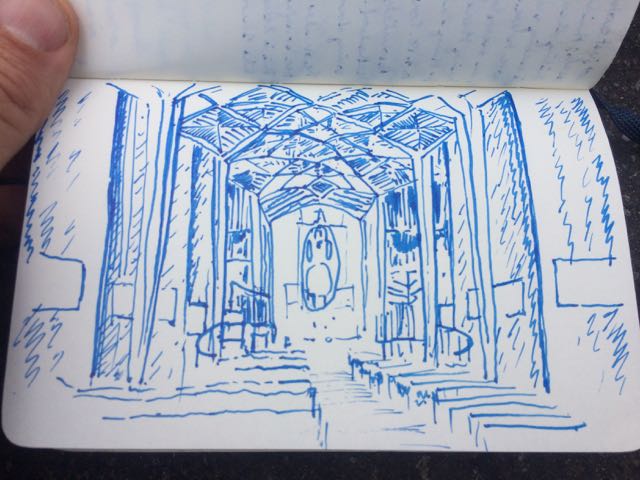
After a recent seminar in Coventry I had an hour to spare and so headed over to the famous cathederal. This sketch doesn’t come close to catching the finesse of the columns on this bold modern design but it serves to remind me of the textiures and feel of the place.
Category: Engineering and architecture
-
Eiffelovercast #3 – Andrew Scoones – is there is such a thing as engineering culture?
We are trying to define the heritage of the future – the creativity and ideas in engineering that people will look back on – Andrew Scoones
Andrew Scoones is a filmmaker specialising in the built environment. Andrew seems to have interviewed or met almost all of my engineering design heroes, and so I was equally delighted and nervous when he agreed to let me interview him! In this podcast we explore one of Andrew’s passions, the identification and celebration of engineering culture. Along the way way we get in to some great stories about designers, what they design and how they do it.
Andrew is director of the Engineering Club, set up over twenty years ago to host events about the broad culture of engineering in an informal setting. In this podcast he shares some of his favourite stories from Engineering Club guests, which illustrate different aspects of engineering culture.
En route we get into bicycle design, designing trainers, whether there engineering culture includes creativity, and whether there is room for creativity in industrialissed systems. We talk about some great engineers and their projects. And we talk about building your own dishwasher.

Please enjoy this interview with Andrew Scoones and let me know what you think in the comments below.
-
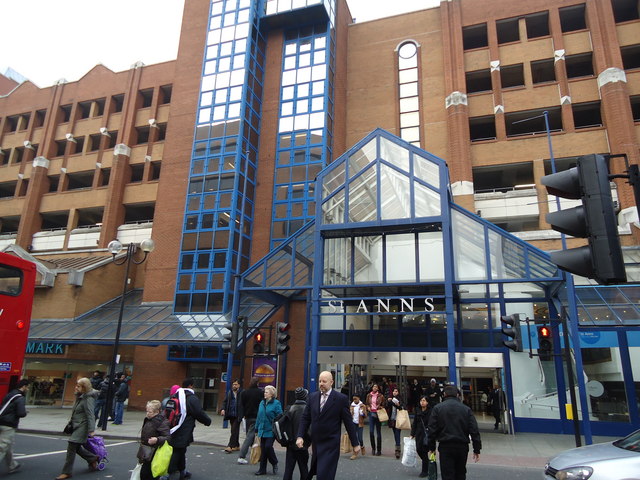
Harrow: my original civil engineering inspiration?
St Ann’s shopping centre, Harrow – my original inspiration? ‘geograph-2284249‘ by Stacey Harris is licenced under CC BY SA 2.0 This morning I was down at our local primary school arranging to do a talk about civil engineering for the Year 5 and 6s. The head teacher remarked that most of the teachers at the school probably wouldn’t know what civil engineers do, let alone the students. It was the same for me as a kid. But although I didn’t know the words civil engineer, I was fascinated by all things civil engineering: big construction, railways, bridges, waterways.
I grew up in Harrow, and though I regularly visit family in the area, in over fifteen years I haven’t been back to the town centre that was the backdrop to my childhood. This week, beating the Tube strikes meant an eighteen mile cycle ride through that part of the world. After an hour and a half in the saddle in the pouring rain I decided to take a pit stop in downtown Harrow. And WHAMM: all these childhood memories came streaming back, as vivid as if they were yesterday:
- There’s the ‘whole in the wall’ where my Dad would queue for cash
- There’s the Debenhams that I followed my Mum round on what seemed like endless trips
- There’s where I first went to McDonald’s on my own
- That’s where I got mugged for the money I’d saved up to buy a new motor for my radio control car
- There’s the bar that underaged me used to go into at 4pm on a Saturday and wait patiently to avoid the evening bouncers.
But the strongest memory I have of all is the excitement of seeing much of the town centre under construction. For the suburban child that I was, Harrow was the big lights. The 6-8 storey office blocks in the town centre I considered big, glamorous, sophisticated – like the buildings in the montage at the start of Dallas. So when construction started of an enormous middle-of-town shopping centre began including a 9-storey post-modern multi-storey car park, it really captured my imagination.
I remember watching the St Ann’s centre being built right from the basement excavation works and the piling through to the fit-out – watching from the bus stop across the road. I remember the steel superstructure being erected and asking my Dad why they were building a giant Meccano model of the building before they built the real thing. The new centre required major rerouting of the roads – this too I found fascinating.
The influence of all this construction is clear in the drawings that I made at this age – some of which I still have. I was trying to design my own shopping centres, car parks, one-way systems, tram systems, all modelled on Harrow. There were other influences too: the construction of the M25 up the road was an event horizon for me. When my best friend moved away, I asked if he would be coming back before they finished the M25, something which I knew would take ages. When I was told no he wouldn’t, I knew I was in for a long wait.
I even remember aged about ten going to a traveling exhibition about how Harrow would be served by something called ‘Crossrail’ – that sounded incredible.
After St Ann’s with its anchor stores and enticing food court, they built St George’s the even more ambitious St George’s shopping centre, and then the Harrow property bubble must have burst because there is the concrete shell of abandoned incomplete office block just around the corner. These days the anchor stores have dwindled, and the food court sells more chicken than I remember.
Had I grown up here fifteen years later I wonder if I would have been similarly inspired?
-
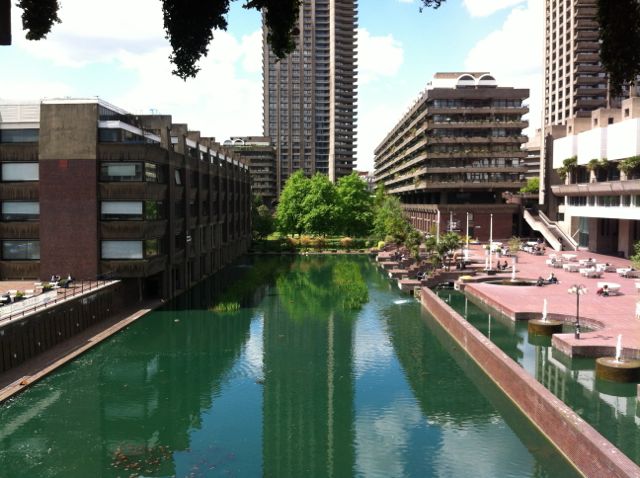
Barbican, you were looking lovely today
Today the Barbican looked stunning. I had the feeling that with the sun shining this is how Chamberlin, Powell and Bonn’s original renders of the Barbican might have looked.
[pe2-image src=”http://lh6.ggpht.com/-7ka-Lujly04/Ubay2xXgaVI/AAAAAAAAAYA/av_FNCOhNWc/s144-c-o/IMG_4923.jpg” href=”https://picasaweb.google.com/101339256689884186918/BarbicanYouWereLookingLovelyToday#5888090216868112722″ caption=”The Barbican” type=”image” alt=”IMG_4923.jpg” pe2_gal_format=”phototile” ] [pe2-image src=”http://lh6.ggpht.com/-3WrpNspLFDU/Ubay_xHkfrI/AAAAAAAAAYA/_K04qXLe_t0/s144-c-o/IMG_4938.jpg” href=”https://picasaweb.google.com/101339256689884186918/BarbicanYouWereLookingLovelyToday#5888090371420094130″ caption=”The Barbican” type=”image” alt=”IMG_4938.jpg” pe2_gal_format=”phototile” ] [pe2-image src=”http://lh3.ggpht.com/-qYEOy4EO4k8/Ubay3h3er5I/AAAAAAAAAYA/tkpj2yfeP-Q/s144-c-o/IMG_4924.jpg” href=”https://picasaweb.google.com/101339256689884186918/BarbicanYouWereLookingLovelyToday#5888090229887119250″ caption=”The Barbican” type=”image” alt=”IMG_4924.jpg” pe2_gal_format=”phototile” ] [pe2-image src=”http://lh6.ggpht.com/-jjvpv0FP_So/Ubay3zuAifI/AAAAAAAAAYA/Wwm1kHfEZ_U/s144-c-o/IMG_4925.jpg” href=”https://picasaweb.google.com/101339256689884186918/BarbicanYouWereLookingLovelyToday#5888090234679233010″ caption=”The Barbican” type=”image” alt=”IMG_4925.jpg” pe2_gal_format=”phototile” ] [pe2-image src=”http://lh4.ggpht.com/-5qn-s4kKcZo/Ubay7vmD9VI/AAAAAAAAAYA/x1Ea6mFproI/s144-c-o/IMG_4928.jpg” href=”https://picasaweb.google.com/101339256689884186918/BarbicanYouWereLookingLovelyToday#5888090302291637586″ caption=”The Barbican” type=”image” alt=”IMG_4928.jpg” pe2_gal_format=”phototile” ] [pe2-image src=”http://lh5.ggpht.com/-Ytf_6MDS-IQ/Ubay8yiXclI/AAAAAAAAAYA/S8zKN5uEi1M/s144-c-o/IMG_4934.jpg” href=”https://picasaweb.google.com/101339256689884186918/BarbicanYouWereLookingLovelyToday#5888090320261313106″ caption=”The Barbican” type=”image” alt=”IMG_4934.jpg” pe2_gal_format=”phototile” ] [pe2-image src=”http://lh3.ggpht.com/-VFMrT96W6Ok/Ubay-v3q0jI/AAAAAAAAAYA/Wrl3QfOnHtY/s144-c-o/IMG_4937.jpg” href=”https://picasaweb.google.com/101339256689884186918/BarbicanYouWereLookingLovelyToday#5888090353905095218″ caption=”The Barbican” type=”image” alt=”IMG_4937.jpg” pe2_gal_format=”phototile” ]
-
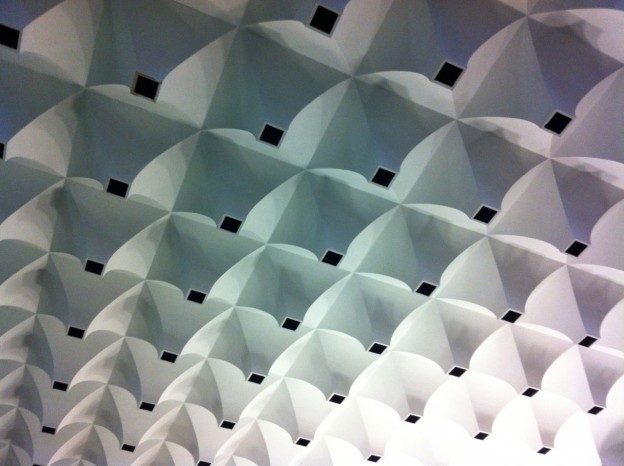
In Praise of Euston Station
I know it is not often that you hear people say this, but I do really like Euston station – from an interpreted transport perspective, it is a good example of a well-thought through hub. (more…)
-
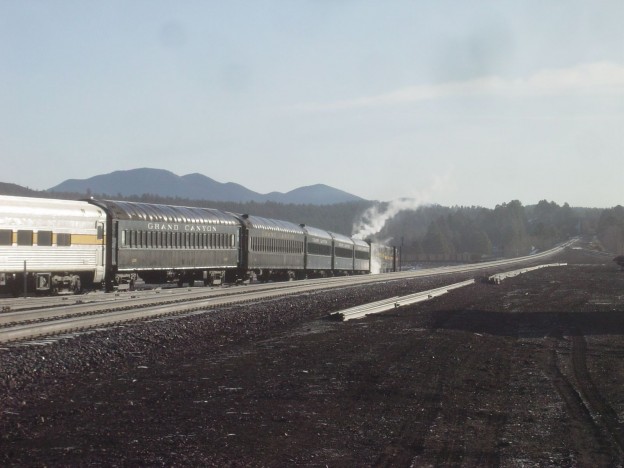
Taking inspiration from the Transcontinental Railroad
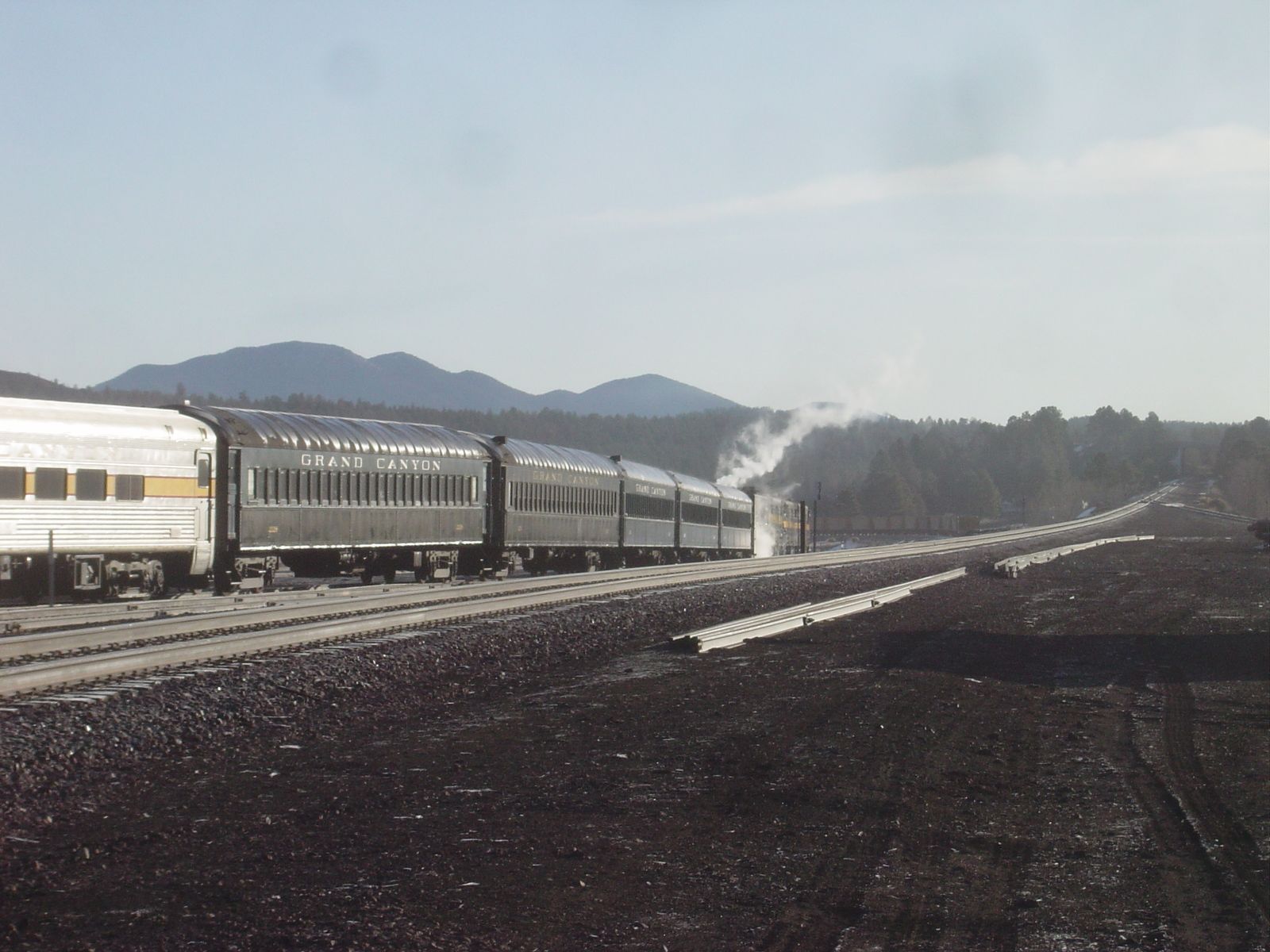
A train pulls of the Santa Fe railway at Williams Arizona to join the Grand Canyon Railroad As I tweeted earlier this morning, today at Think Up I have been working on Build Camp, a concept for a week-long hands-on learning event designed to encourage young people to take on a career in civil engineering. For some time now we have been proposing an event based around the idea of students designing and building their own railway in a week. Today we were looking at how to create a context for the event around which on-site role play activities can be built. Today’s idea was to use the construction of the first american transcontinental railroad as the context, for reasons explained in the following text, extracted from some my draft web copy for the soon-to-be-online Build Camp website.
Why the Pacific Railroad?
Learning about the construction of a railway line is an excellent introduction to the world of civil engineering because it embraces so many aspects of the discipline, including: planning and surveying: structural, geotechnical and fluid mechanics; construction management. This event is set in the context of the construction of the Pacific Railroad, the first railway to cross the United States. The construction of this pioneering railway line was led by a team of engineers operating at the railhead. Engineers were responsible for:* Surveying and choose a route through the unknown territory ahead.
* Designing cuttings, embankments, bridges, dams, causeways and tunnels as needed;* Sourcing local construction materials: fill for embankments; timber for sleepers; fuel for machinery;
* Overseeing construction works
* Organising the logistics of moving labour, materials and plant along the single-track line
* Establishing camps for workers, sourcing food, and paying wages.These engineers were working in the unknown; it was 2000 miles back to headquarters, and so they had to rely on their own ingenuity and engineering judgement to solve the problems they encountered. By setting the role play for this event in the context of the Pacific Railroad we aim to harness that visionary and pioneering spirit, and demonstrates the potential engineers have to shape the world for the better. We are also providing a baseline against which the advances of modern railway construction can be illustrated.
At present we are hoping to run a pilot of Build Camp in October. Keep an eye out for updates on the Think Up website for more information.
-
Going full circle on the Overground
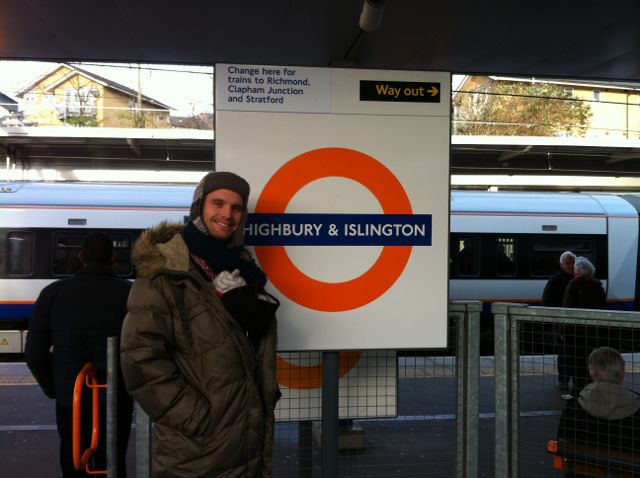
I feel like a bit of a wally standing here in the rain at Clapham High Street Overground station. There are many shorter ways to get me home, which is diametrically across London from here. I could for example slice straight through the middle on the Northern Line. But I want to take the slow circumferential route simply because for the first time, I can. (more…)
-
A3 Hindhead Tunnel: User notes for the London-to-Portsmouth Motorist

English: Hindhead Tunnel A3 Open Day 14th May 2011 North Portal (Photo credit: Wikipedia) For many years the London to Portsmouth motorist would often have been delayed in tail-backs where the A3 wound its way up the closely packed contours of the Devil’s Punchbowl, a site of special scientific interest. But not so any more thanks to a twin-bore tunnel which sends the A3 beneath this stunning part of the Surrey landscape.
Here are a few things for the curious motorcar driver to know on as he or she whizzes 65m under the landscape: (more…)
-
Built in Britain
 Yesterday I watched the first episode of Evan Davis‘s two-part programme Built in Britain. If you like engineering then you’ll love this. It is great to see a big-budget BBC feature on civil engineering that both celebrates modern engineering projects in the UK, but also attempts to answer some of the more difficult questions that new infrastructure projects raise. I feel that engineering programmes usually feature the superlatives – biggest, tallest, longest, deepest – and miss the more important issues, like what societal benefit large-scale engineering projects do, or in some cases don’t, bring. The example of the A3 tunnel under the Devil’s Punch Bowl is a great example of how the case can be made for an expensive infrastructure projects (see links below). And the example of Kielder dam shows how risky predicting the future is.
(more…) -
Speaking with Pictures – Peter Ayres at Big Draw Big Make at the V&A
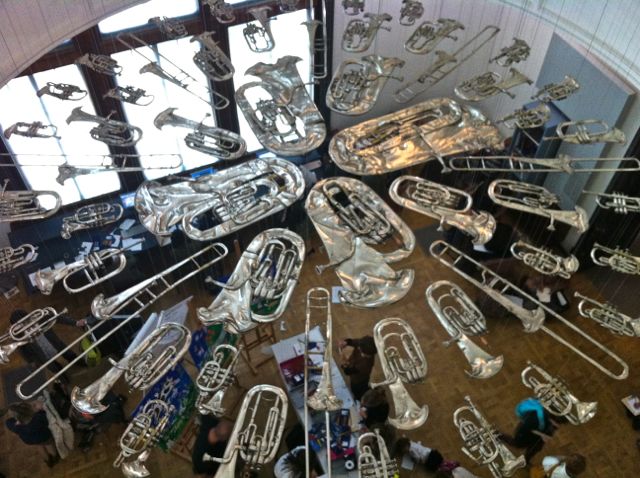
This afternoon M and I dropped in to the V&A to see what was happening at Big Draw, Big Make. The first talk that caught our eye was Speaking with Pictures, by Peter Ayres from Hetherwick Studio.
(more…) -
Half a million pounds to save Roald Dahl’s hut?
This morning the Today programme ran with the headline “£1/2Million to save Roald Dahl’s writing hut”. I woke up thinking ‘how can that be’?
(more…) -
Using the Flipped Classroom model with Expedition Workshed
It’s been one of those days where everything comes together. I have spent the day working on Expedition Workshed site, in particular a new blog aimed helping us have a better dialogue with the teachers who are using the resource in their teaching (I will post a link to the blog when it is ready in a couple of days). At the same time, I have been contributing to discussions related to a new paper that we will be publishing that sets out a model for understanding how structural engineers learn.
And now this evening I have been reading this interesting blog post (http://usergeneratededucation.wordpress.com/2011/06/13/the-flipped-classroom-model-a-full-picture/#entry)about the Flipped Classroom model for teaching, in which material usually delivered during the lecturers and in class is instead delivered via online resources, freeing up classroom time for problem solving, group work, debating, creating and communicating. The post has some overlap with the paper that we are working on, and has got my cognitives whirling away thinking about how Workshed can be used to deliver the at home content.
The post sets out a cycle of learning with four stages:
1. Experimental engagement through hands-on activities, games etc
2. Concept exploration through content-rich website, pod-casts, online chats etc
3. Meaning making through reflective blogging, podcasts
4. Demonstration and application through creative personalised projects and presentations.So here’s my idea (and hopefully before too long I will be able to try it out). I would like to create a lesson plan for s series of activities that teach school children about construction materials and the fabric of their school.
The first stage would be a series of games and discovery activities using the fabric of the school is a stimulus. Learners could for example try to make a model of their school building out of paper, and see what they need to do to make it stronger.
In stage two they would go away and find out about materials and basic structural forms using the resources on Workshed.
In stage three would answer quiz questions about materials and simple structural forms using the interactive tools on Workshed.
In stage four, they would come back to the classroom and work in groups to develop their own design for a new school building, creating a poster or a model, and presenting their proposal to their classmates.
Whilst I have developed teacher packs before based around the design-and-build methodology, this post on Flipped Classrooms has motivated me to think about how the design-and-build can be more thoroughly split out and developed. I look forward to giving it a go.
-
Showreal – Millennium Bridge Micro Documetary
Early this year I was filmed presenting a short clip about the Millennium Bridge by a TV production company developing a concept for a new engineering show. We did the shoot on a freezing January lunchtime. Producer/Director Nick Watson has just posted the clip on YouTube. Thanks Nick!
http://www.youtube.com/watch?v=bJoCc3OyCwA
-
Excited about resource scarcity
I just found myself getting quite excited about resource scarcity. Not the fact of depleting the earth’s resources, but that the subject is relevant to three things that I can claim to know something about: engineering, chemistry and explaining science.

Yesterday I was doing some background research for a new teaching resource that we are exploring developing at Think Up related to resource scarcity and material choice. The resource could become part of Workshed. The starting point for my work Michael Ashby’s book “Material and the Environment, Eco-informed Material Choice”
All the time I was reading I was thinking how interesting it would be to create ways of explaining some of these complex and multidisciplinary issues in an engaging way – from the maths required to understand the economics of resource scarcity, through to understanding how to optimise the design for the whole life of the product.
Here are some choice facts that struck me from the first chapter:
– in 1930 it was estimated that the world would exhaust its stock of copper in thirty years; in 2008, the remaining reserves of copper will still estimated to be exhausted in thirty years.
– the global annual consumption of steel is greater than that of all other metals combined
– the weight of wood used annually in construction is greater than the weight of steel
– the weight of concrete consumed in construction annually exceeds the weight of all other construction materials combined.
The book then goes into detail about the economics of resource depletion and processes for assessing the environmental impact of one material over another during the design process.
Watch is space for teaching resources of this flavour.
-
Compressing my ‘cello
Yesterday I compressed my ‘cello

– that is, I turned the tuning pegs, winding up the slack in the strings and gradually started to increase their tension. At first the strings wouldn’t make any noise; and then gradually, as the tension increased, they became audible. At the same time, the wood in the main body of the ‘cello started to creak and groan, and I have to confess I became a little scared.
I started playing the ‘cello when I was five and gave up at sixteen, finding the guitar a much more exciting prospect. During those eleven years of playing, I had given little thought to the forces that the instrument must withstand. Since then I have completed an engineering degree, and so now when I look at the fragile wooden structure I find it surprising that it should be able to resist the forces that the strings place on it.
I remember being told that as instruments in the violin family age they improve because the effect of the tensioned strings is to compress the structure. The strings are stretched from the tuning pegs, over the bridge and loop over the bottom edge and around the sound peg, effectively squeezing the whole box together. This is in contract to a classical guitar, in which the strings stretch from the tuning pegs but stop at the bridge. When guitar strings are tightened, rather than squeezing the box together, the effect is to pull up on the bridge, effectively pulling the front off the sound box. Guitars are therefore said to decrease in quality with age.
I learned the hard way about the physics of guitars at age fifteen when I decided to replace the nylon strings on my mother’s acoustic guitar with steel strings to create a brighter, more jangley sound. Unfortunately the only sound I got was a cracking noise just before I ripped the bridge off of the front of the instrument.
So with that experience in mind, and some engineering under my belt, I was getting increasingly nervous as I upped the tension on my dusted-off ‘cello. The other reason why I was nervous was that until recently this ‘cello had been a collapsed bag of bits in the corner of a basement. The instrument has belonged to my Aunt. Many years ago it got consigned to the cellar, forgotten about, squashed and ultimately broken. About five years ago, it was dug out and my Dad kindly had it restored for me. My end of the bargain was that I would do a little practice now and then. The instrument was reassembled by the late Geoff Crease, the instrument mender that had supplied my first 1/8th-size ‘cello from when I was five. His parting words to me were that though fixed it remained very fragile. That was five years ago. Almost immediately the fingerboard fell off and I lost it, only it to find it again six months ago hiding in the back of the ‘cello case. It has since been stuck back on, and so it was yesterday following a trip with my Dad that I decided to give it ago.
With all that in mind that I found it excruciating to tune the strings up those final few semitones: the strings driving the back of the finger board down on to the instruments shoulders, which in turn put the thin front and back into compression. With every turn of the screw I expected to hear that cracking noise, followed by the implosion of my fragile instrument. And so it was with great relief that the A string reached 440Hz, and I could begin playing – well, scraping.
Since then I have managed two half-our practice sessions. My aim is to get good enough this summer to audition in September for the Angel Orchestra, which M plays in. Whilst tuning up for me was excruciating, I am sure it will be even more so for my neighbours who will have to hear me preparing for that audition. Does anyone have a practice mute?
-
Touring the Capital with ICE President Paul Jowitt

Article written for the ICE London’s newsletter in my capacity as Chair of the London Graduates and Students.
Touring the Capital with ICE President Paul Jowitt
ICE President Paul Jowitt’s visit to the London Region.
At the beginning of March I was invited to tour the Capital with ICE President Paul Jowitt. The day long tour was his formal visit to the London Region. I always find the President’s visit to the London Region a funny thing because the President inevitably spends a large portion of his time in the area anyway; nevertheless the President’s visit is intended to be the time at which he or she is formally given a tour of the London Region to hear about the work that this region of the ICE has been up to, as well as to find out about the engineering projects taking shape at the moment. The story of the day was two-fold: great engineering works, and great work being carried out by the ICE London Region volunteers and staff.
The day started with a tour of the Olympic Site. We met at the View Tube, the Olympic Park’s luminous visitor centre from where all the main stadia can be seen whilst munching on the most up-market breakfast butty (read ciabatta) in town. Touring the site in a bus, our tour guides went to great lengths to tell the story of the engineering that we couldn’t see: the park’s extensive infrastructure and enabling works, which were up for an award at the evening’s ICE Merit Awards.
A sprint across town took us to the BBC for lunchtime where we met a group teenagers taking part in an ICE/BBC/Collaboration. The group had been filming interviews with members of the public about Crossrail. We joined them while they were making edits to their films in the BBC’s edit suite designed specifically for school groups. All were amazed by just how the students came alive on camera. One participant didn’t realise that he had managed to coller former Controller of BBC One Alan Yentob into doing an interview. That same student said to me later that it had been the best day of his life. Full credit then to Susan Clements at the ICE who had put this event together.
After lunch in the notorious BBC canteen (do people still make jokes about it? If they do, I don’t see why: it was at least as upmarket as the view tube), another sprint took us back to ICE Headquarters for the President’s meeting with representatives from the ICE London’s Graduate and Students Committee. The session, organised by G&S Vice Chair Kiran Gowda, focused international development, one of the President’s special interest topics for the year, and the role that graduates and students can take in development. The session was a discussion between experts from the field including representatives from Engineers Without Borders and Practical Action, and graduates and students who had secured their place by writing in beforehand with questions that they would like to ask.
The finale to the day was the ICE London Merit Awards, held at the London Transport Museum. The museum made for an exciting venue. This high-profile event celebrated the best of the capital’s recent engineering. Of course the Shards and the Olympic Parks of the line-up did very well – impressive engineering that deserves celebrating – but I was especially glad to see the work of council engineers being celebrated. The judges gave a special award to a small group of local authority engineers who had improved the pedestrian spaces in Woolwich town centre – as important, if not more so, than than structural gymnastics of sky scrapers.
All in all a fascinating, enjoyable and thoroughly exhausting day. A big thank you to Miranda and her team for putting together such a great programme of events.
-
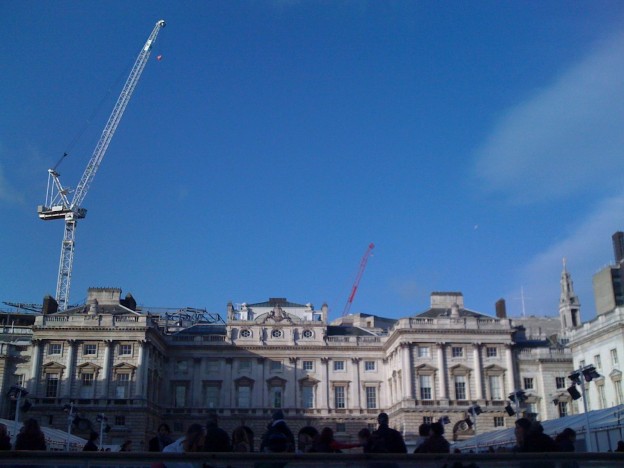
Frank Auerbach: London Building Sites 1952-1962

This afternoon M took me as part of my Christmas present to the Courtauld Gallery to see the exhibition ‘Frank Auerbach: London Building Sites 1952-1962. Quite how I have managed to live in London and work in the built-environment sector all these years without ever having taken a look at the Courtauld I just don’t know.
This collection of Auerbach’s work explores the striking and immense construction sites to be found in post-war London. But unlike the clean-cut lines of the modern architecture that rose from the sites, Auerbach’s work is all about the excavations. This is an artist that is painting the world of the civil engineer: the deep excavations for the Shell Building on the Southbank, the basement for the John Lewis headquarters on Oxford Street, the girders of One New Change adjacent to St Paul’s.
Auerbach layers the paint on in spades – up to an inch thick in some works. This is the result of repeatedly reapplying the paint and reworking each piece. The result is a rich texture that evokes the physicality of the building site. The walls ooze and seem almost to weep water; you can almost smell the unearthed depths. The images have been rendered and rerendered so many times on the same canvas that the original image is almost completely obscured and is only identifiable by reference to the preparatory sketches that accompany some of the works. But as a friend put it, you can get so much more out of the paintings but reflecting on the sensations they evoke rather than trying to pick out any particular detail. The reworking of the paint makes a striking resemblance to the movement of materials on site.
“Through his labours with paint, Auerback vividly translated the chasms of mud, shored-up earth and equipment into works which express the creation and distruction inherent in London’s post-war building sites” – exhibition introduction
‘Building site near St. Paul’s: winter’ situates the observer inside the construction site of One New Change, a building which has since been redemolished and is currently being rebuilt again. Unlike many images of the cathedral painted during the war in which the dome is seen to rise above the flames of the Blitz, in this painting St Paul’s cowers away in the corner submitting to this new architecture.
‘Shell Building Site: from the Festival Hall’ is one of set of works peering into the excavations for London’s first skyscraper. What’s struck me about these paintings is that while these are images of the construction of London’s modern era buildings, the viewer could be looking at a site centuries earlier – medieval even.
Probably most inspirational however was the collection of quick hand sketch studies of the sites that feature in some of the works. The lines are very simple but very powerful. Over the last two years I have been on a couple of building drawing classes, and have sketched many buildings: sketches that are about a finished product. But these works are much more about the process than the result. 50 years later another gaping hole has opened up on Oxford Street, a building demolished by developers rather than bombs. I find myself reaching for my sketchbook…
-
The Smallest Cinema in the World

The Smallest Cinema in the World is now open. The Cinema, conceived by artist Annika Eriksson as a venue for films that she is making about Regent’s Park, was designed by a team from Hopkins Architects and Expedition Engineering. The Cinema is mobile so that visitors will have to penetrate deep into the park to find it.
-
Other mobile structures in London this summer
The Smallest Cinema in the World will be a mobile structure. It will be towed to different locations in Regent’s Park throughout the summer. This is possible because the base of the cinema, hidden behind those beautiful shells, is a trailer.
I want to compile a list of other mobile or demountable structures that will be in London this summer. I will start the ball rolling with:
Tonkin Liu’s signature pavilion for this year’s London Festival of Architecture.

-
Richard Rogers Exhibition – Pompidou centre
The Richard Rogers exhibition at the Pompidou centre is now over. I went once and meant to go back as there was so much to take in (and I seem to get exhibition fatigue after about an hour and a half) but alas I didn’t get the chance.
Highlights were the 1:2 scale bright pink models of one of the Heathrow T5 connections, the exquisite 3d-printed model of the Barcelona Bullring and the original competition drawings for the Pompidou – how apt to see them in the finished building.
A few belated few pickies then:-

Antwerp Law Courts
3D Print of Barcelona Bullring
Credits -
A few quotes about cities
I am currently preparing a presentation about the density of cities and in particular, how housing should be organised. Here are a some snippets gathered here for my research…
From Rogers’ ‘Cities for a Small Planet‘
(Rogers and Gumuchdjian, 1997, Faber)
“To being our position-fixing aboard our Spacesip Earth wemust first acknowledge that the abundance of immediately consumable, obviously disarable or utterly essential resources have been sufficient until now to allow us to carry on despite our ignorance. Being eventually exhaustible and spoilable, they have been adequate only up to this critical moment. This cushion-for-error of humanity’s survival and growth up to now was apparently provided just as a bird inside of the egg is provided with liquid nutriment to develop it to a certain point” Buckminster Fuller, Operation Manual for Planet Earth (Pg1/1)
”We will leave this city not less but greater, etter and more beautiful than it was left to us” – Athenian oath pledged by new citizens (Pg 1/16)
-
Hello St.Pancras

For all the publicity in London about the opening of the new Eurostar terminal at St Pancras, passengers leaving Paris on its inaugural day wouldn’t have been any the wiser. The lack of Parisian interest in the new London terminal was underlined by the ticket prices: while it would have cost me over £100 to book a place on a train leaving St.Pancras that day, the cost of a ticket in the other direction was just £29! I can forgive the lack of excitement from that end of the line however. When it comes to high speed train networks, France’s is in its late twenties whilst Britain’s is still teething.

Until yesterday, once the tunnel had been crossed and England reached, passengers were treated to a short stretch of tantalizing high-speed rail (the first part of the new link has been in use for some time now) before the trains slowed to a dismal trundle on the old line. Well, no more. Unfortunately it was dark so I did not get to see all that pristine Kent countryside that had seen routes for the line changed so many times. Before I knew it, a tunnel under the Thames, then we appeared to be over-ground and then back under again. We popped up for air again at what I guess was the building site for Stratford International before tunneling our way under North London. I remember five years ago a friend of mine living in Highbury had complained of rumbling under his basement flat for a period of about a week or so. He found out, from the council I believe, that those noises had been the tunnel digging machines digging those very tunnels that I was zooming through significantly faster.

The train popped of the ground one last time and we were cruising into the magnificently lit train station. Words do not do justice to what an amazing site the new station is. Passengers off the train for the first time on these platforms walked in eerie gob-smacked silence. The train shed, with its arches of ‘heritage Barlow blue’ which soar over the tracks to support 18 000 panes of self cleaning glass, makes for quite a destination. Indeed there were plenty of people there who had just come for the opening. At the end of the platforms they posed for photos beneath the 9m tall sculpture of a couple kissing. Europe’s longest champagne bar was not long enough to accommodate the masses who came to toast the new station.

I was grabbed for an interview by BBC Radio London who were broadcasting live from the concourse. I think I ticked a few of their boxes: not only had I just stepped off a train from Paris, but I was an enthusing engineer (and, as a bonus, someone whose father had arranged the medley of French songs played that afternoon by the LSO Brass section as part of the opening celebrations). On air, I was asked about how long it must have taken to paint the roof, a question to which I had no answer but assured them that it must take less time than that for the Forth Rail Bridge.

For me, St Pancras represents the first completed major engineering project university colleagues of mine have been involved with during their summer placements. St Pancras celebrates the engineering of a bygone era, is a fine example of how old can become new, and puts international rail travel back into the national consciousness. Not a bad start!

-
Au revoir Waterloo

Last Tuesday evening I bid farewell to Waterloo International, the last day that Eurostar will serve this station before it transfers to St Pancras ‘in the (other) heart of London’. Before I even arrived I had fears that the Eurostar staff had packed up and gone as all the signs directing travelers from the Underground up to the terminal had already been whited out. How wrong I was. I arrived on the main station concourse to the sound of live music and the sight of dazzling lights. In the sunken entrance level to the Eurostar terminal, a stage had been set up and a band were playing, none too aptly, “Waterloo Sunset”.I am happy to admit that I am a station spotter and have long been. It is cooler than being a train spotter as you get to talk about architecture, your subject doesn’t move so you don’t have to stand their waiting for it, there are plenty of food shops so no packed lunches required, and you can wear any clothes you like. This last advantage makes the station spotter hard to spot. I have blended in all these years and have simply thought that I was alone in my pursuit, unaware that other station spotters were all around me. That is until that evening when they showed their true colours and, in droves, they headed down to Waterloo International to wish it farewell.

The police had crowd control measures in place to stop people pushing into the sunken entrance area. If your name wasn’t on the list (read, if you didn’t have a ticket) you weren’t getting in. By the time I got in, the show was wrapping up, leaving only video footage of the new station projected onto the wall. It felt like mass train station hysteria; one woman had a tear in her eye. Staff stood around beaming, journalists were interviewing. With all the publicity for the new St. Pancras terminal, international train travel has recaptured the public’s imagination. But from this train station 81,891,738 travelers over the last thirteen years have already trained it, internationally. And so one can understand people being sad to see it go.
But go where exactly? It is all very well to wish a station farewell but it is not going anywhere. What are they going to do with it? Scuttle it? The plan as I understand it is to make the platforms available for comunter trains to use. But what of the long arrival and departure concourses? When I was twelve or so, I saw an architectural model of the terminal with it’s snake-like blue roof. It is hard to believe that this structure will now lie largely obsolete.
The party was over on the other side of security (the real bouncers). The place has felt tatty for a while now. I can’t imagine the maintenance budget has been kept up in recent months. Shops lay half empty of stock which was annoying as I badly wanted an adaptor. There were girls handing out free cake. Just like at the end of a party.

The squashed arch roof of the Hauptbahnhof in Berlin
I rode the escalator up to the platforms beneath their wonderful blue roof. This Grimshaw structure arches over the three platforms. Like that of the Hauptbahnhof (photo above) in Berlin the curving roof is made from a squashed arch which means that the roof in both Waterloo and at the Hauptbahnhof can cover the tracks without having to rise to high. By contrast the un-squashed arch of St Pancras’ roof soars high above the cityscape. Squashing the arch induces bending in the structure. In both cases the structure follows the exact form of the bending moment diagram giving a very pure structural aesthetic. At the Hauptbahnhof the arch is four-pinned and symmetric. At Waterloo, the designers chopped a third off this symmetric arch, giving it its asymmetric shape.

With the fanfare far behind, I boarded the train and as we pulled out was reminded that it was not the station that was the problem but the line. As the train bumps through Vauxhall, the carriages bottom-out their suspension. We creaked round a sharp left turn and then screeched through Brixton, presumably deafening those on the platform. By Herne Hill, the train slowed further to skateboard speed. However, after forty minutes of this bumping and grinding, a reminder of what the new route will bring, as the the Eurostar joins the already-open section of high speed track and accelerates towards France.
And so Waterloo must close. I am sure that station spotters such as myself will get over it soon enough. The start of services to St Pancras, for example, might offer a suitable distraction. With this opening I am certain that a whole new generation of station spotters will be inspired into being
-
It’s not just architects who make great buildings
 Over the last couple of weeks the Guardian has been publishing their Great Modern Buildings pullout. In each issue, there are photos, blue prints and articles about the structure of the day. The articles go into some depth about the architects, but the engineers seem to have been forgotten. In the case of the Pompidou centre, who’s design has as much to do with the structural engineer Peter Rice as it does to do with the architects Renzo Piano and Richard Rogers, the omission of the engineer was the subject of a column today in the Guardian co-authored Rice’s son Kieran who is President of RFR, the company that the late Rice senior cofounded.
I think it is great that the Guardian is championning some great pieces of design in these daily supliments. I only wish that they would also champion the designers.
-
Things to do in Paris ⋕1: Go to Lyon
This Monday I did “le pont”, which is when French employers give their staff an extra day off between the weekend and a bank holiday, in this case, on a Tuesday. But rather than have a lie in I put myself on the 06h50 train to Lyon for a day in a city that I have wanted to visit for many years. France‘s first TGV line was built between Paris and Lyon linking France‘s two largest centres of population in just under two hours.

I had two sites of design interest on my wish list. The first is the awe-inspiring Calatrava -designed TGV station at St.Exupery, Lyon‘s airport. Trains running directly to the centre of Lyon do not in fact stop here as St Exupery is on the branch that bypasses the city and heads down to the Med; in order to get there I had to catch a train to Marseille and remember not to fall asleep. The station was conceived to fulfil three roles: as a show piece to mark the opening of the newly built TGV line to the Med, as an entrance to the airport and thirdly as a symbolic gateway to the Rhone-Alps region.

When I stepped off the train at 8h30, I was virtually the only person there and it felt I had the entire station in all its magnificence to myself. I took photos of the magnificent train concourse and of the arching atrium over the ticket hall, but it was only by sketching different views of the building that I was able to decompose the anthropomorphic structure and understand its underlying logic. In the end I spent the rest of the morning there and I hope you will see why from the photos that I will post over the next week.

I arrived in the centre of town about 13h00 with no map and no plan. I found a FNAC and bought a guide, and then made it my first task to walk up the very steep hill just next to the town centre and get an overview of the city. Lyon is built on the confluence of Soane and the Rhone rivers. The city centre is on the long spit of land known as the presque-ile which reaches out to where the two rivers eventually join. From the top I was able to see all this and beyond.
Then it back downhill and up again in the district called Croix Rousse. In this area was based Lyon‘s formerly booming silk weaving industry. The district is full of secret passages that link streets and buildings up and down the hillside. Unfortunately there was too little time to discover any and if ever I go back, a return to this fascinating area will at the top of my list.

Back in the centre, I positioned myself in a café in front of the Opéra de Lyon which had its extension designed by Jean Nouvelle. Unfortunately the building was closed for the bank holiday which was a shame as I would have liked to have taken a tour of the new rehearsal spaces at the top from which, the view is apparently amazing.
Late afternoon was spent drinking coffee with a friend in the town by the town hall, followed by a tour of the campus of the Ecole Normal Supérieure. The tranquil wilderness of the glade in the middle of architect Henri Gaudin’s plan for the school makes for such a pleasant respite from the hustle and bustle of the city beyond its walls.
As evening drew in, there was just enough time for a beer on a floating bar before the thunderstorms rolled in, forcing me to take shelter in a pizzeria opposite the central station.
I really enjoyed my visit to Lyon. It is a city that seems charged with youthful energy and it is in the middle of a region of France that I would really like to get to know better. My visit was rathe quick, but it will serve as a good taster for when I go back, for I am sure that I will do.
-
Reducing electricity consumption in homes to become as addictive as checking your blogstats?

The UK government has recently passed new legislation requiring electricity suppliers to fit free real time electricity price monitors in homes in a plan to massively reduce electricity consommation in homes. With Britain committed to reducing its carbon emissions to 60% of 1990 levels by 2050, I am certain that this measure will go at least some way to seeing how much electricity they are wasting. Who knows, checking your consumption metre might become just as addictive as checking your blog stats (addicts, you know who you are!). Read more on the ICE website.
-
Pre-‘fab’ wooden house in Hackney
Over the last few days the way we live, architechnophilia, and inhabit have all been covering a new pre-fab wooden house in Hackney designed by David Adjaye. Pre-fab does exactly what is says on the tin. It is PREfabricated and it allows the construction of some FABulous buildings in less time than it takes concrete to set. I remember seeing a documentary about a pair of artists who dreamt of building their own house for their retirement. In the end chose to have a house designed by a German team who specialise in pre-fab metal structures. The house arrived in pieces on a flat bed lorry and within a matter of days, a team of five or so had ratchetted the whole thing together in a latter of days (if any readers remember seeing this programme and know who they were I would be much obliged if they could share the knowledge!).
There are quite a number of streets in Hackney with grand old Victorian semi-detached houses set back from the road, especially around London Fields and Victoria Park. Every so often however there is a house missing, presumably victims of stray second world war bombs in this area of East London. And quite often these gaps are filled with new and exciting architecture. I haven’t seen Adjaye’s house for myself, but I can well imagine it filling such a void.
ps If anyone reading happens to be going to Hackney this weekend (I’m sure one of you will be) and happens to be passing, could they get me a picture so that I don’t have to steal somebody else’s… thanks
-
Can’t get enough of Calatrava, Hertzog and De Meuron
Two articles on the way we live caught my attention…
Since my final year project is well and truly rooted in the domain of tall buildings, I was interested by Calatrava’s Chicago spire
and because, quite simply, they build beautiful buildings, cast an eye over Hertzog and de Meuron’s work in Beijing