A year on from declarations of climate emergency in the construction industry I am looking for ways to carry on emphasising the scale of the problem and the scale of the action we need to take. I feel that behind these bold declarations of emergency we are no closer to seeing the system-wide changes that we need and are instead focusing on smaller details.
Category: Engineering (old category)
-
Apollo 8 | What do you do with your computer?
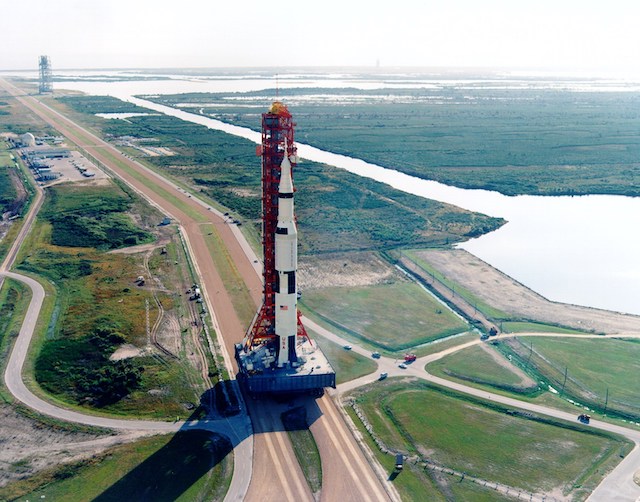
I’ve been listening the BBC World Service’s podcast ’13 Minutes to the Moon’ about the Apollo space programme. Last night I listened to the episode about Apollo 8, the perhaps forgotten daring mission that enabled the moon landings to happen. I woke up this morning thinking just what an incredible achievement it was.
(more…) -
#16 Bengt Cousins-Jenvey – How to save a million tonnes of carbon – shownotes
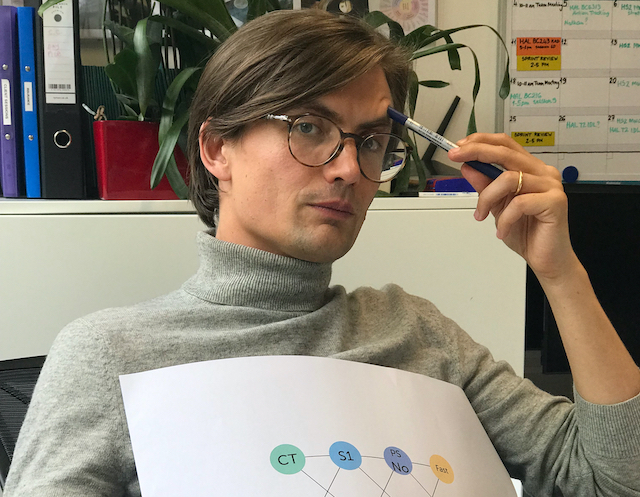
Bengt is a consultant and ‘re-designer’, working in sustainability and circular design in the built environment. This year we are working together to create training in response to the climate emergency. In this interview I ask Bengt about his big question: what single thing can you do to save a million tonnes of carbon. Exploring this question we get into:
- High-level strategies for accounting for carbon that help avoid getting stuck in the detail.
- Using culture-change models to guide organisations as they respond to declaring a climate emergency.
- Thinking frameworks that help consultants engage with the businesses they are supporting.
Listen on Apple Podcasts , Sticher or by download here
(more…) -
The Lighthouse: film review + engineering notes
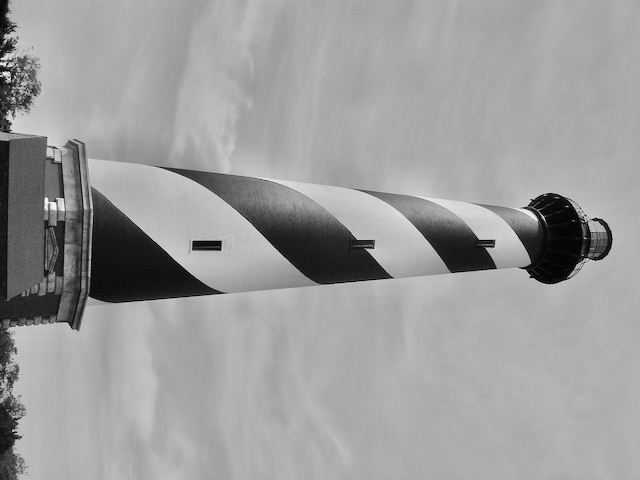
I just went to see The Lighthouse, an enjoyably gothic story of the descent into madness of two lighthouse keepers. I loved the visual design of this film – black and white and square, with high-contrast shots of machinary and bleak landscapes. And there is a haunting, almost mechanical soundtrack, which recalls for me Johnny Greenwood’s soundtrack for There Will Be Blood.
(more…) -
Clash of the sign writers
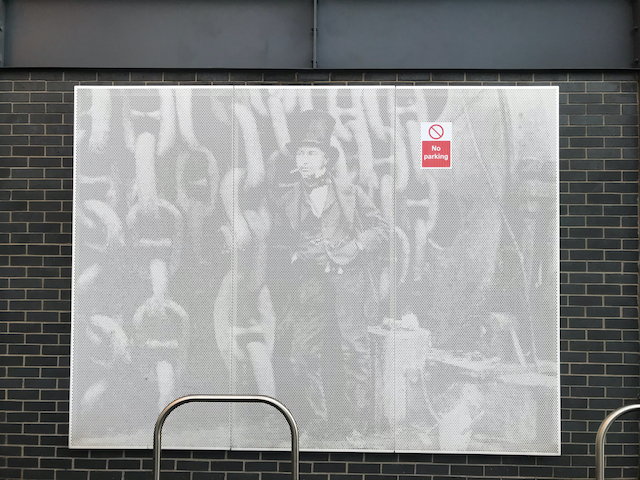
Spotted in Swindon. I don’t understand how this sort of thing happens -
In praise of Aix-en-Provence TGV
I am speeding north on a train from Aix-en-Provence TGV and reflecting on what it is I like so much about this station. It sits on the southern section of the high-speed line from Paris to Marseilles. The original line built in the 1970s went as far as Lyon. In the 1990s, as part of President Mitterand’s ‘grand projets’ the line way extended to the Marseille.
The extension feels like an unapologeticly bold statement of the importance of high-speed rail. All the stations and many of the bridges have a monumental quality to them. No doubt the line was built with huge controversy – it seems to pay little reverence to the villages and countrysides it blasts through other than to say this is a piece of national infrastructure to be proud of.
(more…) -
On traffic
Drivers, please don’t complain about the traffic: you are the traffic
Broadbent, O. (2019). Internal monologue everytime I hear a driver complain about the traffic. Bristol. -
Performance versus reflection
A key part of problem-based learning is reflection. But how do you get people not interested in reflection to start thinking critically about the decisions they take over their learning. The answer could be to think about performance.
(more…) -
The end of trying harder and being nicer
Over the last few weeks I’ve been talking to engineers about they can do in response to the climate emergency. For those that are engaged with the topic, I am picking up a sense of deep frustration, which seems to come in two flavours.
(more…) -
A reminder about the imminent climate catastrophe and how we should educate engineers to prepare for it
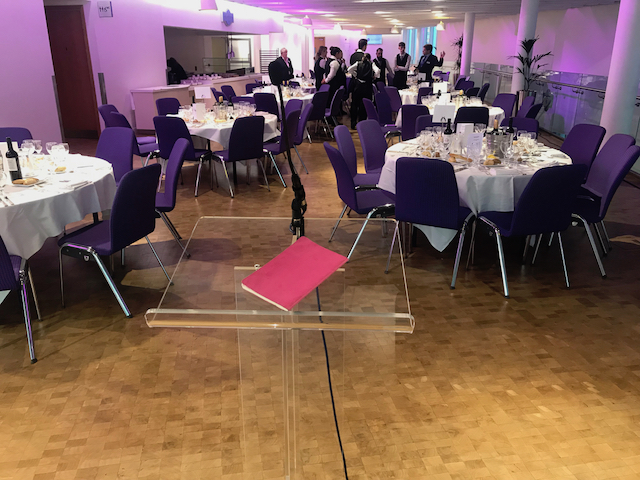
[The following text is adapted from the after-dinner speech I gave at the University of Edinburgh Engineering Faculty’s away day. It was originally titled ‘How problem-based learning can save the world and make you happy too’. But I have renamed it ‘A reminder about the imminent climate catastrophe and how we should educate engineers to prepare for it’]
Tonight’s engagement is my first since I took a summer sabbatical, which I planned to use to work on a book. Those plans changed in my first week away when I got involved in the Extinction Rebellion summer uprising in Bristol. That experience of direct action and the reaction it caused prompted me to read much more about climate breakdown, models for political change, the implications of societal collapse, the role of engineers to help minimise impacts and deal with upheaval in our own communities and the role of the people that teach engineers.
(more…) -
Parenting x inspecting hydraulic structures in the Frome Valley
[Written in May, posted today] Saturday was the chance for my one of my favourite kinds of parenting: the kind where I can go on a journey with my daughter at her pace, stop and look at various bits of engineering infrastructure along the way, and then move on when we are ready.
This weekend’s excursion was along the Frome Valley in East Bristol. Near where we live the river cuts a steep gorge through the limestone landscape that forms a lush green necklace that weaves its way through our neighbourhood. It is an excellent off-road route for cycling.
(more…) -
Climate breakdown – uncivil engineering questions
At the start of the summer I felt that the best contribution I could make to tackling the climate emergency was to offer my skills as a trainer and a facilitator to Extinction Rebellion (XR). In June, I joined the team that run induction sessions for new members of XR Bristol. The following words I’ve adapted from the script we use as the basis for the induction sessions.
‘The Government has an obligation to provide protection for the citizens it represents. This is the basis of the social contract upon which the citizens give the government the power to rule.
(more…) -
Appreciating concrete in Marseille
One of the thing things that I like about Marseille is the quality of the concrete tower block design. I’ve been riding in taxis back and forth across the city with my father who is undergoing cancer treatment in various branches of the city’s healthcare system and appreciating the architectural tour I’m getting.
In the centre of town these blocks remind me of bookcases: two monolithic, slick sides between which span the concrete shelves, on which sit the apartments like colourful books. It’s fascinating to see the different ways that windows, balconies and staircases are articulated in these concrete buildings. I point out towering souring fin walls, beautifully articulated fire escapes, and how paint is used to express the different elements of the concrete structures.
The rocky hills that rise up behind Marseille keep the city hemmed in by the sea. Standing on the high ground platform of Notre Dame de la Gard in the middle of town, you can see clusters of distant tower blocks that seem to bravely climb the distant slopes of the edge of the city, like pilgrims. I’m used to seeing tower blocks standing imposingly against the flat, grey London sky, but here these structures are rendered tiny by the massive hills behind them.
(more…) -
Transformative infrastructure goes both ways
Marseille
In my previous post I was talking about the experience of distance, and how, when understood as an experience, distance is no longer a fixed entity.
That post was triggered by some lines from Proust in which the narrator is talking about how his perception of local distances alters when he switches from rail transport to motorcar. Some further thoughts on this topic.
I recall how the distances between various destinations, and therefore the shape of the city itself, appeared to change when the London Overground, an orbital railway in the inner suburbs, opened. All of a sudden areas of the city that seemed far away felt much closer: South-East London, previously impossibly far, was now a nearby neighbourhood to where I lived in the North-East.
Such a step-change in the experience of city living demonstrates the transformative power of civil engineering infrastructure. Linking, drawing together, connecting – this is what engineers have been doing for centuries.
(more…) -
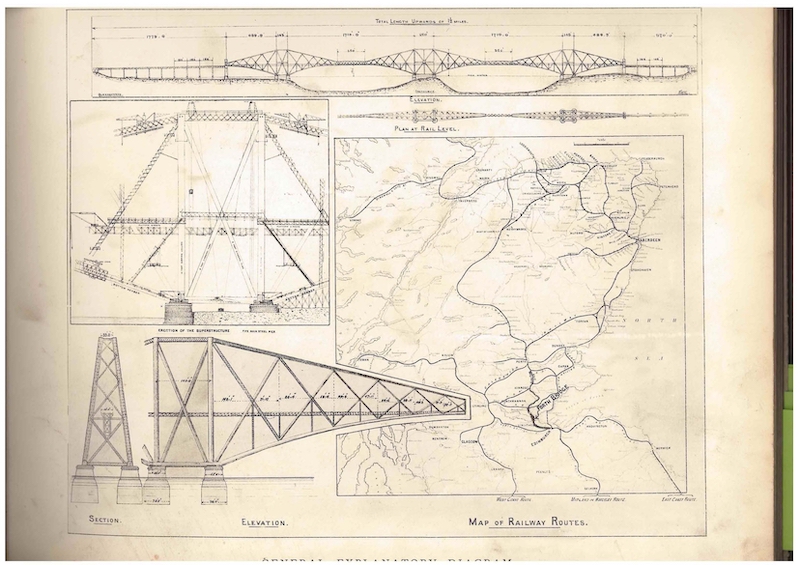
#13 Show-notes – Forth Bridge – An Engineering Detour
An engineering detour is something engineers do when they go out of their way, usually on holiday, to go and check out a piece of engineering infrastructure. In this episode I take an engineering detour to the mighty Forth Rail bridge. Along the we get into the engineering of the structure, how taking detours can build our creative skills, and on a philosophical note I weigh up facts and figures versus experiential knowledge. Join me for the ride.
Listen on Apple Podcasts , Sticher or by download here.
Related Eiffel Over episodes and posts
-
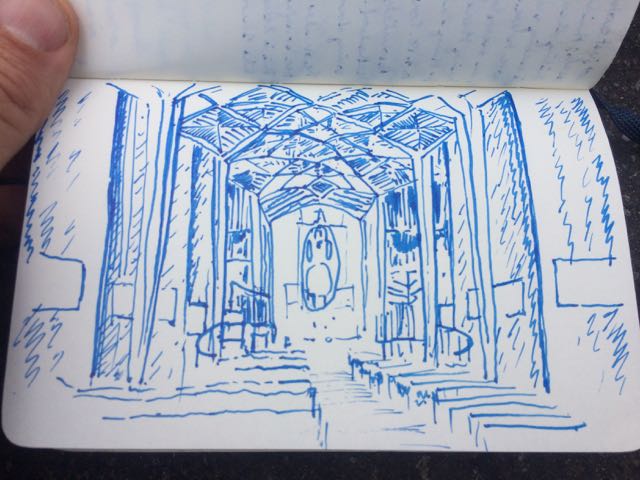
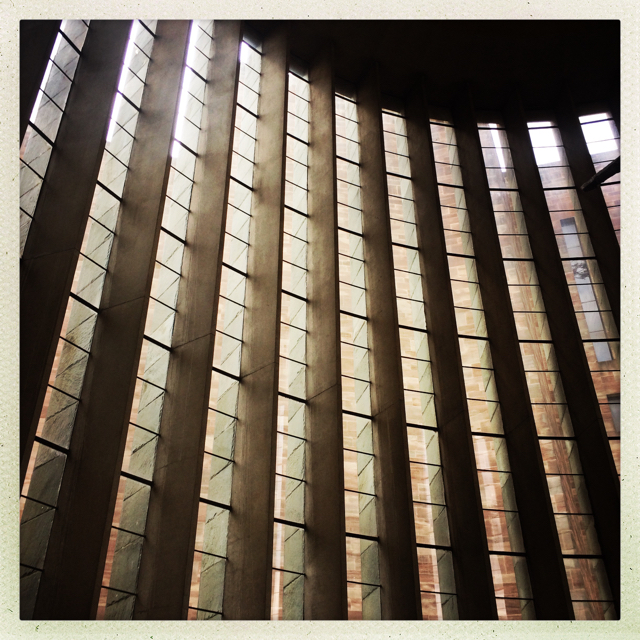
Coventry Cathederal
After a recent seminar in Coventry I had an hour to spare and so headed over to the famous cathederal. This sketch doesn’t come close to catching the finesse of the columns on this bold modern design but it serves to remind me of the textiures and feel of the place.
-
Notes from ISEE 2018, UCL London
A very interesting couple of days at the 7th International Symposium of Engineering Education down at UCL. Here’s something I found interesting which I am sharing with colleagues and collaborators.
(more…) -
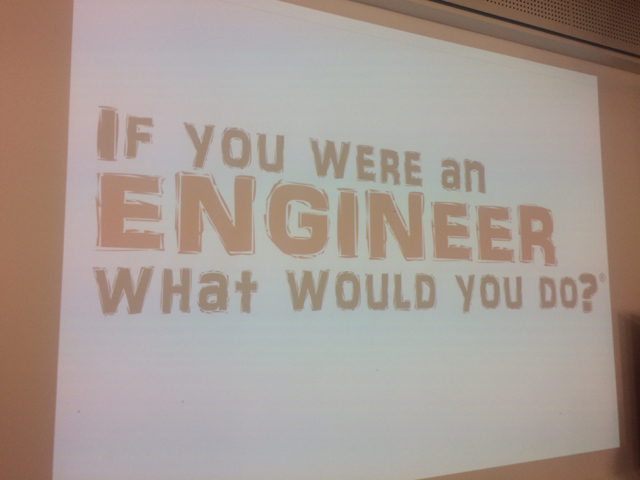
We are engineers, what are we doing?
Irrigation reservoirs/ocean plastic cleanup robot/fingerprint recognition keyfinder/light-up bicycle/anti-drinkdrive steering/air-conditioned tie/plant-based academic gradebooster… a maelstrom technology, ideas and solutions proposed by school children who made the final of the Primary Engineerand Secondary Engineer Leaders Award.
In this competition, children interview a practising engineer to find out about problem-finding, problem-solving and creativity in engineering. They then go home, find a problem of their own to solve, and create solutions, answering the question, if you were an engineer, what would you do?’ An astonishing 37,000 pupils entered the competition, from as young as recetpion-age. (more…)
-

My neighbours don’t like bees
We planted a hedge of lavender on our estate to revitalise a barren patch of soil near our front door. This sunny morning, the enthusastic lavender stems were bobbing up and down laden with bees. There must have been between 20 and 30. I went to count, as part of the Great British Bee Count. And so it was that I had conversations with several of my neighbours about bees, and I was depressed by what I heard.
- One complemented me on the lavender, but said the only problem with lavender is that it attracts bees.
- A second reported hatred for bees, having been repeatedly stung by that very flower bed, before conceding they had been wasps.
- The third, having been complementary about the flowers, reported a bee had dive bombed from twenty metres above delibrately to sting him and concluded they must be evil.
-
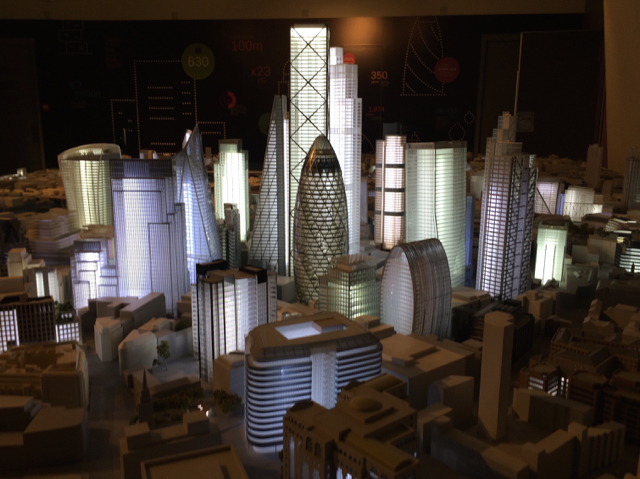
Circling the square – psychogeography in the City
Last night I have a talk at the first ever City of London Showoff called Circling the Square. The event was put on by the City Centre, a fantastic organsiation right at the heart of the City that hosts a fascinatingly detailed 3D model of the City of London. I had been asked to say something entertaining and interesting about engineering in the City. I thought this was a great opportunity to try out and talk about my new hobby, psychogeography. The folllowing is a transcript of my talk (my full data log see my post Dérive #2 – City of London – Logbook)
As an engineer I love going on unconventional journeys: using odd means of transport, exploring forgotten paths, seeing the new from different perspectives. In his book, a Road of One’s Own, Robert Macfarlane instructs us to:
…unfold a street map. Place a glass rim down anywhere on the map and daw round its edge. Pick up the map, go out into the city and walk the circle, keeping as close you can to the curve. Record the experience as you go, in whatever medium you favour: film, photograph, manuscript, tape. Catch the graffiti, the branded litter, the snatches of conversation…Log the data stream…Be alert to the happenstance of metaphors, watch for visual rhymes, conincidenes, analogies, family resemblances, the changing moods of the street. Complete the circle and the record ends. Walking makes for content; footage for footage.
Robert Macfarlne – a Road of One’s Own, cited by Merlin Covereley in ‘Psychogeogrpahy’
-
My VR training epiphany
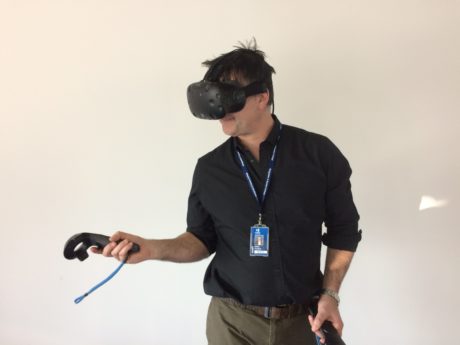
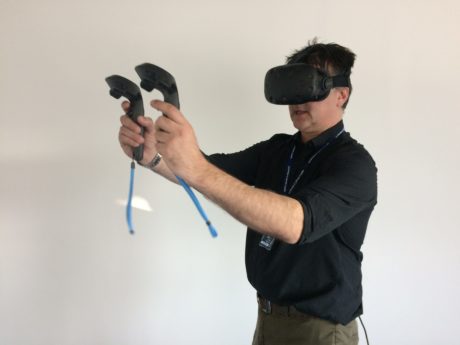
Last week I was down at Bridgwater and Taunton College to check out the tools Stefan Cecchini and his colleagues are going to be using to deliver a revolutionary new engineering degree curriculum that aims to be entirely inquiry-led. There for the first time I tried out a virtual reality (VR) training environment. I put on the VR headset and gloves, and this is what happened (that’s Stefan, by the way wearing the VR gear).
-
#12 Show-notes – Roma Agrawal: how to build a skyscraper
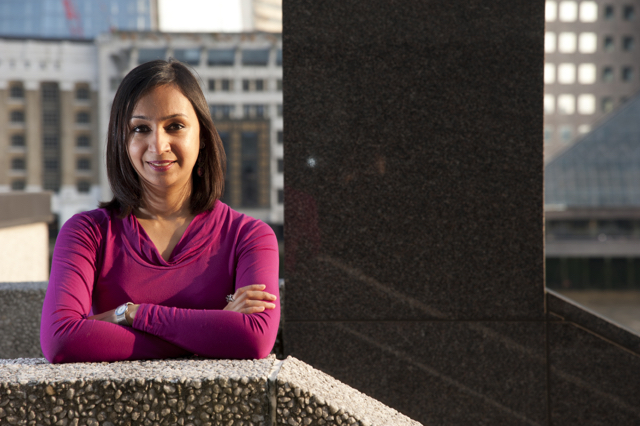
In this episode I bring you a step-by-step guide on how to build a skyscraper with structural engineer Roma Agrawal (@RomaTheEngineer), author of ‘Built, the Hidden Stories Behind our Structures’. We get into the engineering, creativity and philosophy of sky scrapers and their designers. Don’t try to build a skyscraper yourself without listening to this first.And since engineering education is something I do for my day job, I thought I’d accompany this episode with some additional resources related to the topics of this podcast. I’ll be adding to these over the next few days so stay tuned. -
#9: Engineering transport in San Francisco with Andrew Kosinski
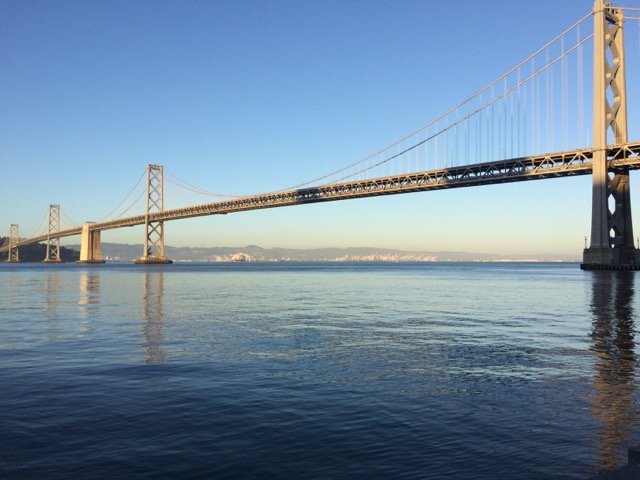
I can’t think of metropolitan landscape that offers more varied and exciting opportunities for designing transport infrastructure than San Francisco, with its steep hills, its bay, its rapidly changing economy and its tantalisingly separated land masses.
In this second episode of the Eiffelovercast from my recent trip to the US (catch the first one here) I catch up San Francisco-based transport engineer and old friend Andrew Kosinski and we geek out on transport-related matters including:
- Bridgoff: Bay vs. Golden Gate
- Tearing down freeways
- Bringing cycling into San Francisco
- Is driving a right and it is a freedom?
- The phenomenon of ‘parklets’
- Tunnelling through ships
- Building towers on weak and shifting sands
- The creative bubble of silicon valley and the unintended consequences
- Autonomous vehicles
- Using firms like Uber to replace under-productive bus routes
- Becoming passive consumers of cities


-
Defending New York with Oyters
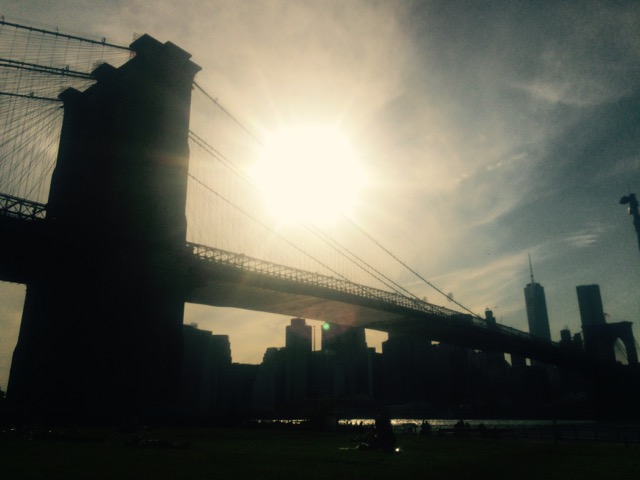
 I really enjoyed listening to this 99 Percent Invisible podcast called ‘Oyster-tecture‘, which explains how, in the aftermath of Hurricane Sandy, the city is developing artificial reefs on which oysters will be seeded. The oyster beds will defend the city from storm swell and large waves. As the podcast explains, 200 years ago, the southern end of Manhatten Island was one of the greatest sources of oysters in the world, and these oyster beds woudl have defended the coastline from storms. The oyster beds disappeared due to overexploitation, but now designers are working on bringing them back to defend the city against the impact of severe weather events.
I liked this article because it reminded me of the importance of looking to nature to find more collaborative ways of tackling some of our infrastructure challenges. It is also a reminded of the positive impact that imaginative design thinking can have a positive impact on people’s lives.
-
Surface travel – Münster to London
Overview
- Six trains and one monorail
- Leisure
- 709km
- £130
Today I take my journey home from Münster to London via a different route from my way out. Outbound I came by ferry because it was cheaper; travelling back midweek I can just about afford the Eurostar. The route gives me the chance for a quick stop in Köln and the chance for an engineering detour via the Wupertaal suspended monorail.
Münster to Wuppertal
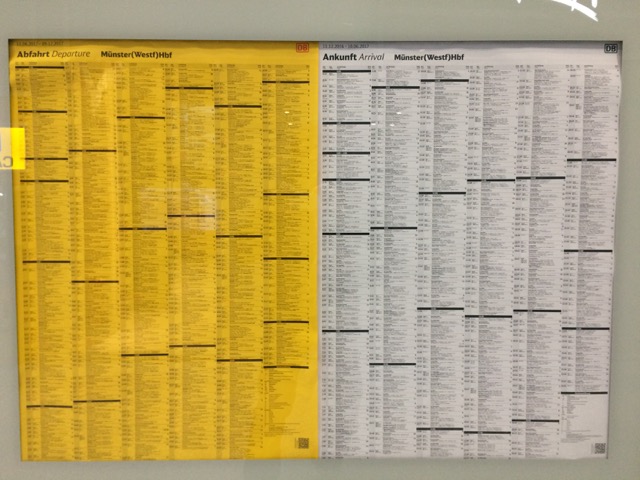
Münster is a beautiful town. I’ve spent the last few days staying with a friend and working on my book in the city library. The cities walls were removed to create a circumferential boulevard that is now tree-lined and a major thoroughfare for bikes and pedestrians. I walk this path one last time and peel off at the Hauptbahnhof.
I ride for twenty minutes on a quiet commuter train to Hamm. The flat landscape is filled with a mixture of fields and factories, with the occasional wind turbine. It reminds me of travelling up the Lea Valley north of London.
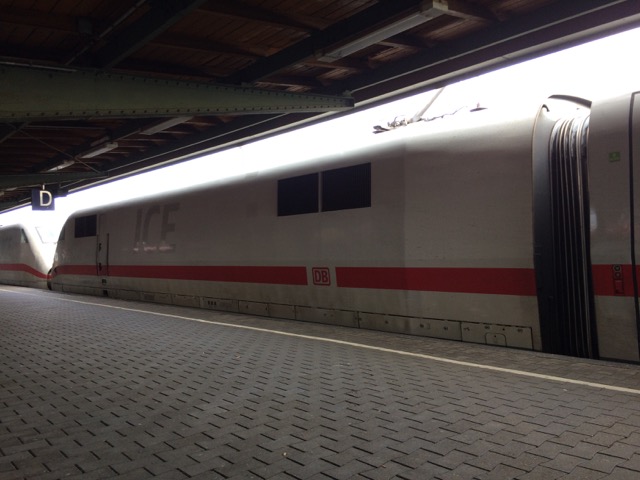
Hamm station feels in the middle of nowhere but its ten unloved platforms are busy with trains of all sorts coming and going. I get to my platform early and see one of the slightly older German high speed ICE trains arriving. Its bright white carriages are like hermetically sealed capsules. You can imagine this train is capable of zooming along the sea bed as easily as over land.
The ICE train is in fact two hitched together. I watch as the two are uncoupled and the front half pulls away. Just in time, I realise the back half is my train to Wuppertal, and I jump aboard. The land becomes more rutted and we follow an industrial valley that is well scored into the valley – it resembles the valley of the Seine as it winds its way north from Paris to Rouen in Normandy.
My connection time in Wuppertal is three-and-a-half hours; that was deliberate to give me time to make an engineering pilgrimage to a highly unusual railway, the Schweibebahn, Wuppertal’s suspended monorail. More details of that in a separate post.
Wuppertal to Köln
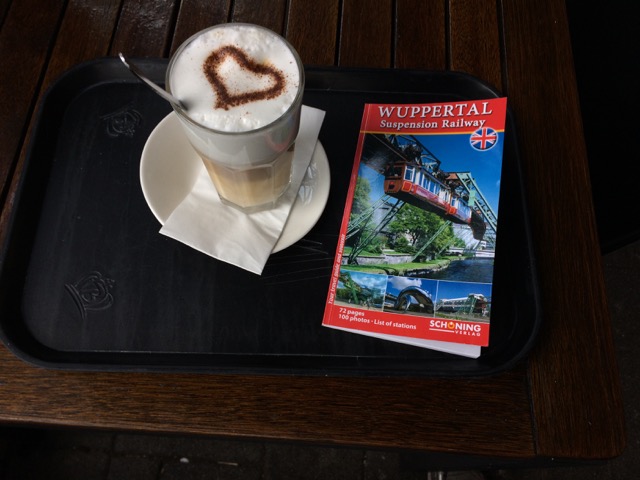
I’m blown away by the monorail – a great piece of railway engineering integrated into the city. With hindsight, three-and-a-half hours was a bit too long for my engineering excursion and I struggle to find the inspiration to explore the town further. It’s nothing against Wuppertal: I’m just keen to get on. I wait impatiently at the platform for my next train.
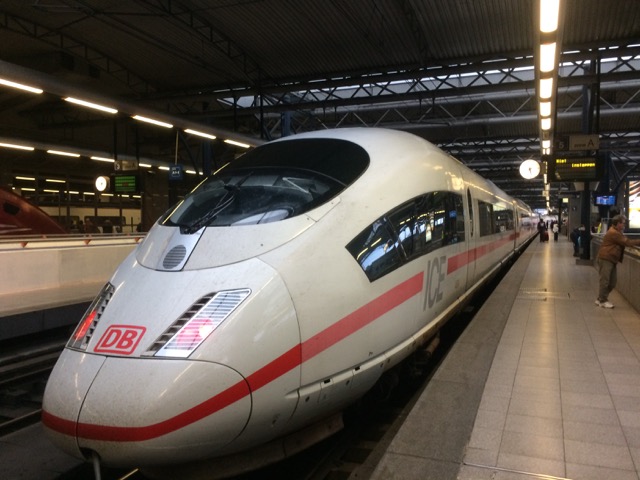
If the last ICE train I took looked like it could be amphibious, this train, a next generation edition, looks ready for space flight, with it’s pointed nose and sleek black-and-white lines. It’s a short twenty-minute ride to Köln and before I know it we are rumbling across the bridge over the Rhine. Köln Hauptbhahnhoff is covered by a wide arching roof; beneath, trains come and go from across Germany – and I see my first French train, the Thalys service to Paris.
I have fifty minutes between trains so I visit the magnificent cathedral which is surprisingly right next door to the station – almost on top of it. It’s quiet pews are better than any waiting room I can think of.
Köln to Bruxelles Midi
I get on board another of the sleek new DB ICE trains and settle in. I don’t remember much about this 2-hour leg as I slept most of the way. The day before long journeys I rarely sleep well as I worry about missing my train, and last night’s wakefulness just caught up with me. As we slow down on the approach into Brussels I see some fairly grotty looking commuter trains and I realise these are the oldest trains I have seen since I left the UK. All the trains I’ve taken over the last few days in Germany or the Netherlands, whether high speed or slower, were well looked after. I am reminded why I don’t ever get that excited about train travel through Belgium. I may however just be prejudiced against Belgian railways because they were responsible for putting the DB night train to Berlin out of business when they put up the transit fees they charge other countries for their overnight services.
Bruxelles Midi to London
Bruxelles Midi is an endless warren of tunnels where the light at the end never seems that appealing. I have an hour and a half before I can check in; I bought tickets for a later train because it would save me £50. The beer in the cafe is half the price of the tea, which is a shame as I’ve just decided to give up alcohol for a few days.
The journey flies by; before I know it I am back in St Pancras. As I walk down the long platforms I am struck that in all the stations that I have been through on either my outbound or my return journey in the UK, the Netherlands, Germany, Belgium and France nothing quite compares to the experience of arriving under the magnificent Midland Blue-coloured soaring arch of St Pancras station. A fantastic piece of engineering lovingly re-invented for a different century.
-

Surface travel – London to Münster, Westfalia
Overview
- London – Harwich – Hook of Holland – Den Haag – Enschede – Münster
- Six trains, two buses and a ferry.
- Leisure
- 365 miles.
- £90.
When I first imagined doing this journey I thought it would be a straight-forward case of taking the Eurostar to Brussels, a fast train to Köln and then a slower train to Münster. That is indeed is a feasible route but becomes expensive when you leave booking to the last minute, especially for a trip on the first day of the half term holidays, so I had to find an alternative plan.
Then I remembered the Dutch Flyer, a rail and boat service that goes from London Liverpool Street to Harwich, then on a ferry to Hook of Holland, and then, included in the ticket, to any station in the Netherlands. It’s a great overland (and sea) route if you are heading anywhere in Northern Europe.
Londond Liverpool street to Harwich
I take two empty local trains to get me to Liverpool Street for the 6:30am train to Harwich, only to realise that I could have had an extra half-hour in bed had I picked up the Harwich train from Stratford on it’s way out of town. Travelling this way is always an experiment though and you work out travel hacks like this as you go for use next time.
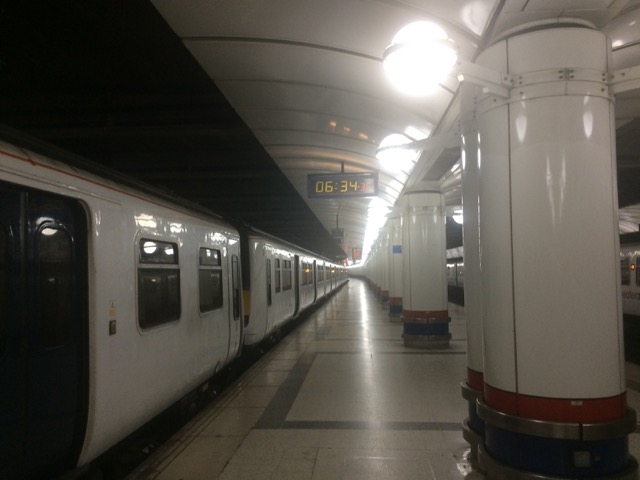
The Harwich train leaves from a dimly lit platform in the upper teens at Liverpool Street. It looks like any other shabby commuter train; nobody onboard seemed to realise they were on the first leg of the Dutch Flyer – or if they did they were concealing their excitement as clattered through the Essex countryside.
Darknesses gave way to an overcast morning. The train made a strange ticking noise when it stopped at stations.We reached beautiful Dedham Vale and as we rolled along the estuary the horizon on the other side was punctured by occasional steeples.
Harwich International is not as glamorous as it sounds, and it doesn’t even sound that glamorous. But the station couldn’t be more convenient for the ferry port: you climb the stairs from the platform and walk straight into the terminal building – integrated transport!
The building seems oversized – presumably designed for some long passed heyday of the ‘Dutch Flyer’. It has six check-in desks but only one booth was open for the three customers I was among. We went on through passport control, with a similar booth count redundancy of five, and onto a bus that drove me 50m from the shore, up a ramp and onto the ferry.
Harwich to Hook of Holland
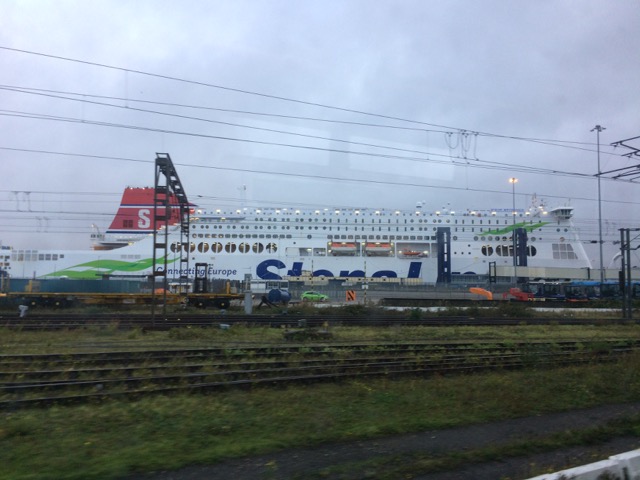
The boat trip is a good seven or so hours at sea. I installed myself in the lounge and settled in for a day of writing. Around me people were settling in for a day of drinking. It was 8:45am and the bar was open before breakfast was even being served. The onboard drinking was a bit alarming as the majority of passengers seemed to be drivers. It now struck me that they were getting their pints in early so that their bodies could process them before we got to the other side.
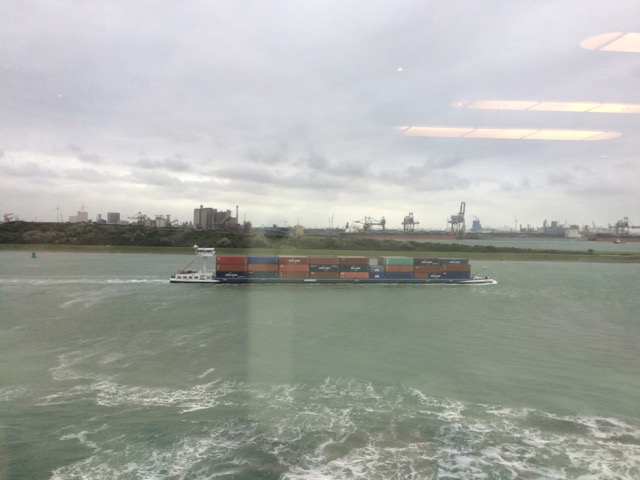
The sea between Harwich and Hook of Holland is a busy place. There are container ships everywhere. We are following another ship eastwards, and there is another on our tail in the shipping lane. And all the while we are avoiding the impressive arrays of wind farms in the sea. Storm Brian is whipping up in the UK and strong tail winds are sending big rolling waves past us.
Eventually we arrive at the port at Hook of Holland, an industrial spot complete with flaring oil refineries in the distance. The ferry passenger terminal is slick and modern. It has an exhibition of models of old Stena Ferries in the waiting area that make me think of the Science Museum.
Crossing the Netherlands
Included in the Dutch flyer ticket – which is only £55 – is a rail pass to anywhere in the Netherlands. But before you can get anywhere you have to find the trains. A new rail link is being built between Hook of Holland and the nearby rail hub of Schiedam Centraal, and so I waited twenty minutes on the windy dockside for the bus.
This leg of the journey is a cross-section through industrial flower production. There are acres upon acres of glass houses, some lit up, many apparently heated, filled with flowering plants, there are huge processing and packing factories, and then eventually we reach snazzy looking management buildings and distribution centres. I’ll never look at a cut flower for sale again the same.
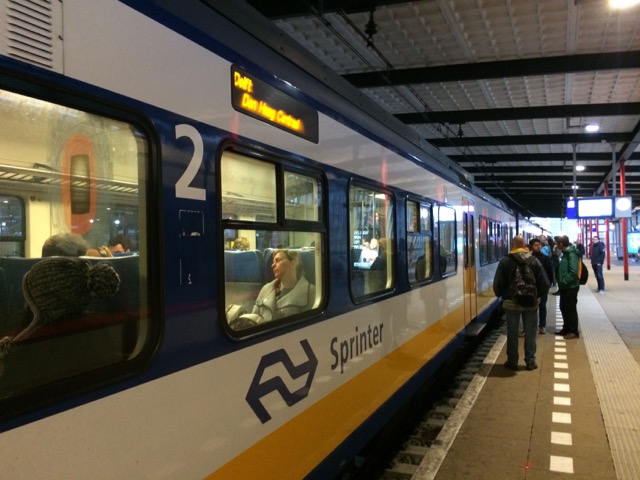
For me Dutch railways are about good modern design rather than high-speed, although they are fairly rapid too. The large stations I travel through are modern with a restrained elegance. Take Schiedam Centraal, from where I picked up a train to Den Haag. It has six platforms covered by an elegant roof that cantilevers out on both sides from a central spine. That central spine runs the length of the middle platforms, and while it necessarily an imposing structure because of all the load it carries, has large opening in it to let in lots light.
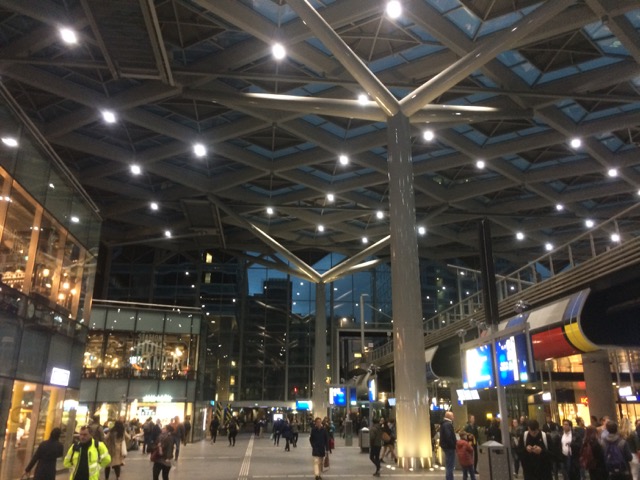
Spectacular roof at Den Haag Centraal I change trains at Den Haag Centraal, a magnificent rail terminus, with towering steel columns that splay out at the top to support a distant roof. By now it is dark again, and as I take my next express train, I can no-longer pick out any features of the countryside I am travelling through.
From the border to Münster
At Enschede I change trains one last time. I am now on a Deutche Bahn service. Somewhere along this leg we cross into Germany, although there is of course no evidence of the border. The only difference is I can understand a small amount of the announcements, which I couldn’t in the Netherlands.
Finally, at 22:45, some seventeen hours after I left the house, I arrive in Münster to be greeted by my host at the station. This has felt like a long journey it has also been very satisfying; I was able to get a day’s work done on the ferry, and read the newspaper cover to cover on the train; and for the first time I feel I have a mental map forming of how the Netherlands and North West Germany relate to each other, and where major cities in this area sit with respect to one another. I look forward to discovering further this corner of Europe.
-
Eiffelovercast #6 – Riding the Northern Line Ghost Train
In this episode of the podcast I attempt a sonic recreation of a part of the London Underground that never got built, a stretch of the Northern Line that would have run from Moorgate to Alexandra Palace. En route I reflect on the transport infrastructure shapes our experience of the city and the difference between what engineers plan and what actually gets built. I really loved making this podcast – it features my mother, Anne Soutry, as Northern Line announcer, making the most of her skills as a continuity announcer for BBC Radio Manchester many years ago. Also, as part of my research, I got a ride in the cab of a Northern Line train with my friend Stuart McGee – thanks Stu. So, have a listen, and I hope you enjoy the ride.
- Listen to it on iTunes
- Stream by clicking here
- Download as an MP3 by right-clicking here and choosing “save as.”
If you liked this podcast then you’d definitely enjoy:
-
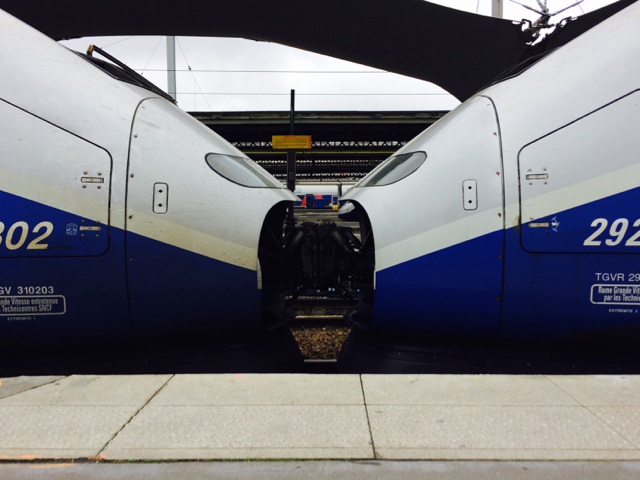
Eiffelovercast #4 – Crossing France very very fast: a paean to TGVs
Ever since I saw my first one zoom past as a boy I’ve loved TGVs. In January I travelled from one side of France to the other and back by high-speed train to get to a conference, and used the chance to try to capture some of what I love about fast trains in France. It’s a mash up of travel diary, interviews and engineering history, all stitched together with familiar SNCF noises. I hope you enjoy.
- Listen to it on iTunes
- Stream by clicking here
- Download as an MP3 by right-clicking here and choosing “save as.”
If you enjoy the interview then please let me know in the comments thread below.
-
Eiffelovercast #3 – Andrew Scoones – is there is such a thing as engineering culture?
We are trying to define the heritage of the future – the creativity and ideas in engineering that people will look back on – Andrew Scoones
Andrew Scoones is a filmmaker specialising in the built environment. Andrew seems to have interviewed or met almost all of my engineering design heroes, and so I was equally delighted and nervous when he agreed to let me interview him! In this podcast we explore one of Andrew’s passions, the identification and celebration of engineering culture. Along the way way we get in to some great stories about designers, what they design and how they do it.
Andrew is director of the Engineering Club, set up over twenty years ago to host events about the broad culture of engineering in an informal setting. In this podcast he shares some of his favourite stories from Engineering Club guests, which illustrate different aspects of engineering culture.
En route we get into bicycle design, designing trainers, whether there engineering culture includes creativity, and whether there is room for creativity in industrialissed systems. We talk about some great engineers and their projects. And we talk about building your own dishwasher.
Please enjoy this interview with Andrew Scoones and let me know what you think in the comments below.
-
Pre-stressed concrete: lessons for swing dancers
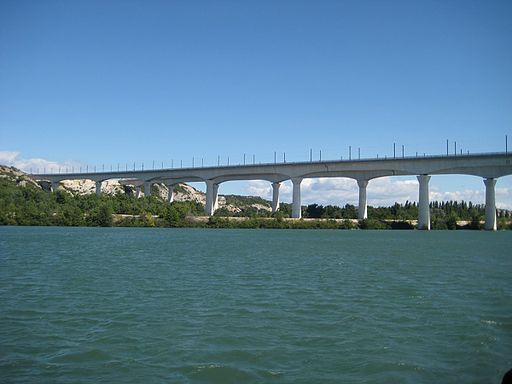
TGV Bridge at Avignon by John is available under CC 3.0 Recently in beginner’s swing dancing classes I’ve described the connection between lead and follow when dancing side-by-side Charleston as being a bit like how pre-stressed concrete works. I promised a longer explanation. Here it is.
Starting with reinforced concrete
To begin we need to understand how reinforced concrete works.
When you build a beam in a building and you stand in the middle of it, the beam sags, albeit ever so slightly. To understand what is happening, you can simulate a simple beam by interlacing your fingers in front of you, palms down. Now imagine what were to happen if someone were to balance a bag of sugar on your knuckles: your hands would sink down, the skin on the underside of your fingers would stretch, and the skin on the top would pucker up. That’s because the skin underneath is going into tension, and the skin that is on top is going into compression. This tension-compression couple is what supports the load resting on the back of your hands.
For a video illiustration of this deomonstration, see this video I helped to script a few years ago at Think Up.
Now let’s imagine what happens if we were to build that beam out of pure concrete instead. Concrete is strong in compression, and so would have no difficulty in resisting the compressive force in the top side of a bending beam. But it has virtually no tensile strength, and so as soon as the underside of that beam starts to stretch it would suddenly crack and catastrophically fail.
So for about 130 years now, engineers have been embedding reinforcing steel in the bottom of concrete beams to carry that tension which arises when a beam bends. Steel is strong in tension (think of the steel cables in a suspension bridge). In a beam reinforced with steel, the steel rods act like stiff elastic bands which resist the tensile loads that are generated when the beam bends.
The importance of depth
Reinforced concrete is a popular building material. To work, the beams need to have a certain depth to them. To illustrate we can think what happens when we bend a 30cm ruler. If you hold the ruler out in front of you flat side facing down, and try to bend it downwards, it bends easily. But if you hold the ruler out in front of you edge-downwards, and try to bend it downwards, it is almost impossible. What’s the difference? It’s the difference in distance between the top and bottom fibre that determines the stiffness.
So, deeper beams are stiffer, and can span further between supports.
Pre-stressed concrete
The problem with deeper beams is that they require a deeper floor void between the ceiling of one level and the floor the level above. Building designers usually want to minimise the floor depth so that they can fit in as many levels as possible within a given height. More levels means more rent.
Pre-stressed concrete is an evolution of reinforced concrete which enables shallower beams and slabs to be used in buildings. In pre-stressed concrete, the steel bars of reinforced concrete are replaced with steel cables which run through the middle of the beam and are attached to a plate at either end. When the concrete is set, this steel cable up is tensioned up squeezing either end of the beam, putting the entire thing into compression.
The effect is similar to when you pick up a row of books simply by squeezing from either end. If you squeeze hard enough, you can pick up say 15 paper backs without any of the middle ones slipping out.
For an illustration of this principle, see another video that I helped to make a few years back at Think Up:
Now imagine you were picking up a row of books in this way, squeezing from either end, and someone were to put a bag of sugar on top in the middle, as long as you were squeezing hard enough, you could probably support the weight of the bag of sugar.
So what is happening here? In fact, the same thing is happening here as when the sugar was placed on our interlaced hands. The top of the books are squashed together, and the bottom split apart a bit. The difference is that because these bending forces are applied to a set of books that is already being compressed together from either end, the bottom edge never goes into tension: it is just a little less compressed. Similarly the top of the books are more compressed because of the sugar they are supporting.
Putting pre-stressing cables into a concrete beam puts the whole thing into constant compression, making the whole thing stiffer.
What’s that got to do with swing dancing?
In teaching beginner swing dancing classes there often seems to come a point where we have to move learners from simply dancing a choreography to leaders leading and followers following. The key to that is the connection between them, which works in different ways depending on the dance.
When dancing side-by-side Charleston, the leader has their arm around their follower’s waist. The follower needs to sit back into this arm slightly, and the lead needs to push against their follower’s back. This creates a slight compressive force between them, which is equal and opposite.
To signal to the follower that the leader wants to move forwards, the leader moves forwards themselves, and in doing so, increase the compression in the connection, which causes the follower to accelerate forwards.
To signal to the follower that the leader wants to move backwards again, the leader moves backwards themselves, and in theory, this reduction in compression should cause the follower to accelerate backwards.
In practice, what we see is leaders moving backwards, and become disconnected from the followers. This disconnection reveals that they never had that matched compressive force in the first place: the pre-stress was missing.
If that compression is there to start with, if one person reduces the compression by pulling away, the other starts moving towards them. If there is no compression, and one person reduces the compression by pulling way, the two simply separate from each other.
So, to get the connection right, get the pre-stress right.
Related posts