Tag: climate emergency

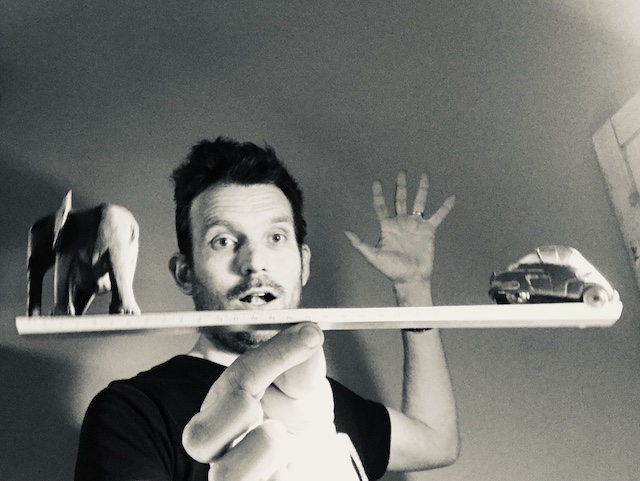
  • The Systems Bookcase at the Houses of Parliament

    The Systems Bookcase at the Houses of Parliament

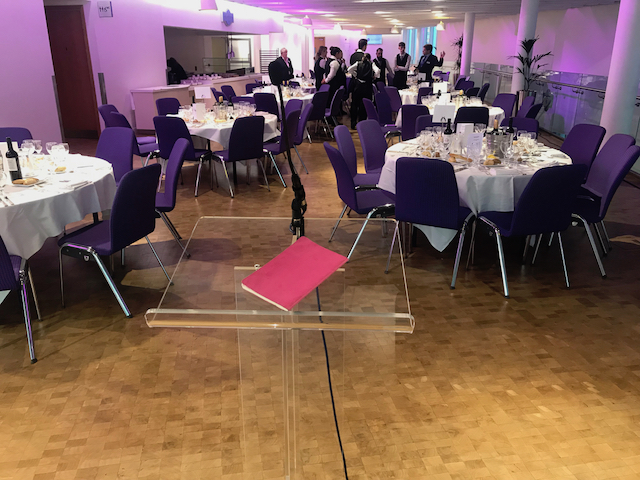
    Yesterday I had the privilege of attending the launch at Parliament of Building Blocks to Transform the Built Environment – a manifesto to turn the climate emergency into a climate opportunity. If you don’t know about it, then you should definitely check it out here.

    On the journey back I was thinking about what conversations it is and isn’t possible to have in a place like the Houses of Parliament. For example, we were there to talk about making our building standards fit for purpose, incentivising retrofit and circularity and ensuing a just and green transition. These may not seem like particularly radical ideas, but standing in those halls of power, I couldn’t help think that these run against the grain of business-as-usual here.

    (more…)
  • What if every time we built something the world got better?

    What if every time we built something the world got better?

    It is a simple question. What if every time we built something the world got better? Not just in the places we construct but in all the places affected by our construction activities. If we could meet this apparently simple ask, then we would shift the construction industry from a paradigm of extraction and damage to a paradigm of healing and repair.

    In our groundbreaking new book, James Norman and I explore what it would take for the construction industry to make this shift and what role structural engineers have to play in this transition. In short, what it would mean to be a regenerative structural engineer?

    (more…)
  • Regenerative design as a response to the systemic challenges we face

    In the construction industry we are focused on tackling anthropogenic carbon emissions. But this focus misses two wider points. 

    Firstly, that the climate crisis is just one of a series of outcomes of wider system collapse. Others include massive species loss, social injustice, health, war. 

    Secondly, that the restoration of our biosphere could tackle all of these crises. A thriving socio-ecological system would sequester carbon at the same time as reducing emissions, would create the conditions for a great return of dwindling species, create the conditions for a more socially just society, in which humans can be healthy and thrive. And in which we are not competing with each other for resources.

    So why don’t we just get on with the mission of restoring habitats ourselves?  

    The problem is that setting ourselves that mission does nothing to change the fundamental relationship between humans and the wider living world. 

    Since the Enlightenment, in the Global North we have come to see the living world as something that we can fully know and control. But what we can now see is that the net outcome of humankind’s intervention in the living world is system degredation. 

    From systems theory, we know that if you want to change the outcome of a system, you need to change the rules and relationships in it. 

    As we witness the collapse of our life-supporting ecosystem as a consequence of our actions, many people are starting to realise that it is our relationship to the living world that is at the heart of the problem. Unless we tackle that, and therefore the actions we take as humans, the system will continue to collapse. 

    Instead of seeing ourselves as controllers of nature – separate to nature, what if we instead saw ourselves as part of a wider living system, and having the unique capacity to unlock the potential of that system. In this framing humans act like a keystone species, one that has a disproportionately positive benefit on its ecosystem – a species that increases the potential of all to thrive around it. 

    It is in this philosophy that regenerative design is framed. Regenerative design seeks to intervene at a socio-ecological system level (in other words, the system that includes people and wider living world) to increase the capacity of that system to survive, thrive and evolve.

    By adopting a regenerative approach, we fundamentally change our relationship to the rest of the system – with the aim of changing overall system behaviour, from one of system collapse to one of system thriving.

    When our socio-ecological system is thriving, carbon is sequestered in soils, plants and oceans, species can recover, our use of resources stays within the renewable limits of the local system, resilience returns to our living system, social injustice by definition disappears and the health of our population improves.

    We don’t have to solve these problems one by one – nor can we. Instead we need to create the conditions within which our socio-ecological system can flourish, and these other benefits will follow.

    Regenerative design provides the lens for seeing how we can intervene in a way that seeks to work with life-giving capacity of living systems, and in doing so, transforming our role from instigators of collapse to a keystone species that unlocks living potential. 

    More blog posts about regenerative design

    My work on regenerative design is generously supported by the Royal Commission for the Exhibition of 1851. Read more about my Fellowship in Regenerative Design.
  • Ouistreham to Paris

    Ouistreham to Paris

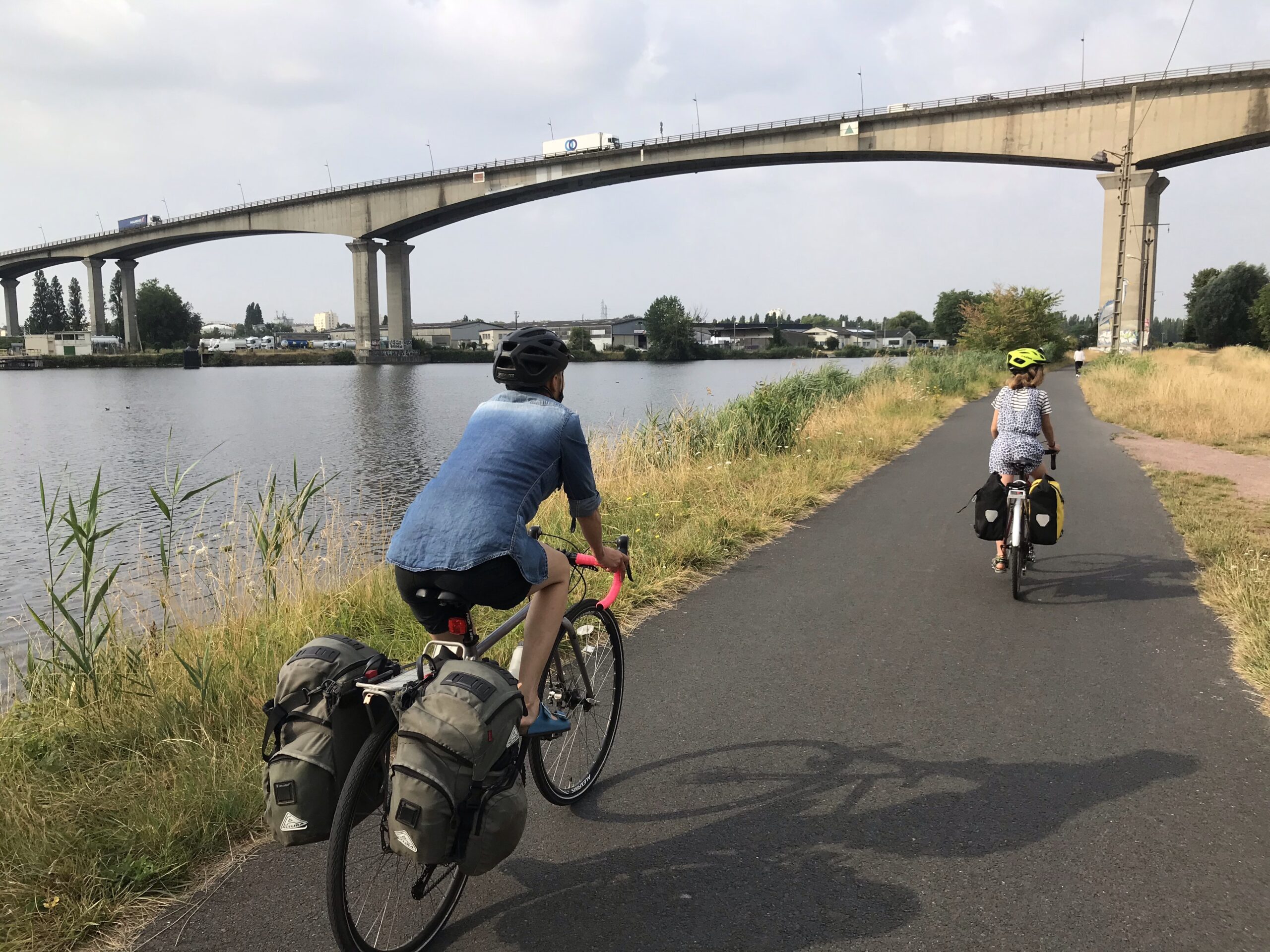
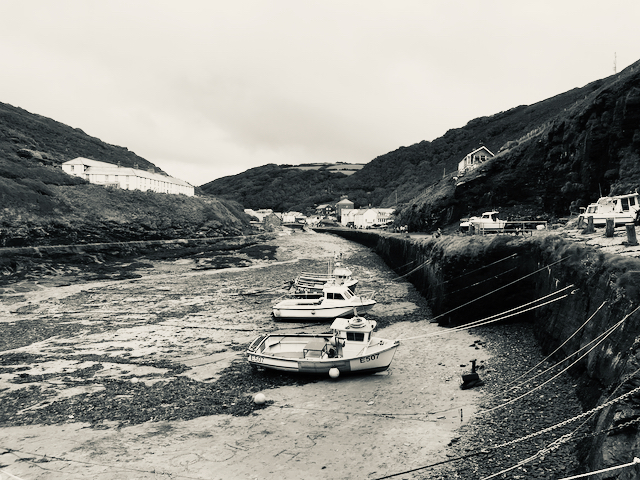
    The port of Ouistreham is about 15km from the city of Caen. Journey today began with a cycle along the canal de Caen à la Mer. The canal is a major import terminal for tropical hardwoods from West Africa. And we could see the timber being stacked up on the opposite banks of the canal.

    Downtown Ouistreham

    We cycled under a heroic motorway viaduct and then arrived by well appointed cycle path in the middle of town. We only had about 45 minutes to spend in town so we found a high point to hang out: in this case the castle right in the city centre.

    Heroic viaduct outside Caen

    Other city centre castles I have enjoyed: Belgrade, Budapest, Blaye. I like when you can simply cycle up from the town below and straight into the gates.

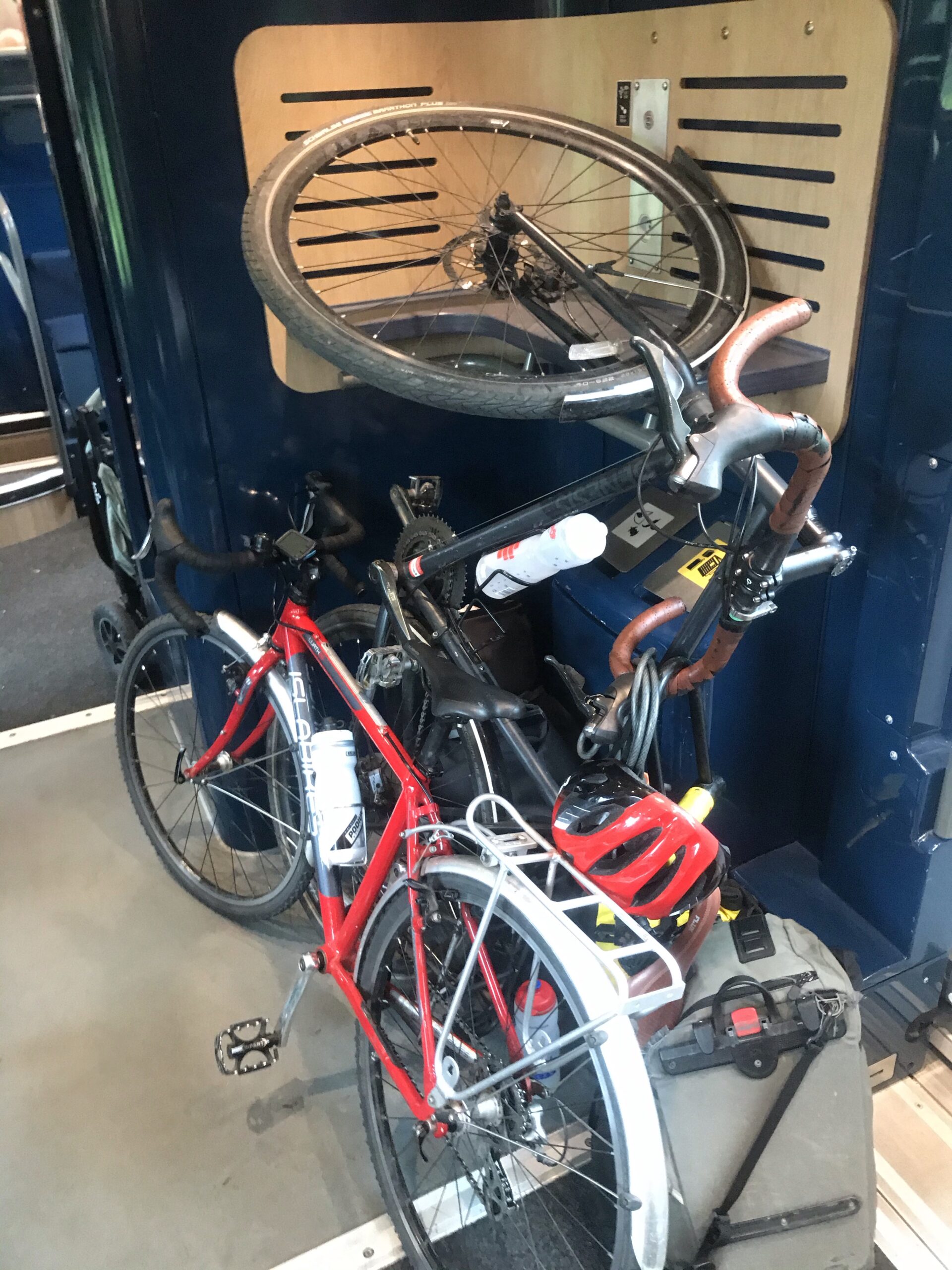
    Our train from Caen to Paris St Lazare was a squash and a squeeze with our bikes. The service has unreserved bike spaces, but these were full and the service busy. Lots of people boarding and getting off with luggage got stuck with us in the bottleneck of the doors. I ended up lifting my bike up on its rear wheel and squeezing on. Somehow I miraculously managed to balance it on a pile of panniers so that when I let go it stayed upright.

    Miraculously balanced bicycles

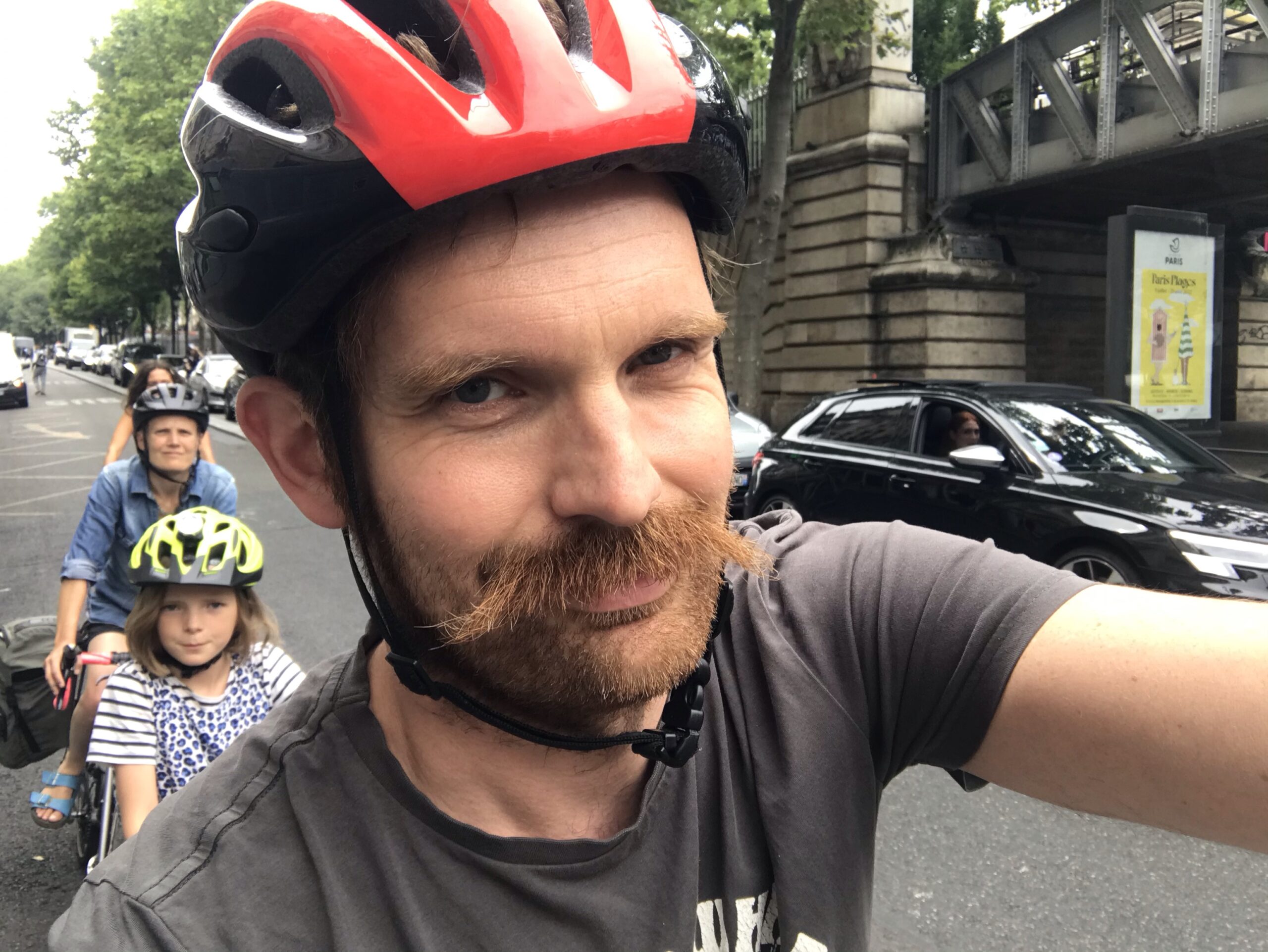
    From Paris St Lazare to the 20th arrondissement we cycled the route of the Metro Line 2, following the cycle paths through the boulevards. This infrastructure went in when we lived here in 2006. Now it feels really hectic to use, with e-scooters, mopeds and delivery vehicles competing for space. As is offering the case though when I feel squashed using cycle infrastructure, I shouldn’t bemoan the other users: they are doing the right thing and it’s fewer cars that we need.

    With all the alternative, shared transport infrastructure, I think Paris is now ready to ban cars altogether. Maybe with rising fuel costs and renewed focus on the climate crisis due to recent heat waves, banning cars in Paris might happen soon.

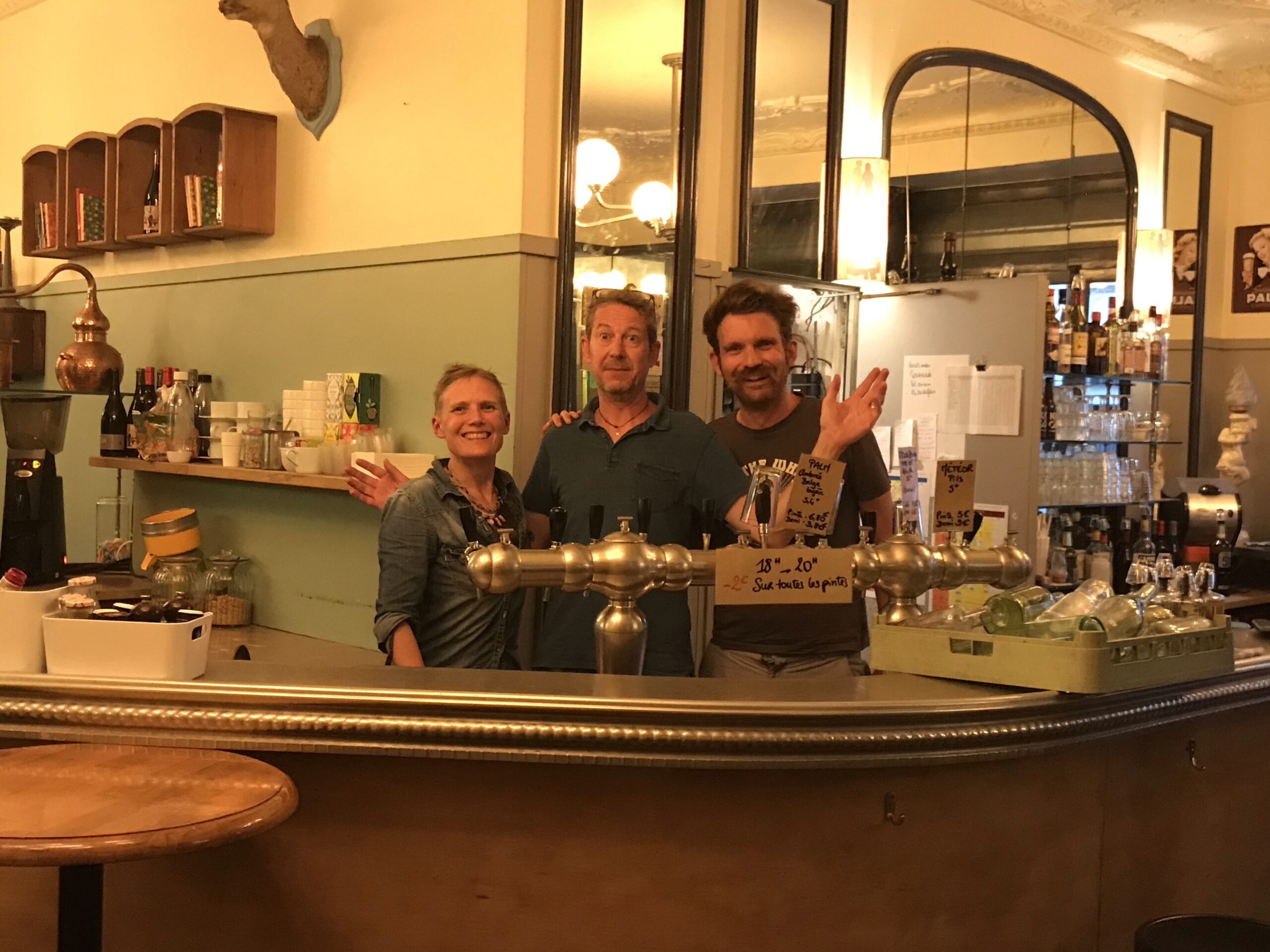
    We finished the day with our friend and proprietor of our old local the Piston Pelican, Stéphane. The bar was closed but he welcomed us in for pizza and wine and an insight on what it’s been like trying to run a Paris bar through Covid. We talked about the heat wave and the climate crisis, and what people in their position can do.

    I told Steph that running a bar like theirs is an important thing to be doing in a time of crisis because it builds community cohesion and resilience. I’m not sure how reassuring that was though as my climate French vocab is a bit ropey: turns out I’d been referring to the climate crisis all evening as the ‘central heating crisis’!

    Mary Stéphane and me at the Piston Pelican

  • Sometimes I think it needs to get really bad before people will care about energy

    Sometimes I think it needs to get really bad before people will care about energy

    In the bakery where I often go to write in the mornings they are having heating fitted. The cafe is in a warehouse and it gets cold in the winter. As I write, warm-air ducts are being installed overhead that circulate heat from a new gas-fired boiler. 

    Meanwhile, the room next door is so hot from the ovens that they use fans to vent the heat to the atmosphere. I asked isn’t there a way that they could use the waste heat from the ovens to heat the space we are in. The answer I got was that we asked and it is not possible. 

    I wonder how much more possible it would become if gas were not available. The challenge is the problem is not real enough. Sometimes I think it needs to get real bad before people will care about how much energy they are really using.

  • The Boy Who Cried Climate Emergency

    We all know the story of the boy who cried wolf. He didn’t really mean it. In the end, everyone stopped believing him. Wolf didn’t mean anything. But the danger was still there. When the wolf came, nobody helped. The wolf got him.

    What do you think happens if your organisation declares a climate emergency and then doesn’t really do anything about it? 

    In an emergency, individuals take the shortest path to a place of safety. The normal rules don’t count. People collaborate to help others in greatest danger. The situation is monitored to see if the danger has subsided. We only go back when it is safe to do so.

    If your organisation has declared a climate emergency, but most of the business is carrying on as usual, then do they really mean it? Has your work and the work of your colleagues changed substantially since declaring that emergency or not?

    If so then they don’t really really mean it. Climate emergency will stop being meaningful. But the danger is still here. 

    When the wolf came, nobody helped. The wolf got him. Except the him is all of us.

  • Act, advise, advocate in the climate crisis

    Act, advise, advocate in the climate crisis

    On the surface I feel like it is business as usual in the construction and engineering industry. Like a polluting ferryboat travelling full speed ahead towards the storm while no one on the bridge as the courage to turn the ship around. Meanwhile, beneath the surface, I see numerous individuals and groups swimming the other way. Each finding ways to build and engineer differently. How can these mutineers gather enough critical mass to form a viable fleet to take us to safety? I have three words: act, advise, advocate.

    (more…)
  • What the fuel crisis reveals about the government’s approach to climate breakdown

    I’m sharing today my notes on the fuel crisis and what it reveals about how the government is acting in the wider context of climate breakdown.

    Defending fossil fuels

    Fossil fuels are a dying out. One way or another, their use will dwindle. But for now at least the government is prepared to ensure their supply by using the army to distribute supplies. What is so striking is the use of the armed services to prop up the dying system rather than directing these resources towards tackling the far larger crisis: how to massively reduce our dependence on fossil fuels in the first place. It is a sign of how committed the government is to the status quo rather than to find a path away from the bigger problem.

    In a related tactic, the government is willing to bend the rules to fast-track HGV licenses and visas for drivers, but we don’t see it acting to legislate to promote the rapid development of solutions that will reduce our dependence on fossil fuels.

    (more…)
  • Book notes: What if we stopped pretending

    I originally wrote this post for the ‘Training on what to do After Declaring a Climate Emergencyalumni network, and I’m sharing it here too. For some start-the-week inspiration I’m sharing some thoughts after reading Jonathan Franzen’sWhat If We Stopped Pretending‘. Thank you to James Norman for lending this to me a week a go. 

    (more…)
  • Universal Cycle Flyover

    Universal Cycle Flyover

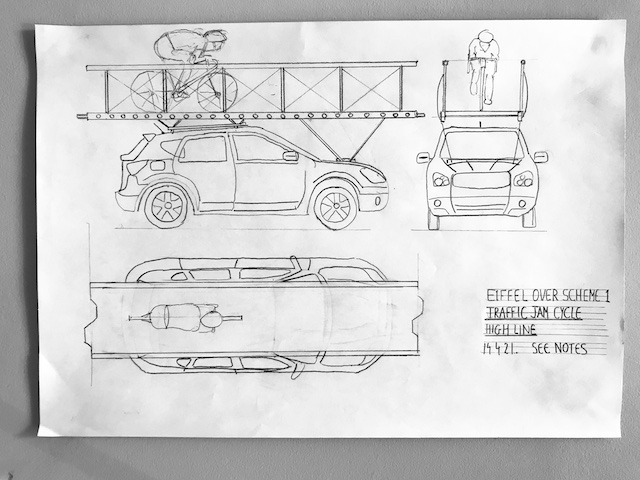
    The daily traffic jam on my local high street has inspired me to think about a way to turn a traffic jam into an opportunity to a way to create safer cycling. This solution is win-win: car drivers get to stay in their cars while facilitating the creation of more traffic-free cycle routes in and out of our cities.

    The concept is for all cars to be fitted with a light-weight section of Universal Cycle Flyover, designed to fit most any vehicle. Cars approaching a traffic jam simply park close enough to the next car to to enable a continuous connection for the cycle deck.

    (The scheme shows a cyclist on a racing bicycle. Of course other types of bicycle would be encouraged, I just started the sketch too close to the top of the page to fit a more upright riding position.)

  • Planting parking spaces is a dismal affair

    Planting parking spaces is a dismal affair

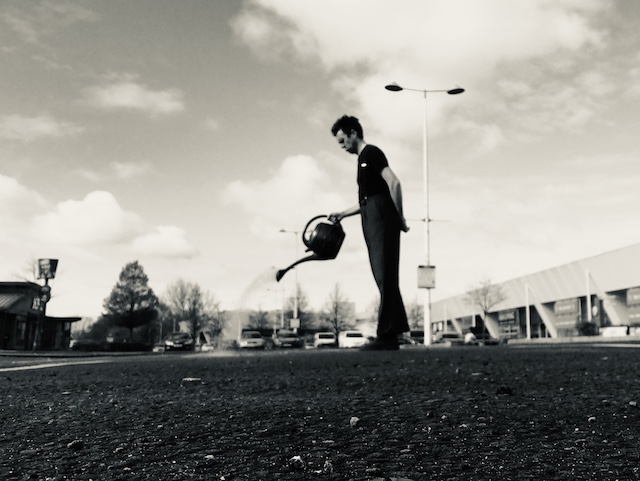
    Planting parking spaces is a dismal affair.

    When you water them, the water just drains away.

    The rich soil underneath is capped.

    Parking spaces don’t flower; don’t make nectar, don’t produce fruit that we can eat.

    Insects stay away; birds fly over.

    Never do they grow, rise up from the ground, spread their branches to oxygenate the air.

    No one returns in 30 years time and says I planted that parking space.

    No generation thanked the last for planting more.

    (more…)
  • Will you always own a car?

    Will you always own a car?

    By asking this question I make a choice about where the centre ground is. By framing the question I put the position ‘I will always own a car’ at the extreme. At the other extreme is ‘I will never own a car’.

    The middle ground becomes some partial version of car ownership. I will own a car for a bit. I’ll think about selling it in a few years. Maybe, I will own my car with other people . I will join a car club.

    Given what we know about air pollution, the contribution private transport makes to carbon emissions, the number of people killed each year by cars, and the damage caused to our communities by busy roads, why is private car ownership still considered the norm?

    (more…)
  • Rethinking our relationship with our ecosystem

    Yesterday I was writing about what to do after declaring a biodiversity emergency. My conclusions was that the process starts with rethinking our relationship to our ecosystem. Not how can we do something to our ecosystem but how can we work with it. Today I want to get into more ways that we can achieve this shift in the way we think.

    (more…)
  • Inspiration from balance : when the day = night

    Inspiration from balance : when the day = night

    This week day equalled night.

    I see the seasons as sine and cosine waves. Peaks and troughs for different phenomena offset from one another.

    At the summer solstice, the hours of day light peak, but the rate of change of day light is zero. Nothing much seems to change.

    At this time of year the hours of daylight are only half way between their winter and summer extremes, but the rate of change is at its maximum.

    For an instant everything is in balance, when day equals night. But there is no pause. This is also the time of maximum change. We are now moving away from balance at the highest rate of the year.

    Close up it is moving rapidly but taking the longview there is dynamic equilibrium.

    I find lots I can draw inspiration from in my creative and design work at this time of year.

    (more…)
  • What’s the least effective thing I can do to tackle the climate crisis?

    What’s the least effective thing I can do to tackle the climate crisis?

    I am grateful to the participant in this morning’s climate coaching call who reminded me of the power of asking the opposite question to the one you are trying to answer. Instead of asking what’s the most effective thing he could to tackle the climate crisis, he asked what’s the least he could do. Sometimes it is much easier to define what we shouldn’t be doing than what we should. But from this point of opposition we can get some clues about what we should in fact be doing.

    (more…)
  • Culture of climate emergency

    Culture of climate emergency

    If you are interested in understanding how your organisation should perform in the climate emergency then you should be interested in organisational culture. An emergency is a state in which we require people to behave differently to normal and take urgent action.

    We can understand organisational culture as the way a group of people get things done. If we want people to behave differently in the climate emergency then we need to change our organisational culture to one that is more appropriate to the urgency of the situation.

    (more…)
  • Training with audio in the age of Zoom.

    Training with audio in the age of Zoom.

    In March 2020 we were all sent home and we discovered we could meet using video conferencing instead. Suddenly our wide-angled world was sliced to a quarter of its width. Our body language receptors had to cope with just head and shoulders rendered in a tiny square. And our brains had to work much harder to make sense of this reduced world view.

    Just because we have lost something doesn’t mean we have to replace it anew. Just because we can substitute IRL for Zoom doesn’t mean we always should.

    (more…)
  • Three ideas for bearing witness to the climate emergency

    Three ideas for bearing witness to the climate emergency

    A year on from declarations of climate emergency in the construction industry I am looking for ways to carry on emphasising the scale of the problem and the scale of the action we need to take. I feel that behind these bold declarations of emergency we are no closer to seeing the system-wide changes that we need and are instead focusing on smaller details.

    (more…)

  • #17 Tabitha Pope – Participatory Architecture – Show notes

    #17 Tabitha Pope – Participatory Architecture – Show notes

    Tabitha Pope is an architect and lecturer, with a specialism temporary structures and participatory architecture and a passion for work that sits at the boundary of art and architecture. In this episode, produced in support of International Women’s Day, my colleague Lucy Barber interview Tabitha about:

    • What is participatory design and what benefits does it offer us in the climate emergency.
    • Challenging power in order to make architecture a more inclusive space for all under-represented groups, not just women.
    • How her practice of carpentry allows her to intervene in the design process in a different way.
    • Establishing a nature connection to help designers and citizens alike tackle the biodiversity crisis.
    • Stepping into a space of vulnerability in design in order to do things differently.
    • Creating spaces for joy and encounter to tackle loneliness and build resilience in communities.

    Listen on Apple Podcasts , Sticher or by download here.

    (more…)
  • #16  Bengt Cousins-Jenvey – How to save a million tonnes of carbon – shownotes

    #16 Bengt Cousins-Jenvey – How to save a million tonnes of carbon – shownotes

    Bengt is a consultant and ‘re-designer’, working in sustainability and circular design in the built environment. This year we are working together to create training in response to the climate emergency. In this interview I ask Bengt about his big question: what single thing can you do to save a million tonnes of carbon. Exploring this question we get into:

    • High-level strategies for accounting for carbon that help avoid getting stuck in the detail.
    • Using culture-change models to guide organisations as they respond to declaring a climate emergency.
    • Thinking frameworks that help consultants engage with the businesses they are supporting.

    Listen on Apple Podcasts , Sticher or by download here

    (more…)
  • Keynote: How problem-based learning can save the world and make you happy too.

    Keynote: How problem-based learning can save the world and make you happy too.

    In November 2019 I was booked to deliver the keynote address for the University of Edinburgh Engineering Faculty’s away day. It was an opportunity to explore how the climate and ecological emergencies are an invitation to delve into:

    • The scale of the challenge to traditional university teaching
    • The nature of the challenge and how we need a different approach
    • How to use a problem-based learning approach
    (more…)