We left Amboise, climbed the out of the valley of the Loire and over into the Cher, which runs parallel to the Loire and would be what we followed for the rest of the day. First stop le chateau de Chenonceau, which is sits across a river on arches. I always thought this would be my favourite of the Loire chateau but again I felt disappointed. I think mainly because it so heaving with visitors, which, obviously we are too. (are you stuck in traffic or are you traffic?)
We knew we would have a hot day of cycling. 70km to our destination. We could see the city of Tour from afar, and the river gradually widened as we approached. Tour sits between the Cher and the Loire rivers but largely seems to ignore them both. We found it hard even to find a place to leave the river path and get up over the levee. We cycled into town hot and hungry and ended up eating expensive pizza. It’s one of those situations where you feel like you haven’t quite got this right and you pay through the nose for it.
I was pleased at least to have seen Tours, with its medieval centre. One of those places that I’m unlikely to visit again so pleased at least to be able to have put a brief experience to the name. But I was pleased to leave too. The way out, like the way in was not trop évident.
We cycled through the afternoon heat. We found our way to Savionières which had a ganguette. Coffee and ice cream while we waited for the heat to pass.
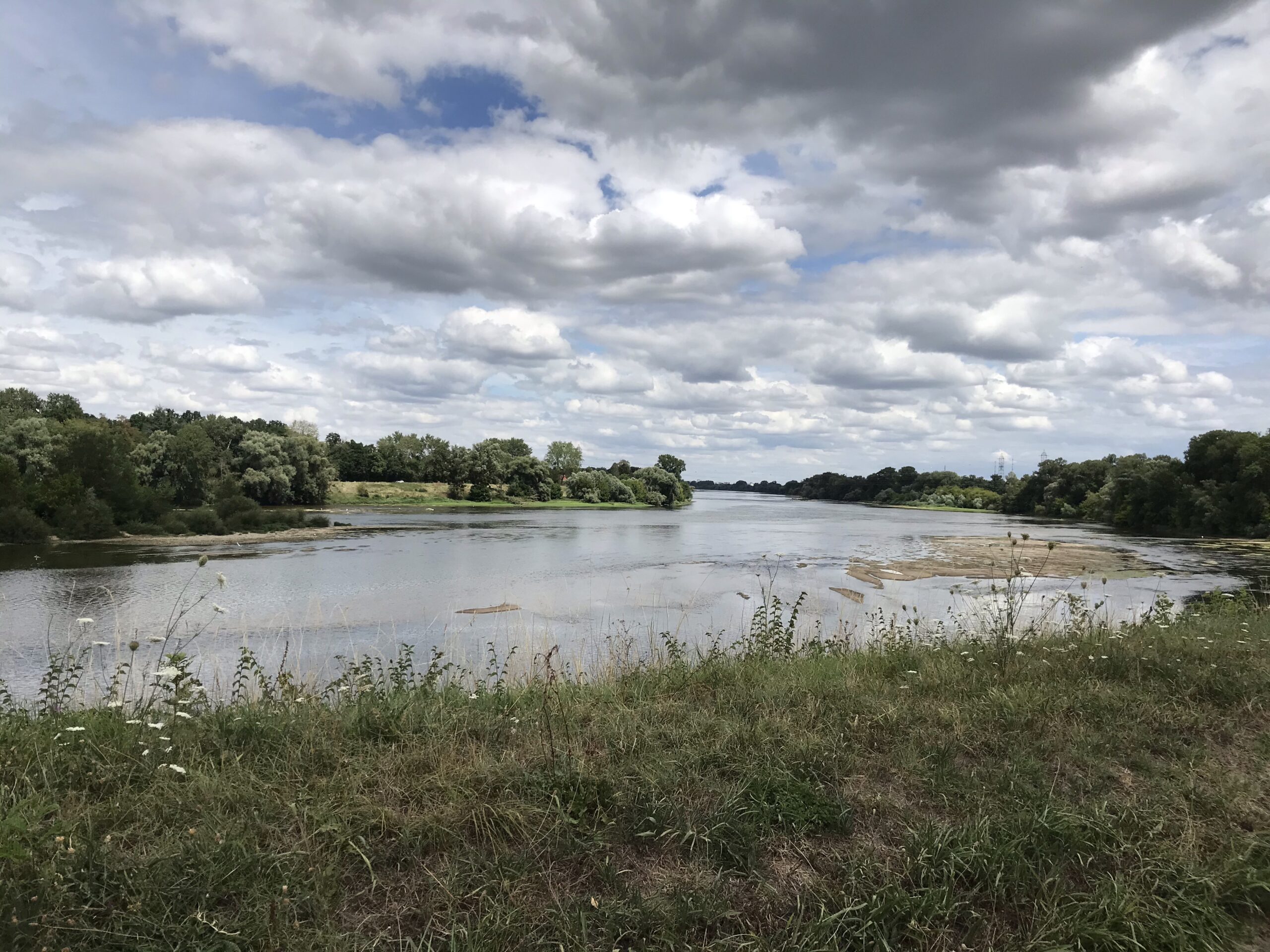
We were due to be staying in a garden further downstream, arranged through Warmshowers.com but as we cycled along we noticed a quiet, picturesque sweep in the river and wondered if we could wild camp. We picked our way through the trees and discovered we were at the point where the Cher river joins with the Loire. There was a beach we could swim off and a shelter point to sleep. We didn’t even need to put up a tent.
S and I went swimming in the Cher. The flow in the Loire looked a bit fast so we didn’t venture into its waters. Bright green frogs leapt out of the undergrowth. The water was so warm. Overhead egrets patrolled the skies and waded in the water. Opposite a whole herd of cows came down to the water and waded in the shallows. We fell asleep to the sight of bats a few metres overhead and the occasional rattle of trains on the Tours Nantes line crossing the viaduct opposite.
The second day of cycling along the Loire. A relatively flat 70km that would get steadily heavier going as the day heated up. The cycle path along the Loire is well signed, well routed through towns and villages to ensure you can get provisions. It also has lots of attractive river-side places to stop for a beer and for kids to play in a playground.
Our day began in Loir-et-Cher and at some point we crossed into Indre-et-Cher. French départements were created to enable a horse rider to reach any part from the central préfecture in a day. It’s probably the same distance as if you were travelling by bicycle.
This has been a day of castles. First, Chambord, the famous opulent palace. Then Blois, situated on its battlements in the town centre over looking the river. Finally Amboise, an astonishing fortress which is also where Leonardo Da Vinci is buried.
My recent reading about commons and land ownership means that I can’t see these places and not think about how the wealth needed to create them is made in part from confiscating land and taxing them local populations. This isn’t news, but these sights are often held in isolation from the story of their creation. At Chambord Europe’s longest stone wall kept the locals out of the forest to stop them hunting and foraging on land that would have been theirs on pain of death.
These are of course stories of rulers and social injustice from 100s of years ago. Arguably France had a conversation about this imbalance of land ownership in through the Revolution, but in the UK we never have. Consequently we still have owners of massive parcels of land who derive this ownership from William the Conqueror. As we think about how we use local resources to support local economies, we need to have a conversation about returning common land to them communities that surround them.
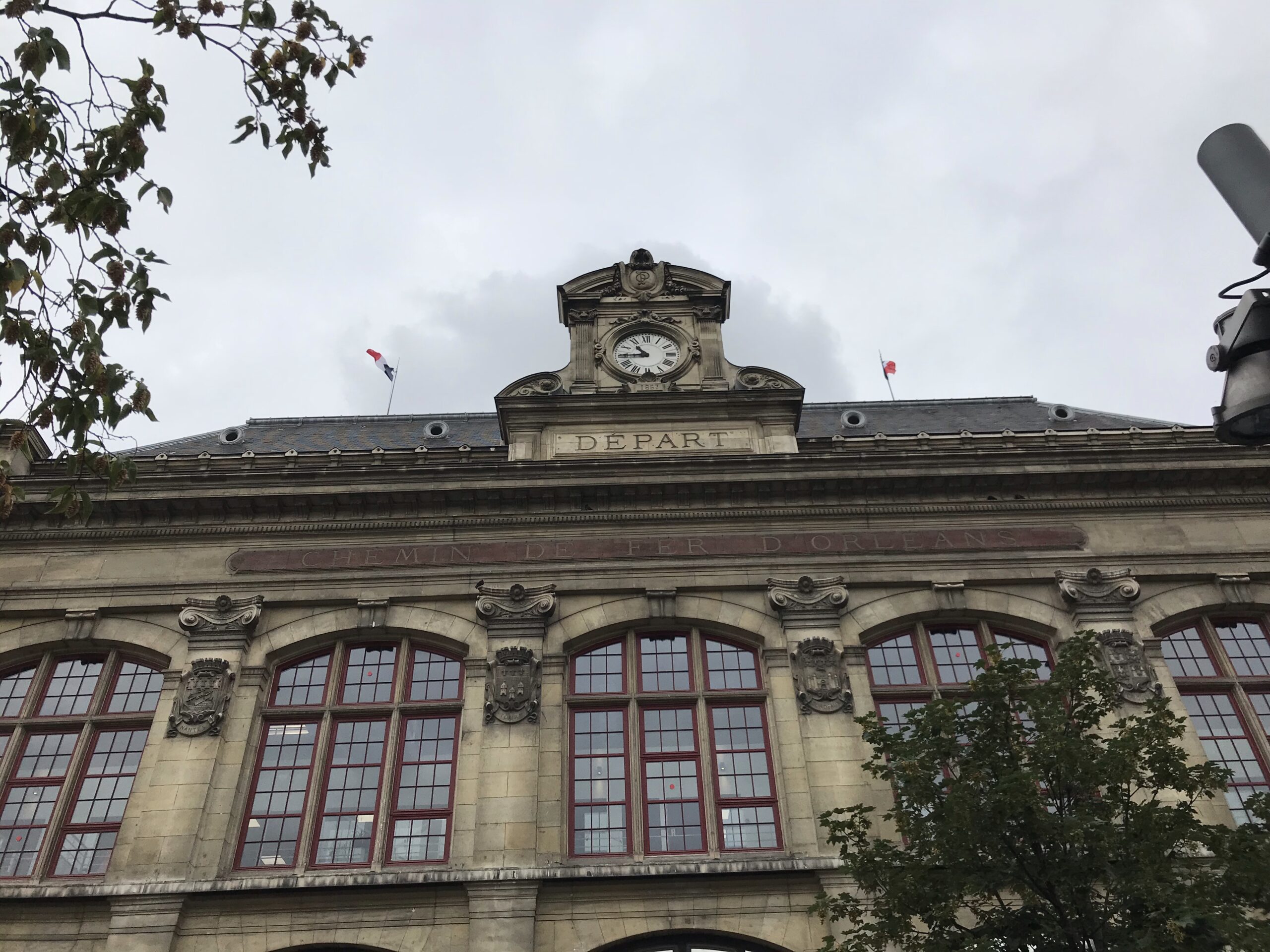
Today our trip shifted gear, away from the city and on the road again. We left paris from the Gare Austerlitz, which feels like it has been under reconstruction for 15 years. I can’t believe how much concrete must have been poured to create the podium that is spanning over the platforms. I wonder if attitudes to using concrete are shifting in France like they are shifting in the UK?
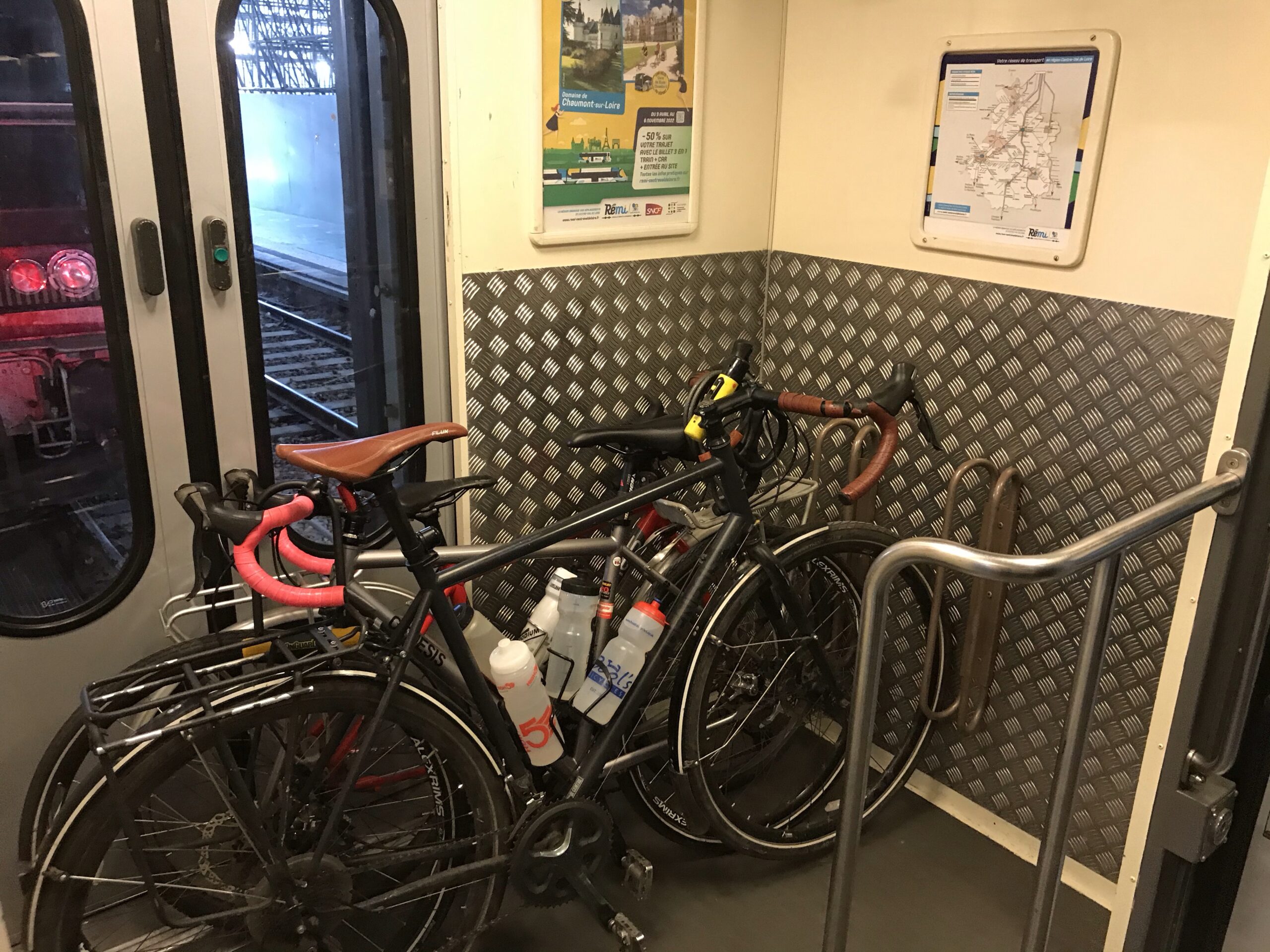
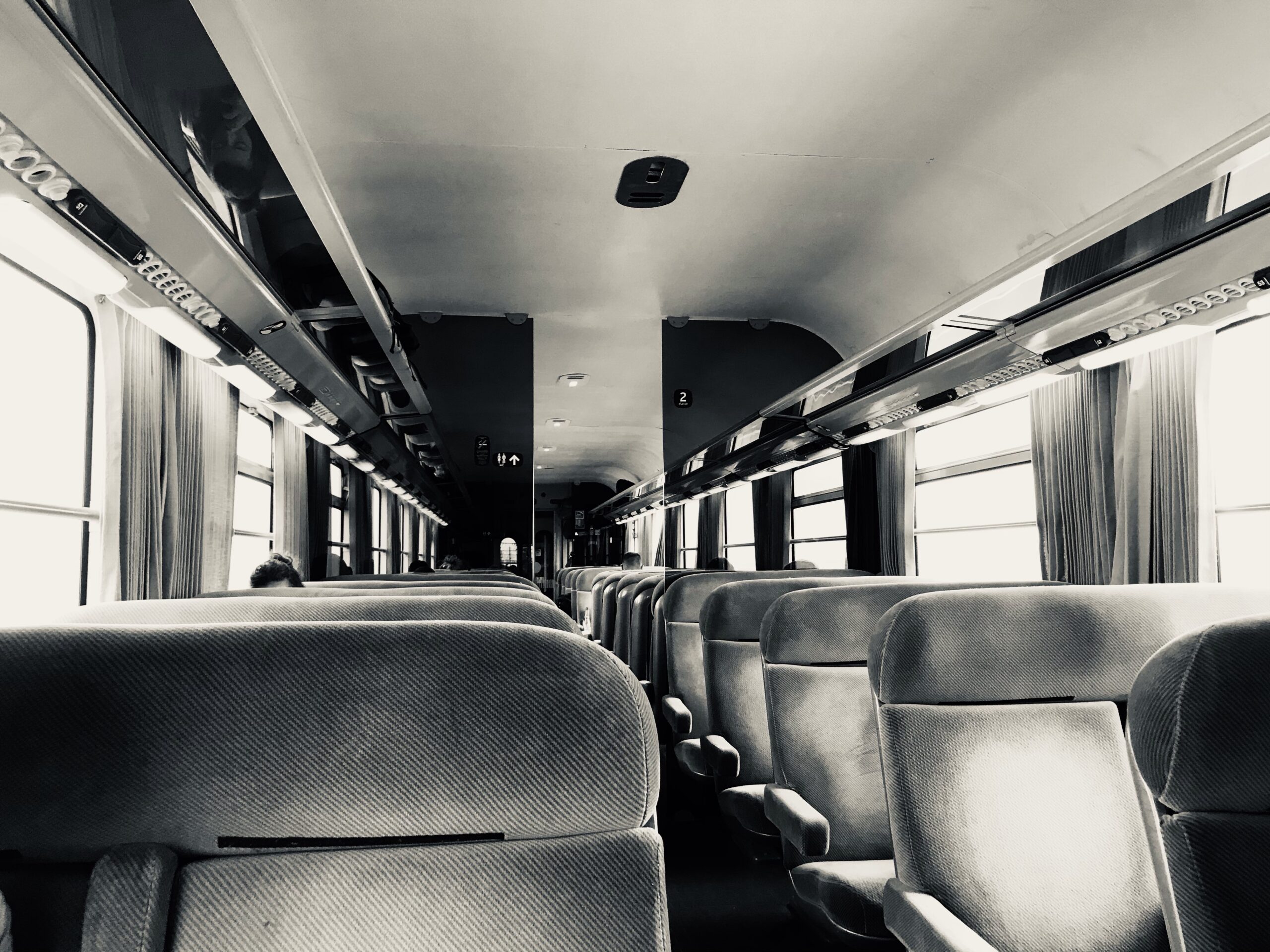
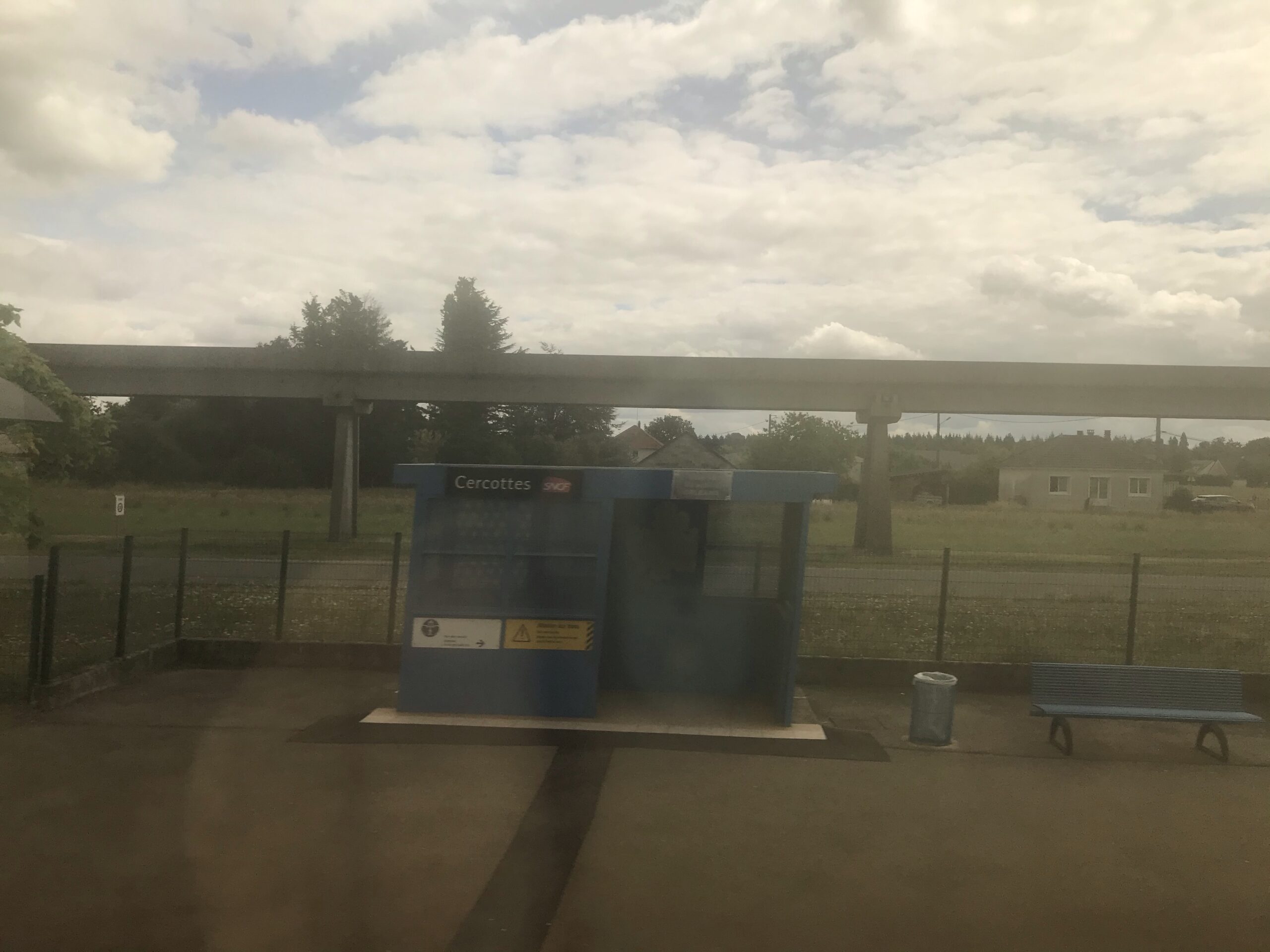
It’s a short ride to Orléans from Paris in one of those old intercity trains like the ones I’d see go humming past on the railway line below my grandmother’s house. There’s plenty of space for bicycles, albeit after you have lifted them up the high steps. On the way I spotted the remains of a test track for an aborted hover train project, a competitor to the British schemes being tested in Ely in the 1970s, neither of which came to fruition.
After a few days in city it feels a relief to reach the Loire, which stretched out before us left and right as we ate our picnic lunch on the banks. We now have six days of cycling down it’s wide cycle paths atop flood dykes.
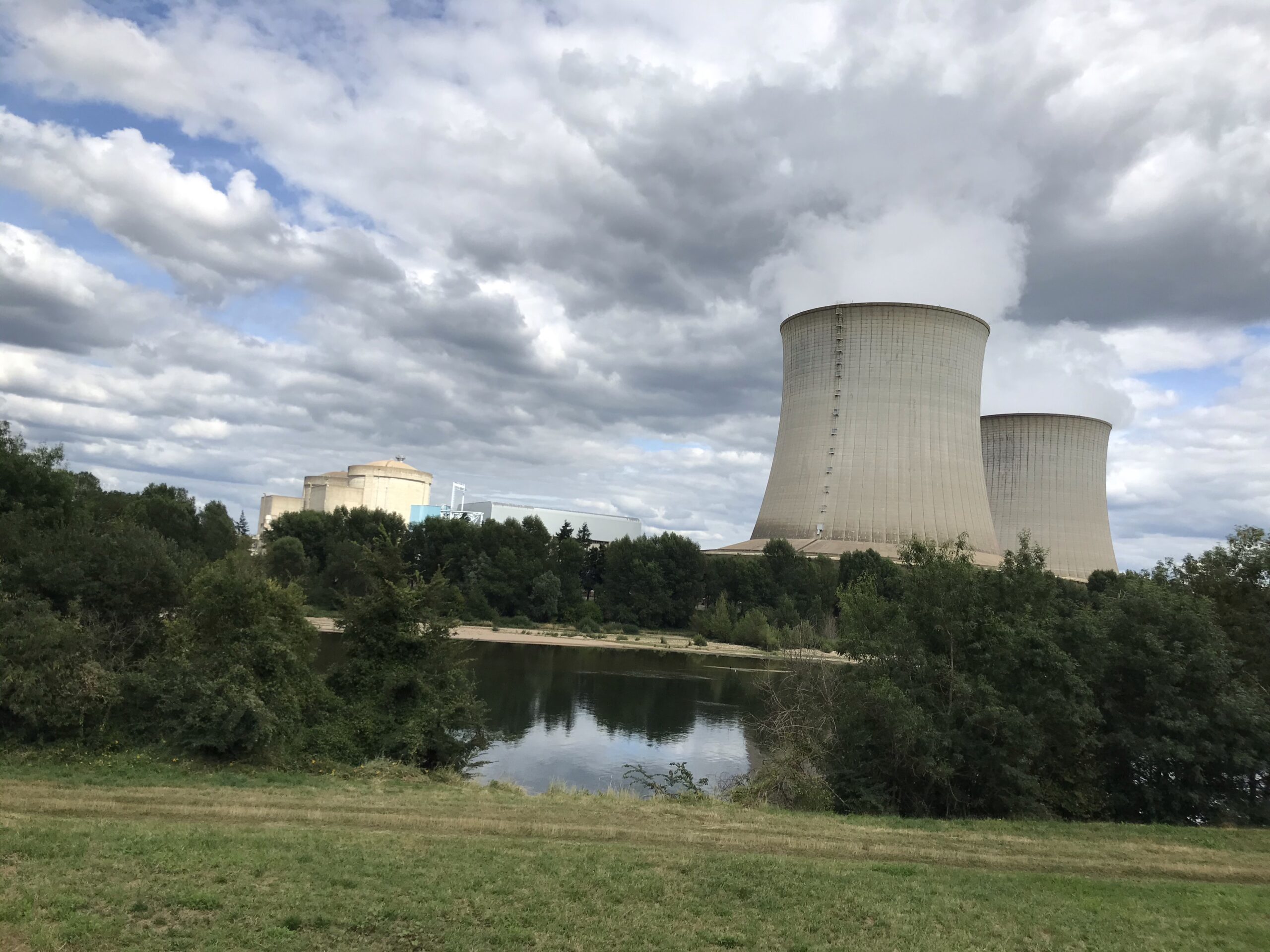
First nuclear power station of the trip
Last night we drank in a packed street bar in Paris, today our beers are in a riverside campsite ganguette. I am enjoying the change.
From stage one of the Tour de Femmes in Paris to a very different stage two finish in Provins. The stage in Paris was of ceremonial importance, but I think the stages between more regional towns are more characteristic of the overall tour experience.
Unsure whether to go the night before, we looked up the finish town of Provins on the race website. And sure enough it is a UNESCO world heritage sight. This is what the Tour is for: showing off bits of France. Having lived here and traveled widely for a year I’d never heard of Provins. And so we set off for a day of sightseeing and cycle watching.
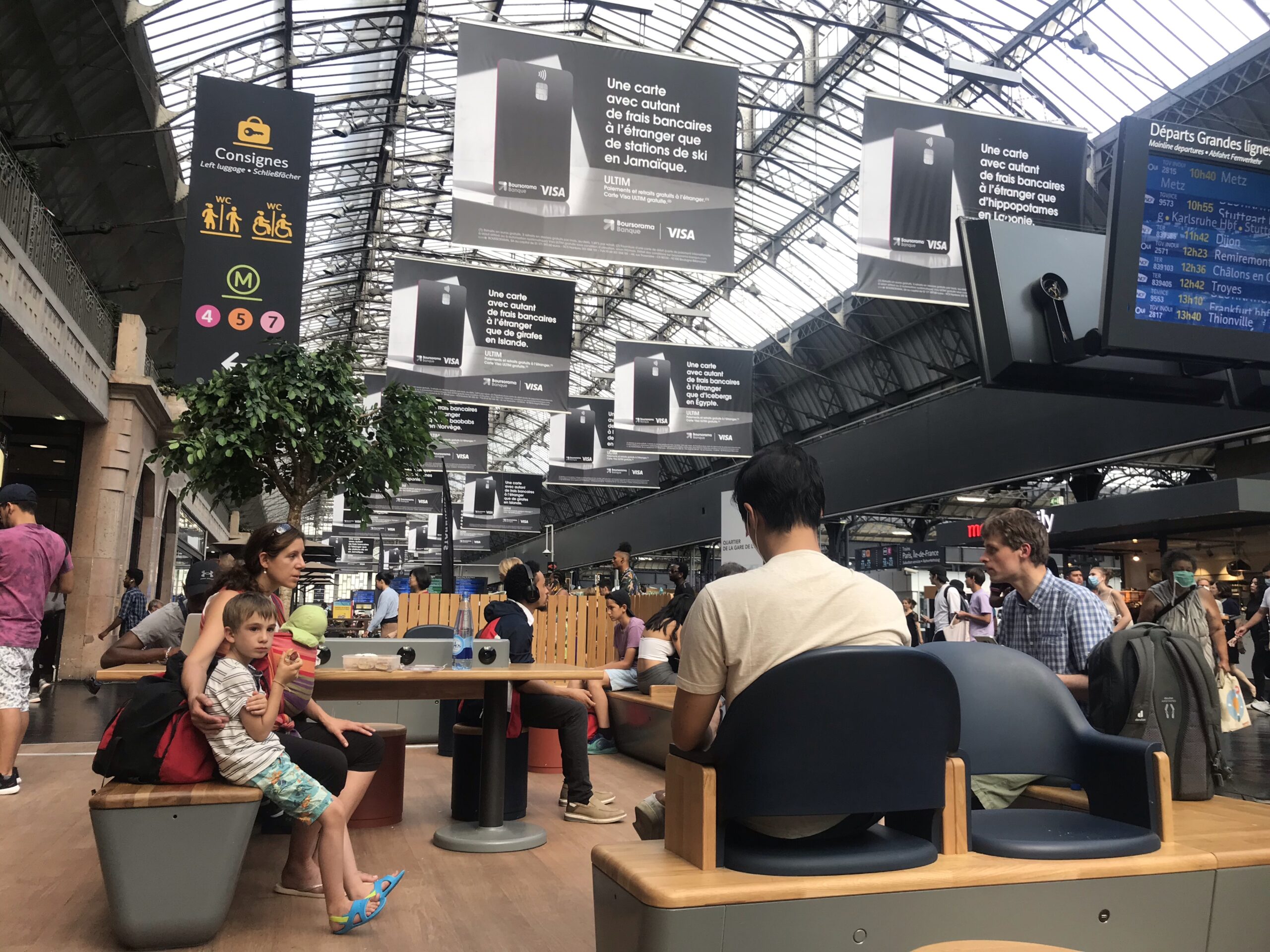
I was happy to find that our route to Provins was a direct train from the Gare de l’Est. I used to come here and imagine the journeys you’d be able to take when they would open the TGV Est Européen in 2007, connecting Paris at high speed to Strasbourg, Cologne and Frankfurt. It is a very wide terminus station with brightly lit, glazed concourse that runs the width of the platform ends. It’s not as imperious as Gare du Nord, not as concrete as Montparnasse, not as complicated as Saint Lazare. It’s like a dinner table set out for lots of European friends with a nice bright table cloth and plenty of elbow room. I also appreciate the abundance of seating without obligation to sit in a cafe.
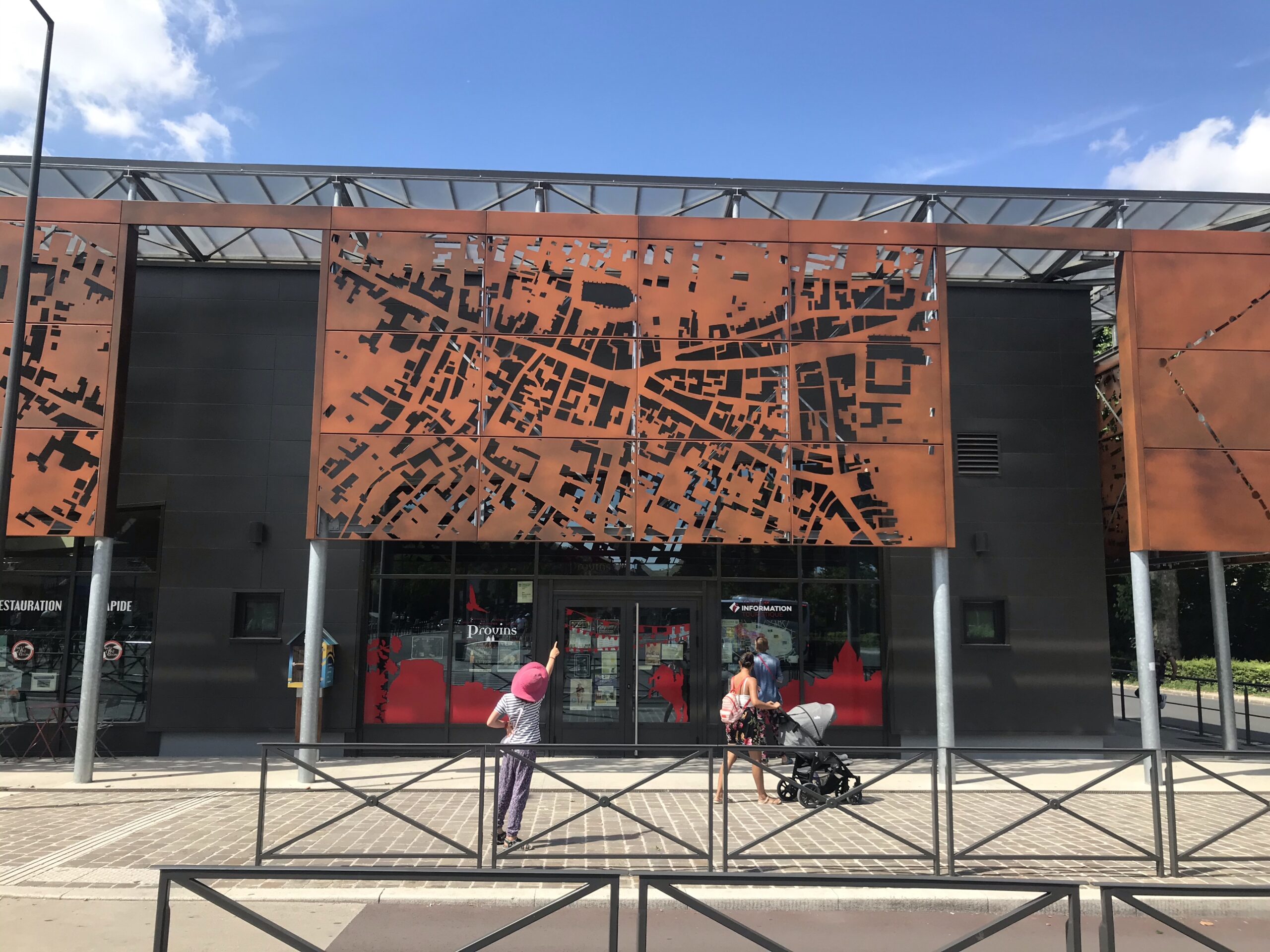
From one end of the Transilien line P to the other, at Provins station the most striking thing is the Office de Tourisme which had an elegant Coreten facade with the map of the city carved out of it to make dappled shade on the building front.
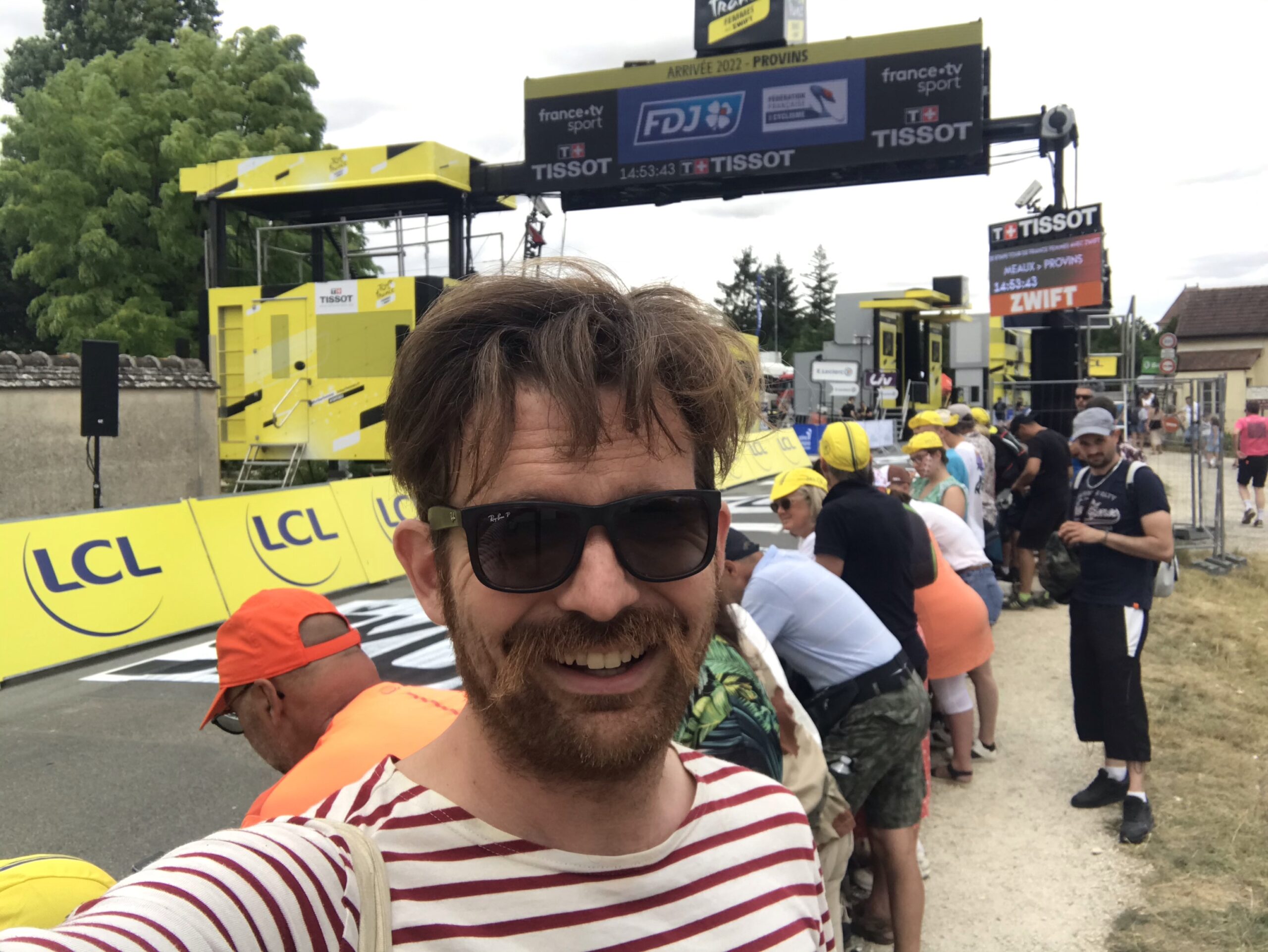
We walked down the medieval streets, had a relaxed lunch in a restaurant, spotting Tour lanyard wearers all around us. Gently, imperceptibly at first, the pedestrians, the residents started all walking in one direction. We followed them round the ancient streets, through the impressive ramparts and then there it was: the ‘permanance’ – the collection of vehicles which is the travelling caravan of the Tour. We passed the winners’ podium, the commentators box and then there was the finish line. All of these bits of infrastructure are so familiar from watching over a hundred stages from the television, and there they were just in front of us. Smaller, and bigger, in real life.
I think one of the most surprising things about the Tour is that all this infrastructure is moved from town to town every day. It is literally a travelling circus. It is life on the road, not just for the riders but for the logistics entourage.
We knew we’d get a good chance of standing near the finish, but we didn’t expect to get five metres from the line. We found our spot and waited the two hours or so for the race to pass. I did this watercolour of the finish line. I appeared to be the only person taking pictures with this choice of medium.
A brave local commentator was keeping the crowd interested, and i learnt a lot about what a big deal it is for a region or département to host the tour. We heard about the local cycle clubs and rising stars. We heard about all the local people who had worked to bring the Tour to Seine et Marne and to the town of Provins. All the folk who had assisted in getting the barriers in place early in the morning. I had the feeling that lots of people watching weren’t into pro-cycling, but that this was the travelling spectacle coming to town that they had to see.
An hour before the race came the travelling caravan of sponsors vehicles handing out free stuff. I know that this is what the Tour is all about on one level, marketing opportunities for these big French brands. It is awful in terms of waste stuff given out and it is laughable. From the cars freebies are thrown out and the crowd go wild for them. Key rings from the gendarmerie, T-shirts, the famous hats, processed meat from one of the sponsors. I am sorry to say I didn’t get a pink Zwift that but glad that my daughter got one.
And then it was on to watch the racing. As I found yesterday it is actually quite hard to follow the race when you are there, but being near the end we could see the big screen. I was watching when three pretty awful looking crashes happened. These were made all the more graphic when we saw the injured riders limp to the line later.
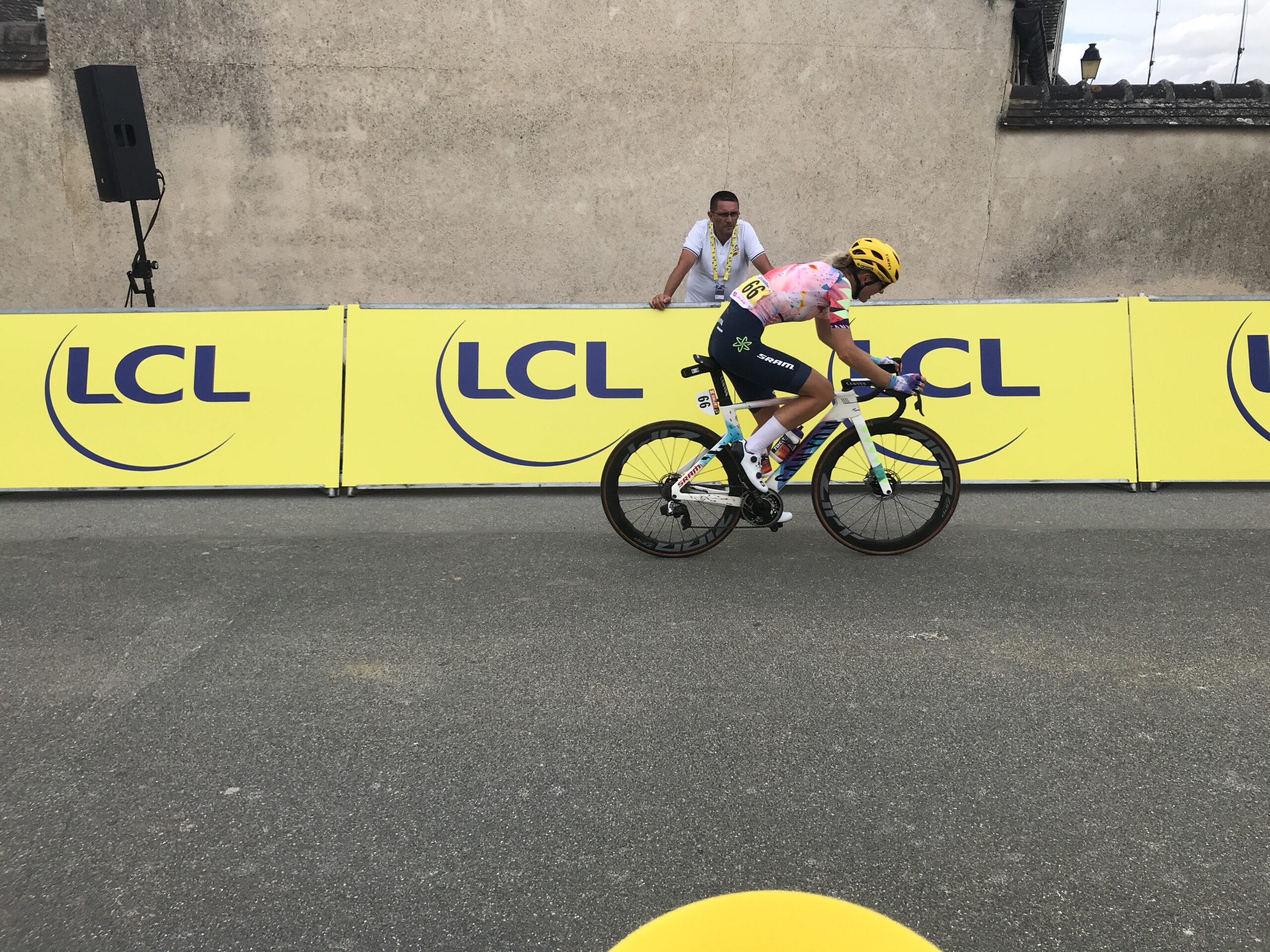
The riders passed the finish twice. First for an intermediate sprint, and then round a 15km loop which brought them back for the finish. After the sprint a breakaway group formed of Elisa Balsamo, Elisa Longo Borghini, Marianne Vos, Niewiadoma, Silvia Persico and Makia van der Duin. But in the final sprint to the line Marianne Vos broke away from this group and zoomed ahead to cross the line. Incredible to see possibly the best cyclist in the world win her 241 stage win and with it the Yellow Jersey.
Seeing the racers close up makes the whole thing feel more human. They are much smaller in real life. Their pain is more real. And their power as they cycle past.
And then fascinating to see how the end of race proceedings are orchestrated. While one racer is collapsed on the ground getting medical help, other people are getting on with the medal ceremony. This stage is done, and the juggernaut must roll on.
One of the anchor points for our trip this summer is to catch the start of the Tour de Femmes, which coincides with the end of the Tour de France.
It is so exciting to be able to see the first women’s tour, of proper scale, kickoff. following the tour feels like a bit of a family guilty pleasure, that a guilt subdued a bit now that there is a women’s tour of decent scale, but there’s still a long way to go. Interestingly it seems some of the women’s teams were set up by pro-men who wanted decent cycling opportunities for their daughters.
From the Rue de Rivoli we stood on the railings to watch the eight laps of the women’s peleton, struggling to identify who was whom, relying mostly on the live updates from the website. Despite my preference for analogue experiences, it really is a sporting day out that is enhanced by having a live feed in your pocket.
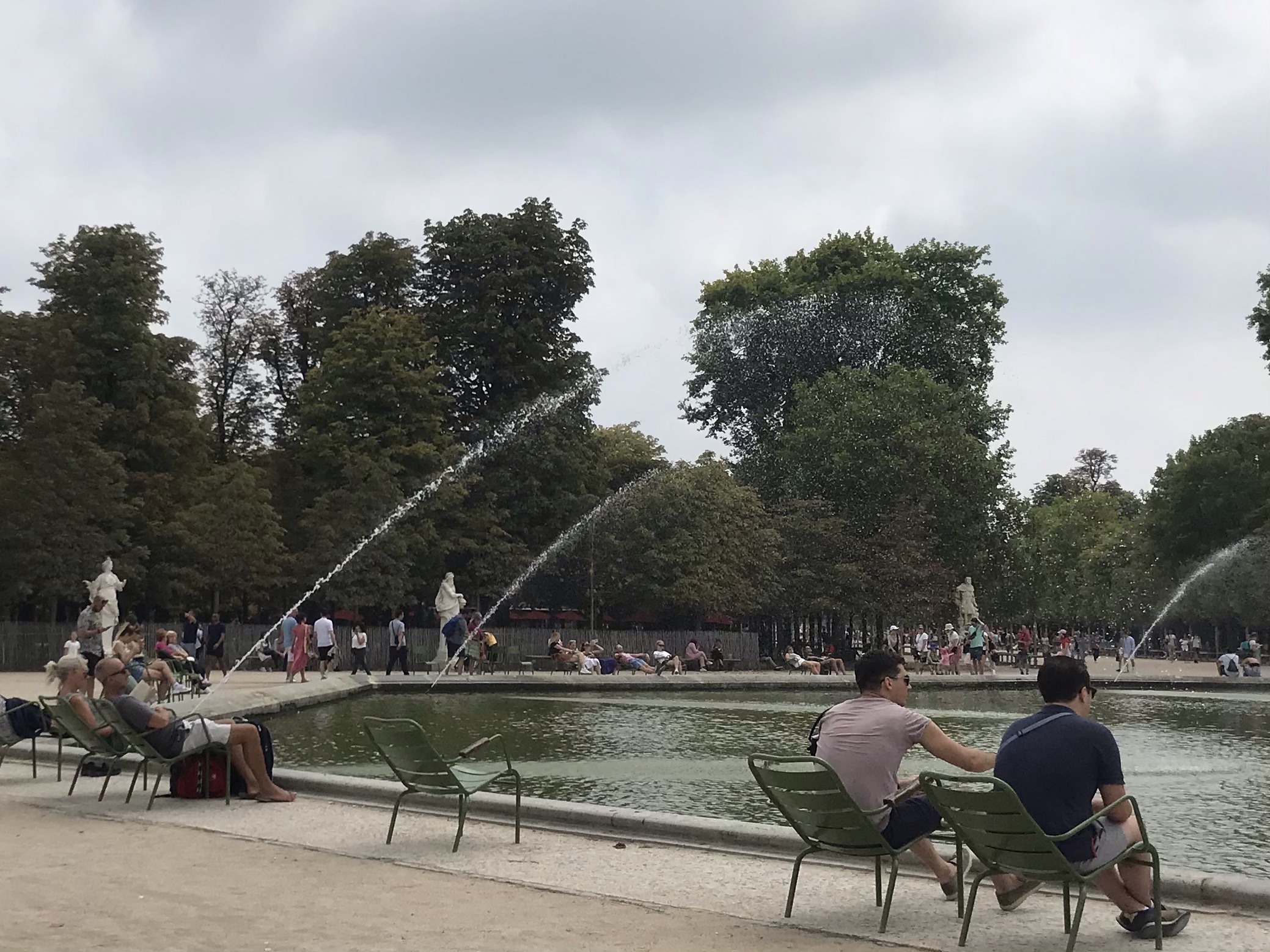
When the women had gone by we crossed the Jardin de Tuileries to the Orangerie to wait for the Men’s peloton. Having watched the men’s tour on the TV for so many years it was really exciting to be seeing the spectacle close up. It’s like with anything that you have watched on television the scale of things looks very different in real life. Things are at once much smaller because you don’t get the close-up camera shots, and then very large when people do get close.
The Tour de France peleton on its penultimate lap of the Tuileries
It’s such a thrill to see these riders who have been up and down mountains all around France, not to mention their excursion to Denmark, end up right in front of us. It is quite a spectacle. We enjoyed having it with a group of British cycling fans, and were interested to see how little our Paris friends cared for the race. This corroborates a newspaper article yesterday about the Tour’s growing international reputation and the increasing ambivalence for it among the French.
Tomorrow we head out into Ile de France to see stage two of the Tour de Femmes. It’ll be interesting to see how the atmosphere changes on a smaller stage in a more rural spot.
Tips for watching the Tour de France in Paris
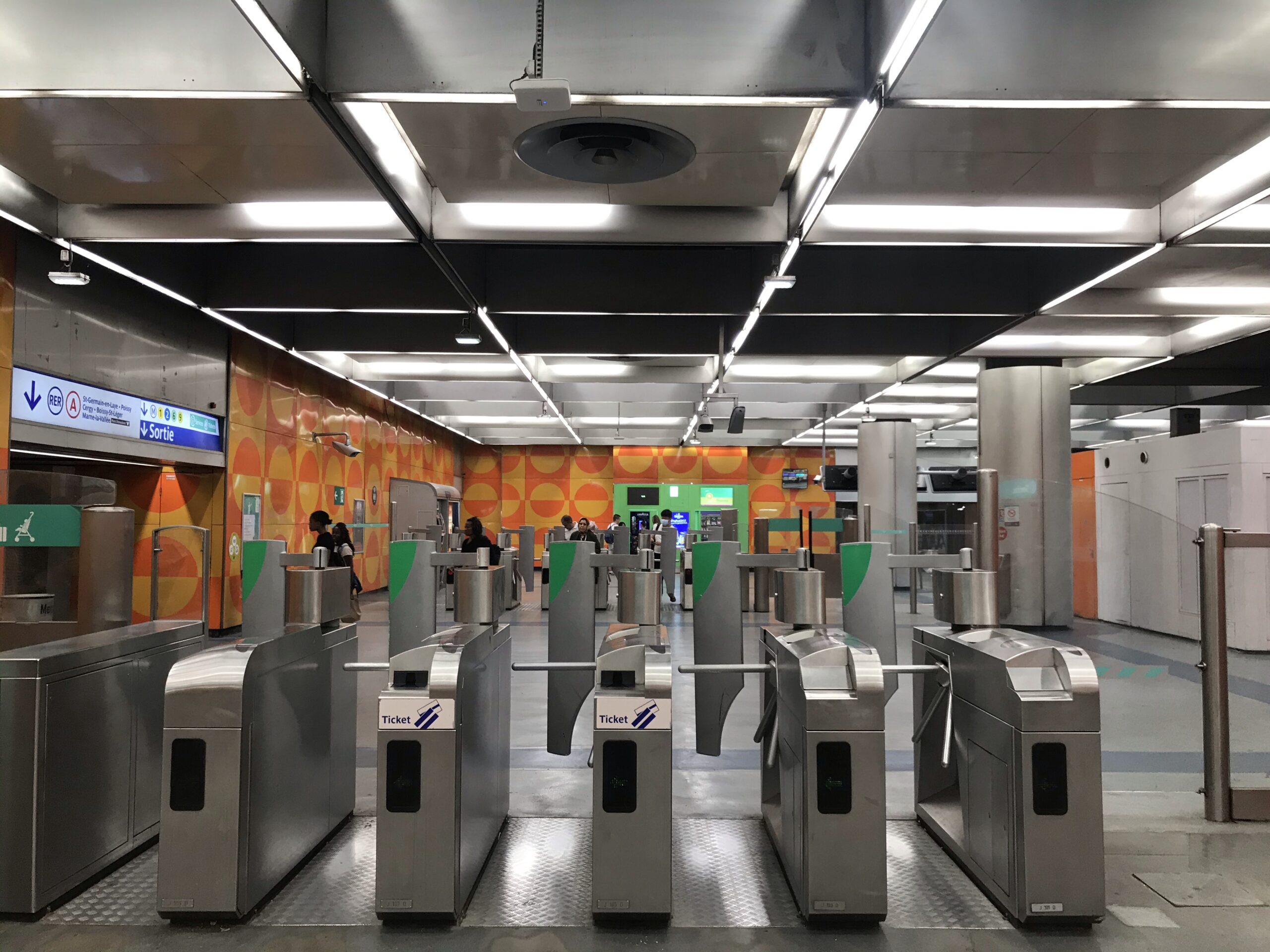
This is what we did in 2022 and what we’d do again. Both the women’s and men’s Tour do loops of the Jardin de Tuileries and the Champs Elysées. Access to metro stations in the area is limited. So we arrived an hour early and entrees the area via Metro Palais Royale Louvre. From there you can walk straight in to the gardens. There was also an access point by the Pont Solferino.
We watched the Women’s Tour from behind the railings along the Rue de Rivoli, which is where the close up photo I took above is taken from. A good shady spot but you don’t get long-distance views.
We watched the Men’s Tour from the terrace outside the Orangerie. This was well shaded while waited during the day but was in full sun for the last hour wait and during the laps. Come prepared if you go there.
Next time we’d go to the banks of the Seine opposite the Orangerie which stayed in shade throughout but which had a good view. Note this area had a police bag check point as it is closer to the track and we didn’t think we’d get through with our picnic knives!
Today we had a proper tourist day in Paris. We’ve been numerous times with our daughter but now she’s old enough to remember we decided to take in some sights. And you know, it’s good to do these things every so often even in the places you call or once called home.
Main mode of transport was the Bateau Bus. I love the ferry ride. I often wonder why boats aren’t used more in cities to get around. We had three great rides along the river to get us to right across town.
Here are some snaps
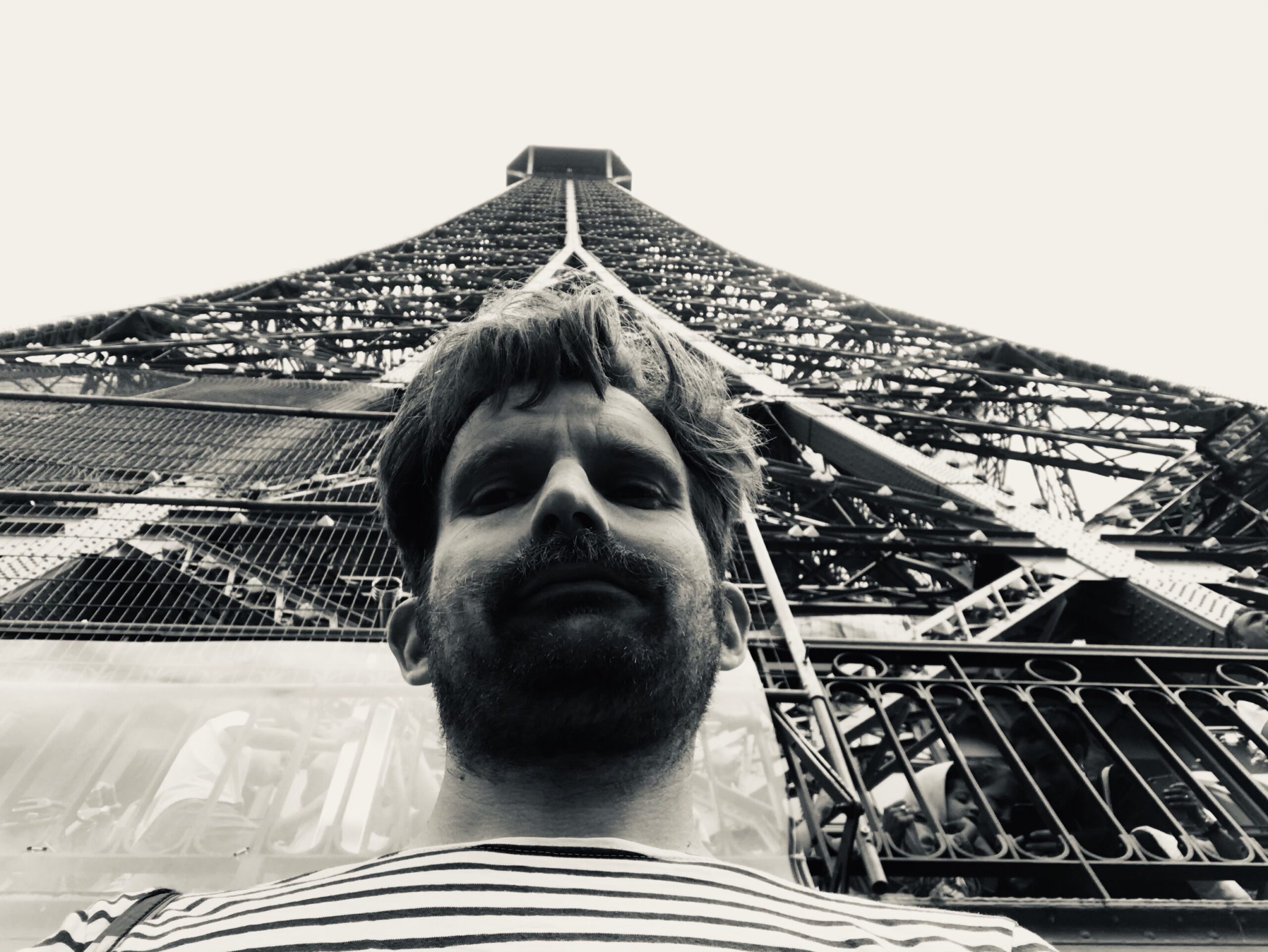
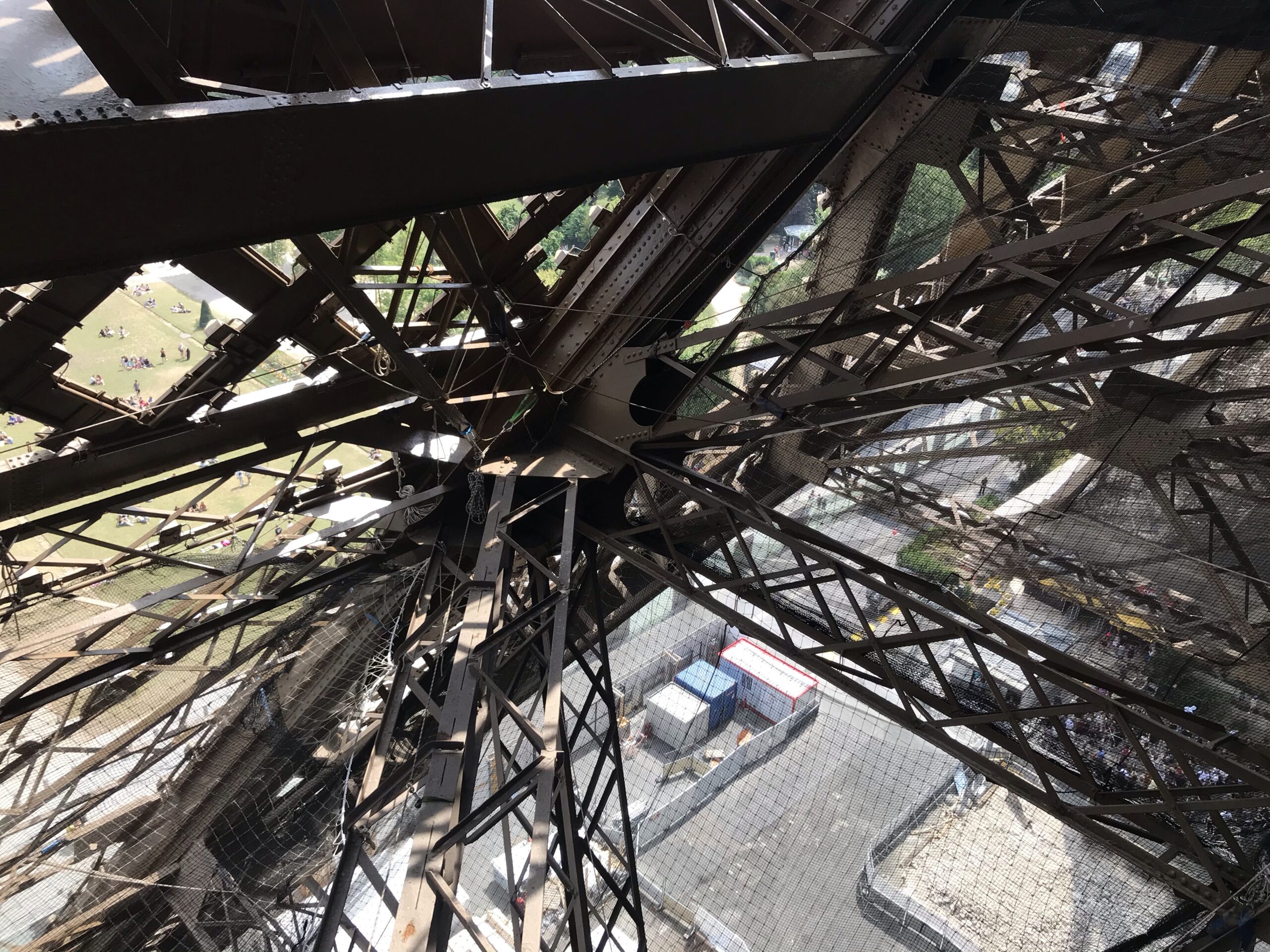
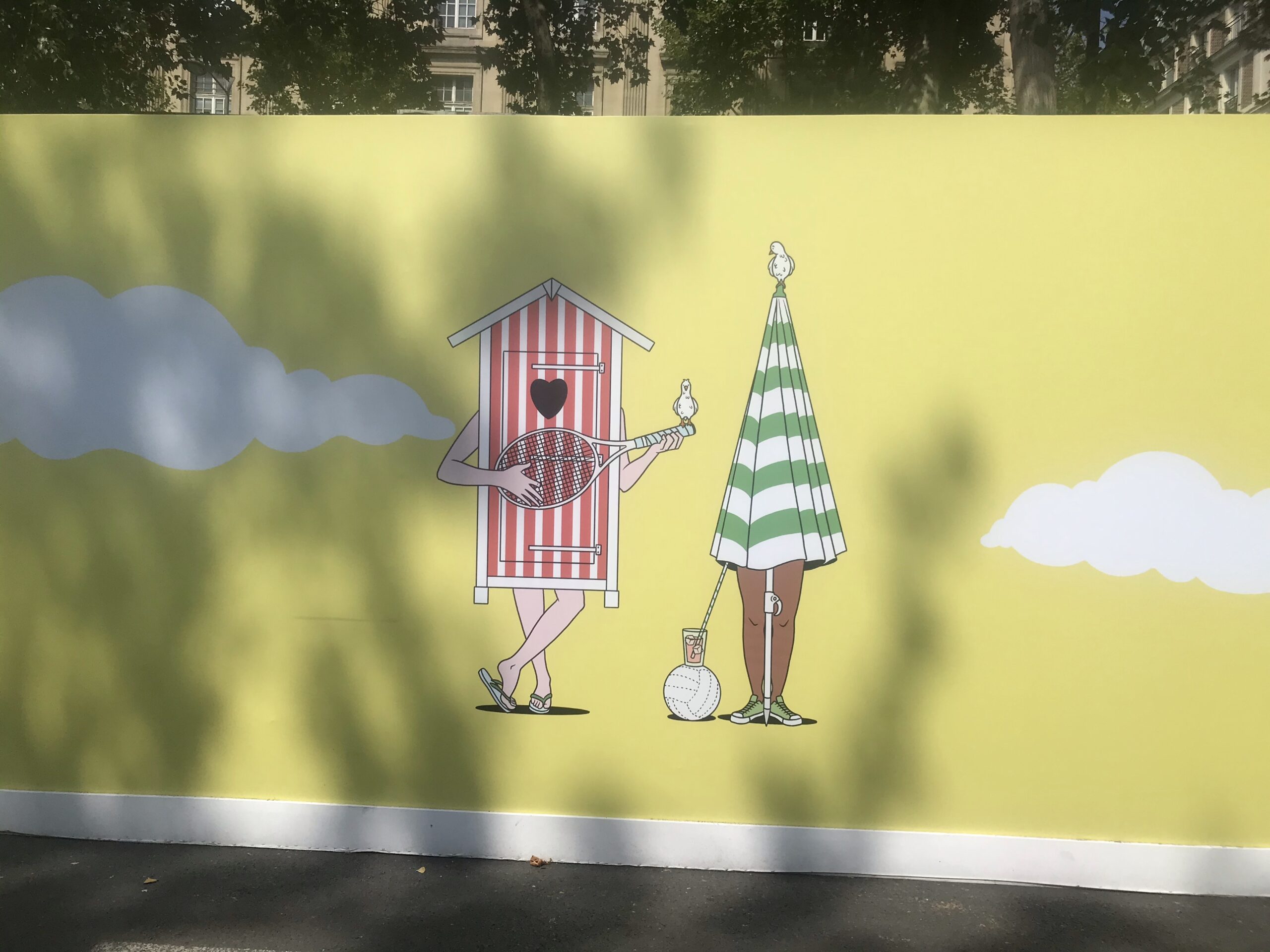
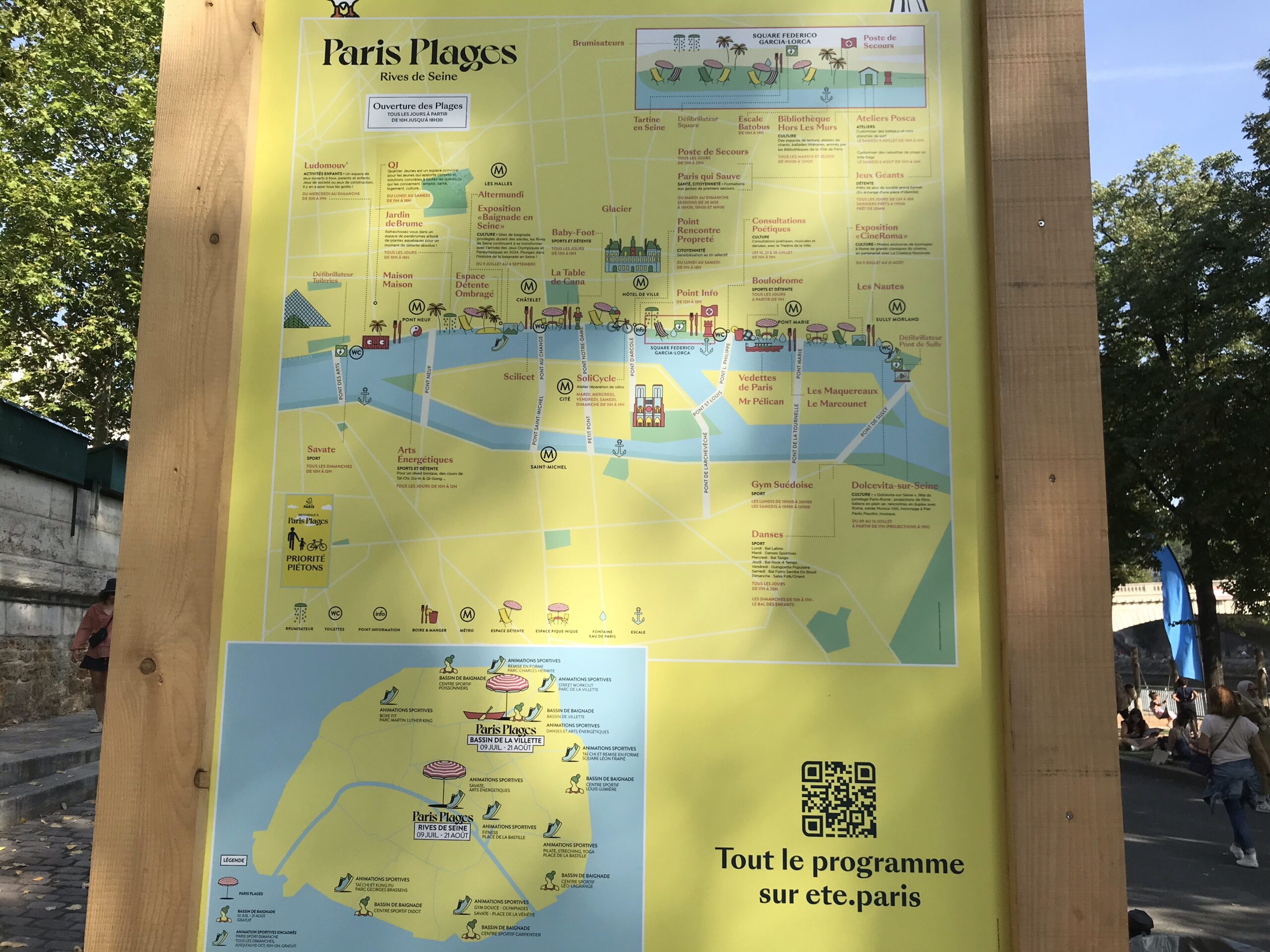
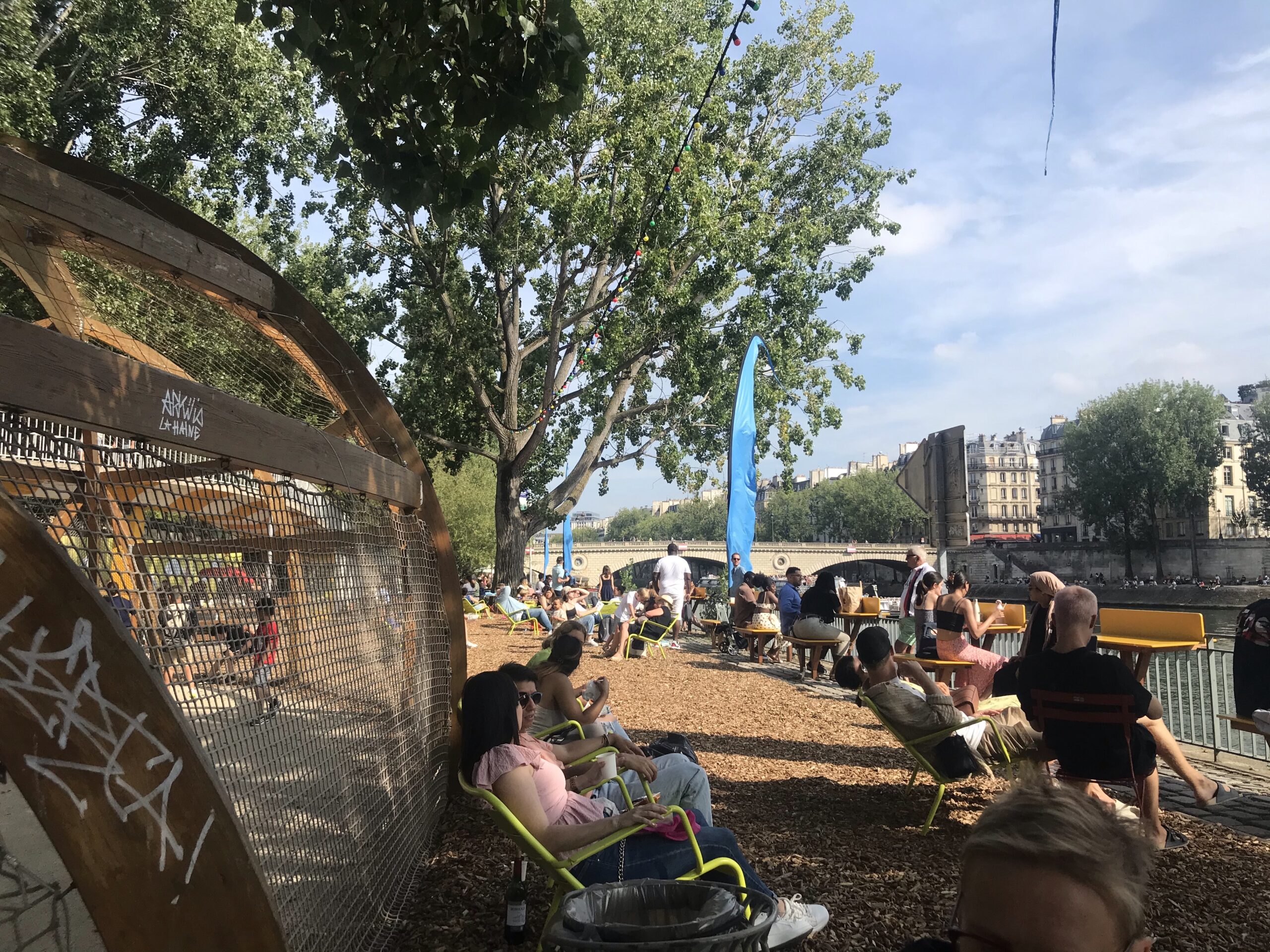
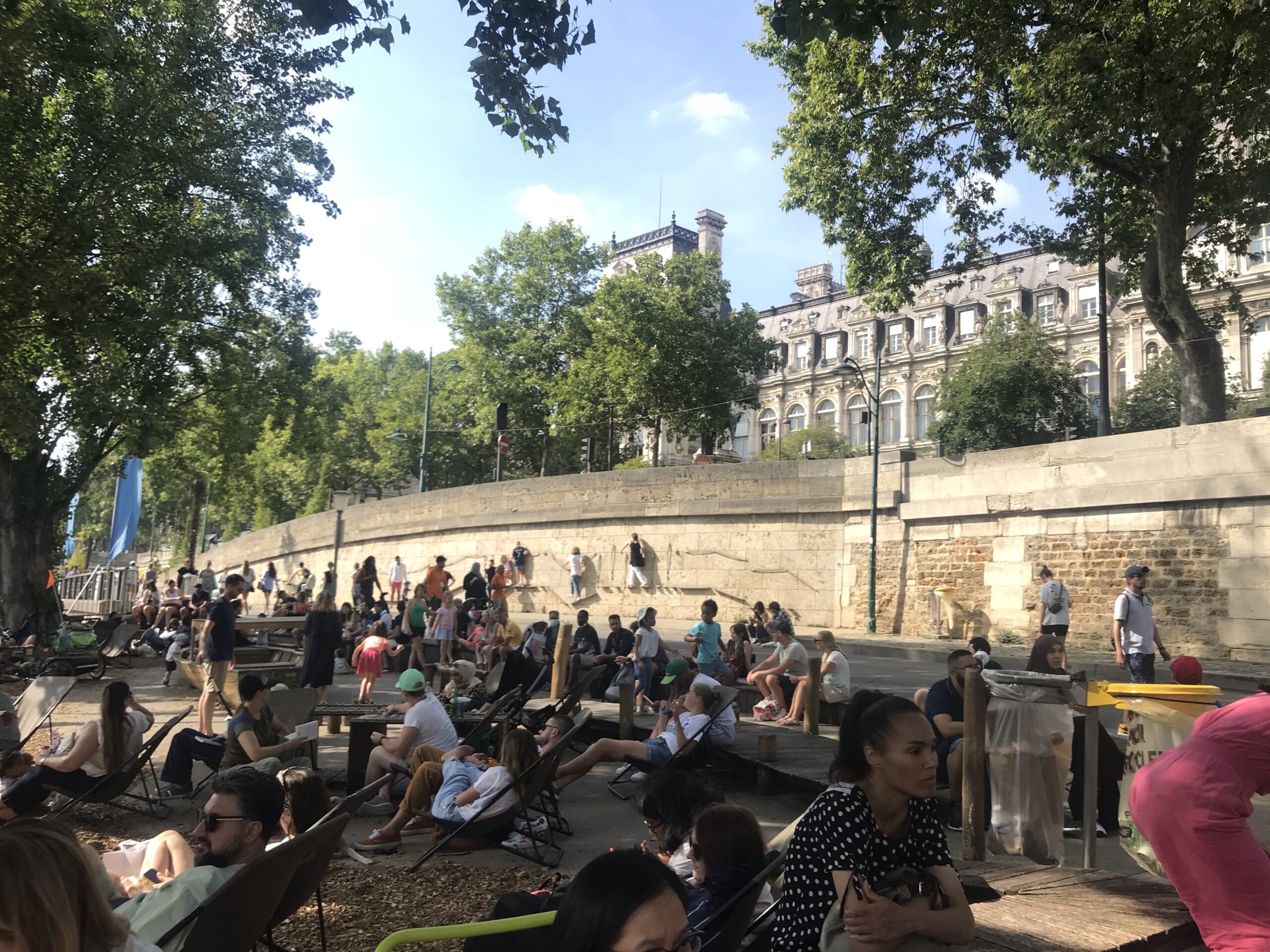
Nation Station – I have always loved the futuristic from the past look of this station. The peeing fountains are always a giggleThe eponymous tower in all its glory and ridiculousness Complicated node connectionParis PlageThe plan of Paris Plage activities Beach bar and football areaClimbing wall and water misters to keep everyone cool
Paris Plage
Paris Plage is Paris’s beach. Created by closing a busy road along the banks of the river. The fully pedestrianised area is a mixture of beaches, at areas, games areas and just generally space to hang out. It’s not commercial. It’s there to enrich the life of people. A fantastic example of shared public abundance.
The port of Ouistreham is about 15km from the city of Caen. Journey today began with a cycle along the canal de Caen à la Mer. The canal is a major import terminal for tropical hardwoods from West Africa. And we could see the timber being stacked up on the opposite banks of the canal.
Downtown Ouistreham
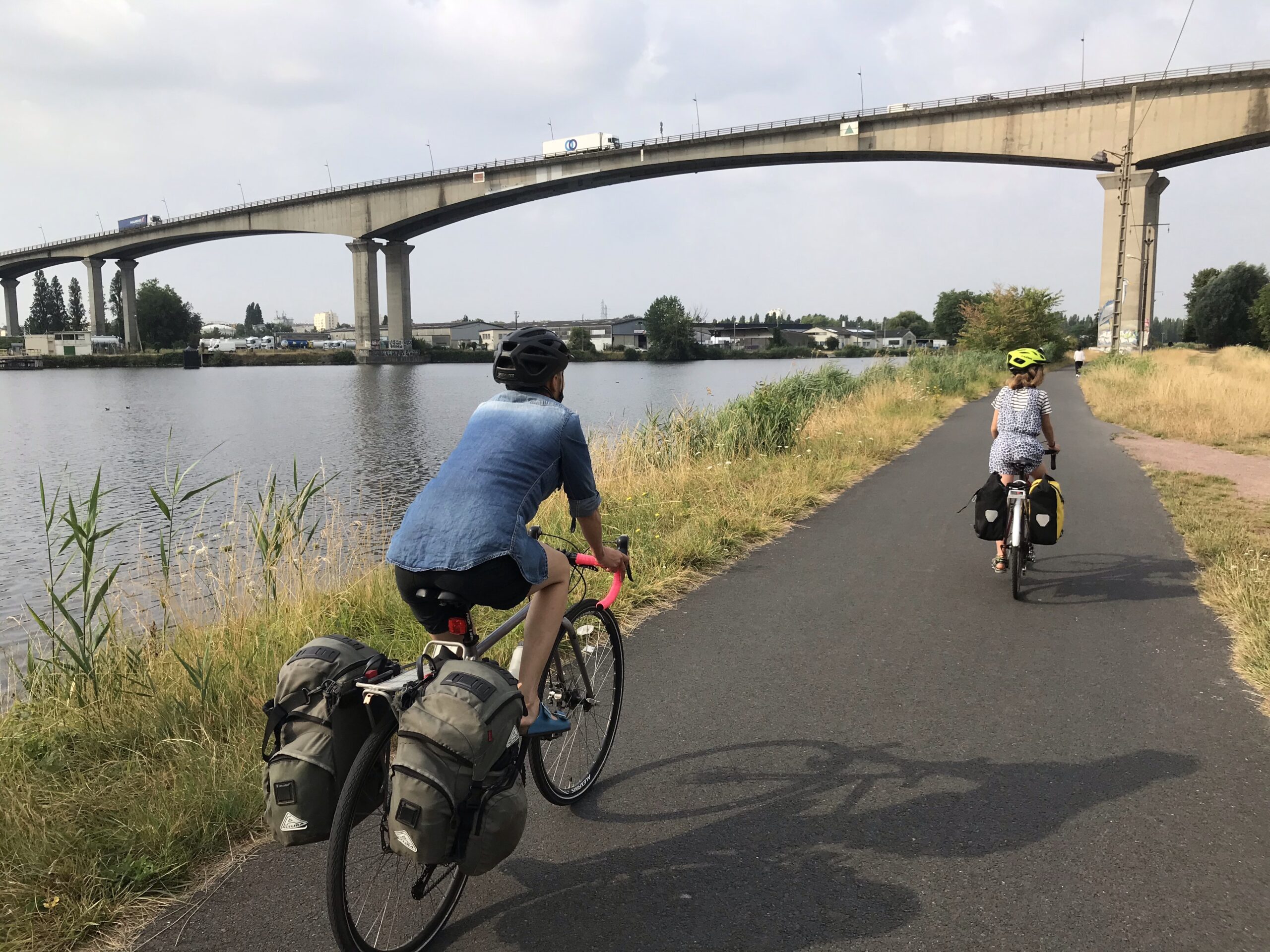
We cycled under a heroic motorway viaduct and then arrived by well appointed cycle path in the middle of town. We only had about 45 minutes to spend in town so we found a high point to hang out: in this case the castle right in the city centre.
Heroic viaduct outside Caen
Other city centre castles I have enjoyed: Belgrade, Budapest, Blaye. I like when you can simply cycle up from the town below and straight into the gates.
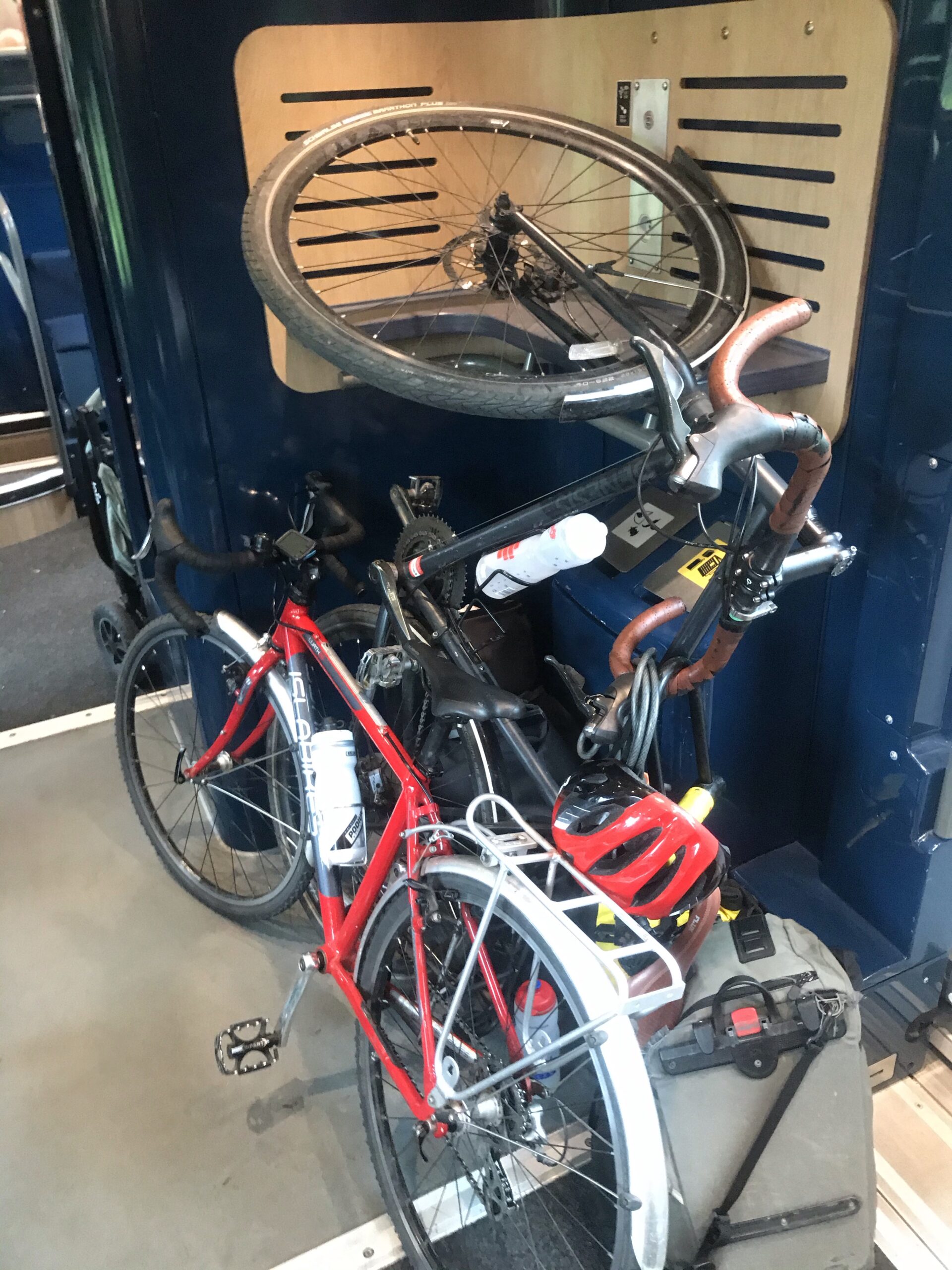
Our train from Caen to Paris St Lazare was a squash and a squeeze with our bikes. The service has unreserved bike spaces, but these were full and the service busy. Lots of people boarding and getting off with luggage got stuck with us in the bottleneck of the doors. I ended up lifting my bike up on its rear wheel and squeezing on. Somehow I miraculously managed to balance it on a pile of panniers so that when I let go it stayed upright.
Miraculously balanced bicycles
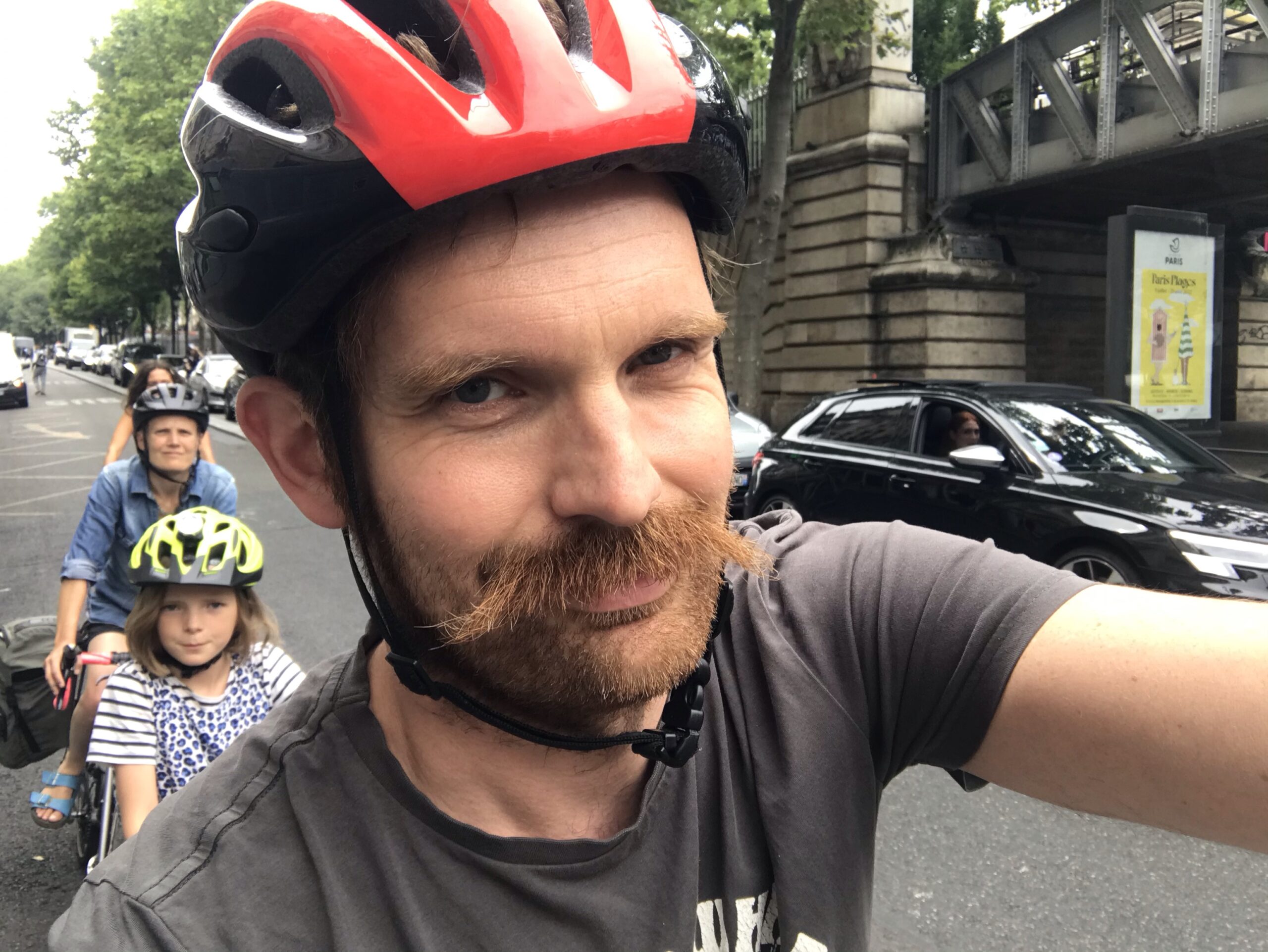
From Paris St Lazare to the 20th arrondissement we cycled the route of the Metro Line 2, following the cycle paths through the boulevards. This infrastructure went in when we lived here in 2006. Now it feels really hectic to use, with e-scooters, mopeds and delivery vehicles competing for space. As is offering the case though when I feel squashed using cycle infrastructure, I shouldn’t bemoan the other users: they are doing the right thing and it’s fewer cars that we need.
With all the alternative, shared transport infrastructure, I think Paris is now ready to ban cars altogether. Maybe with rising fuel costs and renewed focus on the climate crisis due to recent heat waves, banning cars in Paris might happen soon.
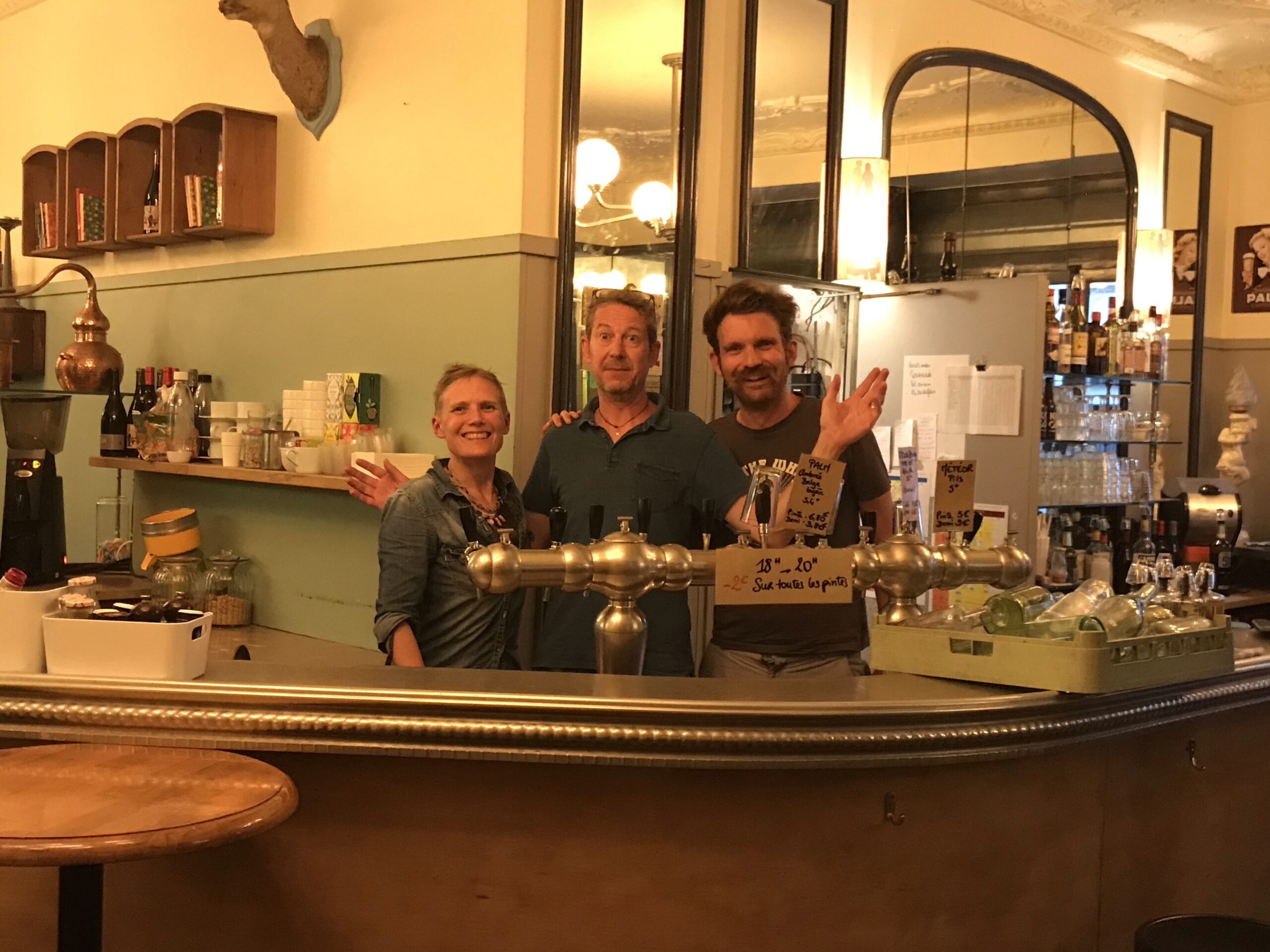
We finished the day with our friend and proprietor of our old local the Piston Pelican, Stéphane. The bar was closed but he welcomed us in for pizza and wine and an insight on what it’s been like trying to run a Paris bar through Covid. We talked about the heat wave and the climate crisis, and what people in their position can do.
I told Steph that running a bar like theirs is an important thing to be doing in a time of crisis because it builds community cohesion and resilience. I’m not sure how reassuring that was though as my climate French vocab is a bit ropey: turns out I’d been referring to the climate crisis all evening as the ‘central heating crisis’!
Today we begin our summer #surfacetravel continental adventure: from Caen in Normandy to Santander in Northern Spain. We are travelling via mixture of bicycle and train.
The adventure began yesterday with putting our bicycles on the ferry at Portsmouth. As a cycle passenger on a ferry you exist in this weird no persons land between foot passenger and car driver. The cycle route from Portsmouth harbour to the ferry port it’s actually very well signposted. But when you get to the ferry port it is unclear what you are supposed to do. Once we realised though that you’re supposed to line up with the cars, it’s pretty straightforward. And cycling across the open expenses of the ferry terminal and up to the boat feels quite rebellious.
As a regular readers of this blog will know, I love a ferry ride. Ferries are like floating buildings. A funny mixture of shopping centre, hotel and seagoing vessel. I also love a cafeteria. All of this made for a very enjoyable six hour crossing. I particularly enjoyed trying some handstands in the deck with S.
Riding with Brittany ferries feels like I’m having a little piece of France pick you up from the UK coast. A two course lunch menu followed by a stiff coffee. The Tour de France on the TV.
Speaking of which, I was blown away watching the race leader stop to allow his rival to catch up after having fallen on the slopes in the Pyrenees. So often the historical stories of men racing in the tour are about macho rivalries. this feels much more sporting, much more human.
Looking forward to beginning our own Tour de France.
Serendipitously, as I was preparing for my first dance teaching workshop this morning at the Idler Festival, I spotted a quote in one of my other open browser tabs a quote from David Flemming.
Commons are cooperative enterprises; they therefore depend on trust, on reciprocity, and on social capital. The market economy can get by, for a time, with a gravely-weakened culture and social capital, but the commons cannot. If you really want to save the planet and to give human society a decent chance of living on it, the first thing you should do is to join a choir. Or have dancing lessons, or both. That is not quite the hyperbole it seems: in enduring communities, the thing which defines and distinguishes them is their culture of dance, music, story and tradition—so intertwined with trust that it is hard to tell cause from effect.
David Flemming, in ‘Lean Logic – A DICTIONARY for the FUTURE and HOW to SURVIVE IT’
We always said in the Mudflappers that our mission was to make the world slightly better through the medium of dance. Well here is some compelling philosophical underpinning to back that up. I shared this quote with the dance workshop today and it was well received.
This post is a message to all the lovely people who joined one my dancing lessons at the Idler Festival. You were such a lovely crowd. I had so many great conversations with people who were just happy to be dancing. And it fills me with joy to get people moving their bodies to music.
A big thank you to Tom and Victoria for inviting me back. And a big thank you to Ellie Westgarth-Flynn for teaching with me.
A few of you were asking if I teach anywhere regularly. The short answer is no, but I am looking forward to returning to more festival teaching in the year ahead. If you are based in London, check out Swing Out London for details of classes. If you are based in the West Country, then check out Swing Dance Bristol.
If you have found your way to this blog then hopefully you will find it to be a joyful mix of engineering, creativity, dance and philosophy, all tools I think we need to build the places we want to live in. So stay tuned, or sign up to my mailing list.
I’ll post again soon with the playlists from my teaching sessions.
A day of two halves: book writing this morning and then swing dance teaching at the Idler festival this evening, with some hair engineering in the middle.
Enabling systems to self learn
I have about ten days to finish the first draft of the two chapters I am writing for James and my book on regenerative design for structural engineers. Today I was writing one of 12 principles for thinking about regenerative design. This one is about enabling systems to self-learn, adapt and evolve.
As ever, with regenerative design, we are thinking about how to enable healthy system qualities to emerge. It is difficult to write about because for one thing we are not talking about directly doing something ourselves, but thinking about how to set the conditions for a certain desirable quality to arise. The second is it doesn’t always feel close to structural engineering. But with our writing, we are not attempting to fully resolve the picture, rather to show what the arguments are and how they might intersect with structural engineering.
The question I keep coming back to to guide the writing is, how can we move away from seeing the design of buildings as the ends in itself, and instead as the means of creating a society that thrives within ecosystem boundaries.
In the built environment context, this idea of self-learning in the system could manifest itself as communities being better able to design and adapt their own buildings. And that that process can put them in greater harmony with their supporting ecosystems. The barriers to this process I wrote today were:
A design process that starts too late and stops too soon
Specialist knowledge not being distributed in the system
Lack of local systems knowledge
Discomfort with uncertainty
The challenge of hearing our nature responds to our plans.
Tomorrow I will be writing about how design can enable the emergence of a healthy socio-ecological system structure.
Hair Engineering
I have a phenomenal amount of hair. When ever I get it cut, it renews at an astonishing rate. You could say it is an abundant natural system. I am impressed with how tall she was able to make it. You could say I have a High Barnet.
Idler Festival Day One
For the first time in two years it feels great to be back teaching at a Festival. This time it is back with my friends at the Idler, for their Idler Festival at Fenton House.
This evening I was second on the bill, teaching a group of about 30 a solo taster Charleston class. On the playlist:
Around the World (Daft Punk)/I’ve Got That Tune (Chinese Man)/A Cool Cat in Town – Aerophon Mix (Tape Five)/Booty Swing (Parov Stelar)/Lone Digger (Caravan Palace). Link here to playlist.
Halfway through the class I spotted someone who had been there in the classroom when I had my first swing dancing classes 18 years ago.
I was happy to see my friend, dancer Constructivist collaborator, Peter Ayres. Looking forward to spending more time together on the Idler lawn over the next two days.
On the programme at the Idler Festival, by workshops are simply listed as ‘Dance Teaching with Oliver Broadbent’. One participant came up to me at the end and, after thanking me for the class, said I was looking for you online, but I couldn’t find anything about you, but I did find another Oliver Broadbent who writes about engineering… She was surprised to find we were one and the same.
Sometimes when I write on this blog I like to distill my thoughts around one topic. But when there’s lots going on I prefer to write in more of a diary mode, capturing observations, events and the things that are on my mind in case they are useful for when I have a bit more time to do some distillation. For anyone who is a regular reader of this blog you will recognise this as just another way to keep a Kalideascope, gathering the elements from which I can make future creative connections.
The big news is that James Norman and I now have a signed contract with the Institution of Structural Engineers to publish our book on regenerative design for structural engineers. We are two-thirds of the way through the first draft and our aim is to get this completed before our respective summer travels. So I have a mid-July writing deadline to hit. But in the meantime there is all of the following going on:
Monday I am off to Hazel Hill Wood to prep for the next thing on my list:
Tuesday and Wednesday this week I co-leading the second of the three woodland-residential retreats for the Regenerative Design Lab.
Thursday I am teaching a session on advocacy in net-zero design as part of the Net-Zero Structural Design course I run with Will Arnold at the Institution of Structural Engineers.
Thursday I am also teaching a workshop for the Cambridge Institute of Sustainable Leadership’s masters programme, Interdisciplinary Design for the Built Environment. This will be a reflective session on preparing the soon-to-graduate students for applying their learning in practice.
Thursday also (big day!) we have the summer meeting of Hazel Hill Wood’s Trustees.
Friday to Sunday I am teaching Lindyhop and Charleston at the Idler Festival, Fenton House.
And finally, Sunday, at around midnight, I am running an online workshop for a construction firm in Australia about avoiding error in construction, part of the GIRI initiative.
Somewhere in the middle of all that, I am going to do some book writing. I’ll keep you posted.
A multimodal stage on our journey through France, with 70km by bike, 7km by kayak and another 2km uphill to finish the day.
We crossed the Maine river at Bouchemaine, where we stopped for the market and breakfast by the river. The scene looked like we could be in the Netherlands.
I remember little about the rest of the ride other than it was hot and we cycled in a tight convoy to keep a steady pace and cover the ground.
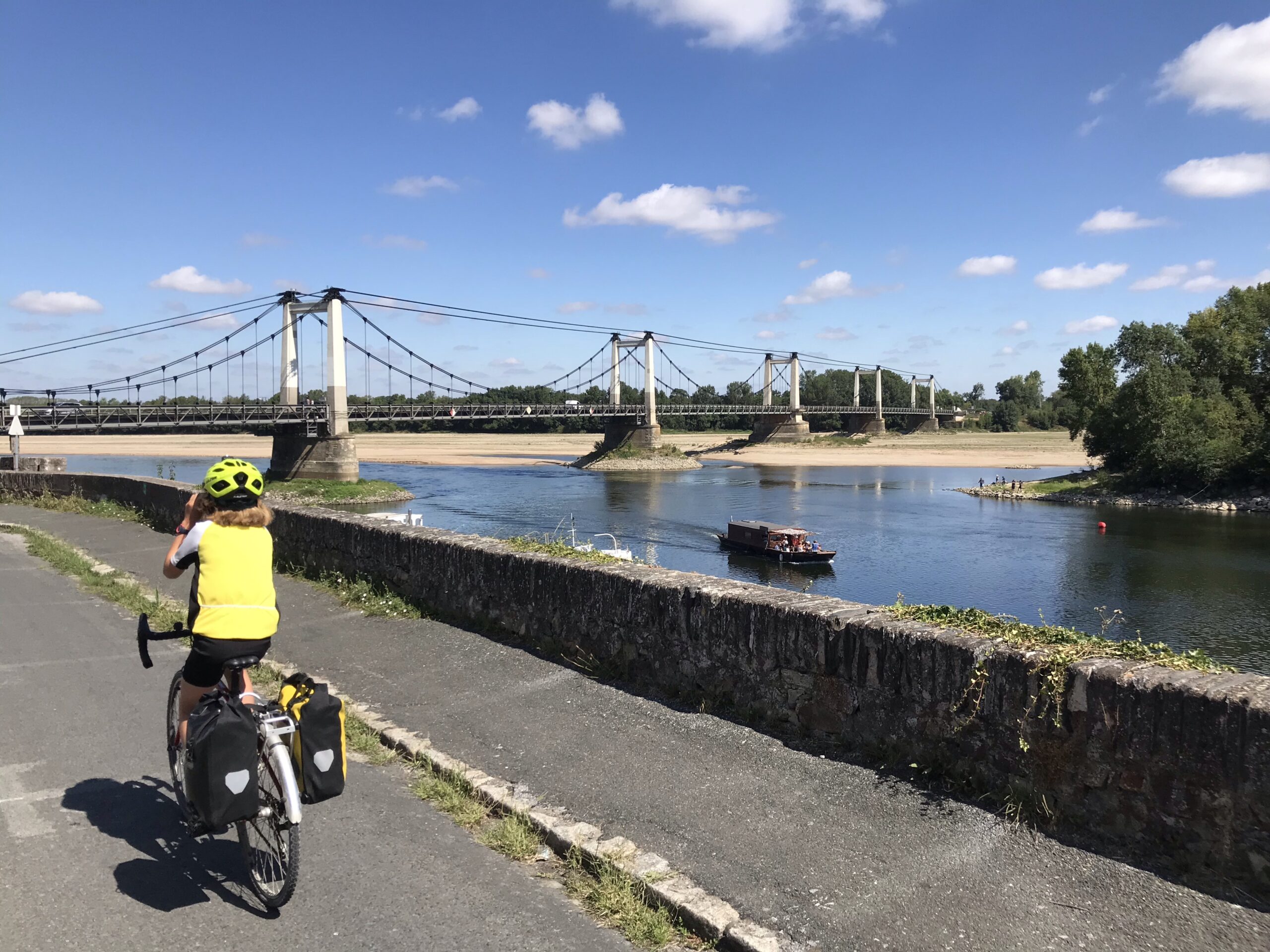
We crossed to the north side of the Loire over a more substantial suspension bridge than we’ve seen so far. Minor aside on suspension bridges. The Loire is the first place I’ve seen multispan suspension bridges with a post tensioned top cable to keep the towers an equal distance apart.
At Ancenis we boarded two kayaks and our bikes were taken downstream in a van. There was a big difference in river flow rate across the width of the channel and finding the fast flowing sections was quite tricky.
We were advised we could moor up and swim behind any of the groynes built out into the river. Behind each, the river water swirls in a great rotating eddy that you have to paddle through to reach the beach. This was where we had our only swim in the Loire. It was so warm.
We arrived at the drop off point, refreshed ourselves as the guinguette and climbed the hill up to our accommodation, a family home we found on warmshowers.com
Our hosts live in a beautiful, self-build home. We enjoyed hearing the details of the construction, their water conservation measures and meeting their guinea pigs.
Warm Showers is a great tool for cheap travel, but it does require quite a lot of on-the-go administration.
Here are my notes from reading the RESTORE report ‘ (REthinking Sustainability TOwards a Regenerative Economy) Sustainability, Restorative to Regenerative – edited by Martin Brown and Edeltraud Haselsteiner – as my part of my regenerative design research. Thanks Emma Crichton for the link.
On regenerative design
This is probably the most useful part for me.
‘Regenerative design, relates to holistic approaches that support the co-evolution of human and natural systems in a partnered relationship.’
If we want to think really regeneratively about engineering and the creation of buildings, then maybe we should consider building materials as a common resource.
I realise that I have been approaching the question of regenerative design in engineering from the standpoint of a market-driven economy. Materials are supplied by private suppliers, installed by private companies for a mixture of public and private clients. In most cases the profit (surplus) is reaped far from either the source of the materials or the location of the building.
But listening to the Frontiers of Commoning podcast I realise that this is only a relatively modern framing of the mechanism by which materials can be sourced, shared and distributed.
If we want to design buildings regeneratively, then we need to be thinking about how the process of sourcing and manufacturing building materials is regenerative: how the very harvesting of these materials can create more; how these processes can create habitats which enhance other aspects of the ecosystem, building local complexity; how feedback loops are built in so that we know if the system is working within its limits or not.
If we see our construction materials as a common resource rather than a commodity, we can think much more collectively about how these resources should be manufactured, used, reused, borrowed, repurposed, re-imagined and finally returned to the ecosystem.
In this framing, no-longer is the engineer is not serving a particular project but the people who share ownership of that common resource. Their role becomes threefold: harvesting of materials from the local bio-mineral region; managing stocks of resources in the most equitable way; and design and re-design of how these materials are used. (Note there is no return of the material to the ground as there is no waste in a regenerative system – just more used for the materials.)
No-longer would the engineer be working to maximise shareholder value and maximising ecosystem destruction. Instead the engineer would be working to maximise the regenerative harvest of local materials to maximise local flourishing.
As James and I start to delve into the writing for our book on regenerative design for structural engineers, I am gathering my thoughts on what regenerative practice might look for an engineer. This is a working-out-loud post to help develop and share my thoughts.
The challenge with regenerative design is that we are reaching for something that doesn’t yet exist. But if we wait for the answer to be fully formed, the natural systems that we seek to regenerate – ourselves included – may be destroyed beyond repair.
This month I am writing an article on that explores what if we restricted construction material use to those from a local catchment. Rather than a global supply chain of materials that is disconnected between source and use, what if we could use materials that were a more locally relevant, resilient and regenerative resource?
Today at the third of James Norman and my sessions exploring regenerative design with Buro Happold in Bath, we heard about the example of the machine shed at Westonburt Arboretum that was built only timber from the site.
At our local allotments, permaculture teacher Mike Fiengold re-distributes food waste in the community. Even after he has sent food to various local charities there is lots left over, and so he asks if we can take some away. At first I felt it greedy to take more than what I considered to be my fair share. But then I realised it was helpful if we could take as much as possible off his hands. Because if he can clear his stores, he can get more of whatever waste the system is generating and put it into the hands of the people that need it. So now we take more than we need and try to distribute this excess among our neighbours on our street.
There’s a few things going on here that I want to note.
After a two-year break I am back on my bike in London. This morning a short hop from Paddington to Kings Cross. Having moved to Bristol almost four years ago the difference I can really appreciate the difference between the two: cycling in London is streets ahead.
People say to me I wouldn’t want to cycle in London but I think the cycle provision is actually pretty good. I left the station without needing to look at a map*. There were ‘quiet ways’ cycle route signs directing me all the way. Not only did all traffic lights have forward stop boxes for cyclists, cyclists also get their own green light that lets them set off before cars wanting to turn in front of them. And the quiet ways were, well, quiet.
Of course there are ways that the system could be improved. More cycle and pedestrian-only routes would always be better. But the improvements I have seen are relatively low-cost and easy to implement. Bristol has some excellent off-road cycle paths. We chose to live close to one specifically to benefit from the access it provides to the centre of town. But the general permeability of the city to cyclists is poor.
This is a choice. All it takes is the political way to say we choose not to have a streets choked with cars; we choose to make our streets living, breathing places where people can get around safely and cheaply.
Restorative and regenerative are two words I am hearing used interchangeably. Both are relevant to engineering and design. Both are approaches to design that are valuable. But they need differentiating.
I am a connoisseur of email-reduction strategies, so I share this for friends and colleagues of mine who I know are struggling with this at the moment. The best way of dealing with having too many emails is never ‘answer all the emails’. Email overload is a systems problem. It manifests itself as an overflowing inbox but it is rooted in the way the system is set up. Answer all the emails and new ones will appear. We have to fix the system.
I will start by saying that I still have too many emails. But I don’t feel bad about it because I am trying to work on the system. And some of my system changes have been helpful and I can see are working. This post is not supposed to be a definitive guide but a few things to get you started.
In today’s planning session for the Regenerative Design Lab with my co-facilitator Ellie Osborne, we asked what if we made the lab itself a regenerative system?
This announcement always irks me. “To ensure a timely departure, train doors will shut 40 seconds before departure.” It reminds me of what a senior Network Rail manager once said to me, that railways are great at treating their customers as if they are in the wrong.
This forty seconds buffer gives time to deal with any problems at the event horizon of the doors closing. But why does this 40 seconds have to come out of the passengers’ time, the free morning they had before they boarded the train rather than from the train company’s time, the schedule.
When renewable systems are over exploited they fall into a desertlike state. In this state the system population is too low to support regrowth and the system structures break down. But given the right conditions and encouragement, regrowth can return. The seeds are all there. The self-organising ecosystem can return to recreate resilience, complexity and diversity associated with rich life.
Where I live, coal was so abundant near the surface that you could have dug a hole in your garden and found it lying there. This coal was laid down during the carboniferous period when Bristol was somewhere over the Equator and the ecosystem was abundant with life. This coal is fossilised life.
Yet walk a few streets north-west and you find a band of red sandstone. By this time in its geological history, Bristol had drifted north towards the Tropic of Cancer and the area had become desert. No more fossilised life, no more coal – just scorched sand. Carry on further north and carbonate limestones return. The desert receded and life came back.
I have nothing to say but lots to show you – Walter Benjamin. I heard this quote this morning on In Our Time and it really struck me.
For me it says you don’t have to have the answers in order to bear witness.
There is so much that I see in the world that makes me smile. Things that when I see them make me despair.
I can’t necessarily find the exact narrative to rationalise these sensations. But that shouldn’t stop me from sharing them. Because when I do, I am creating the pieces from which a pattern can form.
Work on regenerative thinking progresses on all fronts. Book writing with my friend James on Monday (read his excellent blog on this process), developing regenerative practice at Hazel Hill Wood Tuesday and short-listing candidates for the Regenerative Design Lab Wednesday. I love that all of these initiatives inform each other.
To aid all three I have synthesised my understanding of how regenerative systems operate. This framing is informed in large-part by Donnella Meadows’s book ‘Thinking in Systems’, which is helping to understand the conversations are having across all these fronts.