Yesterday I wrote about my remarkable journey southbound across Switzerland via the breathtaking Bernina Express.
For the homebound journey we opted for a faster itinerary: the Milan-Zurich express. Midway through the journey, drinking a coffee in the restaurant car, I noticed that we seemed to have been underground for quite a long time.
A while later, still underground, thinking this is a very long tunnel, I sought out a map. To my delight and surprise I realised we were zipping along the Gotthard Base Tunnel, which, at 52km, is the longest rail tunnel in the world.
What was so striking is how unremarkable this remarkable tunnel makes the journey. It is the opposite of the Bernina Express in so many ways, it is fast, straight, flat and has no views (at some point we will have crossed the watershed between the Po and the Rhine, but I was none the wiser).
In a sense, the immense effort to build this tunnel has made the journey effortless. A flattening that smooths the flow of goods and people between northern and southern Europe. The Milan to Zurich journey time shortened by an hour.
In their own times, both the Bernina and the Gottard routes were faster than what went before. Both a remarkable feats of engineering.
I recently traveled to Italy and back overland, seeking an alternative to the usual high-speed Paris-Milan service, which had been blocked for many months due to a landslip. But fortunately (like a more positive version of the poem ‘We’re going on a bear hunt’), when looking for alternative ways to cross the Alpine massif, then there definitely are other ways to go over it, under it and around it.
The ‘around it’ route in case would have involved to the south of France and then along the coast to Italy. But French holiday travel precluded us from getting tickets on the fast French sections. And so we opted for going outbound ‘over it’ via the Bernina Express, and homebound ‘under it’ via the Gotthard Base tunnel.
The Bernina Express really is the scenic way to cross the Alps. From the eastern Swiss town of Chur, the train corkscrews up inside mountains, zigzags across steep slopes and leaps over more than a hundred viaducts. This narrow-gauge railway turns impossibly narrow curves so that you regularly see the trailing end of the train out of the windows when you sit at the front. At the top of the Bernina Pass, over 2000 metres up, glaciers hang overhead in valleys above, and mineral water in lakes reflect the mountain-scape in technicolor. The descent begins where we cross the watershed between the Danube (leading to the Black Sea) and the Po (heading to the Adriatic) – two very different destinies for a raindrop. The descent feels steeper than the rise, with our destination of Tirano tantalisingly close in the valley below but the switchbacks and spirals taking over an hour to complete.
Crossing over the border into Italy at the very end of the line feels like an achievement. And even though we have spent the last four hours sitting down, travelling this way you really get a sense of what an awesome barrier the Alps are right in the middle of Europe. How over the centuries trade might have travelled along these passes, and the advantages to the people able to make the route faster.
Top tip – the Bernina Express terminus and the Trenitalia station, for onward travel, are on two sides of a town square. The other two sides are occupied by cafes that will do you a delicious meal of pasta and leave you plenty of time to make your connection.
Tomorrow – ‘going under it’, via the Gotthard Base tunnel.
There’s a magic about boarding a night train in a big city terminus. At that hour, some people are ending their nights out. For others their night out is just beginning. But skulking around the station with a mixture of luggage types is a band of travellers who are getting ready for bed, right here in the middle of the city. These are the residents of the night train, who must wait for some late hour until they can board.
France is well-known for its TGVs. But there is a place in my heart for the ‘trains classiques’, the older, long-distance trains that still trundle round the older lines of France’s rail network.
I like that they don’t go very fast. I don’t want to get there quickly today.
I like how the seats are like sofas; ideal for napping.
I like how they purr. There’s a deep whir that I feel in my stomach. I higher pitched whine that wibbles my nostrils. And when someone opens the end-of-carriage sliding doors, the loud waah that washes through the carriage, like an approaching TIE fighter.
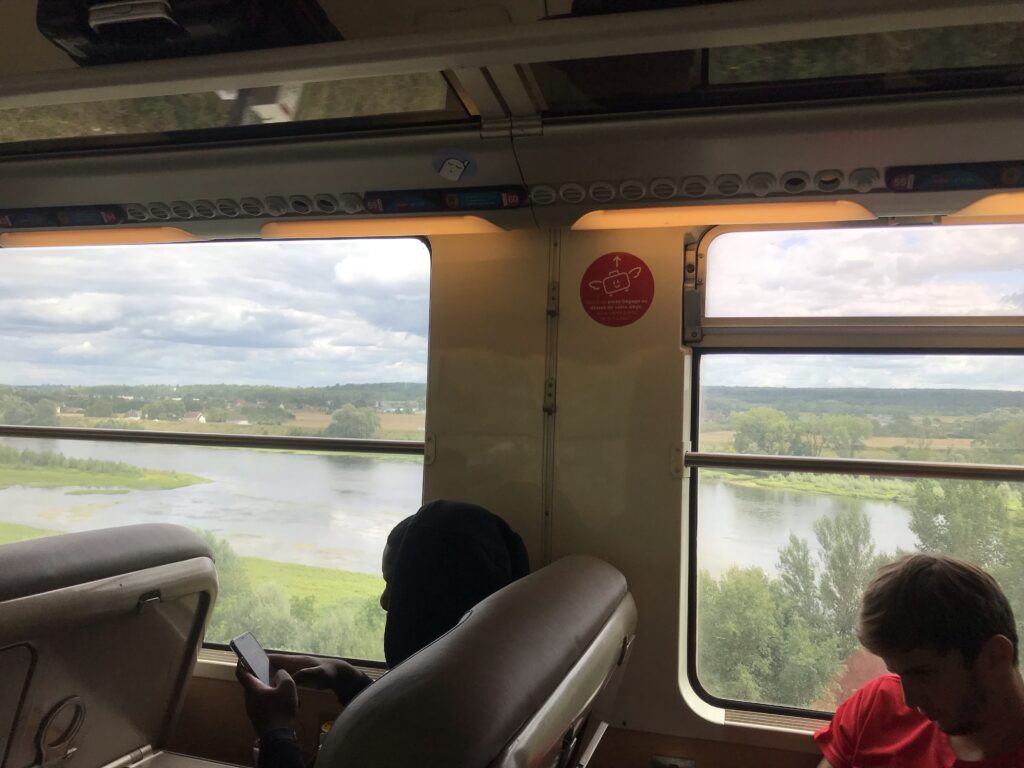
View of the Loire near Blois seen from the train windows
I like the big windows (the opposite of the miserable arrowslits you get on Cross Country train services in the UK).
I like all the unhurried journeys I’ve taken on these trains before, from one regional town to another. Often on holiday.
I like the system of regionally-subsidised train networks (that these trains usually run on), which help keep trains running to remote parts of France.
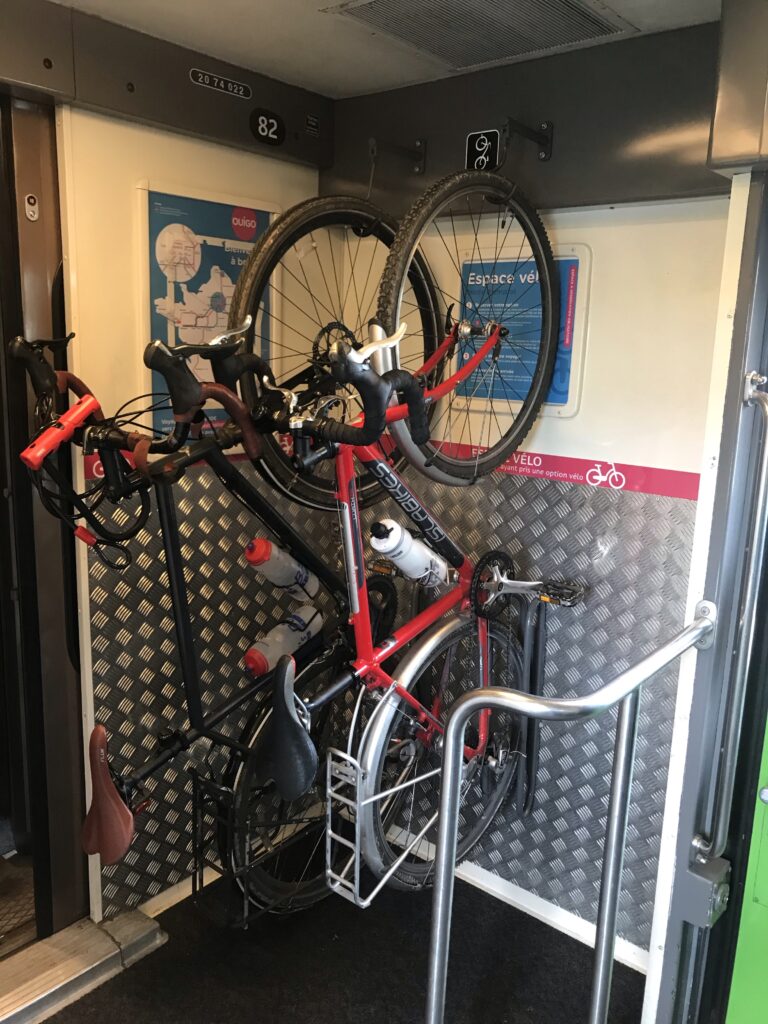
Photo showing cycle storage on Ouigo Trains Classiques – 2 bikes per carriage.
I like the ample bike storage space – two reservable spots per carriage.
I like how these routes are usually cheaper than the TGV.
And I like how these older trains ply a sort of parallel, older network, of places in between or far from the big TGV stations. It somehow feels like more of an adventure.
Want to ride on a train classique? Your best bet is to book a journey between destinations on the SNCF Intercités network – these are the trunk routes where TGVs don’t operate. Or, as we are doing today, travel on the Ouigo Trains Classiques network (these travel between Paris and Lyon and Paris and Nantes – both also served by TGV trains, but the Ouigos classique travel down the old slower routes.
From stage one of the Tour de Femmes in Paris to a very different stage two finish in Provins. The stage in Paris was of ceremonial importance, but I think the stages between more regional towns are more characteristic of the overall tour experience.
Unsure whether to go the night before, we looked up the finish town of Provins on the race website. And sure enough it is a UNESCO world heritage sight. This is what the Tour is for: showing off bits of France. Having lived here and traveled widely for a year I’d never heard of Provins. And so we set off for a day of sightseeing and cycle watching.
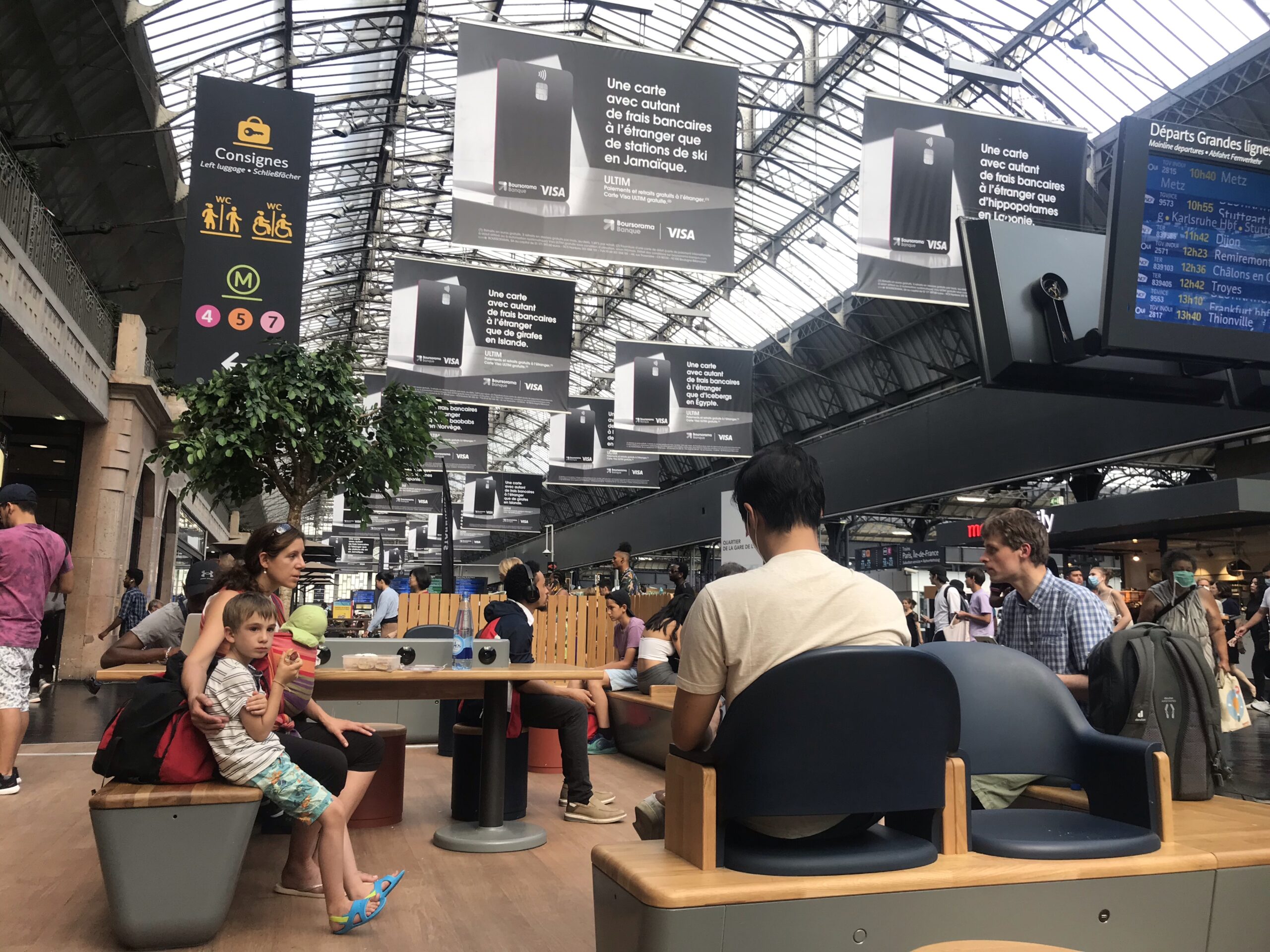
I was happy to find that our route to Provins was a direct train from the Gare de l’Est. I used to come here and imagine the journeys you’d be able to take when they would open the TGV Est Européen in 2007, connecting Paris at high speed to Strasbourg, Cologne and Frankfurt. It is a very wide terminus station with brightly lit, glazed concourse that runs the width of the platform ends. It’s not as imperious as Gare du Nord, not as concrete as Montparnasse, not as complicated as Saint Lazare. It’s like a dinner table set out for lots of European friends with a nice bright table cloth and plenty of elbow room. I also appreciate the abundance of seating without obligation to sit in a cafe.
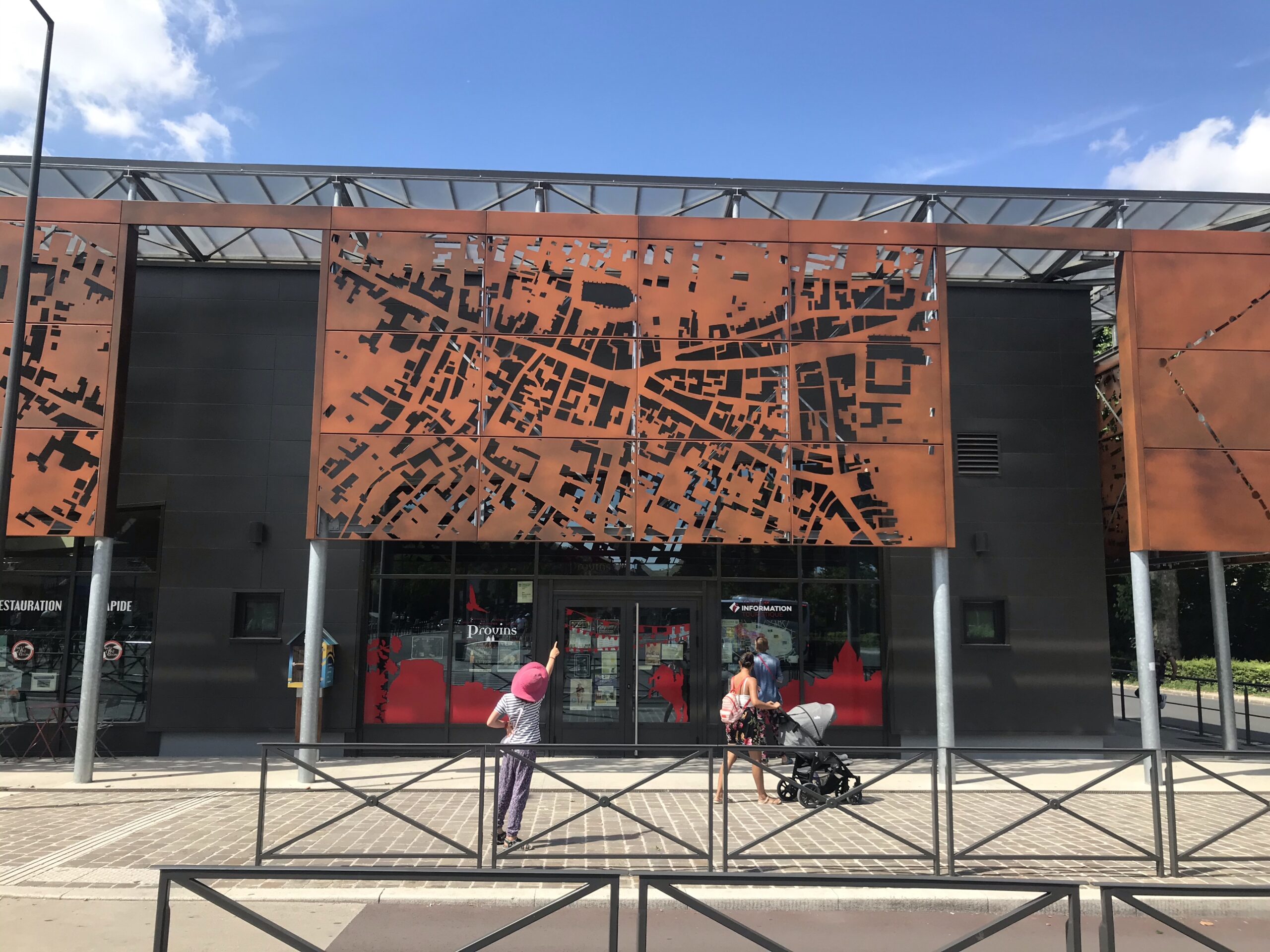
From one end of the Transilien line P to the other, at Provins station the most striking thing is the Office de Tourisme which had an elegant Coreten facade with the map of the city carved out of it to make dappled shade on the building front.
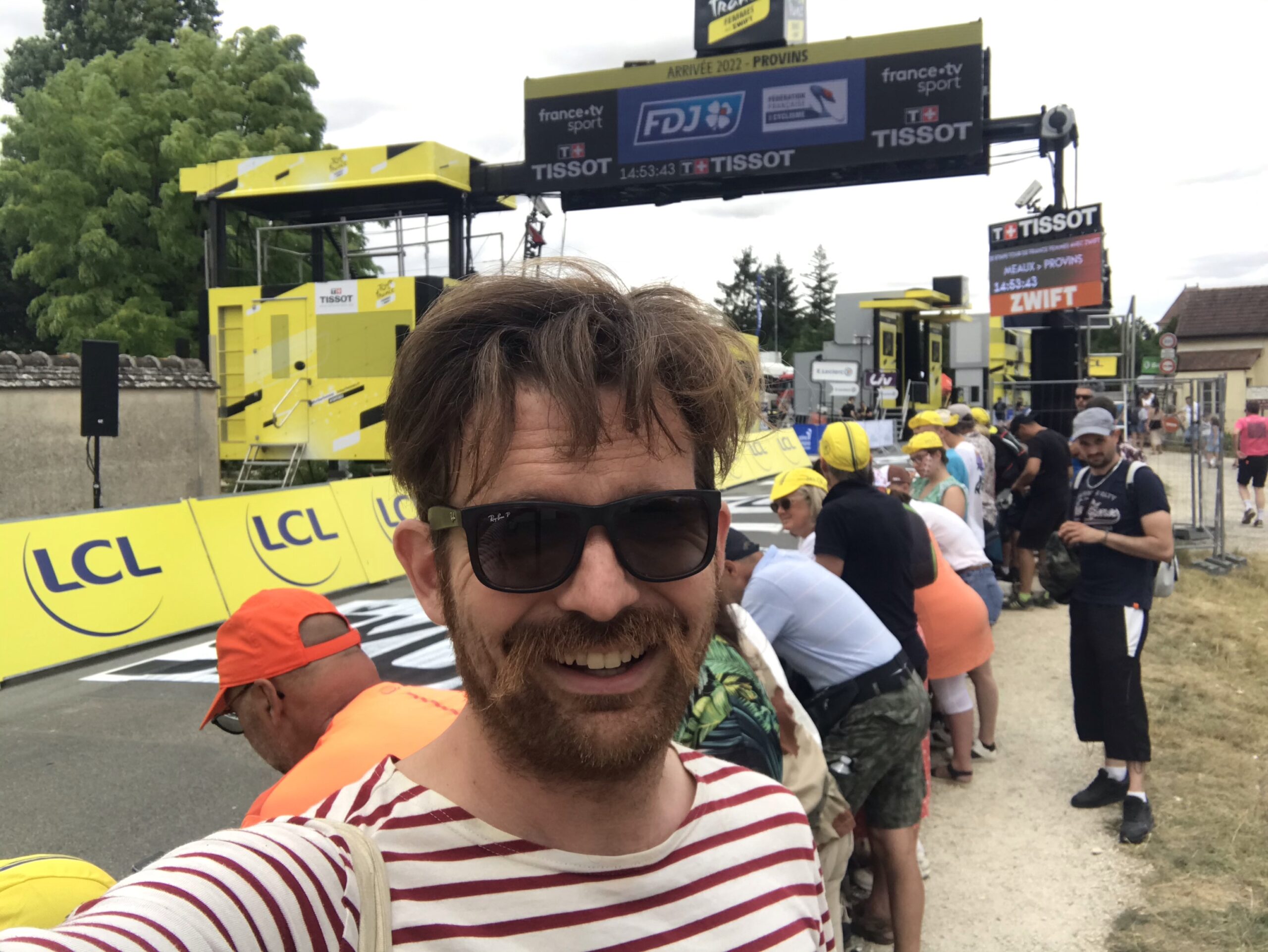
We walked down the medieval streets, had a relaxed lunch in a restaurant, spotting Tour lanyard wearers all around us. Gently, imperceptibly at first, the pedestrians, the residents started all walking in one direction. We followed them round the ancient streets, through the impressive ramparts and then there it was: the ‘permanance’ – the collection of vehicles which is the travelling caravan of the Tour. We passed the winners’ podium, the commentators box and then there was the finish line. All of these bits of infrastructure are so familiar from watching over a hundred stages from the television, and there they were just in front of us. Smaller, and bigger, in real life.
I think one of the most surprising things about the Tour is that all this infrastructure is moved from town to town every day. It is literally a travelling circus. It is life on the road, not just for the riders but for the logistics entourage.
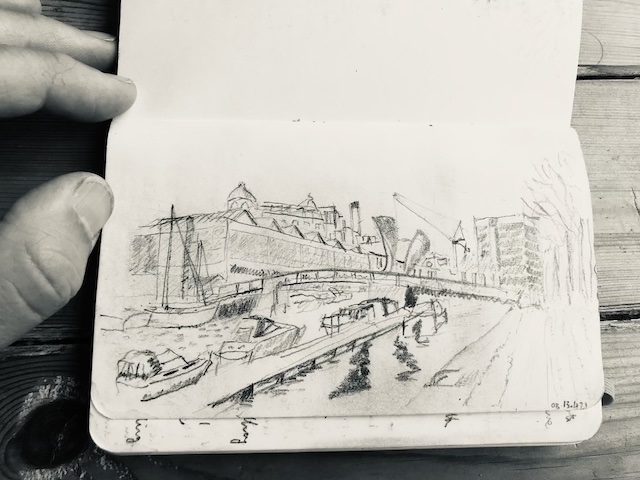
We knew we’d get a good chance of standing near the finish, but we didn’t expect to get five metres from the line. We found our spot and waited the two hours or so for the race to pass. I did this watercolour of the finish line. I appeared to be the only person taking pictures with this choice of medium.
A brave local commentator was keeping the crowd interested, and i learnt a lot about what a big deal it is for a region or département to host the tour. We heard about the local cycle clubs and rising stars. We heard about all the local people who had worked to bring the Tour to Seine et Marne and to the town of Provins. All the folk who had assisted in getting the barriers in place early in the morning. I had the feeling that lots of people watching weren’t into pro-cycling, but that this was the travelling spectacle coming to town that they had to see.
An hour before the race came the travelling caravan of sponsors vehicles handing out free stuff. I know that this is what the Tour is all about on one level, marketing opportunities for these big French brands. It is awful in terms of waste stuff given out and it is laughable. From the cars freebies are thrown out and the crowd go wild for them. Key rings from the gendarmerie, T-shirts, the famous hats, processed meat from one of the sponsors. I am sorry to say I didn’t get a pink Zwift that but glad that my daughter got one.
And then it was on to watch the racing. As I found yesterday it is actually quite hard to follow the race when you are there, but being near the end we could see the big screen. I was watching when three pretty awful looking crashes happened. These were made all the more graphic when we saw the injured riders limp to the line later.
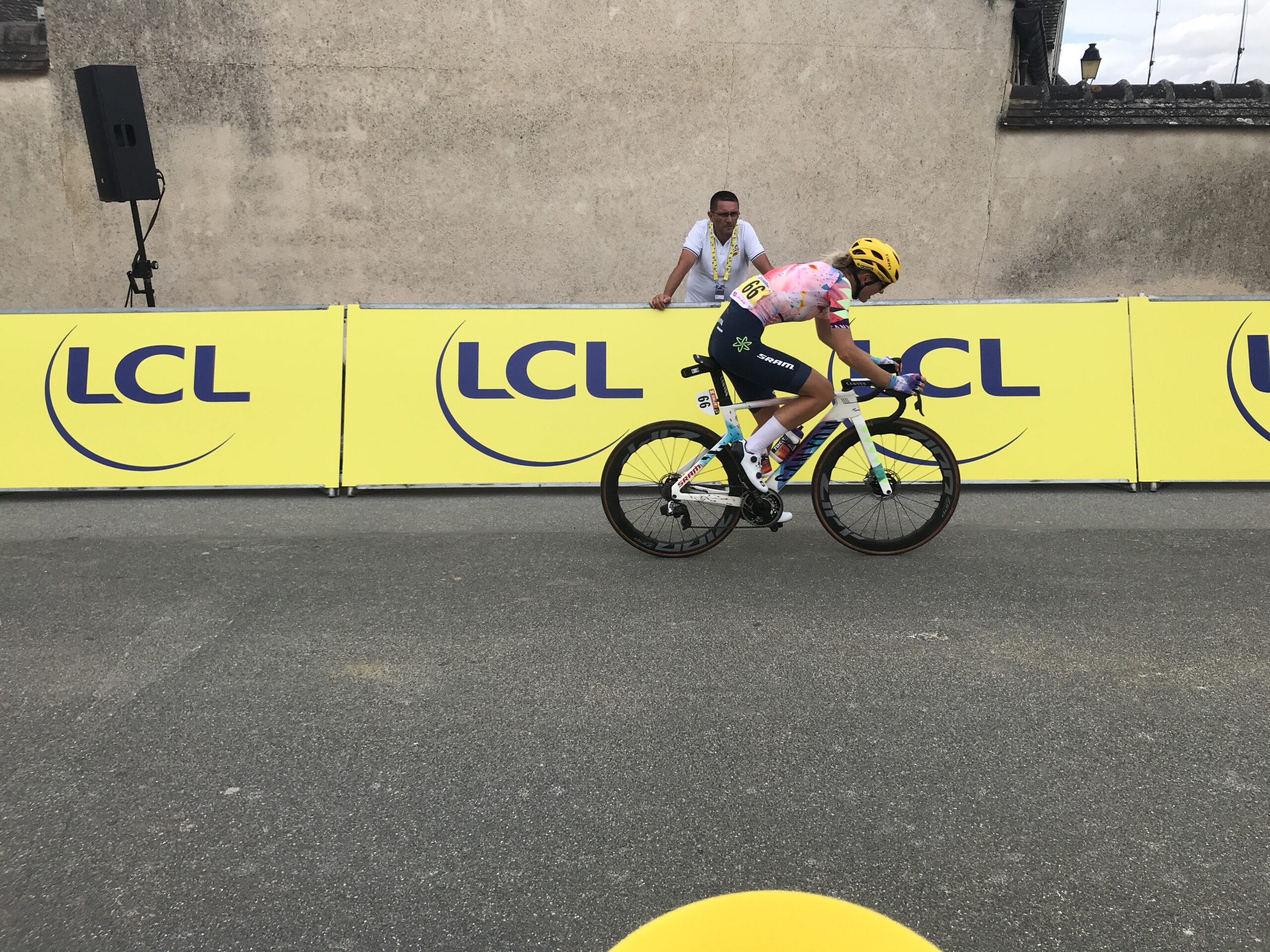
The riders passed the finish twice. First for an intermediate sprint, and then round a 15km loop which brought them back for the finish. After the sprint a breakaway group formed of Elisa Balsamo, Elisa Longo Borghini, Marianne Vos, Niewiadoma, Silvia Persico and Makia van der Duin. But in the final sprint to the line Marianne Vos broke away from this group and zoomed ahead to cross the line. Incredible to see possibly the best cyclist in the world win her 241 stage win and with it the Yellow Jersey.
Seeing the racers close up makes the whole thing feel more human. They are much smaller in real life. Their pain is more real. And their power as they cycle past.
And then fascinating to see how the end of race proceedings are orchestrated. While one racer is collapsed on the ground getting medical help, other people are getting on with the medal ceremony. This stage is done, and the juggernaut must roll on.
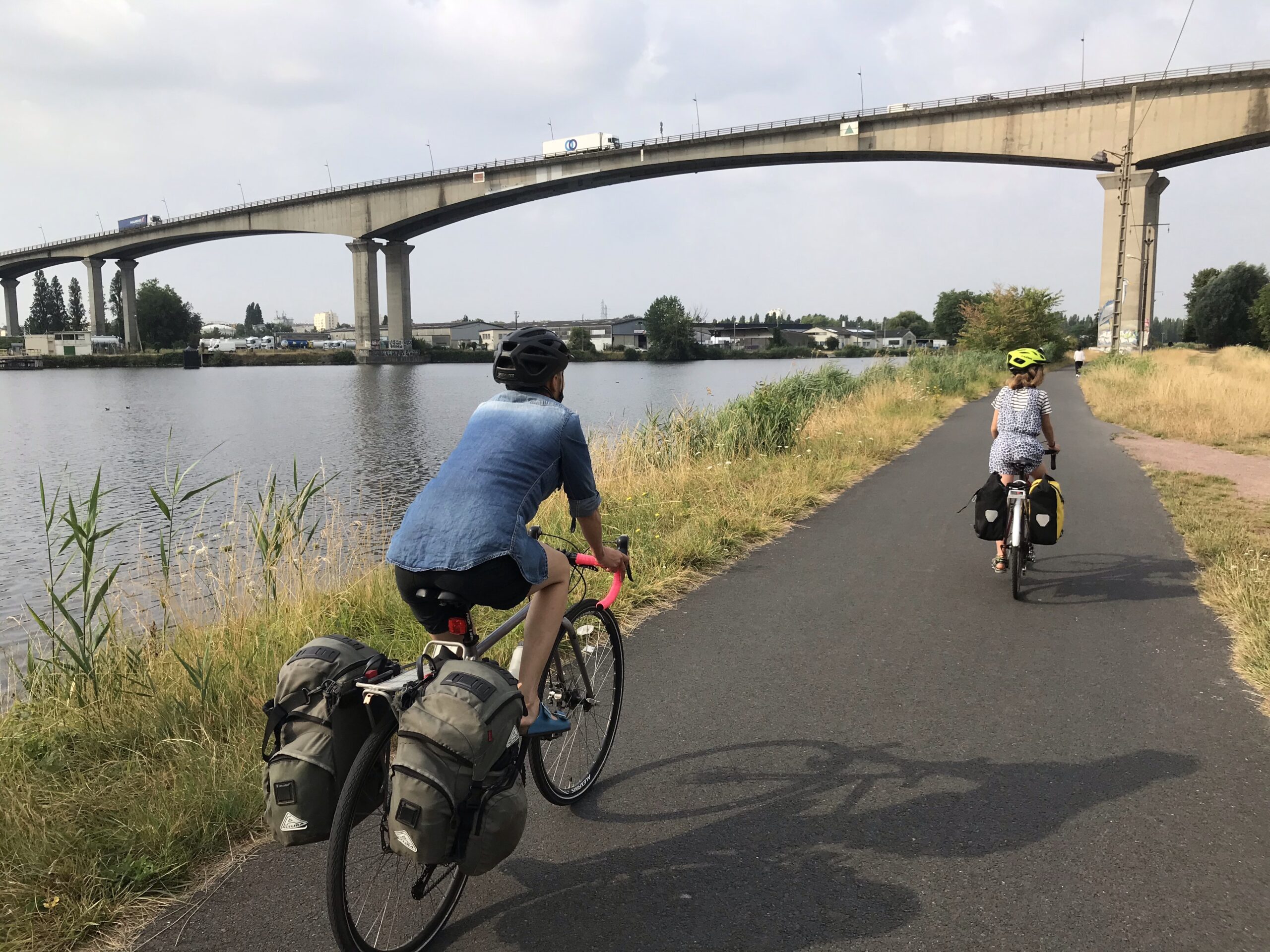
The port of Ouistreham is about 15km from the city of Caen. Journey today began with a cycle along the canal de Caen à la Mer. The canal is a major import terminal for tropical hardwoods from West Africa. And we could see the timber being stacked up on the opposite banks of the canal.
Downtown Ouistreham
We cycled under a heroic motorway viaduct and then arrived by well appointed cycle path in the middle of town. We only had about 45 minutes to spend in town so we found a high point to hang out: in this case the castle right in the city centre.
Heroic viaduct outside Caen
Other city centre castles I have enjoyed: Belgrade, Budapest, Blaye. I like when you can simply cycle up from the town below and straight into the gates.
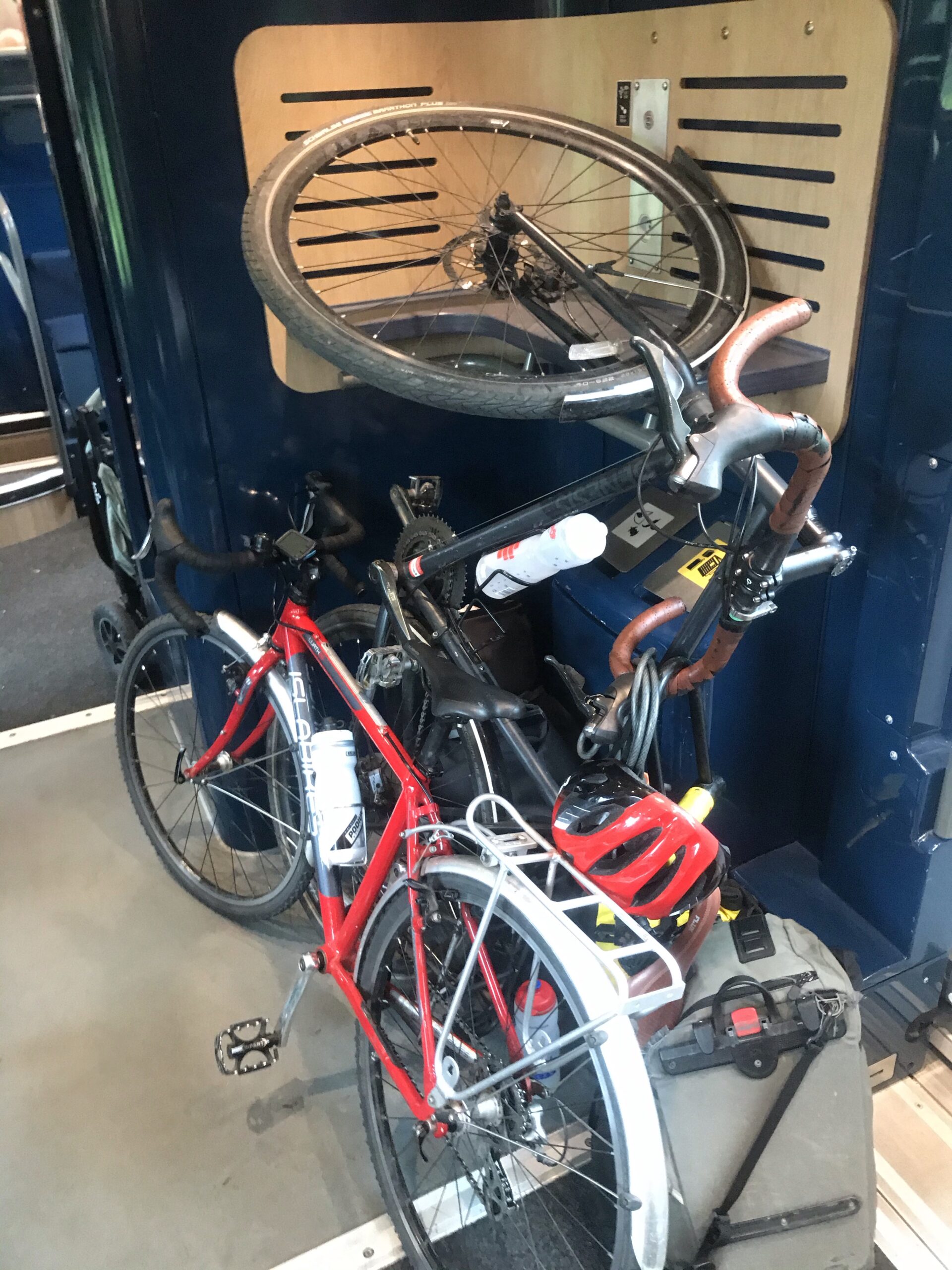
Our train from Caen to Paris St Lazare was a squash and a squeeze with our bikes. The service has unreserved bike spaces, but these were full and the service busy. Lots of people boarding and getting off with luggage got stuck with us in the bottleneck of the doors. I ended up lifting my bike up on its rear wheel and squeezing on. Somehow I miraculously managed to balance it on a pile of panniers so that when I let go it stayed upright.
Miraculously balanced bicycles
From Paris St Lazare to the 20th arrondissement we cycled the route of the Metro Line 2, following the cycle paths through the boulevards. This infrastructure went in when we lived here in 2006. Now it feels really hectic to use, with e-scooters, mopeds and delivery vehicles competing for space. As is offering the case though when I feel squashed using cycle infrastructure, I shouldn’t bemoan the other users: they are doing the right thing and it’s fewer cars that we need.
With all the alternative, shared transport infrastructure, I think Paris is now ready to ban cars altogether. Maybe with rising fuel costs and renewed focus on the climate crisis due to recent heat waves, banning cars in Paris might happen soon.
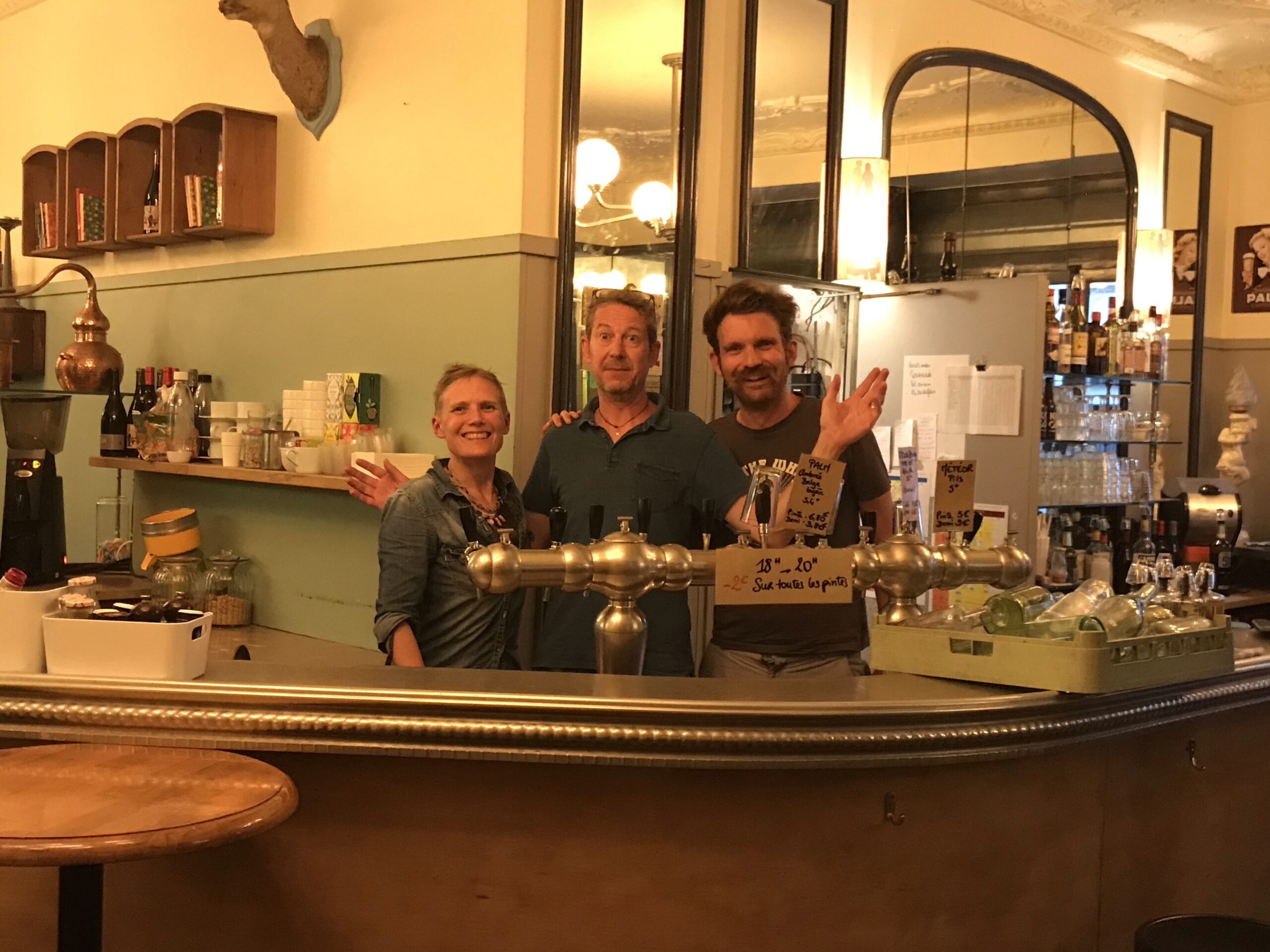
We finished the day with our friend and proprietor of our old local the Piston Pelican, Stéphane. The bar was closed but he welcomed us in for pizza and wine and an insight on what it’s been like trying to run a Paris bar through Covid. We talked about the heat wave and the climate crisis, and what people in their position can do.
I told Steph that running a bar like theirs is an important thing to be doing in a time of crisis because it builds community cohesion and resilience. I’m not sure how reassuring that was though as my climate French vocab is a bit ropey: turns out I’d been referring to the climate crisis all evening as the ‘central heating crisis’!
At our local allotments, permaculture teacher Mike Fiengold re-distributes food waste in the community. Even after he has sent food to various local charities there is lots left over, and so he asks if we can take some away. At first I felt it greedy to take more than what I considered to be my fair share. But then I realised it was helpful if we could take as much as possible off his hands. Because if he can clear his stores, he can get more of whatever waste the system is generating and put it into the hands of the people that need it. So now we take more than we need and try to distribute this excess among our neighbours on our street.
There’s a few things going on here that I want to note.
Restorative and regenerative are two words I am hearing used interchangeably. Both are relevant to engineering and design. Both are approaches to design that are valuable. But they need differentiating.
Last Friday I took the train from York to Hull. Onboard I was speaking on the phone to Will Arnold about our Net Zero Structural Design Course. As we rounded a bend this epic site swung into view and I stunned into silence. Spread out before me, skimming the water like a second horizon, the Humber Bridge.
This bridge seems improbably long. How can it be that the vertical load at midspan is supported by those towers when they are so far away? There must be some antigravity involved.
When it opened it was the longest single span bridge in the world, at 1.6km between the towers. Of the other facts I read on the bridge’s Wikipedia page, my favourite is that the towers are 36mm further apart at the top than at the bottom due to the curvature of the earth. I’d like to think I managed to capture that aspect in my rapid-fire photo from the train window.
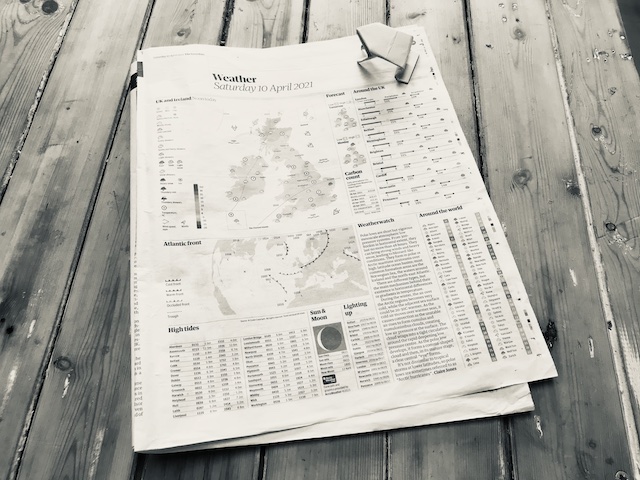
From hospital waiting rooms to long-distance train journeys, the weather page is a great conversation starter for my daughter and me, full of questions about geography, mathematics, history, about language…
This week’s Weekend Engineering Works post is about Ticket to Ride winning strategies. The game involves racing against other players to build a network of railway lines across different counties and continents. What I find exciting about the game is the recreation of an age of bold and adventurous engineering: the railway era. I particular enjoy building routes that I have travelled down in real life. But what I enjoy most is dreaming up winning strategies, and then testing them out.
In this post I describe my few of my more successful Ticket to Ride wining strategies. Alongside, as you might expect from this blog, I’ve also provided some wider musings on their philosophical implications.
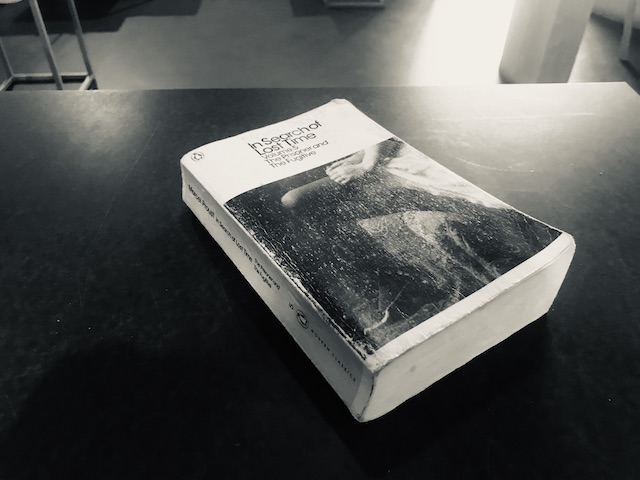
It wasn’t what I was expecting but volume 5 of Proust’s In Search of Lost Time ends on a cliff-hanger. It is incredible how such separate threads from five previous volumes are starting to brought together: a narrative arc that I could never see converging has in fact been much closer to convergence than I expected.
I’ve been reading In Search of Lost Time – Proust’s epic explorationg of memory, art, adolescence and decisre – on and off since 2007. It is one of those books that lots of people have heard of, some know two things about it (the long sentances and the flood of memories provoked by dipping a madeliene cake in his tea) but I’ve hardly found anyone who has actually read it. So in 2007 I decided to give it a go (in English!).
I’ve realised that quietly, in the back of my mind I am waiting. It hasn’t happened yet, so I just have to wait a bit longer. I am waiting for things to return to normal.
One of the thing things that I like about Marseille is the quality of the concrete tower block design. I’ve been riding in taxis back and forth across the city with my father who is undergoing cancer treatment in various branches of the city’s healthcare system and appreciating the architectural tour I’m getting.
In the centre of town these blocks remind me of bookcases: two monolithic, slick sides between which span the concrete shelves, on which sit the apartments like colourful books. It’s fascinating to see the different ways that windows, balconies and staircases are articulated in these concrete buildings. I point out towering souring fin walls, beautifully articulated fire escapes, and how paint is used to express the different elements of the concrete structures.
The rocky hills that rise up behind Marseille keep the city hemmed in by the sea. Standing on the high ground platform of Notre Dame de la Gard in the middle of town, you can see clusters of distant tower blocks that seem to bravely climb the distant slopes of the edge of the city, like pilgrims. I’m used to seeing tower blocks standing imposingly against the flat, grey London sky, but here these structures are rendered tiny by the massive hills behind them.
In my previous post I was talking about the experience of distance, and how, when understood as an experience, distance is no longer a fixed entity.
That post was triggered by some lines from Proust in which the narrator is talking about how his perception of local distances alters when he switches from rail transport to motorcar. Some further thoughts on this topic.
I recall how the distances between various destinations, and therefore the shape of the city itself, appeared to change when the London Overground, an orbital railway in the inner suburbs, opened. All of a sudden areas of the city that seemed far away felt much closer: South-East London, previously impossibly far, was now a nearby neighbourhood to where I lived in the North-East.
Such a step-change in the experience of city living demonstrates the transformative power of civil engineering infrastructure. Linking, drawing together, connecting – this is what engineers have been doing for centuries.
Today I take my journey home from Münster to London via a different route from my way out. Outbound I came by ferry because it was cheaper; travelling back midweek I can just about afford the Eurostar. The route gives me the chance for a quick stop in Köln and the chance for an engineering detour via the Wupertaal suspended monorail.
Münster to Wuppertal
Münster is a beautiful town. I’ve spent the last few days staying with a friend and working on my book in the city library. The cities walls were removed to create a circumferential boulevard that is now tree-lined and a major thoroughfare for bikes and pedestrians. I walk this path one last time and peel off at the Hauptbahnhof.
I ride for twenty minutes on a quiet commuter train to Hamm. The flat landscape is filled with a mixture of fields and factories, with the occasional wind turbine. It reminds me of travelling up the Lea Valley north of London.
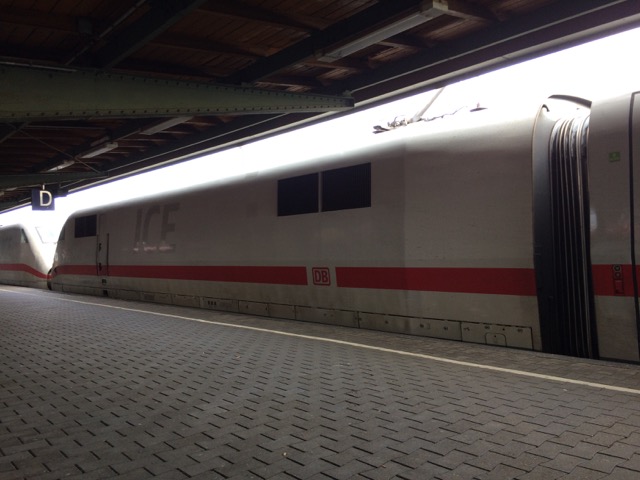
Hamm station feels in the middle of nowhere but its ten unloved platforms are busy with trains of all sorts coming and going. I get to my platform early and see one of the slightly older German high speed ICE trains arriving. Its bright white carriages are like hermetically sealed capsules. You can imagine this train is capable of zooming along the sea bed as easily as over land.
The ICE train is in fact two hitched together. I watch as the two are uncoupled and the front half pulls away. Just in time, I realise the back half is my train to Wuppertal, and I jump aboard. The land becomes more rutted and we follow an industrial valley that is well scored into the valley – it resembles the valley of the Seine as it winds its way north from Paris to Rouen in Normandy.
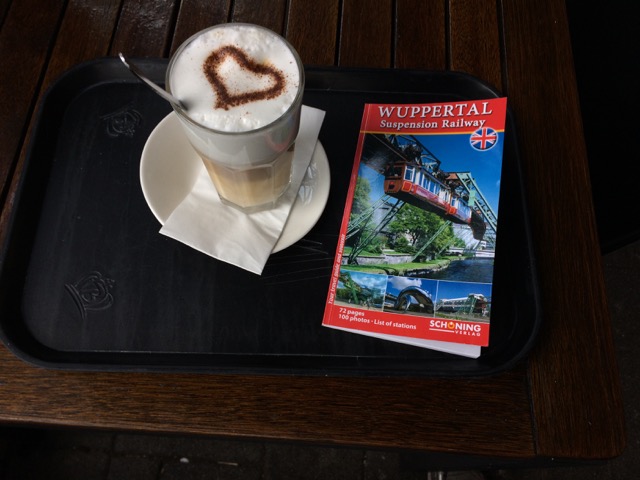
My connection time in Wuppertal is three-and-a-half hours; that was deliberate to give me time to make an engineering pilgrimage to a highly unusual railway, the Schweibebahn, Wuppertal’s suspended monorail. More details of that in a separate post.
Wuppertal to Köln
I’m blown away by the monorail – a great piece of railway engineering integrated into the city. With hindsight, three-and-a-half hours was a bit too long for my engineering excursion and I struggle to find the inspiration to explore the town further. It’s nothing against Wuppertal: I’m just keen to get on. I wait impatiently at the platform for my next train.
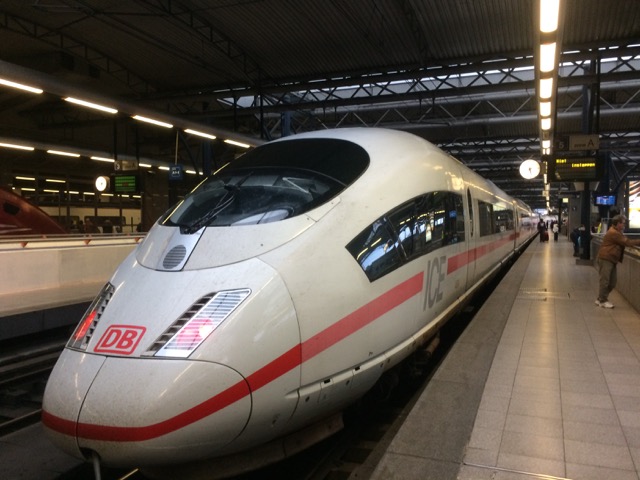
If the last ICE train I took looked like it could be amphibious, this train, a next generation edition, looks ready for space flight, with it’s pointed nose and sleek black-and-white lines. It’s a short twenty-minute ride to Köln and before I know it we are rumbling across the bridge over the Rhine. Köln Hauptbhahnhoff is covered by a wide arching roof; beneath, trains come and go from across Germany – and I see my first French train, the Thalys service to Paris.
I have fifty minutes between trains so I visit the magnificent cathedral which is surprisingly right next door to the station – almost on top of it. It’s quiet pews are better than any waiting room I can think of.
Köln to Bruxelles Midi
I get on board another of the sleek new DB ICE trains and settle in. I don’t remember much about this 2-hour leg as I slept most of the way. The day before long journeys I rarely sleep well as I worry about missing my train, and last night’s wakefulness just caught up with me. As we slow down on the approach into Brussels I see some fairly grotty looking commuter trains and I realise these are the oldest trains I have seen since I left the UK. All the trains I’ve taken over the last few days in Germany or the Netherlands, whether high speed or slower, were well looked after. I am reminded why I don’t ever get that excited about train travel through Belgium. I may however just be prejudiced against Belgian railways because they were responsible for putting the DB night train to Berlin out of business when they put up the transit fees they charge other countries for their overnight services.
Bruxelles Midi to London
Bruxelles Midi is an endless warren of tunnels where the light at the end never seems that appealing. I have an hour and a half before I can check in; I bought tickets for a later train because it would save me £50. The beer in the cafe is half the price of the tea, which is a shame as I’ve just decided to give up alcohol for a few days.
The journey flies by; before I know it I am back in St Pancras. As I walk down the long platforms I am struck that in all the stations that I have been through on either my outbound or my return journey in the UK, the Netherlands, Germany, Belgium and France nothing quite compares to the experience of arriving under the magnificent Midland Blue-coloured soaring arch of St Pancras station. A fantastic piece of engineering lovingly re-invented for a different century.
This week we took our 5-month old by Eurostar to Paris. The experience of travelling with a baby is adding a new perspective to my journeys. Long-distance train travel with a baby is by no means impossible. The couple travelling opposite us on the Eurostar last Friday were on their way to Florence by night train, having recently travelled to Venice and to Madrid by sleeper with their well-travelled toddler. Most things still feel possible – I just feel I want to know a little more in advance. So this post is for the benefit of other people seeking reassurance about travelling on Eurostar with a baby. (more…)
For all the publicity in London about the opening of the new Eurostar terminal at St Pancras, passengers leaving Paris on its inaugural day wouldn’t have been any the wiser. The lack of Parisian interest in the new London terminal was underlined by the ticket prices: while it would have cost me over £100 to book a place on a train leaving St.Pancras that day, the cost of a ticket in the other direction was just £29! I can forgive the lack of excitement from that end of the line however. When it comes to high speed train networks, France’s is in its late twenties whilst Britain’s is still teething.
Until yesterday, once the tunnel had been crossed and England reached, passengers were treated to a short stretch of tantalizing high-speed rail (the first part of the new link has been in use for some time now) before the trains slowed to a dismal trundle on the old line. Well, no more. Unfortunately it was dark so I did not get to see all that pristine Kent countryside that had seen routes for the line changed so many times. Before I knew it, a tunnel under the Thames, then we appeared to be over-ground and then back under again. We popped up for air again at what I guess was the building site for Stratford International before tunneling our way under North London. I remember five years ago a friend of mine living in Highbury had complained of rumbling under his basement flat for a period of about a week or so. He found out, from the council I believe, that those noises had been the tunnel digging machines digging those very tunnels that I was zooming through significantly faster.
The train popped of the ground one last time and we were cruising into the magnificently lit train station. Words do not do justice to what an amazing site the new station is. Passengers off the train for the first time on these platforms walked in eerie gob-smacked silence. The train shed, with its arches of ‘heritage Barlow blue’ which soar over the tracks to support 18 000 panes of self cleaning glass, makes for quite a destination. Indeed there were plenty of people there who had just come for the opening. At the end of the platforms they posed for photos beneath the 9m tall sculpture of a couple kissing. Europe’s longest champagne bar was not long enough to accommodate the masses who came to toast the new station.
I was grabbed for an interview by BBC Radio London who were broadcasting live from the concourse. I think I ticked a few of their boxes: not only had I just stepped off a train from Paris, but I was an enthusing engineer (and, as a bonus, someone whose father had arranged the medley of French songs played that afternoon by the LSO Brass section as part of the opening celebrations). On air, I was asked about how long it must have taken to paint the roof, a question to which I had no answer but assured them that it must take less time than that for the Forth Rail Bridge.
For me, St Pancras represents the first completed major engineering project university colleagues of mine have been involved with during their summer placements. St Pancras celebrates the engineering of a bygone era, is a fine example of how old can become new, and puts international rail travel back into the national consciousness. Not a bad start!
Last Tuesday evening I bid farewell to Waterloo International, the last day that Eurostar will serve this station before it transfers to St Pancras ‘in the (other) heart of London’. Before I even arrived I had fears that the Eurostar staff had packed up and gone as all the signs directing travelers from the Underground up to the terminal had already been whited out. How wrong I was. I arrived on the main station concourse to the sound of live music and the sight of dazzling lights. In the sunken entrance level to the Eurostar terminal, a stage had been set up and a band were playing, none too aptly, “Waterloo Sunset”.
I am happy to admit that I am a station spotter and have long been. It is cooler than being a train spotter as you get to talk about architecture, your subject doesn’t move so you don’t have to stand their waiting for it, there are plenty of food shops so no packed lunches required, and you can wear any clothes you like. This last advantage makes the station spotter hard to spot. I have blended in all these years and have simply thought that I was alone in my pursuit, unaware that other station spotters were all around me. That is until that evening when they showed their true colours and, in droves, they headed down to Waterloo International to wish it farewell.
The police had crowd control measures in place to stop people pushing into the sunken entrance area. If your name wasn’t on the list (read, if you didn’t have a ticket) you weren’t getting in. By the time I got in, the show was wrapping up, leaving only video footage of the new station projected onto the wall. It felt like mass train station hysteria; one woman had a tear in her eye. Staff stood around beaming, journalists were interviewing. With all the publicity for the new St. Pancras terminal, international train travel has recaptured the public’s imagination. But from this train station 81,891,738 travelers over the last thirteen years have already trained it, internationally. And so one can understand people being sad to see it go.
But go where exactly? It is all very well to wish a station farewell but it is not going anywhere. What are they going to do with it? Scuttle it? The plan as I understand it is to make the platforms available for comunter trains to use. But what of the long arrival and departure concourses? When I was twelve or so, I saw an architectural model of the terminal with it’s snake-like blue roof. It is hard to believe that this structure will now lie largely obsolete.
The party was over on the other side of security (the real bouncers). The place has felt tatty for a while now. I can’t imagine the maintenance budget has been kept up in recent months. Shops lay half empty of stock which was annoying as I badly wanted an adaptor. There were girls handing out free cake. Just like at the end of a party.
The squashed arch roof of the Hauptbahnhof in Berlin
I rode the escalator up to the platforms beneath their wonderful blue roof. This Grimshaw structure arches over the three platforms. Like that of the Hauptbahnhof (photo above) in Berlin the curving roof is made from a squashed arch which means that the roof in both Waterloo and at the Hauptbahnhof can cover the tracks without having to rise to high. By contrast the un-squashed arch of St Pancras’ roof soars high above the cityscape. Squashing the arch induces bending in the structure. In both cases the structure follows the exact form of the bending moment diagram giving a very pure structural aesthetic. At the Hauptbahnhof the arch is four-pinned and symmetric. At Waterloo, the designers chopped a third off this symmetric arch, giving it its asymmetric shape.
With the fanfare far behind, I boarded the train and as we pulled out was reminded that it was not the station that was the problem but the line. As the train bumps through Vauxhall, the carriages bottom-out their suspension. We creaked round a sharp left turn and then screeched through Brixton, presumably deafening those on the platform. By Herne Hill, the train slowed further to skateboard speed. However, after forty minutes of this bumping and grinding, a reminder of what the new route will bring, as the the Eurostar joins the already-open section of high speed track and accelerates towards France.
And so Waterloo must close. I am sure that station spotters such as myself will get over it soon enough. The start of services to St Pancras, for example, might offer a suitable distraction. With this opening I am certain that a whole new generation of station spotters will be inspired into being