It’s a phrase I picked up a long time ago from Tim Ferriss and it has stuck. What you do is much more important than how you do it. More and more I notice lots of organisational energy being spent tweaking how something is done rather than addressing what needs to be done. Here are some ways that it is showing up for me at the moment.
(more…)Blog
-
Think, feel, do – shorter emails
I picked up this tip at home yesterday – thanks Mary. It’s a formula for getting to the point when writing emails. What do you want the person to think, what do you want them to feel and what do you want them to do. That’s it. You can save background context for another time for further down the email if you wish.
As an added challenge, see if you can get it down to three sentences. -
Two facilitation lessons from Strictly
Facilitation means making something easier. It isn’t about controlling; it’s about following, listening and enabling. In a workshop setting, it’s about having the confidence to let go of control and see what happens, and if things don’t go as expected, being confident to step back in and help everyone get back on track.
(more…)
Watching the Christmas Day Strictly Come Dancing highlights show I saw two pieces of facilitation gold, which are a lesson in what to do when things go wrong and how to put them right again. -
Seneca says don’t be scruffy – trawling this blog for sales advice
Today I’m preparing for a session I’m giving at the University of Cambridge tomorrow on how to sell ideas. To help prepare, I’m going back through old posts to gather materials on the art of selling. Here is the best of what I have found.
(more…) -

Asking what if – change the frame for new ideas
Asking what if. It’s my go-to technique for stimulating rapid idea generation in groups. In this post, the latest in my series on creative thinking tools for projects, I am sharing another tool for Turning the Kalideascope. In other words, mixing up what we know about a project to help find new ideas. In this post I explain the thinking and then I share a method for facilitating this approach in groups.
(more…) -

Use your Professional Palette
We move now in my series of posts on tools for creative thinking from gathering inputs to stimulating new connections. This is what I call ‘Turning the Kalideacope‘. The first technique is called ‘Use your Professional Palette’, and it builds on a technique for Filling the Kalideascope we discussed yesterday. It also provides a bridge from gathering inputs to processing them. First, let’s talk about the pre-requisites.
(more…) -

Preparing the colours for your Professional Palette
There are some inputs to our creative process that we build up over time so that we are ready to draw on them whenever we work on a new project. In this next post in my series on creative thinking tools for projects, I will share with you another source of inputs for the Kalideacope. I call it the ‘preparing the colours for your Professional Palette. These are the set of colours from which you paint your ideas. The image this phrase conjures up for me is of the Impressionist painter spending time in their workshop in Paris getting their paints ready before they get on a train from the Gare St. Lazare, head out into the Normandy countryside and paint a landscape. You have to do the prep in the workshop before you can go out and paint. But how does this apply to us?
(more…) -
Creative thinking tools for projects: the Eiffel Over guide
We need creative thinking tools in our project toolkit to get the most out the opportunities that a new project offers. Projects provide a setting in which people can come together. They provide a focus point for joint attention. They can lead to outcomes that are probably far greater than what we could achieve on our own. In organisations we rightly focus effort on achieving project goals within project constraints – this is project management. But what I think gets neglected is investing in the creative thinking will help define those goals and help reach them in new ways.
The need for creative thinking in setting goals and figuring out how to achieve them is greater than ever before. The climate and ecological emergencies show us that the usual ways of thinking have failed us. We need new thinking. We need creative thinking.
I have spent much of the last five years researching, developing and teaching practical creative thinking tools. People use these tools to help develop their personal and team-level creativity in projects. Based on feedback from workshops with hundreds of engineers and other professionals, I have developed a shortlist of tools and techniques that have the most impact: either in terms of how they help people understand creativity; or how they empower people to be creative with more confidence.
(more…) -
Global zoom confession
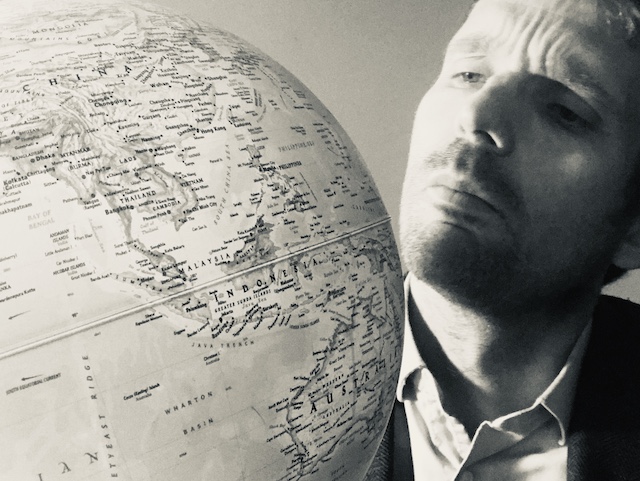
I have a confession to make. Sometimes, when online meetings are getting really dull, I gaze at the globe on my desk and search for islands. My eye lazily drifts across the curving expanses of ocean and every so often something spikes my attention. Usually it is no more than spec, and when I lean in I see, in microscopic print, the name of an islands or an archipelago. Before long I’m on the good ship Wikipedia (I’m a supporter – are you?) setting imaginary sail for these distant lands. Recent places I have made landfall include:
(more…) -
Weekend engineering works – near Weston-Super-Mare
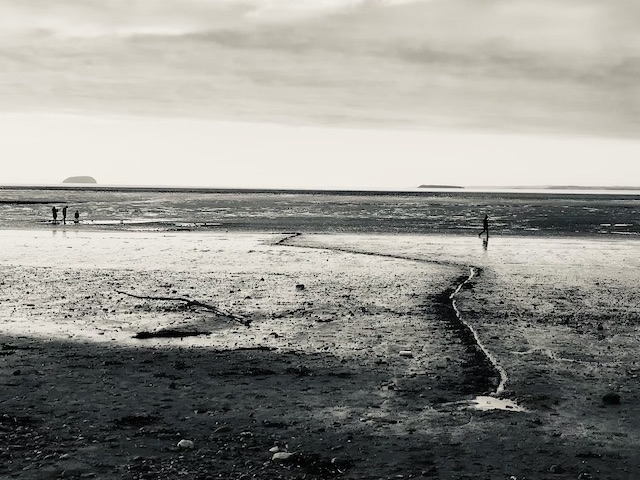
Today engineers completed work on a major new irrigation channel to bring drinking water to a major new coastal development on Sand Bay, near Weston-Super-Mare. The 60-metre-long new canal brings water that rises from the coarse sand at the back of the beach across the inter-tidal zone to the new fortified town, which looks north-westwards across the Bristol Channel towards Cardiff.
In a bold vision, the water supply has two functions: potable water supply for the imaginary people living in the turret in the middle of the island; and also to ensure the defensive moat is always full. Anglo-French design and build contractors Eiffelover and Co. have a long track record in delivering civil and environmental projects in coastal settings.
(more…) -

Farewell Beethoven
Off-topic, but I feel we rarely capture and talk about moments of grief. Between facilitation sessions today I listened to the final episode of Radio 3’s year-long Composer of the Week series on Beethoven, the episode in which he dies. And now I am streaming tears: because it is a sad story, yes; because he wrote music that can make you cry, also yes. But more so because I really, really miss the all-encompassing world of live music. To hear that full orchestral sound now would be such a joy. I miss going to see my Dad play in an orchestra. I miss the joy of giving shared attention to creative spectacles, be they small or large. I can stream whatever music I want, but I want to see human beings playing, making the noise. That’s all.
-
Filling the Kalideascope – inputs from colleagues
Together, the people around you know so much more than you do. In my last post for now on Filling the Kalideacope – gathering inputs for the creative process – I am suggesting that you tap into the vast resource of information and insight that is the people around you. Ask them about the context, the setting of the brief. Ask them if they have done anything similar themselves. Ask them what ideas the brief inspires in them. How does the project make them feel?
And then they speak, listen. Don’t interrupt. Don’t pitch in with your idea. See where the train of thought takes them and go along with them on the ride.
-
Filling the Kalideascope – previous projects
Humans tend be to attracted to novelty – Oo, the shiny new thing – but sometimes what we need is in what we know already. This post is another in a my series on ‘Filling the Kalideascope‘ – gathering inputs to the creative process. Today’s input is your previous project work.
(more…) -

Creative inspiration from December
A new month, new good intentions. Just like when I started a new exercise book at school, when I would commit to being extra neat (and then forgetting about it a few days later). It’s good time at least to think about how the advent of December can influence your creative work.
(more…) -
Filling the Kalideascope – go to site
This post has moved and along with my other conceptual design teaching tools is now hosted on the Constructivist website here.
-
Creating contours in the flat landscape of lockdown
In the midst of lockdown we have created a new household tradition that brings a highlight to the week. On Saturday nights we dress for dinner, enjoy our meal, watch Strictly on our new TV, and then push back the furniture and dance.
With the household locked down, one day could easily look like the rest. To use Matthew Crawford‘s language, the ‘affordances’ of one day look exactly like the rest: there are a fewer physical contours that shape how different parts of the week feel now that we are always at home. So you have to create that structure for yourself.
(more…) -
Why I write (this blog)
When I teach I realise I am drawing on ideas that I have gathered and processed over many years, but little of which exists outside my head. If I compare a mental list of the main concepts and ideas that have preoccupied my thinking for the last few years, I find it bears little correlation with what I have written over that period.
(more…) -

New adventures with a television – part 2.
I wrote earlier this week about getting a TV for the first time in 13 years. It reminds me of when I took my first flight in seven years. Things have changed but there isn’t an instruction manual for the uninitiated.
When you are in a system it is hard to see it change, but when you step out and return, the changes are much more obvious. Television watching now:
- Involves many more controllers
- Is much more expensive with the subscription services
- Involves a bewildering amount of choice.
- Is now on demand meaning you can watch anything at any time.
Nobody we asked seemed to know if we could just have a TV with a few channels. If you type into a search engine how do I watch BBC1 on a television, the top result is how to watch BBC1 via the iPlayer on your television.
But I am happy to say we have, as far as I can see, the simplest set-up possible in the modern world: a TV plugged into an aerial that shows the free view terrestrial channels, and that’s it. No internet streaming subscriptions, no catch-up (no VHS!).
It means that if we want to watch something, we have to watch it at the time that it is on. A rediscovered pleasure is looking at the listing in the newspaper. If there is a clash, we have to negotiate. It’s the return of appointment TV, and I’m loving it.
Of course, Disney Plus is very popular these days but we’ve been experimenting with just getting Disney DVDs from the library. I call it Disney Minus, and it’s much cheaper. Actually we do have a subscription service – it’s called the BBC, and as far as I am concerned is the best value-for-money service out there.
Right, got to run, there is a 75 year anniversary screening of Brief Encounter starting in a few minutes.
-

Choose the productivity tool for the job you want not the one you have
The tools you use define your work. They lock in choices about what you turn your attention to, what you can do and what you can’t. Before you choose a new productivity tool, define what they work is that you do and don’t want to do, then find the tool for the job.
(more…) -
What’s the least effective thing I can do to tackle the climate crisis?
I am grateful to the participant in this morning’s climate coaching call who reminded me of the power of asking the opposite question to the one you are trying to answer. Instead of asking what’s the most effective thing he could to tackle the climate crisis, he asked what’s the least he could do. Sometimes it is much easier to define what we shouldn’t be doing than what we should. But from this point of opposition we can get some clues about what we should in fact be doing.
(more…) -

Asking someone instead of Googling
What if you couldn’t look stuff up online? This is a question I keep returning to. One answer is that other people might become a more important source of information. You’d need to pay more attention. You’d probably look forward to the opportunity to speak to them more. And you’d remember more about what they said.
The premise makes me think of books set in a time before tv and radio (let alone internet) when the arrival of a new visitor in the house represented the chance to mine a new seam of experience.
(more…) -
New adventures with a television – part 1.
Television, television television. Say it a few times in a row and it sounds a bit futuristic, of science fiction even. The ability to capture moving images and transmit them over space is incredible. Having not had a TV in the house for thirteen years I have been enjoying rediscovering this most twentieth century of media formats, and discovering, rather than futuristic, how out-of-date my expectations of the format are.
(more…) -

Too many inputs
All this week I have been writing about organising inputs to the creative process, but at the end of the week I’m feeling overwhelmed from too many inputs. I need to switch off and reflect, but before I do here are the themes that are swirling round my head. I capture them so that they might be useful for another time.
(more…) -

Brief explosion – starting a creative project
This post has moved and along with my other conceptual design teaching tools is now hosted on the Constructivist website here.
-

Filling the Kalideascope – creative inputs over time
Yesterday I wrote about the inputs you might gather at the start of a creative project. These are what I call inputs in the moment. But there is a different sort input that is only available to you if you put in the work to gather them. I call these creative inputs over time.
(more…) -
Filling the Kalideascope – creative inputs in the moment
In my last post I described the Kalideascope as a tool for having ideas. You fill it with inputs and then turn it to create new the connections between those inputs which constitute new ideas. In this post I will give an overview of the different kinds of inputs to the creative process you might look for.
(more…) -

Curating information for creativity
In this third video in my series on creative thinking, I go into the concept of curating inputs to the creative process. The combination of our brain and body makes for an awesomely powerful creative machine. We can use our bodies to explore and gather a wide range of inputs and then we can use our arms and fingers to manipulate and rearrange elements within our wide field of vision, and yet much of our creative work is blinkered by computer screens, or worse reduced to the width of a phone. In this video I ask viewers to think about how they can arrange their creative inputs to make full use of their creative faculties.
(more…) -
Build a Kalideascope for creative thinking
In my last post I cited James Webb Young’s definition of an idea as being a new arrangement of existing elements. He goes on to suggest having an idea is like using a kaleidoscope. As I explain in this second video on creative thinking, in my teaching I encourage participants to create their own kaleidoscope dedicate to generating ideas – a Kalideacope.
(more…) -
What is an idea?
This week I have begun creating a series of videos to share my teaching on how to have ideas. The videos start with what simple question, what is an idea. The definition I use, provided by James Webb Young in his 1965 book ‘A Technique for Producing Ideas’ is pragmatic – it gives us tangible ways to work on improving our creative thinking.
(more…)