Blog

  • Training with audio in the age of Zoom.

    Training with audio in the age of Zoom.

    In March 2020 we were all sent home and we discovered we could meet using video conferencing instead. Suddenly our wide-angled world was sliced to a quarter of its width. Our body language receptors had to cope with just head and shoulders rendered in a tiny square. And our brains had to work much harder to make sense of this reduced world view.

    Just because we have lost something doesn’t mean we have to replace it anew. Just because we can substitute IRL for Zoom doesn’t mean we always should.

    (more…)
  • Proust’s antidote to endless scrolling

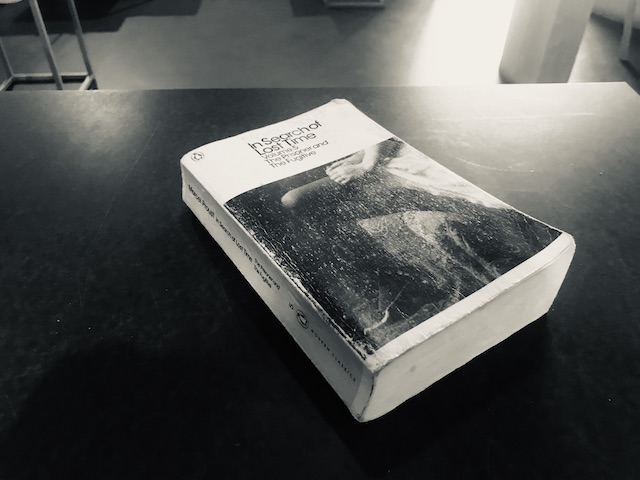
    Proust’s antidote to endless scrolling

    The fault I find in our journalism is it forces us to engage with some fresh triviality every day whereas only three or four books give us anything that is of any importance.

    Charles Swann, in Swann’s Way, In Search of Lost Time Vol.1
    (more…)
  • Using  Zoom, Eventbrite and Facebook to promote your event

    Using Zoom, Eventbrite and Facebook to promote your event

    Boring post alert.

    Sometimes you need to be boring to be creative.

    This is a really boring post about something I find myself doing lots and lots: setting up an event on Zoom, selling tickets for it and promoting it. My hope is that by sharing these steps you will need to spend less time figuring it all out yourselves.

    (more…)
  • Reading Proust – volume 5 update

    Reading Proust – volume 5 update

    It wasn’t what I was expecting but volume 5 of Proust’s In Search of Lost Time ends on a cliff-hanger. It is incredible how such separate threads from five previous volumes are starting to brought together: a narrative arc that I could never see converging has in fact been much closer to convergence than I expected.

    I’ve been reading In Search of Lost Time – Proust’s epic explorationg of memory, art, adolescence and decisre – on and off since 2007. It is one of those books that lots of people have heard of, some know two things about it (the long sentances and the flood of memories provoked by dipping a madeliene cake in his tea) but I’ve hardly found anyone who has actually read it. So in 2007 I decided to give it a go (in English!).

    (more…)
  • A better-dressed version of me

    A better-dressed version of me

    I sit in my current preferred cafe bolthole and the jacket of the person opposite me catches my eye. It’s a slightly faded turquoise, not unlike a jacket I recently got in the sale. Hang on a second, it is the same jacket, maybe slightly older. I zoom out and notice their whole clothing combination is familiar: a stripey top, dark blue jeans, converse, set off with a dark grey panier.

    These are the clothes that I wear, or at least I think I wear – only better. I look down at my own sartorial combination and I realise it is a poor approximation to my self image. I start to take notes for self improvement – cream converse, turned up jeans – but then my alter-wardrobe is gone.

    I have long been in pursuit of the one outfit to rule them all. There are a few inspirations.

    (more…)
  • Training course – Introduction to Conceptual Design for Structural Engineers

    Training course – Introduction to Conceptual Design for Structural Engineers

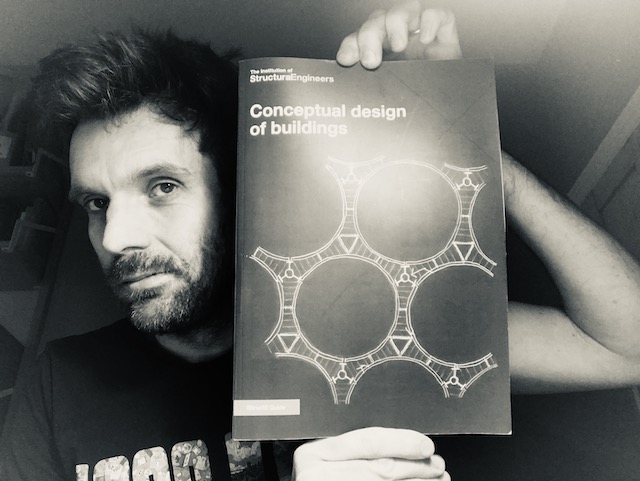
    This course, which I deliver at Constructivist for the Institution of Structural Engineers is my longest running conceptual design training course. It is an introductory course, which splits conceptual design up into three phases: establishing the brief, creative thinking and convergent thinking and provides simple models for understanding each of these phases.

    (more…)
  • Three ideas for bearing witness to the climate emergency

    Three ideas for bearing witness to the climate emergency

    A year on from declarations of climate emergency in the construction industry I am looking for ways to carry on emphasising the scale of the problem and the scale of the action we need to take. I feel that behind these bold declarations of emergency we are no closer to seeing the system-wide changes that we need and are instead focusing on smaller details.

    (more…)

  • Still waiting

    Still waiting

    I’ve realised that quietly, in the back of my mind I am waiting. It hasn’t happened yet, so I just have to wait a bit longer. I am waiting for things to return to normal.

    (more…)
  • Chamber music in the woods

    Chamber music in the woods

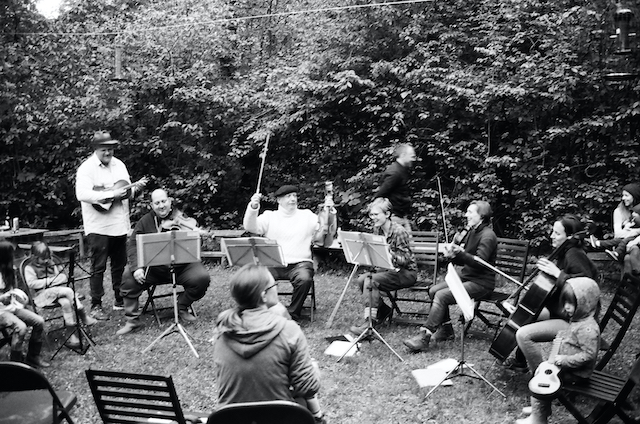
    Yesterday I was feeling particularly sad about the loss of live music during lockdown and the stories of musicians who just don’t have any work at the moment. And then, because this how my brain works, I thought, how can we put on some live chamber music at Hazel Hill Woods?

    (more…)
  • Book notes – The Hidden Life of Trees

    Book notes – The Hidden Life of Trees

    It feels right as I take on my new role at Hazel Hill Wood to read the Hidden Life of Trees. This is an evolving post based on notes I take as I read through the book.

    From the foreward: ‘The author’s deep understanding of the lives of trees, reached through decasdes of careful observation and study, reveals a world so astonishing that if you read his book, I believe that forests will become magical places for you too.’

    (more…)

  • Talk: How do you maintain creativity across remote teams?

    Talk: How do you maintain creativity across remote teams?

    In the height of the first Covid lockdown I was invited by James Norman and the Institution of Structural Engineers to give a talk on how to maintain creativity across remote teams. During the talk I covered:

    • Understanding the design team as a creative system
    • Ways to improve interactions across a team of remote workers
    • Improving ways to share design information when the traditional ways are no longer possible.
    (more…)
  • Working notes on feedback as a design tool

    This week I ran a workshop with undergraduate students at Imperial College working in design teams at imperial. the aim was to show that it is much easier to give feedback when you a working from a common set of expectations. But this feedback approach can go much further than supporting good team dynamics – itself very important – it can be used as a tool for creative thinking and exploring new ground. Here is a summary of the ten most common points that came up during my conversations with students.

    (more…)
  • The left-right game – experiments in navigation, embodiment and control

    The left-right game – experiments in navigation, embodiment and control

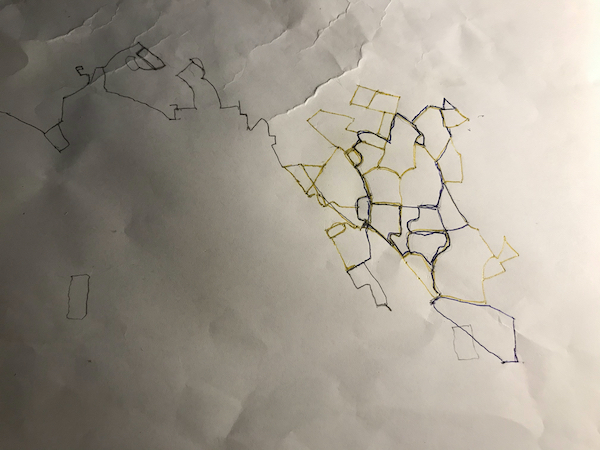
    Yesterday my daughter and I left the house and flipped a coin. Heads for left, tails for right. Right it was, then left, then left again, et cetera. A random journey along the roads, cyclepaths and alleyways of our neighbourhood ensued. It became a fun home-schooling lesson in probability. It revealed to me the habits that stop me from noticing so much of what surrounds me. And it was a fascinating experiment in not having a plan.

    (more…)
  • #18 Hazel Hill Wood – Dawn chorus sonic lockdown therapy- show-notes

    #18 Hazel Hill Wood – Dawn chorus sonic lockdown therapy- show-notes

    30 minutes of uninterrupted dawn chorus Hazel Hill Wood, recorded at the end of March. Hazel Hill is woodland nature reserve and education centre helping frontline staff develop resilience and wellbeing through connection with nature. While people are prevented from visiting the woods during lockdown, the team are working on ways to bring the wood to them during lockdown. Listening suggestions:

    • Early in the morning
    • Over breakfast
    • In the background while you work
    • To clear your mind at the end of work
    • Late at night as you drift off to sleep
    (more…)
  • It’s the invisible ingredients in the design dough that makes it rise

    It’s the invisible ingredients in the design dough that makes it rise

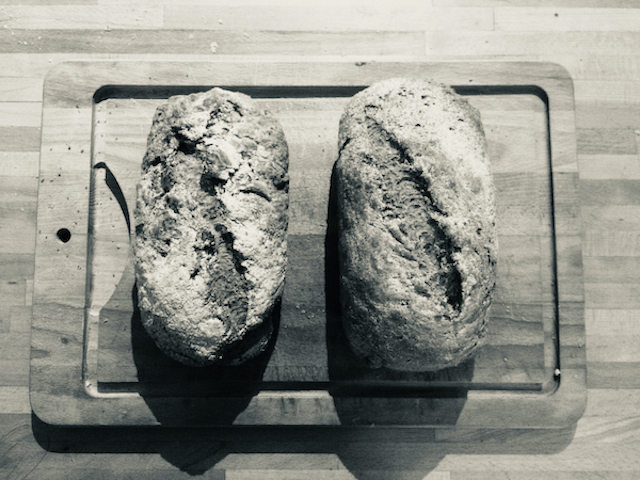
    There used to be a sign outside a bakery in London that said something along the lines of, ‘it’s the invisible ingredients – love, care and attention – that make our bread taste so good. This aphorism often comes to mind when I am running sessions on how to interpret a design brief. Understanding the ingredients can really help the design rise.

    (more…)
  • Unreliable briefs – finding the deeper design narrative

    Unreliable briefs – finding the deeper design narrative

    It is tempting to think of a design brief as wholly reliable, a document that contains all the information necessary to execute the design. But design briefs are rarely as reliable as that. In fact we should expect them to be unreliable to start with. Our job as designers is to make our briefs more reliable. To help, I have been playing with the literature concept of the unreliable narrator to help characterise types of unreliable briefs.

    (more…)
  • Developing a design brief: asking the bigger questions

    Developing a design brief: asking the bigger questions

    When developing a design brief, it is tempting to start by constraining the problem – by clarifying, by simplifying, by cutting out. But if we want to make sure we are answering problems that matter, we need to step back from the brief and ask some bigger questions.

    (more…)
  • Apollo 8 | What do you do with your computer?

    Apollo 8 | What do you do with your computer?

    I’ve been listening the BBC World Service’s podcast ’13 Minutes to the Moon’ about the Apollo space programme. Last night I listened to the episode about Apollo 8, the perhaps forgotten daring mission that enabled the moon landings to happen. I woke up this morning thinking just what an incredible achievement it was.

    (more…)
  • Imprisoned with the infinite – the philosophical implications of an imaginary visit to Sweden

    Imprisoned with the infinite – the philosophical implications of an imaginary visit to Sweden

    Yesterday our household returned home from an imaginary holiday. Despite being in lockdown, we realised that we could imagine going on a trip anywhere in the world. Our daughter suggested our Sweden. Too far to easily get to under normal circumstances without flying, with that constraint removed we thought, why not? Now back home, I have been using this visit as an opportunity to explore some philosophical arguments about how we deal with choice and how this affects our creativity.

    (more…)
  • A click of the ratchet from physical to virtual

    A click of the ratchet from physical to virtual

    Across all the of the projects I’m involved with we are working out what can go ahead and what must be postponed. A significant factor in whether to proceed is whether the activity can go ahead virtually. While the ability to move online is a blessing for business and job continuity, I think it represents an irriversible step for industry and society away from the phyical to the virtual – a click of the ratchet – that will have long-lasting impacts on our freedom and how we interact with other people.

    (more…)

  • The horizon of existence | surveillance capitalism | the return of analogue skills

    The horizon of existence | surveillance capitalism | the return of analogue skills

    It’s hard to know where to start. So much has changed in the last fortnight and there is so much that I feel compelled to write about. But now that our house has also become a remote workplace, a homeschool and playground and locus for all entertainment and time-passing activities, it is hard to find the time to write in an ordered way, so I will capture things as they emerge and look to see the patterns over time. I hope you will bear with me, reader. On my mind today:

    • The shrinking horizon of existance
    • Surveillance capitalism and Analogue Skills
    • Everyone is the same distance away
    • Mourning friction
    • A great slowing

    (more…)

  • #17 Tabitha Pope – Participatory Architecture – Show notes

    #17 Tabitha Pope – Participatory Architecture – Show notes

    Tabitha Pope is an architect and lecturer, with a specialism temporary structures and participatory architecture and a passion for work that sits at the boundary of art and architecture. In this episode, produced in support of International Women’s Day, my colleague Lucy Barber interview Tabitha about:

    • What is participatory design and what benefits does it offer us in the climate emergency.
    • Challenging power in order to make architecture a more inclusive space for all under-represented groups, not just women.
    • How her practice of carpentry allows her to intervene in the design process in a different way.
    • Establishing a nature connection to help designers and citizens alike tackle the biodiversity crisis.
    • Stepping into a space of vulnerability in design in order to do things differently.
    • Creating spaces for joy and encounter to tackle loneliness and build resilience in communities.

    Listen on Apple Podcasts , Sticher or by download here.

    (more…)
  • #16  Bengt Cousins-Jenvey – How to save a million tonnes of carbon – shownotes

    #16 Bengt Cousins-Jenvey – How to save a million tonnes of carbon – shownotes

    Bengt is a consultant and ‘re-designer’, working in sustainability and circular design in the built environment. This year we are working together to create training in response to the climate emergency. In this interview I ask Bengt about his big question: what single thing can you do to save a million tonnes of carbon. Exploring this question we get into:

    • High-level strategies for accounting for carbon that help avoid getting stuck in the detail.
    • Using culture-change models to guide organisations as they respond to declaring a climate emergency.
    • Thinking frameworks that help consultants engage with the businesses they are supporting.

    Listen on Apple Podcasts , Sticher or by download here

    (more…)
  • An action learning template for reaching any goal

    An action learning template for reaching any goal

    I met with a friend earlier in the week to talk about setting some life goals. It’s a conversation we had had five years ago and then did nothing about, but this time I came prepared with the Eiffel Over Action Learning Template.

    (more…)
  • Reading fast and slow

    Reading fast and slow

    I’m a slow reader. The problem is I can’t seem to retain things unless I write them down or sketch them out. It means that I read very few books each year, but it also means those ones I do read I know really well. This is great when you want to be able to recall a concept while standing in front of a workshop, but it is not so good for reading new content. The pile of books I now want to read is now far greater than I’ll ever get through. The smartest stuff I’ve read about productivity tells me that doing things quicker is a fool’s game. So maybe I need a different aproach.

    (more…)

  • The Lighthouse: film review + engineering notes

    The Lighthouse: film review + engineering notes

    I just went to see The Lighthouse, an enjoyably gothic story of the descent into madness of two lighthouse keepers. I loved the visual design of this film – black and white and square, with high-contrast shots of machinary and bleak landscapes. And there is a haunting, almost mechanical soundtrack, which recalls for me Johnny Greenwood’s soundtrack for There Will Be Blood.

    (more…)
  • The satisfaction of learning what the buttons can do

    The satisfaction of learning what the buttons can do

    I am reminded this morning of much I like working out what all the buttons do on a machine. Quite often the machines we use, be they an oven, a sports watch or a computer, have many more functions than we realise. Not all of these devices have the levels of user interface design that you might get from say a modern phone. While I’m a fan of good user design, I quite enjoy pouring through manuals to discover these more obscure functions… or better still, trying to discover them for myself.

    (more…)
  • #15 Show-notes – Oliver Broadbent interview by Alexie Sommer – Creativity, climate and clowning

    #15 Show-notes – Oliver Broadbent interview by Alexie Sommer – Creativity, climate and clowning

    I spend most of my time designing creativity training for engineers. In this episode we flip the format. Alexie Sommer, Independent Design and Communication Director and collaborator on many of my projects interviews me about why I set up Eiffel Over and Constructivist Ltd, and what our plans are for designing creativity training for engineers in 2020. We get into:

    • Techniques for teaching creativity
    • Our programme of training support people tackling the climate emergency
    • And what engineers might learn from clowns.

    Listen on Apple Podcasts , Sticher or by download here

    (more…)
  • From self-help to help me.

    Readers of this blog will know I started a project a couple of years ago to write a book called ‘Analogue Skills‘, a re-examination of the pre-screen skills that relied on to get through the day. I’ve always intended it to be part philosophical, part self-help. When I’ve stalled in my writing, one of the barriers has been not knowing how much of an authoritative voice to take. There is a well-troden self-help author path in which the writer spends a period of time – usually at least six months, sometimes a decade of a career – living the chosen lifestyle, and then writing about it. But that doesn’t sit well with me. I feel the Analogue Skills project to be much more of an experiment.

    (more…)
  • Clash of the sign writers

    Spotted in Swindon. I don’t understand how this sort of thing happens