Blog

  • Four reflective modes for engineers and other humans

    Four reflective modes for engineers and other humans

    I once worked for a client who said his ambition for his firm was that it should become a learning organisation. That thought stuck with me. What if, through every action you took, you were learning. Every action could be an opportunity to learn to take the next action in a better way. Whether you are working alone or working with others, every day is an opportunity to learn and add value to your process.

    The way to do this is through reflection. I use four reflective modes, loosely based on Kolb’s Learning Cycle.

    (more…)
  • Analogue Skill 009: Sketch what you see

    Analogue Skill 009: Sketch what you see

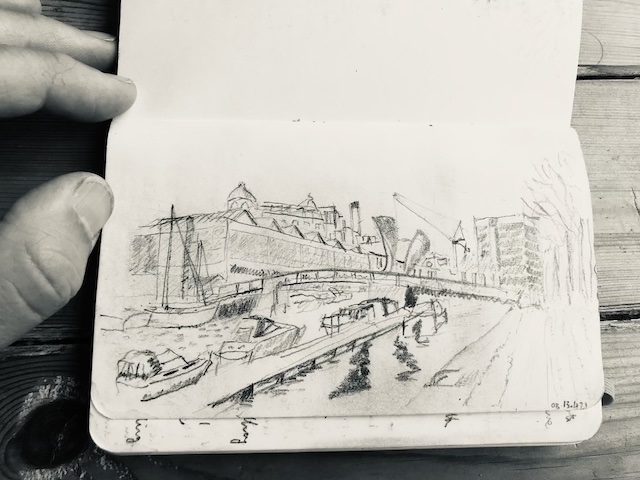
    Take out a piece of paper and draw a sketch of what you can see. You will notice more than you ever would by taking a photograph.

    Sketching could easily fall into two categories in my collection of analogue skills: Remembering Things and Spending Time Alone.

    (more…)
  • Analogue Skill 008: Be happy not knowing

    Analogue Skill 008: Be happy not knowing

    There’s a gap between certainty and doubt, and that is being happy not knowing. In this gap is space for discovery, serendipity, delight and the opportunity to grow confidence that you have everything you need. 

    I see the ability to be happy not knowing as a keystone analogue skill that supports other analogue skills and behaviours. Not knowing the weather, what’s on at the cinema, what your friends are doing, the headlines, what’s on TV, the fastest way to get there. Once we can wean ourselves off this need for certainty, we can become less dependent on our devices and more confident in encountering the world as we find it. 

    (more…)
  • Analogue Skill 007: Print out photos of your friends

    Analogue Skill 007: Print out photos of your friends

    Print out photos of your friends. Stick them on your wall. What are they doing? How can you support them? A regular reminder to give them a call.

    Printing out photos of your friends speaks to at least five points on the Analogue Skills manifesto:

    • Don’t delegate responsibility to the machines/ Resist life as content
    • Much less is much more/ Embrace inconvenience
    • Share, swap and learn from others
    • Forget the unimportant and remember the valuable.
    (more…)
  • Analogue Skill 006: Sing songs with other people

    Analogue Skill 006: Sing songs with other people

    Songs to pass the time. Songs of celebration. Songs of nostalgia. Songs that mark the seasons. Songs of work. Travelling songs. Songs that tell a story. Songs of hope. 

    I’m thinking of that moment in Wayne’s World where Wayne, pulling out a cassette* from his shirt pocket, says ‘I’m going to propose a little Bohemian Rhapsody, gentlemen.’ And then what follows is a joyous scene of shared humanity. Losing themselves in the happiness of this time spent together. Singing with other people binds us together. 

    (more…)
  • Analogue Skill 005: Finding North

    Analogue Skill 005: Finding North

    Ways of finding north. The position of the sun. The angle of solar panels. The prevailing wind – either live or frozen in the bent and twisted shape of trees. The orientation of places of worship. The current of rivers. The flow of infrastructure. The weather vane on a steeple. The North Star and Southern Cross.

    The human operating system comes equipped with means of finding north. Without an inbuilt ferrous device, the system combines sensual data with geographic, scientific and social knowledge to determine direction. 

    (more…)
  • Analogue Skill 004: Become a regular

    Analogue Skill 004: Become a regular

    Anywhere versus somewhere. 

    Contactable versus findable.

    Interchangeable versus valuable. 

    Stranger versus friend.

    This analogue skill first emerged for me from asking a simple question. If you have left your phone at home, how can people find you? 

    (more…)
  • Potential energy navigation  – or not pedalling downhill

    Potential energy navigation – or not pedalling downhill

    How driving an e-car has changed the way I think about driving, cycling and our relationship to the landscape through which we travel.

    I have recently started driving an electric vehicle from a car club. I have always understood one of the benefits of electric vehicles being that when you slow down you can convert some of your kinetic energy back into potential energy. In practice you can see this happening when you drive. Motoring along a flat or uphill road, the dashboard display shows a steady flow of current from the battery to the motor. And when you crest a hill and take your foot off the accelerator, the display shows the current flowing the other way. 

    But this engine-braking effect only gives you a slow rate of deceleration. If you need to slow down more quickly then you need to use the old-fashioned breaks, converting that kinetic energy to heat – which is lost. 

    (more…)
  • What if the screen you are now using is your last?

    What if the screen you are now using is your last?

    One day I hope this article will be printed in a book. But until then I can be fairly sure that you will be reading it on a screen. In 2021, that is most likely to be a phone, a tablet or a desktop, or possibly some sort of wearable device. In the future, that list could include countless other devices: a web table, a car dashboard, smart glasses, digital wall paper – even a hologram? Such is the speed of technological development that it is only natural to assume that whatever device we have now it will be renewed and upgraded to the next thing at some point. But what if that weren’t true?

    (more…)
  • Six motivations for collecting Analogue Skills

    Six motivations for collecting Analogue Skills

    Today I thought I’d share some of my motivations for the Analogue Skills project. 

    1 – An engineer’s fascination

    I am not anti-technology. I’m an engineer. I’m fascinated by how systems, machines and technology work, and how people use them. I am also fascinated by how technology changes the user and the user’s perception of the world. 

    2 – Tech awkward

    I’m also a bit awkward when it comes to tech. Sometimes I’m an early adopter – I got an iPhone before all my friends. Sometimes I’m an early rejector – I think I’m the only person I know who doesn’t have Google Maps on their mobile. Sometimes I’m a never adopter – for example, I don’t have an Amazon account. 

    The awkward bit is that I do have a smart phone (or phone, as they are now called), but I don’t assume I should use it for everything. Phone or no phone is a false dichotomy. I just don’t want my experience of life to mediated through a screen and potentially manipulated to meet corporate ends.

    (more…)
  • Analogue Skill 003: Watch the clouds – streaming now

    Analogue Skill 003: Watch the clouds – streaming now

    Watch the clouds. Streaming now. Telling a story of past, present and future. Of up there and down here.

    If you also live on the lump of rock that is Great Britain, then you will be fortunate enough to have a drama unfolding in the skies above you most days. The clouds are so familiar that it is easy not to notice them. But start to pay them attention and curiosity may get you hooked again.

    (more…)
  • What is real-world search in a digital world?

    What is real-world search in a digital world?

    What is real-world search, and why might it serve us in the digital world? The promise of a fully connected, digital paradigm is access to all the world’s information, at any time, everywhere. But there are some reasons why this ubiquity of access might not be a good thing. 

    • There is a risk that we become less confident in going out into the world without the information we need. 
    • We may lose the ability to find information other than by searching for it via a web browser. 
    • We may become less willing to seek information from people rather than machines.
    (more…)
  • Analogue Skill 002: Remember some phone numbers

    Analogue Skill 002: Remember some phone numbers

    Your loved ones. Your best friends. Your colleagues. Could you call them if you needed to? 

    This skill is an enabler for leaving the house with your phone. If you need to call home you can use a phone box but only if you know what number to dial. 

    Remembering phone numbers just takes practice. Find the rhythm. Find the pattern. Set them to song, if it helps. Practise recall by dialing the numbers rather than using the saved number.

    (more…)
  • More lanes = more cars. More apps = more things to do?

    More lanes = more cars. More apps = more things to do?

    Deleting apps and leaving your phone at home could be analogous to dismantling urban highways.

    I read earlier this week about the research that established a direct link between building more roads and the level of traffic in a system. The researches established a directly proportional link. Increase road capacity by 10% and traffic increases by 10%. The causal link is that when you increase road capacity, you make it easier for more people to make more journeys. And so more people drive until the new road reaches capacity. At which point the traffic stops growing until new roads are built.

    (more…)
  • Analogue Skill 001: Buy tickets at the station

    Analogue Skill 001: Buy tickets at the station

    Go to the station. Stand in the queue. Look at all the people and wonder where they are going. See leaflets in the rack for places you hadn’t thought of going before. Look up at the station architecture, notice how drab it is, notice where someone has made an effort.

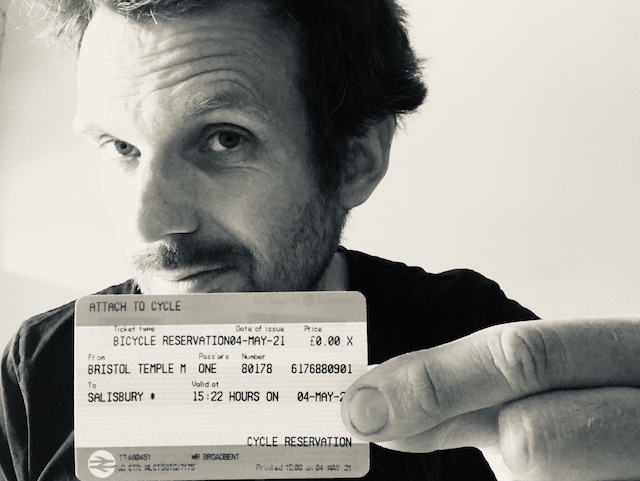
    Talk to the person at the window. Smile at them. You might be the first person to do this today. Engage in life-affirming transaction. You want to buy a ticket and they want to help. Ask an expert. What’s the best route? What’s the best time to travel? Find out if there is a different way. Find out if there really aren’t any spaces available for your bike (or was the computer lying?).

    Leave, ticket in hand, a malleable scrap of evidence that you are going somewhere and you didn’t just imagine it. A ticket that won’t run out of power.

  • If you are stuck in the weeds, look at the ecosystem

    This morning I’m writing about how action in the context ecological crisis will sometimes feel a long way from anything to do with nature.

    I wrote this week about my reflections following reading ‘What if we stopped pretending?‘. One was that the ecological crisis will require action on many fronts to build resilience and support regeneration. On a day-to-day level, many of these actions will feel a long way from that greater cause, but it is important, I think to maintain a connection between the means and the ends.

    This week and last I have had my head in helping my colleagues at Hazel Hill Wood with providing back-up power supply to our off-grid buildings. The sorts of things that need doing are negotiating contracts with suppliers, managing resources, working with the team to set objectives, thinking about fundraising.

    All of this feels a long way from ecosystem regeneration and supporting people’s connection to nature, which are our aims for the wood, and my motivations in the project. But there is a thread that connects the two:

    (more…)
  • Book notes: What if we stopped pretending

    I originally wrote this post for the ‘Training on what to do After Declaring a Climate Emergencyalumni network, and I’m sharing it here too. For some start-the-week inspiration I’m sharing some thoughts after reading Jonathan Franzen’sWhat If We Stopped Pretending‘. Thank you to James Norman for lending this to me a week a go. 

    (more…)
  • A minor win in the climate emergency

    A minor win in the climate emergency

    For years I have toiled to get bathwater out of the bathroom and into the garden to help reduce our water footprint. For many years, gravity wasn’t on my side. When we lived in a ground floor flat my method was to fill up a flexible bucket and carry the water out, trying not to slosh the carpet.

    Even when we moved to a house with an upstairs bathroom – you’d think with the potential for some downpipe diversion to a water butt action – it has not been any easier. The downpipe from the bath is inaccessible. Our alternative has been to bucket the water out of the window, sending it down the roof of the lean-to extension, catching it in the guttering, and sending it onto a water butt. The high level of the window opening makes this a tough task on the arms, and about a third of the water splashes on the neighbour’s patio.

    (more…)
  • Gauss, railways and corrugated iron

    I really enjoyed listening to the In Our Time episode on mathematician Carl Friedrich Gauss this morning. As is sometimes the case with these podcasts, I hear about theories I might once have been expected to study and to which I now wish I had been paying more attention. This morning, two theories in particular piqued my inner engineer.

    (more…)
  • If I’m the fool then what does that make you?

    I heard this line in a BBC audio adaptation of King Lear for kids. “If I’m the fool, then what does that make you?” It struck a chord. For me this question captures the power of fooling around as a clown.

    Fooling is playful and at the same time powerfully subversive stuff. The clown owns their foolishness, but in doing so raises a mirror the audience. I may be foolish, but in what ways are you unwittingly foolish too?

    (The play also included the line ‘I hate living a thousand years ago’ – which I am also noting down here for future reference).

  • Universal Cycle Flyover

    Universal Cycle Flyover

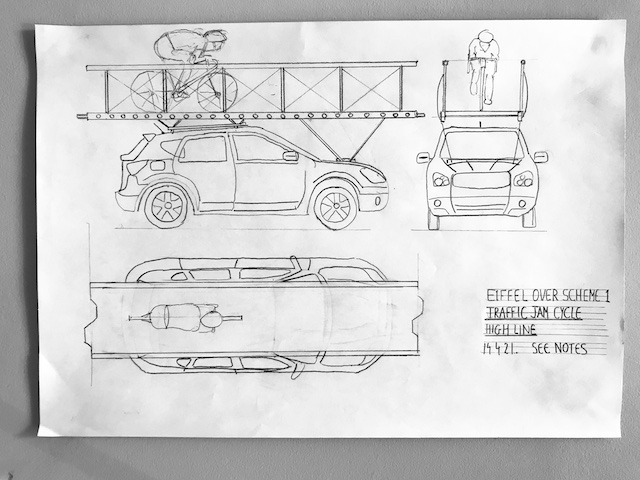
    The daily traffic jam on my local high street has inspired me to think about a way to turn a traffic jam into an opportunity to a way to create safer cycling. This solution is win-win: car drivers get to stay in their cars while facilitating the creation of more traffic-free cycle routes in and out of our cities.

    The concept is for all cars to be fitted with a light-weight section of Universal Cycle Flyover, designed to fit most any vehicle. Cars approaching a traffic jam simply park close enough to the next car to to enable a continuous connection for the cycle deck.

    (The scheme shows a cyclist on a racing bicycle. Of course other types of bicycle would be encouraged, I just started the sketch too close to the top of the page to fit a more upright riding position.)

  • Great idea – terrible font

    Don’t spoil your idea with a terrible font.

    The environmental movement seems to be particularly prone this affliction. Once upon a time, people with the mindset that was willing to challenge mainstream military-industrial thinking also challenged the strictures of modern fonts. Gone sans serif, in its place, curly whirly.

    Thankfully, the times are indeed a-changin. And what were once wacky ideas are increasingly appealing to the mainstream: renewable energy; whole-system design; zero-waste systems.

    I just don’t think the mainstream is ready for curly-whirly fonts yet.

  • Revaluing weeds in the biodiversity emergency

    Revaluing weeds in the biodiversity emergency

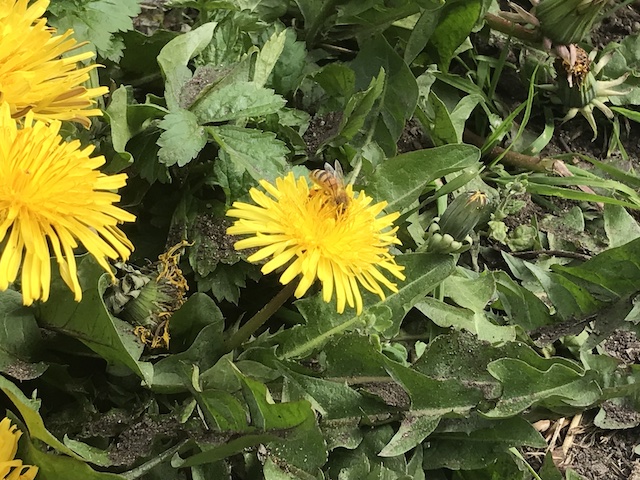
    Yesterday a council contractor rode up and down our street spraying weed killer on the pavements, grass and tree pits. I was dumbstruck. This is the biodiversity crisis manifesting literally on my doorstep. And at the same time double standards. Here you have a council that has led the way in the UK in declaring both climate and ecological emergencies. All the while its contractors are spraying weedkiller on its streets. For me this encapsulates the fundamental challenge of the ecological crisis: we understand at some high level that something must be done but we can’t translate that into what a thriving ecosystem looks like.

    (more…)
  • Human-scale chalk stream restoration.

    Human-scale chalk stream restoration.

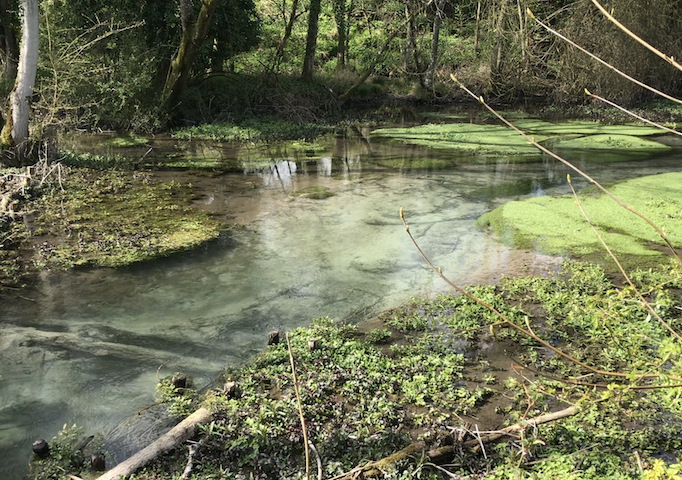
    On this afternoon’s walk we had the joy of arriving at a chalk stream. We had started high on the Ridgeway and descended quickly down through the Devil’s Punchbowl, a dry valley. And it was at the lowest point on our walk that we came upon Letcombe Brook. At this site, conservationist are working to recreate the natural conditions of a chalk stream to enable wildlife to thrive.

    (more…)
  • Connection with nature through drawing

    Connection with nature through drawing

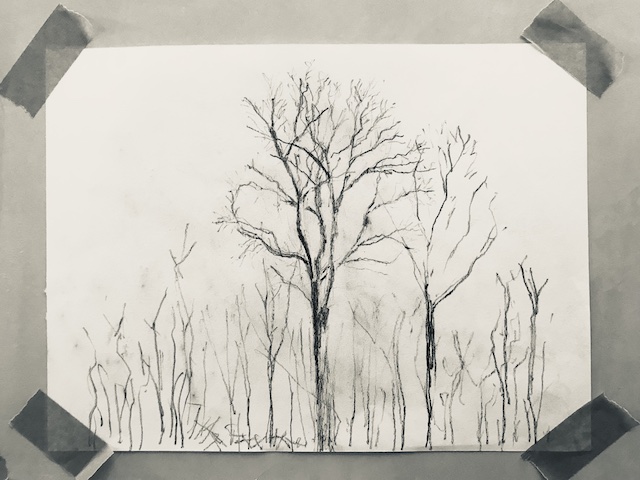
    I drew this ash tree at Hazel Hill Wood last weekend. Though it rises opposite a bench where I like to have a morning coffee, I have never paid it much attention. But doing a twenty-minute sketch I am discovering the tree. Climbing the trunk that rises without foothold for a third of its height. Noticing for the first time its rhythm – the trees spatial ordering. How one trunk becomes a thousand twigs, like a trachea transitioning to countless alveoli.

    As I draw I see a space in the canopy to the left, one that I would not have noticed otherwise. I presume it is a space left by another tree that is now fallen, on the ground but leaving its imprint in the sky.

    (more…)
  • Fear holds back my imagination

    Fear holds back my imagination

    I had a revelation this morning as I walked down the hill to the newsagent: fear holds back my imagination. A fear of imagining the impossible; fear of saying, hey I want this wonderful thing and other people laughing. It was a meta-level realisation of the lid that fear was putting on my imagination.

    (more…)
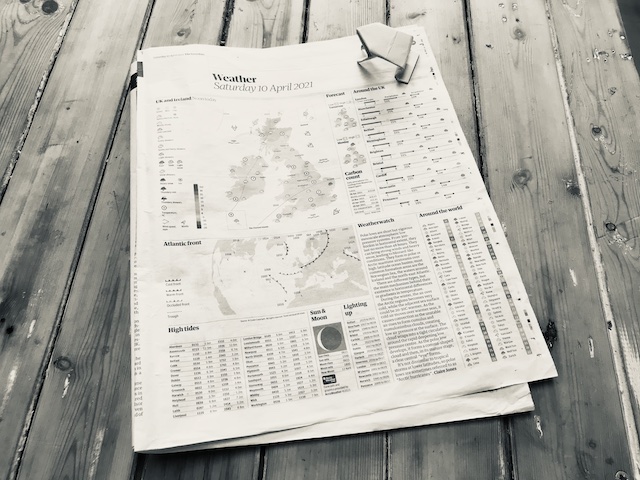
  • Why isn’t Lands End called Lands Start? – parenting with the weather pages

    Why isn’t Lands End called Lands Start? – parenting with the weather pages

    From hospital waiting rooms to long-distance train journeys, the weather page is a great conversation starter for my daughter and me, full of questions about geography, mathematics, history, about language…

    (more…)
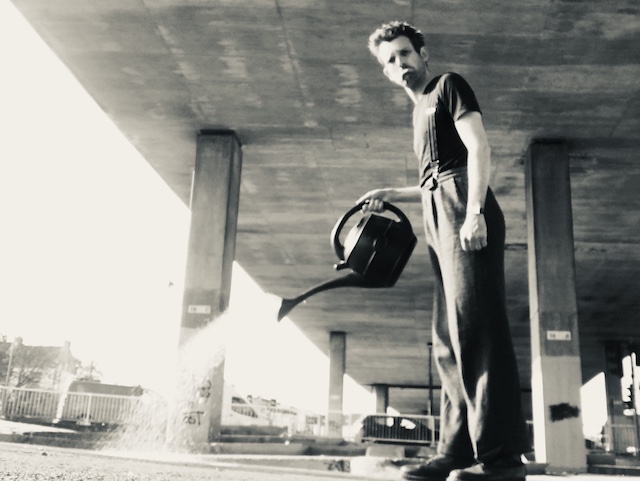
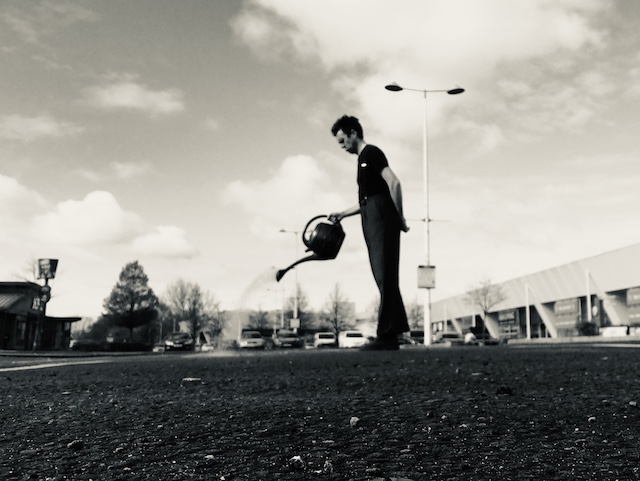
  • Planting parking spaces is a dismal affair

    Planting parking spaces is a dismal affair

    Planting parking spaces is a dismal affair.

    When you water them, the water just drains away.

    The rich soil underneath is capped.

    Parking spaces don’t flower; don’t make nectar, don’t produce fruit that we can eat.

    Insects stay away; birds fly over.

    Never do they grow, rise up from the ground, spread their branches to oxygenate the air.

    No one returns in 30 years time and says I planted that parking space.

    No generation thanked the last for planting more.

    (more…)
  • Questions to ask your colleagues in the biodiversity emergency

    Questions to ask your colleagues in the biodiversity emergency

    The biodiversity emergency requires us to change how we value and relate to the ecosystems that support us.

    Values shift when we change our habits. Habits are the rituals and routines that form part of an organisation’s culture. Work the habits to shift the culture.

    We see it in Toyota’s Improvement Kata, which uses habit to reinforce behaviours around improvement, adaptation and innovation. We see it in the ‘safe-start’ procedure used for meetings in safety-critical industries.

    And so I’m wondering what might be questions that we might routinely ask each other of our projects in organisations that have declared a biodiversity emergency?

    (more…)
  • Will you always own a car?

    Will you always own a car?

    By asking this question I make a choice about where the centre ground is. By framing the question I put the position ‘I will always own a car’ at the extreme. At the other extreme is ‘I will never own a car’.

    The middle ground becomes some partial version of car ownership. I will own a car for a bit. I’ll think about selling it in a few years. Maybe, I will own my car with other people . I will join a car club.

    Given what we know about air pollution, the contribution private transport makes to carbon emissions, the number of people killed each year by cars, and the damage caused to our communities by busy roads, why is private car ownership still considered the norm?

    (more…)